
talk-data.com talk-data.com

C

Speaker

Clare Churcher

3

talks

author

Filter by Event / Source

Talks & appearances

3 activities · Newest first

Search activities →
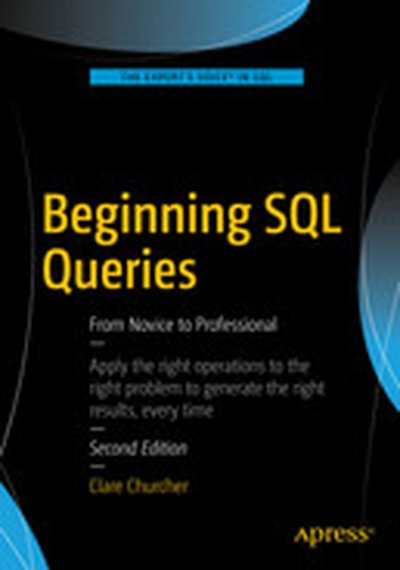
Beginning SQL Queries: From Novice to Professional, Second Edition

Get started on mastering the one language binding the entire database industry. That language is SQL, and how it works is must-have knowledge for anyone involved with relational databases, and surprisingly also for anyone involved with NoSQL databases. SQL is universally used in querying and reporting on large data sets in order to generate knowledge to drive business decisions. Good knowledge of SQL is crucial to anyone working with databases, because it is with SQL that you retrieve data, manipulate data, and generate business results. Every relational database supports SQL for its expressiveness in writing queries underlying reports and business intelligence dashboards. Knowing how to write good queries is the foundation for all work done in SQL, and it is a foundation that Clare Churcher's book, , 2nd Edition, lays well. Beginning SQL Queries What You Will Learn Write simple queries to extract data from a single table Combine data from many tables into one business result using set operations Translate natural language questions into database queries providing meaningful information to the business Avoid errors associated with duplicated and null values Summarize data with amazing ease using the newly-added feature of window functions Tackle tricky queries with confidence that you are generating correct results Investigate and understand the effects of indexes on the efficiency of queries Who This Book Is For Beginning SQL Queries, 2nd Edition is aimed at intelligent laypeople who need to extract information from a database, and at developers and other IT professionals who are new to SQL. The book is especially useful for business intelligence analysts who must ask more complex questions of their database than their GUI—based reporting software supports. Such people might be business owners wanting to target specific customers, scientists and students needing to extract subsets of their research data, or end users wanting to make the best use of databases for their clubs and societies.
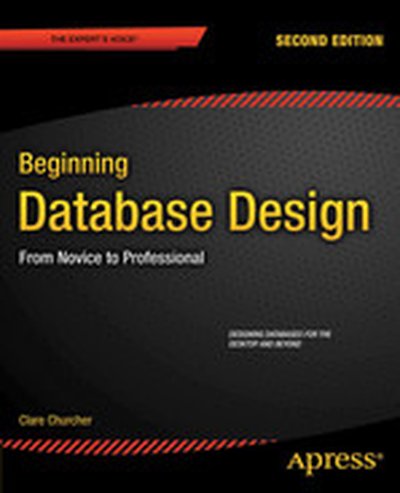
Beginning Database Design: From Novice to Professional, Second Edition

Beginning Database Design, Second Edition provides short, easy-to-read explanations of how to get database design right the first time. This book offers numerous examples to help you avoid the many pitfalls that entrap new and not-so-new database designers. Through the help of use cases and class diagrams modeled in the UML, you'll learn to discover and represent the details and scope of any design problem you choose to attack. Database design is not an exact science. Many are surprised to find that problems with their databases are caused by poor design rather than by difficulties in using the database management software. Beginning Database Design, Second Edition helps you ask and answer important questions about your data so you can understand the problem you are trying to solve and create a pragmatic design capturing the essentials while leaving the door open for refinements and extension at a later stage. Solid database design principles and examples help demonstrate the consequences of simplifications and pragmatic decisions. The rationale is to try to keep a design simple, but allow room for development as situations change or resources permit. Provides solid design principles by which to avoid pitfalls and support changing needs Includes numerous examples of good and bad design decisions and their consequences Shows a modern method for documenting design using the Unified Modeling Language What you'll learn Avoid the most common pitfalls in database design. Create clear use cases from project requirements. Design a data model to support the use cases. Apply generalization and specialization appropriately. Secure future flexibility through a normalized design. Ensure integrity through relationships, keys, and constraints. Successfully implement your data model as a relational schema. Who this book is for Beginning Database Design, Second Edition is aimed at desktop power users, developers, database administrators, and others who are charged with caring for data and storing it in ways that preserve its meaning and integrity. Desktop users will appreciate the coverage of Excel as a plausible "database" for research systems and lab environments. Developers and database designers will find insight from the clear discussions of design approaches and their pitfalls and benefits. All readers will benefit from learning a modern notation for documenting designs that is based upon the widely used and accepted Universal Modeling Language.

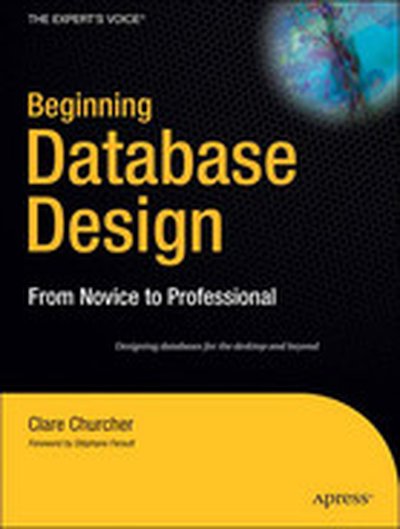
Beginning Database Design

Beginning Database Design: From Novice to Professional provides short, easy-to-read explanations of how to get database design right the first time. This book offers numerous examples to help you avoid the many pitfalls that entrap new and not-so-new database designers. Through the help of use cases and class diagrams modeled in the UML, youll learn how to discover and represent the details and scope of the problem in question. Database design is not an exact science, and solid database design principles and examples help demonstrate the consequences of simplifications and pragmatic decisions. The rationale is to try to keep it simple, but allow room for development as situations change or resources permit. The book also features an introduction for implementing the final design in a relational database.