talk-data.com talk-data.com

Topic

NoSQL

databases big_data non_relational

151

tagged

Activity Trend

7 peak/qtr
2020-Q1 2026-Q1

Activities

151 activities · Newest first

Universal Data Modeling

Most data professionals work with multiple datasets scattered across teams, systems, and formats. But without a clear modeling strategy, the result is often chaos: mismatched schemas, fragile pipelines, and a constant fight to make sense of the noise. This essential guide offers a better way by introducing a practical framework for designing high-quality data models that work across platforms while supporting the growing demands of AI, analytics, and real-time systems. Author Jun Shan bridges the gap between disconnected modeling approaches and the need for a unified, system-agnostic methodology. Whether you're building a new data platform or rethinking legacy infrastructure, Universal Data Modeling gives you the clarity, patterns, and tools to model data that's consistent, resilient, and ready to scale. Connect conceptual, logical, and physical modeling phases with confidence Apply best-fit techniques across relational, semistructured, and NoSQL formats Improve data quality, clarity, and maintainability across your organization Support modern design paradigms like data mesh and data products Translate domain knowledge into models that empower teams Build flexible, scalable models that stand the test of technology change

Designing Data-Intensive Applications, 2nd Edition

Data is at the center of many challenges in system design today. Difficult issues such as scalability, consistency, reliability, efficiency, and maintainability need to be resolved. In addition, there's an overwhelming variety of tools and analytical systems, including relational databases, NoSQL datastores, plus data warehouses and data lakes. What are the right choices for your application? How do you make sense of all these buzzwords? In this second edition, authors Martin Kleppmann and Chris Riccomini build on the foundation laid in the acclaimed first edition, integrating new technologies and emerging trends. You'll be guided through the maze of decisions and trade-offs involved in building a modern data system, from choosing the right tools like Spark and Flink to understanding the intricacies of data laws like the GDPR. Peer under the hood of the systems you already use, and learn to use them more effectively Make informed decisions by identifying the strengths and weaknesses of different tools Navigate the trade-offs around consistency, scalability, fault tolerance, and complexity Understand the distributed systems research upon which modern databases are built Peek behind the scenes of major online services, and learn from their architectures

Modern data, modern apps: Innovation with Microsoft Databases

Whether you’re modernizing for peak performance and AI readiness or building the next generation of intelligent apps and agents, the Microsoft database portfolio fuels your vision. Join CVP Shireesh Thota for an inside look at the latest innovations across SQL, NoSQL, and open-source databases—featuring dynamic demos that reveal how to boost productivity, deliver rich, personalized experiences, and unlock new possibilities from your data.

Data Engineering for Beginners

A hands-on technical and industry roadmap for aspiring data engineers In Data Engineering for Beginners, big data expert Chisom Nwokwu delivers a beginner-friendly handbook for everyone interested in the fundamentals of data engineering. Whether you're interested in starting a rewarding, new career as a data analyst, data engineer, or data scientist, or seeking to expand your skillset in an existing engineering role, Nwokwu offers the technical and industry knowledge you need to succeed. The book explains: Database fundamentals, including relational and noSQL databases Data warehouses and data lakes Data pipelines, including info about batch and stream processing Data quality dimensions Data security principles, including data encryption Data governance principles and data framework Big data and distributed systems concepts Data engineering on the cloud Essential skills and tools for data engineering interviews and jobs Data Engineering for Beginners offers an easy-to-read roadmap on a seemingly complicated and intimidating subject. It addresses the topics most likely to cause a beginning data engineer to stumble, clearly explaining key concepts in an accessible way. You'll also find: A comprehensive glossary of data engineering terms Common and practical career paths in the data engineering industry An introduction to key cloud technologies and services you may encounter early in your data engineering career Perfect for practicing and aspiring data analysts, data scientists, and data engineers, Data Engineering for Beginners is an effective and reliable starting point for learning an in-demand skill. It's a powerful resource for everyone hoping to expand their data engineering Skillset and upskill in the big data era.

Relational SQL databases remain the winner when it comes to optimal and structured data storage and management. However, as data storage needs become more complex, especially with the rise of AI, NoSQL databases are making waves. NoSQL (Not-Only-SQL) is a powerful alternative, excelling at handling large volumes of unstructured, non-relational data and offering flexible data structures for ever-evolving schemas. In this session, we will explore the basics and core concepts of different types of NoSQL databases, such as document stores, key-value stores, and graph databases. We’ll discuss the ideal use cases and best practices for each store, their unique strengths, and how they compare to traditional relational databases in various scenarios. We will also cover practical examples, such as using graph databases for more efficient retrieval in AI applications, or leveraging document stores for storing and querying raw logs. By the end of the session, attendees will be equipped with the knowledge required to implement NoSQL data storage in Azure, as well as being able to make informed decisions about when and where to implement NoSQL databases. While NoSQL is not always the answer, choosing the right data store will always ensure scalability and performance for your data solutions.

MongoDB 8.0 in Action, Third Edition

Deliver flexible, scalable, and high-performance data storage that's perfect for AI and other modern applications with MongoDB 8.0 and MongoDB Atlas multi-cloud data platform. In MongoDB 8.0 in Action, Third Edition you'll find comprehensive coverage of the latest version of MongoDB 8.0 and the MongoDB Atlas multi-cloud data platform. Learn to utilize MongoDB’s flexible schema design for data modeling, scale applications effectively using advanced sharding features, integrate full-text and vector-based semantic search, and more. This totally revised new edition delivers engaging hands-on tutorials and examples that put MongoDB into action! In MongoDB 8.0 in Action, Third Edition you'll: Master new features in MongoDB 8.0 Create your first, free Atlas cluster using the Atlas CLI Design scalable NoSQL databases with effective data modeling techniques Master Vector Search for building GenAI-driven applications Utilize advanced search capabilities in MongoDB Atlas, including full-text search Build Event-Driven Applications with Atlas Stream Processing Deploy and manage MongoDB Atlas clusters both locally and in the cloud using the Atlas CLI Leverage the Atlas SQL interface for familiar SQL querying Use MongoDB Atlas Online Archive for efficient data management Establish robust security practices including encryption Master backup and restore strategies Optimize database performance and identify slow queries MongoDB 8.0 in Action, Third Edition offers a clear, easy-to-understand introduction to everything in MongoDB 8.0 and MongoDB Atlas—including new advanced features such as embedded config servers in sharded clusters, or moving an unsharded collection to a different shard. The book also covers Atlas stream processing, full text search, and vector search capabilities for generative AI applications. Each chapter is packed with tips, tricks, and practical examples you can quickly apply to your projects, whether you're brand new to MongoDB or looking to get up to speed with the latest version. About the Technology MongoDB is the database of choice for storing structured, semi-structured, and unstructured data like business documents and other text and image files. MongoDB 8.0 introduces a range of exciting new features—from sharding improvements that simplify the management of distributed data, to performance enhancements that stay resilient under heavy workloads. Plus, MongoDB Atlas brings vector search and full-text search features that support AI-powered applications. About the Book MongoDB 8.0 in Action, Third Edition you’ll learn how to take advantage of all the new features of MongoDB 8.0, including the powerful MongoDB Atlas multi-cloud data platform. You’ll start with the basics of setting up and managing a document database. Then, you’ll learn how to use MongoDB for AI-driven applications, implement advanced stream processing, and optimize performance with improved indexing and query handling. Hands-on projects like creating a RAG-based chatbot and building an aggregation pipeline mean you’ll really put MongoDB into action! What's Inside The new features in MongoDB 8.0 Get familiar with MongoDB’s Atlas cloud platform Utilizing sharding enhancements Using vector-based search technologies Full-text search capabilities for efficient text indexing and querying About the Reader For developers and DBAs of all levels. No prior experience with MongoDB required. About the Author Arek Borucki is a MongoDB Champion, certified MongoDB and MongoDB Atlas administrator with expertise in distributed systems, NoSQL databases, and Kubernetes. Quotes An excellent resource with real-world examples and best practices to design, optimize, and scale modern applications. - Advait Patel, Broadcom Essential MongoDB resource. Covers new features such as full-text search, vector search, AI, and RAG applications. - Juan Roy, Credit Suisse Reflects author’s practical experience and clear teaching style. It’s packed with real-world examples and up-to-date insights. - Rajesh Nair, MongoDB Champion & community leader This book will definitely make you a MongoDB star! - Vinicios Wentz, JP Morgan & Chase Co.

Metadata management is a cornerstone of effective data governance, yet it presents unique challenges distinct from traditional data engineering. At scale, efficiently extracting metadata from relational and NoSQL databases demands specialized solutions. To address this, our team has developed custom Airflow operators that scan and extract metadata across various database technologies, orchestrating 100+ production jobs to ensure continuous and reliable metadata collection. Now, we’re expanding beyond databases to tackle non-traditional data sources such as file repositories and message queues. This shift introduces new complexities, including processing structured and unstructured files, managing schema evolution in streaming data, and maintaining metadata consistency across heterogeneous sources. In this session, we’ll share our approach to building scalable metadata scanners, optimizing performance, and ensuring adaptability across diverse data environments. Attendees will gain insights into designing efficient metadata pipelines, overcoming common pitfalls, and leveraging Airflow to drive metadata governance at scale.

Delta and Databricks as a Performant Exabyte-Scale Application Backend

The Delta Lake architecture promises to provide a single, highly functional, and high-scale copy of data that can be leveraged by a variety of tools to satisfy a broad range of use cases. To date, most use cases have focused on interactive data warehousing, ETL, model training, and streaming. Real-time access is generally delegated to costly and sometimes difficult-to-scale NoSQL, indexed storage, and domain-specific specialty solutions, which provide limited functionality compared to Spark on Delta Lake. In this session, we will explore the Delta data-skipping and optimization model and discuss how Capital One leveraged it along with Databricks photon and Spark Connect to implement a real-time web application backend. We’ll share how we built a highly-functional and performant security information and event management user experience (SIEM UX) that is cost effective.

Summary In this episode of the Data Engineering Podcast Chakravarthy Kotaru talks about scaling data operations through standardized platform offerings. From his roots as an Oracle developer to leading the data platform at a major online travel company, Chakravarthy shares insights on managing diverse database technologies and providing databases as a service to streamline operations. He explains how his team has transitioned from DevOps to a platform engineering approach, centralizing expertise and automating repetitive tasks with AWS Service Catalog. Join them as they discuss the challenges of migrating legacy systems, integrating AI and ML for automation, and the importance of organizational buy-in in driving data platform success.

Announcements Hello and welcome to the Data Engineering Podcast, the show about modern data managementData migrations are brutal. They drag on for months—sometimes years—burning through resources and crushing team morale. Datafold's AI-powered Migration Agent changes all that. Their unique combination of AI code translation and automated data validation has helped companies complete migrations up to 10 times faster than manual approaches. And they're so confident in their solution, they'll actually guarantee your timeline in writing. Ready to turn your year-long migration into weeks? Visit dataengineeringpodcast.com/datafold today for the details.This is a pharmaceutical Ad for Soda Data Quality. Do you suffer from chronic dashboard distrust? Are broken pipelines and silent schema changes wreaking havoc on your analytics? You may be experiencing symptoms of Undiagnosed Data Quality Syndrome — also known as UDQS. Ask your data team about Soda. With Soda Metrics Observability, you can track the health of your KPIs and metrics across the business — automatically detecting anomalies before your CEO does. It’s 70% more accurate than industry benchmarks, and the fastest in the category, analyzing 1.1 billion rows in just 64 seconds. And with Collaborative Data Contracts, engineers and business can finally agree on what “done” looks like — so you can stop fighting over column names, and start trusting your data again.Whether you’re a data engineer, analytics lead, or just someone who cries when a dashboard flatlines, Soda may be right for you. Side effects of implementing Soda may include: Increased trust in your metrics, reduced late-night Slack emergencies, spontaneous high-fives across departments, fewer meetings and less back-and-forth with business stakeholders, and in rare cases, a newfound love of data. Sign up today to get a chance to win a $1000+ custom mechanical keyboard. Visit dataengineeringpodcast.com/soda to sign up and follow Soda’s launch week. It starts June 9th.Your host is Tobias Macey and today I'm interviewing Chakri Kotaru about scaling successful data operations through standardized platform offeringsInterview IntroductionHow did you get involved in the area of data management?Can you start by outlining the different ways that you have seen teams you work with fail due to lack of structure and opinionated design?Why NoSQL?Pairing different styles of NoSQL for different problemsUseful patterns for each NoSQL style (document, column family, graph, etc.)Challenges in platform automation and scaling edge casesWhat challenges do you anticipate as a result of the new pressures as a result of AI applications?What are the most interesting, innovative, or unexpected ways that you have seen platform engineering practices applied to data systems?What are the most interesting, unexpected, or challenging lessons that you have learned while working on data platform engineering?When is NoSQL the wrong choice?What do you have planned for the future of platform principles for enabling data teams/data applications?Contact Info LinkedInParting Question From your perspective, what is the biggest gap in the tooling or technology for data management today?Closing Announcements Thank you for listening! Don't forget to check out our other shows. Podcast.init covers the Python language, its community, and the innovative ways it is being used. The AI Engineering Podcast is your guide to the fast-moving world of building AI systems.Visit the site to subscribe to the show, sign up for the mailing list, and read the show notes.If you've learned something or tried out a project from the show then tell us about it! Email [email protected] with your story.Links RiakDynamoDBSQL ServerCassandraScyllaDBCAP TheoremTerraformAWS Service CatalogBlog PostThe intro and outro music is from The Hug by The Freak Fandango Orchestra / CC BY-SA

As we look back at 2024, we're highlighting some of our favourite episodes of the year, and with 100 of them to choose from, it wasn't easy! The four guests we'll be recapping with are: Lea Pica - A celebrity in the data storytelling and visualisation space. Richie and Lea cover the full picture of data presentation, how to understand your audience, how to leverage hollywood storytelling and more. Out December 19.Alex Banks - Founder of Sunday Signal. Adel and Alex cover Alex’s journey into AI and what led him to create Sunday Signal, the potential of AI, prompt engineering at its most basic level, chain of thought prompting, the future of LLMs and more. Out December 23.Don Chamberlin - The renowned co-inventor of SQL. Richie and Don explore the early development of SQL, how it became standardized, the future of SQL through NoSQL and SQL++ and more. Out December 26.Tom Tunguz - general Partner at Theory Ventures, a $235m VC firm. Richie and Tom explore trends in generative AI, cloud+local hybrid workflows, data security, the future of business intelligence and data analytics, AI in the corporate sector and more. Out December 30. Rapid change seems to be the new norm within the data and AI space, and due to the ecosystem constantly changing, it can be tricky to keep up. Fortunately, any self-respecting venture capitalist looking into data and AI will stay on top of what’s changing and where the next big breakthroughs are likely to come from. We all want to know which important trends are emerging and how we can take advantage of them, so why not learn from a leading VC.  Tomasz Tunguz is a General Partner at Theory Ventures, a $235m early-stage venture capital firm. He blogs sat tomtunguz.com & co-authored Winning with Data. He has worked or works with Looker, Kustomer, Monte Carlo, Dremio, Omni, Hex, Spot, Arbitrum, Sui & many others. He was previously the product manager for Google's social media monetization team, including the Google-MySpace partnership, and managed the launches of AdSense into six new markets in Europe and Asia. Before Google, Tunguz developed systems for the Department of Homeland Security at Appian Corporation.  In the episode, Richie and Tom explore trends in generative AI, the impact of AI on professional fields, cloud+local hybrid workflows, data security, and changes in data warehousing through the use of integrated AI tools, the future of business intelligence and data analytics, the challenges and opportunities surrounding AI in the corporate sector. You'll also get to discover Tom's picks for the hottest new data startups. Links Mentioned in the Show: Tom’s BlogTheory VenturesArticle: What Air Canada Lost In ‘Remarkable’ Lying AI Chatbot Case[Course] Implementing AI Solutions in BusinessRelated Episode: Making Better Decisions using Data & AI with Cassie Kozyrkov, Google's First Chief Decision ScientistSign up to RADAR: AI...

As we look back at 2024, we're highlighting some of our favourite episodes of the year, and with 100 of them to choose from, it wasn't easy! The four guests we'll be recapping with are: Lea Pica - A celebrity in the data storytelling and visualisation space. Richie and Lea cover the full picture of data presentation, how to understand your audience, how to leverage hollywood storytelling and more. Out December 19.Alex Banks - Founder of Sunday Signal. Adel and Alex cover Alex’s journey into AI and what led him to create Sunday Signal, the potential of AI, prompt engineering at its most basic level, chain of thought prompting, the future of LLMs and more. Out December 23.Don Chamberlin - The renowned co-inventor of SQL. Richie and Don explore the early development of SQL, how it became standardized, the future of SQL through NoSQL and SQL++ and more. Out December 26.Tom Tunguz - general Partner at Theory Ventures, a $235m VC firm. Richie and Tom explore trends in generative AI, cloud+local hybrid workflows, data security, the future of business intelligence and data analytics, AI in the corporate sector and more. Out December 30. For our 200th episode, we bring you a special guest and taking a walk down memory lane—to the creation and development of one of the most popular programming languages in the world. Don Chamberlin is renowned as the co-inventor of SQL (Structured Query Language), the predominant database language globally, which he developed with Raymond Boyce in the mid-1970s. Chamberlin's professional career began at IBM Research in Yorktown Heights, New York, following a summer internship there during his academic years. His work on IBM's System R project led to the first SQL implementation and significantly advanced IBM’s relational database technology. His contributions were recognized when he was made an IBM Fellow in 2003 and later a Fellow of the Computer History Museum in 2009 for his pioneering work on SQL and database architectures. Chamberlin also contributed to the development of XQuery, an XML query language, as part of the W3C, which became a W3C Recommendation in January 2007. Additionally, he holds fellowships with ACM and IEEE and is a member of the National Academy of Engineering. In the episode, Richie and Don explore his early career at IBM and the development of his interest in databases alongside Ray Boyce, the database task group (DBTG), the transition to relational databases and the early development of SQL, the commercialization and adoption of SQL, how it became standardized, how it evolved and spread via open source, the future of SQL through NoSQL and SQL++ and much more.  Links Mentioned in the Show: The first-ever journal paper on SQL. SEQUEL: A Structured English Query LanguageDon’s Book: SQL++ for SQL Users: A TutorialSystem R: Relational approach to database managementSQL CoursesSQL Articles, Tutorials and Code-AlongsRelated Episode: Scaling Enterprise Analytics with...

As we look back at 2024, we're highlighting some of our favourite episodes of the year, and with 100 of them to choose from, it wasn't easy! The four guests we'll be recapping with are: Lea Pica - A celebrity in the data storytelling and visualisation space. Richie and Lea cover the full picture of data presentation, how to understand your audience, how to leverage hollywood storytelling and more. Out December 19.Alex Banks - Founder of Sunday Signal. Adel and Alex cover Alex’s journey into AI and what led him to create Sunday Signal, the potential of AI, prompt engineering at its most basic level, chain of thought prompting, the future of LLMs and more. Out December 23.Don Chamberlin - The renowned co-inventor of SQL. Richie and Don explore the early development of SQL, how it became standardized, the future of SQL through NoSQL and SQL++ and more. Out December 26.Tom Tunguz - general Partner at Theory Ventures, a $235m VC firm. Richie and Tom explore trends in generative AI, cloud+local hybrid workflows, data security, the future of business intelligence and data analytics, AI in the corporate sector and more. Out December 30. Since the launch of ChatGPT, one of the trending terms outside of ChatGPT itself has been prompt engineering. This act of carefully crafting your instructions is treated as alchemy by some and science by others. So what makes an effective prompt? Alex Banks has been building and scaling AI products since 2021. He writes Sunday Signal, a newsletter offering a blend of AI advancements and broader thought-provoking insights. His expertise extends to social media platforms on X/Twitter and LinkedIn, where he educates a diverse audience on leveraging AI to enhance productivity and transform daily life. In the episode, Alex and Adel cover Alex’s journey into AI and what led him to create Sunday Signal, the potential of AI, prompt engineering at its most basic level, strategies for better prompting, chain of thought prompting, prompt engineering as a skill and career path, building your own AI tools rather than using consumer AI products, AI literacy, the future of LLMs and much more.  Links Mentioned in the Show: [Alex’s Free Course on DataCamp] Understanding Prompt EngineeringSunday SignalPrinciples by Ray Dalio: Life and WorkRelated Episode: [DataFramed AI Series #1] ChatGPT and the OpenAI Developer EcosystemRewatch sessions from RADAR: The Analytics Edition New to DataCamp? Learn on the go using the DataCamp mobile appEmpower your business with world-class data and AI skills with DataCamp for business

As we look back at 2024, we're highlighting some of our favourite episodes of the year, and with 100 of them to choose from, it wasn't easy! The four guests we'll be recapping with are: Lea Pica - A celebrity in the data storytelling and visualisation space. Richie and Lea cover the full picture of data presentation, how to understand your audience, how to leverage hollywood storytelling and more. Out December 19.Alex Banks - Founder of Sunday Signal. Adel and Alex cover Alex’s journey into AI and what led him to create Sunday Signal, the potential of AI, prompt engineering at its most basic level, chain of thought prompting, the future of LLMs and more. Out December 23.Don Chamberlin - The renowned co-inventor of SQL. Richie and Don explore the early development of SQL, how it became standardized, the future of SQL through NoSQL and SQL++ and more. Out December 26.Tom Tunguz - general Partner at Theory Ventures, a $235m VC firm. Richie and Tom explore trends in generative AI, cloud+local hybrid workflows, data security, the future of business intelligence and data analytics, AI in the corporate sector and more. Out December 30. Your data project doesn't end once you have results. In order to have impact, you need to communicate those results to others. Presentations filled with endless tables and technical jargon can easily become tedious, leading your audience to lose interest or misunderstand your point. Data storytelling provides a solution to this: by creating a narrative around your results you can increase engagement and understanding from your audience. This is an art, and there are so many factors that contribute to visualizing data and creating a compelling story, it can be overwhelming. However, with the right approach, creating data stories can become second nature. In this special episode of DataFramed, we join forces with the Present Beyond Measure podcast to glean the best data presentation practices from one of the leading voices in the space. Lea Pica host of the Founder and Host of the Present Beyond Measure podcast and is a seasoned digital analytics practitioner, social media marketer and blogger with over 11 years of experience building search marketing and digital analytics practices for companies like Scholastic, Victoria’s Secret and Prudential. Present Beyond Measure’s mission is to bring their teachings to the digital marketing and web analytics communities, and empower anyone responsible for presenting data to an audience. In the full episode, Richie and Lea cover the full picture of data presentation, how to understand your audience, leverage hollywood storytelling, data storyboarding and visualization, the use of imagery in presentations, cognitive load management, the use of throughlines in presentations, how to improve your speaking and engagement skills, data visualization techniques in business setting and much more.  Links Mentioned in the Show: Present Beyond MeasureLea’s BookConnect with Lea on LinkedinHollywood Storytelling[Course] Data Storytelling Concepts New to DataCamp? Learn on the go using thea href="https://www.datacamp.com/mobile" rel="noopener...

AWS re:Invent 2024 - Deep dive into Amazon DynamoDB zero-ETL integrations (DAT348)

Amazon DynamoDB is a serverless, NoSQL, fully managed database with single-digit millisecond performance at any scale. DynamoDB lends itself to easy integration with several other AWS services. In this session, dive deep into zero-ETL integrations between Amazon DynamoDB and Amazon SageMaker Lakehouse, Amazon OpenSearch Service, and Amazon Redshift. Learn from AWS experts about how these integrations can reduce operational burden and cost, allowing you to focus on creating value from data instead of preparing data for analysis.

Learn more: AWS re:Invent: https://go.aws/reinvent. More AWS events: https://go.aws/3kss9CP

Subscribe: More AWS videos: http://bit.ly/2O3zS75 More AWS events videos: http://bit.ly/316g9t4

About AWS: Amazon Web Services (AWS) hosts events, both online and in-person, bringing the cloud computing community together to connect, collaborate, and learn from AWS experts. AWS is the world's most comprehensive and broadly adopted cloud platform, offering over 200 fully featured services from data centers globally. Millions of customers—including the fastest-growing startups, largest enterprises, and leading government agencies—are using AWS to lower costs, become more agile, and innovate faster.

AWSreInvent #AWSreInvent2024

We’re improving DataFramed, and we need your help! We want to hear what you have to say about the show, and how we can make it more enjoyable for you—find out more here. What makes a database modern, and why does it matter? In a world where we face countless choices, how do you build systems that not only scale but also make life easier for your teams? And with AI reshaping industries and workflows, how do businesses bridge the gap between legacy systems and cutting-edge applications? Sahir Azam is the Chief Product Officer at MongoDB. He has been with MongoDB since 2016, where he launched the industry’s first developer data platform, MongoDB Atlas, and scaled the company’s thriving cloud business from the ground up. He also serves on the boards of Temporal and Observe, Inc, a cloud data observability startup. Sahir joined MongoDB from Sumo Logic, where he managed platform, pricing, packaging, and technology partnerships. Before Sumo Logic, he launched VMware's first organically developed SaaS management product and grew their management tools business to $1B+ in revenue. Earlier in his career, Sahir also held technical and sales-focused roles at DynamicOps, BMC Software, and BladeLogic. In the episode, Richie and Sahir Azam explore the evolution of databases beyond NoSQL, enhancing developer productivity, integrating AI capabilities, modernizing legacy systems, and much more. Links Mentioned in the Show: MongoDBConnect with SahirCourse: Introduction to MongoDB in PythonRelated Episode: Not Only Vector Databases: Putting Databases at the Heart of AI, with Andi Gutmans, VP and GM of Databases at GoogleRewatch sessions from RADAR: Forward Edition New to DataCamp? Learn on the go using the DataCamp mobile appEmpower your business with world-class data and AI skills with DataCamp for business

Unlock the power of open-source databases in Azure | BRK207

Microsoft is making significant investments in relational and NoSQL open-source databases. Learn about Azure Database for PostgreSQL, Azure Database for MySQL, Azure Cosmos DB for MongoDB, with new enterprise-ready features to support daily business operations. See new migration capabilities as well as Microsoft's new contributions to the open-source community, including DiskANN, a PostgreSQL extension for Azure OpenAI Service, and much more.

𝗦𝗽𝗲𝗮𝗸𝗲𝗿𝘀: * Aditi Gupta * AVIJIT GUPTA * Dingding Lu * Prasanth Tammiraju

𝗦𝗲𝘀𝘀𝗶𝗼𝗻 𝗜𝗻𝗳𝗼𝗿𝗺𝗮𝘁𝗶𝗼𝗻: This is one of many sessions from the Microsoft Ignite 2024 event. View even more sessions on-demand and learn about Microsoft Ignite at https://ignite.microsoft.com

BRK207 | English (US) | Data

MSIgnite

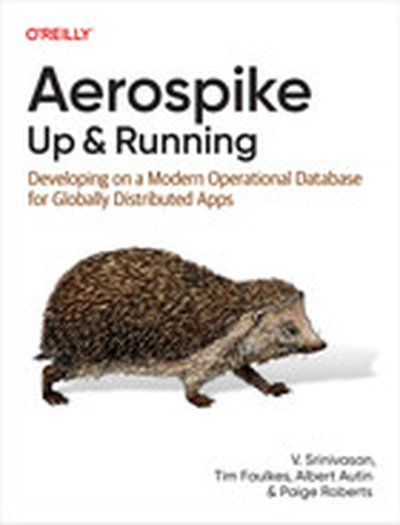
Aerospike: Up and Running

If you're a developer looking to build a distributed, resilient, scalable, high-performance application, you may be evaluating distributed SQL and NoSQL solutions. Perhaps you're considering the Aerospike database. This practical book shows developers, architects, and engineers how to get the highly scalable and extremely low-latency Aerospike database up and running. You will learn how to power your globally distributed applications and take advantage of Aerospike's hybrid memory architecture with the real-time performance of in-memory plus dependable persistence. After reading this book, you'll be able to build applications that can process up to tens of millions of transactions per second for millions of concurrent users on any scale of data. This practical guide provides: Step-by-step instructions on installing and connecting to Aerospike A clear explanation of the programming models available All the advice you need to develop your Aerospike application Coverage of issues such as administration, connectors, consistency, and security Code examples and tutorials to get you up and running quickly And more

Amazon DynamoDB - The Definitive Guide

Master Amazon DynamoDB, the serverless NoSQL database designed for lightning-fast performance and scalability, with this definitive guide. You'll delve into its features, learn advanced concepts, and acquire practical skills to harness DynamoDB for modern application development. What this Book will help me do Understand AWS DynamoDB fundamentals for real-world applications. Model and optimize NoSQL databases with advanced techniques. Integrate DynamoDB into scalable, high-performance architectures. Utilize DynamoDB indexing, caching, and analytical features effectively. Plan and execute RDBMS to NoSQL data migrations successfully. Author(s) None Dhingra, an AWS DynamoDB solutions expert, and None Mackay, a seasoned NoSQL architect, bring their combined expertise straight from Amazon Web Services to guide you step-by-step in mastering DynamoDB. Combining comprehensive technical knowledge with approachable explanations, they empower readers to implement practical and efficient data strategies. Who is it for? This book is ideal for software developers and architects seeking to deepen their knowledge about AWS solutions like DynamoDB, engineering managers aiming to incorporate scalable NoSQL solutions into their projects, and data professionals transitioning from RDBMS towards a serverless data approach. Individuals with basic knowledge in cloud computing or database systems and those ready to advance in DynamoDB will find this book particularly beneficial.

Information Modeling and Relational Databases, 3rd Edition

Information Modeling and Relational Databases, Third Edition, provides an introduction to ORM (Object-Role Modeling) and much more. In fact, it is the only book to go beyond introductory coverage and provide all of the in-depth instruction you need to transform knowledge from domain experts into a sound database design. This book is intended for anyone with a stake in the accuracy and efficacy of databases: systems analysts, information modelers, database designers and administrators, and programmers. Dr. Terry Halpin and Dr. Tony Morgan, pioneers in the development of ORM, blend conceptual information with practical instruction that will let you begin using ORM effectively as soon as possible. The all-new Third Edition includes coverage of advances and improvements in ORM and UML, nominalization, relational mapping, SQL, XML, data interchange, NoSQL databases, ontological modeling, and post-relational databases. Supported by examples, exercises, and useful background information, the authors’ step-by-step approach teaches you to develop a natural-language-based ORM model, and then, where needed, abstract ER and UML models from it. This book will quickly make you proficient in the modeling technique that is proving vital to the development of accurate and efficient databases that best meet real business objectives. "This book is an excellent introduction to both information modeling in ORM and relational databases. The book is very clearly written in a step-by-step manner and contains an abundance of well-chosen examples illuminating practice and theory in information modeling. I strongly recommend this book to anyone interested in conceptual modeling and databases." — Dr. Herman Balsters, Director of the Faculty of Industrial Engineering, University of Groningen, The Netherlands Presents the most in-depth coverage of object-role modeling, including a thorough update of the book for the latest versions of ORM, ER, UML, OWL, and BPMN modeling. Includes clear coverage of relational database concepts as well as the latest developments in SQL, XML, information modeling, data exchange, and schema transformation. Case studies and a large number of class-tested exercises are provided for many topics. Includes all-new chapters on data file formats and NoSQL databases.