talk-data.com talk-data.com

Topic

Azure

Microsoft Azure

cloud cloud_provider microsoft infrastructure

723

tagged

Activity Trend

278 peak/qtr
2020-Q1 2026-Q1

Activities

723 activities · Newest first

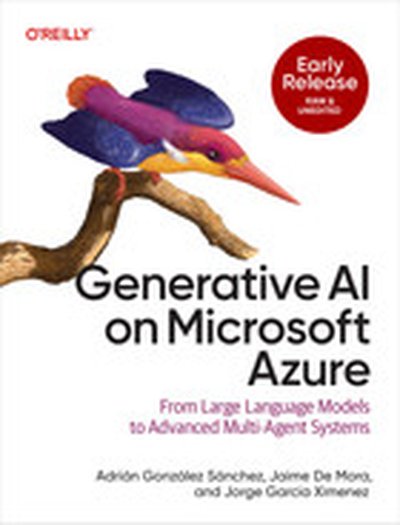
Generative AI on Microsoft Azure

Companies are now moving generative AI projects from the lab to production environments. To support these increasingly sophisticated applications, they're turning to advanced practices such as multiagent architectures and complex code-based frameworks. This practical handbook shows you how to leverage cutting-edge techniques using Microsoft's powerful ecosystem of tools to deploy trustworthy AI systems tailored to your organization's needs. Written for and by AI professionals, Generative AI on Microsoft Azure goes beyond the technical core aspects, examining underlying principles, tools, and practices in depth, from the art of prompt engineering to strategies for fine-tuning models to advanced techniques like retrieval-augmented generation (RAG) and agentic AI. Through real-world case studies and insights from top experts, you'll learn how to harness AI's full potential on Azure, paving the way for groundbreaking solutions and sustainable success in today's AI-driven landscape. Understand the technical foundations of generative AI and how the technology has evolved over the last few years Implement advanced GenAI applications using Microsoft services like Azure AI Foundry, Copilot, GitHub Models, Azure Databricks, and Snowflake on Azure Leverage patterns, tools, frameworks, and platforms to customize AI projects Manage, govern, and secure your AI-enabled systems with responsible AI practices Build upon expert guidance to avoid common pitfalls, future-proof your applications, and more
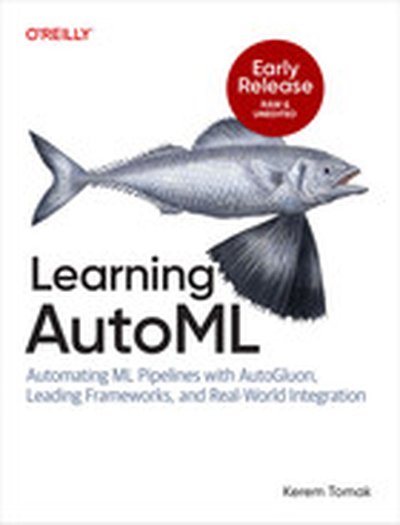
Learning AutoML

Learning AutoML is your practical guide to applying automated machine learning in real-world environments. Whether you're a data scientist, ML engineer, or AI researcher, this book helps you move beyond experimentation to build and deploy high-performing models with less manual tuning and more automation. Using AutoGluon as a primary toolkit, you'll learn how to build, evaluate, and deploy AutoML models that reduce complexity and accelerate innovation. Author Kerem Tomak shares insights on how to integrate models into end-to-end deployment workflows using popular tools like Kubeflow, MLflow, and Airflow, while exploring cross-platform approaches with Vertex AI, SageMaker Autopilot, Azure AutoML, Auto-sklearn, and H2O.ai. Real-world case studies highlight applications across finance, healthcare, and retail, while chapters on ethics, governance, and agentic AI help future-proof your knowledge. Build AutoML pipelines for tabular, text, image, and time series data Deploy models with fast, scalable workflows using MLOps best practices Compare and navigate today's leading AutoML platforms Interpret model results and make informed decisions with explainability tools Explore how AutoML leads into next-gen agentic AI systems

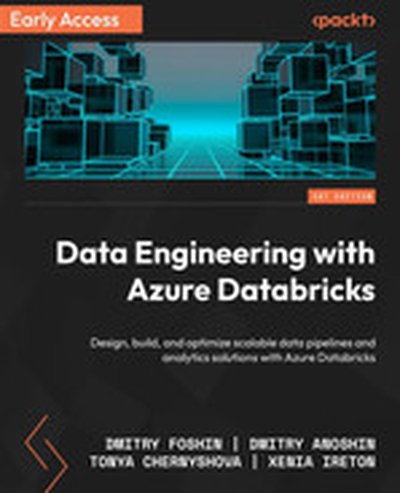
Data Engineering with Azure Databricks

Master end-to-end data engineering on Azure Databricks. From data ingestion and Delta Lake to CI/CD and real-time streaming, build secure, scalable, and performant data solutions with Spark, Unity Catalog, and ML tools. Key Features Build scalable data pipelines using Apache Spark and Delta Lake Automate workflows and manage data governance with Unity Catalog Learn real-time processing and structured streaming with practical use cases Implement CI/CD, DevOps, and security for production-ready data solutions Explore Databricks-native ML, AutoML, and Generative AI integration Book Description "Data Engineering with Azure Databricks" is your essential guide to building scalable, secure, and high-performing data pipelines using the powerful Databricks platform on Azure. Designed for data engineers, architects, and developers, this book demystifies the complexities of Spark-based workloads, Delta Lake, Unity Catalog, and real-time data processing. Beginning with the foundational role of Azure Databricks in modern data engineering, you’ll explore how to set up robust environments, manage data ingestion with Auto Loader, optimize Spark performance, and orchestrate complex workflows using tools like Azure Data Factory and Airflow. The book offers deep dives into structured streaming, Delta Live Tables, and Delta Lake’s ACID features for data reliability and schema evolution. You’ll also learn how to manage security, compliance, and access controls using Unity Catalog, and gain insights into managing CI/CD pipelines with Azure DevOps and Terraform. With a special focus on machine learning and generative AI, the final chapters guide you in automating model workflows, leveraging MLflow, and fine-tuning large language models on Databricks. Whether you're building a modern data lakehouse or operationalizing analytics at scale, this book provides the tools and insights you need. What you will learn Set up a full-featured Azure Databricks environment Implement batch and streaming ingestion using Auto Loader Optimize Spark jobs with partitioning and caching Build real-time pipelines with structured streaming and DLT Manage data governance using Unity Catalog Orchestrate production workflows with jobs and ADF Apply CI/CD best practices with Azure DevOps and Git Secure data with RBAC, encryption, and compliance standards Use MLflow and Feature Store for ML pipelines Build generative AI applications in Databricks Who this book is for This book is for data engineers, solution architects, cloud professionals, and software engineers seeking to build robust and scalable data pipelines using Azure Databricks. Whether you're migrating legacy systems, implementing a modern lakehouse architecture, or optimizing data workflows for performance, this guide will help you leverage the full power of Databricks on Azure. A basic understanding of Python, Spark, and cloud infrastructure is recommended.

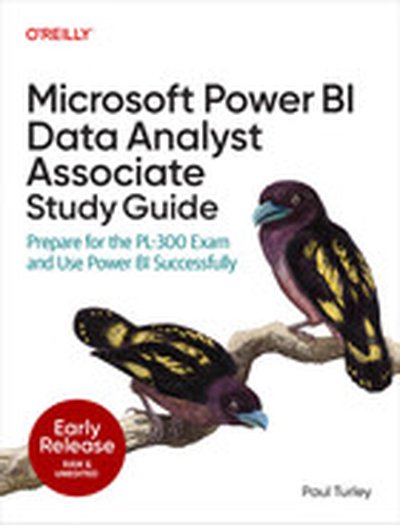
Microsoft Power BI Data Analyst Associate Study Guide

Passing the PL-300 exam with 2025 revisions isn't just about memorization—you need to thoroughly know the basic features of Power BI. However, data professionals must also apply best practices that make Power BI solutions scalable and future-proof. The first half of this go-to companion by Paul Turley provides complete coverage of the PL-300 exam objectives for desktop and self-service users, while the second half equips you with necessary best practices and practical skills for real-world success after the exam. Immerse yourself in exam prep, practice questions, and hands-on references for applying time-tested design patterns in Power BI. You'll learn how to transform raw data into actionable insights using Power Query, DAX, and dimensional modeling. Perfect for data analysts and business intelligence developers, this guide shows how Power BI fits into modern data platforms like Azure and Microsoft Fabric, preparing you for the exam and for the evolving world of data engineering. Understand PL-300 exam topics and key prep strategies Discover scalable, enterprise-grade Power BI solutions using best practices Learn how to correctly apply Power Query, DAX, and visualizations in real-world scenarios, with real business data Uncover how to build for scale See how Power BI fits into modern architectures like Azure and Microsoft Fabric

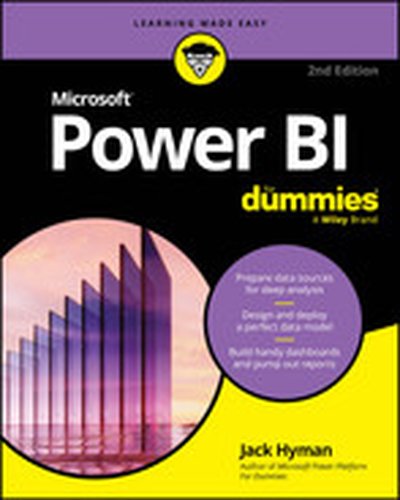
Microsoft Power BI For Dummies, 2nd Edition

Make smarter business decisions with Microsoft PowerBI Microsoft PowerBI For Dummies gives you the foundation you need to use this powerful software platform to manage your data and gather insight for making better decisions. With PowerBI, you can visualize, model, and interpret large datasets, quickly revealing insights that once took weeks to dig out. This book takes you through the basics of getting your data ready, preparing your analysis, and creating reports. Then, you'll dig into more advanced features using DAX—the PowerBI programming language—even if you have no prior programming experience. This edition covers the latest updates to the software, including AI integration, enhanced customization, and improved real-time collaboration tools. Transform raw data into meaningful information and make data-driven decisions Import datasets and create dashboards, visualizations, and reports Use the Copilot AI assistant to speed up workflows and simplify tasks Integrate PowerBI with other Microsoft services like Excel and Azure Businesses of all sizes can use PowerBI to manage their data. With Microsoft PowerBI For Dummies, you can quickly and easily set up PowerBI, learn the fundamentals, and handle complex reporting.

Azure IaaS platform security deep dive

As organizations accelerate their cloud adoption, robust security for your Infrastructure as a Service platform is more critical than ever. This session will provide a comprehensive exploration of Azure’s security architecture, best practices, and innovations across four pillars: foundational security, compute security, network security, and storage security. Attendees will gain actionable insights to strengthen their cloud posture, ensure compliance, and protect sensitive workloads.

Govern your estate using PowerShell and the CLI with AI

Discover how you can use AI for PowerShell and Azure CLI to boost automation and simplify complex commands. We’ll showcase how AI can generate scripts on demand, guide you through best practices, and help enforce governance and security policies confidently. Through practical demos, see how natural language prompts can automate tasks, apply guardrails, and secure your estate.

Partners are Accelerating Media Innovation with AI Agents

Discover how Microsoft and top media partners are reshaping Media & Entertainment with AI and the Microsoft Cloud. Learn how Azure, Fabric, and generative AI are powering faster content creation, smarter workflows, and immersive audience experiences—featuring real-world innovations in storytelling, distribution, and monetization.

Powering modern cloud workloads with Azure Compute

Dive into the latest compute innovation at the core of Azure IaaS. This session highlights key compute advancements across performance, cost optimization, scalability, reliability, and security designed to make both new and existing workloads run faster, more efficiently, and more securely. Whether you're running mission-critical enterprise apps or scaling cloud-native services, discover how these innovations are unlocking new value for customers and get a preview of what’s coming next.

Learn to leverage agent-framework, the new unified platform from Semantic Kernel and AutoGen engineering teams, to build A2A compatible agents similar to magnetic-one. Use SWE Agents (GitHub Copilot coding agent and Codex with Azure OpenAI models) to accelerate development. Implement MCP tools for secure enterprise agentic workflows. Experience hands-on building, deploying, and orchestrating multi-agent systems with pre-release capabilities. Note: Contains embargoed content.

Please RSVP and arrive at least 5 minutes before the start time, at which point remaining spaces are open to standby attendees.

Learn how to build an advanced AI agent using Azure Database for PostgreSQL and the new Microsoft Agent Framework. This hands-on lab walks you through integrating Retrieval-Augmented Generation (RAG), semantic re-ranking, Semantic Operators, and GraphRAG (using Apache AGE) to enable intelligent legal question-answering using real case data. Gain practical AI implementation skills with your own PostgreSQL-backed applications.

Please RSVP and arrive at least 5 minutes before the start time, at which point remaining spaces are open to standby attendees.

In this hands-on lab, discover how to govern AI Apps & Agents using AI Gateway in Azure API Management. Learn to apply governance best practices by onboarding AI models, monitoring and controlling token usage, enforcing safety and compliance, and boosting performance with semantic caching. You’ll also govern MCP-based agent architectures by creating secure, efficient servers from APIs or connecting to backend MCP servers, equipping you to deliver responsible, resilient AI solutions at scale.

Please RSVP and arrive at least 5 minutes before the start time, at which point remaining spaces are open to standby attendees.

Azure IaaS best practices to enhance performance and scale

Azure IaaS can deliver excellent performance and scalability across a broad range of workloads. With high-throughput storage, low-latency networking, and intelligent auto-scaling, Azure supports demanding apps with precision. Learn how to optimize compute, storage, and network resources to meet performance goals, reduce costs, and scale confidently across global regions. Dive into the latest capabilities Azure Boost, Compute Fleet, Azure Virtual Machines, Azure Storage and Networking offer.

Fast and flexible inference on open-source AI models at scale

Run open-source AI models of your choice with flexibility—from local environments to cloud deployments using Azure Container Apps and serverless GPUs for fast, cost-efficient inferencing. You will also learn how AKS powers scalable, high-performance LLM operations with fine-tuned control, giving you confidence to deploy your models your way. You’ll leave with a clear path to run custom and OSS models with agility and cost clarity.

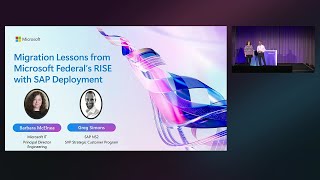
Migration lessons from Microsoft Federal's RISE with SAP deployment

Learn how the Microsoft Federal team is modernizing SAP ERP with RISE on Microsoft Cloud. This includes High SLA infrastructure on Azure Government, SAP BTP integration, and AI-powered monitoring. Discover how Defender and Sentinel secure workloads, and how sovereignty solutions support compliance. Gain practical lessons and insights from a real-world deployment for regulated industries.

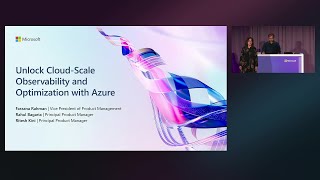
Unlock cloud-scale observability and optimization with Azure

In this session, we'll deep dive into how Azure Monitor delivers end-to-end observability across your cloud and hybrid environments, helping you detect issues early and reduce mean time to recovery. We'll also share how new Copilot in Azure agents can extend this visibility into actionable cost and carbon efficiency insights—helping you identify optimization opportunities, validating recommendations, and streamlining resource performance for business impact.