talk-data.com talk-data.com

Topic

GitHub

version_control collaboration code_hosting

661

tagged

Activity Trend

79 peak/qtr
2020-Q1 2026-Q1

Activities

661 activities · Newest first

Generative AI on Microsoft Azure

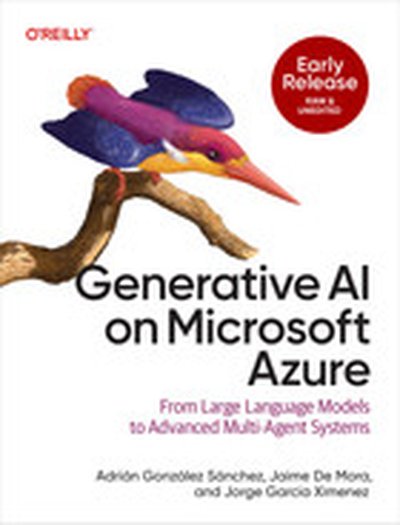
Companies are now moving generative AI projects from the lab to production environments. To support these increasingly sophisticated applications, they're turning to advanced practices such as multiagent architectures and complex code-based frameworks. This practical handbook shows you how to leverage cutting-edge techniques using Microsoft's powerful ecosystem of tools to deploy trustworthy AI systems tailored to your organization's needs. Written for and by AI professionals, Generative AI on Microsoft Azure goes beyond the technical core aspects, examining underlying principles, tools, and practices in depth, from the art of prompt engineering to strategies for fine-tuning models to advanced techniques like retrieval-augmented generation (RAG) and agentic AI. Through real-world case studies and insights from top experts, you'll learn how to harness AI's full potential on Azure, paving the way for groundbreaking solutions and sustainable success in today's AI-driven landscape. Understand the technical foundations of generative AI and how the technology has evolved over the last few years Implement advanced GenAI applications using Microsoft services like Azure AI Foundry, Copilot, GitHub Models, Azure Databricks, and Snowflake on Azure Leverage patterns, tools, frameworks, and platforms to customize AI projects Manage, govern, and secure your AI-enabled systems with responsible AI practices Build upon expert guidance to avoid common pitfalls, future-proof your applications, and more
Hands-On Software Engineering with Python - Second Edition

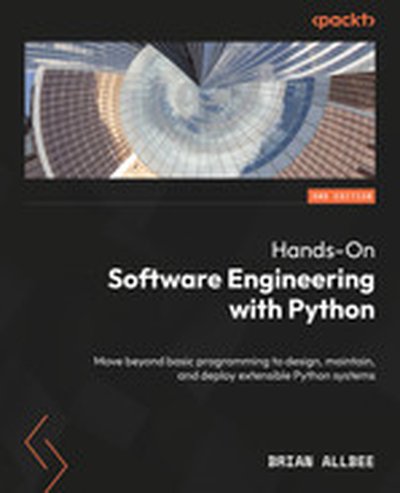
Grow your software engineering discipline, incorporating and mastering design, development, testing, and deployment best practices examples in a realistic Python project structure. Key Features Understand what makes Software Engineering a discipline, distinct from basic programming Gain practical insight into updating, refactoring, and scaling an existing Python system Implement robust testing, CI/CD pipelines, and cloud-ready architecture decisions Book Description Software engineering is more than coding; it’s the strategic design and continuous improvement of systems that serve real-world needs. This newly updated second edition of Hands-On Software Engineering with Python expands on its foundational approach to help you grow into a senior or staff-level engineering role. Fully revised for today’s Python ecosystem, this edition includes updated tooling, practices, and architectural patterns. You’ll explore key changes across five minor Python versions, examine new features like dataclasses and type hinting, and evaluate modern tools such as Poetry, pytest, and GitHub Actions. A new chapter introduces high-performance computing in Python, and the entire development process is enhanced with cloud-readiness in mind. You’ll follow a complete redesign and refactor of a multi-tier system from the first edition, gaining insight into how software evolves—and what it takes to do that responsibly. From system modeling and SDLC phases to data persistence, testing, and CI/CD automation, each chapter builds your engineering mindset while updating your hands-on skills. By the end of this book, you'll have mastered modern Python software engineering practices and be equipped to revise and future-proof complex systems with confidence. What you will learn Distinguish software engineering from general programming Break down and apply each phase of the SDLC to Python systems Create system models to plan architecture before writing code Apply Agile, Scrum, and other modern development methodologies Use dataclasses, pydantic, and schemas for robust data modeling Set up CI/CD pipelines with GitHub Actions and cloud build tools Write and structure unit, integration, and end-to-end tests Evaluate and integrate tools like Poetry, pytest, and Docker Who this book is for This book is for Python developers with a basic grasp of software development who want to grow into senior or staff-level engineering roles. It’s ideal for professionals looking to deepen their understanding of software architecture, system modeling, testing strategies, and cloud-aware development. Familiarity with core Python programming is required, as the book focuses on applying engineering principles to maintain, extend, and modernize real-world systems.

The JupyterLab Extension Ecosystem: Trends & Signals from PyPI and GitHub

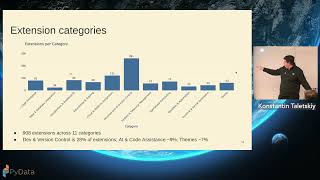
What does the JupyterLab extension ecosystem actually look like in 2025? While extensions drive much of JupyterLab's practical value, their overall landscape remains largely unexplored. This talk analyzes public PyPI (via BigQuery) and GitHub data to quantify growth, momentum, and health: monthly downloads by category, release recency, star-download relationships, and the rise of AI-focused extensions. I will present my approach for building this analysis pipeline and offer lessons learned. Finally, I will demonstrate of an open, read-only web catalog built on this data set.

De nombreux frameworks convergent vers les signaux comme primitive de réactivité. Nous ferons un pas de côté pour repenser l'objectif, voir les limitations des signaux et découvrir une solution alternative : la réactivité fonctorielle. Pour ceux qui étaient présents au dernier event ce talk peut être vu comme une suite. Il n'y a cependant pas de prérequis. https://github.com/fcrozatier/f-stack/

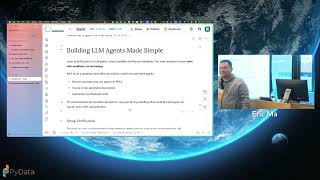
Building LLM Agents Made Simple

Learn to build practical LLM agents using LlamaBot and Marimo notebooks. This hands-on tutorial teaches the most important lesson in agent development: start with workflows, not technology.

We'll build a complete back-office automation system through three agents: a receipt processor that extracts data from PDFs, an invoice writer that generates documents, and a coordinator that orchestrates both. This demonstrates the fundamental pattern for agent systems—map your boring workflows first, build focused agents for specific tasks, then compose them so agents can use other agents as tools.

By the end, you'll understand how to identify workflows worth automating, build agents with decision-making loops, compose agents into larger systems, and integrate them into your own work. You'll leave with working code and confidence to automate repetitive tasks.

Prerequisites: Intermediate Python, familiarity with APIs, basic LLM understanding. Participants should have Ollama and models installed beforehand (setup instructions provided).

Materials: GitHub repository with Marimo notebooks. Setup uses Pixi for dependency management.

In this episode, Conor and Bryce interview Sean Parent about the origin story of his career in software engineering! Link to Episode 263 on WebsiteDiscuss this episode, leave a comment, or ask a question (on GitHub)Socials ADSP: The Podcast: TwitterConor Hoekstra: Twitter | BlueSky | MastodonBryce Adelstein Lelbach: TwitterAbout the Guest: Sean Parent is a senior principal scientist and software architect managing Adobe's Software Technology Lab. Sean first joined Adobe in 1993 working on Photoshop and is one of the creators of Photoshop Mobile, Lightroom Mobile, and Lightroom Web. In 2009 Sean spent a year at Google working on Chrome OS before returning to Adobe. From 1988 through 1993 Sean worked at Apple, where he was part of the system software team that developed the technologies allowing Apple’s successful transition to PowerPC. Show Notes Date Recorded: 2025-10-10 Date Released: 2025-12-05 Source CodeTRS80Ohio Scientific ChallengerExidy SorcererIntro Song Info Miss You by Sarah Jansen https://soundcloud.com/sarahjansenmusic Creative Commons — Attribution 3.0 Unported — CC BY 3.0 Free Download / Stream: http://bit.ly/l-miss-you Music promoted by Audio Library https://youtu.be/iYYxnasvfx8

In this talk, Xia He-Bleinagel, Head of Data & Cloud at NOW GmbH, shares her remarkable journey from studying automotive engineering across Europe to leading modern data, cloud, and engineering teams in Germany. We dive into her transition from hands-on engineering to leadership, how she balanced family with career growth, and what it really takes to succeed in today’s cloud, data, and AI job market.

TIMECODES: 00:00 Studying Automotive Engineering Across Europe 08:15 How Andrew Ng Sparked a Machine Learning Journey 11:45 Import–Export Work as an Unexpected Career Boos t17:05 Balancing Family Life with Data Engineering Studies 20:50 From Data Engineer to Head of Data & Cloud 27:46 Building Data Teams & Tackling Tech Debt 30:56 Learning Leadership Through Coaching & Observation 34:17 Management vs. IC: Finding Your Best Fit 38:52 Boosting Developer Productivity with AI Tools 42:47 Succeeding in Germany’s Competitive Data Job Market 46:03 Fast-Track Your Cloud & Data Career 50:03 Mentorship & Supporting Working Moms in Tech 53:03 Cultural & Economic Factors Shaping Women’s Careers 57:13 Top Networking Groups for Women in Data 1:00:13 Turning Domain Expertise into a Data Career Advantage

Connect with Xia- Linkedin - https://www.linkedin.com/in/xia-he-bleinagel-51773585/ - Github - https://github.com/Data-Think-2021 - Website - https://datathinker.de/

Connect with DataTalks.Club: - Join the community - https://datatalks.club/slack.html - Subscribe to our Google calendar to have all our events in your calendar - https://calendar.google.com/calendar/r?cid=ZjhxaWRqbnEwamhzY3A4ODA5azFlZ2hzNjBAZ3JvdXAuY2FsZW5kYXIuZ29vZ2xlLmNvbQ - Check other upcoming events - https://lu.ma/dtc-events - GitHub: https://github.com/DataTalksClub - LinkedIn - https://www.linkedin.com/company/datatalks-club/ - Twitter - https://twitter.com/DataTalksClub - Website - https://datatalks.club/

In this talk, Anusha Akkina, co-founder of Auralytix, shares her journey from working as a Chartered Accountant and Auditor at Deloitte to building an AI-powered finance intelligence platform designed to augment, not replace, human decision-making. Together with host Alexey from DataTalks.Club, she explores how AI is transforming finance operations beyond spreadsheets—from tackling ERP limitations to creating real-time insights that drive strategic business outcomes.

TIMECODES: 00:00 Building trust in AI finance and introducing Auralytix 02:22 From accounting roots to auditing at Deloitte and Paraxel 08:20 Moving to Germany and pivoting into corporate finance 11:50 The data struggle in strategic finance and the need for change 13:23 How Auralytix was born: bridging AI and financial compliance 17:15 Why ERP systems fail finance teams and how spreadsheets fill the gap 24:31 The real cost of ERP rigidity and lessons from failed transformations 29:10 The hidden risks of spreadsheet dependency and knowledge loss 37:30 Experimenting with ChatGPT and coding the first AI finance prototype 43:34 Identifying finance’s biggest pain points through user research 47:24 Empowering finance teams with AI-driven, real-time decision insights 50:59 Developing an entrepreneurial mindset through strategy and learning 54:31 Essential resources and finding the right AI co-founder

Connect with Anusha - Linkedin - https://www.linkedin.com/in/anusha-akkina-acma-cgma-56154547/ - Website - https://aurelytix.com/

Connect with DataTalks.Club: - Join the community - https://datatalks.club/slack.html - Subscribe to our Google calendar to have all our events in your calendar - https://calendar.google.com/calendar/r?cid=ZjhxaWRqbnEwamhzY3A4ODA5azFlZ2hzNjBAZ3JvdXAuY2FsZW5kYXIuZ29vZ2xlLmNvbQ - Check other upcoming events - https://lu.ma/dtc-events - GitHub: https://github.com/DataTalksClub - LinkedIn - https://www.linkedin.com/company/datatalks-club/ - Twitter - https://twitter.com/DataTalksClub - Website - https://datatalks.club/

In this episode, Conor and Bryce interview Sean Parent about generic programming and there is much chaos! Link to Episode 262 on WebsiteDiscuss this episode, leave a comment, or ask a question (on GitHub)Socials ADSP: The Podcast: TwitterConor Hoekstra: Twitter | BlueSky | MastodonBryce Adelstein Lelbach: TwitterAbout the Guest: Sean Parent is a senior principal scientist and software architect managing Adobe's Software Technology Lab. Sean first joined Adobe in 1993 working on Photoshop and is one of the creators of Photoshop Mobile, Lightroom Mobile, and Lightroom Web. In 2009 Sean spent a year at Google working on Chrome OS before returning to Adobe. From 1988 through 1993 Sean worked at Apple, where he was part of the system software team that developed the technologies allowing Apple’s successful transition to PowerPC. Show Notes Date Recorded: 2025-10-10 Date Released: 2025-11-28 Koala bear cryingabscond DefintionSean's C++ Under the Sea KeynotePacific++ 2018: Sean Parent "Generic Programming"From Mathematics to Generic Programming (FM2GP)ParrotParrot on GitHubIntro Song Info Miss You by Sarah Jansen https://soundcloud.com/sarahjansenmusic Creative Commons — Attribution 3.0 Unported — CC BY 3.0 Free Download / Stream: http://bit.ly/l-miss-you Music promoted by Audio Library https://youtu.be/iYYxnasvfx8

Learn to leverage agent-framework, the new unified platform from Semantic Kernel and AutoGen engineering teams, to build A2A compatible agents similar to magnetic-one. Use SWE Agents (GitHub Copilot coding agent and Codex with Azure OpenAI models) to accelerate development. Implement MCP tools for secure enterprise agentic workflows. Experience hands-on building, deploying, and orchestrating multi-agent systems with pre-release capabilities. Note: Contains embargoed content.

Please RSVP and arrive at least 5 minutes before the start time, at which point remaining spaces are open to standby attendees.

In this episode, Conor and Bryce record live from C++ Under the Sea! We interview Bernhard, Koen, talk about C++26 Reflection and more! Link to Episode 261 on WebsiteDiscuss this episode, leave a comment, or ask a question (on GitHub)Socials ADSP: The Podcast: TwitterConor Hoekstra: Twitter | BlueSky | MastodonBryce Adelstein Lelbach: TwitterAbout the Guests: Bernhard is a senior system software engineer at NVIDIA, where he extends, optimizes and maintains the CUDA Core Compute Libraries (CCCL). Previously, he worked as software engineer among physicists at CERN on real-time and embedded software for the Large Hadron Collider, as well as data layout abstractions for heterogeneous architectures, for which he received a PhD in High Performance Computing from the University of Dresden, Germany. Before, he implemented GPU accelerated simulations and 3D visualizations of industrial machining processes. Since 2022, Bernhard is a voting member of WG21 and his interests span geometry, 3D visualizations, optimization, SIMD, GPU computing, refactoring and teaching C++. Koen is an engineer specializing in high-quality software with a strong mathematical foundation. With a PhD in Computer Science from KU Leuven, his work bridges applied mathematics and performance-critical software engineering. As Team Lead for HMI Software at NV Michel Van de Wiele, he focuses on developing C++/Qt applications for textile production systems, optimizing performance, usability, and cloud integration. Passionate about elegant, efficient solutions, Koen brings deep expertise in numerical methods, system optimization, and software architecture. Show Notes Date Recorded: 2025-10-10 Date Released: 2025-11-21 Thrust DocsCUB LibraryC++26 Reflection ProposalADSP Episode 39: How Steve Jobs Saved Sean ParentParrotParrot on GitHubSean's C++ Under the Sea KeynoteParrot sumIntro Song Info Miss You by Sarah Jansen https://soundcloud.com/sarahjansenmusic Creative Commons — Attribution 3.0 Unported — CC BY 3.0 Free Download / Stream: http://bit.ly/l-miss-you Music promoted by Audio Library https://youtu.be/iYYxnasvfx8

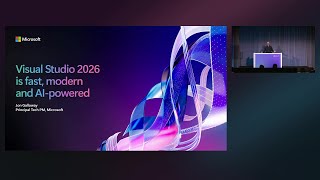
Visual Studio 2026 is fast, modern, and AI-powered

Join us for a first look at Visual Studio 2026—blazing fast, beautifully modern, and powered by agentic AI. See how GitHub Copilot and Profiler Agent transform your dev flow with smarter code reviews, guided diagnostics, and enterprise-grade trust. Whether you're building mission-critical apps or scaling across teams, VS2026 delivers the speed, clarity, and confidence you need to ship faster.

Ship faster. Stress Less. Idea to ops with Azure and GitHub Copilot

Explore how GitHub Copilot and intelligent agents streamline Azure application development from design to operations. This session covers how the Coding Agent, App Modernization agent, and cloud architecture agent accelerate planning and coding, while GitHub Copilot for Azure and the Azure MCP Server simplify deployment and diagnostics. Learn how the SRE Agent and testing agent extend automation into production and quality assurance, enabling end-to-end DevOps with AI-powered workflows.

Unlock the future of data productivity with a hands-on exploration of AI-powered Copilots! We’ll dive into GitHub Copilot in SQL Server Management Studio (SSMS), Microsoft Copilot in Azure and Copilot for SQL Databases in Microsoft Fabric. With real-world demos and best practice tips along the way, you’ll leave ready to transform how you interact with SQL, anywhere.

Organizations are under constant pressure to deliver software faster, more securely, and at lower cost. GitHub Enterprise is more than just a source code platform, it is the foundation for developer velocity and future-ready innovation. In this session, you will learn how to adopt GitHub as a platform, what to consider when migrating from existing tools, and how to enable your teams with built-in security, automation, and AI- powered development. We will cover the benefits of centralizing on GitHub Enterprise, strategies to accelerate adoption across your organization, and practical steps to get the most out of GitHub Advanced Security and GitHub Copilot. Finally, weʼll look ahead to the future of AI in software development and how todayʼs adoption choices set you up to take full advantage of whatʼs next. Whether you are just beginning your GitHub journey or looking to maximize your investment, this session will help you prepare your developers, and your organization, for long-term success.

GitHub Learn: your personal guide to mastering the platform. In this session, we’ll introduce GitHub Learn—a centralized, learning experience designed to help you build real skills faster. We’ll also demo a GitHub Skill to show how easy it is to get started. After this session, you’ll understand how GitHub Learn helps: Save time with a single, organized hub Drive deeper learning with certification prep, registration, & completion Reduce support dependency through self-serve learning

In this talk we’ll learn Infrastructure-as-Code by automating the world’s most popular game: Minecraft. Using Packer, Terraform and GitHub Actions, we’ll build a server, configure Linux, provision cloud infrastructure and operate it through GitOps. Finally, we’ll demonstrate how to go beyond automating traditional cloud control planes—automating the Minecraft world itself by using Terraform to build and demolish structures like castles and pyramids before our very eyes!

Learn to leverage agent-framework, the new unified platform from Semantic Kernel and AutoGen engineering teams, to build A2A compatible agents similar to magnetic-one. Use SWE Agents (GitHub Copilot coding agent and Codex with Azure OpenAI models) to accelerate development. Implement MCP tools for secure enterprise agentic workflows. Experience hands-on building, deploying, and orchestrating multi-agent systems with pre-release capabilities. Note: Contains embargoed content.

Please RSVP and arrive at least 5 minutes before the start time, at which point remaining spaces are open to standby attendees.