
talk-data.com talk-data.com

Topic

Docker

containerization devops virtualization

109

tagged

Activity Trend

14 peak/qtr
2020-Q1 2026-Q1

Activities

109 activities · Newest first

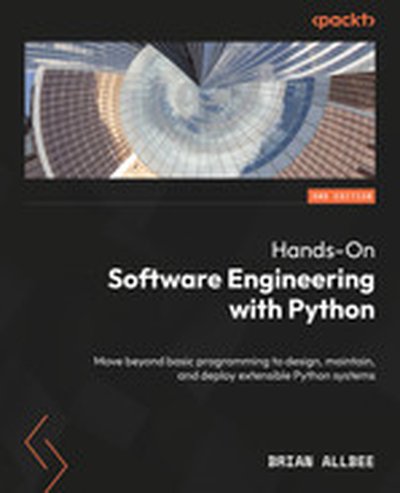
Hands-On Software Engineering with Python - Second Edition

Grow your software engineering discipline, incorporating and mastering design, development, testing, and deployment best practices examples in a realistic Python project structure. Key Features Understand what makes Software Engineering a discipline, distinct from basic programming Gain practical insight into updating, refactoring, and scaling an existing Python system Implement robust testing, CI/CD pipelines, and cloud-ready architecture decisions Book Description Software engineering is more than coding; it’s the strategic design and continuous improvement of systems that serve real-world needs. This newly updated second edition of Hands-On Software Engineering with Python expands on its foundational approach to help you grow into a senior or staff-level engineering role. Fully revised for today’s Python ecosystem, this edition includes updated tooling, practices, and architectural patterns. You’ll explore key changes across five minor Python versions, examine new features like dataclasses and type hinting, and evaluate modern tools such as Poetry, pytest, and GitHub Actions. A new chapter introduces high-performance computing in Python, and the entire development process is enhanced with cloud-readiness in mind. You’ll follow a complete redesign and refactor of a multi-tier system from the first edition, gaining insight into how software evolves—and what it takes to do that responsibly. From system modeling and SDLC phases to data persistence, testing, and CI/CD automation, each chapter builds your engineering mindset while updating your hands-on skills. By the end of this book, you'll have mastered modern Python software engineering practices and be equipped to revise and future-proof complex systems with confidence. What you will learn Distinguish software engineering from general programming Break down and apply each phase of the SDLC to Python systems Create system models to plan architecture before writing code Apply Agile, Scrum, and other modern development methodologies Use dataclasses, pydantic, and schemas for robust data modeling Set up CI/CD pipelines with GitHub Actions and cloud build tools Write and structure unit, integration, and end-to-end tests Evaluate and integrate tools like Poetry, pytest, and Docker Who this book is for This book is for Python developers with a basic grasp of software development who want to grow into senior or staff-level engineering roles. It’s ideal for professionals looking to deepen their understanding of software architecture, system modeling, testing strategies, and cloud-aware development. Familiarity with core Python programming is required, as the book focuses on applying engineering principles to maintain, extend, and modernize real-world systems.
PubMed is a free search interface for biomedical literature, including citations and abstracts from many life science scientific journals. It is maintained by the National Library of Medicine at the NIH. Yet, most users only interact with it through simple keyword searches. In this hands-on tutorial, we will introduce PubMed as a data source for intelligent biomedical research assistants — and build a Health Research AI Agent using modern agentic AI frameworks such as LangChain, LangGraph, and Model Context Protocol (MCP) with minimum hardware requirements and no key tokens. To ensure compatibility, the agent will run in a Docker container which will host all necessary elements.

Participants will learn how to connect language models to structured biomedical knowledge, design context-aware queries, and containerize the entire system using Docker for maximum portability. By the end, attendees will have a working prototype that can read and reason over PubMed abstracts, summarize findings according to a semantic similarity engine, and assist with literature exploration — all running locally on modest hardware.

Expected Audience: Enthusiasts, researchers, and data scientists interested in AI agents, biomedical text mining, or practical LLM integration. Prior Knowledge: Python and Docker familiarity; no biomedical background required. Minimum Hardware Requirements: 8GB RAM (+16GB recommended), 30GB disk space, Docker pre-installed. MacOS, Windows, Linux. Key Takeaway: How to build a lightweight, reproducible research agent that combines open biomedical data with modern agentic AI frameworks.

In this hands-on lab, you will learn how to migrate traditional workloads to AKS using containerization and AKS Automatic, while enhancing functionality through integration with Azure PaaS services. We'll also explore how GitHub Copilot Application Modernization accelerates the process with AI-assisted coding and intelligent refactoring, helping teams streamline modernization and unlock cloud-native capabilities faster.

Please RSVP and arrive at least 5 minutes before the start time, at which point remaining spaces are open to standby attendees.

In this hands-on lab, you will learn how to migrate traditional workloads to AKS using containerization and AKS Automatic, while enhancing functionality through integration with Azure PaaS services. We'll also explore how GitHub Copilot Application Modernization accelerates the process with AI-assisted coding and intelligent refactoring, helping teams streamline modernization and unlock cloud-native capabilities faster.

Please RSVP and arrive at least 5 minutes before the start time, at which point remaining spaces are open to standby attendees.

In this hands-on lab, you will learn how to migrate traditional workloads to AKS using containerization and AKS Automatic, while enhancing functionality through integration with Azure PaaS services. We'll also explore how GitHub Copilot Application Modernization accelerates the process with AI-assisted coding and intelligent refactoring, helping teams streamline modernization and unlock cloud-native capabilities faster.

Please RSVP and arrive at least 5 minutes before the start time, at which point remaining spaces are open to standby attendees.

In this hands-on workshop, we'll learn to run containers, write Dockerfiles, optimize images with multi-stage builds, and orchestrate multi-container apps with Compose. You'll apply what you learn through numerous interactive labs. Topics include Docker fundamentals (docker run), building images with Dockerfiles, optimizing builds to reduce build time and image size, and orchestrating multi-container apps with Compose. Demo apps will be containerized during labs; feel free to bring your own apps for personalized guidance.

Currently developers face critical production challenges when building intelligent agent-based applications: managing agent lifecycles, handling authentication, and maintaining consistency across AI clients. During this demonstration, we will show how to use Docker's latest tools to build AI agents in containers, allowing you to build, share, and scale intelligent systems with the same reliability as containerized applications. This talk will feature Docker's cagent project which brings declarative YAML to multi-agent systems, letting developers create specialized AI agents that collaborate like microservices, and Docker's mcp-gateway to provide agents with scalable access to external APIs and data sources through a unified MCP gateway.

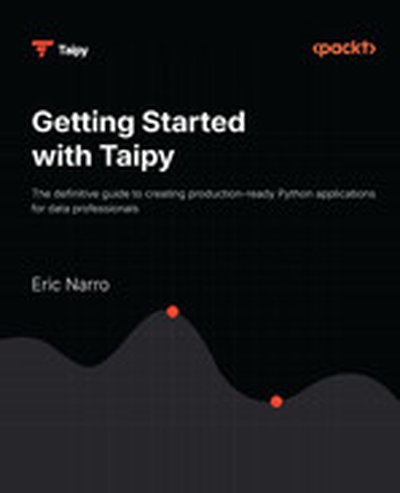
Getting Started with Taipy

Share your machine learning models, create chatbots, as well as build and deploy insightful dashboards speedily using Taipy with this hands-on book featuring real-world application examples from multiple industries Free with your book: DRM-free PDF version + access to Packt's next-gen Reader Key Features Create visually compelling, interactive data applications with Taipy Bring predictive models to end users and create data pipelines to compare scenarios with what-if analyses Go beyond prototypes to build and deploy production-ready applications using the cloud provider of your choice Purchase of the print or Kindle book includes a free PDF eBook in full color Book Description While data analysts, data scientists, and BI experts have the tools to analyze data, build models, and create compelling visuals, they often struggle to translate these insights into practical, user-friendly applications that help end users answer real-world questions, such as identifying revenue trends, predicting inventory needs, or detecting fraud, without wading through complex code. This book is a comprehensive guide to overcoming this challenge. This book teaches you how to use Taipy, a powerful open-source Python library, to build intuitive, production-ready data apps quickly and efficiently. Instead of creating prototypes that nobody uses, you'll learn how to build faster applications that process large amounts of data for multiple users and deliver measurable business impact. Taipy does the heavy lifting to enable your users to visualize their KPIs, interact with charts and maps, and compare scenarios for better decision-making. You’ll learn to use Taipy to build apps that make your data accessible and actionable in production environments like the cloud or Docker. By the end of this book, you won’t just understand Taipy, you'll be able to transform your data skills into impactful solutions that address real-world needs and deliver valuable insights. Email sign-up and proof of purchase required What you will learn Explore Taipy, its use cases, and how it's different from other projects Discover how to create visually appealing interactive apps, display KPIs, charts, and maps Understand how to compare scenarios to make better decisions Connect Taipy applications to several data sources and services Develop apps for diverse use cases, including chatbots, dashboards, ML apps, and maps Deploy Taipy applications on different types of servers and services Master advanced concepts for simplifying and accelerating your development workflow Who this book is for If you’re a data analyst, data scientist, or BI analyst looking to build production-ready data apps entirely in Python, this book is for you. If your scripts and models sit idle because non-technical stakeholders can’t use them, this book shows you how to turn them into full applications fast with Taipy, so your work delivers real business value. It’s also valuable for developers and engineers who want to streamline their data workflows and build UIs in pure Python.