Python is at the core of our analytics platform, which processes over 8,000 game records daily, each approximately 500 MB in size. Over the past two years, we have accumulated more than 200 TB of data, equivalent to 1,600 years of game time from over 7 million players—and our goal is to increase this user count tenfold. This talk will cover how we transitioned from Go and C++ parsers connected via PyBind to data frames in Python, how our analyses evolved from Pandas to Polars, and why we migrated our backend from Django to FastAPI. Finally, we will share our real-world experience with performance optimization, leveraging RabbitMQ, Redis, and process monitoring in an environment where Python bridges the worlds of game data and AI analysis.
 talk-data.com
Topic
fastapi
12
tagged
Activity Trend
4
peak/qtr
2020-Q1
2026-Q2
Top Events
Build & Learn: Data Science with Coffee
2
O'Reilly Data Science Books
2
Build & Learn: Data Science with Coffee
2
Build & Learn: Data Science with Coffee
1
PyData Prague #31 - PyData Prague meets TechMeetup Ostrava
1
Build & Learn: Data Science with Coffee
1
Build & Learn: Data Science with Coffee
1
PyData Hamburg July 24th Meetup
1
Build & Learn: Data Science with Coffee
1
Top Speakers
Move from experimentation to a reproducible, shareable format.
Explore tools like Docker, FastAPI, or simple cloud deployment.
by
Lindsey
Week 4 Focus: Intro to MLOps & Deployment. Topics include packaging your model (move from experimentation to a reproducible, shareable format), setting up basic infrastructure with Docker, FastAPI, or simple cloud deployment, and thinking in pipelines (automating data inputs, retraining, and model monitoring).
explore tools like Docker, FastAPI, or simple cloud deployment.
move from experimentation to a reproducible, shareable format.
by
Lindsey
explore tools like Docker, FastAPI, or simple cloud deployment.
Building production-ready ML systems is rarely straightforward—especially when predictions must be triggered by real-world events in near real time. In this talk, I’ll walk through how FastAPI and Pydantic can be used to architect an event-driven ML system, where model workflows are orchestrated using message queues and jobs vary in latency and compute requirements. The goal is to show how Python developers can move fast while maintaining control over validation, orchestration, and deployment in complex ML architectures.
by
Lindsey
explore tools like Docker, FastAPI, or simple cloud deployment.
This session covers packaging your model for reproducibility, setting up basic infrastructure (Docker, FastAPI, or simple cloud deployment), and thinking in pipelines (how to automate data inputs, retraining, and monitoring).
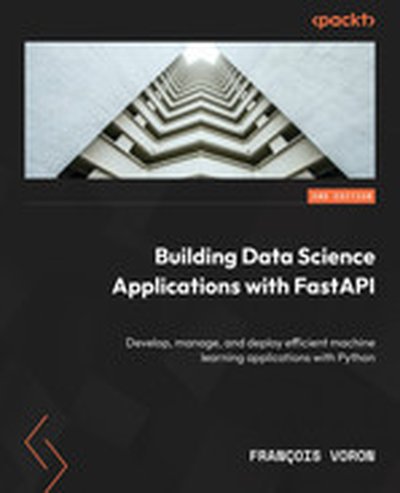
Building Data Science Applications with FastAPI is your comprehensive guide to mastering the FastAPI framework to build efficient, reliable data science applications and APIs. You'll explore examples and projects that integrate machine learning models, manage databases, and leverage advanced FastAPI features like asynchronous I/O and WebSockets. What this Book will help me do Develop an understanding of the fundamentals and advanced features of the FastAPI framework, like dependency injection and type hinting. Learn how to integrate machine learning models into a FastAPI-based web backend effectively. Master concepts of authentication, database connections, and asynchronous programming in Python. Build and deploy two practical AI applications: a real-time object detection tool and a text-to-image generator. Acquire skills to monitor, log, and maintain software systems for optimal performance and reliability. Author(s) François Voron is an experienced Python developer and data scientist with extensive knowledge of western frameworks including FastAPI. With years of experience designing and deploying machine learning and data science applications, François focuses on empowering developers with practical techniques and real-world applications. His guidance helps readers tackle contemporary challenges in software development. Who is it for? This book is ideal for data scientists and software engineers looking to broaden their skillset by creating robust web APIs for data science applications. Readers are expected to have a working knowledge of Python and basic data science concepts, offering them a chance to expand into backend development. If you're keen to deploy machine learning models and integrate them seamlessly with web technologies, this book is for you. It provides both fundamental insights and advanced techniques to serve a broad range of learners.
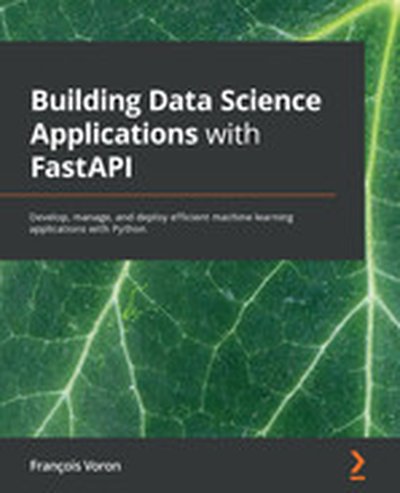
This comprehensive guide to FastAPI walks readers through developing modern web backends optimized for data science applications. By mastering key concepts like dependency injection and asynchronous programming, you will create high-performing REST APIs and machine learning powered systems. What this Book will help me do Master asynchronous programming and type hinting in Python for efficient coding. Design comprehensive RESTful APIs for machine learning with FastAPI. Build, test, and maintain scalable data science applications. Integrate Python libraries like NumPy and scikit-learn into web backends. Deploy modular and efficient FastAPI-backed systems to production. Author(s) None Voron is a seasoned software developer specialized in web frameworks and data science applications. With a strong background in building scalable systems, they bring invaluable insights on utilizing FastAPI. Voron emphasizes clarity and hands-on learning, sharing their expertise to help developers master the technology efficiently. Who is it for? This book is ideal for data scientists and Python developers interested in creating efficient data science backends. If you have groundwork knowledge of machine learning concepts and Python programming, this book will enhance your ability to deploy and manage APIs for data-driven applications.