
talk-data.com talk-data.com

Topic

Pydantic

schemas python data_modeling data_validation

14

tagged

Activity Trend

5 peak/qtr
2020-Q1 2026-Q1

Activities

14 activities · Newest first

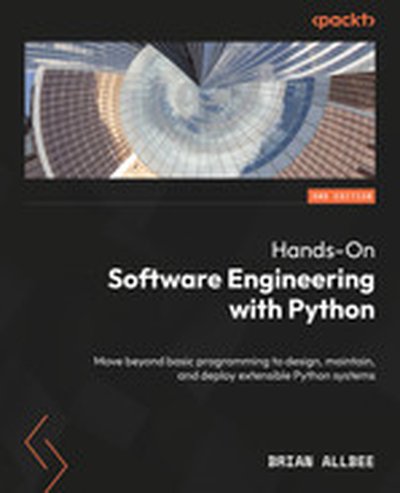
Hands-On Software Engineering with Python - Second Edition

Grow your software engineering discipline, incorporating and mastering design, development, testing, and deployment best practices examples in a realistic Python project structure. Key Features Understand what makes Software Engineering a discipline, distinct from basic programming Gain practical insight into updating, refactoring, and scaling an existing Python system Implement robust testing, CI/CD pipelines, and cloud-ready architecture decisions Book Description Software engineering is more than coding; it’s the strategic design and continuous improvement of systems that serve real-world needs. This newly updated second edition of Hands-On Software Engineering with Python expands on its foundational approach to help you grow into a senior or staff-level engineering role. Fully revised for today’s Python ecosystem, this edition includes updated tooling, practices, and architectural patterns. You’ll explore key changes across five minor Python versions, examine new features like dataclasses and type hinting, and evaluate modern tools such as Poetry, pytest, and GitHub Actions. A new chapter introduces high-performance computing in Python, and the entire development process is enhanced with cloud-readiness in mind. You’ll follow a complete redesign and refactor of a multi-tier system from the first edition, gaining insight into how software evolves—and what it takes to do that responsibly. From system modeling and SDLC phases to data persistence, testing, and CI/CD automation, each chapter builds your engineering mindset while updating your hands-on skills. By the end of this book, you'll have mastered modern Python software engineering practices and be equipped to revise and future-proof complex systems with confidence. What you will learn Distinguish software engineering from general programming Break down and apply each phase of the SDLC to Python systems Create system models to plan architecture before writing code Apply Agile, Scrum, and other modern development methodologies Use dataclasses, pydantic, and schemas for robust data modeling Set up CI/CD pipelines with GitHub Actions and cloud build tools Write and structure unit, integration, and end-to-end tests Evaluate and integrate tools like Poetry, pytest, and Docker Who this book is for This book is for Python developers with a basic grasp of software development who want to grow into senior or staff-level engineering roles. It’s ideal for professionals looking to deepen their understanding of software architecture, system modeling, testing strategies, and cloud-aware development. Familiarity with core Python programming is required, as the book focuses on applying engineering principles to maintain, extend, and modernize real-world systems.

This talk presents a technical case study of applying agentic AI systems to automate community operations at PyCon DE & PyData, treated as an open-source testbed. The key lesson is simple: AI only works when put on a leash. Reliable results required good architecture, a clear plan, and structured data models — from YAML and Pydantic schemas to reproducible pipelines with GitHub Actions. With that foundation, LLM agents supported logistics, FAQs, video processing, and scheduling; without it, they failed. By contrasting successes and failure modes across different coding agents, the talk demonstrates that robust design, validation, and controlled context are prerequisites for making agentic AI usable in real-world workflows.

When working with Large Language Models (LLMs), how do we ensure a probabilistic blob of text is something our code can actually use? In this talk, we explore how Pydantic emerged at a perfect moment exactly for this task; bridging Python's flexibility with the structured data needs of modern AI applications. We will introduce Pydantic and then demonstrate practical applications of it; from prompt engineering and parsing responses, to example of robust function calling and tool chaining via APIs.

Building production-ready ML systems is rarely straightforward—especially when predictions must be triggered by real-world events in near real time. In this talk, I’ll walk through how FastAPI and Pydantic can be used to architect an event-driven ML system, where model workflows are orchestrated using message queues and jobs vary in latency and compute requirements. The goal is to show how Python developers can move fast while maintaining control over validation, orchestration, and deployment in complex ML architectures.

Airflow Asset originated from data lineage and evolved into its current state, being used as a scheduling concept (data-aware, event-based scheduling). It has even more potential. This talk discusses how other parts of Airflow, namely Connection and Object Storage, contain concepts related to Asset, and we can tie them all together to make task authoring flow even more naturally. Planned topics: Brief history on Asset and related constructs. Current state of Asset concepts. Inlets, anyone? Finding inspiration from Pydantic et al. My next step for Asset.

This session explores how to bring unit testing to SQL pipelines using Airflow. I’ll walk through the development of a SQL testing library that allows isolated testing of SQL logic by injecting mock data into base tables. To support this, we built a type system for AWS Glue tables using Pydantic, enabling schema validation and mock data generation. Over time, this type system also powered production data quality checks via a custom Airflow operator. Learn how this approach improves reliability, accelerates development, and scales testing across data workflows.

Send us a text Welcome to the cozy corner of the tech world where ones and zeros mingle with casual chit-chat. Datatopics Unplugged is your go-to spot for relaxed discussions around tech, news, data, and society. Dive into conversations that flow as smoothly as your morning coffee (but don't), where industry insights meet laid-back banter. Whether you're a data aficionado or just someone curious about the digital age, pull up a chair, relax, and let's get into the heart of data, unplugged style! In this episode, we explore: OpenAI’s O3: Features, O1 Comparison, Release Date & more.Advent of Code: How LLMs performed on the 2024 coding challenges.DeepSeek V3: A breakthrough AI model developed for a fraction of GPT-4’s cost, yet rivaling top benchmarks.Shadow Workspace: How Cursor compares to Copilot with features like integrated models, documentation, and search.Bolt.new: Why it’s poised to revolutionize web app development with prompt-driven innovation.O1 Preview’s Chess Hack: When smarter means “cheater” in a fascinating experiment against Stockfish.Pydantic AI: A new tool bringing structure and intelligence to Python’s AI workflows.RightTyper: A tool to infer and apply type hints for cleaner, more efficient Python code.Doom: The Gallery Experience: A whimsical take on art appreciation in a retro gaming environment.Suno V4: The next-gen music generator, featuring "Bart, the Data Dynamo."Ghostty Terminal: The terminal emulator developers are raving about.

Send us a text Welcome to the cozy corner of the tech world where ones and zeros mingle with casual chit-chat. Datatopics Unplugged is your go-to spot for relaxed discussions around tech, news, data, and society. Dive into conversations that should flow as smoothly as your morning coffee (but don't), where industry insights meet laid-back banter. Whether you're a data aficionado or just someone curious about the digital age, pull up a chair, relax, and let's get into the heart of data, unplugged style! In today's episode: Biz corner AI regulation race https://www.aisnakeoil.com/p/what-the-executive-order-means-forhttps://www.ft.com/content/e0574e79-d723-4d94-9681-fae22648e3adhttps://www.washingtonpost.com/technology/2023/10/25/artificial-intelligence-executive-order-biden/https://www.wired.com/story/joe-biden-wants-us-government-algorithms-tested-for-potential-harm-against-citizensTech corner Adoption of the business source license (BSL)https://www.hashicorp.com/blog/hashicorp-adopts-business-source-licensehttps://www.getdbt.com/blog/licensing-dbthttps://mariadb.com/bsl-faq-mariadb/https://github.com/MaterializeInc/materialize/blob/main/LICENSECompanies responding to HashiCorp's move to BSLhttps://spacelift.io/blog/spacelift-latest-statement-on-hashicorp-bslOpenTofu & HashiCorp's OSS workhttps://opentofu.org/https://medium.com/@andrewhertog/contributing-to-terraform-vs-opentofu-26779d480c7f?sk=5343d4a76b390833af621905c858777bCyber Resilience Act might kill open-source altogetherhttps://www.linuxfoundation.org/blog/understanding-the-cyber-resilience-acthttps://github.blog/2023-07-12-no-cyber-resilience-without-open-source-sustainability/https://eur-lex.europa.eu/legal-content/EN/TXT/?uri=celex:52022PC0454OSS companies - is it a sustainable way of doing open source?https://bun.sh/blog/bun-v1.0https://astral.sh/https://pydantic.dev/https://duckdblabs.com/We haven't figured out OSS sustainability yet, but the BSL comes close.https://curl.se/docs/security.htmlhttps://xkcd.com/2347/Intro music courtesy of fesliyanst