talk-data.com talk-data.com

Topic

Data Quality

data_management data_cleansing data_validation

537

tagged

Activity Trend

82 peak/qtr
2020-Q1 2026-Q1

Activities

537 activities · Newest first

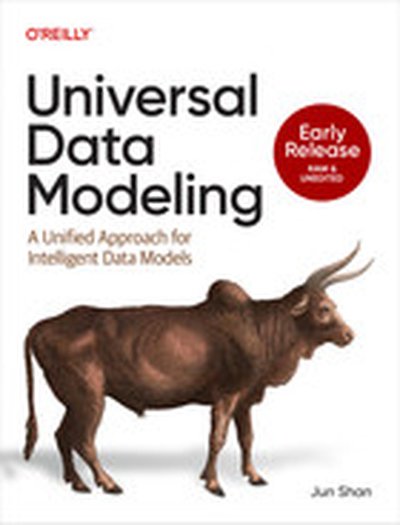
Universal Data Modeling

Most data professionals work with multiple datasets scattered across teams, systems, and formats. But without a clear modeling strategy, the result is often chaos: mismatched schemas, fragile pipelines, and a constant fight to make sense of the noise. This essential guide offers a better way by introducing a practical framework for designing high-quality data models that work across platforms while supporting the growing demands of AI, analytics, and real-time systems. Author Jun Shan bridges the gap between disconnected modeling approaches and the need for a unified, system-agnostic methodology. Whether you're building a new data platform or rethinking legacy infrastructure, Universal Data Modeling gives you the clarity, patterns, and tools to model data that's consistent, resilient, and ready to scale. Connect conceptual, logical, and physical modeling phases with confidence Apply best-fit techniques across relational, semistructured, and NoSQL formats Improve data quality, clarity, and maintainability across your organization Support modern design paradigms like data mesh and data products Translate domain knowledge into models that empower teams Build flexible, scalable models that stand the test of technology change

This multigroup session will focus on questions like: How should data and analytics teams be structured to maximize business value, align with strategy, and support governance, AI and data quality across distributed environments? Join this session to learn more.

Organizations are charged with being more productive, and while AI is an answer to many such opportunities, organization and program structure can be far more impactful on productivity than using AI. This session will weave together data and analytics governance, MDM, and data quality into one organized initiative that will simplify complexity. Join this session to learn more.

Data quality and data observability tools provide significant capabilities to ensure good data for your BI and AI. Data observability tools give organizations integrated visibility into the health of their data, data pipelines and data landscape. Data quality tools enable business users to manage data at its sources by setting rules and policies. Together, these tools help organizations build a strong foundation in data management for BI and AI initiatives.

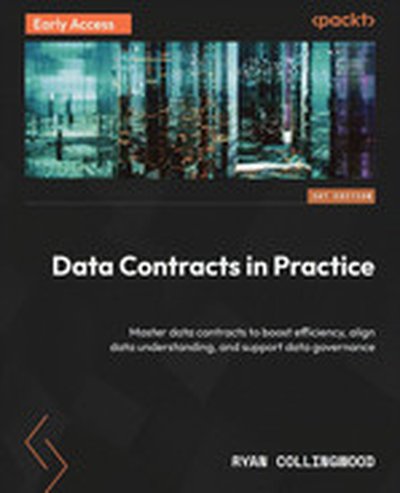
Data Contracts in Practice

In 'Data Contracts in Practice', Ryan Collingwood provides a detailed guide to managing and formalizing data responsibilities within organizations. Through practical examples and real-world use cases, you'll learn how to systematically address data quality, governance, and integration challenges using data contracts. What this Book will help me do Learn to identify and formalize expectations in data interactions, improving clarity among teams. Master implementation techniques to ensure data consistency and quality across critical business processes. Understand how to effectively document and deploy data contracts to bolster data governance. Explore solutions for proactively addressing and managing data changes and requirements. Gain real-world skills through practical examples using technologies like Python, SQL, JSON, and YAML. Author(s) Ryan Collingwood is a seasoned expert with over 20 years of experience in product management, data analysis, and software development. His holistic techno-social approach, designed to address both technical and organizational challenges, brings a unique perspective to improving data processes. Ryan's writing is informed by his extensive hands-on experience and commitment to enabling robust data ecosystems. Who is it for? This book is ideal for data engineers, software developers, and business analysts working to enhance organizational data integration. Professionals with a familiarity of system design, JSON, and YAML will find it particularly beneficial. Enterprise architects and leadership roles looking to understand data contract implementation and their business impacts will also greatly benefit. Basic understanding of Python and SQL is recommended to maximize learning.

AWS re:Invent 2025 - Customize AI models & accelerate time to production with Amazon SageMaker AI

Customizing models often requires lengthy iteration cycles. Now with Amazon SageMaker AI, you can accelerate the model customization process from months to days. With an easy-to-use interface, you can quickly get started and customize popular models with your own data, including Amazon Nova, Llama, Qwen, DeepSeek, and GPT-OSS, with the latest customization techniques such as reinforcement learning and direct preference optimization. In addition, with the AI agent-guided workflow (in preview), you can use natural language to generate synthetic data, analyze data quality, and handle model training and evaluation—all entirely serverless. Join us to learn how you can accelerate your model customization journey.

Learn more: More AWS events: https://go.aws/3kss9CP

Subscribe: More AWS videos: http://bit.ly/2O3zS75 More AWS events videos: http://bit.ly/316g9t4

ABOUT AWS: Amazon Web Services (AWS) hosts events, both online and in-person, bringing the cloud computing community together to connect, collaborate, and learn from AWS experts. AWS is the world's most comprehensive and broadly adopted cloud platform, offering over 200 fully featured services from data centers globally. Millions of customers—including the fastest-growing startups, largest enterprises, and leading government agencies—are using AWS to lower costs, become more agile, and innovate faster.

AWSreInvent #AWSreInvent2025 #AWS

AWS re:Invent 2025 - A practitioner’s guide to data for agentic AI (DAT315)

In this session, gain the skills needed to deploy end-to-end agentic AI applications using your most valuable data. This session focuses on data management using processes like Model Context Protocol (MCP) and Retrieval Augmented Generation (RAG), and provides concepts that apply to other methods of customizing agentic AI applications. Discover best practice architectures using AWS database services like Amazon Aurora and OpenSearch Service, along with analytical, data processing and streaming experiences found in SageMaker Unified Studio. Learn data lake, governance, and data quality concepts and how Amazon Bedrock AgentCore and Bedrock Knowledge Bases, and other features tie solution components together.

Learn more: More AWS events: https://go.aws/3kss9CP

Subscribe: More AWS videos: http://bit.ly/2O3zS75 More AWS events videos: http://bit.ly/316g9t4

ABOUT AWS: Amazon Web Services (AWS) hosts events, both online and in-person, bringing the cloud computing community together to connect, collaborate, and learn from AWS experts. AWS is the world's most comprehensive and broadly adopted cloud platform, offering over 200 fully featured services from data centers globally. Millions of customers—including the fastest-growing startups, largest enterprises, and leading government agencies—are using AWS to lower costs, become more agile, and innovate faster.

AWSreInvent #AWSreInvent2025 #AWS

This talk explores how modern data governance software helps organizations manage, trust, and get more value from their data. As businesses collect and analyse information from an ever-growing number of sources, maintaining data quality, consistency, and compliance has become increasingly important. Data governance tools address these challenges by providing centralized platforms for cataloging data, tracking lineage, managing policies, and enforcing standards across the enterprise. They make it easier for teams to discover reliable data, understand how it is being used, and ensure it meets both internal and regulatory requirements.

Summary In this crossover episode, Max Beauchemin explores how multiplayer, multi‑agent engineering is transforming the way individuals and teams build data and AI systems. He digs into the shifting boundary between data and AI engineering, the rise of “context as code,” and how just‑in‑time retrieval via MCP and CLIs lets agents gather what they need without bloating context windows. Max shares hard‑won practices from going “AI‑first” for most tasks, where humans focus on orchestration and taste, and the new bottlenecks that appear — code review, QA, async coordination — when execution accelerates 2–10x. He also dives deep into Agor, his open‑source agent orchestration platform: a spatial, multiplayer workspace that manages Git worktrees and live dev environments, templatizes prompts by workflow zones, supports session forking and sub‑sessions, and exposes an internal MCP so agents can schedule, monitor, and even coordinate other agents.

Announcements Hello and welcome to the Data Engineering Podcast, the show about modern data managementData teams everywhere face the same problem: they're forcing ML models, streaming data, and real-time processing through orchestration tools built for simple ETL. The result? Inflexible infrastructure that can't adapt to different workloads. That's why Cash App and Cisco rely on Prefect. Cash App's fraud detection team got what they needed - flexible compute options, isolated environments for custom packages, and seamless data exchange between workflows. Each model runs on the right infrastructure, whether that's high-memory machines or distributed compute. Orchestration is the foundation that determines whether your data team ships or struggles. ETL, ML model training, AI Engineering, Streaming - Prefect runs it all from ingestion to activation in one platform. Whoop and 1Password also trust Prefect for their data operations. If these industry leaders use Prefect for critical workflows, see what it can do for you at dataengineeringpodcast.com/prefect.Data migrations are brutal. They drag on for months—sometimes years—burning through resources and crushing team morale. Datafold's AI-powered Migration Agent changes all that. Their unique combination of AI code translation and automated data validation has helped companies complete migrations up to 10 times faster than manual approaches. And they're so confident in their solution, they'll actually guarantee your timeline in writing. Ready to turn your year-long migration into weeks? Visit dataengineeringpodcast.com/datafold today for the details.Composable data infrastructure is great, until you spend all of your time gluing it together. Bruin is an open source framework, driven from the command line, that makes integration a breeze. Write Python and SQL to handle the business logic, and let Bruin handle the heavy lifting of data movement, lineage tracking, data quality monitoring, and governance enforcement. Bruin allows you to build end-to-end data workflows using AI, has connectors for hundreds of platforms, and helps data teams deliver faster. Teams that use Bruin need less engineering effort to process data and benefit from a fully integrated data platform. Go to dataengineeringpodcast.com/bruin today to get started. And for dbt Cloud customers, they'll give you $1,000 credit to migrate to Bruin Cloud.Your host is Tobias Macey and today I'm interviewing Maxime Beauchemin about the impact of multi-player multi-agent engineering on individual and team velocity for building better data systemsInterview IntroductionHow did you get involved in the area of data management?Can you start by giving an overview of the types of work that you are relying on AI development agents for?As you bring agents into the mix for software engineering, what are the bottlenecks that start to show up?In my own experience there are a finite number of agents that I can manage in parallel. How does Agor help to increase that limit?How does making multi-agent management a multi-player experience change the dynamics of how you apply agentic engineering workflows?Contact Info LinkedInLinks AgorApache AirflowApache SupersetPresetClaude CodeCodexPlaywright MCPTmuxGit WorktreesOpencode.aiGitHub CodespacesOnaThe intro and outro music is from The Hug by The Freak Fandango Orchestra / CC BY-SA

The core of enterprise’s agentic transformation involves autonomous AI agents to handle complex tasks and a workflow logic that is dynamic/decision driven. The success of agentic transformation hinges on access to high-quality, trusted and well-governed data. Explore how Informatica, Microsoft Foundry and Microsoft Fabric power agentic workflows through MCP and dive into an architectural blueprint/demo of metadata driven data discovery, automated data quality and enriched master data.

Summary  In this episode Preeti Somal, EVP of Engineering at Temporal, talks about the durable execution model and how it reshapes the way teams build reliable, stateful systems for data and AI. She explores Temporal’s code‑first programming model—workflows, activities, task queues, and replay—and how it eliminates hand‑rolled retry, checkpoint, and error‑handling scaffolding while letting data remain where it lives. Preeti shares real-world patterns for replacing DAG-first orchestration, integrating application and data teams through signals and Nexus for cross-boundary calls, and using Temporal to coordinate long-running, human-in-the-loop, and agentic AI workflows with full observability and auditability. Shee also discusses heuristics for choosing Temporal alongside (or instead of) traditional orchestrators, managing scale without moving large datasets, and lessons from running durable execution as a cloud service. 

Announcements  Hello and welcome to the Data Engineering Podcast, the show about modern data managementData teams everywhere face the same problem: they're forcing ML models, streaming data, and real-time processing through orchestration tools built for simple ETL. The result? Inflexible infrastructure that can't adapt to different workloads. That's why Cash App and Cisco rely on Prefect. Cash App's fraud detection team got what they needed - flexible compute options, isolated environments for custom packages, and seamless data exchange between workflows. Each model runs on the right infrastructure, whether that's high-memory machines or distributed compute. Orchestration is the foundation that determines whether your data team ships or struggles. ETL, ML model training, AI Engineering, Streaming - Prefect runs it all from ingestion to activation in one platform. Whoop and 1Password also trust Prefect for their data operations. If these industry leaders use Prefect for critical workflows, see what it can do for you at dataengineeringpodcast.com/prefect.Data migrations are brutal. They drag on for months—sometimes years—burning through resources and crushing team morale. Datafold's AI-powered Migration Agent changes all that. Their unique combination of AI code translation and automated data validation has helped companies complete migrations up to 10 times faster than manual approaches. And they're so confident in their solution, they'll actually guarantee your timeline in writing. Ready to turn your year-long migration into weeks? Visit dataengineeringpodcast.com/datafold today for the details. Composable data infrastructure is great, until you spend all of your time gluing it together. Bruin is an open source framework, driven from the command line, that makes integration a breeze. Write Python and SQL to handle the business logic, and let Bruin handle the heavy lifting of data movement, lineage tracking, data quality monitoring, and governance enforcement. Bruin allows you to build end-to-end data workflows using AI, has connectors for hundreds of platforms, and helps data teams deliver faster. Teams that use Bruin need less engineering effort to process data and benefit from a fully integrated data platform. Go to dataengineeringpodcast.com/bruin today to get started. And for dbt Cloud customers, they'll give you $1,000 credit to migrate to Bruin Cloud.Your host is Tobias Macey and today I'm interviewing Preeti Somal about how to incorporate durable execution and state management into AI application architectures Interview   IntroductionHow did you get involved in the area of data management?Can you describe what durable execution is and how it impacts system architecture?With the strong focus on state maintenance and high reliability, what are some of the most impactful ways that data teams are incorporating tools like Temporal into their work?One of the core primitives in Temporal is a "workflow". How does that compare to similar primitives in common data orchestration systems such as Airflow, Dagster, Prefect, etc.?  What are the heuristics that you recommend when deciding which tool to use for a given task, particularly in data/pipeline oriented projects? Even if a team is using a more data-focused orchestration engine, what are some of the ways that Temporal can be applied to handle the processing logic of the actual data?AI applications are also very dependent on reliable data to be effective in production contexts. What are some of the design patterns where durable execution can be integrated into RAG/agent applications?What are some of the conceptual hurdles that teams experience when they are starting to adopt Temporal or other durable execution frameworks?What are the most interesting, innovative, or unexpected ways that you have seen Temporal/durable execution used for data/AI services?What are the most interesting, unexpected, or challenging lessons that you have learned while working on Temporal?When is Temporal/durable execution the wrong choice?What do you have planned for the future of Temporal for data and AI systems? Contact Info   LinkedIn Parting Question   From your perspective, what is the biggest gap in the tooling or technology for data management today? Closing Announcements   Thank you for listening! Don't forget to check out our other shows. Podcast.init covers the Python language, its community, and the innovative ways it is being used. The AI Engineering Podcast is your guide to the fast-moving world of building AI systems.Visit the site to subscribe to the show, sign up for the mailing list, and read the show notes.If you've learned something or tried out a project from the show then tell us about it! Email [email protected] with your story. Links   TemporalDurable ExecutionFlinkMachine Learning EpochSpark StreamingAirflowDirected Acyclic Graph (DAG)Temporal NexusTensorZeroAI Engineering Podcast Episode The intro and outro music is from The Hug by The Freak Fandango Orchestra / CC BY-SA  

A Women-Led Case Study in Applied Data Analytics with Mariah Marr & Michelle Sullivan

While data analytics is often viewed as a highly technical field, one of its most challenging aspects lies in identifying the right questions to ask. Beyond the expected skills of summarizing data, building visualizations, and generating insights, analysts must also bridge the gap between complex data and non-technical stakeholders.

This presentation features a case study led by two women from the Research and Data Analytics team at the Minnesota Department of Labor and Industry. It illustrates the end-to-end process of transforming raw data to create a fully developed dashboard that delivers actionable insights for the department’s Apprenticeship unit.

We will share key challenges encountered along the way, from handling issues of data quality and accessibility to adapting the tool for the differing needs and expectations of new stakeholders. Attendees will leave with actionable strategies for transforming messy datasets into clear, impactful dashboards that drive smarter decision making.

Operationalizing Responsible AI and Data Science in Healthcare with Nasibeh Zanirani Farahani

As healthcare organizations accelerate their adoption of AI and data-driven systems, the challenge lies not only in innovation but in responsibly scaling these technologies within clinical and operational workflows. This session examines the technical and governance frameworks required to translate AI research into reliable and compliant real-world applications. We will explore best practices in model lifecycle management, data quality assurance, bias detection, regulatory alignment, and human-in-the-loop validation, grounded in lessons from implementing AI solutions across complex healthcare environments. Emphasizing cross-functional collaboration among clinicians, data scientists, and business leaders, the session highlights how to balance technical rigor with clinical relevance and ethical accountability. Attendees will gain actionable insights into building trustworthy AI pipelines, integrating MLOps principles in regulated settings, and delivering measurable improvements in patient care, efficiency, and organizational learning.

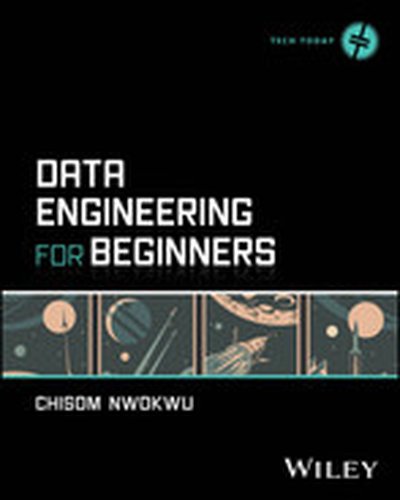
Data Engineering for Beginners

A hands-on technical and industry roadmap for aspiring data engineers In Data Engineering for Beginners, big data expert Chisom Nwokwu delivers a beginner-friendly handbook for everyone interested in the fundamentals of data engineering. Whether you're interested in starting a rewarding, new career as a data analyst, data engineer, or data scientist, or seeking to expand your skillset in an existing engineering role, Nwokwu offers the technical and industry knowledge you need to succeed. The book explains: Database fundamentals, including relational and noSQL databases Data warehouses and data lakes Data pipelines, including info about batch and stream processing Data quality dimensions Data security principles, including data encryption Data governance principles and data framework Big data and distributed systems concepts Data engineering on the cloud Essential skills and tools for data engineering interviews and jobs Data Engineering for Beginners offers an easy-to-read roadmap on a seemingly complicated and intimidating subject. It addresses the topics most likely to cause a beginning data engineer to stumble, clearly explaining key concepts in an accessible way. You'll also find: A comprehensive glossary of data engineering terms Common and practical career paths in the data engineering industry An introduction to key cloud technologies and services you may encounter early in your data engineering career Perfect for practicing and aspiring data analysts, data scientists, and data engineers, Data Engineering for Beginners is an effective and reliable starting point for learning an in-demand skill. It's a powerful resource for everyone hoping to expand their data engineering Skillset and upskill in the big data era.

Summary In this episode of the Data Engineering Podcast Ariel Pohoryles, head of product marketing for Boomi's data management offerings, talks about a recent survey of 300 data leaders on how organizations are investing in data to scale AI. He shares a paradox uncovered in the research: while 77% of leaders trust the data feeding their AI systems, only 50% trust their organization's data overall. Ariel explains why truly productionizing AI demands broader, continuously refreshed data with stronger automation and governance, and highlights the challenges posed by unstructured data and vector stores. The conversation covers the need to shift from manual reviews to automated pipelines, the resurgence of metadata and master data management, and the importance of guardrails, traceability, and agent governance. Ariel also predicts a growing convergence between data teams and application integration teams and advises leaders to focus on high-value use cases, aggressive pipeline automation, and cataloging and governing the coming sprawl of AI agents, all while using AI to accelerate data engineering itself.

Announcements Hello and welcome to the Data Engineering Podcast, the show about modern data managementData teams everywhere face the same problem: they're forcing ML models, streaming data, and real-time processing through orchestration tools built for simple ETL. The result? Inflexible infrastructure that can't adapt to different workloads. That's why Cash App and Cisco rely on Prefect. Cash App's fraud detection team got what they needed - flexible compute options, isolated environments for custom packages, and seamless data exchange between workflows. Each model runs on the right infrastructure, whether that's high-memory machines or distributed compute. Orchestration is the foundation that determines whether your data team ships or struggles. ETL, ML model training, AI Engineering, Streaming - Prefect runs it all from ingestion to activation in one platform. Whoop and 1Password also trust Prefect for their data operations. If these industry leaders use Prefect for critical workflows, see what it can do for you at dataengineeringpodcast.com/prefect.Data migrations are brutal. They drag on for months—sometimes years—burning through resources and crushing team morale. Datafold's AI-powered Migration Agent changes all that. Their unique combination of AI code translation and automated data validation has helped companies complete migrations up to 10 times faster than manual approaches. And they're so confident in their solution, they'll actually guarantee your timeline in writing. Ready to turn your year-long migration into weeks? Visit dataengineeringpodcast.com/datafold today for the details.Composable data infrastructure is great, until you spend all of your time gluing it together. Bruin is an open source framework, driven from the command line, that makes integration a breeze. Write Python and SQL to handle the business logic, and let Bruin handle the heavy lifting of data movement, lineage tracking, data quality monitoring, and governance enforcement. Bruin allows you to build end-to-end data workflows using AI, has connectors for hundreds of platforms, and helps data teams deliver faster. Teams that use Bruin need less engineering effort to process data and benefit from a fully integrated data platform. Go to dataengineeringpodcast.com/bruin today to get started. And for dbt Cloud customers, they'll give you $1,000 credit to migrate to Bruin Cloud.Your host is Tobias Macey and today I'm interviewing Ariel Pohoryles about data management investments that organizations are making to enable them to scale AI implementationsInterview IntroductionHow did you get involved in the area of data management?Can you start by describing the motivation and scope of your recent survey on data management investments for AI across your respondents?What are the key takeaways that were most significant to you?The survey reveals a fascinating paradox: 77% of leaders trust the data used by their AI systems, yet only half trust their organization's overall data quality. For our data engineering audience, what does this suggest about how companies are currently sourcing data for AI? Does it imply they are using narrow, manually-curated "golden datasets," and what are the technical challenges and risks of that approach as they try to scale?The report highlights a heavy reliance on manual data quality processes, with one expert noting companies feel it's "not reliable to fully automate validation" for external or customer data. At the same time, maturity in "Automated tools for data integration and cleansing" is low, at only 42%. What specific technical hurdles or organizational inertia are preventing teams from adopting more automation in their data quality and integration pipelines?There was a significant point made that with generative AI, "biases can scale much faster," making automated governance essential. From a data engineering perspective, how does the data management strategy need to evolve to support generative AI versus traditional ML models? What new types of data quality checks, lineage tracking, or monitoring for feedback loops are required when the model itself is generating new content based on its own outputs?The report champions a "centralized data management platform" as the "connective tissue" for reliable AI. How do you see the scale and data maturity impacting the realities of that effort?How do architectural patterns in the shape of cloud warehouses, lakehouses, data mesh, data products, etc. factor into that need for centralized/unified platforms?A surprising finding was that a third of respondents have not fully grasped the risk of significant inaccuracies in their AI models if they fail to prioritize data management. In your experience, what are the biggest blind spots for data and analytics leaders?Looking at the maturity charts, companies rate themselves highly on "Developing a data management strategy" (65%) but lag significantly in areas like "Automated tools for data integration and cleansing" (42%) and "Conducting bias-detection audits" (24%). If you were advising a data engineering team lead based on these findings, what would you tell them to prioritize in the next 6-12 months to bridge the gap between strategy and a truly scalable, trustworthy data foundation for AI?The report states that 83% of companies expect to integrate more data sources for their AI in the next year. For a data engineer on the ground, what is the most important capability they need to build into their platform to handle this influx?What are the most interesting, innovative, or unexpected ways that you have seen teams addressing the new and accelerated data needs for AI applications?What are some of the noteworthy trends or predictions that you have for the near-term future of the impact that AI is having or will have on data teams and systems?Contact Info LinkedInParting Question From your perspective, what is the biggest gap in the tooling or technology for data management today?Closing Announcements Thank you for listening! Don't forget to check out our other shows. Podcast.init covers the Python language, its community, and the innovative ways it is being used. The AI Engineering Podcast is your guide to the fast-moving world of building AI systems.Visit the site to subscribe to the show, sign up for the mailing list, and read the show notes.If you've learned something or tried out a project from the show then tell us about it! Email [email protected] with your story.Links BoomiData ManagementIntegration & Automation DemoAgentstudioData Connector Agent WebinarSurvey ResultsData GovernanceShadow ITPodcast EpisodeThe intro and outro music is from The Hug by The Freak Fandango Orchestra / CC BY-SA

Modern data pipelines are fast and expressive, but ensuring data quality is often not as straightforward. This talk introduces Paguro, an open-source, feature-rich validation and metadata library designed on top of the Polars DataFrame library. Paguro enables users to validate both single Data(Lazy)Frames and collections of Data(Lazy)Frames together, and provides beautifully formatted terminal diagnostics that explain why and where validation failed. Attendees will learn how to integrate the lightweight, fast, and composable validation toolkit into their workflows, from exploration to production, using a familiar Polars-native syntax.

Wrangling Internet-scale Image Datasets

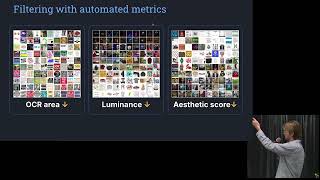
Building and curating datasets at internet scale is both powerful and messy. At Irreverent Labs, we recently released Re-LAION-Caption19M, a 19-million–image dataset with improved captions, alongside a companion arXiv paper. Behind the scenes, the project involved wrangling terabytes of raw data and designing pipelines that could produce a research-quality dataset while remaining resilient, efficient, and reproducible. In this talk, we’ll share some of the practical lessons we learned while engineering data at this scale. Topics include: strategies for ensuring data quality through a mix of automated metrics and human inspection; why building file manifests pays off when dealing with millions of files; effective use of Parquet, WDS and JSONL for metadata and intermediate results; pipeline patterns that favor parallel processing and fault tolerance; and how logging and dashboards can turn long-running jobs from opaque into observable. Whether you’re working with images, text, or any other massive dataset, these patterns and pitfalls may help you design pipelines that are more robust, maintainable, and researcher-friendly.

Get ready to ingest data and transform it into ready-to-use datasets using Python. We'll share a no-nonsense approach for developing and testing data connectors and transformations locally. Moving to production will be a matter of tweaking your configuration. In the end, you get a simple dataset interface to build dashboards & applications, train predictive models, or create agentic workflows. This workshop includes two guest speakers. Brian teach how to leverage AI IDEs, MCP servers and LLM scaffoldings to create ingestion pipelines. Elvis will show how to interactively define transformations and data quality checks.

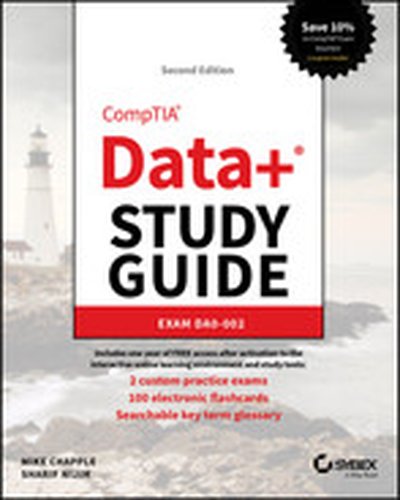
CompTIA Data+ Study Guide, 2nd Edition

Prepare for the CompTIA Data+ exam, as well as a new career in data science, with this effective study guide In the newly revised second edition of CompTIA Data+ Study Guide: Exam DA0-002, veteran IT professionals Mike Chapple and Sharif Nijim provide a powerful, one-stop resource for anyone planning to pursue the CompTIA Data+ certification and go on to an exciting new career in data science. The authors walk you through the info you need to succeed on the exam and in your first day at a data science-focused job. Complete with two online practice tests, this book comprehensively covers every objective tested by the updated DA0-002 exam, including databases and data acquisition, data quality, data analysis and statistics, data visualization, and data governance. You'll also find: Efficient and comprehensive content, helping you get up-to-speed as quickly as possible Bite-size chapters that break down essential topics into manageable and accessible lessons Complimentary access to Sybex' famous online learning environment, with practice questions, a complete glossary of common industry terminology, hundreds of flashcards, and more A practical and hands-on pathway to the CompTIA Data+ certification, as well as a new career in data science, the CompTIA Data+ Study Guide, Second Edition, offers the foundational knowledge, skills, and abilities you need to get started in an exciting and rewarding new career.

Data quality and AI reliability are two sides of the same coin in today's technology landscape. Organizations rushing to implement AI solutions often discover that their underlying data infrastructure isn't prepared for these new demands. But what specific data quality controls are needed to support successful AI implementations? How do you monitor unstructured data that feeds into your AI systems? When hallucinations occur, is it really the model at fault, or is your data the true culprit? Understanding the relationship between data quality and AI performance is becoming essential knowledge for professionals looking to build trustworthy AI systems. Shane Murray is a seasoned data and analytics executive with extensive experience leading digital transformation and data strategy across global media and technology organizations. He currently serves as Senior Vice President of Digital Platform Analytics at Versant Media, where he oversees the development and optimization of analytics capabilities that drive audience engagement and business growth. In addition to his corporate leadership role, he is a founding member of InvestInData, an angel investor collective of data leaders supporting early-stage startups advancing innovation in data and AI. Prior to joining Versant Media, Shane spent over three years at Monte Carlo, where he helped shape AI product strategy and customer success initiatives as Field CTO. Earlier, he spent nearly a decade at The New York Times, culminating as SVP of Data & Insights, where he was instrumental in scaling the company’s data platforms and analytics functions during its digital transformation. His earlier career includes senior analytics roles at Accenture Interactive, Memetrics, and Woolcott Research. Based in New York, Shane continues to be an active voice in the data community, blending strategic vision with deep technical expertise to advance the role of data in modern business. In the episode, Richie and Shane explore AI disasters and success stories, the concept of being AI-ready, essential roles and skills for AI projects, data quality's impact on AI, and much more. Links Mentioned in the Show: Versant MediaConnect with ShaneCourse: Responsible AI PracticesRelated Episode: Scaling Data Quality in the Age of Generative AI with Barr Moses, CEO of Monte Carlo Data, Prukalpa Sankar, Cofounder at Atlan, and George Fraser, CEO at FivetranRewatch RADAR AI  New to DataCamp? Learn on the go using the DataCamp mobile appEmpower your business with world-class data and AI skills with DataCamp for business