talk-data.com talk-data.com

Topic

Data Quality

data_management data_cleansing data_validation

38

tagged

Activity Trend

82 peak/qtr
2020-Q1 2026-Q1

Activities

Showing filtered results

Filtering by: O'Reilly Data Engineering Books ×
Universal Data Modeling

Most data professionals work with multiple datasets scattered across teams, systems, and formats. But without a clear modeling strategy, the result is often chaos: mismatched schemas, fragile pipelines, and a constant fight to make sense of the noise. This essential guide offers a better way by introducing a practical framework for designing high-quality data models that work across platforms while supporting the growing demands of AI, analytics, and real-time systems. Author Jun Shan bridges the gap between disconnected modeling approaches and the need for a unified, system-agnostic methodology. Whether you're building a new data platform or rethinking legacy infrastructure, Universal Data Modeling gives you the clarity, patterns, and tools to model data that's consistent, resilient, and ready to scale. Connect conceptual, logical, and physical modeling phases with confidence Apply best-fit techniques across relational, semistructured, and NoSQL formats Improve data quality, clarity, and maintainability across your organization Support modern design paradigms like data mesh and data products Translate domain knowledge into models that empower teams Build flexible, scalable models that stand the test of technology change

Data Contracts in Practice

In 'Data Contracts in Practice', Ryan Collingwood provides a detailed guide to managing and formalizing data responsibilities within organizations. Through practical examples and real-world use cases, you'll learn how to systematically address data quality, governance, and integration challenges using data contracts. What this Book will help me do Learn to identify and formalize expectations in data interactions, improving clarity among teams. Master implementation techniques to ensure data consistency and quality across critical business processes. Understand how to effectively document and deploy data contracts to bolster data governance. Explore solutions for proactively addressing and managing data changes and requirements. Gain real-world skills through practical examples using technologies like Python, SQL, JSON, and YAML. Author(s) Ryan Collingwood is a seasoned expert with over 20 years of experience in product management, data analysis, and software development. His holistic techno-social approach, designed to address both technical and organizational challenges, brings a unique perspective to improving data processes. Ryan's writing is informed by his extensive hands-on experience and commitment to enabling robust data ecosystems. Who is it for? This book is ideal for data engineers, software developers, and business analysts working to enhance organizational data integration. Professionals with a familiarity of system design, JSON, and YAML will find it particularly beneficial. Enterprise architects and leadership roles looking to understand data contract implementation and their business impacts will also greatly benefit. Basic understanding of Python and SQL is recommended to maximize learning.

Data Engineering for Beginners

A hands-on technical and industry roadmap for aspiring data engineers In Data Engineering for Beginners, big data expert Chisom Nwokwu delivers a beginner-friendly handbook for everyone interested in the fundamentals of data engineering. Whether you're interested in starting a rewarding, new career as a data analyst, data engineer, or data scientist, or seeking to expand your skillset in an existing engineering role, Nwokwu offers the technical and industry knowledge you need to succeed. The book explains: Database fundamentals, including relational and noSQL databases Data warehouses and data lakes Data pipelines, including info about batch and stream processing Data quality dimensions Data security principles, including data encryption Data governance principles and data framework Big data and distributed systems concepts Data engineering on the cloud Essential skills and tools for data engineering interviews and jobs Data Engineering for Beginners offers an easy-to-read roadmap on a seemingly complicated and intimidating subject. It addresses the topics most likely to cause a beginning data engineer to stumble, clearly explaining key concepts in an accessible way. You'll also find: A comprehensive glossary of data engineering terms Common and practical career paths in the data engineering industry An introduction to key cloud technologies and services you may encounter early in your data engineering career Perfect for practicing and aspiring data analysts, data scientists, and data engineers, Data Engineering for Beginners is an effective and reliable starting point for learning an in-demand skill. It's a powerful resource for everyone hoping to expand their data engineering Skillset and upskill in the big data era.

AWS Certified Data Engineer Associate Study Guide

There's no better time to become a data engineer. And acing the AWS Certified Data Engineer Associate (DEA-C01) exam will help you tackle the demands of modern data engineering and secure your place in the technology-driven future. Authors Sakti Mishra, Dylan Qu, and Anusha Challa equip you with the knowledge and sought-after skills necessary to effectively manage data and excel in your career. Whether you're a data engineer, data analyst, or machine learning engineer, you'll discover in-depth guidance, practical exercises, sample questions, and expert advice you need to leverage AWS services effectively and achieve certification. By reading, you'll learn how to: Ingest, transform, and orchestrate data pipelines effectively Select the ideal data store, design efficient data models, and manage data lifecycles Analyze data rigorously and maintain high data quality standards Implement robust authentication, authorization, and data governance protocols Prepare thoroughly for the DEA-C01 exam with targeted strategies and practices

Data Engineering Design Patterns

Data projects are an intrinsic part of an organization's technical ecosystem, but data engineers in many companies continue to work on problems that others have already solved. This hands-on guide shows you how to provide valuable data by focusing on various aspects of data engineering, including data ingestion, data quality, idempotency, and more. Author Bartosz Konieczny guides you through the process of building reliable end-to-end data engineering projects, from data ingestion to data observability, focusing on data engineering design patterns that solve common business problems in a secure and storage-optimized manner. Each pattern includes a user-facing description of the problem, solutions, and consequences that place the pattern into the context of real-life scenarios. Throughout this journey, you'll use open source data tools and public cloud services to apply each pattern. You'll learn: Challenges data engineers face and their impact on data systems How these challenges relate to data system components Useful applications of data engineering patterns How to identify and fix issues with your current data components Technology-agnostic solutions to new and existing data projects, with open source implementation examples Bartosz Konieczny is a freelance data engineer who's been coding since 2010. He's held various senior hands-on positions that allowed him to work on many data engineering problems in batch and stream processing.

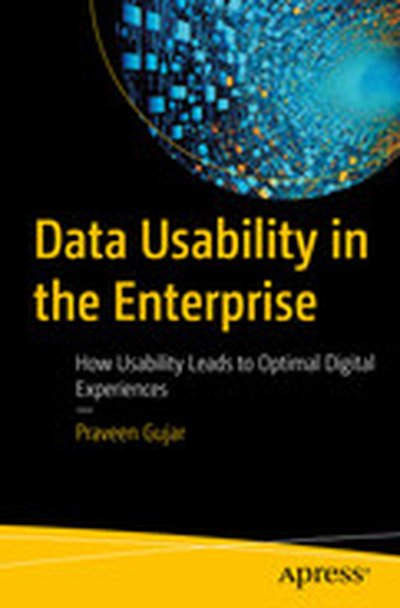
Data Usability in the Enterprise: How Usability Leads to Optimal Digital Experiences

Ensuring data usability is paramount to unlocking a company’s full potential and driving informed decision-making. Part of author Saurav Bhattacharya’s trilogy that covers the essential pillars of digital ecosystems—security, reliability, and usability—this book offers a comprehensive exploration of the fundamental concepts, principles, and practices essential for enhancing data accessibility and effectiveness. You’ll study the core aspects of data design, standardization, and interoperability, gaining the knowledge needed to create and maintain high-quality data environments. By examining the tools and technologies that improve data usability, along with best practices for data visualization and user-centric strategies, this book serves as an invaluable resource for professionals seeking to leverage data more effectively. The book also addresses crucial governance issues, ensuring data quality, integrity, and security are maintained. Through a detailed analysis of data governance frameworks and privacy concerns, you’ll see how to manage data responsibly. Additionally, the book includes compelling case studies that highlight successful data usability implementations, future trends, and the challenges faced in achieving optimal data usability. By fostering a culture of data literacy and usability, this book will help you and your organization navigate the evolving data landscape and harness the power of data for innovation and growth. What You Will Learn Understand the fundamental concepts and importance of data usability, including effective data design, enhancing data accessibility, and ensuring data standardization and interoperability. Review the latest tools and technologies that enhance data usability, best practices for data visualization, and strategies for implementing user-centric data approaches. Ensure data quality and integrity, while navigating data privacy and security concerns. Implement robust data governance frameworks to manage data responsibly and effectively. Who This Book Is For Cybersecurity and IT professionals

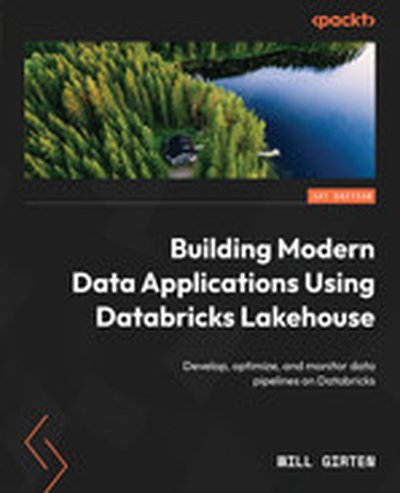
Building Modern Data Applications Using Databricks Lakehouse

This book, "Building Modern Data Applications Using Databricks Lakehouse," provides a comprehensive guide for data professionals to master the Databricks platform. You'll learn to effectively build, deploy, and monitor robust data pipelines with Databricks' Delta Live Tables, empowering you to manage and optimize cloud-based data operations effortlessly. What this Book will help me do Understand the foundations and concepts of Delta Live Tables and its role in data pipeline development. Learn workflows to process and transform real-time and batch data efficiently using the Databricks lakehouse architecture. Master the implementation of Unity Catalog for governance and secure data access in modern data applications. Deploy and automate data pipeline changes using CI/CD, leveraging tools like Terraform and Databricks Asset Bundles. Gain advanced insights in monitoring data quality and performance, optimizing cloud costs, and managing DataOps tasks effectively. Author(s) Will Girten, the author, is a seasoned Solutions Architect at Databricks with over a decade of experience in data and AI systems. With a deep expertise in modern data architectures, Will is adept at simplifying complex topics and translating them into actionable knowledge. His books emphasize real-time application and offer clear, hands-on examples, making learning engaging and impactful. Who is it for? This book is geared towards data engineers, analysts, and DataOps professionals seeking efficient strategies to implement and maintain robust data pipelines. If you have a basic understanding of Python and Apache Spark and wish to delve deeper into the Databricks platform for streamlining workflows, this book is tailored for you.

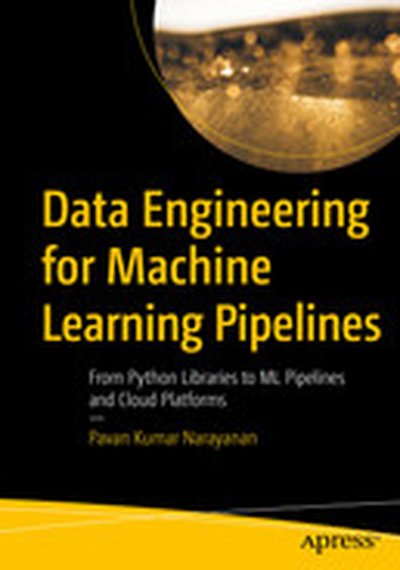
Data Engineering for Machine Learning Pipelines: From Python Libraries to ML Pipelines and Cloud Platforms

This book covers modern data engineering functions and important Python libraries, to help you develop state-of-the-art ML pipelines and integration code. The book begins by explaining data analytics and transformation, delving into the Pandas library, its capabilities, and nuances. It then explores emerging libraries such as Polars and CuDF, providing insights into GPU-based computing and cutting-edge data manipulation techniques. The text discusses the importance of data validation in engineering processes, introducing tools such as Great Expectations and Pandera to ensure data quality and reliability. The book delves into API design and development, with a specific focus on leveraging the power of FastAPI. It covers authentication, authorization, and real-world applications, enabling you to construct efficient and secure APIs using FastAPI. Also explored is concurrency in data engineering, examining Dask's capabilities from basic setup to crafting advanced machine learning pipelines. The book includes development and delivery of data engineering pipelines using leading cloud platforms such as AWS, Google Cloud, and Microsoft Azure. The concluding chapters concentrate on real-time and streaming data engineering pipelines, emphasizing Apache Kafka and workflow orchestration in data engineering. Workflow tools such as Airflow and Prefect are introduced to seamlessly manage and automate complex data workflows. What sets this book apart is its blend of theoretical knowledge and practical application, a structured path from basic to advanced concepts, and insights into using state-of-the-art tools. With this book, you gain access to cutting-edge techniques and insights that are reshaping the industry. This book is not just an educational tool. It is a career catalyst, and an investment in your future as a data engineering expert, poised to meet the challenges of today's data-driven world. What You Will Learn Elevate your data wrangling jobs by utilizing the power of both CPU and GPU computing, and learn to process data using Pandas 2.0, Polars, and CuDF at unprecedented speeds Design data validation pipelines, construct efficient data service APIs, develop real-time streaming pipelines and master the art of workflow orchestration to streamline your engineering projects Leverage concurrent programming to develop machine learning pipelines and get hands-on experience in development and deployment of machine learning pipelines across AWS, GCP, and Azure Who This Book Is For Data analysts, data engineers, data scientists, machine learning engineers, and MLOps specialists

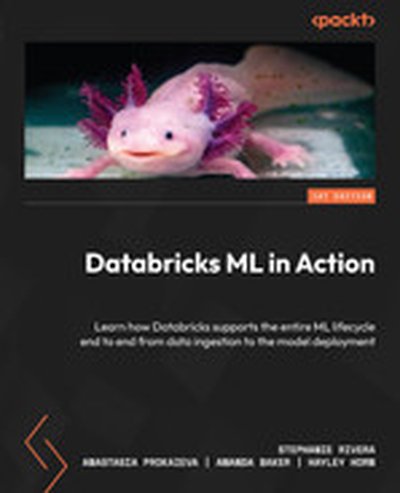
Databricks ML in Action

Dive into the Databricks Data Intelligence Platform and learn how to harness its full potential for creating, deploying, and maintaining machine learning solutions. This book covers everything from setting up your workspace to integrating state-of-the-art tools such as AutoML and VectorSearch, imparting practical skills through detailed examples and code. What this Book will help me do Set up and manage a Databricks workspace tailored for effective data science workflows. Implement monitoring to ensure data quality and detect drift efficiently. Build, fine-tune, and deploy machine learning models seamlessly using Databricks tools. Operationalize AI projects including feature engineering, data pipelines, and workflows on the Databricks Lakehouse architecture. Leverage integrations with popular tools like OpenAI's ChatGPT to expand your AI project capabilities. Author(s) This book is authored by Stephanie Rivera, Anastasia Prokaieva, Amanda Baker, and Hayley Horn, seasoned experts in data science and machine learning from Databricks. Their collective years of expertise in big data and AI technologies ensure a rich and insightful perspective. Through their work, they strive to make complex concepts accessible and actionable. Who is it for? This book serves as an ideal guide for machine learning engineers, data scientists, and technically inclined managers. It's well-suited for those transitioning to the Databricks environment or seeking to deepen their Databricks-based machine learning implementation skills. Whether you're an ambitious beginner or an experienced professional, this book provides clear pathways to success.

The Definitive Guide to Data Integration

Master the modern data stack with 'The Definitive Guide to Data Integration.' This comprehensive book covers the key aspects of data integration, including data sources, storage, transformation, governance, and more. Equip yourself with the knowledge and hands-on skills to manage complex datasets and unlock your data's full potential. What this Book will help me do Understand how to integrate diverse datasets efficiently using modern tools. Develop expertise in designing and implementing robust data integration workflows. Gain insights into real-time data processing and cloud-based data architectures. Learn best practices for data quality, governance, and compliance in integration. Master the use of APIs, workflows, and transformation patterns in practice. Author(s) The authors, None Bonnefoy, None Chaize, Raphaël Mansuy, and Mehdi Tazi, are seasoned experts in data engineering and integration. They bring years of experience in modern data technologies and consulting. Their approachable writing style ensures that readers at various skill levels can grasp complex concepts effectively. Who is it for? This book is ideal for data engineers, architects, analysts, and IT professionals. Whether you're new to data integration or looking to deepen your expertise, this guide caters to individuals seeking to navigate the challenges of the modern data stack.

Data Observability for Data Engineering

"Data Observability for Data Engineering" introduces you to the foundational concepts of observing and validating data pipeline health. With real-world projects and Python code examples, you'll gain hands-on experience in improving data quality and minimizing risks, enabling you to implement strategies that ensure accuracy and reliability in your data systems. What this Book will help me do Master data observability techniques to monitor and validate data pipelines effectively. Learn to collect and analyze meaningful metrics to gauge and improve data quality. Develop skills in Python programming specific to applying data concepts such as observable data state. Address scalability challenges using state-of-the-art observability frameworks and practices. Enhance your ability to manage and optimize data workflows ensuring seamless operation from start to end. Author(s) Authors Michele Pinto and Sammy El Khammal bring a wealth of experience in data engineering and observing scalable data systems. Pinto specializes in constructing robust analytics platforms while Khammal offers insights into integrating software observability into massive pipelines. Their collaborative writing style ensures readers find both practical advice and theoretical foundations. Who is it for? This book is geared toward data engineers, architects, and scientists who seek to confidently handle pipeline challenges. Whether you're addressing specific issues or wish to introduce proactive measures in your team, this guide meets the needs of those ready to leverage observability as a key practice.

Delta Lake: Up and Running

With the surge in big data and AI, organizations can rapidly create data products. However, the effectiveness of their analytics and machine learning models depends on the data's quality. Delta Lake's open source format offers a robust lakehouse framework over platforms like Amazon S3, ADLS, and GCS. This practical book shows data engineers, data scientists, and data analysts how to get Delta Lake and its features up and running. The ultimate goal of building data pipelines and applications is to gain insights from data. You'll understand how your storage solution choice determines the robustness and performance of the data pipeline, from raw data to insights. You'll learn how to: Use modern data management and data engineering techniques Understand how ACID transactions bring reliability to data lakes at scale Run streaming and batch jobs against your data lake concurrently Execute update, delete, and merge commands against your data lake Use time travel to roll back and examine previous data versions Build a streaming data quality pipeline following the medallion architecture

Data Quality Engineering in Financial Services

Data quality will either make you or break you in the financial services industry. Missing prices, wrong market values, trading violations, client performance restatements, and incorrect regulatory filings can all lead to harsh penalties, lost clients, and financial disaster. This practical guide provides data analysts, data scientists, and data practitioners in financial services firms with the framework to apply manufacturing principles to financial data management, understand data dimensions, and engineer precise data quality tolerances at the datum level and integrate them into your data processing pipelines. You'll get invaluable advice on how to: Evaluate data dimensions and how they apply to different data types and use cases Determine data quality tolerances for your data quality specification Choose the points along the data processing pipeline where data quality should be assessed and measured Apply tailored data governance frameworks within a business or technical function or across an organization Precisely align data with applications and data processing pipelines And more

Advanced SQL with SAS

This book introduces advanced techniques for using PROC SQL in SAS. If you are a SAS programmer, analyst, or student who has mastered the basics of working with SQL, Advanced SQL with SAS® will help take your skills to the next level. Filled with practical examples with detailed explanations, this book demonstrates how to improve performance and speed for large data sets. Although the book addresses advanced topics, it is designed to progress from the simple and manageable to the complex and sophisticated. In addition to numerous tuning techniques, this book also touches on implicit and explicit pass-throughs, presents alternative SAS grid- and cloud-based processing environments, and compares SAS programming languages and approaches including FedSQL, CAS, DS2, and hash programming. Other topics include: Missing values and data quality with audit trails “Blind spots” like how missing values can affect even the simplest calculations and table joins SAS macro language and SAS macro programs SAS functions Integrity constraints SAS Dictionaries SAS Compute Server

Data Mesh in Practice

The data mesh is poised to replace data lakes and data warehouses as the dominant architectural pattern in data and analytics. By promoting the concept of domain-focused data products that go beyond file sharing, data mesh helps you deal with data quality at scale by establishing true data ownership. This approach is so new, however, that many misconceptions and a general lack of practical experience for implementing data mesh are widespread. With this report, you'll learn how to successfully overcome challenges in the adoption process. By drawing on their experience building large-scale data infrastructure, designing data architectures, and contributing to data strategies of large and successful corporations, authors Max Schultze and Arif Wider have identified the most common pain points along the data mesh journey. You'll examine the foundations of the data mesh paradigm and gain both technical and organizational insights. This report is ideal for companies just starting to work with data, for organizations already in the process of transforming their data infrastructure landscape, as well as for advanced companies working on federated governance setups for a sustainable data-driven future. This report covers: Data mesh principles and practical examples for getting started Typical challenges and solutions you'll encounter when implementing a data mesh Data mesh pillars including domain ownership, data as a product, and infrastructure as a platform How to move toward a decentralized data product and build a data infrastructure platform

Data Engineering on Azure

Build a data platform to the industry-leading standards set by Microsoft’s own infrastructure. In Data Engineering on Azure you will learn how to: Pick the right Azure services for different data scenarios Manage data inventory Implement production quality data modeling, analytics, and machine learning workloads Handle data governance Using DevOps to increase reliability Ingesting, storing, and distributing data Apply best practices for compliance and access control Data Engineering on Azure reveals the data management patterns and techniques that support Microsoft’s own massive data infrastructure. Author Vlad Riscutia, a data engineer at Microsoft, teaches you to bring an engineering rigor to your data platform and ensure that your data prototypes function just as well under the pressures of production. You'll implement common data modeling patterns, stand up cloud-native data platforms on Azure, and get to grips with DevOps for both analytics and machine learning. About the Technology Build secure, stable data platforms that can scale to loads of any size. When a project moves from the lab into production, you need confidence that it can stand up to real-world challenges. This book teaches you to design and implement cloud-based data infrastructure that you can easily monitor, scale, and modify. About the Book In Data Engineering on Azure you’ll learn the skills you need to build and maintain big data platforms in massive enterprises. This invaluable guide includes clear, practical guidance for setting up infrastructure, orchestration, workloads, and governance. As you go, you’ll set up efficient machine learning pipelines, and then master time-saving automation and DevOps solutions. The Azure-based examples are easy to reproduce on other cloud platforms. What's Inside Data inventory and data governance Assure data quality, compliance, and distribution Build automated pipelines to increase reliability Ingest, store, and distribute data Production-quality data modeling, analytics, and machine learning About the Reader For data engineers familiar with cloud computing and DevOps. About the Author Vlad Riscutia is a software architect at Microsoft. Quotes A definitive and complete guide on data engineering, with clear and easy-to-reproduce examples. - Kelum Prabath Senanayake, Echoworx An all-in-one Azure book, covering all a solutions architect or engineer needs to think about. - Albert Nogués, Danone A meaningful journey through the Azure ecosystem. You’ll be building pipelines and joining components quickly! - Todd Cook, Appen A gateway into the world of Azure for machine learning and DevOps engineers. - Krzysztof Kamyczek, Luxoft

Advanced Analytics with Transact-SQL: Exploring Hidden Patterns and Rules in Your Data

Learn about business intelligence (BI) features in T-SQL and how they can help you with data science and analytics efforts without the need to bring in other languages such as R and Python. This book shows you how to compute statistical measures using your existing skills in T-SQL. You will learn how to calculate descriptive statistics, including centers, spreads, skewness, and kurtosis of distributions. You will also learn to find associations between pairs of variables, including calculating linear regression formulas and confidence levels with definite integration. No analysis is good without data quality. Advanced Analytics with Transact-SQL introduces data quality issues and shows you how to check for completeness and accuracy, and measure improvements in data quality over time. The book also explains how to optimize queries involving temporal data, such as when you search for overlapping intervals. More advanced time-oriented information in the book includes hazard and survival analysis. Forecasting with exponential moving averages and autoregression is covered as well. Every web/retail shop wants to know the products customers tend to buy together. Trying to predict the target discrete or continuous variable with few input variables is important for practically every type of business. This book helps you understand data science and the advanced algorithms use to analyze data, and terms such as data mining, machine learning, and text mining. Key to many of the solutions in this book are T-SQL window functions. Author Dejan Sarka demonstrates efficient statistical queries that are based on window functions and optimized through algorithms built using mathematical knowledge and creativity. The formulas and usage of those statistical procedures are explained so you can understand and modify the techniques presented. T-SQL is supported in SQL Server,Azure SQL Database, and in Azure Synapse Analytics. There are so many BI features in T-SQL that it might become your primary analytic database language. If you want to learn how to get information from your data with the T-SQL language that you already are familiar with, then this is the book for you. What You Will Learn Describe distribution of variables with statistical measures Find associations between pairs of variables Evaluate the quality of the data you are analyzing Perform time-series analysis on your data Forecast values of a continuous variable Perform market-basket analysis to predict customer purchasing patterns Predict target variable outcomes from one or more input variables Categorize passages of text by extracting and analyzing keywords Who This Book Is For Database developers and database administrators who want to translate their T-SQL skills into the world of business intelligence (BI) and data science. For readers who want to analyze large amounts of data efficiently by using their existing knowledge of T-SQL and Microsoft’s various database platforms such as SQL Server and Azure SQL Database. Also for readers who want to improve their querying by learning new and original optimization techniques.

Data Fabric as Modern Data Architecture

Data fabric is a hot concept in data management today. By encompassing the data ecosystem your company already has in place, this architectural design pattern provides your staff with one reliable place to go for data. In this report, author Alice LaPlante shows CIOs, CDOs, and CAOs how data fabric enables their users to spend more time analyzing than wrangling data. The best way to thrive during this intense period of digital transformation is through data. But after roaring through 2019, progress on getting the most out of data investments has lost steam. Only 38% of companies now say they've created a data-driven organization. This report describes how a data fabric can help you reach the all-important goal of data democratization. Learn how data fabric handles data prep, data delivery, and serves as a data catalog Use data fabric to handle data variety, a top challenge for many organizations Learn how data fabric spans any environment to support data for users and use cases from any source Examine data fabric's capabilities including data and metadata management, data quality, integration, analytics, visualization, and governance Get five pieces of advice for getting started with data fabric

Big Data Management

Data analytics is core to business and decision making. The rapid increase in data volume, velocity and variety offers both opportunities and challenges. While open source solutions to store big data, like Hadoop, offer platforms for exploring value and insight from big data, they were not originally developed with data security and governance in mind. Big Data Management discusses numerous policies, strategies and recipes for managing big data. It addresses data security, privacy, controls and life cycle management offering modern principles and open source architectures for successful governance of big data. The author has collected best practices from the world’s leading organizations that have successfully implemented big data platforms. The topics discussed cover the entire data management life cycle, data quality, data stewardship, regulatory considerations, data council, architectural and operational models are presented for successful management of big data. The book is a must-read for data scientists, data engineers and corporate leaders who are implementing big data platforms in their organizations.

Exam Ref 70-767 Implementing a SQL Data Warehouse

Prepare for Microsoft Exam 70-767–and help demonstrate your real-world mastery of skills for managing data warehouses. This exam is intended for Extract, Transform, Load (ETL) data warehouse developers who create business intelligence (BI) solutions. Their responsibilities include data cleansing as well as ETL and data warehouse implementation. The reader should have experience installing and implementing a Master Data Services (MDS) model, using MDS tools, and creating a Master Data Manager database and web application. The reader should understand how to design and implement ETL control flow elements and work with a SQL Service Integration Services package. Focus on the expertise measured by these objectives: • Design, and implement, and maintain a data warehouse • Extract, transform, and load data • Build data quality solutionsThis Microsoft Exam Ref: • Organizes its coverage by exam objectives • Features strategic, what-if scenarios to challenge you • Assumes you have working knowledge of relational database technology and incremental database extraction, as well as experience with designing ETL control flows, using and debugging SSIS packages, accessing and importing or exporting data from multiple sources, and managing a SQL data warehouse. Implementing a SQL Data Warehouse About the Exam Exam 70-767 focuses on skills and knowledge required for working with relational database technology. About Microsoft Certification Passing this exam earns you credit toward a Microsoft Certified Professional (MCP) or Microsoft Certified Solutions Associate (MCSA) certification that demonstrates your mastery of data warehouse management Passing this exam as well as Exam 70-768 (Developing SQL Data Models) earns you credit toward a Microsoft Certified Solutions Associate (MCSA) SQL 2016 Business Intelligence (BI) Development certification. See full details at: microsoft.com/learning