talk-data.com talk-data.com

Topic

SAS

statistical_software analytics data_management

296

tagged

Activity Trend

8 peak/qtr
2020-Q1 2026-Q1

Activities

296 activities · Newest first

Learn Data Science Using SAS Studio : From Clicks to Code

Do you want to create data analysis reports without writing a line of code? This book introduces SAS Studio, a free, web-based data science product for educational and non-commercial purposes. The power of SAS Studio lies in its visual, point-and-click user interface, which generates SAS code. It is easier to learn SAS Studio than to learn R and Python to accomplish data cleaning, statistics, and visualization tasks. The book includes a case study analyzing the data required to predict the results of presidential elections in the state of Maine for 2016 and 2020. In addition to the presidential elections, the book provides real-life examples, including analyses of stock, oil, and gold prices, crime, marketing, and healthcare. You will see data science in action and how easily it can be performed using complicated tasks and visualizations in SAS Studio. You will learn, step by step, how to perform visualizations, including creating maps. In most cases, you will not need a line of code as you work with the SAS Studio graphical user interface. The book includes explanations of the code that SAS Studio generates automatically. You will learn how to edit this code to perform more complicated advanced tasks. What You Will Learn Become familiar with the SAS Studio IDE. How to create essential visualizations. Know the fundamental statistical analysis required in most data science and analytics reports. Clean the most common dataset problems Learn linear and logistic regression for data prediction and analysis. Write programs in SAS. How to analyze data and get insights from it for decision-making. Learn character, numeric, date, time, and datetime functions and typecasting. Who This Book Is For A general audience of people who are new to data science, students, and data analysts and scientists who are new to SAS. No prior programming or statistical knowledge is required.
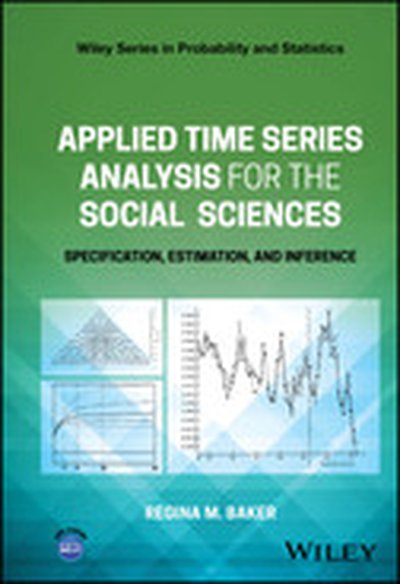
Applied Time Series Analysis for the Social Sciences

EXPLORE THIS INDISPENSABLE AND COMPREHENSIVE GUIDE TO TIME SERIES ANALYSIS FOR STUDENTS AND PRACTITIONERS IN A WIDE VARIETY OF DISCIPLINES Applied Time Series Analysis for the Social Sciences: Specification, Estimation, and Inference delivers an accessible guide to time series analysis that includes both theory and practice. The coverage spans developments from ARIMA intervention models and generalized least squares to the London School of Economics (LSE) approach and vector autoregression. Designed to break difficult concepts into manageable pieces while offering plenty of examples and exercises, the author demonstrates the use of lag operator algebra throughout to provide a better understanding of dynamic specification and the connections between model specifications that appear to be more different than they are. The book is ideal for those with minimal mathematical experience, intended to follow a course in multiple regression, and includes exercises designed to build general skills such as mathematical expectation calculations to derive means and variances. Readers will also benefit from the inclusion of: A focus on social science applications and a mix of theory and detailed examples provided throughout An accompanying website with data sets and examples in Stata, SAS and R A simplified unit root testing strategy based on recent developments An examination of various uses and interpretations of lagged dependent variables and the common pitfalls students and researchers face in this area An introduction to LSE methodology such as the COMFAC critique, general-to-specific modeling, and the use of forecasting to evaluate and test models Perfect for students and professional researchers in the political sciences, public policy, sociology, and economics, Applied Time Series Analysis for the Social Sciences: Specification, Estimation, and Inference will also earn a place in the libraries of post graduate students and researchers in public health, public administration and policy, and education.

In today’s data-driven world, organizations must deliver results with speed and precision. Explore how trustworthy AI—combining transparency, reliability, and ethics—is transforming decision-making. Learn how SAS and Microsoft empower Azure and Fabric users to boost productivity, generate synthetic data, accelerate model development, and deploy decision flows that drive impact.

Deploying AI agents into business operations offers significant potential – but also demands careful execution to deliver tangible results. In this session, discover practical strategies for embedding agentic AI into frontline workflows while maintaining responsible AI governance.

We’ll explore how agentic AI can drive real performance gains – such as in call centre operations, where organisations have achieved a 20% increase in complaint resolution volume, a 30–40% reduction in average response times, and a 15% drop in handling costs. Learn how to turn AI ambition into operational success.

With rates of fraud, scams and identity theft continuing to rise in Australia, there has never been a greater focus on keeping customers’ information safe. Commonwealth Bank is at the forefront of fraud prevention in Australia, implementing a suite of data and AI-driven innovations in partnership with SAS. This is all part of efforts to detect, respond and ultimately prevent the efforts of scammers across the world. During this session, you will hear how one of Australia's largest organisations is working tirelessly to protect its customers.

Migrating Legacy SAS Code to Databricks Lakehouse: What We Learned Along the Way

In PacificSource Health Plans, a health insurance company in the US, we are on a successful multi-year journey to migrate all of our data and analytics ecosystem to Databricks Enterprise Data Warehouse (lakehouse). A particular obstacle on this journey was a reporting data mart which relied on copious amounts of legacy SAS code that applied sophisticated business logic transformations for membership, claims, premiums and reserves. This core data mart was driving many of our critical reports and analytics. In this session we will share the unique and somewhat unexpected challenges and complexities we encountered in migrating this legacy SAS code. How our partner (T1A) leveraged automation technology (Alchemist) and some unique approaches to reverse engineer (analyze), instrument, translate, migrate, validate and reconcile these jobs; and what lessons we learned and carried from this migration effort.

AI-powered decisioning is here—but why aren’t enterprises fully leveraging its potential? Many organizations still struggle with fragmented decisioning engines, inefficient workflows, siloed data and lack of AI governance.
Join us for an engaging discussion with your peers. We’ll tackle the real barriers to AI-driven automation, explore strategies for integration, and explore how organizations are achieving measurable impact through seamless, scalable decisioning.

Industry Focus: Banking | FS | Insurance | Manufacturing
Level of attendees: Analytics Experts| Credit Mgrs, Sr. Mgrs, BU Head

The Bank of India is redefining trust through the power of data. Join its Analytics Head as they share how AI, real-time analytics, and predictive insights are transforming security, transparency, and customer experience. Discover how a legacy institution is embracing agility to lead the future of banking.
In addition - see how organizations unlock value with SAS Viya — achieving over 100x performance gains and half the cost in compute and storage costs when modernizing SAS 9 environments. It will explore how Intelligent Decisioning and Generative AI are integrated with data and models to automate decisions and drive stronger business outcomes.

AI-powered decisioning is here—but why aren’t enterprises fully leveraging its potential? Many organizations still struggle with fragmented decisioning engines, inefficient workflows, siloed data, and lack of AI governance.

Join us for an engaging discussion with your peers. We’ll tackle the real barriers to AI-driven automation, explore strategies for integration, and explore how organizations are achieving measurable impact through seamless, scalable decisioning.

Data and AI are shifting industries and reshaping society, but with great power comes the need for robust governance. In this session, we will focus on governance in data and AI, highlighting why it is a strategic priority for organizations worldwide.

Join this session to discover how trusted AI governance with SAS Viya ensures transparency, ethics, and performance—without slowing innovation. Walk away with real-world strategies to keep your AI trustworthy, efficient, and impactful. Don’t let bad AI decisions cost you.

talk
by Samuel King (Defence Infrastructure Organisation) , Steven Burgees (Sas) , Elaine Kedwards (Defence Infrastructure Organisation)

The UK Ministry of Defence (MOD) oversees the lifecycle management of over 120,000 assets.

Previous reliance on Excel-based models and manual processing limited team collaboration and the development of predictive capabilities. Utilising SAS Viya, Defence Infrastructure Organisation (DIO) transitioned to AI-driven simulation models, enabling predictive and prescriptive analytics to optimise asset management. Now recognised as an advanced asset management model in government, hear how DIO have demonstrated data-driven decision-making, and advanced analytical capabilities across government.

SAS For Dummies, 3rd Edition

Become data-savvy with the widely used data and AI software Data and analytics are essential for any business, giving insight into what's working, what can be improved, and what else needs to be done. SAS software helps you make sure you're doing data right, with a host of data management, reporting, and analysis tools. SAS For Dummies teaches you the essentials, helping you navigate this statistical software and turn information into value. In this book, learn how to gather data, create reports, and analyze results. You'll also discover how SAS machine learning and AI can help deliver decisions based on data. Even if you're brand new to data and analytics, this easy-to-follow guide will turn you into an SAS power user. Become familiar with the most popular SAS applications, including SAS 9 and SAS Viya Connect to data, organize your information, and adopt sound data security practices Get a primer on working with data sets, variables, and statistical analysis Explore and analyze data through SAS programming and rich application interfaces Create and share graphs interactive visualizations to deliver insights This is the perfect Dummies guide for new SAS users looking to improve their skills—in any industry and for any organization size.

Predictive Analytics with SAS and R: Core Concepts, Tools, and Implementation

Gain practical knowledge of application implementation using various programming approaches in predictive analytics. This book serves as a comprehensive guide for both beginners and professionals in the field of predictive analytics, offering core principles and practical insights without requiring an extensive mathematics or statistics background. The book starts with an introduction to analytics in decision making, protective analytics basics, and implementation in various industries. The book then takes you through types of regression, and simple linear regression in detail, followed by a demonstration of R Studio and SAS. Multiple Linear Regression is discussed next along with MLR model diagnostics. The book covers Multivariate Analysis and teaches you how to work with Principal Components Analysis, Factor Analysis, and much more. You also learn Time series Analysis with an understanding of Autoregressive Moving Average (ARMA) Models. After reading the book, you will be able to put predictive analytics principles into practice. What You Will Learn Understand modeling, estimating, and evaluating models for forecasting Implement Partial F-Test and Variable Selection Method Demonstrate each analysis model in R Studio and SAS Understand SLR and MLR Analysis models Who This Book Is For Students and professionals in the field of data analysis and intelligence applications

In this presentation, we will explore the transformative potential of Generative AI, a rapidly evolving field poised to redefine industries across the globe. We will begin by examining the market potential and addressing key challenges surrounding GenAI adoption, providing a comprehensive overview of its current landscape. Following this, we will delve into SAS's innovative approach to GenAI, highlighting our cutting-edge capabilities that empower organisations to harness its full potential. Finally, we will share real-world applications where SAS has successfully enabled organisations to implement GenAI solutions, driving tangible business value and innovation. Join us to gain valuable insights into the future of GenAI and learn how SAS is at the forefront of this technological revolution.

Financial Data Science with SAS

Explore financial data science using SAS. Financial Data Science with SAS provides readers with a comprehensive explanation of the theoretical and practical implementation of the various types of analytical techniques and quantitative tools that are used in the financial services industry. This book shows readers how to implement data visualization, simulation, statistical predictive models, machine learning models, and financial optimizations using real-world examples in the SAS Analytics environment. Each chapter ends with practice exercises that include use case scenarios to allow readers to test their knowledge. Designed for university students and financial professionals interested in boosting their data science skills, Financial Data Science with SAS is an essential reference guide for understanding how data science is used in the financial services industry and for learning how to use SAS to solve complex business problems.

IBM Storage FlashSystem 5200 Product Guide for IBM Storage Virtualize 8.6

This IBM® Redpaper® Product Guide publication describes the IBM Storage FlashSystem® 5200 solution, which is a next-generation IBM Storage FlashSystem control enclosure. It is an NVMe end-to-end platform that is targeted at the entry and midrange market and delivers the full capabilities of IBM FlashCore® technology. It also provides a rich set of software-defined storage (SDS) features that are delivered by IBM Storage Virtualize, including the following features: Data reduction and deduplication Dynamic tiering Thin provisioning Snapshots Cloning Replication Data copy services Transparent Cloud Tiering IBM HyperSwap® including 3-site replication for high availability (HA) Scale-out and scale-up configurations further enhance capacity and throughput for better availability. The IBM Storage FlashSystem 5200 is a high-performance storage solution that is based on a revolutionary 1U form factor. It consists of 12 NVMe Flash Devices in a 1U storage enclosure drawer with full redundant canister components and no single point of failure. It is designed for businesses of all sizes, including small, remote, branch offices and regional clients. It is a smarter, self-optimizing solution that requires less management, which enables organizations to overcome their storage challenges. Flash has come of age and price point reductions mean that lower parts of the storage market are seeing the value of moving over to flash and NVMe--based solutions. The IBM Storage FlashSystem 5200 advances this transition by providing incredibly dense tiers of flash in a more affordable package. With the benefit of IBM FlashCore Module compression and new QLC flash-based technology becoming available, a compelling argument exists to move away from Nearline SAS storage and on to NVMe. This Product Guide is aimed at pre-sales and post-sales technical support and marketing and storage administrators.

Mastering Marketing Data Science

Unlock the Power of Data: Transform Your Marketing Strategies with Data Science In the digital age, understanding the symbiosis between marketing and data science is not just an advantage; it's a necessity. In Mastering Marketing Data Science: A Comprehensive Guide for Today's Marketers, Dr. Iain Brown, a leading expert in data science and marketing analytics, offers a comprehensive journey through the cutting-edge methodologies and applications that are defining the future of marketing. This book bridges the gap between theoretical data science concepts and their practical applications in marketing, providing readers with the tools and insights needed to elevate their strategies in a data-driven world. Whether you're a master's student, a marketing professional, or a data scientist keen on applying your skills in a marketing context, this guide will empower you with a deep understanding of marketing data science principles and the competence to apply these principles effectively. Comprehensive Coverage: From data collection to predictive analytics, NLP, and beyond, explore every facet of marketing data science. Practical Applications: Engage with real-world examples, hands-on exercises in both Python & SAS, and actionable insights to apply in your marketing campaigns. Expert Guidance: Benefit from Dr. Iain Brown's decade of experience as he shares cutting-edge techniques and ethical considerations in marketing data science. Future-Ready Skills: Learn about the latest advancements, including generative AI, to stay ahead in the rapidly evolving marketing landscape. Accessible Learning: Tailored for both beginners and seasoned professionals, this book ensures a smooth learning curve with a clear, engaging narrative. Mastering Marketing Data Science is designed as a comprehensive how-to guide, weaving together theory and practice to offer a dynamic, workbook-style learning experience. Dr. Brown's voice and expertise guide you through the complexities of marketing data science, making sophisticated concepts accessible and actionable.

The Simple Guide to SAS

Start your journey with SAS. Have you just accepted a new job as a data analyst and need to learn SAS fast? Or perhaps you want to make a career change into programming and you’re not sure where to begin. The Simple Guide to SAS: From Null to Novice is the perfect book to get you started. Written for individuals with no prior programming experience, this book teaches the basics of learning SAS using hands-on examples and step-by-step explanations in a short, easy-to-understand guide. Topics covered in this book include: DATA and PROC Steps DATA Step Processing Setting Up SAS Libraries Importing and Exporting Data Viewing and Summarizing Data Sorting and De-duplicating Data Filtering Data and Conditional Logic SAS Functions Formatting Variables Combining and Aggregating Data The Simple Guide to SAS provides solutions to common business problems, identifies pitfalls to avoid, and includes sample code with data for readers to practice their knowledge.

IBM Power E1080 Technical Overview and Introduction

This IBM® Redpaper® publication provides a broad understanding of a new architecture of the IBM Power® E1080 (also known as the Power E1080) server that supports IBM AIX®, IBM i, and selected distributions of Linux operating systems. The objective of this paper is to introduce the Power E1080, the most powerful and scalable server of the IBM Power portfolio, and its offerings and relevant functions: Designed to support up to four system nodes and up to 240 IBM Power10™ processor cores The Power E1080 can be initially ordered with a single system node or two system nodes configuration, which provides up to 60 Power10 processor cores with a single node configuration or up to 120 Power10 processor cores with a two system nodes configuration. More support for a three or four system nodes configuration is to be added on December 10, 2021, which provides support for up to 240 Power10 processor cores with a full combined four system nodes server. Designed to supports up to 64 TB memory The Power E1080 can be initially ordered with the total memory RAM capacity up to 8 TB. More support is to be added on December 10, 2021 to support up to 64 TB in a full combined four system nodes server. Designed to support up to 32 Peripheral Component Interconnect® (PCIe) Gen 5 slots in a full combined four system nodes server and up to 192 PCIe Gen 3 slots with expansion I/O drawers The Power E1080 supports initially a maximum of two system nodes; therefore, up to 16 PCIe Gen 5 slots, and up to 96 PCIe Gen 3 slots with expansion I/O drawer. More support is to be added on December 10, 2021, to support up to 192 PCIe Gen 3 slots with expansion I/O drawers. Up to over 4,000 directly attached serial-attached SCSI (SAS) disks or solid-state drives (SSDs) Up to 1,000 virtual machines (VMs) with logical partitions (LPARs) per system System control unit, providing redundant system master Flexible Service Processor (FSP) Supports IBM Power System Private Cloud Solution with Dynamic Capacity This publication is for professionals who want to acquire a better understanding of Power servers. The intended audience includes the following roles: Customers Sales and marketing professionals Technical support professionals IBM Business Partners Independent software vendors (ISVs) This paper does not replace the current marketing materials and configuration tools. It is intended as an extra source of information that, together with existing sources, can be used to enhance your knowledge of IBM server solutions.