talk-data.com talk-data.com

Topic

Data Collection

146

tagged

Activity Trend

17 peak/qtr
2020-Q1 2026-Q1

Activities

146 activities · Newest first

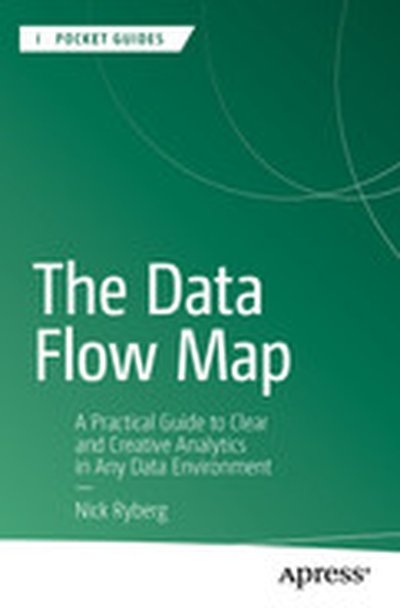
The Data Flow Map: A Practical Guide to Clear and Creative Analytics in Any Data Environment

Unlock the secrets of practical data analysis with the Data Flow Map framework—a game-changing approach that transcends tools and platforms. This book isn’t just another programming manual; it’s a guide to thinking and communicating about data at a higher level. Whether you're working with spreadsheets, databases, or AI-driven models, you'll learn how to express your analytics in clear, common language that anyone can understand. In today’s data-rich world, clarity is the real challenge. Technical details often obscure insights that could drive real impact. The Data Flow Map framework simplifies complexity into three core motions: source, focus, and build. The first half of the book explores these concepts through illustrations and stories. The second half applies them to real-world datasets using tools like Excel, SQL, and Python, showing how the framework works across platforms and use cases. A vital resource for analysts at any level, this book offers a practical, tool-agnostic approach to data analysis. With hands-on examples and a universal mental model, you’ll gain the confidence to tackle any dataset, align your team, and deliver insights that matter. Whether you're a beginner or a seasoned pro, the Data Flow Map framework will transform how you approach data analytics. What You Will Learn Grasp essential elements applicable to every data analysis workflow Adapt quickly to any dataset, tool, or platform Master analytic thinking at a higher level Use analytics patterns to better understand the world Break complex analysis into manageable, repeatable steps Iterate faster to uncover deeper insights and better solutions Communicate findings clearly for better decision-making Who This Book Is For Aspiring data professionals and experienced analysts, from beginners to seasoned data engineers, focused on data collection, analysis, and decision making

Data is key for advances in machine learning, including mobile applications like robots and autonomous cars. To ensure reliable operation, occurring scenarios must be reflected by the underlying dataset. Since the open-world environments can contain unknown scenarios and novel objects, active learning from online data collection and handling of unknowns is required. In this talk we discuss different approach to address this real world requirements.

Data is key for advances in machine learning, including mobile applications like robots and autonomous cars. To ensure reliable operation, occurring scenarios must be reflected by the underlying dataset. Since the open-world environments can contain unknown scenarios and novel objects, active learning from online data collection and handling of unknowns is required. In this talk we discuss different approach to address this real world requirements.

Data is key for advances in machine learning, including mobile applications like robots and autonomous cars. To ensure reliable operation, occurring scenarios must be reflected by the underlying dataset. Since the open-world environments can contain unknown scenarios and novel objects, active learning from online data collection and handling of unknowns is required. In this talk we discuss different approach to address this real world requirements.

Data is key for advances in machine learning, including mobile applications like robots and autonomous cars. To ensure reliable operation, occurring scenarios must be reflected by the underlying dataset. Since the open-world environments can contain unknown scenarios and novel objects, active learning from online data collection and handling of unknowns is required. In this talk we discuss different approach to address this real world requirements.

In this talk, I will walk through how building data products is evolving with modern AI development tools. I’ll take you through a small end-to-end product I built in my free time—covering everything from design, to frontend development, to data collection, and ultimately to building data science components. Here is the link to the project https://stateoftheartwithai.com/

Companies today are hungry for external data to stay competitive, but actually getting and making sense of that data isn’t easy. Standard web scraping often produces messy or incomplete results, and modern anti-bot systems make reliable collection even tougher.

In this talk, I’ll share how pairing Python’s scraping frameworks (like Scrapy, Playwright, and Selenium) with AI/ML can turn raw, unstructured data into clear, actionable insights.

We’ll look at:

1) How to build scrapers that still work in 2025.

2) Ways to use AI to automatically clean, enrich, and classify data.

3) Real-world applications of sentiment analysis for reviews and social media.

4) Case studies showing how SMEs have used these pipelines to sharpen marketing and product strategies.

By the end, you’ll see how to design pipelines that don’t just gather data, but deliver real strategic value. The session will focus on practical Python tools, scalable deployment (Airflow, Kubernetes, cloud platforms), and key lessons learned from hands-on projects at the intersection of scraping and AI.

Deep Intelligent Pharma (DIP) unveils a multi-agent Generative AI system for the entire clinical trial lifecycle. Building on AI protocol design, it designs optimized protocols and performs end-to-end "dry runs" using synthetic data, generating all trial documentation and identifying risks proactively. In live trials, AI agents automate data collection, analysis, and reporting, accelerating processes and ensuring extraordinay efficiency and data integrity from start to finish.

Effective physical AI allows for safe collaboration with people and technology that powers reasoning and action in real time, moving beyond scripts to make on‑the‑fly decisions like moving materials and assembling parts. Understand end‑to‑end workflows with NVIDIA Isaac and Omniverse: data collection, curation, digital twins, training at scale, high‑fidelity simulation, and deployment. You'll experience proven toolchains and OpenUSD examples to accelerate smarter, more adaptable AI for robotics.

Bridging Accessibility and AI: Sign Language Recognition & Inclusive Design with Sheida Rashidi

As AI continues to shape human-computer interaction, there’s a growing opportunity and responsibility to ensure these technologies serve everyone, including people with communication disabilities. In this talk, I will present my ongoing work in developing a real-time American Sign Language (ASL) recognition system, and explore how integrating accessible design principles into AI research can expand both usability and impact.

The core of the talk will cover the Sign Language Recogniser project (available on GitHub), in which I used MediaPipe Studio together with TensorFlow, Keras, and OpenCV to train a model that classifies ASL letters from hand-tracking features.

I’ll share the methodology: data collection, feature extraction via MediaPipe, model training, and demo/testing results. I’ll also discuss challenges encountered, such as dealing with gesture variability, lighting and camera differences, latency constraints, and model generalization.

Beyond the technical implementation, I’ll reflect on the broader implications: how accessibility-focused AI projects can promote inclusion, how design decisions affect trust and usability, and how women in AI & data science can lead innovation that is both rigorous and socially meaningful. Attendees will leave with actionable insights for building inclusive AI systems, especially in domains involving rich human modalities such as gesture or sign.

The Elephant in the room between data collection and data science with Katya Kovalenko

Whether you call it wrangling, cleaning, or preprocessing, data prep is often the most expensive and time-consuming part of the analytical pipeline. It may involve converting data into machine-readable formats, integrating across many datasets or outlier detection, and it can be a large source of error if done manually. Lack of machine-readable or integrated data limits connectivity across fields and data accessibility, sharing, and reuse, becoming a significant contributor to research waste.

For students, it is perhaps the greatest barrier to adopting quantitative tools and advancing their coding and analytical skills. AI tools are available for automating the cleanup and integration, but due to the one-of-a-kind nature of these problems, these approaches still require extensive human collaboration and testing. I review some of the common challenges in data cleanup and integration, approaches for understanding dataset structures, and strategies for developing and testing workflows.

EBMT, one of the biggest medical registries in Europe, has rebuilt its core data system from scratch, after 20 years of service, to keep up with growing data needs, modern technologies, and the evolving needs of researchers in blood and marrow transplantation. The new AWS-based system supports data collection and analysis at scale, using cloud infrastructure and business intelligence tools to improve data quality and data usability across EBMT’s network.

Benchmarking 2000+ Cloud Servers for GBM Model Training and LLM Inference Speed

Spare Cores is a Python-based, open-source, and vendor-independent ecosystem collecting, generating, and standardizing comprehensive data on cloud server pricing and performance. In our latest project, we started 2000+ server types across five cloud vendors to evaluate their suitability for serving Large Language Models from 135M to 70B parameters. We tested how efficiently models can be loaded into memory of VRAM, and measured inference speed across varying token lengths for prompt processing and text generation. The published data can help you find the optimal instance type for your LLM serving needs, and we will also share our experiences and challenges with the data collection and insights into general patterns.

Summary In this episode of the Data Engineering Podcast Effie Baram, a leader in foundational data engineering at Two Sigma, talks about the complexities and innovations in data engineering within the finance sector. She discusses the critical role of data at Two Sigma, balancing data quality with delivery speed, and the socio-technical challenges of building a foundational data platform that supports research and operational needs while maintaining regulatory compliance and data quality. Effie also shares insights into treating data as code, leveraging modern data warehouses, and the evolving role of data engineers in a rapidly changing technological landscape.

Announcements Hello and welcome to the Data Engineering Podcast, the show about modern data managementData migrations are brutal. They drag on for months—sometimes years—burning through resources and crushing team morale. Datafold's AI-powered Migration Agent changes all that. Their unique combination of AI code translation and automated data validation has helped companies complete migrations up to 10 times faster than manual approaches. And they're so confident in their solution, they'll actually guarantee your timeline in writing. Ready to turn your year-long migration into weeks? Visit dataengineeringpodcast.com/datafold today for the details. This episode is brought to you by Coresignal, your go-to source for high-quality public web data to power best-in-class AI products. Instead of spending time collecting, cleaning, and enriching data in-house, use ready-made multi-source B2B data that can be smoothly integrated into your systems via APIs or as datasets. With over 3 billion data records from 15+ online sources, Coresignal delivers high-quality data on companies, employees, and jobs. It is powering decision-making for more than 700 companies across AI, investment, HR tech, sales tech, and market intelligence industries. A founding member of the Ethical Web Data Collection Initiative, Coresignal stands out not only for its data quality but also for its commitment to responsible data collection practices. Recognized as the top data provider by Datarade for two consecutive years, Coresignal is the go-to partner for those who need fresh, accurate, and ethically sourced B2B data at scale. Discover how Coresignal's data can enhance your AI platforms. Visit dataengineeringpodcast.com/coresignal to start your free 14-day trial. Your host is Tobias Macey and today I'm interviewing Effie Baram about data engineering in the finance sectorInterview IntroductionHow did you get involved in the area of data management?Can you start by outlining the role of data in the context of Two Sigma?What are some of the key characteristics of the types of data sources that you work with?Your role is leading "foundational data engineering" at Two Sigma. Can you unpack that title and how it shapes the ways that you think about what you build?How does the concept of "foundational data" influence the ways that the business thinks about the organizational patterns around data?Given the regulatory environment around finance, how does that impact the ways that you think about the "what" and "how" of the data that you deliver to data consumers?Being the foundational team for data use at Two Sigma, how have you approached the design and architecture of your technical systems?How do you think about the boundaries between your responsibilities and the rest of the organization?What are the design patterns that you have found most helpful in empowering data consumers to build on top of your work?What are some of the elements of sociotechnical friction that have been most challenging to address?What are the most interesting, innovative, or unexpected ways that you have seen the ideas around "foundational data" applied in your organization?What are the most interesting, unexpected, or challenging lessons that you have learned while working with financial data?When is a foundational data team the wrong approach?What do you have planned for the future of your platform design?Contact Info LinkedInParting Question From your perspective, what is the biggest gap in the tooling or technology for data management today?Closing Announcements Thank you for listening! Don't forget to check out our other shows. Podcast.init covers the Python language, its community, and the innovative ways it is being used. The AI Engineering Podcast is your guide to the fast-moving world of building AI systems.Visit the site to subscribe to the show, sign up for the mailing list, and read the show notes.If you've learned something or tried out a project from the show then tell us about it! Email [email protected] with your story.Links 2SigmaReliability EngineeringSLA == Service-Level AgreementAirflowParquet File FormatBigQuerySnowflakedbtGemini AssistMCP == Model Context ProtocoldtraceThe intro and outro music is from The Hug by The Freak Fandango Orchestra / CC BY-SA

Summary In this episode of the Data Engineering Podcast Arun Joseph talks about developing and implementing agent platforms to empower businesses with agentic capabilities. From leading AI engineering at Deutsche Telekom to his current entrepreneurial venture focused on multi-agent systems, Arun shares insights on building agentic systems at an organizational scale, highlighting the importance of robust models, data connectivity, and orchestration loops. Listen in as he discusses the challenges of managing data context and cost in large-scale agent systems, the need for a unified context management platform to prevent data silos, and the potential for open-source projects like LMOS to provide a foundational substrate for agentic use cases that can transform enterprise architectures by enabling more efficient data management and decision-making processes.

Announcements Hello and welcome to the Data Engineering Podcast, the show about modern data managementData migrations are brutal. They drag on for months—sometimes years—burning through resources and crushing team morale. Datafold's AI-powered Migration Agent changes all that. Their unique combination of AI code translation and automated data validation has helped companies complete migrations up to 10 times faster than manual approaches. And they're so confident in their solution, they'll actually guarantee your timeline in writing. Ready to turn your year-long migration into weeks? Visit dataengineeringpodcast.com/datafold today for the details. This episode is brought to you by Coresignal, your go-to source for high-quality public web data to power best-in-class AI products. Instead of spending time collecting, cleaning, and enriching data in-house, use ready-made multi-source B2B data that can be smoothly integrated into your systems via APIs or as datasets. With over 3 billion data records from 15+ online sources, Coresignal delivers high-quality data on companies, employees, and jobs. It is powering decision-making for more than 700 companies across AI, investment, HR tech, sales tech, and market intelligence industries. A founding member of the Ethical Web Data Collection Initiative, Coresignal stands out not only for its data quality but also for its commitment to responsible data collection practices. Recognized as the top data provider by Datarade for two consecutive years, Coresignal is the go-to partner for those who need fresh, accurate, and ethically sourced B2B data at scale. Discover how Coresignal's data can enhance your AI platforms. Visit dataengineeringpodcast.com/coresignal to start your free 14-day trial. Your host is Tobias Macey and today I'm interviewing Arun Joseph about building an agent platform to empower the business to adopt agentic capabilitiesInterview IntroductionHow did you get involved in the area of data management?Can you start by giving an overview of how Deutsche Telekom has been approaching applications of generative AI?What are the key challenges that have slowed adoption/implementation?Enabling non-engineering teams to define and manage AI agents in production is a challenging goal. From a data engineering perspective, what does the abstraction layer for these teams look like? How do you manage the underlying data pipelines, versioning of agents, and monitoring of these user-defined agents?What was your process for developing the architecture and interfaces for what ultimately became the LMOS?How do the principles of operatings systems help with managing the abstractions and composability of the framework?Can you describe the overall architecture of the LMOS?What does a typical workflow look like for someone who wants to build a new agent use case?How do you handle data discovery and embedding generation to avoid unnecessary duplication of processing?With your focus on openness and local control, how do you see your work complementing projects like OumiWhat are the most interesting, innovative, or unexpected ways that you have seen LMOS used?What are the most interesting, unexpected, or challenging lessons that you have learned while working on LMOS?When is LMOS the wrong choice?What do you have planned for the future of LMOS and MASAIC?Contact Info LinkedInParting Question From your perspective, what is the biggest gap in the tooling or technology for data management today?Closing Announcements Thank you for listening! Don't forget to check out our other shows. Podcast.init covers the Python language, its community, and the innovative ways it is being used. The AI Engineering Podcast is your guide to the fast-moving world of building AI systems.Visit the site to subscribe to the show, sign up for the mailing list, and read the show notes.If you've learned something or tried out a project from the show then tell us about it! Email [email protected] with your story.Links LMOSDeutsche TelekomMASAICOpenAI Agents SDKRAG == Retrieval Augmented GenerationLangChainMarvin MinskyVector DatabaseMCP == Model Context ProtocolA2A (Agent to Agent) ProtocolQdrantLlamaIndexDVC == Data Version ControlKubernetesKotlinIstioXerox PARC)OODA (Observe, Orient, Decide, Act) LoopThe intro and outro music is from The Hug by The Freak Fandango Orchestra / CC BY-SA
In 2024, the Ctrl-labs team at Meta Reality Labs published a preprint, introducing the science behind a new neural input device worn on the wrist. This talk will cover the custom Kubernetes-based platform underlying both the research/ML workloads and the data collection. We'll talk about the challenges of serving 'only' hundreds of internal scientists and engineers, while also supporting data collection from thousands of participants. We'll cover the evolution of the services and codebase, the reliability tradeoffs, the growing pains and the custom tools that we had to build.

Summary In this episode of the Data Engineering Podcast we welcome back Nick Schrock, CTO and founder of Dagster Labs, to discuss the evolving landscape of data engineering in the age of AI. As AI begins to impact data platforms and the role of data engineers, Nick shares his insights on how it will ultimately enhance productivity and expand software engineering's scope. He delves into the current state of AI adoption, the importance of maintaining core data engineering principles, and the need for human oversight when leveraging AI tools effectively. Nick also introduces Dagster's new components feature, designed to modularize and standardize data transformation processes, making it easier for teams to collaborate and integrate AI into their workflows. Join in to explore the future of data engineering, the potential for AI to abstract away complexity, and the importance of open standards in preventing walled gardens in the tech industry.

Announcements Hello and welcome to the Data Engineering Podcast, the show about modern data managementThis episode is brought to you by Coresignal, your go-to source for high-quality public web data to power best-in-class AI products. Instead of spending time collecting, cleaning, and enriching data in-house, use ready-made multi-source B2B data that can be smoothly integrated into your systems via APIs or as datasets. With over 3 billion data records from 15+ online sources, Coresignal delivers high-quality data on companies, employees, and jobs. It is powering decision-making for more than 700 companies across AI, investment, HR tech, sales tech, and market intelligence industries. A founding member of the Ethical Web Data Collection Initiative, Coresignal stands out not only for its data quality but also for its commitment to responsible data collection practices. Recognized as the top data provider by Datarade for two consecutive years, Coresignal is the go-to partner for those who need fresh, accurate, and ethically sourced B2B data at scale. Discover how Coresignal's data can enhance your AI platforms. Visit dataengineeringpodcast.com/coresignal to start your free 14-day trial. Data migrations are brutal. They drag on for months—sometimes years—burning through resources and crushing team morale. Datafold's AI-powered Migration Agent changes all that. Their unique combination of AI code translation and automated data validation has helped companies complete migrations up to 10 times faster than manual approaches. And they're so confident in their solution, they'll actually guarantee your timeline in writing. Ready to turn your year-long migration into weeks? Visit dataengineeringpodcast.com/datafold today for the details. This is a pharmaceutical Ad for Soda Data Quality. Do you suffer from chronic dashboard distrust? Are broken pipelines and silent schema changes wreaking havoc on your analytics? You may be experiencing symptoms of Undiagnosed Data Quality Syndrome — also known as UDQS. Ask your data team about Soda. With Soda Metrics Observability, you can track the health of your KPIs and metrics across the business — automatically detecting anomalies before your CEO does. It’s 70% more accurate than industry benchmarks, and the fastest in the category, analyzing 1.1 billion rows in just 64 seconds. And with Collaborative Data Contracts, engineers and business can finally agree on what “done” looks like — so you can stop fighting over column names, and start trusting your data again.Whether you’re a data engineer, analytics lead, or just someone who cries when a dashboard flatlines, Soda may be right for you. Side effects of implementing Soda may include: Increased trust in your metrics, reduced late-night Slack emergencies, spontaneous high-fives across departments, fewer meetings and less back-and-forth with business stakeholders, and in rare cases, a newfound love of data. Sign up today to get a chance to win a $1000+ custom mechanical keyboard. Visit dataengineeringpodcast.com/soda to sign up and follow Soda’s launch week. It starts June 9th.Your host is Tobias Macey and today I'm interviewing Nick Schrock about lowering the barrier to entry for data platform consumersInterview IntroductionHow did you get involved in the area of data management?Can you start by giving your summary of the impact that the tidal wave of AI has had on data platforms and data teams?For anyone who hasn't heard of Dagster, can you give a quick summary of the project?What are the notable changes in the Dagster project in the past year?What are the ecosystem pressures that have shaped the ways that you think about the features and trajectory of Dagster as a project/product/community?In your recent release you introduced "components", which is a substantial change in how you enable teams to collaborate on data problems. What was the motivating factor in that work and how does it change the ways that organizations engage with their data?tension between being flexible and extensible vs. opinionated and constrainedincreased dependency on orchestration with LLM use casesreducing the barrier to contribution for data platform/pipelinesbringing application engineers into the mixchallenges of meeting users/teams where they are (languages, platform investments, etc.)What are the most interesting, innovative, or unexpected ways that you have seen teams applying the Components pattern?What are the most interesting, unexpected, or challenging lessons that you have learned while working on the latest iterations of Dagster?When is Dagster the wrong choice?What do you have planned for the future of Dagster?Contact Info LinkedInParting Question From your perspective, what is the biggest gap in the tooling or technology for data management today?Links Dagster+ EpisodeDagster Components Slide DeckThe Rise Of Medium CodeLakehouse ArchitectureIcebergDagster ComponentsPydantic ModelsKubernetesDagster PipesRuby on RailsdbtSlingFivetranTemporalMCP == Model Context ProtocolThe intro and outro music is from The Hug by The Freak Fandango Orchestra / CC BY-SA