talk-data.com talk-data.com

Topic

Data Collection

64

tagged

Activity Trend

17 peak/qtr
2020-Q1 2026-Q1

Activities

64 activities · Newest first

The Data Flow Map: A Practical Guide to Clear and Creative Analytics in Any Data Environment

Unlock the secrets of practical data analysis with the Data Flow Map framework—a game-changing approach that transcends tools and platforms. This book isn’t just another programming manual; it’s a guide to thinking and communicating about data at a higher level. Whether you're working with spreadsheets, databases, or AI-driven models, you'll learn how to express your analytics in clear, common language that anyone can understand. In today’s data-rich world, clarity is the real challenge. Technical details often obscure insights that could drive real impact. The Data Flow Map framework simplifies complexity into three core motions: source, focus, and build. The first half of the book explores these concepts through illustrations and stories. The second half applies them to real-world datasets using tools like Excel, SQL, and Python, showing how the framework works across platforms and use cases. A vital resource for analysts at any level, this book offers a practical, tool-agnostic approach to data analysis. With hands-on examples and a universal mental model, you’ll gain the confidence to tackle any dataset, align your team, and deliver insights that matter. Whether you're a beginner or a seasoned pro, the Data Flow Map framework will transform how you approach data analytics. What You Will Learn Grasp essential elements applicable to every data analysis workflow Adapt quickly to any dataset, tool, or platform Master analytic thinking at a higher level Use analytics patterns to better understand the world Break complex analysis into manageable, repeatable steps Iterate faster to uncover deeper insights and better solutions Communicate findings clearly for better decision-making Who This Book Is For Aspiring data professionals and experienced analysts, from beginners to seasoned data engineers, focused on data collection, analysis, and decision making
Data Insight Foundations: Step-by-Step Data Analysis with R

This book is an essential guide designed to equip you with the vital tools and knowledge needed to excel in data science. Master the end-to-end process of data collection, processing, validation, and imputation using R, and understand fundamental theories to achieve transparency with literate programming, renv, and Git--and much more. Each chapter is concise and focused, rendering complex topics accessible and easy to understand. Data Insight Foundations caters to a diverse audience, including web developers, mathematicians, data analysts, and economists, and its flexible structure allows enables you to explore chapters in sequence or navigate directly to the topics most relevant to you. While examples are primarily in R, a basic understanding of the language is advantageous but not essential. Many chapters, especially those focusing on theory, require no programming knowledge at all. Dive in and discover how to manipulate data, ensure reproducibility, conduct thorough literature reviews, collect data effectively, and present your findings with clarity. What You Will Learn Data Management: Master the end-to-end process of data collection, processing, validation, and imputation using R. Reproducible Research: Understand fundamental theories and achieve transparency with literate programming, renv, and Git. Academic Writing: Conduct scientific literature reviews and write structured papers and reports with Quarto. Survey Design: Design well-structured surveys and manage data collection effectively. Data Visualization: Understand data visualization theory and create well-designed and captivating graphics using ggplot2. Who this Book is For Career professionals such as research and data analysts transitioning from academia to a professional setting where production quality significantly impacts career progression. Some familiarity with data analytics processes and an interest in learning R or Python are ideal.

Grokking Relational Database Design

A friendly illustrated guide to designing and implementing your first database. Grokking Relational Database Design makes the principles of designing relational databases approachable and engaging. Everything in this book is reinforced by hands-on exercises and examples. In Grokking Relational Database Design, you’ll learn how to: Query and create databases using Structured Query Language (SQL) Design databases from scratch Implement and optimize database designs Take advantage of generative AI when designing databases A well-constructed database is easy to understand, query, manage, and scale when your app needs to grow. In Grokking Relational Database Design you’ll learn the basics of relational database design including how to name fields and tables, which data to store where, how to eliminate repetition, good practices for data collection and hygiene, and much more. You won’t need a computer science degree or in-depth knowledge of programming—the book’s practical examples and down-to-earth definitions are beginner-friendly. About the Technology Almost every business uses a relational database system. Whether you’re a software developer, an analyst creating reports and dashboards, or a business user just trying to pull the latest numbers, it pays to understand how a relational database operates. This friendly, easy-to-follow book guides you from square one through the basics of relational database design. About the Book Grokking Relational Database Design introduces the core skills you need to assemble and query tables using SQL. The clear explanations, intuitive illustrations, and hands-on projects make database theory come to life, even if you can’t tell a primary key from an inner join. As you go, you’ll design, implement, and optimize a database for an e-commerce application and explore how generative AI simplifies the mundane tasks of database designs. What's Inside Define entities and their relationships Minimize anomalies and redundancy Use SQL to implement your designs Security, scalability, and performance About the Reader For self-taught programmers, software engineers, data scientists, and business data users. No previous experience with relational databases assumed. About the Authors Dr. Qiang Hao and Dr. Michail Tsikerdekis are both professors of Computer Science at Western Washington University. Quotes If anyone is looking to improve their database design skills, they can’t go wrong with this book. - Ben Brumm, DatabaseStar Goes beyond SQL syntax and explores the core principles. An invaluable resource! - William Jamir Silva, Adjust Relational database design is best done right the first time. This book is a great help to achieve that! - Maxim Volgin, KLM Provides necessary notions to design and build databases that can stand the data challenges we face. - Orlando Méndez, Experian

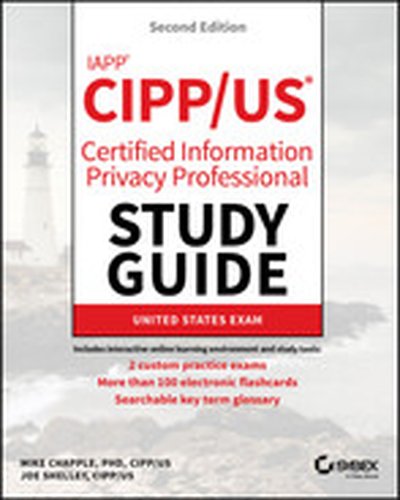
IAPP CIPP / US Certified Information Privacy Professional Study Guide, 2nd Edition

Prepare for success on the IAPP CIPP/US exam and further your career in privacy with this effective study guide - now includes a downloadable supplement to get you up to date on the current CIPP exam for 2024-2025! Information privacy has become a critical and central concern for small and large businesses across the United States. At the same time, the demand for talented professionals able to navigate the increasingly complex web of legislation and regulation regarding privacy continues to increase. Written from the ground up to prepare you for the United States version of the Certified Information Privacy Professional (CIPP) exam, Sybex's IAPP CIPP/US Certified Information Privacy Professional Study Guide also readies you for success in the rapidly growing privacy field. You'll efficiently and effectively prepare for the exam with online practice tests and flashcards as well as a digital glossary. The concise and easy-to-follow instruction contained in the IAPP/CIPP Study Guide covers every aspect of the CIPP/US exam, including the legal environment, regulatory enforcement, information management, private sector data collection, law enforcement and national security, workplace privacy and state privacy law, and international privacy regulation. Provides the information you need to gain a unique and sought-after certification that allows you to fully understand the privacy framework in the US Fully updated to prepare you to advise organizations on the current legal limits of public and private sector data collection and use Includes 1 year free access to the Sybex online learning center, with chapter review questions, full-length practice exams, hundreds of electronic flashcards, and a glossary of key terms, all supported by Wiley's support agents who are available 24x7 via email or live chat to assist with access and login questions Perfect for anyone considering a career in privacy or preparing to tackle the challenging IAPP CIPP exam as the next step to advance an existing privacy role, the IAPP CIPP/US Certified Information Privacy Professional Study Guide offers you an invaluable head start for success on the exam and in your career as an in-demand privacy professional.

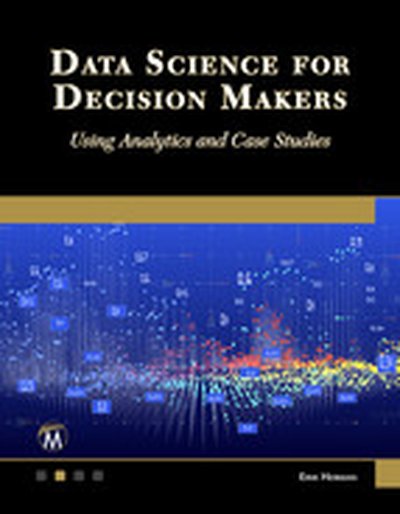
Data Science for Decision Makers

Data Science for Decision Makers is an essential guide for executives, managers, entrepreneurs, and anyone seeking to harness the power of data to drive business success. In today's fast-paced and increasingly digital world, the ability to make informed decisions based on data-driven insights is vital. This book serves as a bridge between the complex world of data science and the strategic decision-making process, providing readers with the knowledge and tools they need to leverage data effectively. With a clear focus on practical application, this book demystifies key concepts in data science, from data collection and analysis to predictive modeling and visualization. Via real-world examples, case studies, and actionable insights, readers will learn how to extract insights from data and translate them into actionable strategies that drive organizational growth. Written in a reader-friendly manner, this book caters to both novice and experienced professionals alike. Whether you're a seasoned executive looking to sharpen your strategic acumen or a manager seeking to enhance your team's data literacy, this essential reference provides the necessary foundation to navigate the complex landscape of data science with confidence.

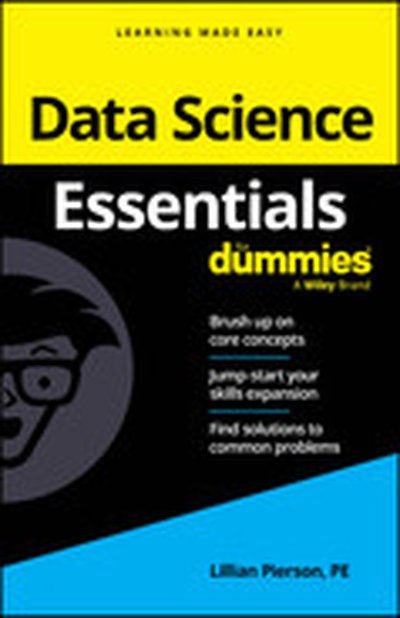
Data Science Essentials For Dummies

Feel confident navigating the fundamentals of data science Data Science Essentials For Dummies is a quick reference on the core concepts of the exploding and in-demand data science field, which involves data collection and working on dataset cleaning, processing, and visualization. This direct and accessible resource helps you brush up on key topics and is right to the point—eliminating review material, wordy explanations, and fluff—so you get what you need, fast. Strengthen your understanding of data science basics Review what you've already learned or pick up key skills Effectively work with data and provide accessible materials to others Jog your memory on the essentials as you work and get clear answers to your questions Perfect for supplementing classroom learning, reviewing for a certification, or staying knowledgeable on the job, Data Science Essentials For Dummies is a reliable reference that's great to keep on hand as an everyday desk reference.

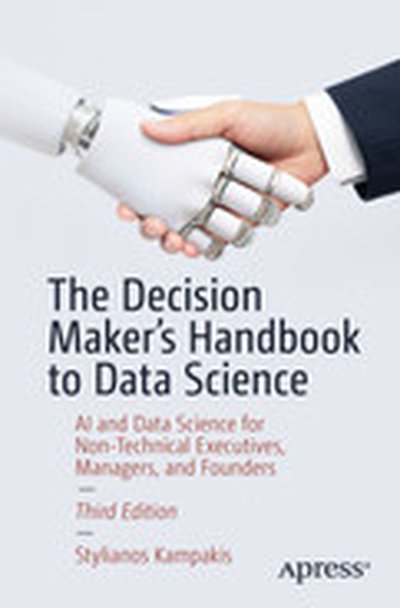
The Decision Maker's Handbook to Data Science: AI and Data Science for Non-Technical Executives, Managers, and Founders

Data science is expanding across industries at a rapid pace, and the companies first to adopt best practices will gain a significant advantage. To reap the benefits, decision makers need to have a confident understanding of data science and its application in their organization. This third edition delves into the latest advancements in AI, particularly focusing on large language models (LLMs), with clear distinctions made between AI and traditional data science, including AI's ability to emulate human decision-making. Author Stylianos Kampakis introduces you to the critical aspect of ethics in AI, an area of growing importance and scrutiny. The narrative examines the ethical considerations intrinsic to the development and deployment of AI technologies, including bias, fairness, transparency, and accountability. You’ll be provided with the expertise and tools required to develop a solid data strategy that is continuously effective. Ethics and legal issues surrounding data collection and algorithmic bias are some common pitfalls that Kampakis helps you avoid, while guiding you on the path to build a thriving data science culture at your organization. This updated edition also includes plenty of case studies, tools for project assessment, and expanded content for hiring and managing data scientists. Data science is a language that everyone at a modern company should understand across departments. Friction in communication arises most often when management does not connect with what a data scientist is doing or how impactful data collection and storage can be for their organization. The Decision Maker’s Handbook to Data Science bridges this gap and readies you for both the present and future of your workplace in this engaging, comprehensive guide. What You Will Learn Integrate AI with other innovative technologies Explore anticipated ethical, regulatory, and technical landscapes that will shape the future of AI and data science Discover how to hire and manage data scientists Build the right environment in order to make your organization data-driven Who This Book Is For Startup founders, product managers, higher level managers, and any other non-technical decision makers who are thinking to implement data science in their organization and hire data scientists. A secondary audience includes people looking for a soft introduction into the subject of data science.

Mastering Marketing Data Science

Unlock the Power of Data: Transform Your Marketing Strategies with Data Science In the digital age, understanding the symbiosis between marketing and data science is not just an advantage; it's a necessity. In Mastering Marketing Data Science: A Comprehensive Guide for Today's Marketers, Dr. Iain Brown, a leading expert in data science and marketing analytics, offers a comprehensive journey through the cutting-edge methodologies and applications that are defining the future of marketing. This book bridges the gap between theoretical data science concepts and their practical applications in marketing, providing readers with the tools and insights needed to elevate their strategies in a data-driven world. Whether you're a master's student, a marketing professional, or a data scientist keen on applying your skills in a marketing context, this guide will empower you with a deep understanding of marketing data science principles and the competence to apply these principles effectively. Comprehensive Coverage: From data collection to predictive analytics, NLP, and beyond, explore every facet of marketing data science. Practical Applications: Engage with real-world examples, hands-on exercises in both Python & SAS, and actionable insights to apply in your marketing campaigns. Expert Guidance: Benefit from Dr. Iain Brown's decade of experience as he shares cutting-edge techniques and ethical considerations in marketing data science. Future-Ready Skills: Learn about the latest advancements, including generative AI, to stay ahead in the rapidly evolving marketing landscape. Accessible Learning: Tailored for both beginners and seasoned professionals, this book ensures a smooth learning curve with a clear, engaging narrative. Mastering Marketing Data Science is designed as a comprehensive how-to guide, weaving together theory and practice to offer a dynamic, workbook-style learning experience. Dr. Brown's voice and expertise guide you through the complexities of marketing data science, making sophisticated concepts accessible and actionable.

Healthcare Big Data Analytics

This book highlights how optimized big data applications can be used for patient monitoring and clinical diagnosis. In fact, IoT-based applications are data-driven and mostly employ modern optimization techniques. The book also explores challenges, opportunities, and future research directions, discussing the stages of data collection and pre-processing, as well as the associated challenges and issues in data handling and setup.

Data Engineering and Data Science

DATA ENGINEERING and DATA SCIENCE Written and edited by one of the most prolific and well-known experts in the field and his team, this exciting new volume is the “one-stop shop” for the concepts and applications of data science and engineering for data scientists across many industries. The field of data science is incredibly broad, encompassing everything from cleaning data to deploying predictive models. However, it is rare for any single data scientist to be working across the spectrum day to day. Data scientists usually focus on a few areas and are complemented by a team of other scientists and analysts. Data engineering is also a broad field, but any individual data engineer doesn’t need to know the whole spectrum of skills. Data engineering is the aspect of data science that focuses on practical applications of data collection and analysis. For all the work that data scientists do to answer questions using large sets of information, there have to be mechanisms for collecting and validating that information. In this exciting new volume, the team of editors and contributors sketch the broad outlines of data engineering, then walk through more specific descriptions that illustrate specific data engineering roles. Data-driven discovery is revolutionizing the modeling, prediction, and control of complex systems. This book brings together machine learning, engineering mathematics, and mathematical physics to integrate modeling and control of dynamical systems with modern methods in data science. It highlights many of the recent advances in scientific computing that enable data-driven methods to be applied to a diverse range of complex systems, such as turbulence, the brain, climate, epidemiology, finance, robotics, and autonomy. Whether for the veteran engineer or scientist working in the field or laboratory, or the student or academic, this is a must-have for any library.

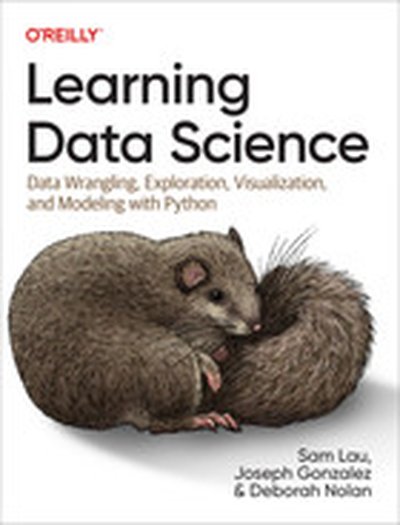
Learning Data Science

As an aspiring data scientist, you appreciate why organizations rely on data for important decisions—whether it's for companies designing websites, cities deciding how to improve services, or scientists discovering how to stop the spread of disease. And you want the skills required to distill a messy pile of data into actionable insights. We call this the data science lifecycle: the process of collecting, wrangling, analyzing, and drawing conclusions from data. Learning Data Science is the first book to cover foundational skills in both programming and statistics that encompass this entire lifecycle. It's aimed at those who wish to become data scientists or who already work with data scientists, and at data analysts who wish to cross the "technical/nontechnical" divide. If you have a basic knowledge of Python programming, you'll learn how to work with data using industry-standard tools like pandas. Refine a question of interest to one that can be studied with data Pursue data collection that may involve text processing, web scraping, etc. Glean valuable insights about data through data cleaning, exploration, and visualization Learn how to use modeling to describe the data Generalize findings beyond the data

Advances in Business Statistics, Methods and Data Collection

ADVANCES IN BUSINESS STATISTICS, METHODS AND DATA COLLECTION Advances in Business Statistics, Methods and Data Collection delivers insights into the latest state of play in producing establishment statistics, obtained from businesses, farms and institutions. Presenting materials and reflecting discussions from the 6 th International Conference on Establishment Statistics (ICES-VI), this edited volume provides a broad overview of methodology underlying current establishment statistics from every aspect of the production life cycle while spotlighting innovative and impactful advancements in the development, conduct, and evaluation of modern establishment statistics programs. Highlights include: Practical discussions on agile, timely, and accurate measurement of rapidly evolving economic phenomena such as globalization, new computer technologies, and the informal sector. Comprehensive explorations of administrative and new data sources and technologies, covering big (organic) data sources and methods for data integration, linking, machine learning and visualization. Detailed compilations of statistical programs’ responses to wide-ranging data collection and production challenges, among others caused by the Covid-19 pandemic. In-depth examinations of business survey questionnaire design, computerization, pretesting methods, experimentation, and paradata. Methodical presentations of conventional and emerging procedures in survey statistics techniques for establishment statistics, encompassing probability sampling designs and sample coordination, non-probability sampling, missing data treatments, small area estimation and Bayesian methods. Providing a broad overview of most up-to-date science, this book challenges the status quo and prepares researchers for current and future challenges in establishment statistics and methods. Perfect for survey researchers, government statisticians, National Bank employees, economists, and undergraduate and graduate students in survey research and economics, Advances in Business Statistics, Methods and Data Collection will also earn a place in the toolkit of researchers working –with data– in industries across a variety of fields.

Building Solutions with the Microsoft Power Platform

With the accelerating speed of business and the increasing dependence on technology, companies today are significantly changing the way they build in-house business solutions. Many now use low-code and no code technologies to help them deal with specific issues, but that's just the beginning. With this practical guide, power users and developers will discover ways to resolve everyday challenges by building end-to-end solutions with the Microsoft Power Platform. Author Jason Rivera, who specializes in SharePoint and the Microsoft 365 solution architecture, provides a comprehensive overview of how to use the Power Platform to build end-to-end solutions that address tactical business needs. By learning key components of the platform, including Power Apps, Power Automate, and Power BI, you'll be able to build low-code and no code applications, automate repeatable business processes, and create interactive reports from available data. Learn how the Power Platform apps work together Incorporate AI into the Power Platform without extensive ML or AI knowledge Create end-to-end solutions to solve tactical business needs, including data collection, process automation, and reporting Build AI-based solutions using Power Virtual Agents and AI Builder

Unlocking the Value of Real-Time Analytics

Storing data and making it accessible for real-time analysis is a huge challenge for organizations today. In 2020 alone, 64.2 billion GB of data was created or replicated, and it continues to grow. With this report, data engineers, architects, and software engineers will learn how to do deep analysis and automate business decisions while keeping your analytical capabilities timely. Author Christopher Gardner takes you through current practices for extracting data for analysis and uncovers the opportunities and benefits of making that data extraction and analysis continuous. By the end of this report, you’ll know how to use new and innovative tools against your data to make real-time decisions. And you’ll understand how to examine the impact of real-time analytics on your business. Learn the four requirements of real-time analytics: latency, freshness, throughput, and concurrency Determine where delays between data collection and actionable analytics occur Understand the reasons for real-time analytics and identify the tools you need to reach a faster, more dynamic level Examine changes in data storage and software while learning methodologies for overcoming delays in existing database architecture Explore case studies that show how companies use columnar data, sharding, and bitmap indexing to store and analyze data Fast and fresh data can make the difference between a successful transaction and a missed opportunity. The report shows you how.

Mastering Microsoft Power BI - Second Edition

Dive deep into Microsoft Power BI with the second edition of 'Mastering Microsoft Power BI'. This comprehensive book equips you with the skills to transform business data into actionable insights using Power BI's latest features and techniques. From efficient data retrieval and transformation processes to creating interactive dashboards that tell impactful data stories, you will learn actionable knowledge every step of the way. What this Book will help me do Learn to master data collection and modeling using the Power Query M language Gain expertise in designing DirectQuery, import, and composite data models Understand how to create advanced analytics reports using DAX and Power BI visuals Learn to manage the Power BI environment as an administrator with Premium capacity Develop insightful, scalable, and visually impactful dashboards and reports Author(s) Greg Deckler, a seasoned Power BI expert and solution architect, and None Powell, an experienced BI consultant and data visualization specialist, bring their extensive practical knowledge to this book. Together, they share their real-world expertise and proven techniques applying Power BI's diverse capabilities. Who is it for? This book is ideal for business intelligence professionals and intermediate Power BI users. If you're looking to master data visualization, prepare insightful dashboards, and explore Power BI's full potential, this is for you. Basic understanding of BI concepts and familiarity with Power BI will ensure you get the most value.

Managing and Visualizing Your BIM Data

Managing and Visualizing Your BIM Data is an essential guide for AEC professionals who want to harness the power of data to enhance their projects. Designed with a hands-on approach, this book delves into using Autodesk Dynamo for data collection and Microsoft Power BI for creating insightful dashboards. By the end, readers will be adept at connecting BIM models to interactive visualizations. What this Book will help me do Gain a deep understanding of data collection workflows in Autodesk Dynamo. Learn to connect Building Information Modeling (BIM) data to Power BI dashboards. Master the basics and advanced features of Dynamo for BIM data management. Create dynamic and visually appealing Power BI dashboards for AEC projects. Explore real-world use cases with expert-guided hands-on examples. Author(s) The authors, None Pellegrino, None Bottiglieri, None Crump, None Pieper, and None Touil, are experienced professionals in the AEC and software development industries. With extensive backgrounds in Building Information Modeling (BIM) and data visualization, they bring practical insights combined with a passion for teaching. Their approach ensures readers not only learn the tools but also understand the reasoning behind best practices. Who is it for? This book is ideal for BIM managers and coordinators, design technology managers, and other Architecture, Engineering, and Construction (AEC) professionals. Readers with a foundational knowledge of BIM will find it particularly beneficial for enhancing their data analysis and reporting capabilities. If you're aiming to elevate your skill set in managing BIM data and creating impactful visualizations, this guide is for you.

Advances in Longitudinal Survey Methodology

Advances in Longitudinal Survey Methodology Explore an up-to-date overview of best practices in the implementation of longitudinal surveys from leading experts in the field of survey methodology Advances in Longitudinal Survey Methodology delivers a thorough review of the most current knowledge in the implementation of longitudinal surveys. The book provides a comprehensive overview of the many advances that have been made in the field of longitudinal survey methodology over the past fifteen years, as well as extending the topic coverage of the earlier volume, “Methodology of Longitudinal Surveys”, published in 2009. This new edited volume covers subjects like dependent interviewing, interviewer effects, panel conditioning, rotation group bias, measurement of cognition, and weighting. New chapters discussing the recent shift to mixed-mode data collection and obtaining respondents’ consent to data linkage add to the book’s relevance to students and social scientists seeking to understand modern challenges facing data collectors today. Readers will also benefit from the inclusion of: A thorough introduction to refreshment sampling for longitudinal surveys, including consideration of principles, sampling frame, sample design, questionnaire design, and frequency An exploration of the collection of biomarker data in longitudinal surveys, including detailed measurements of ill health, biological pathways, and genetics in longitudinal studies An examination of innovations in participant engagement and tracking in longitudinal surveys, including current practices and new evidence on internet and social media for participant engagement. An invaluable source for post-graduate students, professors, and researchers in the field of survey methodology, Advances in Longitudinal Survey Methodology will also earn a place in the libraries of anyone who regularly works with or conducts longitudinal surveys and requires a one-stop reference for the latest developments and findings in the field.

IoT-Based Data Analytics for the Healthcare Industry

IoT Based Data Analytics for the Healthcare Industry: Techniques and Applications explores recent advances in the analysis of healthcare industry data through IoT data analytics. The book covers the analysis of ubiquitous data generated by the healthcare industry, from a wide range of sources, including patients, doctors, hospitals, and health insurance companies. The book provides AI solutions and support for healthcare industry end-users who need to analyze and manipulate this vast amount of data. These solutions feature deep learning and a wide range of intelligent methods, including simulated annealing, tabu search, genetic algorithm, ant colony optimization, and particle swarm optimization. The book also explores challenges, opportunities, and future research directions, and discusses the data collection and pre-processing stages, challenges and issues in data collection, data handling, and data collection set-up. Healthcare industry data or streaming data generated by ubiquitous sensors cocooned into the IoT requires advanced analytics to transform data into information. With advances in computing power, communications, and techniques for data acquisition, the need for advanced data analytics is in high demand. Provides state-of-art methods and current trends in data analytics for the healthcare industry Addresses the top concerns in the healthcare industry using IoT and data analytics, and machine learning and deep learning techniques Discusses several potential AI techniques developed using IoT for the healthcare industry Explores challenges, opportunities, and future research directions, and discusses the data collection and pre-processing stages

Intelligent Data Analysis
  This book focuses on methods and tools for intelligent data analysis, aimed at narrowing the increasing gap between data gathering and data comprehension, and emphasis will also be given to solving of problems which result from automated data collection, such as analysis of computer-based patient records, data warehousing tools, intelligent alarming, effective and efficient monitoring, and so on. This book aims to describe the different approaches of Intelligent Data Analysis from a practical point of view: solving common life problems with data analysis tools.
Building an Anonymization Pipeline

How can you use data in a way that protects individual privacy but still provides useful and meaningful analytics? With this practical book, data architects and engineers will learn how to establish and integrate secure, repeatable anonymization processes into their data flows and analytics in a sustainable manner. Luk Arbuckle and Khaled El Emam from Privacy Analytics explore end-to-end solutions for anonymizing device and IoT data, based on collection models and use cases that address real business needs. These examples come from some of the most demanding data environments, such as healthcare, using approaches that have withstood the test of time. Create anonymization solutions diverse enough to cover a spectrum of use cases Match your solutions to the data you use, the people you share it with, and your analysis goals Build anonymization pipelines around various data collection models to cover different business needs Generate an anonymized version of original data or use an analytics platform to generate anonymized outputs Examine the ethical issues around the use of anonymized data