talk-data.com talk-data.com

Topic

Computer Science

programming algorithms data_structures

166

tagged

Activity Trend

9 peak/qtr
2020-Q1 2026-Q1

Activities

166 activities · Newest first

Edge Artificial Intelligence

Secure your expertise in the next wave of computing with this essential book, which provides a comprehensive guide to Edge AI, detailing its foundational concepts, deployment strategies, and real-world applications for revolutionizing performance and privacy across various industries. Edge AI has the potential to bring the computational power of AI algorithms closer to where data is generated, processed, and utilized. Traditionally, AI models are deployed in centralized cloud environments, leading to latency issues, bandwidth constraints, and privacy concerns. Edge AI addresses these limitations by enabling AI inference and decision-making directly on edge devices, such as smartphones, IoT sensors, and edge servers. Despite its challenges, edge AI presents numerous opportunities across various domains. From real-time health monitoring and predictive maintenance in industrial IoT to personalized recommendations in retail and immersive experiences in augmented reality, edge AI has the potential to revolutionize how we interact with technology. This book aims to provide a comprehensive exploration of edge AI, covering its foundational concepts, development frameworks, deployment strategies, security considerations, ethical implications, emerging trends, and real-world applications. This guide is essential for anyone pushing the boundaries to leverage edge computing for enhanced performance and efficiency. Readers will find this volume: Dives deep into the world of edge AI with a comprehensive exploration covering foundational concepts, development frameworks, deployment strategies, security considerations, ethical implications, governance frameworks, optimization techniques, and real-world applications; Offers practical guidance on implementing edge AI solutions effectively in various domains, including architecture design, development frameworks, deployment strategies, and optimization techniques; Explores concrete examples of edge AI applications across diverse domains such as healthcare, industrial IoT, smart cities, and autonomous systems, providing insights into how edge AI is revolutionizing industries and everyday life; Provides insights into emerging trends and technologies in the field of edge AI, including convergence with blockchain, augmented reality, virtual reality, autonomous systems, personalized experiences, and cybersecurity. Audience Researchers, AI experts, and industry professionals in the field of computer science, IT, and business management.
Graph Theory for Computer Science

This book is a vital resource for anyone looking to understand the essential role of graph theory as the unifying thread that connects and provides innovative solutions across a wide spectrum of modern computer science disciplines. Graph theory is a traditional mathematical discipline that has evolved as a basic tool for modeling and analyzing the complex relationships between different technological landscapes. Graph theory helps explain the semantic and syntactic relationships in natural language processing, a technology behind many businesses. Disciplinary and industry developments are seeing a major transition towards more interconnected and data-driven decision-making, and the application of graph theory will facilitate this transition. Disciplines such as parallel and distributive computing will gain insights into how graph theory can help with resource optimization and job scheduling, creating considerable change in the design and development of scalable systems. This book provides comprehensive coverage of how graph theory acts as the thread that connects different areas of computer science to create innovative solutions to modern technological problems. Using a multi-faceted approach, the book explores the fundamentals and role of graph theory in molding complex computational processes across a wide spectrum of computer science.

In this episode, Conor and Bryce record live from C++ Under the Sea! We interview Bernhard, Koen, talk about C++26 Reflection and more! Link to Episode 261 on WebsiteDiscuss this episode, leave a comment, or ask a question (on GitHub)Socials ADSP: The Podcast: TwitterConor Hoekstra: Twitter | BlueSky | MastodonBryce Adelstein Lelbach: TwitterAbout the Guests: Bernhard is a senior system software engineer at NVIDIA, where he extends, optimizes and maintains the CUDA Core Compute Libraries (CCCL). Previously, he worked as software engineer among physicists at CERN on real-time and embedded software for the Large Hadron Collider, as well as data layout abstractions for heterogeneous architectures, for which he received a PhD in High Performance Computing from the University of Dresden, Germany. Before, he implemented GPU accelerated simulations and 3D visualizations of industrial machining processes. Since 2022, Bernhard is a voting member of WG21 and his interests span geometry, 3D visualizations, optimization, SIMD, GPU computing, refactoring and teaching C++. Koen is an engineer specializing in high-quality software with a strong mathematical foundation. With a PhD in Computer Science from KU Leuven, his work bridges applied mathematics and performance-critical software engineering. As Team Lead for HMI Software at NV Michel Van de Wiele, he focuses on developing C++/Qt applications for textile production systems, optimizing performance, usability, and cloud integration. Passionate about elegant, efficient solutions, Koen brings deep expertise in numerical methods, system optimization, and software architecture. Show Notes Date Recorded: 2025-10-10 Date Released: 2025-11-21 Thrust DocsCUB LibraryC++26 Reflection ProposalADSP Episode 39: How Steve Jobs Saved Sean ParentParrotParrot on GitHubSean's C++ Under the Sea KeynoteParrot sumIntro Song Info Miss You by Sarah Jansen https://soundcloud.com/sarahjansenmusic Creative Commons — Attribution 3.0 Unported — CC BY 3.0 Free Download / Stream: http://bit.ly/l-miss-you Music promoted by Audio Library https://youtu.be/iYYxnasvfx8

How to Optimize your Python Program for Slowness: Inspired by New Turing Machine Results

Many talks show how to make Python code faster. This one flips the script: what if we try to make our Python as slow as possible? By exploring deliberately inefficient programs — from infinite loops to Turing machines that halt only after an astronomically long time — we’ll discover surprising lessons about computation, large numbers, and the limits of programming languages. Inspired by new Turing machine results, this talk will connect Python experiments with deep questions in theoretical computer science.

We don't dataframe shame: A love letter to dataframes

This lighthearted educational talk explores the wild west of dataframes. We discuss where dataframes got their origin (it wasn't R), how dataframes have evolved over time, and why dataframe is such a confusing term (what even is a dataframe?). We will look at what makes dataframes special from both a theoretical computer science perspective (the math is brief, I promise!) and from a technology landscape perspective. This talk doesn't advocate for any specific tool or technology, but instead surveys the broad field of dataframes as a whole.

In this episode of Data Skeptic's Recommender Systems series, Kyle sits down with Aditya Chichani, a senior machine learning engineer at Walmart, to explore the darker side of recommendation algorithms. The conversation centers on shilling attacks—a form of manipulation where malicious actors create multiple fake profiles to game recommender systems, either to promote specific items or sabotage competitors. Aditya, who researched these attacks during his undergraduate studies at SPIT before completing his master's in computer science with a data science specialization at UC Berkeley, explains how these vulnerabilities emerge particularly in collaborative filtering systems. From promoting a friend's ska band on Spotify to inflating product ratings on e-commerce platforms, shilling attacks represent a significant threat in an industry where approximately 4% of reviews are fake, translating to $800 billion in annual sales in the US alone. The discussion delves deep into collaborative filtering, explaining both user-user and item-item approaches that create similarity matrices to predict user preferences. However, these systems face various shilling attacks of increasing sophistication: random attacks use minimal information with average ratings, while segmented attacks strategically target popular items (like Taylor Swift albums) to build credibility before promoting target items. Bandwagon attacks focus on highly popular items to connect with genuine users, and average attacks leverage item rating knowledge to appear authentic. User-user collaborative filtering proves particularly vulnerable, requiring as few as 500 fake profiles to impact recommendations, while item-item filtering demands significantly more resources. Aditya addresses detection through machine learning techniques that analyze behavioral patterns using methods like PCA to identify profiles with unusually high correlation and suspicious rating consistency. However, this remains an evolving challenge as attackers adapt strategies, now using large language models to generate more authentic-seeming fake reviews. His research with the MovieLens dataset tested detection algorithms against synthetic attacks, highlighting how these concerns extend to modern e-commerce systems. While companies rarely share attack and detection data publicly to avoid giving attackers advantages, academic research continues advancing both offensive and defensive strategies in recommender systems security.

The promise of AI in enterprise settings is enormous, but so are the privacy and security challenges. How do you harness AI's capabilities while keeping sensitive data protected within your organization's boundaries? Private AI—using your own models, data, and infrastructure—offers a solution, but implementation isn't straightforward. What governance frameworks need to be in place? How do you evaluate non-deterministic AI systems? When should you build in-house versus leveraging cloud services? As data and software teams evolve in this new landscape, understanding the technical requirements and workflow changes is essential for organizations looking to maintain control over their AI destiny. Manasi Vartak is Chief AI Architect and VP of Product Management (AI Platform) at Cloudera. She is a product and AI leader with more than a decade of experience at the intersection of AI infrastructure, enterprise software, and go-to-market strategy. At Cloudera, she leads product and engineering teams building low-code and high-code generative AI platforms, driving the company’s enterprise AI strategy and enabling trusted AI adoption across global organizations. Before joining Cloudera through its acquisition of Verta, Manasi was the founder and CEO of Verta, where she transformed her MIT research into enterprise-ready ML infrastructure. She scaled the company to multi-million ARR, serving Fortune 500 clients in finance, insurance, and capital markets, and led the launch of enterprise MLOps and GenAI products used in mission-critical workloads. Manasi earned her PhD in Computer Science from MIT, where she pioneered model management systems such as ModelDB — foundational work that influenced the development of tools like MLflow. Earlier in her career, she held research and engineering roles at Twitter, Facebook, Google, and Microsoft. In the episode, Richie and Manasi explore AI's role in financial services, the challenges of AI adoption in enterprises, the importance of data governance, the evolving skills needed for AI development, the future of AI agents, and much more. Links Mentioned in the Show: ClouderaCloudera Evolve ConferenceCloudera Agent StudioConnect with ManasiCourse: Introduction to AI AgentsRelated Episode: RAG 2.0 and The New Era of RAG Agents with Douwe Kiela, CEO at Contextual AI & Adjunct Professor at Stanford UniversityRewatch RADAR AI  New to DataCamp? Learn on the go using the DataCamp mobile appEmpower your business with world-class data and AI skills with DataCamp for business

Today, we’re joined by Mark Walker, CEO of Nue, an easy-to-manage, omni-channel quote-to-revenue platform that meets the needs of businesses looking to innovate and manage their customer revenue lifecycles end-to-end. We talk about:

The best people to design software other than computer science gradsExpertise is dead, but experience isn't – and what impacts this hasThe deflationary impact of AI model improvementsPredictions for the pricing structure of AI modelsHow large AI companies will start taking a page out of Amazon's book

ActiveTigger: A Collaborative Text Annotation Research Tool for Computational Social Sciences

The exponential growth of textual data—ranging from social media posts and digital news archives to speech-to-text transcripts—has opened new frontiers for research in the social sciences. Tasks such as stance detection, topic classification, and information extraction have become increasingly common. At the same time, the rapid evolution of Natural Language Processing, especially pretrained language models and generative AI, has largely been led by the computer science community, often leaving a gap in accessibility for social scientists.

To address this, we initiated since 2023 the development of ActiveTigger, a lightweight, open-source Python application (with a web frontend in React) designed to accelerate annotation process and manage large-scale datasets through the integration of fine-tuned models. It aims to support computational social science for a large public both within and outside social sciences. Already used by a dynamic community in social sciences, the stable version is planned for early June 2025.

From a more technical prospect, the API is designed to manage the complete workflow from project creation, embeddings computation, exploration of the text corpus, human annotation with active learning, fine-tuning of pre-trained models (BERT-like), prediction on a larger corpus, and export. It also integrates LLM-as-a-service capabilities for prompt-based annotation and information extraction, offering a flexible approach for hybrid manual/automatic labeling. Accessible both with a web frontend and a Python client, ActiveTigger encourages customization and adaptation to specific research contexts and practices.

In this talk, we will delve into the motivations behind the creation of ActiveTigger, outline its technical architecture, and walk through its core functionalities. Drawing on several ongoing research projects within the Computational Social Science (CSS) group at CREST, we will illustrate concrete use cases where ActiveTigger has accelerated data annotation, enabled scalable workflows, and fostered collaborations. Beyond the technical demonstration, the talk will also open a broader reflection on the challenges and opportunities brought by generative AI in academic research—especially in terms of reliability, transparency, and methodological adaptation for qualitative and quantitative inquiries.

The repository of the project : https://github.com/emilienschultz/activetigger/

The development of this software is funded by the DRARI Ile-de-France and supported by Progédo.

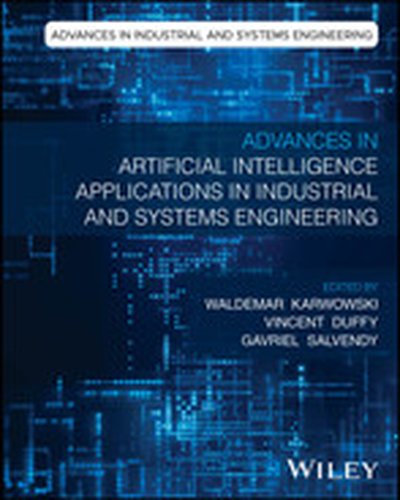
Advances in Artificial Intelligence Applications in Industrial and Systems Engineering

Comprehensive guide offering actionable strategies for enhancing human-centered AI, efficiency, and productivity in industrial and systems engineering through the power of AI. Advances in Artificial Intelligence Applications in Industrial and Systems Engineering is the first book in the Advances in Industrial and Systems Engineering series, offering insights into AI techniques, challenges, and applications across various industrial and systems engineering (ISE) domains. Not only does the book chart current AI trends and tools for effective integration, but it also raises pivotal ethical concerns and explores the latest methodologies, tools, and real-world examples relevant to today’s dynamic ISE landscape. Readers will gain a practical toolkit for effective integration and utilization of AI in system design and operation. The book also presents the current state of AI across big data analytics, machine learning, artificial intelligence tools, cloud-based AI applications, neural-based technologies, modeling and simulation in the metaverse, intelligent systems engineering, and more, and discusses future trends. Written by renowned international contributors for an international audience, Advances in Artificial Intelligence Applications in Industrial and Systems Engineering includes information on: Reinforcement learning, computer vision and perception, and safety considerations for autonomous systems (AS) (NLP) topics including language understanding and generation, sentiment analysis and text classification, and machine translation AI in healthcare, covering medical imaging and diagnostics, drug discovery and personalized medicine, and patient monitoring and predictive analysis Cybersecurity, covering threat detection and intrusion prevention, fraud detection and risk management, and network security Social good applications including poverty alleviation and education, environmental sustainability, and disaster response and humanitarian aid. Advances in Artificial Intelligence Applications in Industrial and Systems Engineering is a timely, essential reference for engineering, computer science, and business professionals worldwide.

In this episode, I sit down with Wendy Turner-Williams, a distinguished tech leader and executive with a deep history at companies like Microsoft and Salesforce. She's of the original minds behind what became Azure Data Factory, among other foundational tech. In this wide-ranging conversation, Wendy charts the trajectory from the early days of the Internet to the current AI-driven hype cycle and looming crisis. She explains how these tools of innovation are now being turned against the workforce and why this technological revolution is fundamentally more disruptive than anything that has come before. This episode is a candid, unfiltered discussion about the real-world impact of AI on jobs, the economy, and our collective future, and a call for leaders to act before it's too late. Timestamps: 00:22 - Catching up: The tough job market and writing new books. 05:49 - Wendy's impressive career history at Microsoft, Salesforce, and Tableau. 06:17 - The origin story of Azure Data Factory and other foundational projects at Microsoft. 09:18 - A personal story about the challenges of being a woman in Big Tech in the early days. 13:02 - A look back at a favorite early-career project: Digitizing physical maps with nascent GPS technology in 2001. 18:11 - The state of the tech industry: "Tech is cannibalizing itself because of AI." 20:31 - The massive, impending shock to the job market and why AI is different from previous industrial revolutions. 27:26 - Why the "human in the loop" is a temporary and misleading solution. 29:55 - Breaking down the numbers: The staggering quantity of white-collar jobs projected to be eliminated. 36:37 - Why leaders are failing to act and conversations are happening behind closed doors without solutions. 38:25 - Discussing potential solutions: Should companies have quotas for their human workforce? 45:21 - The need for "truth tellers" and leaders who are willing to question the current path and drive human-centric transformation. 53:15 - The grim reality for recent graduates with computer science degrees who can't find jobs. 56:22 - The risk of IP hoarding and engineers deliberately crippling systems to protect their jobs. 01:00:20 - Final thoughts: Are we waiting for a "let them eat cake" moment before we see real change?

The manufacturing floor is undergoing a technological revolution with industrial AI at its center. From predictive maintenance to quality control, AI is transforming how products are designed, produced, and maintained. But implementing these technologies isn't just about installing sensors and software—it's about empowering your workforce to embrace new tools and processes. How do you overcome AI hesitancy among experienced workers? What skills should your team develop to make the most of these new capabilities? And with limited resources, how do you prioritize which AI applications will deliver the greatest impact for your specific manufacturing challenges? The answers might be simpler than you think. Barbara Humpton is President and CEO of Siemens Corporation, responsible for strategy and engagement in Siemens’ largest market. Under her leadership, Siemens USA operates across all 50 states and Puerto Rico with 45,000 employees and generated $21.1 billion in revenue in fiscal year 2024. She champions the role of technology in expanding what’s humanly possible and is a strong advocate for workforce development, mentorship, and building sustainable work-life integration. Previously, she was President and CEO of Siemens Government Technologies, leading delivery of Siemens’ products and services to U.S. federal agencies. Before joining Siemens in 2011, she held senior roles at Booz Allen Hamilton and Lockheed Martin, where she oversaw programs in national security, biometrics, border protection, and critical infrastructure, including the FBI’s Next Generation Identification and TSA’s Transportation Workers’ Identification Credential. Olympia Brikis is a seasoned technology and business leader with over a decade of experience in AI research. As the Technology and Engineering Director for Siemens' Industrial AI Research in the U.S., she leads AI strategy, technology roadmapping, and R&D for next-gen AI products. Olympia has a strong track record in developing Generative AI products that integrate industrial and digital ecosystems, driving real-world business impact. She is a recognized thought leader with numerous patents and peer-reviewed publications in AI for manufacturing, predictive analytics, and digital twins. Olympia actively engages with executives, policymakers, and AI practitioners on AI's role in enterprise strategy and workforce transformation. With a background in Computer Science from LMU Munich and an MBA from Wharton, she bridges AI research, product strategy, and enterprise adoption, mentoring the next generation of AI leaders. In the episode, Richie, Barbara, and Olympia explore the transformative power of AI in manufacturing, from predictive maintenance to digital twins, the role of industrial AI in enhancing productivity, the importance of empowering workers with new technology, real-world applications, overcoming AI hesitancy, and much more. Links Mentioned in the Show: Siemens Industrial AI SuiteConnect with Barbara and OlympiaCourse: Implementing AI Solutions in BusinessRelated Episode: Master Your Inner Game to Avoid Burnout with Klaus Kleinfeld, Former CEO at Alcoa and SiemensRewatch RADAR AI where...

The structured data that powers business decisions is more complex than the sequences processed by traditional AI models. Enterprise databases with their interconnected tables of customers, products, and transactions form intricate graphs that contain valuable predictive signals. But how can we effectively extract insights from these complex relationships without extensive manual feature engineering? Graph transformers are revolutionizing this space by treating databases as networks and learning directly from raw data. What if you could build models in hours instead of months while achieving better accuracy? How might this technology change the role of data scientists, allowing them to focus on business impact rather than data preparation? Could this be the missing piece that brings the AI revolution to predictive modeling? Jure Leskovec is a Professor of Computer Science at Stanford University, where he is affiliated with the Stanford AI Lab, the Machine Learning Group, and the Center for Research on Foundation Models. Previously, he served as Chief Scientist at Pinterest and held a research role at the Chan Zuckerberg Biohub. He is also a co-founder of Kumo.AI, a machine learning startup. Leskovec has contributed significantly to the development of Graph Neural Networks and co-authored PyG, a widely-used library in the field. Research from his lab has supported public health efforts during the COVID-19 pandemic and informed product development at companies including Facebook, Pinterest, Uber, YouTube, and Amazon. His work has received several recognitions, including the Microsoft Research Faculty Fellowship (2011), the Okawa Research Award (2012), the Alfred P. Sloan Fellowship (2012), the Lagrange Prize (2015), and the ICDM Research Contributions Award (2019). His research spans social networks, machine learning, data mining, and computational biomedicine, with a focus on drug discovery. He has received 12 best paper awards and five 10-year Test of Time awards at leading academic conferences. In the episode, Richie and Jure explore the need for a foundation model for enterprise data, the limitations of current AI models in predictive tasks, the potential of graph transformers for business data, and the transformative impact of relational foundation models on machine learning workflows, and much more. Links Mentioned in the Show: Jure’s PublicationsKumo AIConnect with JureCourse - Transformer Models with PyTorchRelated Episode: High Performance Generative AI Applications with Ram Sriharsha, CTO at PineconeRewatch RADAR AI  New to DataCamp? Learn on the go using the DataCamp mobile appEmpower your business with world-class data and AI skills with DataCamp for business

Thinking about swapping your 9‑to‑5 for client work, but worried that a long German–style notice period will kill your chances?  In this live interview, seven‑year data‑freelance veteran Dimitri walks through his experience of taking his freelance career to the next level.

About the Speaker: Dimitri Visnadi is an independent data consultant with a focus on data strategy. He has been consulting companies leading the marketing data space such as Unilever, Ferrero, Heineken, and Red Bull.

He has lived and worked in 6 countries across Europe in both corporate and startup organizations. He was part of data departments at Hewlett-Packard (HP) and a Google partnered consulting firm where he was working on data products and strategy.

Having received a Masters in Business Analytics with Computer Science from University College London and a Bachelor in Business Administration from John Cabot University, Dimitri still has close ties to academia and holds a mentor position in entrepreneurship at both institutions. 🕒 TIMECODES00:00 Dimitri’s journey from corporate to freelance data specialist05:41 Job tenure trends, tech career shifts, and freelance types10:50 Freelancing challenges, success, and finding clients17:33 Freelance market trends and Dimitri’s job board23:51 Starting points, top freelance skills, and market insights32:48 Building a lifestyle business: scaling and work-life balance45:30 Data Freelancer course and marketing for freelancers48:33 Subscription services and managing client relationships56:47 Pricing models and transitioning advice1:01:02 Notice periods, networking, and risks in freelancing transition 🔗 CONNECT WITH DataTalksClub Join the community - https://datatalks.club/slack.html Subscribe to our Google calendar to have all our events in your calendar - https://calendar.google.com/calendar/... Check other upcoming events - https://lu.ma/dtc-events LinkedIn - / datatalks-club
Twitter - / datatalksclub
Website - https://datatalks.club/ 🔗 CONNECT WITH DIMITRI Linkedin - https://www.linkedin.com/in/visnadi/

In this episode, Conor and Bryce chat with Jared Hoberock about the NVIDIA Thrust Parallel Algorithms Library and more!. Link to Episode 242 on WebsiteDiscuss this episode, leave a comment, or ask a question (on GitHub)Socials ADSP: The Podcast: TwitterConor Hoekstra: Twitter | BlueSky | MastodonBryce Adelstein Lelbach: TwitterAbout the Guest Jared Hoberock joined NVIDIA Research in October 2008. His interests include parallel programming models and physically-based rendering. Jared is the co-creator of Thrust, a high performance parallel algorithms library. While at NVIDIA, Jared has contributed to the DirectX graphics driver, Gelato, a final frame film renderer, and OptiX, a high-performance, programmable ray tracing engine. Jared received a Ph.D in computer science from the University of Illinois at Urbana-Champaign. He is a two-time recipient of the NVIDIA Graduate Research Fellowship. Show Notes Date Generated: 2025-05-21 Date Released: 2025-07-11 ThrustThrust DocsCUB LibraryCCCL LibrariesIntro Song Info Miss You by Sarah Jansen https://soundcloud.com/sarahjansenmusic Creative Commons — Attribution 3.0 Unported — CC BY 3.0 Free Download / Stream: http://bit.ly/l-miss-you Music promoted by Audio Library https://youtu.be/iYYxnasvfx8

In this episode, Conor and Bryce chat with Jared Hoberock about the NVIDIA Thrust Parallel Algorithms Library, specifically scan and rotate. Link to Episode 241 on WebsiteDiscuss this episode, leave a comment, or ask a question (on GitHub)Socials ADSP: The Podcast: TwitterConor Hoekstra: Twitter | BlueSky | MastodonBryce Adelstein Lelbach: TwitterAbout the Guest Jared Hoberock joined NVIDIA Research in October 2008. His interests include parallel programming models and physically-based rendering. Jared is the co-creator of Thrust, a high performance parallel algorithms library. While at NVIDIA, Jared has contributed to the DirectX graphics driver, Gelato, a final frame film renderer, and OptiX, a high-performance, programmable ray tracing engine. Jared received a Ph.D in computer science from the University of Illinois at Urbana-Champaign. He is a two-time recipient of the NVIDIA Graduate Research Fellowship. Show Notes Date Generated: 2025-05-21 Date Released: 2025-07-04 ThrustThrust DocsNumPyRAPIDS cuDFthrust::inclusive_scanC++98 std::rotatethrust::permutation_iteratorthrust::gatherthrust::adjacent_differenceIntro Song Info Miss You by Sarah Jansen https://soundcloud.com/sarahjansenmusic Creative Commons — Attribution 3.0 Unported — CC BY 3.0 Free Download / Stream: http://bit.ly/l-miss-you Music promoted by Audio Library https://youtu.be/iYYxnasvfx8

How a Complete Beginner in Data Engineering / Junior Computer Science Student Became an Apache Airflow Committer in Just 5 Months—With 70+ PRs and 300 Hours of Contributions This talk is aimed at those who are still hesitant about contributing to Apache Airflow. I hope to inspire and encourage anyone to take the first step and start their journey in open-source—let’s build together!

How a Complete Beginner in Data Engineering / Junior Computer Science Student Became an Apache Airflow Committer in Just 5 Months—With 70+ PRs and 300 Hours of Contributions This talk is aimed at those who are still hesitant about contributing to Apache Airflow. I hope to inspire and encourage anyone to take the first step and start their journey in open-source—let’s build together!

In this episode, Conor and Bryce chat with Jared Hoberock about the NVIDIA Thrust Parallel Algorithms Library, Rust vs C++, Python and more. Link to Episode 240 on WebsiteDiscuss this episode, leave a comment, or ask a question (on GitHub)Socials ADSP: The Podcast: TwitterConor Hoekstra: Twitter | BlueSky | MastodonBryce Adelstein Lelbach: TwitterAbout the Guest Jared Hoberock joined NVIDIA Research in October 2008. His interests include parallel programming models and physically-based rendering. Jared is the co-creator of Thrust, a high performance parallel algorithms library. While at NVIDIA, Jared has contributed to the DirectX graphics driver, Gelato, a final frame film renderer, and OptiX, a high-performance, programmable ray tracing engine. Jared received a Ph.D in computer science from the University of Illinois at Urbana-Champaign. He is a two-time recipient of the NVIDIA Graduate Research Fellowship. Show Notes Date Generated: 2025-05-21 Date Released: 2025-06-27 ThrustThrust Docsiota Algorithmthrust::counting_iteratorthrust::sequenceMLIRNumPyNumbaIntro Song Info Miss You by Sarah Jansen https://soundcloud.com/sarahjansenmusic Creative Commons — Attribution 3.0 Unported — CC BY 3.0 Free Download / Stream: http://bit.ly/l-miss-you Music promoted by Audio Library https://youtu.be/iYYxnasvfx8

Searching for Meaning in the Age of AI

Bryan McCann, You.com’s co-founder and CTO, shares his journey from studying philosophy and meaning to the Stanford Computer Science Department working on groundbreaking AI research alongside Richard Socher. Right now, AI is reshaping everything we hold dear — our jobs, creativity, and identities. It’s also our greatest source of inspiration. The Age of AI is simultaneously a Renaissance, Enlightenment, Industrial Revolution and likely source of humanity’s greatest existential crisis. To surmount this, Bryan will discuss how he uses AI responses as new starting points rather than answers, building teams like neural networks optimized for learning and how the answer to our meaning crisis may be for humans to be more like AI. Exploring AI’s impact on politics, economics, healthcare, education and culture, Bryan asserts that we must all take part in authoring humanity’s new story — AI can inspire us to become something new, rather than merely replace what we are now.