talk-data.com talk-data.com

Topic

Data Engineering

etl data_pipelines big_data

1127

tagged

Activity Trend

127 peak/qtr
2020-Q1 2026-Q1

Activities

1127 activities · Newest first

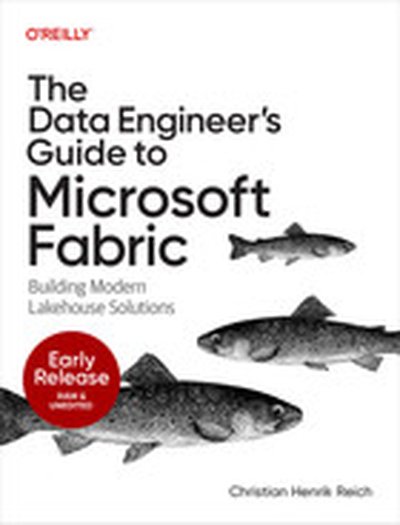
The Data Engineer's Guide to Microsoft Fabric

Modern data engineering is evolving; and with Microsoft Fabric, the entire data platform experience is being redefined. This essential book offers a fresh, hands-on approach to navigating this shift. Rather than being an introduction to features, this guide explains how Fabric's key components—Lakehouse, Warehouse, and Real-Time Intelligence—work under the hood and how to put them to use in realistic workflows. Written by Christian Henrik Reich, a data engineering expert with experience that extends from Databricks to Fabric, this book is a blend of foundational theory and practical implementation of lakehouse solutions in Fabric. You'll explore how engines like Apache Spark and Fabric Warehouse collaborate with Fabric's Real-Time Intelligence solution in an integrated platform, and how to build ETL/ELT pipelines that deliver on speed, accuracy, and scale. Ideal for both new and practicing data engineers, this is your entry point into the fabric of the modern data platform. Acquire a working knowledge of lakehouses, warehouses, and streaming in Fabric Build resilient data pipelines across real-time and batch workloads Apply Python, Spark SQL, T-SQL, and KQL within a unified platform Gain insight into architectural decisions that scale with data needs Learn actionable best practices for engineering clean, efficient, governed solutions
Data Engineering for Multimodal AI

A shift is underway in how organizations approach data infrastructure for AI-driven transformation. As multimodal AI systems and applications become increasingly sophisticated and data hungry, data systems must evolve to meet these complex demands. Data Engineering for Multimodal AI is one of the first practical guides for data engineers, machine learning engineers, and MLOps specialists looking to rapidly master the skills needed to build robust, scalable data infrastructures for multimodal AI systems and applications. You'll follow the entire lifecycle of AI-driven data engineering, from conceptualizing data architectures to implementing data pipelines optimized for multimodal learning in both cloud native and on-premises environments. And each chapter includes step-by-step guides and best practices for implementing key concepts. Design and implement cloud native data architectures optimized for multimodal AI workloads Build efficient and scalable ETL processes for preparing diverse AI training data Implement real-time data processing pipelines for multimodal AI inference Develop and manage feature stores that support multiple data modalities Apply data governance and security practices specific to multimodal AI projects Optimize data storage and retrieval for various types of multimodal ML models Integrate data versioning and lineage tracking in multimodal AI workflows Implement data-quality frameworks to ensure reliable outcomes across data types Design data pipelines that support responsible AI practices in a multimodal context

Data Engineering with Azure Databricks

Master end-to-end data engineering on Azure Databricks. From data ingestion and Delta Lake to CI/CD and real-time streaming, build secure, scalable, and performant data solutions with Spark, Unity Catalog, and ML tools. Key Features Build scalable data pipelines using Apache Spark and Delta Lake Automate workflows and manage data governance with Unity Catalog Learn real-time processing and structured streaming with practical use cases Implement CI/CD, DevOps, and security for production-ready data solutions Explore Databricks-native ML, AutoML, and Generative AI integration Book Description "Data Engineering with Azure Databricks" is your essential guide to building scalable, secure, and high-performing data pipelines using the powerful Databricks platform on Azure. Designed for data engineers, architects, and developers, this book demystifies the complexities of Spark-based workloads, Delta Lake, Unity Catalog, and real-time data processing. Beginning with the foundational role of Azure Databricks in modern data engineering, you’ll explore how to set up robust environments, manage data ingestion with Auto Loader, optimize Spark performance, and orchestrate complex workflows using tools like Azure Data Factory and Airflow. The book offers deep dives into structured streaming, Delta Live Tables, and Delta Lake’s ACID features for data reliability and schema evolution. You’ll also learn how to manage security, compliance, and access controls using Unity Catalog, and gain insights into managing CI/CD pipelines with Azure DevOps and Terraform. With a special focus on machine learning and generative AI, the final chapters guide you in automating model workflows, leveraging MLflow, and fine-tuning large language models on Databricks. Whether you're building a modern data lakehouse or operationalizing analytics at scale, this book provides the tools and insights you need. What you will learn Set up a full-featured Azure Databricks environment Implement batch and streaming ingestion using Auto Loader Optimize Spark jobs with partitioning and caching Build real-time pipelines with structured streaming and DLT Manage data governance using Unity Catalog Orchestrate production workflows with jobs and ADF Apply CI/CD best practices with Azure DevOps and Git Secure data with RBAC, encryption, and compliance standards Use MLflow and Feature Store for ML pipelines Build generative AI applications in Databricks Who this book is for This book is for data engineers, solution architects, cloud professionals, and software engineers seeking to build robust and scalable data pipelines using Azure Databricks. Whether you're migrating legacy systems, implementing a modern lakehouse architecture, or optimizing data workflows for performance, this guide will help you leverage the full power of Databricks on Azure. A basic understanding of Python, Spark, and cloud infrastructure is recommended.

Microsoft Power BI Data Analyst Associate Study Guide

Passing the PL-300 exam with 2025 revisions isn't just about memorization—you need to thoroughly know the basic features of Power BI. However, data professionals must also apply best practices that make Power BI solutions scalable and future-proof. The first half of this go-to companion by Paul Turley provides complete coverage of the PL-300 exam objectives for desktop and self-service users, while the second half equips you with necessary best practices and practical skills for real-world success after the exam. Immerse yourself in exam prep, practice questions, and hands-on references for applying time-tested design patterns in Power BI. You'll learn how to transform raw data into actionable insights using Power Query, DAX, and dimensional modeling. Perfect for data analysts and business intelligence developers, this guide shows how Power BI fits into modern data platforms like Azure and Microsoft Fabric, preparing you for the exam and for the evolving world of data engineering. Understand PL-300 exam topics and key prep strategies Discover scalable, enterprise-grade Power BI solutions using best practices Learn how to correctly apply Power Query, DAX, and visualizations in real-world scenarios, with real business data Uncover how to build for scale See how Power BI fits into modern architectures like Azure and Microsoft Fabric

Data integration tools help organizations access, process, move and transform data. They support use cases like data engineering, modern data architecture, less-technical/business user support and operational data integration. In this session, we'll present the latest Magic Quadrant for Data Integration Tools, discussing vendors and technologies to help you choose the best tool for your needs.

Data integration is a core component of D&A, and it is continuously transforming. This session provides guidance on how best practices for data engineering are evolving to improve data integration and support AI initiatives. It also examines the trends guiding data integration technology, including how data integration tools are leveraging AI features.

D&A leaders must develop DataOps as an essential practice to redefine their data management operations. This involves establishing business value before pursuing significant data engineering initiatives, and preventing duplicated efforts undertaken by different teams in managing the common metadata, security and observability of information assets within the data platforms.

Google Cloud Certified Professional Data Engineer Certification Guide

A guide to pass the GCP Professional Data Engineer exam on your first attempt and upgrade your data engineering skills on GCP. Key Features Fully understand the certification exam content and exam objectives Consolidate your knowledge of all essential exam topics and key concepts Get realistic experience of answering exam-style questions Develop practical skills for everyday use Purchase of this book unlocks access to web-based exam prep resources including mock exams, flashcards, exam tips Book Description The GCP Professional Data Engineer certification validates the fundamental knowledge required to perform data engineering tasks and use GCP services to enhance data engineering processes and further your career in the data engineering/architecting field. This book is a best-in-class study guide that fully covers the GCP Professional Data Engineer exam objectives and helps you pass the exam first time. Complete with clear explanations, chapter review questions, realistic mock exams, and pragmatic solutions, this guide will help you master the core exam concepts and build the understanding you need to go into the exam with the skills and confidence to get the best result you can. With the help of relevant examples, you'll learn fundamental data engineering concepts such as data warehousing and data security. As you progress, you'll delve into the important domains of the exam, including data pipelining, data migration, and data processing. Unlike other study guides, this book contains logical reasoning behind the choice of correct answers based in scenarios and provide you with excellent tips regarding the optimal use of each service, and gives you everything you need to pass the exam and enhance your prospects in the data engineering field. What you will learn Create data solutions and pipelines in GCP Analyze and transform data into useful information Apply data engineering concepts to real scenarios Create secure, cost-effective, valuable GCP workloads Work in the GCP environment with industry best practices Who this book is for This book is for data engineers who want a reliable source for the key concepts and terms present in the most prestigious and highly-sought-after cloud-based data engineering certification. This book will help you improve your data engineering in GCP skills to give you a better chance at earning the GCP Professional Data Engineer Certification. You will already be familiar with the Google Cloud Platform, having either explored it (professionally or personally) for at least a year. You should also have some familiarity with basic data concepts (such as types of data and basic SQL knowledge).

ML and Generative AI in the Data Lakehouse

In today's race to harness generative AI, many teams struggle to integrate these advanced tools into their business systems. While platforms like GPT-4 and Google's Gemini are powerful, they aren't always tailored to specific business needs. This book offers a practical guide to building scalable, customized AI solutions using the full potential of data lakehouse architecture. Author Bennie Haelen covers everything from deploying ML and GenAI models in Databricks to optimizing performance with best practices. In this must-read for data professionals, you'll gain the tools to unlock the power of large language models (LLMs) by seamlessly combining data engineering and data science to create impactful solutions. Learn to build, deploy, and monitor ML and GenAI models on a data lakehouse architecture using Databricks Leverage LLMs to extract deeper, actionable insights from your business data residing in lakehouses Discover how to integrate traditional ML and GenAI models for customized, scalable solutions Utilize open source models to control costs while maintaining model performance and efficiency Implement best practices for optimizing ML and GenAI models within the Databricks platform

Practical Data Engineering with Apache Projects: Solving Everyday Data Challenges with Spark, Iceberg, Kafka, Flink, and More

This book is a comprehensive guide designed to equip you with the practical skills and knowledge necessary to tackle real-world data challenges using Open Source solutions. Focusing on 10 real-world data engineering projects, it caters specifically to data engineers at the early stages of their careers, providing a strong foundation in essential open source tools and techniques such as Apache Spark, Flink, Airflow, Kafka, and many more. Each chapter is dedicated to a single project, starting with a clear presentation of the problem it addresses. You will then be guided through a step-by-step process to solve the problem, leveraging widely-used open-source data tools. This hands-on approach ensures that you not only understand the theoretical aspects of data engineering but also gain valuable experience in applying these concepts to real-world scenarios. At the end of each chapter, the book delves into common challenges that may arise during the implementation of the solution, offering practical advice on troubleshooting these issues effectively. Additionally, the book highlights best practices that data engineers should follow to ensure the robustness and efficiency of their solutions. A major focus of the book is using open-source projects and tools to solve problems encountered in data engineering. In summary, this book is an indispensable resource for data engineers looking to build a strong foundation in the field. By offering practical, real-world projects and emphasizing problem-solving and best practices, it will prepare you to tackle the complex data challenges encountered throughout your career. Whether you are an aspiring data engineer or looking to enhance your existing skills, this book provides the knowledge and tools you need to succeed in the ever-evolving world of data engineering. You Will Learn: The foundational concepts of data engineering and practical experience in solving real-world data engineering problems How to proficiently use open-source data tools like Apache Kafka, Flink, Spark, Airflow, and Trino 10 hands-on data engineering projects Troubleshoot common challenges in data engineering projects Who is this book for: Early-career data engineers and aspiring data engineers who are looking to build a strong foundation in the field; mid-career professionals looking to transition into data engineering roles; and technology enthusiasts interested in gaining insights into data engineering practices and tools.

For the past decade, SQL has reigned king of the data transformation world, and tools like dbt have formed a cornerstone of the modern data stack. Until recently, Python-first alternatives couldn't compete with the scale and performance of modern SQL. Now Ibis can provide the same benefits of SQL execution with a flexible Python dataframe API.

In this talk, you will learn how Ibis supercharges open-source libraries like Kedro, Pandera, and the Boring Semantic Layer and how you can combine these technologies (and a few more) to build and orchestrate scalable data engineering pipelines without sacrificing the comfort (and other advantages) of Python.

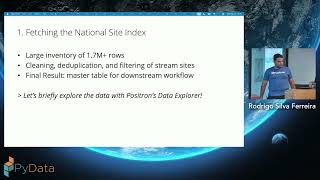
When Rivers Speak: Analyzing Massive Water Quality Datasets using USGS API and Remote SSH in Positron

Rivers have long been storytellers of human history. From the Nile to the Yangtze, they have shaped trade, migration, settlement, and the rise of civilizations. They reveal the traces of human ambition... and the costs of it. Today, from the Charles to the Golden Gate, US rivers continue to tell stories, especially through data.

Over the past decades, extensive water quality monitoring efforts have generated vast public datasets: millions of measurements of pH, dissolved oxygen, temperature, and conductivity collected across the country. These records are more than environmental snapshots; they are archives of political priorities, regulatory choices, and ecological disruptions. Ultimately, they are evidence of how societies interact with their environments, often unevenly.

In this talk, I’ll explore how Python and modern data workflows can help us "listen" to these stories at scale. Using the United States Geological Survey (USGS) Water Data APIs and Remote SSH in Positron, I’ll process terabytes of sensor data spanning several years and regions. I’ll demonstrate that, while Parquet and DuckDB enable scalable exploration of historical records, using Remote SSH is paramount in order to enable large-scale data analysis. By doing so, I hope to answer some analytical questions that can surface patterns linked to industrial growth, regulatory shifts, and climate change.

By treating rivers as both ecological systems and social mirrors, we can begin to see how environmental data encodes histories of inequality, resilience, and transformation.

Whether your interest lies in data engineering, environmental analytics, or the human dimensions of climate and infrastructure, this talk will explore topics at the intersection of environmental science, will offer both technical methods and sociological lenses to understand the stories rivers continue to tell.

From Notebook to Pipeline: Hands-On Data Engineering with Python

In this hands-on tutorial, you'll go from a blank notebook to a fully orchestrated data pipeline built entirely in Python, all in under 90 minutes. You'll learn how to design and deploy end-to-end data pipelines using familiar notebook environments, using Python for your data loading, data transformations, and insights delivery.

We'll dive into the Ingestion-Tranformation-Delivery (ITD) framework for building data pipelines: ingest raw data from cloud object storage, transform the data using Python DataFrames, and deliver insights via a Streamlit application.

Basic familiarity with Python (and/or SQL) is helpful, but not required. By the end of the session, you'll understand practical data engineering patterns and leave with reusable code templates to help you build, orchestrate, and deploy data pipelines from notebook environments.

AWS re:Invent 2025 - Agentic data engineering with AWS Analytics MCP Servers (ANT335)

In this session, we will introduce AWS Analytics Model Context Protocol (MCP) Servers, including the Data Processing MCP Server and Amazon Redshift MCP Server, which enable agentic workflows across AWS Glue, Amazon EMR, Amazon Athena, and Amazon Redshift. You will learn how these open-source tools simplify complex analytics operations through natural language interactions with AI agents. We'll cover MCP server implementation strategies, real-world use cases, architectural patterns for deployment, and production best practices for building intelligent data engineering workflows that understand and orchestrate your analytics environment.

Learn more: More AWS events: https://go.aws/3kss9CP

Subscribe: More AWS videos: http://bit.ly/2O3zS75 More AWS events videos: http://bit.ly/316g9t4

ABOUT AWS: Amazon Web Services (AWS) hosts events, both online and in-person, bringing the cloud computing community together to connect, collaborate, and learn from AWS experts. AWS is the world's most comprehensive and broadly adopted cloud platform, offering over 200 fully featured services from data centers globally. Millions of customers—including the fastest-growing startups, largest enterprises, and leading government agencies—are using AWS to lower costs, become more agile, and innovate faster.

AWSreInvent #AWSreInvent2025 #AWS

AWS re:Invent 2025 - Accelerating data engineering with AI Agents for AWS Analytics (ANT215)

Data engineers face critical time sinks: writing code to build analytics pipelines from scratch and upgrading Apache Spark versions. In this lightning talk, discover how AWS is addressing both challenges with AI agents that accelerate development cycles. Learn how the Amazon SageMaker Data Agent transforms natural language instructions into executable SQL and Python code within SageMaker notebooks, maintaining full context awareness of your data sources and schemas. Then explore the Apache Spark upgrade agent, which accelerates complex multi-month upgrade projects into week-long initiatives through automated code analysis and transformation. Walk away understanding how these agents work to automate manual work from your data engineering workflows, whether you're building new applications or modernizing existing ones.

Learn more: More AWS events: https://go.aws/3kss9CP

Subscribe: More AWS videos: http://bit.ly/2O3zS75 More AWS events videos: http://bit.ly/316g9t4

ABOUT AWS: Amazon Web Services (AWS) hosts events, both online and in-person, bringing the cloud computing community together to connect, collaborate, and learn from AWS experts. AWS is the world's most comprehensive and broadly adopted cloud platform, offering over 200 fully featured services from data centers globally. Millions of customers—including the fastest-growing startups, largest enterprises, and leading government agencies—are using AWS to lower costs, become more agile, and innovate faster.

AWSreInvent #AWSreInvent2025 #AWS

Python's generators offer a simple, elegant way to build lightweight data pipelines. In this talk, we’ll break down generator functions and expressions and walk through practical Data Engineering examples: streaming large datasets in chunks, transforming records without exhausting memory, and using yield for clean setup and teardown. A concise tour of how generators can make data workflows more efficient—and more elegant.

In this talk, Xia He-Bleinagel, Head of Data & Cloud at NOW GmbH, shares her remarkable journey from studying automotive engineering across Europe to leading modern data, cloud, and engineering teams in Germany. We dive into her transition from hands-on engineering to leadership, how she balanced family with career growth, and what it really takes to succeed in today’s cloud, data, and AI job market.

TIMECODES: 00:00 Studying Automotive Engineering Across Europe 08:15 How Andrew Ng Sparked a Machine Learning Journey 11:45 Import–Export Work as an Unexpected Career Boos t17:05 Balancing Family Life with Data Engineering Studies 20:50 From Data Engineer to Head of Data & Cloud 27:46 Building Data Teams & Tackling Tech Debt 30:56 Learning Leadership Through Coaching & Observation 34:17 Management vs. IC: Finding Your Best Fit 38:52 Boosting Developer Productivity with AI Tools 42:47 Succeeding in Germany’s Competitive Data Job Market 46:03 Fast-Track Your Cloud & Data Career 50:03 Mentorship & Supporting Working Moms in Tech 53:03 Cultural & Economic Factors Shaping Women’s Careers 57:13 Top Networking Groups for Women in Data 1:00:13 Turning Domain Expertise into a Data Career Advantage

Connect with Xia- Linkedin - https://www.linkedin.com/in/xia-he-bleinagel-51773585/ - Github - https://github.com/Data-Think-2021 - Website - https://datathinker.de/

Connect with DataTalks.Club: - Join the community - https://datatalks.club/slack.html - Subscribe to our Google calendar to have all our events in your calendar - https://calendar.google.com/calendar/r?cid=ZjhxaWRqbnEwamhzY3A4ODA5azFlZ2hzNjBAZ3JvdXAuY2FsZW5kYXIuZ29vZ2xlLmNvbQ - Check other upcoming events - https://lu.ma/dtc-events - GitHub: https://github.com/DataTalksClub - LinkedIn - https://www.linkedin.com/company/datatalks-club/ - Twitter - https://twitter.com/DataTalksClub - Website - https://datatalks.club/

Summary In this crossover episode, Max Beauchemin explores how multiplayer, multi‑agent engineering is transforming the way individuals and teams build data and AI systems. He digs into the shifting boundary between data and AI engineering, the rise of “context as code,” and how just‑in‑time retrieval via MCP and CLIs lets agents gather what they need without bloating context windows. Max shares hard‑won practices from going “AI‑first” for most tasks, where humans focus on orchestration and taste, and the new bottlenecks that appear — code review, QA, async coordination — when execution accelerates 2–10x. He also dives deep into Agor, his open‑source agent orchestration platform: a spatial, multiplayer workspace that manages Git worktrees and live dev environments, templatizes prompts by workflow zones, supports session forking and sub‑sessions, and exposes an internal MCP so agents can schedule, monitor, and even coordinate other agents.

Announcements Hello and welcome to the Data Engineering Podcast, the show about modern data managementData teams everywhere face the same problem: they're forcing ML models, streaming data, and real-time processing through orchestration tools built for simple ETL. The result? Inflexible infrastructure that can't adapt to different workloads. That's why Cash App and Cisco rely on Prefect. Cash App's fraud detection team got what they needed - flexible compute options, isolated environments for custom packages, and seamless data exchange between workflows. Each model runs on the right infrastructure, whether that's high-memory machines or distributed compute. Orchestration is the foundation that determines whether your data team ships or struggles. ETL, ML model training, AI Engineering, Streaming - Prefect runs it all from ingestion to activation in one platform. Whoop and 1Password also trust Prefect for their data operations. If these industry leaders use Prefect for critical workflows, see what it can do for you at dataengineeringpodcast.com/prefect.Data migrations are brutal. They drag on for months—sometimes years—burning through resources and crushing team morale. Datafold's AI-powered Migration Agent changes all that. Their unique combination of AI code translation and automated data validation has helped companies complete migrations up to 10 times faster than manual approaches. And they're so confident in their solution, they'll actually guarantee your timeline in writing. Ready to turn your year-long migration into weeks? Visit dataengineeringpodcast.com/datafold today for the details.Composable data infrastructure is great, until you spend all of your time gluing it together. Bruin is an open source framework, driven from the command line, that makes integration a breeze. Write Python and SQL to handle the business logic, and let Bruin handle the heavy lifting of data movement, lineage tracking, data quality monitoring, and governance enforcement. Bruin allows you to build end-to-end data workflows using AI, has connectors for hundreds of platforms, and helps data teams deliver faster. Teams that use Bruin need less engineering effort to process data and benefit from a fully integrated data platform. Go to dataengineeringpodcast.com/bruin today to get started. And for dbt Cloud customers, they'll give you $1,000 credit to migrate to Bruin Cloud.Your host is Tobias Macey and today I'm interviewing Maxime Beauchemin about the impact of multi-player multi-agent engineering on individual and team velocity for building better data systemsInterview IntroductionHow did you get involved in the area of data management?Can you start by giving an overview of the types of work that you are relying on AI development agents for?As you bring agents into the mix for software engineering, what are the bottlenecks that start to show up?In my own experience there are a finite number of agents that I can manage in parallel. How does Agor help to increase that limit?How does making multi-agent management a multi-player experience change the dynamics of how you apply agentic engineering workflows?Contact Info LinkedInLinks AgorApache AirflowApache SupersetPresetClaude CodeCodexPlaywright MCPTmuxGit WorktreesOpencode.aiGitHub CodespacesOnaThe intro and outro music is from The Hug by The Freak Fandango Orchestra / CC BY-SA