talk-data.com talk-data.com

Topic

Trino

Apache Trino

query_engine big_data analytics

83

tagged

Activity Trend

14 peak/qtr
2020-Q1 2026-Q1

Activities

83 activities · Newest first

Practical Data Engineering with Apache Projects: Solving Everyday Data Challenges with Spark, Iceberg, Kafka, Flink, and More

This book is a comprehensive guide designed to equip you with the practical skills and knowledge necessary to tackle real-world data challenges using Open Source solutions. Focusing on 10 real-world data engineering projects, it caters specifically to data engineers at the early stages of their careers, providing a strong foundation in essential open source tools and techniques such as Apache Spark, Flink, Airflow, Kafka, and many more. Each chapter is dedicated to a single project, starting with a clear presentation of the problem it addresses. You will then be guided through a step-by-step process to solve the problem, leveraging widely-used open-source data tools. This hands-on approach ensures that you not only understand the theoretical aspects of data engineering but also gain valuable experience in applying these concepts to real-world scenarios. At the end of each chapter, the book delves into common challenges that may arise during the implementation of the solution, offering practical advice on troubleshooting these issues effectively. Additionally, the book highlights best practices that data engineers should follow to ensure the robustness and efficiency of their solutions. A major focus of the book is using open-source projects and tools to solve problems encountered in data engineering. In summary, this book is an indispensable resource for data engineers looking to build a strong foundation in the field. By offering practical, real-world projects and emphasizing problem-solving and best practices, it will prepare you to tackle the complex data challenges encountered throughout your career. Whether you are an aspiring data engineer or looking to enhance your existing skills, this book provides the knowledge and tools you need to succeed in the ever-evolving world of data engineering. You Will Learn: The foundational concepts of data engineering and practical experience in solving real-world data engineering problems How to proficiently use open-source data tools like Apache Kafka, Flink, Spark, Airflow, and Trino 10 hands-on data engineering projects Troubleshoot common challenges in data engineering projects Who is this book for: Early-career data engineers and aspiring data engineers who are looking to build a strong foundation in the field; mid-career professionals looking to transition into data engineering roles; and technology enthusiasts interested in gaining insights into data engineering practices and tools.

AWS re:Invent 2025 - Best practices for building Apache Iceberg based lakehouse architectures on AWS

Discover advanced strategies for implementing Apache Iceberg on AWS, focusing on Amazon S3 Tables and integration of Iceberg Rest Catalog with the lakehouse in Amazon SageMaker. We'll cover performance optimization techniques for Amazon Athena and Amazon Redshift queries, real-time processing using Apache Spark, and integration with Amazon EMR, AWS Glue, and Trino. Explore practical implementations of zero-ETL, change data capture (CDC) patterns, and medallion architecture. Gain hands-on expertise in implementing enterprise-grade lakehouse solutions with Iceberg on AWS.

Learn more: More AWS events: https://go.aws/3kss9CP

Subscribe: More AWS videos: http://bit.ly/2O3zS75 More AWS events videos: http://bit.ly/316g9t4

ABOUT AWS: Amazon Web Services (AWS) hosts events, both online and in-person, bringing the cloud computing community together to connect, collaborate, and learn from AWS experts. AWS is the world's most comprehensive and broadly adopted cloud platform, offering over 200 fully featured services from data centers globally. Millions of customers—including the fastest-growing startups, largest enterprises, and leading government agencies—are using AWS to lower costs, become more agile, and innovate faster.

AWSreInvent #AWSreInvent2025 #AWS

In this twofold session, I'll cover how we've used dbt to bring order in heaps of SQL statements used to manage a datawarehouse. I'd like to share how dbt made our team more efficient and our data warehouse more resilient. Secondly, I'll highlight why dbt enabled a way forward on supporting low-code applications: by leveraging our data warehouse as a backend. I'll dive into systemic design, application architecture & data modelling. Tools/tech covered will be SQL, Trino, Outsystems, GIT, Airflow and of course dbt! Expect practical insights, architectural patterns, and lessons learned from a real-world implementation.

A l’occasion de cette démo, en partant d’une page blanche et de différentes sources de données, nous irons jusqu’à déployer une application Data Analytics augmentée par des LMM en utilisant ces deux produits lancés par OVHcloud en 2025.

OVHcloud DataPlatform : une solution unifiée et permettant vos équipes de gérer en self-service de bout en bout vos projets Data & Analytics : de la collecte de tous types de données, leur exploration, leur stockage, leurs transformations, jusqu’à la construction de tableaux de bords partagés via des applications dédiées. Une service pay-as-you-go pour accélérer de déploiement et simplifier la gestion des projets Data.

AI Endpoints : une solution serverless qui permet aux développeurs d’intégrer facilement des fonctionnalités d'IA avancées à leurs applications. Grâce à plus de 40 modèles open-source de pointe incluant LLM et IA générative – pour des usages comme les agents conversationnels, modèles vocaux, assistants de code, etc. - AI Endpoints démocratise l’utilisation de l'IA, indépendamment de la taille ou du secteur de l'organisation.

Et cela en s’appuyant sur les meilleurs standards Data open-source (Apache Iceberg, Spark, SuperSet, Trino, Jupyter Notebooks…) dans des environnements respectueux de votre souveraineté technologique.

Plongez au cœur du connecteur Trino pour Apache Iceberg ! Au-delà des bases, nous vous invitons à découvrir les dernières nouveautés et les fonctionnalités les plus avancées. À travers des démonstrations en direct, nous explorerons des sujets clés : La gestion des branches et des tags liés aux instantanés (snapshots). Les options de maintenance pour vos tables Iceberg. Le support étendu des métastores (catalogues). Ce talk est l'occasion de maîtriser des aspects souvent méconnus pour optimiser vos tables Iceberg avec Trino.

Summary In this episode of the Data Engineering Podcast Hannes Mühleisen and Mark Raasveldt, the creators of DuckDB, share their work on Duck Lake, a new entrant in the open lakehouse ecosystem. They discuss how Duck Lake, is focused on simplicity, flexibility, and offers a unified catalog and table format compared to other lakehouse formats like Iceberg and Delta. Hannes and Mark share insights into how Duck Lake revolutionizes data architecture by enabling local-first data processing, simplifying deployment of lakehouse solutions, and offering benefits such as encryption features, data inlining, and integration with existing ecosystems.

Announcements Hello and welcome to the Data Engineering Podcast, the show about modern data managementData teams everywhere face the same problem: they're forcing ML models, streaming data, and real-time processing through orchestration tools built for simple ETL. The result? Inflexible infrastructure that can't adapt to different workloads. That's why Cash App and Cisco rely on Prefect. Cash App's fraud detection team got what they needed - flexible compute options, isolated environments for custom packages, and seamless data exchange between workflows. Each model runs on the right infrastructure, whether that's high-memory machines or distributed compute. Orchestration is the foundation that determines whether your data team ships or struggles. ETL, ML model training, AI Engineering, Streaming - Prefect runs it all from ingestion to activation in one platform. Whoop and 1Password also trust Prefect for their data operations. If these industry leaders use Prefect for critical workflows, see what it can do for you at dataengineeringpodcast.com/prefect.Data migrations are brutal. They drag on for months—sometimes years—burning through resources and crushing team morale. Datafold's AI-powered Migration Agent changes all that. Their unique combination of AI code translation and automated data validation has helped companies complete migrations up to 10 times faster than manual approaches. And they're so confident in their solution, they'll actually guarantee your timeline in writing. Ready to turn your year-long migration into weeks? Visit dataengineeringpodcast.com/datafold today for the details. Your host is Tobias Macey and today I'm interviewing Hannes Mühleisen and Mark Raasveldt about DuckLake, the latest entrant into the open lakehouse ecosystemInterview IntroductionHow did you get involved in the area of data management?Can you describe what DuckLake is and the story behind it?What are the particular problems that DuckLake is solving for?How does this compare to the capabilities of MotherDuck?Iceberg and Delta already have a well established ecosystem, but so does DuckDB. Who are the primary personas that you are trying to focus on in these early days of DuckLake?One of the major factors driving the adoption of formats like Iceberg is cost efficiency for large volumes of data. That brings with it challenges of large batch processing of data. How does DuckLake account for these axes of scale?There is also a substantial investment in the ecosystem of technologies that support Iceberg. The most notable ecosystem challenge for DuckDB and DuckLake is in the query layer. How are you thinking about the evolution and growth of that capability beyond DuckDB (e.g. support in Trino/Spark/Flink)?What are your opinions on the viability of a future where DuckLake and Iceberg become a unified standard and implementation? (why can't Iceberg REST catalog implementations just use DuckLake under the hood?)Digging into the specifics of the specification and implementation, what are some of the capabilities that it offers above and beyond Iceberg?Is it now possible to enforce PK/FK constraints, indexing on underlying data?Given that DuckDB has a vector type, how do you think about the support for vector storage/indexing?How do the capabilities of DuckLake and the integration with DuckDB change the ways that data teams design their data architecture and access patterns?What are your thoughts on the impact of "data gravity" in today's data ecosystem, with engines like DuckDB, KuzuDB, LanceDB, etc. available for embedded and edge use cases?What are the most interesting, innovative, or unexpected ways that you have seen DuckLake used?What are the most interesting, unexpected, or challenging lessons that you have learned while working on DuckLake?When is DuckLake the wrong choice?What do you have planned for the future of DuckLake?Contact Info HannesWebsiteMarkWebsiteParting Question From your perspective, what is the biggest gap in the tooling or technology for data management today?Closing Announcements Thank you for listening! Don't forget to check out our other shows. Podcast.init covers the Python language, its community, and the innovative ways it is being used. The AI Engineering Podcast is your guide to the fast-moving world of building AI systems.Visit the site to subscribe to the show, sign up for the mailing list, and read the show notes.If you've learned something or tried out a project from the show then tell us about it! Email [email protected] with your story.Links DuckDBPodcast EpisodeDuckLakeDuckDB LabsMySQLCWIMonetDBIcebergIceberg REST CatalogDeltaHudiLanceDuckDB Iceberg ConnectorACID == Atomicity, Consistency, Isolation, DurabilityMotherDuckMotherDuck Managed DuckLakeTrinoSparkPrestoSpark DuckLake DemoDelta KernelArrowdltS3 TablesAttribute Based Access Control (ABAC)ParquetArrow FlightHadoopHDFSDuckLake RoadmapThe intro and outro music is from The Hug by The Freak Fandango Orchestra / CC BY-SA

Zoom détaillé sur les projets Apache Iceberg et Trino avec Julien Thiaw-Kine et Victor Coustenoble. Tour d'horizon, les acteurs, les promesses et pourquoi la combinaison Iceberg et Trino a du sens. La séparation du compute et du storage avec Iceberg change la façon dont on pense les architectures data. L'approche multi-engine permet de traiter tout type de workload en utilisant le moteur adéquat. Cas d'usage et retour d'expérience de l'utilisation de Iceberg & Trino chez OVHcloud.

Trino is incredibly effective at enabling users to extract insights quickly and effectively from large amount of data located in dispersed and heterogeneous federated data systems. However, some business data problems are more complex than interactive analytics use cases, and are best broken down into a sequence of interdependent steps, a.k.a. a workflow. For these use cases, dedicated software is often required in order to schedule and manage these processes with a principled approach. In this session, we will look at how we can leverage Apache Airflow to orchestrate Trino queries into complex workflows that solve practical batch processing problems, all the while avoiding the use of repetitive, redundant data movement.

Extending the Lakehouse: Power Interoperable Compute With Unity Catalog Open APIs

The lakehouse is built for storage flexibility, but what about compute? In this session, we’ll explore how Unity Catalog enables you to connect and govern multiple compute engines across your data ecosystem. With open APIs and support for the Iceberg REST Catalog, UC lets you extend access to engines like Trino, DuckDB, and Flink while maintaining centralized security, lineage, and interoperability. We will show how you can get started today working with engines like Apache Spark and Starburst to read and write to UC managed tables with some exciting demos. Learn how to bring flexibility to your compute layer—without compromising control.

Iceberg Table Format Adoption and Unified Metadata Catalog Implementation in Lakehouse Platform

DoorDash Data organization actively adopts LakeHouse paradigm. This presentation describes the methodology which allows to migrate the classic Data Warehouse and Data Lake platforms to unified LakeHouse solution.The objective of this effort include Elimination of excessive data movement.Seamless integration and consolidation of the query engine layers, including Snowflake, Databricks, EMR and Trino.Query performance optimization.Abstracting away complexity of underlying storage layers and table formatsStrategic and justified decision on the Unified Metadata catalog used across varios compute platforms

Summary In this episode of the Data Engineering Podcast Alex Albu, tech lead for AI initiatives at Starburst, talks about integrating AI workloads with the lakehouse architecture. From his software engineering roots to leading data engineering efforts, Alex shares insights on enhancing Starburst's platform to support AI applications, including an AI agent for data exploration and using AI for metadata enrichment and workload optimization. He discusses the challenges of integrating AI with data systems, innovations like SQL functions for AI tasks and vector databases, and the limitations of traditional architectures in handling AI workloads. Alex also shares his vision for the future of Starburst, including support for new data formats and AI-driven data exploration tools.

Announcements Hello and welcome to the Data Engineering Podcast, the show about modern data managementData migrations are brutal. They drag on for months—sometimes years—burning through resources and crushing team morale. Datafold's AI-powered Migration Agent changes all that. Their unique combination of AI code translation and automated data validation has helped companies complete migrations up to 10 times faster than manual approaches. And they're so confident in their solution, they'll actually guarantee your timeline in writing. Ready to turn your year-long migration into weeks? Visit dataengineeringpodcast.com/datafold today for the details.This is a pharmaceutical Ad for Soda Data Quality. Do you suffer from chronic dashboard distrust? Are broken pipelines and silent schema changes wreaking havoc on your analytics? You may be experiencing symptoms of Undiagnosed Data Quality Syndrome — also known as UDQS. Ask your data team about Soda. With Soda Metrics Observability, you can track the health of your KPIs and metrics across the business — automatically detecting anomalies before your CEO does. It’s 70% more accurate than industry benchmarks, and the fastest in the category, analyzing 1.1 billion rows in just 64 seconds. And with Collaborative Data Contracts, engineers and business can finally agree on what “done” looks like — so you can stop fighting over column names, and start trusting your data again.Whether you’re a data engineer, analytics lead, or just someone who cries when a dashboard flatlines, Soda may be right for you. Side effects of implementing Soda may include: Increased trust in your metrics, reduced late-night Slack emergencies, spontaneous high-fives across departments, fewer meetings and less back-and-forth with business stakeholders, and in rare cases, a newfound love of data. Sign up today to get a chance to win a $1000+ custom mechanical keyboard. Visit dataengineeringpodcast.com/soda to sign up and follow Soda’s launch week. It starts June 9th. This episode is brought to you by Coresignal, your go-to source for high-quality public web data to power best-in-class AI products. Instead of spending time collecting, cleaning, and enriching data in-house, use ready-made multi-source B2B data that can be smoothly integrated into your systems via APIs or as datasets. With over 3 billion data records from 15+ online sources, Coresignal delivers high-quality data on companies, employees, and jobs. It is powering decision-making for more than 700 companies across AI, investment, HR tech, sales tech, and market intelligence industries. A founding member of the Ethical Web Data Collection Initiative, Coresignal stands out not only for its data quality but also for its commitment to responsible data collection practices. Recognized as the top data provider by Datarade for two consecutive years, Coresignal is the go-to partner for those who need fresh, accurate, and ethically sourced B2B data at scale. Discover how Coresignal's data can enhance your AI platforms. Visit dataengineeringpodcast.com/coresignal to start your free 14-day trial.Your host is Tobias Macey and today I'm interviewing Alex Albu about how Starburst is extending the lakehouse to support AI workloadsInterview IntroductionHow did you get involved in the area of data management?Can you start by outlining the interaction points of AI with the types of data workflows that you are supporting with Starburst?What are some of the limitations of warehouse and lakehouse systems when it comes to supporting AI systems?What are the points of friction for engineers who are trying to employ LLMs in the work of maintaining a lakehouse environment?Methods such as tool use (exemplified by MCP) are a means of bolting on AI models to systems like Trino. What are some of the ways that is insufficient or cumbersome?Can you describe the technical implementation of the AI-oriented features that you have incorporated into the Starburst platform?What are the foundational architectural modifications that you had to make to enable those capabilities?For the vector storage and indexing, what modifications did you have to make to iceberg?What was your reasoning for not using a format like Lance?For teams who are using Starburst and your new AI features, what are some examples of the workflows that they can expect?What new capabilities are enabled by virtue of embedding AI features into the interface to the lakehouse?What are the most interesting, innovative, or unexpected ways that you have seen Starburst AI features used?What are the most interesting, unexpected, or challenging lessons that you have learned while working on AI features for Starburst?When is Starburst/lakehouse the wrong choice for a given AI use case?What do you have planned for the future of AI on Starburst?Contact Info LinkedInParting Question From your perspective, what is the biggest gap in the tooling or technology for data management today?Closing Announcements Thank you for listening! Don't forget to check out our other shows. Podcast.init covers the Python language, its community, and the innovative ways it is being used. The AI Engineering Podcast is your guide to the fast-moving world of building AI systems.Visit the site to subscribe to the show, sign up for the mailing list, and read the show notes.If you've learned something or tried out a project from the show then tell us about it! Email [email protected] with your story.Links StarburstPodcast EpisodeAWS AthenaMCP == Model Context ProtocolLLM Tool UseVector EmbeddingsRAG == Retrieval Augmented GenerationAI Engineering Podcast EpisodeStarburst Data ProductsLanceLanceDBParquetORCpgvectorStarburst IcehouseThe intro and outro music is from The Hug by The Freak Fandango Orchestra / CC BY-SA

Future-proof your data architecture: Learn how DoorDash built a data lakehouse powered by Starburst to achieve a 20-30% faster time to insights. Akshat Nair shares lessons learned about what drove DoorDash to move beyond Snowflake to embrace the lakehouse. He will share his rationale for selecting Trino as their lakehouse query engine and why his team chose Starburst over open source. Discover how DoorDash seamlessly queries diverse sources, including Snowflake, Postgres, and data lake table formats, achieving faster data-driven decision-making at scale with cost benefits.

Summary In this episode of the Data Engineering Podcast Sida Shen, product manager at CelerData, talks about StarRocks, a high-performance analytical database. Sida discusses the inception of StarRocks, which was forked from Apache Doris in 2020 and evolved into a high-performance Lakehouse query engine. He explains the architectural design of StarRocks, highlighting its capabilities in handling high concurrency and low latency queries, and its integration with open table formats like Apache Iceberg, Delta Lake, and Apache Hudi. Sida also discusses how StarRocks differentiates itself from other query engines by supporting on-the-fly joins and eliminating the need for denormalization pipelines, and shares insights into its use cases, such as customer-facing analytics and real-time data processing, as well as future directions for the platform.

Announcements Hello and welcome to the Data Engineering Podcast, the show about modern data managementData migrations are brutal. They drag on for months—sometimes years—burning through resources and crushing team morale. Datafold's AI-powered Migration Agent changes all that. Their unique combination of AI code translation and automated data validation has helped companies complete migrations up to 10 times faster than manual approaches. And they're so confident in their solution, they'll actually guarantee your timeline in writing. Ready to turn your year-long migration into weeks? Visit dataengineeringpodcast.com/datafold today for the details.Your host is Tobias Macey and today I'm interviewing Sida Shen about StarRocks, a high performance analytical database supporting shared nothing and shared data patternsInterview IntroductionHow did you get involved in the area of data management?Can you describe what StarRocks is and the story behind it?There are numerous analytical databases on the market. What are the attributes of StarRocks that differentiate it from other options?Can you describe the architecture of StarRocks?What are the "-ilities" that are foundational to the design of the system?How have the design and focus of the project evolved since it was first created?What are the tradeoffs involved in separating the communication layer from the data layers?The tiered architecture enables the shared nothing and shared data behaviors, which allows for the implementation of lakehouse patterns. What are some of the patterns that are possible due to the single interface/dual pattern nature of StarRocks?The shared data implementation has cacheing built in to accelerate interaction with datasets. What are some of the limitations/edge cases that operators and consumers should be aware of?StarRocks supports management of lakehouse tables (Iceberg, Delta, Hudi, etc.), which overlaps with use cases for Trino/Presto/Dremio/etc. What are the cases where StarRocks acts as a replacement for those systems vs. a supplement to them?The other major category of engines that StarRocks overlaps with is OLAP databases (e.g. Clickhouse, Firebolt, etc.). Why might someone use StarRocks in addition to or in place of those techologies?We would be remiss if we ignored the dominating trend of AI and the systems that support it. What is the role of StarRocks in the context of an AI application?What are the most interesting, innovative, or unexpected ways that you have seen StarRocks used?What are the most interesting, unexpected, or challenging lessons that you have learned while working on StarRocks?When is StarRocks the wrong choice?What do you have planned for the future of StarRocks?Contact Info LinkedInParting Question From your perspective, what is the biggest gap in the tooling or technology for data management today?Closing Announcements Thank you for listening! Don't forget to check out our other shows. Podcast.init covers the Python language, its community, and the innovative ways it is being used. The AI Engineering Podcast is your guide to the fast-moving world of building AI systems.Visit the site to subscribe to the show, sign up for the mailing list, and read the show notes.If you've learned something or tried out a project from the show then tell us about it! Email [email protected] with your story.Links StarRocksCelerDataApache DorisSIMD == Single Instruction Multiple DataApache IcebergClickHousePodcast EpisodeDruidFireboltPodcast EpisodeSnowflakeBigQueryTrinoDatabricksDremioData LakehouseDelta LakeApache HiveC++Cost-Based OptimizerIceberg Summit Tencent Games PresentationApache PaimonLancePodcast EpisodeDelta UniformApache ArrowStarRocks Python UDFDebeziumPodcast EpisodeThe intro and outro music is from The Hug by The Freak Fandango Orchestra / CC BY-SA
Streaming data with Apache Kafka® has become the backbone of modern day applications. While streams are ideal for continuous data flow, they lack built-in querying capability. Unlike databases with indexed lookups, Kafka's append-only logs are designed for high throughput processing, not for on-demand querying. This necessitates teams to build additional infrastructure to enable query capabilities for streaming data. Traditional methods replicate this data into external stores such as relational databases like PostgreSQL for operational workloads and object storage like S3 with Flink, Spark, or Trino for analytical use cases. While useful sometimes, these methods deepen the divide between operational and analytical estates, creating silos, complex ETL pipelines, and issues with schema mismatches, freshness, and failures.\n\nIn this session, we’ll explore and see live demos of some solutions to unify the operational and analytical estates, eliminating data silos. We’ll start with stream processing using Kafka Streams, Apache Flink®, and SQL implementations, then cover integration of relational databases with real-time analytics databases such as Apache Pinot® and ClickHouse. Finally, we’ll dive into modern approaches like Apache Iceberg® with Tableflow, which simplifies data preparation by seamlessly representing Kafka topics and associated schemas as Iceberg or Delta tables in a few clicks. While there's no single right answer to this problem, as responsible system builders, we must understand our options and trade-offs to build robust architectures.

Summary In this episode of the Data Engineering Podcast Rajan Goyal, CEO and co-founder of Datapelago, talks about improving efficiencies in data processing by reimagining system architecture. Rajan explains the shift from hyperconverged to disaggregated and composable infrastructure, highlighting the importance of accelerated computing in modern data centers. He discusses the evolution from proprietary to open, composable stacks, emphasizing the role of open table formats and the need for a universal data processing engine, and outlines Datapelago's strategy to leverage existing frameworks like Spark and Trino while providing accelerated computing benefits.

Announcements Hello and welcome to the Data Engineering Podcast, the show about modern data managementData migrations are brutal. They drag on for months—sometimes years—burning through resources and crushing team morale. Datafold's AI-powered Migration Agent changes all that. Their unique combination of AI code translation and automated data validation has helped companies complete migrations up to 10 times faster than manual approaches. And they're so confident in their solution, they'll actually guarantee your timeline in writing. Ready to turn your year-long migration into weeks? Visit dataengineeringpodcast.com/datafold today for the details.Your host is Tobias Macey and today I'm interviewing Rajan Goyal about how to drastically improve efficiencies in data processing by re-imagining the system architectureInterview IntroductionHow did you get involved in the area of data management?Can you start by outlining the main factors that contribute to performance challenges in data lake environments?The different components of open data processing systems have evolved from different starting points with different objectives. In your experience, how has that un-planned and un-synchronized evolution of the ecosystem hindered the capabilities and adoption of open technologies?The introduction of a new cross-cutting capability (e.g. Iceberg) has typically taken a substantial amount of time to gain support across different engines and ecosystems. What do you see as the point of highest leverage to improve the capabilities of the entire stack with the least amount of co-ordination?What was the motivating insight that led you to invest in the technology that powers Datapelago?Can you describe the system design of Datapelago and how it integrates with existing data engines?The growth in the generation and application of unstructured data is a notable shift in the work being done by data teams. What are the areas of overlap in the fundamental nature of data (whether structured, semi-structured, or unstructured) that you are able to exploit to bridge the processing gap?What are the most interesting, innovative, or unexpected ways that you have seen Datapelago used?What are the most interesting, unexpected, or challenging lessons that you have learned while working on Datapelago?When is Datapelago the wrong choice?What do you have planned for the future of Datapelago?Contact Info LinkedInParting Question From your perspective, what is the biggest gap in the tooling or technology for data management today?Links DatapelagoMIPS ArchitectureARM ArchitectureAWS NitroMellanoxNvidiaVon Neumann ArchitectureTPU == Tensor Processing UnitFPGA == Field-Programmable Gate ArraySparkTrinoIcebergPodcast EpisodeDelta LakePodcast EpisodeHudiPodcast EpisodeApache GlutenIntermediate RepresentationTuring CompletenessLLVMAmdahl's LawLSTM == Long Short-Term MemoryThe intro and outro music is from The Hug by The Freak Fandango Orchestra / CC BY-SA
In this episode, I had the pleasure of speaking with Ken Pickering, VP of Engineering at Going, about the intricacies of streaming data into a Trino and Iceberg lakehouse. Ken shared his journey from product engineering to becoming deeply involved in data-centric roles, highlighting his experiences in ecommerce and InsurTech. At Going, Ken leads the data platform team, focusing on finding travel deals for consumers, a task that involves handling massive volumes of flight data and event stream information.

Ken explained the dual approach of passive and active search strategies used by Going to manage the vast data landscape. Passive search involves aggregating data from global distribution systems, while active search is more transactional, querying specific flight prices. This approach helps Going sift through approximately 50 petabytes of data annually to identify the best travel deals.

We delved into the technical architecture supporting these operations, including the use of Confluent for data streaming, Starburst Galaxy for transformation, and Databricks for modeling. Ken emphasized the importance of an open lakehouse architecture, which allows for flexibility and scalability as the business grows.

Ken also discussed the composition of Going's engineering and data teams, highlighting the collaborative nature of their work and the reliance on vendor tooling to streamline operations. He shared insights into the challenges and strategies of managing data life cycles, ensuring data quality, and maintaining uptime for consumer-facing applications.

Throughout our conversation, Ken provided a glimpse into the future of Going's data architecture, including potential expansions into other travel modes and the integration of large language models for enhanced customer interaction. This episode offers a comprehensive look at the complexities and innovations in building a data-driven travel advisory service.

Delta Lake: The Definitive Guide

Ready to simplify the process of building data lakehouses and data pipelines at scale? In this practical guide, learn how Delta Lake is helping data engineers, data scientists, and data analysts overcome key data reliability challenges with modern data engineering and management techniques. Authors Denny Lee, Tristen Wentling, Scott Haines, and Prashanth Babu (with contributions from Delta Lake maintainer R. Tyler Croy) share expert insights on all things Delta Lake--including how to run batch and streaming jobs concurrently and accelerate the usability of your data. You'll also uncover how ACID transactions bring reliability to data lakehouses at scale. This book helps you: Understand key data reliability challenges and how Delta Lake solves them Explain the critical role of Delta transaction logs as a single source of truth Learn the Delta Lake ecosystem with technologies like Apache Flink, Kafka, and Trino Architect data lakehouses with the medallion architecture Optimize Delta Lake performance with features like deletion vectors and liquid clustering

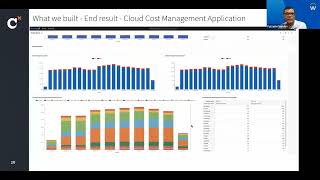
Coalesce 2024: How dbt transformed FinOps cost analysis at Workday

Eric will share the team's experience with dbt and tell the development story of bringing Workday FinOps cost analysis to cloud engineers and stakeholders. He will describe how the team is using dbt, Trino and Lightdash to build a new data platform that is now a key part of their data-driven business decision process in multiple organizations within Workday. Plus, he'll show how they created a secure, efficient, and scalable platform — through dbt governance features — to drive those successful data projects.

Speakers: Eric Pu Senior Software Engineer Workday

Pattabhi Nanduri FinOps Data Engineer Workday

Read the blog to learn about the latest dbt Cloud features announced at Coalesce, designed to help organizations embrace analytics best practices at scale https://www.getdbt.com/blog/coalesce-2024-product-announcements

Summary As data architectures become more elaborate and the number of applications of data increases, it becomes increasingly challenging to locate and access the underlying data. Gravitino was created to provide a single interface to locate and query your data. In this episode Junping Du explains how Gravitino works, the capabilities that it unlocks, and how it fits into your data platform. Announcements Hello and welcome to the Data Engineering Podcast, the show about modern data managementYour host is Tobias Macey and today I'm interviewing Junping Du about Gravitino, an open source metadata service for a unified view of all of your schemasInterview IntroductionHow did you get involved in the area of data management?Can you describe what Gravitino is and the story behind it?What problems are you solving with Gravitino?What are the methods that teams have relied on in the absence of Gravitino to address those use cases?What led to the Hive Metastore being the default for so long?What are the opportunities for innovation and new functionality in the metadata service?The documentation suggests that Gravitino has overlap with a number of tool categories such as table schema (Hive metastore), metadata repository (Open Metadata), data federation (Trino/Alluxio). What are the capabilities that it can completely replace, and which will require other systems for more comprehensive functionality?What are the capabilities that you are explicitly keeping out of scope for Gravitino?Can you describe the technical architecture of Gravitino?How have the design and scope evolved from when you first started working on it?Can you describe how Gravitino integrates into an overall data platform?In a typical day, what are the different ways that a data engineer or data analyst might interact with Gravitino?One of the features that you highlight is centralized permissions management. Can you describe the access control model that you use for unifying across underlying sources?What are the most interesting, innovative, or unexpected ways that you have seen Gravitino used?What are the most interesting, unexpected, or challenging lessons that you have learned while working on Gravitino?When is Gravitino the wrong choice?What do you have planned for the future of Gravitino?Contact Info LinkedInGitHubParting Question From your perspective, what is the biggest gap in the tooling or technology for data management today?Closing Announcements Thank you for listening! Don't forget to check out our other shows. Podcast.init covers the Python language, its community, and the innovative ways it is being used. The AI Engineering Podcast is your guide to the fast-moving world of building AI systems.Visit the site to subscribe to the show, sign up for the mailing list, and read the show notes.If you've learned something or tried out a project from the show then tell us about it! Email [email protected] with your story.Links GravitinoHadoopDatastratoPyTorchRayData FabricHiveIcebergPodcast EpisodeHive MetastoreTrinoOpenMetadataPodcast EpisodeAlluxioAtlanPodcast EpisodeSparkThriftThe intro and outro music is from The Hug by The Freak Fandango Orchestra / CC BY-SA
Summary In this episode of the Data Engineering Podcast, host Tobias Macey welcomes back Chris Berg, CEO of DataKitchen, to discuss his ongoing mission to simplify the lives of data engineers. Chris explains the challenges faced by data engineers, such as constant system failures, the need for rapid changes, and high customer demands. Chris delves into the concept of DataOps, its evolution, and the misappropriation of related terms like data mesh and data observability. He emphasizes the importance of focusing on processes and systems rather than just tools to improve data engineering workflows. Chris also introduces DataKitchen's open-source tools, DataOps TestGen and DataOps Observability, designed to automate data quality validation and monitor data journeys in production. Announcements Hello and welcome to the Data Engineering Podcast, the show about modern data managementData lakes are notoriously complex. For data engineers who battle to build and scale high quality data workflows on the data lake, Starburst is an end-to-end data lakehouse platform built on Trino, the query engine Apache Iceberg was designed for, with complete support for all table formats including Apache Iceberg, Hive, and Delta Lake. Trusted by teams of all sizes, including Comcast and Doordash. Want to see Starburst in action? Go to dataengineeringpodcast.com/starburst and get $500 in credits to try Starburst Galaxy today, the easiest and fastest way to get started using Trino.Your host is Tobias Macey and today I'm interviewing Chris Bergh about his tireless quest to simplify the lives of data engineersInterview IntroductionHow did you get involved in the area of data management?Can you describe what DataKitchen is and the story behind it?You helped to define and popularize "DataOps", which then went through a journey of misappropriation similar to "DevOps", and has since faded in use. What is your view on the realities of "DataOps" today?Out of the popularized wave of "DataOps" tools came subsequent trends in data observability, data reliability engineering, etc. How have those cycles influenced the way that you think about the work that you are doing at DataKitchen?The data ecosystem went through a massive growth period over the past ~7 years, and we are now entering a cycle of consolidation. What are the fundamental shifts that we have gone through as an industry in the management and application of data?What are the challenges that never went away?You recently open sourced the dataops-testgen and dataops-observability tools. What are the outcomes that you are trying to produce with those projects?What are the areas of overlap with existing tools and what are the unique capabilities that you are offering?Can you talk through the technical implementation of your new obserability and quality testing platform?What does the onboarding and integration process look like?Once a team has one or both tools set up, what are the typical points of interaction that they will have over the course of their workday?What are the most interesting, innovative, or unexpected ways that you have seen dataops-observability/testgen used?What are the most interesting, unexpected, or challenging lessons that you have learned while working on promoting DataOps?What do you have planned for the future of your work at DataKitchen?Contact Info LinkedInParting Question From your perspective, what is the biggest gap in the tooling or technology for data management today?Links DataKitchenPodcast EpisodeNASADataOps ManifestoData Reliability EngineeringData ObservabilitydbtDevOps Enterprise SummitBuilding The Data Warehouse by Bill Inmon (affiliate link)dataops-testgen, dataops-observabilityFree Data Quality and Data Observability CertificationDatabricksDORA MetricsDORA for dataThe intro and outro music is from The Hug by The Freak Fandango Orchestra / CC BY-SA