talk-data.com talk-data.com

Topic

Data Lakehouse

data_architecture data_warehouse data_lake

489

tagged

Activity Trend

118 peak/qtr
2020-Q1 2026-Q1

Activities

489 activities · Newest first

The Data Engineer's Guide to Microsoft Fabric

Modern data engineering is evolving; and with Microsoft Fabric, the entire data platform experience is being redefined. This essential book offers a fresh, hands-on approach to navigating this shift. Rather than being an introduction to features, this guide explains how Fabric's key components—Lakehouse, Warehouse, and Real-Time Intelligence—work under the hood and how to put them to use in realistic workflows. Written by Christian Henrik Reich, a data engineering expert with experience that extends from Databricks to Fabric, this book is a blend of foundational theory and practical implementation of lakehouse solutions in Fabric. You'll explore how engines like Apache Spark and Fabric Warehouse collaborate with Fabric's Real-Time Intelligence solution in an integrated platform, and how to build ETL/ELT pipelines that deliver on speed, accuracy, and scale. Ideal for both new and practicing data engineers, this is your entry point into the fabric of the modern data platform. Acquire a working knowledge of lakehouses, warehouses, and streaming in Fabric Build resilient data pipelines across real-time and batch workloads Apply Python, Spark SQL, T-SQL, and KQL within a unified platform Gain insight into architectural decisions that scale with data needs Learn actionable best practices for engineering clean, efficient, governed solutions

Data Engineering with Azure Databricks

Master end-to-end data engineering on Azure Databricks. From data ingestion and Delta Lake to CI/CD and real-time streaming, build secure, scalable, and performant data solutions with Spark, Unity Catalog, and ML tools. Key Features Build scalable data pipelines using Apache Spark and Delta Lake Automate workflows and manage data governance with Unity Catalog Learn real-time processing and structured streaming with practical use cases Implement CI/CD, DevOps, and security for production-ready data solutions Explore Databricks-native ML, AutoML, and Generative AI integration Book Description "Data Engineering with Azure Databricks" is your essential guide to building scalable, secure, and high-performing data pipelines using the powerful Databricks platform on Azure. Designed for data engineers, architects, and developers, this book demystifies the complexities of Spark-based workloads, Delta Lake, Unity Catalog, and real-time data processing. Beginning with the foundational role of Azure Databricks in modern data engineering, you’ll explore how to set up robust environments, manage data ingestion with Auto Loader, optimize Spark performance, and orchestrate complex workflows using tools like Azure Data Factory and Airflow. The book offers deep dives into structured streaming, Delta Live Tables, and Delta Lake’s ACID features for data reliability and schema evolution. You’ll also learn how to manage security, compliance, and access controls using Unity Catalog, and gain insights into managing CI/CD pipelines with Azure DevOps and Terraform. With a special focus on machine learning and generative AI, the final chapters guide you in automating model workflows, leveraging MLflow, and fine-tuning large language models on Databricks. Whether you're building a modern data lakehouse or operationalizing analytics at scale, this book provides the tools and insights you need. What you will learn Set up a full-featured Azure Databricks environment Implement batch and streaming ingestion using Auto Loader Optimize Spark jobs with partitioning and caching Build real-time pipelines with structured streaming and DLT Manage data governance using Unity Catalog Orchestrate production workflows with jobs and ADF Apply CI/CD best practices with Azure DevOps and Git Secure data with RBAC, encryption, and compliance standards Use MLflow and Feature Store for ML pipelines Build generative AI applications in Databricks Who this book is for This book is for data engineers, solution architects, cloud professionals, and software engineers seeking to build robust and scalable data pipelines using Azure Databricks. Whether you're migrating legacy systems, implementing a modern lakehouse architecture, or optimizing data workflows for performance, this guide will help you leverage the full power of Databricks on Azure. A basic understanding of Python, Spark, and cloud infrastructure is recommended.

ML and Generative AI in the Data Lakehouse

In today's race to harness generative AI, many teams struggle to integrate these advanced tools into their business systems. While platforms like GPT-4 and Google's Gemini are powerful, they aren't always tailored to specific business needs. This book offers a practical guide to building scalable, customized AI solutions using the full potential of data lakehouse architecture. Author Bennie Haelen covers everything from deploying ML and GenAI models in Databricks to optimizing performance with best practices. In this must-read for data professionals, you'll gain the tools to unlock the power of large language models (LLMs) by seamlessly combining data engineering and data science to create impactful solutions. Learn to build, deploy, and monitor ML and GenAI models on a data lakehouse architecture using Databricks Leverage LLMs to extract deeper, actionable insights from your business data residing in lakehouses Discover how to integrate traditional ML and GenAI models for customized, scalable solutions Utilize open source models to control costs while maintaining model performance and efficiency Implement best practices for optimizing ML and GenAI models within the Databricks platform

Engineering Lakehouses with Open Table Formats

Engineering Lakehouses with Open Table Formats introduces the architecture and capabilities of open table formats like Apache Iceberg, Apache Hudi, and Delta Lake. The book guides you through the design, implementation, and optimization of lakehouses that can handle modern data processing requirements effectively with real-world practical insights. What this Book will help me do Understand the fundamentals of open table formats and their benefits in lakehouse architecture. Learn how to implement performant data processing using tools like Apache Spark and Flink. Master advanced topics like indexing, partitioning, and interoperability between data formats. Explore data lifecycle management and integration with frameworks like Apache Airflow and dbt. Build secure lakehouses with regulatory compliance using best practices detailed in the book. Author(s) Dipankar Mazumdar and Vinoth Govindarajan are seasoned professionals with extensive experience in big data processing and software architecture. They bring their expertise from working with data lakehouses and are known for their ability to explain complex technical concepts clearly. Their collaborative approach brings valuable insights into the latest trends in data management. Who is it for? This book is ideal for data engineers, architects, and software professionals aiming to master modern lakehouse architectures. If you are familiar with data lakes or warehouses and wish to transition to an open data architectural design, this book is suited for you. Readers should have basic knowledge of databases, Python, and Apache Spark for the best experience.

AWS re:Invent 2025 - Best practices for building Apache Iceberg based lakehouse architectures on AWS

Discover advanced strategies for implementing Apache Iceberg on AWS, focusing on Amazon S3 Tables and integration of Iceberg Rest Catalog with the lakehouse in Amazon SageMaker. We'll cover performance optimization techniques for Amazon Athena and Amazon Redshift queries, real-time processing using Apache Spark, and integration with Amazon EMR, AWS Glue, and Trino. Explore practical implementations of zero-ETL, change data capture (CDC) patterns, and medallion architecture. Gain hands-on expertise in implementing enterprise-grade lakehouse solutions with Iceberg on AWS.

Learn more: More AWS events: https://go.aws/3kss9CP

Subscribe: More AWS videos: http://bit.ly/2O3zS75 More AWS events videos: http://bit.ly/316g9t4

ABOUT AWS: Amazon Web Services (AWS) hosts events, both online and in-person, bringing the cloud computing community together to connect, collaborate, and learn from AWS experts. AWS is the world's most comprehensive and broadly adopted cloud platform, offering over 200 fully featured services from data centers globally. Millions of customers—including the fastest-growing startups, largest enterprises, and leading government agencies—are using AWS to lower costs, become more agile, and innovate faster.

AWSreInvent #AWSreInvent2025 #AWS

AWS re:Invent 2025 - Accelerate analytics and AI w/ an open and secure lakehouse architecture-ANT309

Data lakes, data warehouses, or both? Join this session to explore how to build a unified, open, and secure data lakehouse architecture, fully compatible with Apache Iceberg, in Amazon SageMaker. Learn how the lakehouse breaks down data silos and opens your data estate offering flexibility to use your preferred query engines and tools that accelerate time to insights. Learn about recent launches that improve data interoperability and performance, and enable large language models (LLMs) and AI agents to interact with your data. Discover robust security features, including consistent fine-grained access controls, attribute-based access control, and tag-based access control that help democratize data without compromises.

Learn more: More AWS events: https://go.aws/3kss9CP

Subscribe: More AWS videos: http://bit.ly/2O3zS75 More AWS events videos: http://bit.ly/316g9t4

ABOUT AWS: Amazon Web Services (AWS) hosts events, both online and in-person, bringing the cloud computing community together to connect, collaborate, and learn from AWS experts. AWS is the world's most comprehensive and broadly adopted cloud platform, offering over 200 fully featured services from data centers globally. Millions of customers—including the fastest-growing startups, largest enterprises, and leading government agencies—are using AWS to lower costs, become more agile, and innovate faster.

AWSreInvent #AWSreInvent2025 #AWS

AWS re:Invent 2025 - What's new with Amazon SageMaker in the era of unified data and AI (ANT216)

Learn the latest in data and AI development with the next generation of Amazon SageMaker. In this session, we'll cover new innovations that are transforming how enterprises build, deploy, and scale analytics and AI. Dive deep into the features of SageMaker Unified Studio, discover the latest catalog capabilities, and see how our lakehouse architecture is breaking down silos between data, analytics, and AI. From streamlined development experiences to enterprise-grade governance, you'll discover why Amazon SageMaker is the best place to to work with your data at AWS.

Learn more: More AWS events: https://go.aws/3kss9CP

Subscribe: More AWS videos: http://bit.ly/2O3zS75 More AWS events videos: http://bit.ly/316g9t4

ABOUT AWS: Amazon Web Services (AWS) hosts events, both online and in-person, bringing the cloud computing community together to connect, collaborate, and learn from AWS experts. AWS is the world's most comprehensive and broadly adopted cloud platform, offering over 200 fully featured services from data centers globally. Millions of customers—including the fastest-growing startups, largest enterprises, and leading government agencies—are using AWS to lower costs, become more agile, and innovate faster.

AWSreInvent #AWSreInvent2025 #AWS

In this episode, Ciro Greco (Co-founder & CEO, Bauplan) joins me to discuss why the future of data infrastructure must be "Code-First" and how this philosophy accidentally created the perfect environment for AI Agents.

We explore why the "Modern Data Stack" isn't ready for autonomous agents and why a programmable lakehouse is the solution. Ciro explains that while we trust agents to write code (because we can roll it back), allowing them to write data requires strict safety rails.

He breaks down how Bauplan uses "Git for Data" semantics - branching, isolation, and transactionality - to provide an air-gapped sandbox where agents can safely operate without corrupting production data. Welcome to the future of the lakehouse.

Bauplan: https://www.bauplanlabs.com/

In this episode, Tristan Handy sits down with Chang She — a co-creator of Pandas and now CEO of LanceDB — to explore the convergence of analytics and AI engineering. The team at LanceDB is rebuilding the data lake from the ground up with AI as a first principle, starting with a new AI-native file format called Lance. Tristan traces Chang's journey as one of the original contributors to the pandas library to building a new infrastructure layer for AI-native data. Learn why vector databases alone aren't enough, why agents require new architecture, and how LanceDB is building a AI lakehouse for the future. For full show notes and to read 6+ years of back issues of the podcast's companion newsletter, head to https://roundup.getdbt.com. The Analytics Engineering Podcast is sponsored by dbt Labs.

Discover how to supercharge analytics and AI workflows using Azure Databricks and Microsoft Fabric. This hands-on lab explores native AI/BI features in Azure Databricks, including ML-powered insights and real-time analytics. Learn multiple ways to serve data to Power BI, with a deep dive into Direct Lake mode with Fabric. Ideal for developers, data scientists, data analysts, and engineers modernizing BI with lakehouse architecture in the AI era.

Please RSVP and arrive at least 5 minutes before the start time, at which point remaining spaces are open to standby attendees.

Discover how to supercharge analytics and AI workflows using Azure Databricks and Microsoft Fabric. This hands-on lab explores native AI/BI features in Azure Databricks, including ML-powered insights and real-time analytics. Learn multiple ways to serve data to Power BI, with a deep dive into Direct Lake mode with Fabric. Ideal for developers, data scientists, data analysts, and engineers modernizing BI with lakehouse architecture in the AI era.

Please RSVP and arrive at least 5 minutes before the start time, at which point remaining spaces are open to standby attendees.

Discover how to supercharge analytics and AI workflows using Azure Databricks and Microsoft Fabric. This hands-on lab explores native AI/BI features in Azure Databricks, including ML-powered insights and real-time analytics. Learn multiple ways to serve data to Power BI, with a deep dive into Direct Lake mode with Fabric. Ideal for developers, data scientists, data analysts, and engineers modernizing BI with lakehouse architecture in the AI era.

Please RSVP and arrive at least 5 minutes before the start time, at which point remaining spaces are open to standby attendees.

Discover how to supercharge analytics and AI workflows using Azure Databricks and Microsoft Fabric. This hands-on lab explores native AI/BI features in Azure Databricks, including ML-powered insights and real-time analytics. Learn multiple ways to serve data to Power BI, with a deep dive into Direct Lake mode with Fabric. Ideal for developers, data scientists, data analysts, and engineers modernizing BI with lakehouse architecture in the AI era.

Please RSVP and arrive at least 5 minutes before the start time, at which point remaining spaces are open to standby attendees.

Bring software-engineering discipline to your data. Learn how Microsoft Fabric integrates Git and deployment pipelines to take a branch from validation to production—fast and safe. Learn how to use parameterized deployments for tables and views, run automated checks, and avoid common pitfalls like broken shortcuts. Walk away with practical patterns to operationalize your Lakehouse with confidence and speed.

The lakehouse promised to unify our data, but popular formats can feel bloated and hard to use for most real-world workloads. If you've ever felt that the complexity and operational overhead of "Big Data" tools are overkill, you're not alone. What if your lakehouse could be simple, fast, and maybe even a little fun? Enter DuckLake , the native lakehouse format, managed on MotherDuck. It delivers the powerful features you need like ACID transactions, time travel, and schema evolution without the heavyweight baggage. This approach truly makes massive data sets feel like Small Data. This workshop is a practical, step-by-step walkthrough for the data practitioner. We'll get straight to the point and show you how to build a fully functional, serverless lakehouse from scratch. You will learn: The Architecture: We’ll explore how DuckLake's design choices make it fundamentally simpler and faster for analytical queries compared to its JVM-based cousins. The Workflow: Through hands-on examples, you'll create a DuckLake table, perform atomic updates, and use time travel—all with the simple SQL you already know. The MotherDuck Advantage: Discover how the serverless platform makes it easy to manage, share, and query your DuckLake tables, enabling a seamless hybrid workflow between your laptop and the cloud.

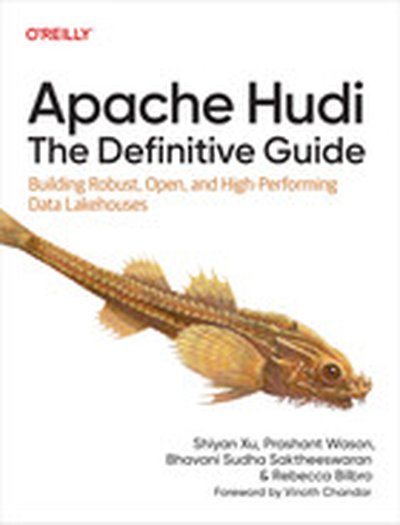
Apache Hudi: The Definitive Guide

Overcome challenges in building transactional guarantees on rapidly changing data by using Apache Hudi. With this practical guide, data engineers, data architects, and software architects will discover how to seamlessly build an interoperable lakehouse from disparate data sources and deliver faster insights using your query engine of choice. Authors Shiyan Xu, Prashant Wason, Bhavani Sudha Saktheeswaran, and Rebecca Bilbro provide practical examples and insights to help you unlock the full potential of data lakehouses for different levels of analytics, from batch to interactive to streaming. You'll also learn how to evaluate storage choices and leverage built-in automated table optimizations to build, maintain, and operate production data applications. Understand the need for transactional data lakehouses and the challenges associated with building them Explore data ecosystem support provided by Apache Hudi for popular data sources and query engines Perform different write and read operations on Apache Hudi tables and effectively use them for various use cases, including batch and stream applications Apply different storage techniques and considerations such as indexing and clustering to maximize your lakehouse performance Build end-to-end incremental data pipelines using Apache Hudi for faster ingestion and fresher analytics

Session: When Microsoft Fabric was released, it came with Apache Spark out of the box. Spark’s ability to work with more programming languages opened up possibilities for creating data-driven and automated lakehouses. With Python Notebooks, we have a better tool for handling metadata, automation, and processing of more trivial workloads, while still having the option to use Spark Notebooks for handling more demanding processing. We will cover: The difference between Python Notebooks and a Single Node Spark cluster, and why Spark Notebooks are more costly and less performant with certain types of workloads. When to use Python Notebooks and when to use Spark Notebooks. Where to use Python Notebooks in a meta-driven Lakehouse. A brief introduction to tooling and move workload between Python Notebooks and Spark Notebooks. How to avoid overload the Lakehouse tech stack with python technologies. Costs

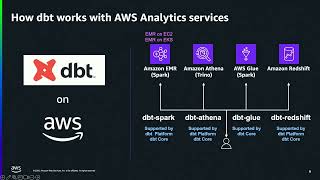
Best practice for leveraging Amazon Analytic Services + dbt

As organizations increasingly adopt modern data stacks, the combination of dbt and AWS Analytics services emerged as a powerful pairing for analytics engineering at scale. This session will explore proven strategies and hard-learned lessons for optimizing this technology stack to use dbt-athena, dbt-redshift, and dbt-glue to deliver reliable, performant data transformations. We will also cover case studies, best practices, and modern lakehouse scenarios with Apache Iceberg and Amazon S3 Tables.