talk-data.com talk-data.com

Topic

Spark

Apache Spark

big_data distributed_computing analytics

581

tagged

Activity Trend

71 peak/qtr
2020-Q1 2026-Q1

Activities

581 activities · Newest first

The Data Engineer's Guide to Microsoft Fabric

Modern data engineering is evolving; and with Microsoft Fabric, the entire data platform experience is being redefined. This essential book offers a fresh, hands-on approach to navigating this shift. Rather than being an introduction to features, this guide explains how Fabric's key components—Lakehouse, Warehouse, and Real-Time Intelligence—work under the hood and how to put them to use in realistic workflows. Written by Christian Henrik Reich, a data engineering expert with experience that extends from Databricks to Fabric, this book is a blend of foundational theory and practical implementation of lakehouse solutions in Fabric. You'll explore how engines like Apache Spark and Fabric Warehouse collaborate with Fabric's Real-Time Intelligence solution in an integrated platform, and how to build ETL/ELT pipelines that deliver on speed, accuracy, and scale. Ideal for both new and practicing data engineers, this is your entry point into the fabric of the modern data platform. Acquire a working knowledge of lakehouses, warehouses, and streaming in Fabric Build resilient data pipelines across real-time and batch workloads Apply Python, Spark SQL, T-SQL, and KQL within a unified platform Gain insight into architectural decisions that scale with data needs Learn actionable best practices for engineering clean, efficient, governed solutions
High Performance Spark, 2nd Edition

Apache Spark is amazing when everything clicks. But if you haven't seen the performance improvements you expected or still don't feel confident enough to use Spark in production, this practical book is for you. Authors Holden Karau, Rachel Warren, and Anya Bida walk you through the secrets of the Spark code base, and demonstrate performance optimizations that will help your data pipelines run faster, scale to larger datasets, and avoid costly antipatterns. Ideal for data engineers, software engineers, data scientists, and system administrators, the second edition of High Performance Spark presents new use cases, code examples, and best practices for Spark 3.x and beyond. This book gives you a fresh perspective on this continually evolving framework and shows you how to work around bumps on your Spark and PySpark journey. With this book, you'll learn how to: Accelerate your ML workflows with integrations including PyTorch Handle key skew and take advantage of Spark's new dynamic partitioning Make your code reliable with scalable testing and validation techniques Make Spark high performance Deploy Spark on Kubernetes and similar environments Take advantage of GPU acceleration with RAPIDS and resource profiles Get your Spark jobs to run faster Use Spark to productionize exploratory data science projects Handle even larger datasets with Spark Gain faster insights by reducing pipeline running times

Data Engineering with Azure Databricks

Master end-to-end data engineering on Azure Databricks. From data ingestion and Delta Lake to CI/CD and real-time streaming, build secure, scalable, and performant data solutions with Spark, Unity Catalog, and ML tools. Key Features Build scalable data pipelines using Apache Spark and Delta Lake Automate workflows and manage data governance with Unity Catalog Learn real-time processing and structured streaming with practical use cases Implement CI/CD, DevOps, and security for production-ready data solutions Explore Databricks-native ML, AutoML, and Generative AI integration Book Description "Data Engineering with Azure Databricks" is your essential guide to building scalable, secure, and high-performing data pipelines using the powerful Databricks platform on Azure. Designed for data engineers, architects, and developers, this book demystifies the complexities of Spark-based workloads, Delta Lake, Unity Catalog, and real-time data processing. Beginning with the foundational role of Azure Databricks in modern data engineering, you’ll explore how to set up robust environments, manage data ingestion with Auto Loader, optimize Spark performance, and orchestrate complex workflows using tools like Azure Data Factory and Airflow. The book offers deep dives into structured streaming, Delta Live Tables, and Delta Lake’s ACID features for data reliability and schema evolution. You’ll also learn how to manage security, compliance, and access controls using Unity Catalog, and gain insights into managing CI/CD pipelines with Azure DevOps and Terraform. With a special focus on machine learning and generative AI, the final chapters guide you in automating model workflows, leveraging MLflow, and fine-tuning large language models on Databricks. Whether you're building a modern data lakehouse or operationalizing analytics at scale, this book provides the tools and insights you need. What you will learn Set up a full-featured Azure Databricks environment Implement batch and streaming ingestion using Auto Loader Optimize Spark jobs with partitioning and caching Build real-time pipelines with structured streaming and DLT Manage data governance using Unity Catalog Orchestrate production workflows with jobs and ADF Apply CI/CD best practices with Azure DevOps and Git Secure data with RBAC, encryption, and compliance standards Use MLflow and Feature Store for ML pipelines Build generative AI applications in Databricks Who this book is for This book is for data engineers, solution architects, cloud professionals, and software engineers seeking to build robust and scalable data pipelines using Azure Databricks. Whether you're migrating legacy systems, implementing a modern lakehouse architecture, or optimizing data workflows for performance, this guide will help you leverage the full power of Databricks on Azure. A basic understanding of Python, Spark, and cloud infrastructure is recommended.

We are at the start of a massive, AI-driven feedback loop. A loop between a universal language, Python, a universal engine, Spark, and universal storage, Open Table Formats, that will accelerate us from simple automation to fully agentic, automated data management. This session helps D&A leaders assess their strategy for navigating this disruptive transition and its opportunities and risks.

Gartner research shows that technical excellence alone rarely shifts mindsets or drives cultural change. If you want your business to truly think differently about data, you need to stop “selling” capabilities and start “marketing” value, using the same tactics as world-class consumer brands. This session unveils a new playbook for D&A leaders to build and execute a marketing plan that transforms culture and boosts adoption, with Gartner insights and real-world examples. Learn why most D&A strategies fail, how to apply proven marketing principles, and spark enthusiasm for data across your organization.

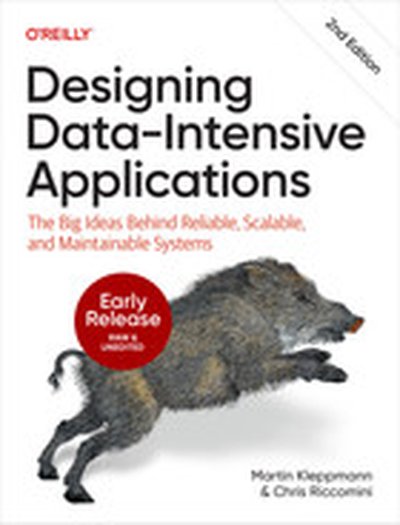
Designing Data-Intensive Applications, 2nd Edition

Data is at the center of many challenges in system design today. Difficult issues such as scalability, consistency, reliability, efficiency, and maintainability need to be resolved. In addition, there's an overwhelming variety of tools and analytical systems, including relational databases, NoSQL datastores, plus data warehouses and data lakes. What are the right choices for your application? How do you make sense of all these buzzwords? In this second edition, authors Martin Kleppmann and Chris Riccomini build on the foundation laid in the acclaimed first edition, integrating new technologies and emerging trends. You'll be guided through the maze of decisions and trade-offs involved in building a modern data system, from choosing the right tools like Spark and Flink to understanding the intricacies of data laws like the GDPR. Peer under the hood of the systems you already use, and learn to use them more effectively Make informed decisions by identifying the strengths and weaknesses of different tools Navigate the trade-offs around consistency, scalability, fault tolerance, and complexity Understand the distributed systems research upon which modern databases are built Peek behind the scenes of major online services, and learn from their architectures

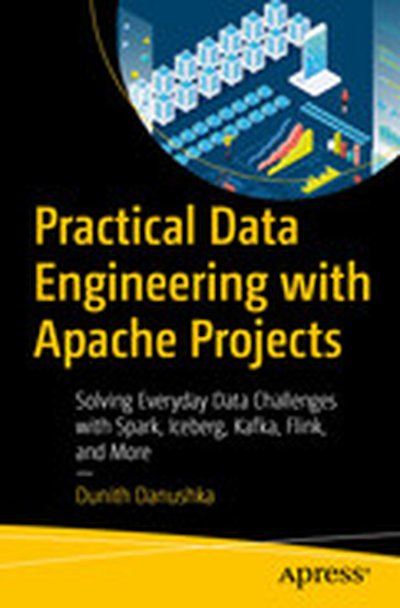
Practical Data Engineering with Apache Projects: Solving Everyday Data Challenges with Spark, Iceberg, Kafka, Flink, and More

This book is a comprehensive guide designed to equip you with the practical skills and knowledge necessary to tackle real-world data challenges using Open Source solutions. Focusing on 10 real-world data engineering projects, it caters specifically to data engineers at the early stages of their careers, providing a strong foundation in essential open source tools and techniques such as Apache Spark, Flink, Airflow, Kafka, and many more. Each chapter is dedicated to a single project, starting with a clear presentation of the problem it addresses. You will then be guided through a step-by-step process to solve the problem, leveraging widely-used open-source data tools. This hands-on approach ensures that you not only understand the theoretical aspects of data engineering but also gain valuable experience in applying these concepts to real-world scenarios. At the end of each chapter, the book delves into common challenges that may arise during the implementation of the solution, offering practical advice on troubleshooting these issues effectively. Additionally, the book highlights best practices that data engineers should follow to ensure the robustness and efficiency of their solutions. A major focus of the book is using open-source projects and tools to solve problems encountered in data engineering. In summary, this book is an indispensable resource for data engineers looking to build a strong foundation in the field. By offering practical, real-world projects and emphasizing problem-solving and best practices, it will prepare you to tackle the complex data challenges encountered throughout your career. Whether you are an aspiring data engineer or looking to enhance your existing skills, this book provides the knowledge and tools you need to succeed in the ever-evolving world of data engineering. You Will Learn: The foundational concepts of data engineering and practical experience in solving real-world data engineering problems How to proficiently use open-source data tools like Apache Kafka, Flink, Spark, Airflow, and Trino 10 hands-on data engineering projects Troubleshoot common challenges in data engineering projects Who is this book for: Early-career data engineers and aspiring data engineers who are looking to build a strong foundation in the field; mid-career professionals looking to transition into data engineering roles; and technology enthusiasts interested in gaining insights into data engineering practices and tools.

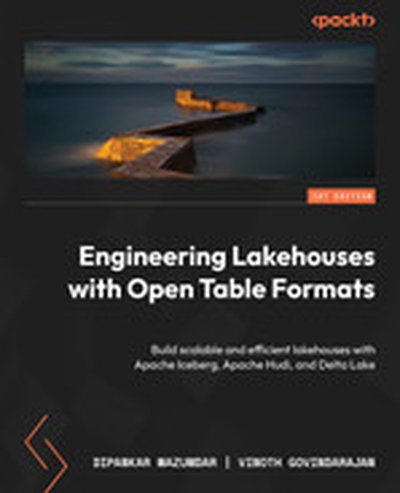
Engineering Lakehouses with Open Table Formats

Engineering Lakehouses with Open Table Formats introduces the architecture and capabilities of open table formats like Apache Iceberg, Apache Hudi, and Delta Lake. The book guides you through the design, implementation, and optimization of lakehouses that can handle modern data processing requirements effectively with real-world practical insights. What this Book will help me do Understand the fundamentals of open table formats and their benefits in lakehouse architecture. Learn how to implement performant data processing using tools like Apache Spark and Flink. Master advanced topics like indexing, partitioning, and interoperability between data formats. Explore data lifecycle management and integration with frameworks like Apache Airflow and dbt. Build secure lakehouses with regulatory compliance using best practices detailed in the book. Author(s) Dipankar Mazumdar and Vinoth Govindarajan are seasoned professionals with extensive experience in big data processing and software architecture. They bring their expertise from working with data lakehouses and are known for their ability to explain complex technical concepts clearly. Their collaborative approach brings valuable insights into the latest trends in data management. Who is it for? This book is ideal for data engineers, architects, and software professionals aiming to master modern lakehouse architectures. If you are familiar with data lakes or warehouses and wish to transition to an open data architectural design, this book is suited for you. Readers should have basic knowledge of databases, Python, and Apache Spark for the best experience.

Most data science projects start with a simple notebook—a spark of curiosity, some exploration, and a handful of promising results. But what happens when that experiment needs to grow up and go into production?

This talk follows the story of a single machine learning exploration that matures into a full-fledged ETL pipeline. We’ll walk through the practical steps and real-world challenges that come up when moving from a Jupyter notebook to something robust enough for daily use.

We’ll cover how to:

  • Set clear objectives and document the process from the beginning
  • Break messy notebook logic into modular, reusable components
  • Choose the right tools (Papermill, nbconvert, shell scripts) based on your workflow—not just the hype
  • Track environments and dependencies to make sure your project runs tomorrow the way it did today
  • Handle data integrity, schema changes, and even evolving labels as your datasets shift over time

And as a bonus: bring your results to life with interactive visualizations using tools like PyScript, Voila, and Panel + HoloViz

Efficient Time-Series Forecasting with Thousands of Local Models on Databricks

In industries like energy and retail, forecasting often requires local models when each time series has unique behavior — though training thousands of them can be overwhelming. However, training and managing thousands of such models presents scalability and operational challenges. This talk shows how we scaled local models on Databricks by leveraging the Pandas API on Spark, and shares practical lessons on storage, reuse, and scaling challenges to make this approach efficient when it’s truly needed

AWS re:Invent 2025 - Best practices for building Apache Iceberg based lakehouse architectures on AWS

Discover advanced strategies for implementing Apache Iceberg on AWS, focusing on Amazon S3 Tables and integration of Iceberg Rest Catalog with the lakehouse in Amazon SageMaker. We'll cover performance optimization techniques for Amazon Athena and Amazon Redshift queries, real-time processing using Apache Spark, and integration with Amazon EMR, AWS Glue, and Trino. Explore practical implementations of zero-ETL, change data capture (CDC) patterns, and medallion architecture. Gain hands-on expertise in implementing enterprise-grade lakehouse solutions with Iceberg on AWS.

Learn more: More AWS events: https://go.aws/3kss9CP

Subscribe: More AWS videos: http://bit.ly/2O3zS75 More AWS events videos: http://bit.ly/316g9t4

ABOUT AWS: Amazon Web Services (AWS) hosts events, both online and in-person, bringing the cloud computing community together to connect, collaborate, and learn from AWS experts. AWS is the world's most comprehensive and broadly adopted cloud platform, offering over 200 fully featured services from data centers globally. Millions of customers—including the fastest-growing startups, largest enterprises, and leading government agencies—are using AWS to lower costs, become more agile, and innovate faster.

AWSreInvent #AWSreInvent2025 #AWS

Before StatQuest became the go-to learning companion for millions of AI and ML practitioners… Before the “BAM! Double BAM! Triple BAM!” became a teaching tool that many learners adore...

There was just one guy in a genetics lab, trying desperately to explain his data analysis to coworkers so they didn't think he was working magic.

In this deeply personal and inspiring episode, Joshua Starmer (CEO & Founder | StatQuest) shares the real story behind his rise — a journey shaped by strategy, struggle, blunt feedback, and a relentless desire to make complicated ideas simple.

What you’ll discover: 🔹How Josh went from helping colleagues in a genetics lab to becoming a renowned educator, treasuring his first 9 views and 2 subscribers as a big win. 🔹How early feedback Josh received as a kid became a quiet spark — motivating him to improve how he explained things and ultimately shaping the teaching style millions now rely on. 🔹How his method for breaking down complex topics with unique tools like his iconic BAM! help make learning lighter and less intimidating. 🔹His thoughts on AI tutors, avatars, and interactive learning and how ethics, bias, and hallucinations relate to next-gen learning.

This is more than a conversation about statistics, data science, AI, education, or YouTube. It’s the story of a researcher who never imagined starting a learning platform, yet became one of the most trusted teachers in statistics and machine learning—turning frustration into clarity, confusion into curiosity, and small beginnings into a massive global impact.

📌 If you’ve ever struggled with PCA, logistic regression, K-means clustering, neural networks, or any tricky stats and ML concepts… chances are StatQuest made it click. Now, hear from the creator himself about what goes on behind the scenes. Now you’ll finally understand how he made it click.

🔹A must-listen for: AI/ML learners, data scientists, educators, content creators, self-taught enthusiasts, and anyone who’s faced the fear of “I’m not good at explaining things.”Prepare to walk away inspired — and with a renewed belief that clarity is a superpower anyone can learn.

AWS re:Invent 2025 - Accelerating data engineering with AI Agents for AWS Analytics (ANT215)

Data engineers face critical time sinks: writing code to build analytics pipelines from scratch and upgrading Apache Spark versions. In this lightning talk, discover how AWS is addressing both challenges with AI agents that accelerate development cycles. Learn how the Amazon SageMaker Data Agent transforms natural language instructions into executable SQL and Python code within SageMaker notebooks, maintaining full context awareness of your data sources and schemas. Then explore the Apache Spark upgrade agent, which accelerates complex multi-month upgrade projects into week-long initiatives through automated code analysis and transformation. Walk away understanding how these agents work to automate manual work from your data engineering workflows, whether you're building new applications or modernizing existing ones.

Learn more: More AWS events: https://go.aws/3kss9CP

Subscribe: More AWS videos: http://bit.ly/2O3zS75 More AWS events videos: http://bit.ly/316g9t4

ABOUT AWS: Amazon Web Services (AWS) hosts events, both online and in-person, bringing the cloud computing community together to connect, collaborate, and learn from AWS experts. AWS is the world's most comprehensive and broadly adopted cloud platform, offering over 200 fully featured services from data centers globally. Millions of customers—including the fastest-growing startups, largest enterprises, and leading government agencies—are using AWS to lower costs, become more agile, and innovate faster.

AWSreInvent #AWSreInvent2025 #AWS

AWS re:Invent 2025 - Enterprise-scale ETL optimization for Apache Spark (ANT336)

Apache Spark on AWS Glue, Amazon EMR, and Amazon SageMaker enhances the optimization of large-scale data processing workloads. These include faster read and write throughput, accelerated processing of common file formats, and expanded Amazon S3 support through the S3A protocol for greater flexibility in write operations. In this session, we'll explore recent enhancements in Spark for distributed computation and in-memory storage to enable efficient data aggregation and job optimization. We'll also demonstrate how these innovations, combined with Spark's native capabilities, strengthen governance and encryption to help you optimize performance while maintaining control and compliance. Join us to learn how to build unified, secure, and high-performance ETL pipelines on AWS using Spark.

Learn more: More AWS events: https://go.aws/3kss9CP

Subscribe: More AWS videos: http://bit.ly/2O3zS75 More AWS events videos: http://bit.ly/316g9t4

ABOUT AWS: Amazon Web Services (AWS) hosts events, both online and in-person, bringing the cloud computing community together to connect, collaborate, and learn from AWS experts. AWS is the world's most comprehensive and broadly adopted cloud platform, offering over 200 fully featured services from data centers globally. Millions of customers—including the fastest-growing startups, largest enterprises, and leading government agencies—are using AWS to lower costs, become more agile, and innovate faster.

AWSreInvent #AWSreInvent2025 #AWS

In this lab you'll help a coffee shop unify their operational and analytical workloads with Cosmos DB in Microsoft Fabric. You'll blend operational data with curated sources using cross-database SQL, stream and visualize real-time POS events, and create a gold layer for personalization. Finally, you'll implement reverse ETL to Cosmos for lightning-fast serving and train a lightweight Spark notebook model to deliver the right offer at the right time before your customer’s order is ready.

Please RSVP and arrive at least 5 minutes before the start time, at which point remaining spaces are open to standby attendees.