talk-data.com talk-data.com

Topic

Spark

Apache Spark

big_data distributed_computing analytics

20

tagged

Activity Trend

71 peak/qtr
2020-Q1 2026-Q1

Activities

Showing filtered results

Filtering by: O'Reilly Data Science Books ×
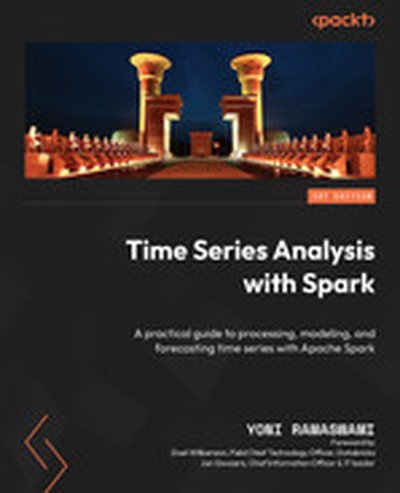
Time Series Analysis with Spark

Time Series Analysis with Spark provides a practical introduction to leveraging Apache Spark and Databricks for time series analysis. You'll learn to prepare, model, and deploy robust and scalable time series solutions for real-world applications. From data preparation to advanced generative AI techniques, this guide prepares you to excel in big data analytics. What this Book will help me do Understand the core concepts and architectures of Apache Spark for time series analysis. Learn to clean, organize, and prepare time series data for big data environments. Gain expertise in choosing, building, and training various time series models tailored to specific projects. Master techniques to scale your models in production using Spark and Databricks. Explore the integration of advanced technologies such as generative AI to enhance predictions and derive insights. Author(s) Yoni Ramaswami, a Senior Solutions Architect at Databricks, has extensive experience in data engineering and AI solutions. With a focus on creating innovative big data and AI strategies across industries, Yoni authored this book to empower professionals to efficiently handle time series data. Yoni's approachable style ensures that both foundational concepts and advanced techniques are accessible to readers. Who is it for? This book is ideal for data engineers, machine learning engineers, data scientists, and analysts interested in enhancing their expertise in time series analysis using Apache Spark and Databricks. Whether you're new to time series or looking to refine your skills, you'll find both foundational insights and advanced practices explained clearly. A basic understanding of Spark is helpful but not required.
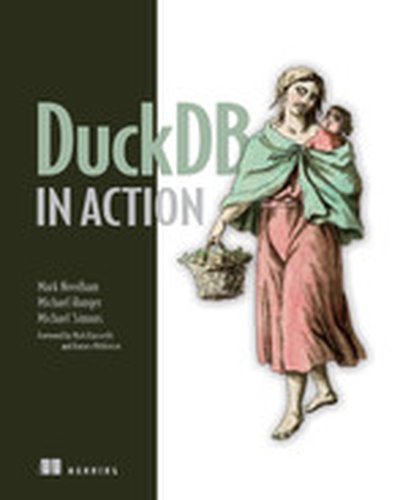
DuckDB in Action

Dive into DuckDB and start processing gigabytes of data with ease—all with no data warehouse. DuckDB is a cutting-edge SQL database that makes it incredibly easy to analyze big data sets right from your laptop. In DuckDB in Action you’ll learn everything you need to know to get the most out of this awesome tool, keep your data secure on prem, and save you hundreds on your cloud bill. From data ingestion to advanced data pipelines, you’ll learn everything you need to get the most out of DuckDB—all through hands-on examples. Open up DuckDB in Action and learn how to: Read and process data from CSV, JSON and Parquet sources both locally and remote Write analytical SQL queries, including aggregations, common table expressions, window functions, special types of joins, and pivot tables Use DuckDB from Python, both with SQL and its "Relational"-API, interacting with databases but also data frames Prepare, ingest and query large datasets Build cloud data pipelines Extend DuckDB with custom functionality Pragmatic and comprehensive, DuckDB in Action introduces the DuckDB database and shows you how to use it to solve common data workflow problems. You won’t need to read through pages of documentation—you’ll learn as you work. Get to grips with DuckDB's unique SQL dialect, learning to seamlessly load, prepare, and analyze data using SQL queries. Extend DuckDB with both Python and built-in tools such as MotherDuck, and gain practical insights into building robust and automated data pipelines. About the Technology DuckDB makes data analytics fast and fun! You don’t need to set up a Spark or run a cloud data warehouse just to process a few hundred gigabytes of data. DuckDB is easily embeddable in any data analytics application, runs on a laptop, and processes data from almost any source, including JSON, CSV, Parquet, SQLite and Postgres. About the Book DuckDB in Action guides you example-by-example from setup, through your first SQL query, to advanced topics like building data pipelines and embedding DuckDB as a local data store for a Streamlit web app. You’ll explore DuckDB’s handy SQL extensions, get to grips with aggregation, analysis, and data without persistence, and use Python to customize DuckDB. A hands-on project accompanies each new topic, so you can see DuckDB in action. What's Inside Prepare, ingest and query large datasets Build cloud data pipelines Extend DuckDB with custom functionality Fast-paced SQL recap: From simple queries to advanced analytics About the Reader For data pros comfortable with Python and CLI tools. About the Authors Mark Needham is a blogger and video creator at @‌LearnDataWithMark. Michael Hunger leads product innovation for the Neo4j graph database. Michael Simons is a Java Champion, author, and Engineer at Neo4j. Quotes I use DuckDB every day, and I still learned a lot about how DuckDB makes things that are hard in most databases easy! - Jordan Tigani, Founder, MotherDuck An excellent resource! Unlocks possibilities for storing, processing, analyzing, and summarizing data at the edge using DuckDB. - Pramod Sadalage, Director, Thoughtworks Clear and accessible. A comprehensive resource for harnessing the power of DuckDB for both novices and experienced professionals. - Qiusheng Wu, Associate Professor, University of Tennessee Excellent! The book all we ducklings have been waiting for! - Gunnar Morling, Decodable

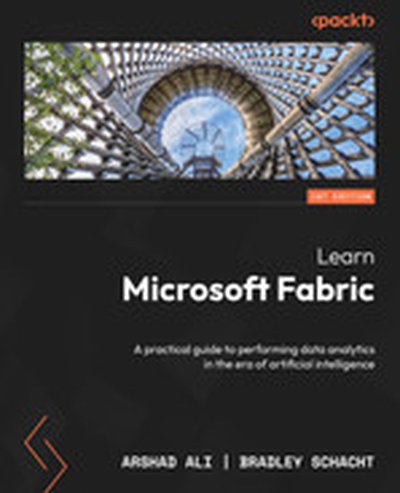
Learn Microsoft Fabric

Dive into the wonders of Microsoft Fabric, the ultimate solution for mastering data analytics in the AI era. Through engaging real-world examples and hands-on scenarios, this book will equip you with all the tools to design, build, and maintain analytics systems for various use cases like lakehouses, data warehouses, real-time analytics, and data science. What this Book will help me do Understand and utilize the key components of Microsoft Fabric for modern analytics. Build scalable and efficient data analytics solutions with medallion architecture. Implement real-time analytics and machine learning models to derive actionable insights. Monitor and administer your analytics platform for high performance and security. Leverage AI-powered assistant Copilot to boost analytics productivity. Author(s) Arshad Ali and None Schacht bring years of expertise in data analytics and system architecture to this book. Arshad is a seasoned professional specialized in AI-integrated analytics platforms, while None Schacht has a proven track record in deploying enterprise data solutions. Together, they provide deep insights and practical knowledge with a structured and approachable teaching method. Who is it for? Ideal for data professionals such as data analysts, engineers, scientists, and AI/ML experts aiming to enhance their data analytics skills and master Microsoft Fabric. It's also suited for students and new entrants to the field looking to establish a firm foundation in analytics systems. Requires a basic understanding of SQL and Spark.

Codeless Time Series Analysis with KNIME

This book, "Codeless Time Series Analysis with KNIME," serves as your practical guide to mastering time series analysis using the KNIME Analytics Platform. By diving into this book, you'll explore a variety of statistical and machine learning techniques applied explicitly to real-world time series scenarios, helping you build predictive and analysis models effectively. What this Book will help me do Leverage KNIME's powerful tools to preprocess and prepare time series data for analysis. Visualize and dissect time series data into its components like trends and seasonality. Apply statistical models like ARIMA to analyze and forecast continuous data. Train and utilize neural networks including LSTM models for predictive analytics. Integrate external tools like Spark and H2O to enhance your forecasting workflows. Author(s) The authors, including experts from KNIME AG, Corey Weisinger, Maarit Widmann, and Daniele Tonini, collectively bring extensive experience in data analytics and time series modeling. Their expertise with KNIME's tools and real-world time series analysis applications ensures readers gain insights into practical, hands-on techniques. Who is it for? This book is ideally suited for data analysts and scientists eager to explore time series analysis through codeless methodologies. Beginners will benefit from the introductory explanations, while seasoned professionals will find value in the advanced topics and real-world examples. A basic understanding of the KNIME platform is recommended to get the most from this book.

Data Science on the Google Cloud Platform, 2nd Edition

Learn how easy it is to apply sophisticated statistical and machine learning methods to real-world problems when you build using Google Cloud Platform (GCP). This hands-on guide shows data engineers and data scientists how to implement an end-to-end data pipeline with cloud native tools on GCP. Throughout this updated second edition, you'll work through a sample business decision by employing a variety of data science approaches. Follow along by building a data pipeline in your own project on GCP, and discover how to solve data science problems in a transformative and more collaborative way. You'll learn how to: Employ best practices in building highly scalable data and ML pipelines on Google Cloud Automate and schedule data ingest using Cloud Run Create and populate a dashboard in Data Studio Build a real-time analytics pipeline using Pub/Sub, Dataflow, and BigQuery Conduct interactive data exploration with BigQuery Create a Bayesian model with Spark on Cloud Dataproc Forecast time series and do anomaly detection with BigQuery ML Aggregate within time windows with Dataflow Train explainable machine learning models with Vertex AI Operationalize ML with Vertex AI Pipelines

Data Science at the Command Line, 2nd Edition

This thoroughly revised guide demonstrates how the flexibility of the command line can help you become a more efficient and productive data scientist. You'll learn how to combine small yet powerful command-line tools to quickly obtain, scrub, explore, and model your data. To get you started, author Jeroen Janssens provides a Docker image packed with over 100 Unix power tools--useful whether you work with Windows, macOS, or Linux. You'll quickly discover why the command line is an agile, scalable, and extensible technology. Even if you're comfortable processing data with Python or R, you'll learn how to greatly improve your data science workflow by leveraging the command line's power. This book is ideal for data scientists, analysts, engineers, system administrators, and researchers. Obtain data from websites, APIs, databases, and spreadsheets Perform scrub operations on text, CSV, HTML, XML, and JSON files Explore data, compute descriptive statistics, and create visualizations Manage your data science workflow Create your own tools from one-liners and existing Python or R code Parallelize and distribute data-intensive pipelines Model data with dimensionality reduction, regression, and classification algorithms Leverage the command line from Python, Jupyter, R, RStudio, and Apache Spark

Practical Data Science with Python 3: Synthesizing Actionable Insights from Data

Gain insight into essential data science skills in a holistic manner using data engineering and associated scalable computational methods. This book covers the most popular Python 3 frameworks for both local and distributed (in premise and cloud based) processing. Along the way, you will be introduced to many popular open-source frameworks, like, SciPy, scikitlearn, Numba, Apache Spark, etc. The book is structured around examples, so you will grasp core concepts via case studies and Python 3 code. As data science projects gets continuously larger and more complex, software engineering knowledge and experience is crucial to produce evolvable solutions. You'll see how to create maintainable software for data science and how to document data engineering practices. This book is a good starting point for people who want to gain practical skills to perform data science. All the code willbe available in the form of IPython notebooks and Python 3 programs, which allow you to reproduce all analyses from the book and customize them for your own purpose. You'll also benefit from advanced topics like Machine Learning, Recommender Systems, and Security in Data Science. Practical Data Science with Python will empower you analyze data, formulate proper questions, and produce actionable insights, three core stages in most data science endeavors. What You'll Learn Play the role of a data scientist when completing increasingly challenging exercises using Python 3 Work work with proven data science techniques/technologies Review scalable software engineering practices to ramp up data analysis abilities in the realm of Big Data Apply theory of probability, statistical inference, and algebra to understand the data sciencepractices Who This Book Is For Anyone who would like to embark into the realm of data science using Python 3.

Graph Algorithms

Learn how graph algorithms can help you leverage relationships within your data to develop intelligent solutions and enhance your machine learning models. With this practical guide,developers and data scientists will discover how graph analytics deliver value, whether they’re used for building dynamic network models or forecasting real-world behavior. Mark Needham and Amy Hodler from Neo4j explain how graph algorithms describe complex structures and reveal difficult-to-find patterns—from finding vulnerabilities and bottlenecksto detecting communities and improving machine learning predictions. You’ll walk through hands-on examples that show you how to use graph algorithms in Apache Spark and Neo4j, two of the most common choices for graph analytics. Learn how graph analytics reveal more predictive elements in today’s data Understand how popular graph algorithms work and how they’re applied Use sample code and tips from more than 20 graph algorithm examples Learn which algorithms to use for different types of questions Explore examples with working code and sample datasets for Spark and Neo4j Create an ML workflow for link prediction by combining Neo4j and Spark

Bioinformatics with Python Cookbook - Second Edition

"Bioinformatics with Python Cookbook" offers a detailed exploration into the modern approaches to computational biology using the Python programming language. Through hands-on recipes, you will master the practical applications of bioinformatics, enabling you to analyze vast biological data effectively using Python libraries and tools. What this Book will help me do Master processing and analyzing genomic datasets in Python to enable accurate bioinformatics discoveries. Understand and apply next-generation sequencing techniques for advanced biological research. Learn to utilize machine learning approaches such as PCA and decision trees for insightful data analysis in biology. Gain proficiency in using high-performance computing frameworks like Dask and Spark for scalable bioinformatics workflows. Develop capabilities to visually represent biological data interactions and insights for presentation and analysis. Author(s) Tiago Antao is a computational scientist specializing in bioinformatics with extensive experience in Python programming applied to biological sciences. He has worked on numerous bioinformatics projects and has a special interest in using Python to bridge biology and data science. Tiago's approachable writing style ensures that both newcomers and experts benefit from his insights. Who is it for? This book is designed for bioinformatics professionals, researchers, and data scientists who are eager to harness the power of Python programming for their biological data analysis needs. If you are familiar with Python and are looking to tackle intermediate to advanced bioinformatics challenges using practical recipes, this book is ideal for you. It is suitable for those seeking to expand their knowledge in computational biology and data visualization techniques. Whether you are working on next-generation sequencing or population genetics, this resource will guide you effectively.

Hands-On Data Science with R

Dive into "Hands-On Data Science with R" and embark on a journey to master the R language for practical data science applications. This comprehensive guide walks through data manipulation, visualization, and advanced analytics, preparing you to tackle real-world data challenges with confidence. What this Book will help me do Understand how to utilize popular R packages effectively for data science tasks. Learn techniques for cleaning, preprocessing, and exploring datasets. Gain insights into implementing machine learning models in R for predictive analytics. Master the use of advanced visualization tools to extract and communicate insights. Develop expertise in integrating R with big data platforms like Hadoop and Spark. Author(s) This book was written by experts in data science and R including Doug Ortiz and his co-authors. They bring years of industry experience and a desire to teach, presenting complex topics in an approachable manner. Who is it for? Designed for data analysts, statisticians, or programmers with basic R knowledge looking to dive into machine learning and predictive analytics. If you're aiming to enhance your skill set or gain confidence in tackling real-world data problems, this book is an excellent choice.

Practical Big Data Analytics

Practical Big Data Analytics is your ultimate guide to harnessing Big Data technologies for enterprise analytics and machine learning. By leveraging tools like Hadoop, Spark, NoSQL databases, and frameworks such as R, this book equips you with the skills to implement robust data solutions that drive impactful business insights. Gain practical expertise in handling data at scale and uncover the value behind the numbers. What this Book will help me do Master the fundamental concepts of Big Data storage, processing, and analytics. Gain practical skills in using tools like Hadoop, Spark, and NoSQL databases for large-scale data handling. Develop and deploy machine learning models and dashboards with R and R Shiny. Learn strategies for creating cost-efficient and scalable enterprise data analytics solutions. Understand and implement effective approaches to combining Big Data technologies for actionable insights. Author(s) None Dasgupta is an expert in Big Data analytics, statistical methodologies, and enterprise data solutions. With years of experience consulting on enterprise data platforms and working with leading industry technologies, Dasgupta brings a wealth of practical knowledge to help readers navigate and succeed in the field of Big Data. Through this book, Dasgupta shares an accessible and systematic way to learn and apply key Big Data concepts. Who is it for? This book is ideal for professionals eager to delve into Big Data analytics, regardless of their current level of expertise. It accommodates both aspiring analysts and seasoned IT professionals looking to enhance their knowledge in data-driven decision making. Individuals with a technical inclination and a drive to build Big Data architectures will find this book particularly beneficial. No prior knowledge of Big Data is required, although familiarity with programming concepts will enhance the learning experience.

Practical Predictive Analytics

Dive into the world of predictive analytics with 'Practical Predictive Analytics.' This comprehensive guide walks you through analyzing current and historical data to predict future outcomes. Using tools like R and Spark, you will master practical skills, solve real-world challenges, and apply predictive analytics across domains like marketing, healthcare, and retail. What this Book will help me do Learn the six steps for successfully implementing predictive analytics projects. Acquire practical skills in data cleaning, input, and model deployment using tools like R and Spark. Understand core predictive analytics algorithms and their applications in various industries. Apply data analytics techniques to solve problems in fields such as healthcare and marketing. Master methods for handling big data analytics using Databricks and Spark for effective prediction. Author(s) The author, None Winters, is an experienced data scientist and technical educator. With extensive background in predictive analytics, Winters specializes in applying statistical methods and techniques to real-world consultation scenarios. Winters brings a practical and accessible approach to this text, ensuring that learners can follow along and apply their newfound expertise effectively. Who is it for? This book is ideal for statisticians and analysts with some programming background in languages like R, who want to master predictive analytics skills. It caters to intermediate learners who aim to enhance their ability to solve complex analytical problems. Whether you're looking to advance your career or improve your proficiency in data science, this book will serve as a valuable resource for learning and growth.

Agile Data Science 2.0

Data science teams looking to turn research into useful analytics applications require not only the right tools, but also the right approach if they’re to succeed. With the revised second edition of this hands-on guide, up-and-coming data scientists will learn how to use the Agile Data Science development methodology to build data applications with Python, Apache Spark, Kafka, and other tools. Author Russell Jurney demonstrates how to compose a data platform for building, deploying, and refining analytics applications with Apache Kafka, MongoDB, ElasticSearch, d3.js, scikit-learn, and Apache Airflow. You’ll learn an iterative approach that lets you quickly change the kind of analysis you’re doing, depending on what the data is telling you. Publish data science work as a web application, and affect meaningful change in your organization. Build value from your data in a series of agile sprints, using the data-value pyramid Extract features for statistical models from a single dataset Visualize data with charts, and expose different aspects through interactive reports Use historical data to predict the future via classification and regression Translate predictions into actions Get feedback from users after each sprint to keep your project on track

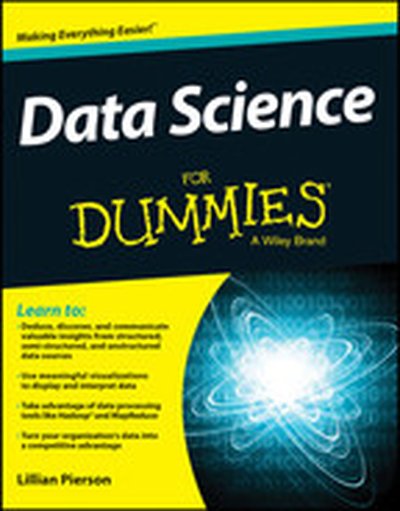
Data Science For Dummies, 2nd Edition

Your ticket to breaking into the field of data science! Jobs in data science are projected to outpace the number of people with data science skills—making those with the knowledge to fill a data science position a hot commodity in the coming years. Data Science For Dummies is the perfect starting point for IT professionals and students interested in making sense of an organization's massive data sets and applying their findings to real-world business scenarios. From uncovering rich data sources to managing large amounts of data within hardware and software limitations, ensuring consistency in reporting, merging various data sources, and beyond, you'll develop the know-how you need to effectively interpret data and tell a story that can be understood by anyone in your organization. Provides a background in data science fundamentals and preparing your data for analysis Details different data visualization techniques that can be used to showcase and summarize your data Explains both supervised and unsupervised machine learning, including regression, model validation, and clustering techniques Includes coverage of big data processing tools like MapReduce, Hadoop, Dremel, Storm, and Spark It's a big, big data world out there—let Data Science For Dummies help you harness its power and gain a competitive edge for your organization.

Scala: Guide for Data Science Professionals

Scala will be a valuable tool to have on hand during your data science journey for everything from data cleaning to cutting-edge machine learning About This Book Build data science and data engineering solutions with ease An in-depth look at each stage of the data analysis process — from reading and collecting data to distributed analytics Explore a broad variety of data processing, machine learning, and genetic algorithms through diagrams, mathematical formulations, and source code Who This Book Is For This learning path is perfect for those who are comfortable with Scala programming and now want to enter the field of data science. Some knowledge of statistics is expected. What You Will Learn Transfer and filter tabular data to extract features for machine learning Read, clean, transform, and write data to both SQL and NoSQL databases Create Scala web applications that couple with JavaScript libraries such as D3 to create compelling interactive visualizations Load data from HDFS and HIVE with ease Run streaming and graph analytics in Spark for exploratory analysis Bundle and scale up Spark jobs by deploying them into a variety of cluster managers Build dynamic workflows for scientific computing Leverage open source libraries to extract patterns from time series Master probabilistic models for sequential data In Detail Scala is especially good for analyzing large sets of data as the scale of the task doesn’t have any significant impact on performance. Scala’s powerful functional libraries can interact with databases and build scalable frameworks — resulting in the creation of robust data pipelines. The first module introduces you to Scala libraries to ingest, store, manipulate, process, and visualize data. Using real world examples, you will learn how to design scalable architecture to process and model data — starting from simple concurrency constructs and progressing to actor systems and Apache Spark. After this, you will also learn how to build interactive visualizations with web frameworks. Once you have become familiar with all the tasks involved in data science, you will explore data analytics with Scala in the second module. You’ll see how Scala can be used to make sense of data through easy to follow recipes. You will learn about Bokeh bindings for exploratory data analysis and quintessential machine learning with algorithms with Spark ML library. You’ll get a sufficient understanding of Spark streaming, machine learning for streaming data, and Spark graphX. Armed with a firm understanding of data analysis, you will be ready to explore the most cutting-edge aspect of data science — machine learning. The final module teaches you the A to Z of machine learning with Scala. You’ll explore Scala for dependency injections and implicits, which are used to write machine learning algorithms. You’ll also explore machine learning topics such as clustering, dimentionality reduction, Naïve Bayes, Regression models, SVMs, neural networks, and more. This learning path combines some of the best that Packt has to offer into one complete, curated package. It includes content from the following Packt products: Scala for Data Science, Pascal Bugnion Scala Data Analysis Cookbook, Arun Manivannan Scala for Machine Learning, Patrick R. Nicolas Style and approach A complete package with all the information necessary to start building useful data engineering and data science solutions straight away. It contains a diverse set of recipes that cover the full spectrum of interesting data analysis tasks and will help you revolutionize your data analysis skills using Scala. Downloading the example code for this book. You can download the example code files for all Packt books you have purchased from your account at http://www.PacktPub.com. If you purchased this book elsewhere, you can visit http://www.PacktPub.com/support and register to have the code file.

Practical Data Analysis - Second Edition

Practical Data Analysis provides a hands-on guide to mastering essential data analysis techniques using tools like Pandas, MongoDB, and Apache Spark. With step-by-step instructions, you'll explore how to process diverse data types, apply machine learning methods, and uncover actionable insights that can drive innovative projects and business solutions. What this Book will help me do Master data acquisition, formatting, and visualization techniques to prepare your data for analysis. Understand and apply machine learning algorithms for tasks like classification and forecasting. Learn to analyze textual data, such as performing sentiment analysis and text classification. Effectively work with databases using tools like MongoDB and handle big data with Apache Spark. Develop data-driven applications using real-world examples like image similarity searches and social network graph analysis. Author(s) None Cuesta and Dr. Sampath Kumar are experienced data scientists and educators. They have considerable experience applying data analysis techniques in various domains and a passion for teaching these skills. Their practical approach to data analysis ensures an engaging learning experience for readers. Who is it for? This book is ideal for developers and data enthusiasts aiming to incorporate practical data analysis into their projects. It is perfectly suited for readers with basic programming, statistics, and linear algebra knowledge. Even if you're new to professional data analysis, you'll find the step-by-step examples approachable. This book guides you in transforming raw data into valuable insights.

Disruptive Analytics: Charting Your Strategy for Next-Generation Business Analytics

Learn all you need to know about seven key innovations disrupting business analytics today. These innovations—the open source business model, cloud analytics, the Hadoop ecosystem, Spark and in-memory analytics, streaming analytics, Deep Learning, and self-service analytics—are radically changing how businesses use data for competitive advantage. Taken together, they are disrupting the business analytics value chain, creating new opportunities. Enterprises who seize the opportunity will thrive and prosper, while others struggle and decline: disrupt or be disrupted. Disruptive Business Analytics provides strategies to profit from disruption. It shows you how to organize for insight, build and provision an open source stack, how to practice lean data warehousing, and how to assimilate disruptive innovations into an organization. Through a short history of business analytics and a detailed survey of products and services, analytics authority Thomas W. Dinsmore provides a practical explanation of the most compelling innovations available today. What You'll Learn Discover how the open source business model works and how to make it work for you See how cloud computing completely changes the economics of analytics Harness the power of Hadoop and its ecosystem Find out why Apache Spark is everywhere Discover the potential of streaming and real-time analytics Learn what Deep Learning can do and why it matters See how self-service analytics can change the way organizations do business Who This Book Is For Corporate actors at all levels of responsibility for analytics: analysts, CIOs, CTOs, strategic decision makers, managers, systems architects, technical marketers, product developers, IT personnel, and consultants.

Big Data Analytics with R

Unlock the potential of big data analytics by mastering R programming with this comprehensive guide. This book takes you step-by-step through real-world scenarios where R's capabilities shine, providing you with practical skills to handle, process, and analyze large and complex datasets effectively. What this Book will help me do Understand the latest big data processing methods and how R can enhance their application. Set up and use big data platforms such as Hadoop and Spark in conjunction with R. Utilize R for practical big data problems, such as analyzing consumption and behavioral datasets. Integrate R with SQL and NoSQL databases to maximize its versatility in data management. Discover advanced machine learning implementations using R and Spark MLlib for predictive analytics. Author(s) None Walkowiak is an experienced data analyst and R programming expert with a passion for data engineering and machine learning. With a deep knowledge of big data platforms and extensive teaching experience, they bring a clear and approachable writing style to help learners excel. Who is it for? Ideal for data analysts, scientists, and engineers with fundamental data analysis knowledge looking to enhance their big data capabilities using R. If you aim to adapt R for large-scale data management and analysis workflows, this book is your ideal companion to bridge the gap.

Learning Bayesian Models with R

Dive into the world of Bayesian Machine Learning with "Learning Bayesian Models with R." This comprehensive guide introduces the foundations of probability theory and Bayesian inference, teaches you how to implement these concepts with the R programming language, and progresses to practical techniques for supervised and unsupervised problems in data science. What this Book will help me do Understand and set up an R environment for Bayesian modeling Build Bayesian models including linear regression and classification for predictive analysis Learn to apply Bayesian inference to real-world machine learning problems Work with big data and high-performance computation frameworks like Hadoop and Spark Master advanced Bayesian techniques and apply them to deep learning and AI challenges Author(s) Hari Manassery Koduvely is a proficient data scientist with extensive experience in leveraging Bayesian frameworks for real-world applications. His passion for Bayesian Machine Learning is evident in his approachable and detailed teaching methodology, aimed at making these complex topics accessible for practitioners. Who is it for? This book is best suited for data scientists, analysts, and statisticians familiar with R and basic probability theory who aim to enhance their expertise in Bayesian approaches. It's ideal for professionals tackling machine learning challenges in applied data contexts. If you're looking to incorporate advanced probabilistic methods into your projects, this guide will show you how.

Data Science For Dummies

Discover how data science can help you gain in-depth insight into your business - the easy way! Jobs in data science abound, but few people have the data science skills needed to fill these increasingly important roles in organizations. Data Science For Dummies is the perfect starting point for IT professionals and students interested in making sense of their organization's massive data sets and applying their findings to real-world business scenarios. From uncovering rich data sources to managing large amounts of data within hardware and software limitations, ensuring consistency in reporting, merging various data sources, and beyond, you'll develop the know-how you need to effectively interpret data and tell a story that can be understood by anyone in your organization. Provides a background in data science fundamentals before moving on to working with relational databases and unstructured data and preparing your data for analysis Details different data visualization techniques that can be used to showcase and summarize your data Explains both supervised and unsupervised machine learning, including regression, model validation, and clustering techniques Includes coverage of big data processing tools like MapReduce, Hadoop, Dremel, Storm, and Spark It's a big, big data world out there - let Data Science For Dummies help you harness its power and gain a competitive edge for your organization.