talk-data.com talk-data.com

Topic

data-science-domains

46

tagged

Activity Trend

1 peak/qtr
2020-Q1 2026-Q1

Activities

46 activities · Newest first

Bioinformatics with Python Cookbook - Fourth Edition

Bioinformatics with Python Cookbook provides a practical, hands-on approach to solving computational biology challenges with Python, enabling readers to analyze sequencing data, leverage AI for bioinformatics applications, and design robust computational pipelines. What this Book will help me do Perform comprehensive sequence analysis using Python libraries for refined data interpretation. Configure and run bioinformatics workflows on cloud environments for scalable solutions. Apply advanced data science practices to analyze and visualize bioinformatics data. Explore the integration of AI tools in processing multimodal biological datasets. Understand and utilize bioinformatics databases for research and development. Author(s) Shane Brubaker is an experienced computational biologist and software developer with a strong background in bioinformatics and Python programming. With years of experience in data analysis and software engineering, Shane has authored numerous solutions for real-world bioinformatics issues. He brings a practical, example-driven teaching approach, aimed at empowering readers to apply techniques effectively in their work. Who is it for? This book is suitable for bioinformatics professionals, data scientists, and software engineers with moderate experience seeking to expand their computational biology knowledge. Readers should have basic understanding of biology, programming, and cloud tools. By engaging with this book, learners can advance their skills in Python and bioinformatics to address complex biological data challenges effectively.

Intelligent Data Analytics for Bioinformatics and Biomedical Systems

The book analyzes the combination of intelligent data analytics with the intricacies of biological data that has become a crucial factor for innovation and growth in the fast-changing field of bioinformatics and biomedical systems. Intelligent Data Analytics for Bioinformatics and Biomedical Systems delves into the transformative nature of data analytics for bioinformatics and biomedical research. It offers a thorough examination of advanced techniques, methodologies, and applications that utilize intelligence to improve results in the healthcare sector. With the exponential growth of data in these domains, the book explores how computational intelligence and advanced analytic techniques can be harnessed to extract insights, drive informed decisions, and unlock hidden patterns from vast datasets. From genomic analysis to disease diagnostics and personalized medicine, the book aims to showcase intelligent approaches that enable researchers, clinicians, and data scientists to unravel complex biological processes and make significant strides in understanding human health and diseases. This book is divided into three sections, each focusing on computational intelligence and data sets in biomedical systems. The first section discusses the fundamental concepts of computational intelligence and big data in the context of bioinformatics. This section emphasizes data mining, pattern recognition, and knowledge discovery for bioinformatics applications. The second part talks about computational intelligence and big data in biomedical systems. Based on how these advanced techniques are utilized in the system, this section discusses how personalized medicine and precision healthcare enable treatment based on individual data and genetic profiles. The last section investigates the challenges and future directions of computational intelligence and big data in bioinformatics and biomedical systems. This section concludes with discussions on the potential impact of computational intelligence on addressing global healthcare challenges. Audience Intelligent Data Analytics for Bioinformatics and Biomedical Systems is primarily targeted to professionals and researchers in bioinformatics, genetics, molecular biology, biomedical engineering, and healthcare. The book will also suit academicians, students, and professionals working in pharmaceuticals and interpreting biomedical data.

R Bioinformatics Cookbook - Second Edition

R Bioinformatics Cookbook is your guide to leveraging the power of R for advanced bioinformatics tasks. This updated second edition uses a recipe-based method to teach data analysis, visualization, and machine learning tailored for biological datasets. You'll gain hands-on experience with popular tools like Bioconductor, ggplot2, and tidyverse to solve real-world genomics problems. What this Book will help me do Set up a reproducible bioinformatics analysis environment using R. Clean, analyze, and visualize biological data with R's powerful packages. Apply RNA-seq and ChIP-seq workflows to study genetic information effectively. Incorporate machine learning techniques into bioinformatics pipelines using R. Automate tasks and create professional-grade reports using functional programming and reporting tools. Author(s) The author, None MacLean, brings years of expertise in bioinformatics and computational biology. Known for clear explanations and practical approaches, they ensure the material is accessible yet challenging. With a strong focus on real-world applications, this book reflects their commitment to bridging bioinformatics and modern data science. Who is it for? This book is perfect for bioinformaticians, researchers, and data scientists with prior R experience. It's tailored for those looking to delve deeper into genomics, data visualization, and bioinformatics techniques. Intermediate knowledge of bioinformatics concepts and familiarity with R programming are assumed for readers to fully benefit from the content.

All About Bioinformatics

All About Bioinformatics: From Beginner to Expert provides readers with an overview of the fundamentals and advances in the _x001F_field of bioinformatics, as well as some future directions. Each chapter is didactically organized and includes introduction, applications, tools, and future directions to cover the topics thoroughly. The book covers both traditional topics such as biological databases, algorithms, genetic variations, static methods, and structural bioinformatics, as well as contemporary advanced topics such as high-throughput technologies, drug informatics, system and network biology, and machine learning. It is a valuable resource for researchers and graduate students who are interested to learn more about bioinformatics to apply in their research work. Presents a holistic learning experience, beginning with an introduction to bioinformatics to recent advancements in the field Discusses bioinformatics as a practice rather than in theory focusing on more application-oriented topics as high-throughput technologies, system and network biology, and workflow management systems Encompasses chapters on statistics and machine learning to assist readers in deciphering trends and patterns in biological data

Bioinformatics Tools for Pharmaceutical Drug Product Development

BIOINFORMATICS TOOLS FOR Pharmaceutical DRUG PRODUCT DLEVELOPMENT A timely book that details bioinformatics tools, artificial intelligence, machine learning, computational methods, protein interactions, peptide-based drug design, and omics technologies, for drug development in the pharmaceutical and medical sciences industries. The book contains 17 chapters categorized into 3 sections. The first section presents the latest information on bioinformatics tools, artificial intelligence, machine learning, computational methods, protein interactions, peptide-based drug design, and omics technologies. The following 2 sections include bioinformatics tools for the pharmaceutical sector and the healthcare sector. Bioinformatics brings a new era in research to accelerate drug target and vaccine design development, improving validation approaches as well as facilitating and identifying side effects and predicting drug resistance. As such, this will aid in more successful drug candidates from discovery to clinical trials to the market, and most importantly make it a more cost-effective process overall. Readers will find in this book: Applications of bioinformatics tools for pharmaceutical drug product development like process development, pre-clinical development, clinical development, commercialization of the product, etc.; The ever-expanding application of this novel technology and discusses some of the unique challenges associated with such an approach; The broad and deep background, as well as updates, on recent advances in both medicine and AI/ML that enable the application of these cutting-edge bioinformatics tools. Audience The book will be used by researchers and scientists in academia and industry including drug developers, computational biochemists, bioinformaticians, immunologists, pharmaceutical and medical sciences, as well as those in artificial intelligence and machine learning.

Leading Biotech Data Teams

With hundreds of startups founded each year, the relatively new field of data-focused biotech—or TechBio—is growing rapidly. But without enough experienced practitioners to go around, most organizations hire data scientists with minimal biotech experience and lab scientists who've taken a crash course in data science. This arrangement is problematic. The way lab scientists and data scientists think and work is fundamentally different. But there is a solution. This report introduces biocode principles to help these scientists reframe the way they think about their role, their team's role, and the tools they use to fulfill those roles. Lab and data scientists alike will learn how to address the underlying issues so they can focus on solving these technology problems together. Each of the following chapters presents a vital biocode principle: "Defining Objectives" explores how to broaden the way teams view their work, shifting from purely technical objectives to organizational-level scientific objectives "Building Collaborations" encourages teams to focus their energy on collaboration with partner teams rather than guard their time for technical work "Deploying Tooling" covers ways to coordinate each team's work with the cadence of experiments and lab work

Bioinformatics and Medical Applications

BIOINFORMATICS AND MEDICAL APPLICATIONS The main topics addressed in this book are big data analytics problems in bioinformatics research such as microarray data analysis, sequence analysis, genomics-based analytics, disease network analysis, techniques for big data analytics, and health information technology. Bioinformatics and Medical Applications: Big Data Using Deep Learning Algorithms analyses massive biological datasets using computational approaches and the latest cutting-edge technologies to capture and interpret biological data. The book delivers various bioinformatics computational methods used to identify diseases at an early stage by assembling cutting-edge resources into a single collection designed to enlighten the reader on topics focusing on computer science, mathematics, and biology. In modern biology and medicine, bioinformatics is critical for data management. This book explains the bioinformatician’s important tools and examines how they are used to evaluate biological data and advance disease knowledge. The editors have curated a distinguished group of perceptive and concise chapters that presents the current state of medical treatments and systems and offers emerging solutions for a more personalized approach to healthcare. Applying deep learning techniques for data-driven solutions in health information allows automated analysis whose method can be more advantageous in supporting the problems arising from medical and health-related information. Audience The primary audience for the book includes specialists, researchers, postgraduates, designers, experts, and engineers, who are occupied with biometric research and security-related issues.

Computation in BioInformatics

COMPUTATION IN BIOINFORMATICS Bioinformatics is a platform between the biology and information technology and this book provides readers with an understanding of the use of bioinformatics tools in new drug design. The discovery of new solutions to pandemics is facilitated through the use of promising bioinformatics techniques and integrated approaches. This book covers a broad spectrum of the bioinformatics field, starting with the basic principles, concepts, and application areas. Also covered is the role of bioinformatics in drug design and discovery, including aspects of molecular modeling. Some of the chapters provide detailed information on bioinformatics related topics, such as silicon design, protein modeling, DNA microarray analysis, DNA-RNA barcoding, and gene sequencing, all of which are currently needed in the industry. Also included are specialized topics, such as bioinformatics in cancer detection, genomics, and proteomics. Moreover, a few chapters explain highly advanced topics, like machine learning and covalent approaches to drug design and discovery, all of which are significant in pharma and biotech research and development. Audience Researchers and engineers in computation biology, information technology, bioinformatics, drug design, biotechnology, pharmaceutical sciences.

Nature-Inspired Computing Paradigms in Systems

Nature-Inspired Computing Paradigms in Systems: Reliability, Availability, Maintainability, Safety and Cost (RAMS+C) and Prognostics and Health Management (PHM) covers several areas that include bioinspired techniques and optimization approaches for system dependability. The book addresses the issue of integration and interaction of the bioinspired techniques in system dependability computing so that intelligent decisions, design, and architectures can be supported. It brings together these emerging areas under the umbrella of bio- and nature-inspired computational intelligence. The primary audience of this book includes experts and developers who want to deepen their understanding of bioinspired computing in basic theory, algorithms, and applications. The book is also intended to be used as a textbook for masters and doctoral students who want to enhance their knowledge and understanding of the role of bioinspired techniques in system dependability. Provides the latest review Covers various nature-inspired techniques applied to RAMS+C and PHM problems Includes techniques applied to new applications

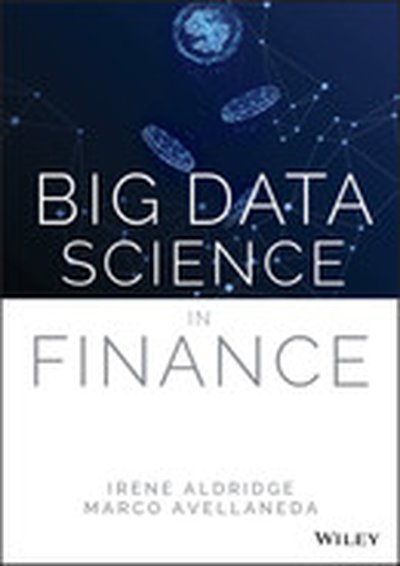
Big Data Science in Finance

Explains the mathematics, theory, and methods of Big Data as applied to finance and investing Data science has fundamentally changed Wall Street—applied mathematics and software code are increasingly driving finance and investment-decision tools. Big Data Science in Finance examines the mathematics, theory, and practical use of the revolutionary techniques that are transforming the industry. Designed for mathematically-advanced students and discerning financial practitioners alike, this energizing book presents new, cutting-edge content based on world-class research taught in the leading Financial Mathematics and Engineering programs in the world. Marco Avellaneda, a leader in quantitative finance, and quantitative methodology author Irene Aldridge help readers harness the power of Big Data. Comprehensive in scope, this book offers in-depth instruction on how to separate signal from noise, how to deal with missing data values, and how to utilize Big Data techniques in decision-making. Key topics include data clustering, data storage optimization, Big Data dynamics, Monte Carlo methods and their applications in Big Data analysis, and more. This valuable book: Provides a complete account of Big Data that includes proofs, step-by-step applications, and code samples Explains the difference between Principal Component Analysis (PCA) and Singular Value Decomposition (SVD) Covers vital topics in the field in a clear, straightforward manner Compares, contrasts, and discusses Big Data and Small Data Includes Cornell University-tested educational materials such as lesson plans, end-of-chapter questions, and downloadable lecture slides Big Data Science in Finance: Mathematics and Applications is an important, up-to-date resource for students in economics, econometrics, finance, applied mathematics, industrial engineering, and business courses, and for investment managers, quantitative traders, risk and portfolio managers, and other financial practitioners.

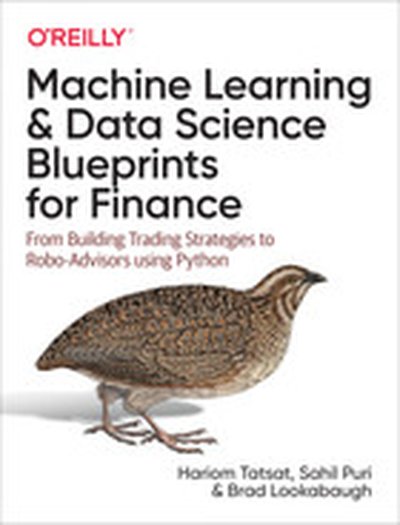
Machine Learning and Data Science Blueprints for Finance

Over the next few decades, machine learning and data science will transform the finance industry. With this practical book, analysts, traders, researchers, and developers will learn how to build machine learning algorithms crucial to the industry. You'll examine ML concepts and over 20 case studies in supervised, unsupervised, and reinforcement learning, along with natural language processing (NLP). Ideal for professionals working at hedge funds, investment and retail banks, and fintech firms, this book also delves deep into portfolio management, algorithmic trading, derivative pricing, fraud detection, asset price prediction, sentiment analysis, and chatbot development. You'll explore real-life problems faced by practitioners and learn scientifically sound solutions supported by code and examples. This book covers: Supervised learning regression-based models for trading strategies, derivative pricing, and portfolio management Supervised learning classification-based models for credit default risk prediction, fraud detection, and trading strategies Dimensionality reduction techniques with case studies in portfolio management, trading strategy, and yield curve construction Algorithms and clustering techniques for finding similar objects, with case studies in trading strategies and portfolio management Reinforcement learning models and techniques used for building trading strategies, derivatives hedging, and portfolio management NLP techniques using Python libraries such as NLTK and scikit-learn for transforming text into meaningful representations

Predictive Intelligence in Biomedical and Health Informatics

Predictive Intelligence in Biomedical and Health Informatics focuses on imaging, computer-aided diagnosis and therapy as well as intelligent biomedical image processing and analysis. It develops computational models, methods and tools for biomedical engineering related to computer-aided diagnostics (CAD), computer-aided surgery (CAS), computational anatomy and bioinformatics. Large volumes of complex data are often a key feature of biomedical and engineering problems and computational intelligence helps to address such problems. Practical and validated solutions to hard biomedical and engineering problems can be developed by the applications of neural networks, support vector machines, reservoir computing, evolutionary optimization, biosignal processing, pattern recognition methods and other techniques to address complex problems of the real world.

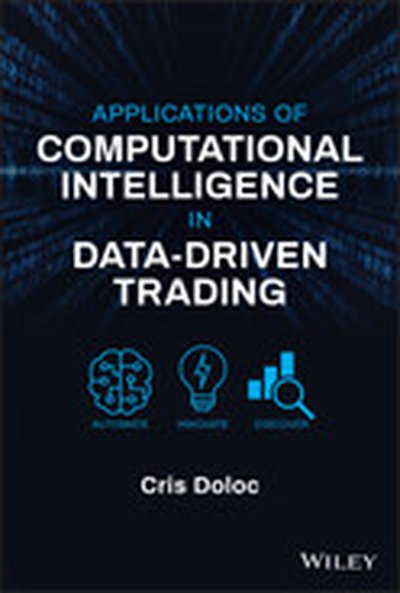
Applications of Computational Intelligence in Data-Driven Trading

“Life on earth is filled with many mysteries, but perhaps the most challenging of these is the nature of Intelligence.” – Prof. Terrence J. Sejnowski, Computational Neurobiologist The main objective of this book is to create awareness about both the promises and the formidable challenges that the era of Data-Driven Decision-Making and Machine Learning are confronted with, and especially about how these new developments may influence the future of the financial industry. The subject of Financial Machine Learning has attracted a lot of interest recently, specifically because it represents one of the most challenging problem spaces for the applicability of Machine Learning. The author has used a novel approach to introduce the reader to this topic: The first half of the book is a readable and coherent introduction to two modern topics that are not generally considered together: the data-driven paradigm and Computational Intelligence. The second half of the book illustrates a set of Case Studies that are contemporarily relevant to quantitative trading practitioners who are dealing with problems such as trade execution optimization, price dynamics forecast, portfolio management, market making, derivatives valuation, risk, and compliance. The main purpose of this book is pedagogical in nature, and it is specifically aimed at defining an adequate level of engineering and scientific clarity when it comes to the usage of the term “ Artificial Intelligence,” especially as it relates to the financial industry. The message conveyed by this book is one of confidence in the possibilities offered by this new era of Data-Intensive Computation. This message is not grounded on the current hype surrounding the latest technologies, but on a deep analysis of their effectiveness and also on the author’s two decades of professional experience as a technologist, quant and academic.

R Bioinformatics Cookbook

In the "R Bioinformatics Cookbook", you will explore the full potential of the R programming language and the Bioconductor ecosystem to overcome challenges in bioinformatics. By working through real-world examples, you will learn to handle biological data effectively and gain insights into genomics, RNA sequencing, and advanced data visualization. What this Book will help me do Develop skills to analyze RNA sequencing data using R and Bioconductor packages such as edgeR and DESeq. Learn to create professional-grade graphical representations of biological data using ggplot and other visualization tools. Understand how to perform genome-wide studies like variant calling and metagenomics analysis with R. Master the integration of external genomic databases with Ensembl for functional annotation. Explore machine learning applications in bioinformatics including classification and clustering models. Author(s) None MacLean and Dr. Dan Maclean are experienced bioinformatics researchers and R programmers. With a deep understanding of computational biology and visualization techniques, they bring years of academic and practical expertise to help readers excel in bioinformatics. Their approachable writing style ensures that complex topics are made accessible. Who is it for? This book is ideal for bioinformatics professionals and data analysts with an interest in applying R to biological data. It is particularly suited for those with a basic knowledge of R and bioinformatics looking to enhance their analysis skills. Researchers seeking to integrate genomics and computational methods into their workflows will find this book valuable. It's perfect for anyone aiming to tackle intermediate to advanced topics in biological data analysis.

Bioinformatics with Python Cookbook - Second Edition

"Bioinformatics with Python Cookbook" offers a detailed exploration into the modern approaches to computational biology using the Python programming language. Through hands-on recipes, you will master the practical applications of bioinformatics, enabling you to analyze vast biological data effectively using Python libraries and tools. What this Book will help me do Master processing and analyzing genomic datasets in Python to enable accurate bioinformatics discoveries. Understand and apply next-generation sequencing techniques for advanced biological research. Learn to utilize machine learning approaches such as PCA and decision trees for insightful data analysis in biology. Gain proficiency in using high-performance computing frameworks like Dask and Spark for scalable bioinformatics workflows. Develop capabilities to visually represent biological data interactions and insights for presentation and analysis. Author(s) Tiago Antao is a computational scientist specializing in bioinformatics with extensive experience in Python programming applied to biological sciences. He has worked on numerous bioinformatics projects and has a special interest in using Python to bridge biology and data science. Tiago's approachable writing style ensures that both newcomers and experts benefit from his insights. Who is it for? This book is designed for bioinformatics professionals, researchers, and data scientists who are eager to harness the power of Python programming for their biological data analysis needs. If you are familiar with Python and are looking to tackle intermediate to advanced bioinformatics challenges using practical recipes, this book is ideal for you. It is suitable for those seeking to expand their knowledge in computational biology and data visualization techniques. Whether you are working on next-generation sequencing or population genetics, this resource will guide you effectively.

Biological and Medical Sensor Technologies

Edited by a pioneer in the area of advanced semiconductor materials, this book contains contributions from experts who explore the development and use of sensors in biological and medical applications. It covers advanced sensing and communications, modeling of DNA-derivative architecture, and the use of enzyme and quartz crystal microbalance-based biosensors. The book also addresses biosensors in human behavior measurement, sweat rate wearable sensors, and the future of medical imaging, including developments in spatial and spectral resolution of semiconductor detectors. Contributors discuss application of high-resolution CdTe detectors in gamma ray imaging and recent advances in positron emission tomography technology.

Basic Applied Bioinformatics

An accessible guide that introduces students in all areas of life sciences to bioinformatics Basic Applied Bioinformatics provides a practical guidance in bioinformatics and helps students to optimize parameters for data analysis and then to draw accurate conclusions from the results. In addition to parameter optimization, the text will also familiarize students with relevant terminology. Basic Applied Bioinformatics is written as an accessible guide for graduate students studying bioinformatics, biotechnology, and other related sub-disciplines of the life sciences. This accessible text outlines the basics of bioinformatics, including pertinent information such as downloading molecular sequences (nucleotide and protein) from databases; BLAST analyses; primer designing and its quality checking, multiple sequence alignment (global and local using freely available software); phylogenetic tree construction (using UPGMA, NJ, MP, ME, FM algorithm and MEGA7 suite), prediction of protein structures and genome annotation, RNASeq data analyses and identification of differentially expressed genes and similar advanced bioinformatics analyses. The authors Chandra Sekhar Mukhopadhyay, Ratan Kumar Choudhary, and Mir Asif Iquebal are noted experts in the field and have come together to provide an updated information on bioinformatics. Salient features of this book includes: Accessible and updated information on bioinformatics tools A practical step-by-step approach to molecular-data analyses Information pertinent to study a variety of disciplines including biotechnology, zoology, bioinformatics and other related fields Worked examples, glossary terms, problems and solutions Basic Applied Bioinformatics gives students studying bioinformatics, agricultural biotechnology, animal biotechnology, medical biotechnology, microbial biotechnology, and zoology an updated introduction to the growing field of bioinformatics.

Infonomics

Infonomics is the theory, study, and discipline of asserting economic significance to information. It strives to apply economic and asset management principles to the valuation, handling, and deployment of information assets. This for the chief data officers and other leaders in their struggle to help their organizations become infosavvy. "Doug Laney masterfully weaves together a collection of great examples with a solid framework to guide readers on how to gain competitive advantage through what he labels "the unruly asset" – data. The framework is comprehensive, the advice practical and the success stories global and across industries and applications." Liz Rowe, Chief Data Officer, State of New Jersey "A must read for anybody who wants to survive in a data centric world." Shaun Adams, Head of Data Science, Betterbathrooms.com "Phenomenal! An absolute must read for data practitioners, business leaders and technology strategists. Doug's lucid style has a set a new standard in providing intelligible material in the field of information economics. His passion and knowledge on the subject exudes thru his literature and inspires individuals like me." Ruchi Rajasekhar, Principal Data Architect, MISO Energy "I highly recommend Infonomics to all aspiring analytics leaders. Doug Laney’s work gives readers a deeper understanding of how and why information should be monetized and managed as an enterprise asset. Laney’s assertion that accounting should recognize information as a capital asset is quite convincing and one I agree with. Infonomics enjoyably echoes that sentiment!" Matt Green, independent business analytics consultant, Atlanta area "If you care about the digital economy, and you should, read this book." Tanya Shuckhart, Analyst Relations Lead, IRI Worldwide