talk-data.com talk-data.com

Topic

R

R (Language)

programming_language statistical_computing data_analysis

37

tagged

Activity Trend

1 peak/qtr
2020-Q1 2026-Q1

Activities

37 activities · Newest first

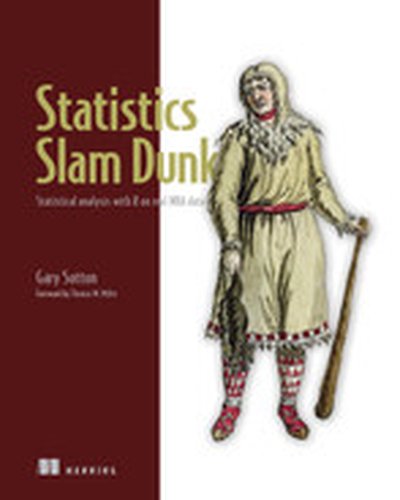
Statistics Slam Dunk

Learn statistics by analyzing professional basketball data! In this action-packed book, you’ll build your skills in exploratory data analysis by digging into the fascinating world of NBA games and player stats using the R language. Statistics Slam Dunk is an engaging how-to guide for statistical analysis with R. Each chapter contains an end-to-end data science or statistics project delving into NBA data and revealing real-world sporting insights. Written by a former basketball player turned business intelligence and analytics leader, you’ll get practical experience tidying, wrangling, exploring, testing, modeling, and otherwise analyzing data with the best and latest R packages and functions. In Statistics Slam Dunk you’ll develop a toolbox of R programming skills including: Reading and writing data Installing and loading packages Transforming, tidying, and wrangling data Applying best-in-class exploratory data analysis techniques Creating compelling visualizations Developing supervised and unsupervised machine learning algorithms Executing hypothesis tests, including t-tests and chi-square tests for independence Computing expected values, Gini coefficients, z-scores, and other measures If you’re looking to switch to R from another language, or trade base R for tidyverse functions, this book is the perfect training coach. Much more than a beginner’s guide, it teaches statistics and data science methods that have tons of use cases. And just like in the real world, you’ll get no clean pre-packaged data sets in Statistics Slam Dunk. You’ll take on the challenge of wrangling messy data to drill on the skills that will make you the star player on any data team. About the Technology Statistics Slam Dunk is a data science manual with a difference. Each chapter is a complete, self-contained statistics or data science project for you to work through—from importing data, to wrangling it, testing it, visualizing it, and modeling it. Throughout the book, you’ll work exclusively with NBA data sets and the R language, applying best-in-class statistics techniques to reveal fun and fascinating truths about the NBA. About the Book Is losing basketball games on purpose a rational strategy? Which hustle statistics have an impact on wins and losses? Does spending more on player salaries translate into a winning record? You’ll answer all these questions and more. Plus, R’s visualization capabilities shine through in the book’s 300 plots and charts, including Pareto charts, Sankey diagrams, Cleveland dot plots, and dendrograms. What's Inside Transforming, tidying, and wrangling data Applying best-in-class exploratory data analysis techniques Developing supervised and unsupervised machine learning algorithms Executing hypothesis tests and effect size tests About the Reader For readers who know basic statistics. No advanced knowledge of R—or basketball—required. About the Author Gary Sutton is a former basketball player who has built and led high-performing business intelligence and analytics organizations across multiple verticals. Quotes In this journey of exploration, every computer scientist will find a valuable ally in understanding the language of data. - Kim Lokøy, areo Transcends other R titles by revealing the hidden narratives that lie within the numbers. - Christian Sutton, Shell International Exploration and Production Seamlessly blending theory and practical insights, this book serves as an indispensable guide for those venturing into the field of data analytics. - Juan Delgado, Sodexo BRS
The R Book, 3rd Edition

A start-to-finish guide to one of the most useful programming languages for researchers in a variety of fields In the newly revised Third Edition of The R Book, a team of distinguished teachers and researchers delivers a user-friendly and comprehensive discussion of foundational and advanced topics in the R software language, which is used widely in science, engineering, medicine, economics, and other fields. The book is designed to be used as both a complete text—readable from cover to cover—and as a reference manual for practitioners seeking authoritative guidance on particular topics. This latest edition offers instruction on the use of the RStudio GUI, an easy-to-use environment for those new to R. It provides readers with a complete walkthrough of the R language, beginning at a point that assumes no prior knowledge of R and very little previous knowledge of statistics. Readers will also find: A thorough introduction to fundamental concepts in statistics and step-by-step roadmaps to their implementation in R; Comprehensive explorations of worked examples in R; A complementary companion website with downloadable datasets that are used in the book; In-depth examination of essential R packages. Perfect for undergraduate and postgraduate students of science, engineering, medicine economics, and geography, The R Book will also earn a place in the libraries of social sciences professionals.

Pro Data Visualization Using R and JavaScript: Analyze and Visualize Key Data on the Web

Use R 4, RStudio, Tidyverse, and Shiny to interrogate and analyze your data, and then use the D3 JavaScript library to format and display that data in an elegant, informative, and interactive way. You will learn how to gather data effectively, and also how to understand the philosophy and implementation of each type of chart, so as to be able to represent the results visually. With the popularity of the R language, the art and practice of creating data visualizations is no longer the preserve of mathematicians, statisticians, or cartographers. As technology leaders, we can gather metrics around what we do and use data visualizations to communicate that information. Pro Data Visualization Using R and JavaScript combines the power of the R language with the simplicity and familiarity of JavaScript to display clear and informative data visualizations. Gathering and analyzing empirical data is the key to truly understanding anything. We can track operational metrics to quantify the health of our products in production. We can track quality metrics of our projects, and even use our data to identify bad code. Visualizing this data allows anyone to read our analysis and easily get a deep understanding of the story the data tells. This book makes the R language approachable, and promotes the idea of data gathering and analysis mostly using web interfaces. What You Will Learn Carry out data visualization using R and JavaScript Use RStudio for data visualization Harness Tidyverse data pipelines Apply D3 and R Notebooks towards your data Work with the R Plumber API generator, Shiny, and more Who This Book Is For Programmers and data scientists/analysts who have some prior experience with R and JavaScript.

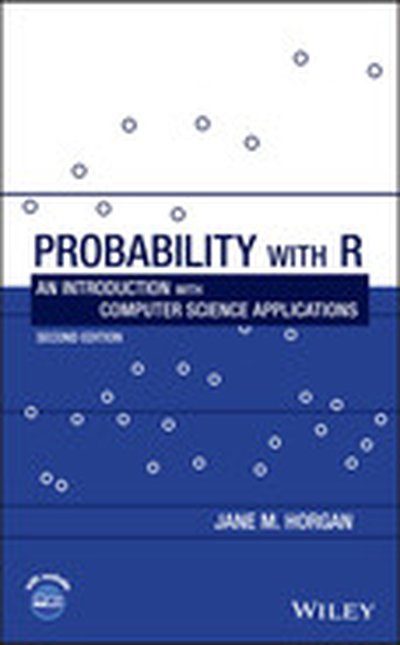
Probability with R, 2nd Edition

Provides a comprehensive introduction to probability with an emphasis on computing-related applications This self-contained new and extended edition outlines a first course in probability applied to computer-related disciplines. As in the first edition, experimentation and simulation are favoured over mathematical proofs. The freely down-loadable statistical programming language R is used throughout the text, not only as a tool for calculation and data analysis, but also to illustrate concepts of probability and to simulate distributions. The examples in Probability with R: An Introduction with Computer Science Applications, Second Edition cover a wide range of computer science applications, including: testing program performance; measuring response time and CPU time; estimating the reliability of components and systems; evaluating algorithms and queuing systems. Chapters cover: The R language; summarizing statistical data; graphical displays; the fundamentals of probability; reliability; discrete and continuous distributions; and more. This second edition includes: improved R code throughout the text, as well as new procedures, packages and interfaces; updated and additional examples, exercises and projects covering recent developments of computing; an introduction to bivariate discrete distributions together with the R functions used to handle large matrices of conditional probabilities, which are often needed in machine translation; an introduction to linear regression with particular emphasis on its application to machine learning using testing and training data; a new section on spam filtering using Bayes theorem to develop the filters; an extended range of Poisson applications such as network failures, website hits, virus attacks and accessing the cloud; use of new allocation functions in R to deal with hash table collision, server overload and the general allocation problem. The book is supplemented with a Wiley Book Companion Site featuring data and solutions to exercises within the book. Primarily addressed to students of computer science and related areas, Probability with R: An Introduction with Computer Science Applications, Second Edition is also an excellent text for students of engineering and the general sciences. Computing professionals who need to understand the relevance of probability in their areas of practice will find it useful.

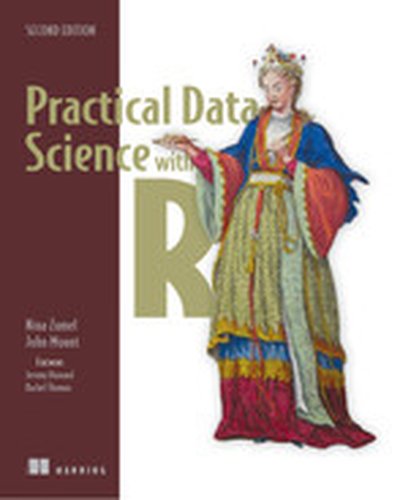
Practical Data Science with R, Second Edition

Practical Data Science with R, Second Edition takes a practice-oriented approach to explaining basic principles in the ever expanding field of data science. You’ll jump right to real-world use cases as you apply the R programming language and statistical analysis techniques to carefully explained examples based in marketing, business intelligence, and decision support. About the Technology Evidence-based decisions are crucial to success. Applying the right data analysis techniques to your carefully curated business data helps you make accurate predictions, identify trends, and spot trouble in advance. The R data analysis platform provides the tools you need to tackle day-to-day data analysis and machine learning tasks efficiently and effectively. About the Book Practical Data Science with R, Second Edition is a task-based tutorial that leads readers through dozens of useful, data analysis practices using the R language. By concentrating on the most important tasks you’ll face on the job, this friendly guide is comfortable both for business analysts and data scientists. Because data is only useful if it can be understood, you’ll also find fantastic tips for organizing and presenting data in tables, as well as snappy visualizations. What's Inside Statistical analysis for business pros Effective data presentation The most useful R tools Interpreting complicated predictive models About the Reader You’ll need to be comfortable with basic statistics and have an introductory knowledge of R or another high-level programming language. About the Authors Nina Zumel and John Mount founded a San Francisco–based data science consulting firm. Both hold PhDs from Carnegie Mellon University and blog on statistics, probability, and computer science. Quotes Full of useful shared experience and practical advice. Highly recommended. - From the Foreword by Jeremy Howard and Rachel Thomas Great examples and an informative walk-through of the data science process. - David Meza, NASA Offers interesting perspectives that cover many aspects of practical data science; a good reference. - Pascal Barbedor, BL SET R you ready to get data science done the right way? - Taylor Dolezal, Disney Studios

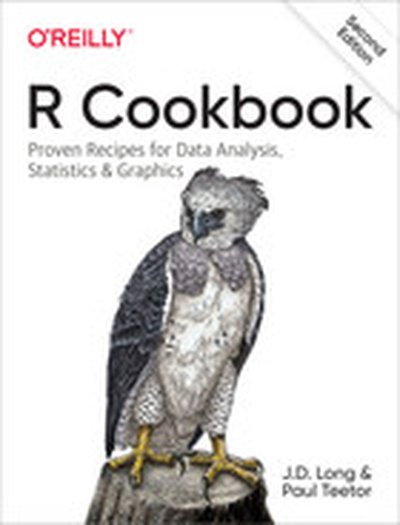
R Cookbook, 2nd Edition

Perform data analysis with R quickly and efficiently with more than 275 practical recipes in this expanded second edition. The R language provides everything you need to do statistical work, but its structure can be difficult to master. These task-oriented recipes make you productive with R immediately. Solutions range from basic tasks to input and output, general statistics, graphics, and linear regression. Each recipe addresses a specific problem and includes a discussion that explains the solution and provides insight into how it works. If you’re a beginner, R Cookbook will help get you started. If you’re an intermediate user, this book will jog your memory and expand your horizons. You’ll get the job done faster and learn more about R in the process. Create vectors, handle variables, and perform basic functions Simplify data input and output Tackle data structures such as matrices, lists, factors, and data frames Work with probability, probability distributions, and random variables Calculate statistics and confidence intervals and perform statistical tests Create a variety of graphic displays Build statistical models with linear regressions and analysis of variance (ANOVA) Explore advanced statistical techniques, such as finding clusters in your data

Advanced R Statistical Programming and Data Models: Analysis, Machine Learning, and Visualization

Carry out a variety of advanced statistical analyses including generalized additive models, mixed effects models, multiple imputation, machine learning, and missing data techniques using R. Each chapter starts with conceptual background information about the techniques, includes multiple examples using R to achieve results, and concludes with a case study. Written by Matt and Joshua F. Wiley, Advanced R Statistical Programming and Data Models shows you how to conduct data analysis using the popular R language. You’ll delve into the preconditions or hypothesis for various statistical tests and techniques and work through concrete examples using R for a variety of these next-level analytics. This is a must-have guide and reference on using and programming with the R language. What You’ll Learn Conduct advanced analyses in R including: generalized linear models, generalized additive models, mixedeffects models, machine learning, and parallel processing Carry out regression modeling using R data visualization, linear and advanced regression, additive models, survival / time to event analysis Handle machine learning using R including parallel processing, dimension reduction, and feature selection and classification Address missing data using multiple imputation in R Work on factor analysis, generalized linear mixed models, and modeling intraindividual variability Who This Book Is For Working professionals, researchers, or students who are familiar with R and basic statistical techniques such as linear regression and who want to learn how to use R to perform more advanced analytics. Particularly, researchers and data analysts in the social sciences may benefit from these techniques. Additionally, analysts who need parallel processing to speed up analytics are givenproven code to reduce time to result(s).

Hands-On Data Science with R

Dive into "Hands-On Data Science with R" and embark on a journey to master the R language for practical data science applications. This comprehensive guide walks through data manipulation, visualization, and advanced analytics, preparing you to tackle real-world data challenges with confidence. What this Book will help me do Understand how to utilize popular R packages effectively for data science tasks. Learn techniques for cleaning, preprocessing, and exploring datasets. Gain insights into implementing machine learning models in R for predictive analytics. Master the use of advanced visualization tools to extract and communicate insights. Develop expertise in integrating R with big data platforms like Hadoop and Spark. Author(s) This book was written by experts in data science and R including Doug Ortiz and his co-authors. They bring years of industry experience and a desire to teach, presenting complex topics in an approachable manner. Who is it for? Designed for data analysts, statisticians, or programmers with basic R knowledge looking to dive into machine learning and predictive analytics. If you're aiming to enhance your skill set or gain confidence in tackling real-world data problems, this book is an excellent choice.

Programming Skills for Data Science: Start Writing Code to Wrangle, Analyze, and Visualize Data with R, First Edition

The Foundational Hands-On Skills You Need to Dive into Data Science “Freeman and Ross have created the definitive resource for new and aspiring data scientists to learn foundational programming skills.” –From the foreword by Jared Lander, series editor Using data science techniques, you can transform raw data into actionable insights for domains ranging from urban planning to precision medicine. brings together all the foundational skills you need to get started, even if you have no programming or data science experience. Programming Skills for Data Science Leading instructors Michael Freeman and Joel Ross guide you through installing and configuring the tools you need to solve professional-level data science problems, including the widely used R language and Git version-control system. They explain how to wrangle your data into a form where it can be easily used, analyzed, and visualized so others can see the patterns you've uncovered. Step by step, you'll master powerful R programming techniques and troubleshooting skills for probing data in new ways, and at larger scales. Freeman and Ross teach through practical examples and exercises that can be combined into complete data science projects. Everything's focused on real-world application, so you can quickly start analyzing your own data and getting answers you can act upon. Learn to Install your complete data science environment, including R and RStudio Manage projects efficiently, from version tracking to documentation Host, manage, and collaborate on data science projects with GitHub Master R language fundamentals: syntax, programming concepts, and data structures Load, format, explore, and restructure data for successful analysis Interact with databases and web APIs Master key principles for visualizing data accurately and intuitively Produce engaging, interactive visualizations with ggplot and other R packages Transform analyses into sharable documents and sites with R Markdown Create interactive web data science applications with Shiny Collaborate smoothly as part of a data science team Register your book for convenient access to downloads, updates, and/or corrections as they become available. See inside book for details.

R Graphics Cookbook, 2nd Edition

This O’Reilly cookbook provides more than 150 recipes to help scientists, engineers, programmers, and data analysts generate high-quality graphs quickly—without having to comb through all the details of R’s graphing systems. Each recipe tackles a specific problem with a solution you can apply to your own project and includes a discussion of how and why the recipe works. Most of the recipes in this second edition use the updated version of the ggplot2 package, a powerful and flexible way to make graphs in R. You’ll also find expanded content about the visual design of graphics. If you have at least a basic understanding of the R language, you’re ready to get started with this easy-to-use reference. Use R’s default graphics for quick exploration of data Create a variety of bar graphs, line graphs, and scatter plots Summarize data distributions with histograms, density curves, box plots, and more Provide annotations to help viewers interpret data Control the overall appearance of graphics Explore options for using colors in plots Create network graphs, heat maps, and 3D scatter plots Get your data into shape using packages from the tidyverse

Business Case Analysis with R: Simulation Tutorials to Support Complex Business Decisions

This tutorial teaches you how to use the statistical programming language R to develop a business case simulation and analysis. It presents a methodology for conducting business case analysis that minimizes decision delay by focusing stakeholders on what matters most and suggests pathways for minimizing the risk in strategic and capital allocation decisions. Business case analysis, often conducted in spreadsheets, exposes decision makers to additional risks that arise just from the use of the spreadsheet environment. R has become one of the most widely used tools for reproducible quantitative analysis, and analysts fluent in this language are in high demand. The R language, traditionally used for statistical analysis, provides a more explicit, flexible, and extensible environment than spreadsheets for conducting business case analysis. The main tutorial follows the case in which a chemical manufacturing company considers constructing a chemical reactor and production facility to bring a new compound to market. There are numerous uncertainties and risks involved, including the possibility that a competitor brings a similar product online. The company must determine the value of making the decision to move forward and where they might prioritize their attention to make a more informed and robust decision. While the example used is a chemical company, the analysis structure it presents can be applied to just about any business decision, from IT projects to new product development to commercial real estate. The supporting tutorials include the perspective of the founder of a professional service firm who wants to grow his business and a member of a strategic planning group in a biomedical device company who wants to know how much to budget in order to refine the quality of information about critical uncertainties that might affect the value of a chosen product development pathway. What You’ll Learn Set upa business case abstraction in an influence diagram to communicate the essence of the problem to other stakeholders Model the inherent uncertainties in the problem with Monte Carlo simulation using the R language Communicate the results graphically Draw appropriate insights from the results Develop creative decision strategies for thorough opportunity cost analysis Calculate the value of information on critical uncertainties between competing decision strategies to set the budget for deeper data analysis Construct appropriate information to satisfy the parameters for the Monte Carlo simulation when little or no empirical data are available Who This Book Is For Financial analysts, data practitioners, and risk/business professionals; also appropriate for graduate level finance, business, or data science students

R for Everyone: Advanced Analytics and Graphics, 2nd Edition

Statistical Computation for Programmers, Scientists, Quants, Excel Users, and Other Professionals Using the open source R language, you can build powerful statistical models to answer many of your most challenging questions. R has traditionally been difficult for non-statisticians to learn, and most R books assume far too much knowledge to be of help. is the solution. R for Everyone, Second Edition, Drawing on his unsurpassed experience teaching new users, professional data scientist Jared P. Lander has written the perfect tutorial for anyone new to statistical programming and modeling. Organized to make learning easy and intuitive, this guide focuses on the 20 percent of R functionality you'll need to accomplish 80 percent of modern data tasks. Lander's self-contained chapters start with the absolute basics, offering extensive hands-on practice and sample code. You'll download and install R; navigate and use the R environment; master basic program control, data import, manipulation, and visualization; and walk through several essential tests. Then, building on this foundation, you'll construct several complete models, both linear and nonlinear, and use some data mining techniques. After all this you'll make your code reproducible with LaTeX, RMarkdown, and Shiny. By the time you're done, you won't just know how to write R programs, you'll be ready to tackle the statistical problems you care about most. Coverage includes Explore R, RStudio, and R packages Use R for math: variable types, vectors, calling functions, and more Exploit data structures, including data.frames, matrices, and lists Read many different types of data Create attractive, intuitive statistical graphics Write user-defined functions Control program flow with if, ifelse, and complex checks Improve program efficiency with group manipulations Combine and reshape multiple datasets Manipulate strings using R's facilities and regular expressions Create normal, binomial, and Poisson probability distributions Build linear, generalized linear, and nonlinear models Program basic statistics: mean, standard deviation, and t-tests Train machine learning models Assess the quality of models and variable selection Prevent overfitting and perform variable selection, using the Elastic Net and Bayesian methods Analyze univariate and multivariate time series data Group data via K-means and hierarchical clustering Prepare reports, slideshows, and web pages with knitr Display interactive data with RMarkdown and htmlwidgets Implement dashboards with Shiny Build reusable R packages with devtools and Rcpp

Metaprogramming in R: Advanced Statistical Programming for Data Science, Analysis and Finance

Learn how to manipulate functions and expressions to modify how the R language interprets itself. This book is an introduction to metaprogramming in the R language, so you will write programs to manipulate other programs. Metaprogramming in R shows you how to treat code as data that you can generate, analyze, or modify. R is a very high-level language where all operations are functions and all functions are data that can be manipulated. This book shows you how to leverage R's natural flexibility in how function calls and expressions are evaluated, to create small domain-specific languages to extend R within the R language itself. What You'll Learn Find out about the anatomy of a function in R Look inside a function call Work with R expressions and environments Manipulate expressions in R Use substitutions Who This Book Is For Those with at least some experience with R and certainly for those with experience in other programming languages

Business Analytics Using R - A Practical Approach

Learn the fundamental aspects of the business statistics, data mining, and machine learning techniques required to understand the huge amount of data generated by your organization. This book explains practical business analytics through examples, covers the steps involved in using it correctly, and shows you the context in which a particular technique does not make sense. Further, Practical Business Analytics using R helps you understand specific issues faced by organizations and how the solutions to these issues can be facilitated by business analytics. This book will discuss and explore the following through examples and case studies: An introduction to R: data management and R functions The architecture, framework, and life cycle of a business analytics project Descriptive analytics using R: descriptive statistics and data cleaning Data mining: classification, association rules, and clustering Predictive analytics: simple regression, multiple regression, and logistic regression This book includes case studies on important business analytic techniques, such as classification, association, clustering, and regression. The R language is the statistical tool used to demonstrate the concepts throughout the book. What You Will Learn • Write R programs to handle data • Build analytical models and draw useful inferences from them • Discover the basic concepts of data mining and machine learning • Carry out predictive modeling • Define a business issue as an analytical problem Who This Book Is For Beginners who want to understand and learn the fundamentals of analytics using R. Students, managers, executives, strategy and planning professionals, software professionals, and BI/DW professionals.

Oracle R Enterprise: Harnessing the Power of R in Oracle Database

Master the Big Data Capabilities of Oracle R Enterprise Effectively manage your enterprise’s big data and keep complex processes running smoothly using the hands-on information contained in this Oracle Press guide. Oracle R Enterprise: Harnessing the Power of R in Oracle Database shows, step-by-step, how to create and execute large-scale predictive analytics and maintain superior performance. Discover how to explore and prepare your data, accurately model business processes, generate sophisticated graphics, and write and deploy powerful scripts. You will also find out how to effectively incorporate Oracle R Enterprise features in APEX applications, OBIEE dashboards, and Apache Hadoop systems. Learn to: • Install, configure, and administer Oracle R Enterprise • Establish connections and move data to the database • Create Oracle R Enterprise packages and functions • Use the R language to work with data in Oracle Database • Build models using ODM, ORE, and other algorithms • Develop and deploy R scripts and use the R script repository • Execute embedded R scripts and employ ORE SQL API functions • Map and manipulate data using Oracle R Advanced Analytics for Hadoop • Use ORE in Oracle Data Miner, OBIEE, and other applications

Writing code for R packages

R packages are a great way to share and create code that you and others can use over and over again. Why is it important? Developing R code for inclusion in a package is different than simply writing R scripts. What you'll learn—and how you can apply it Learn best practices for writing R code for packages: organizing your functions, code style recommendations, understanding and planning for how code will be run. Plan for the "unknowns" once you release a package to the world. Also includes hints for submitting a package to CRAN. This lesson is for you because… You're an R developer and need to package code so that others can reuse it You want to prepare a package to submit to CRAN Prerequisites Some familiarity with the R language Materials or downloads needed in advance Install R Install RStudio This lesson is taken from by Hadley Wickham. R Packages

Graphing Data with R

It’s much easier to grasp complex data relationships with a graph than by scanning numbers in a spreadsheet. This introductory guide shows you how to use the R language to create a variety of useful graphs for visualizing and analyzing complex data for science, business, media, and many other fields. You’ll learn methods for highlighting important relationships and trends, reducing data to simpler forms, and emphasizing key numbers at a glance. Anyone who wants to analyze data will find something useful here—even if you don’t have a background in mathematics, statistics, or computer programming. If you want to examine data related to your work, this book is the ideal way to start.

Beginning R: An Introduction to Statistical Programming, Second Edition

Beginning R, Second Edition is a hands-on book showing how to use the R language, write and save R scripts, read in data files, and write custom statistical functions as well as use built in functions. This book shows the use of R in specific cases such as one-way ANOVA analysis, linear and logistic regression, data visualization, parallel processing, bootstrapping, and more. It takes a hands-on, example-based approach incorporating best practices with clear explanations of the statistics being done. It has been completely re-written since the first edition to make use of the latest packages and features in R version 3. R is a powerful open-source language and programming environment for statistics and has become the de facto standard for doing, teaching, and learning computational statistics. R is both an object-oriented language and a functional language that is easy to learn, easy to use, and completely free. A large community of dedicated R users and programmers provides an excellent source of R code, functions, and data sets, with a constantly evolving ecosystem of packages providing new functionality for data analysis. R has also become popular in commercial use at companies such as Microsoft, Google, and Oracle. Your investment in learning R is sure to pay off in the long term as R continues to grow into the go to language for data analysis and research.

Bioinformatics Data Skills

Learn the data skills necessary for turning large sequencing datasets into reproducible and robust biological findings. With this practical guide, you’ll learn how to use freely available open source tools to extract meaning from large complex biological data sets. At no other point in human history has our ability to understand life’s complexities been so dependent on our skills to work with and analyze data. This intermediate-level book teaches the general computational and data skills you need to analyze biological data. If you have experience with a scripting language like Python, you’re ready to get started. Go from handling small problems with messy scripts to tackling large problems with clever methods and tools Process bioinformatics data with powerful Unix pipelines and data tools Learn how to use exploratory data analysis techniques in the R language Use efficient methods to work with genomic range data and range operations Work with common genomics data file formats like FASTA, FASTQ, SAM, and BAM Manage your bioinformatics project with the Git version control system Tackle tedious data processing tasks with with Bash scripts and Makefiles

R in Action, Second Edition

R in Action, Second Edition presents both the R language and the examples that make it so useful for business developers. Focusing on practical solutions, the book offers a crash course in statistics and covers elegant methods for dealing with messy and incomplete data that are difficult to analyze using traditional methods. You'll also master R's extensive graphical capabilities for exploring and presenting data visually. And this expanded second edition includes new chapters on time series analysis, cluster analysis, and classification methodologies, including decision trees, random forests, and support vector machines. About the Technology Business pros and researchers thrive on data, and R speaks the language of data analysis. R is a powerful programming language for statistical computing. Unlike general-purpose tools, R provides thousands of modules for solving just about any data-crunching or presentation challenge you're likely to face. R runs on all important platforms and is used by thousands of major corporations and institutions worldwide. About the Book R in Action, Second Edition teaches you how to use the R language by presenting examples relevant to scientific, technical, and business developers. Focusing on practical solutions, the book offers a crash course in statistics, including elegant methods for dealing with messy and incomplete data. You'll also master R's extensive graphical capabilities for exploring and presenting data visually. And this expanded second edition includes new chapters on forecasting, data mining, and dynamic report writing. What's Inside Complete R language tutorial Using R to manage, analyze, and visualize data Techniques for debugging programs and creating packages OOP in R Over 160 graphs About the Reader This book is designed for readers who need to solve practical data analysis problems using the R language and tools. Some background in mathematics and statistics is helpful, but no prior experience with R or computer programming is required. About the Author Dr. Rob Kabacoff is a seasoned researcher who specializes in data analysis. He has taught graduate courses in statistical programming and manages the Quick-R website at statmethods.net. Quotes Essential to anyone doing data analysis with R, whether in industry or academia. - Cristofer Weber, NeoGrid A go-to reference for general R and many statistics questions. - George Gaines, KYOS Systems Inc. Accessible language, realistic examples, and clear code. - Samuel D. McQuillin, University of Houston Offers a gentle learning curve to those starting out with R for the first time. - Indrajit Sen Gupta, Mu Sigma Business Solutions