talk-data.com talk-data.com

Topic

Spark

Apache Spark

big_data distributed_computing analytics

167

tagged

Activity Trend

71 peak/qtr
2020-Q1 2026-Q1

Activities

167 activities · Newest first

The Data Engineer's Guide to Microsoft Fabric

Modern data engineering is evolving; and with Microsoft Fabric, the entire data platform experience is being redefined. This essential book offers a fresh, hands-on approach to navigating this shift. Rather than being an introduction to features, this guide explains how Fabric's key components—Lakehouse, Warehouse, and Real-Time Intelligence—work under the hood and how to put them to use in realistic workflows. Written by Christian Henrik Reich, a data engineering expert with experience that extends from Databricks to Fabric, this book is a blend of foundational theory and practical implementation of lakehouse solutions in Fabric. You'll explore how engines like Apache Spark and Fabric Warehouse collaborate with Fabric's Real-Time Intelligence solution in an integrated platform, and how to build ETL/ELT pipelines that deliver on speed, accuracy, and scale. Ideal for both new and practicing data engineers, this is your entry point into the fabric of the modern data platform. Acquire a working knowledge of lakehouses, warehouses, and streaming in Fabric Build resilient data pipelines across real-time and batch workloads Apply Python, Spark SQL, T-SQL, and KQL within a unified platform Gain insight into architectural decisions that scale with data needs Learn actionable best practices for engineering clean, efficient, governed solutions

High Performance Spark, 2nd Edition

Apache Spark is amazing when everything clicks. But if you haven't seen the performance improvements you expected or still don't feel confident enough to use Spark in production, this practical book is for you. Authors Holden Karau, Rachel Warren, and Anya Bida walk you through the secrets of the Spark code base, and demonstrate performance optimizations that will help your data pipelines run faster, scale to larger datasets, and avoid costly antipatterns. Ideal for data engineers, software engineers, data scientists, and system administrators, the second edition of High Performance Spark presents new use cases, code examples, and best practices for Spark 3.x and beyond. This book gives you a fresh perspective on this continually evolving framework and shows you how to work around bumps on your Spark and PySpark journey. With this book, you'll learn how to: Accelerate your ML workflows with integrations including PyTorch Handle key skew and take advantage of Spark's new dynamic partitioning Make your code reliable with scalable testing and validation techniques Make Spark high performance Deploy Spark on Kubernetes and similar environments Take advantage of GPU acceleration with RAPIDS and resource profiles Get your Spark jobs to run faster Use Spark to productionize exploratory data science projects Handle even larger datasets with Spark Gain faster insights by reducing pipeline running times

Data Engineering with Azure Databricks

Master end-to-end data engineering on Azure Databricks. From data ingestion and Delta Lake to CI/CD and real-time streaming, build secure, scalable, and performant data solutions with Spark, Unity Catalog, and ML tools. Key Features Build scalable data pipelines using Apache Spark and Delta Lake Automate workflows and manage data governance with Unity Catalog Learn real-time processing and structured streaming with practical use cases Implement CI/CD, DevOps, and security for production-ready data solutions Explore Databricks-native ML, AutoML, and Generative AI integration Book Description "Data Engineering with Azure Databricks" is your essential guide to building scalable, secure, and high-performing data pipelines using the powerful Databricks platform on Azure. Designed for data engineers, architects, and developers, this book demystifies the complexities of Spark-based workloads, Delta Lake, Unity Catalog, and real-time data processing. Beginning with the foundational role of Azure Databricks in modern data engineering, you’ll explore how to set up robust environments, manage data ingestion with Auto Loader, optimize Spark performance, and orchestrate complex workflows using tools like Azure Data Factory and Airflow. The book offers deep dives into structured streaming, Delta Live Tables, and Delta Lake’s ACID features for data reliability and schema evolution. You’ll also learn how to manage security, compliance, and access controls using Unity Catalog, and gain insights into managing CI/CD pipelines with Azure DevOps and Terraform. With a special focus on machine learning and generative AI, the final chapters guide you in automating model workflows, leveraging MLflow, and fine-tuning large language models on Databricks. Whether you're building a modern data lakehouse or operationalizing analytics at scale, this book provides the tools and insights you need. What you will learn Set up a full-featured Azure Databricks environment Implement batch and streaming ingestion using Auto Loader Optimize Spark jobs with partitioning and caching Build real-time pipelines with structured streaming and DLT Manage data governance using Unity Catalog Orchestrate production workflows with jobs and ADF Apply CI/CD best practices with Azure DevOps and Git Secure data with RBAC, encryption, and compliance standards Use MLflow and Feature Store for ML pipelines Build generative AI applications in Databricks Who this book is for This book is for data engineers, solution architects, cloud professionals, and software engineers seeking to build robust and scalable data pipelines using Azure Databricks. Whether you're migrating legacy systems, implementing a modern lakehouse architecture, or optimizing data workflows for performance, this guide will help you leverage the full power of Databricks on Azure. A basic understanding of Python, Spark, and cloud infrastructure is recommended.

Designing Data-Intensive Applications, 2nd Edition

Data is at the center of many challenges in system design today. Difficult issues such as scalability, consistency, reliability, efficiency, and maintainability need to be resolved. In addition, there's an overwhelming variety of tools and analytical systems, including relational databases, NoSQL datastores, plus data warehouses and data lakes. What are the right choices for your application? How do you make sense of all these buzzwords? In this second edition, authors Martin Kleppmann and Chris Riccomini build on the foundation laid in the acclaimed first edition, integrating new technologies and emerging trends. You'll be guided through the maze of decisions and trade-offs involved in building a modern data system, from choosing the right tools like Spark and Flink to understanding the intricacies of data laws like the GDPR. Peer under the hood of the systems you already use, and learn to use them more effectively Make informed decisions by identifying the strengths and weaknesses of different tools Navigate the trade-offs around consistency, scalability, fault tolerance, and complexity Understand the distributed systems research upon which modern databases are built Peek behind the scenes of major online services, and learn from their architectures

Practical Data Engineering with Apache Projects: Solving Everyday Data Challenges with Spark, Iceberg, Kafka, Flink, and More

This book is a comprehensive guide designed to equip you with the practical skills and knowledge necessary to tackle real-world data challenges using Open Source solutions. Focusing on 10 real-world data engineering projects, it caters specifically to data engineers at the early stages of their careers, providing a strong foundation in essential open source tools and techniques such as Apache Spark, Flink, Airflow, Kafka, and many more. Each chapter is dedicated to a single project, starting with a clear presentation of the problem it addresses. You will then be guided through a step-by-step process to solve the problem, leveraging widely-used open-source data tools. This hands-on approach ensures that you not only understand the theoretical aspects of data engineering but also gain valuable experience in applying these concepts to real-world scenarios. At the end of each chapter, the book delves into common challenges that may arise during the implementation of the solution, offering practical advice on troubleshooting these issues effectively. Additionally, the book highlights best practices that data engineers should follow to ensure the robustness and efficiency of their solutions. A major focus of the book is using open-source projects and tools to solve problems encountered in data engineering. In summary, this book is an indispensable resource for data engineers looking to build a strong foundation in the field. By offering practical, real-world projects and emphasizing problem-solving and best practices, it will prepare you to tackle the complex data challenges encountered throughout your career. Whether you are an aspiring data engineer or looking to enhance your existing skills, this book provides the knowledge and tools you need to succeed in the ever-evolving world of data engineering. You Will Learn: The foundational concepts of data engineering and practical experience in solving real-world data engineering problems How to proficiently use open-source data tools like Apache Kafka, Flink, Spark, Airflow, and Trino 10 hands-on data engineering projects Troubleshoot common challenges in data engineering projects Who is this book for: Early-career data engineers and aspiring data engineers who are looking to build a strong foundation in the field; mid-career professionals looking to transition into data engineering roles; and technology enthusiasts interested in gaining insights into data engineering practices and tools.

Engineering Lakehouses with Open Table Formats

Engineering Lakehouses with Open Table Formats introduces the architecture and capabilities of open table formats like Apache Iceberg, Apache Hudi, and Delta Lake. The book guides you through the design, implementation, and optimization of lakehouses that can handle modern data processing requirements effectively with real-world practical insights. What this Book will help me do Understand the fundamentals of open table formats and their benefits in lakehouse architecture. Learn how to implement performant data processing using tools like Apache Spark and Flink. Master advanced topics like indexing, partitioning, and interoperability between data formats. Explore data lifecycle management and integration with frameworks like Apache Airflow and dbt. Build secure lakehouses with regulatory compliance using best practices detailed in the book. Author(s) Dipankar Mazumdar and Vinoth Govindarajan are seasoned professionals with extensive experience in big data processing and software architecture. They bring their expertise from working with data lakehouses and are known for their ability to explain complex technical concepts clearly. Their collaborative approach brings valuable insights into the latest trends in data management. Who is it for? This book is ideal for data engineers, architects, and software professionals aiming to master modern lakehouse architectures. If you are familiar with data lakes or warehouses and wish to transition to an open data architectural design, this book is suited for you. Readers should have basic knowledge of databases, Python, and Apache Spark for the best experience.

Apache Polaris: The Definitive Guide

Revolutionize your understanding of modern data management with Apache Polaris (incubating), the open source catalog designed for data lakehouse industry standard Apache Iceberg. This comprehensive guide takes you on a journey through the intricacies of Apache Iceberg data lakehouses, highlighting the pivotal role of Iceberg catalogs. Authors Alex Merced, Andrew Madson, and Tomer Shiran explore Apache Polaris's architecture and features in detail, equipping you with the knowledge needed to leverage its full potential. Data engineers, data architects, data scientists, and data analysts will learn how to seamlessly integrate Apache Polaris with popular data tools like Apache Spark, Snowflake, and Dremio to enhance data management capabilities, optimize workflows, and secure datasets. Get a comprehensive introduction to Iceberg data lakehouses Understand how catalogs facilitate efficient data management and querying in Iceberg Explore Apache Polaris's unique architecture and its powerful features Deploy Apache Polaris locally, and deploy managed Apache Polaris from Snowflake and Dremio Perform basic table operations on Apache Spark, Snowflake, and Dremio

Time Series Analysis with Spark

Time Series Analysis with Spark provides a practical introduction to leveraging Apache Spark and Databricks for time series analysis. You'll learn to prepare, model, and deploy robust and scalable time series solutions for real-world applications. From data preparation to advanced generative AI techniques, this guide prepares you to excel in big data analytics. What this Book will help me do Understand the core concepts and architectures of Apache Spark for time series analysis. Learn to clean, organize, and prepare time series data for big data environments. Gain expertise in choosing, building, and training various time series models tailored to specific projects. Master techniques to scale your models in production using Spark and Databricks. Explore the integration of advanced technologies such as generative AI to enhance predictions and derive insights. Author(s) Yoni Ramaswami, a Senior Solutions Architect at Databricks, has extensive experience in data engineering and AI solutions. With a focus on creating innovative big data and AI strategies across industries, Yoni authored this book to empower professionals to efficiently handle time series data. Yoni's approachable style ensures that both foundational concepts and advanced techniques are accessible to readers. Who is it for? This book is ideal for data engineers, machine learning engineers, data scientists, and analysts interested in enhancing their expertise in time series analysis using Apache Spark and Databricks. Whether you're new to time series or looking to refine your skills, you'll find both foundational insights and advanced practices explained clearly. A basic understanding of Spark is helpful but not required.

Databricks Certified Data Engineer Associate Study Guide

Data engineers proficient in Databricks are currently in high demand. As organizations gather more data than ever before, skilled data engineers on platforms like Databricks become critical to business success. The Databricks Data Engineer Associate certification is proof that you have a complete understanding of the Databricks platform and its capabilities, as well as the essential skills to effectively execute various data engineering tasks on the platform. In this comprehensive study guide, you will build a strong foundation in all topics covered on the certification exam, including the Databricks Lakehouse and its tools and benefits. You'll also learn to develop ETL pipelines in both batch and streaming modes. Moreover, you'll discover how to orchestrate data workflows and design dashboards while maintaining data governance. Finally, you'll dive into the finer points of exactly what's on the exam and learn to prepare for it with mock tests. Author Derar Alhussein teaches you not only the fundamental concepts but also provides hands-on exercises to reinforce your understanding. From setting up your Databricks workspace to deploying production pipelines, each chapter is carefully crafted to equip you with the skills needed to master the Databricks Platform. By the end of this book, you'll know everything you need to ace the Databricks Data Engineer Associate certification exam with flying colors, and start your career as a certified data engineer from Databricks! You'll learn how to: Use the Databricks Platform and Delta Lake effectively Perform advanced ETL tasks using Apache Spark SQL Design multi-hop architecture to process data incrementally Build production pipelines using Delta Live Tables and Databricks Jobs Implement data governance using Databricks SQL and Unity Catalog Derar Alhussein is a senior data engineer with a master's degree in data mining. He has over a decade of hands-on experience in software and data projects, including large-scale projects on Databricks. He currently holds eight certifications from Databricks, showcasing his proficiency in the field. Derar is also an experienced instructor, with a proven track record of success in training thousands of data engineers, helping them to develop their skills and obtain professional certifications.

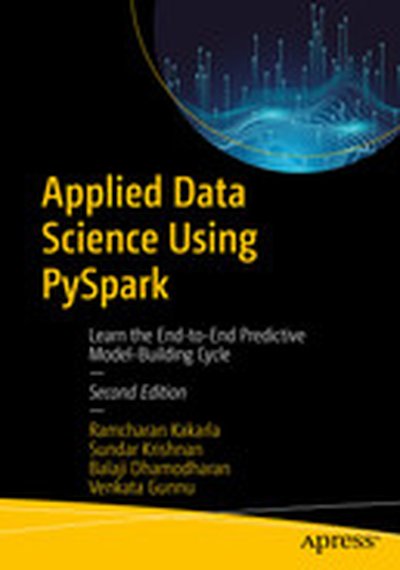
Applied Data Science Using PySpark: Learn the End-to-End Predictive Model-Building Cycle

This comprehensive guide, featuring hand-picked examples of daily use cases, will walk you through the end-to-end predictive model-building cycle using the latest techniques and industry tricks. In Chapters 1, 2, and 3, we will begin by setting up the environment and covering the basics of PySpark, focusing on data manipulation. Chapter 4 delves into the art of variable selection, demonstrating various techniques available in PySpark. In Chapters 5, 6, and 7, we explore machine learning algorithms, their implementations, and fine-tuning techniques. Chapters 8 and 9 will guide you through machine learning pipelines and various methods to operationalize and serve models using Docker/API. Chapter 10 will demonstrate how to unlock the power of predictive models to create a meaningful impact on your business. Chapter 11 introduces some of the most widely used and powerful modeling frameworks to unlock real value from data. In this new edition, you will learn predictive modeling frameworks that can quantify customer lifetime values and estimate the return on your predictive modeling investments. This edition also includes methods to measure engagement and identify actionable populations for effective churn treatments. Additionally, a dedicated chapter on experimentation design has been added, covering steps to efficiently design, conduct, test, and measure the results of your models. All code examples have been updated to reflect the latest stable version of Spark. You will: Gain an overview of end-to-end predictive model building Understand multiple variable selection techniques and their implementations Learn how to operationalize models Perform data science experiments and learn useful tips

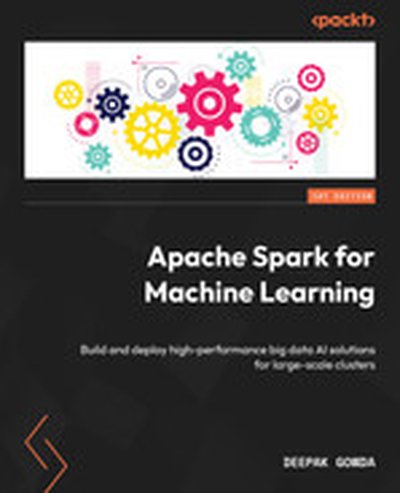
Apache Spark for Machine Learning

Dive into the power of Apache Spark as a tool for handling and processing big data required for machine learning. With this book, you will explore how to configure, execute, and deploy machine learning algorithms using Spark's scalable architecture and learn best practices for implementing real-world big data solutions. What this Book will help me do Understand the integration of Apache Spark with large-scale infrastructures for machine learning applications. Employ data processing techniques for preprocessing and feature engineering efficiently with Spark. Master the implementation of advanced supervised and unsupervised learning algorithms using Spark. Learn to deploy machine learning models within Spark ecosystems for optimized performance. Discover methods for analyzing big data trends and machine learning model tuning for improved accuracy. Author(s) The author, Deepak Gowda, is an experienced data scientist with over ten years of expertise in machine learning and big data. His career spans industries such as supply chain, cybersecurity, and more where he has utilized Apache Spark extensively. Deepak's teaching style is marked by clarity and practicality, making complex concepts approachable. Who is it for? Apache Spark for Machine Learning is tailored for data engineers, machine learning practitioners, and computer science students looking to advance their ability to process, analyze, and model using large datasets. If you're already familiar with basic machine learning and want to scale your solutions using Spark, this book is ideal for your studies and professional growth.

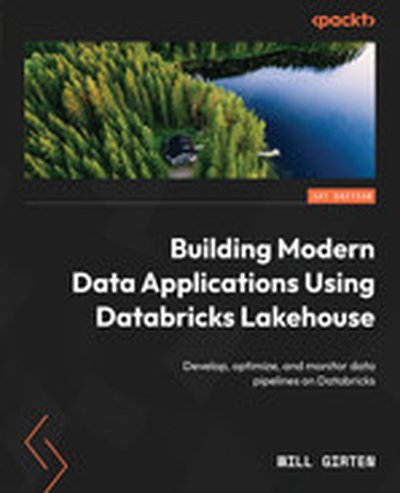
Building Modern Data Applications Using Databricks Lakehouse

This book, "Building Modern Data Applications Using Databricks Lakehouse," provides a comprehensive guide for data professionals to master the Databricks platform. You'll learn to effectively build, deploy, and monitor robust data pipelines with Databricks' Delta Live Tables, empowering you to manage and optimize cloud-based data operations effortlessly. What this Book will help me do Understand the foundations and concepts of Delta Live Tables and its role in data pipeline development. Learn workflows to process and transform real-time and batch data efficiently using the Databricks lakehouse architecture. Master the implementation of Unity Catalog for governance and secure data access in modern data applications. Deploy and automate data pipeline changes using CI/CD, leveraging tools like Terraform and Databricks Asset Bundles. Gain advanced insights in monitoring data quality and performance, optimizing cloud costs, and managing DataOps tasks effectively. Author(s) Will Girten, the author, is a seasoned Solutions Architect at Databricks with over a decade of experience in data and AI systems. With a deep expertise in modern data architectures, Will is adept at simplifying complex topics and translating them into actionable knowledge. His books emphasize real-time application and offer clear, hands-on examples, making learning engaging and impactful. Who is it for? This book is geared towards data engineers, analysts, and DataOps professionals seeking efficient strategies to implement and maintain robust data pipelines. If you have a basic understanding of Python and Apache Spark and wish to delve deeper into the Databricks platform for streamlining workflows, this book is tailored for you.

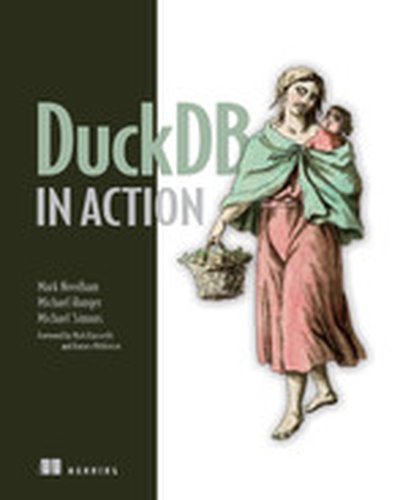
DuckDB in Action

Dive into DuckDB and start processing gigabytes of data with ease—all with no data warehouse. DuckDB is a cutting-edge SQL database that makes it incredibly easy to analyze big data sets right from your laptop. In DuckDB in Action you’ll learn everything you need to know to get the most out of this awesome tool, keep your data secure on prem, and save you hundreds on your cloud bill. From data ingestion to advanced data pipelines, you’ll learn everything you need to get the most out of DuckDB—all through hands-on examples. Open up DuckDB in Action and learn how to: Read and process data from CSV, JSON and Parquet sources both locally and remote Write analytical SQL queries, including aggregations, common table expressions, window functions, special types of joins, and pivot tables Use DuckDB from Python, both with SQL and its "Relational"-API, interacting with databases but also data frames Prepare, ingest and query large datasets Build cloud data pipelines Extend DuckDB with custom functionality Pragmatic and comprehensive, DuckDB in Action introduces the DuckDB database and shows you how to use it to solve common data workflow problems. You won’t need to read through pages of documentation—you’ll learn as you work. Get to grips with DuckDB's unique SQL dialect, learning to seamlessly load, prepare, and analyze data using SQL queries. Extend DuckDB with both Python and built-in tools such as MotherDuck, and gain practical insights into building robust and automated data pipelines. About the Technology DuckDB makes data analytics fast and fun! You don’t need to set up a Spark or run a cloud data warehouse just to process a few hundred gigabytes of data. DuckDB is easily embeddable in any data analytics application, runs on a laptop, and processes data from almost any source, including JSON, CSV, Parquet, SQLite and Postgres. About the Book DuckDB in Action guides you example-by-example from setup, through your first SQL query, to advanced topics like building data pipelines and embedding DuckDB as a local data store for a Streamlit web app. You’ll explore DuckDB’s handy SQL extensions, get to grips with aggregation, analysis, and data without persistence, and use Python to customize DuckDB. A hands-on project accompanies each new topic, so you can see DuckDB in action. What's Inside Prepare, ingest and query large datasets Build cloud data pipelines Extend DuckDB with custom functionality Fast-paced SQL recap: From simple queries to advanced analytics About the Reader For data pros comfortable with Python and CLI tools. About the Authors Mark Needham is a blogger and video creator at @‌LearnDataWithMark. Michael Hunger leads product innovation for the Neo4j graph database. Michael Simons is a Java Champion, author, and Engineer at Neo4j. Quotes I use DuckDB every day, and I still learned a lot about how DuckDB makes things that are hard in most databases easy! - Jordan Tigani, Founder, MotherDuck An excellent resource! Unlocks possibilities for storing, processing, analyzing, and summarizing data at the edge using DuckDB. - Pramod Sadalage, Director, Thoughtworks Clear and accessible. A comprehensive resource for harnessing the power of DuckDB for both novices and experienced professionals. - Qiusheng Wu, Associate Professor, University of Tennessee Excellent! The book all we ducklings have been waiting for! - Gunnar Morling, Decodable

Big Data on Kubernetes

Big Data on Kubernetes is your comprehensive guide to leveraging Kubernetes for scalable and efficient big data solutions. You will learn key concepts of Kubernetes architecture and explore tools like Apache Spark, Airflow, and Kafka. Gain hands-on experience building complete data pipelines to tackle real-world data challenges. What this Book will help me do Understand Kubernetes architecture and learn to deploy and manage clusters. Build and orchestrate big data pipelines using Spark, Airflow, and Kafka. Develop scalable and resilient data solutions with Docker and Kubernetes. Integrate and optimize data tools for real-time ingestion and processing. Apply concepts to hands-on projects addressing actual big data scenarios. Author(s) Neylson Crepalde is an experienced data specialist with extensive knowledge of Kubernetes and big data solutions. With deep practical experience, Neylson brings real-world insights to his writing. His approach emphasizes actionable guidance and relatable problem-solving with a strong foundation in scalable architecture. Who is it for? This book is ideal for data engineers, BI analysts, data team leaders, and tech managers familiar with Python, SQL, and YAML. Targeted at professionals seeking to develop or expand their expertise in scalable big data solutions, it provides practical insights into Docker, Kubernetes, and prominent big data tools.

Databricks Certified Associate Developer for Apache Spark Using Python

This book serves as the ultimate preparation for aspiring Databricks Certified Associate Developers specializing in Apache Spark. Deep dive into Spark's components, its applications, and exam techniques to achieve certification and expand your practical skills in big data processing and real-time analytics using Python. What this Book will help me do Deeply understand Apache Spark's core architecture for building big data applications. Write optimized SQL queries and leverage Spark DataFrame API for efficient data manipulation. Apply advanced Spark functions, including UDFs, to solve complex data engineering tasks. Use Spark Streaming capabilities to implement real-time and near-real-time processing solutions. Get hands-on preparation for the certification exam with mock tests and practice questions. Author(s) Saba Shah is a seasoned data engineer with extensive experience working at Databricks and leading data science teams. With her in-depth knowledge of big data applications and Spark, she delivers clear, actionable insights in this book. Her approach emphasizes practical learning and real-world applications. Who is it for? This book is ideal for data professionals such as engineers and analysts aiming to achieve Databricks certification. It is particularly helpful for individuals with moderate Python proficiency who are keen to understand Spark from scratch. If you're transitioning into big data roles, this guide prepares you comprehensively.

Data Engineering with Databricks Cookbook

In "Data Engineering with Databricks Cookbook," you'll learn how to efficiently build and manage data pipelines using Apache Spark, Delta Lake, and Databricks. This recipe-based guide offers techniques to transform, optimize, and orchestrate your data workflows. What this Book will help me do Master Apache Spark for data ingestion, transformation, and analysis. Learn to optimize data processing and improve query performance with Delta Lake. Manage streaming data processing with Spark Structured Streaming capabilities. Implement DataOps and DevOps workflows tailored for Databricks. Enforce data governance policies using Unity Catalog for scalable solutions. Author(s) Pulkit Chadha, the author of this book, is a Senior Solutions Architect at Databricks. With extensive experience in data engineering and big data applications, he brings practical insights into implementing modern data solutions. His educational writings focus on empowering data professionals with actionable knowledge. Who is it for? This book is ideal for data engineers, data scientists, and analysts who want to deepen their knowledge in managing and transforming large datasets. Readers should have an intermediate understanding of SQL, Python programming, and basic data architecture concepts. It is especially well-suited for professionals working with Databricks or similar cloud-based data platforms.

Azure Data Engineer Associate Certification Guide - Second Edition

This book is your gateway to mastering the skills required for achieving the Azure Data Engineer Associate certification (DP-203). Whether you're new to the field or a seasoned professional, it comprehensively prepares you for the challenges of the exam. Learn to design and implement advanced data solutions, secure sensitive information, and optimize data processes effectively. What this Book will help me do Understand and utilize Azure's data services such as Azure Synapse and Azure Databricks for data processing. Master advanced data storage and management solutions, including designing partitions and lake architectures. Learn to secure data with state-of-the-art tools like RBAC, encryption, and Azure Purview. Develop and manage data pipelines and workflows using tools like Azure Data Factory (ADF) and Spark. Prepare for and confidently pass the DP-203 certification exam with the included practical resources and guidance. Author(s) The authors, None Palmieri, Surendra Mettapalli, and None Alex, bring a wealth of expertise in cloud and data engineering. With extensive industry experience, they've designed this guide to be both educational and practical, enabling learners to not only understand but also apply concepts in real-world scenarios. Their goal is to make complex topics approachable, supporting your journey to certification success. Who is it for? This guide is perfect for aspiring and current data engineers aiming to achieve the Azure Data Engineer Associate certification (DP-203). It's particularly useful for professionals familiar with cloud services and basic data engineering concepts who want to delve deeper into Azure's offerings. Additionally, managers and learners preparing for roles involving Azure cloud data solutions will find the content invaluable for career advancement.

Everyday Data Visualization

Radically improve the quality of your data visualizations by employing core principles of color, typography, chart types, data storytelling, and more. Everyday Data Visualization is a field guide for design techniques that will improve the charts, reports, and data dashboards you build every day. Everything you learn is tool-agnostic, with universal principles you can apply to any data stack. In Everyday Data Visualization you’ll learn important design principles for the most common data visualizations: Harness the power of perception to guide a user’s attention Bring data to life with color and typography Choose the best chart types for your data story Design for interactive visualizations Keep the user’s needs first throughout your projects This book gives you the tools you need to bring your data to life with clarity, precision, and flair. You’ll learn how human brains perceive and process information, wield modern accessibility standards, get the basics of color theory and typography, and more. About the Technology Even mundane presentations like charts, dashboards, and infographics can become engaging and inspiring data stories! This book shows you how to upgrade the visualizations you create every day by improving the layout, typography, color, and accessibility. You’ll discover timeless principles of design that help you highlight important features, compensate for missing information, and interact with live data flows. About the Book Everyday Data Visualization guides you through basic graphic design for the most common types of data visualization. You’ll learn how to enhance charts with color, encourage users to interact and explore data and create visualizations accessible to everyone. Along the way, you’ll practice each new skill as you take a dashboard project from research to publication. What's Inside Bring data to life with color and typography Choose the best chart types for your data story Design interactive visualizations About the Reader For readers experienced with data analysis tools. About the Author Desireé Abbott has over a decade of experience in product analytics, business intelligence, science, design, and software engineering. The technical editor on this book was Michael Petrey. Quotes A delightful blend of data viz principles, guidance, and design tips. The treasure trove of insights I wish I had years ago! - Alli Torban, Author of Chart Spark With vibrant enthusiasm and engaging conversational style, this book shines. - RJ Andrews, data storyteller Elegantly simplifies complex concepts, making them accessible even to beginners. An enlightening journey. - Renato Sinohara, Westwing Group SE Desiree’s approachable writing style makes it easy to dive straight into this book, and you’re in deep before you even know it. I guarantee you’ll learn plenty. - Neil Richards, 5xTableau Visionary, Author of Questions in Dataviz

Apache Iceberg: The Definitive Guide

Traditional data architecture patterns are severely limited. To use these patterns, you have to ETL data into each tool—a cost-prohibitive process for making warehouse features available to all of your data. The lack of flexibility with these patterns requires you to lock into a set of priority tools and formats, which creates data silos and data drift. This practical book shows you a better way. Apache Iceberg provides the capabilities, performance, scalability, and savings that fulfill the promise of an open data lakehouse. By following the lessons in this book, you'll be able to achieve interactive, batch, machine learning, and streaming analytics with this high-performance open source format. Authors Tomer Shiran, Jason Hughes, and Alex Merced from Dremio show you how to get started with Iceberg. With this book, you'll learn: The architecture of Apache Iceberg tables What happens under the hood when you perform operations on Iceberg tables How to further optimize Iceberg tables for maximum performance How to use Iceberg with popular data engines such as Apache Spark, Apache Flink, and Dremio Discover why Apache Iceberg is a foundational technology for implementing an open data lakehouse.

Learn Microsoft Fabric

Dive into the wonders of Microsoft Fabric, the ultimate solution for mastering data analytics in the AI era. Through engaging real-world examples and hands-on scenarios, this book will equip you with all the tools to design, build, and maintain analytics systems for various use cases like lakehouses, data warehouses, real-time analytics, and data science. What this Book will help me do Understand and utilize the key components of Microsoft Fabric for modern analytics. Build scalable and efficient data analytics solutions with medallion architecture. Implement real-time analytics and machine learning models to derive actionable insights. Monitor and administer your analytics platform for high performance and security. Leverage AI-powered assistant Copilot to boost analytics productivity. Author(s) Arshad Ali and None Schacht bring years of expertise in data analytics and system architecture to this book. Arshad is a seasoned professional specialized in AI-integrated analytics platforms, while None Schacht has a proven track record in deploying enterprise data solutions. Together, they provide deep insights and practical knowledge with a structured and approachable teaching method. Who is it for? Ideal for data professionals such as data analysts, engineers, scientists, and AI/ML experts aiming to enhance their data analytics skills and master Microsoft Fabric. It's also suited for students and new entrants to the field looking to establish a firm foundation in analytics systems. Requires a basic understanding of SQL and Spark.