talk-data.com talk-data.com

Topic

DevOps

software_development it_operations continuous_delivery

216

tagged

Activity Trend

25 peak/qtr
2020-Q1 2026-Q1

Activities

216 activities · Newest first

Building Data Products

As organizations grapple with fragmented data, siloed teams, and inconsistent pipelines, data products have emerged as a practical solution for delivering trusted, scalable, and reusable data assets. In Building Data Products, Jean-Georges Perrin provides a comprehensive, standards-driven playbook for designing, implementing, and scaling data products that fuel innovation and cross-functional collaboration—whether or not your organization adopts a full data mesh strategy. Drawing on extensive industry experience and practitioner interviews, Perrin shows readers how to build metadata-rich, governed data products aligned to business domains. Covering foundational concepts, real-world use cases, and emerging standards like Bitol ODPS and ODCS, this guide offers step-by-step implementation advice and practical code examples for key stages—ownership, observability, active metadata, compliance, and integration. Design data products for modular reuse, discoverability, and trust Implement standards-driven architectures with rich metadata and security Incorporate AI-driven automation, SBOMs, and data contracts Scale product-driven data strategies across teams and platforms Integrate data products into APIs, CI/CD pipelines, and DevOps practices

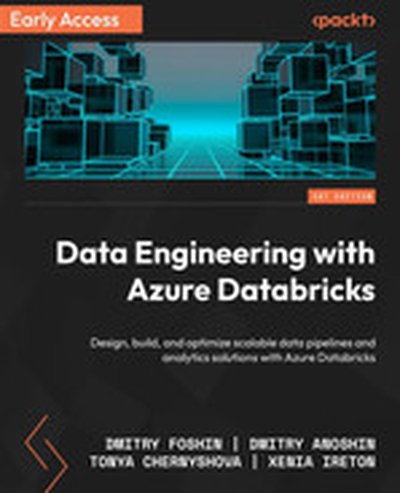
Data Engineering with Azure Databricks

Master end-to-end data engineering on Azure Databricks. From data ingestion and Delta Lake to CI/CD and real-time streaming, build secure, scalable, and performant data solutions with Spark, Unity Catalog, and ML tools. Key Features Build scalable data pipelines using Apache Spark and Delta Lake Automate workflows and manage data governance with Unity Catalog Learn real-time processing and structured streaming with practical use cases Implement CI/CD, DevOps, and security for production-ready data solutions Explore Databricks-native ML, AutoML, and Generative AI integration Book Description "Data Engineering with Azure Databricks" is your essential guide to building scalable, secure, and high-performing data pipelines using the powerful Databricks platform on Azure. Designed for data engineers, architects, and developers, this book demystifies the complexities of Spark-based workloads, Delta Lake, Unity Catalog, and real-time data processing. Beginning with the foundational role of Azure Databricks in modern data engineering, you’ll explore how to set up robust environments, manage data ingestion with Auto Loader, optimize Spark performance, and orchestrate complex workflows using tools like Azure Data Factory and Airflow. The book offers deep dives into structured streaming, Delta Live Tables, and Delta Lake’s ACID features for data reliability and schema evolution. You’ll also learn how to manage security, compliance, and access controls using Unity Catalog, and gain insights into managing CI/CD pipelines with Azure DevOps and Terraform. With a special focus on machine learning and generative AI, the final chapters guide you in automating model workflows, leveraging MLflow, and fine-tuning large language models on Databricks. Whether you're building a modern data lakehouse or operationalizing analytics at scale, this book provides the tools and insights you need. What you will learn Set up a full-featured Azure Databricks environment Implement batch and streaming ingestion using Auto Loader Optimize Spark jobs with partitioning and caching Build real-time pipelines with structured streaming and DLT Manage data governance using Unity Catalog Orchestrate production workflows with jobs and ADF Apply CI/CD best practices with Azure DevOps and Git Secure data with RBAC, encryption, and compliance standards Use MLflow and Feature Store for ML pipelines Build generative AI applications in Databricks Who this book is for This book is for data engineers, solution architects, cloud professionals, and software engineers seeking to build robust and scalable data pipelines using Azure Databricks. Whether you're migrating legacy systems, implementing a modern lakehouse architecture, or optimizing data workflows for performance, this guide will help you leverage the full power of Databricks on Azure. A basic understanding of Python, Spark, and cloud infrastructure is recommended.

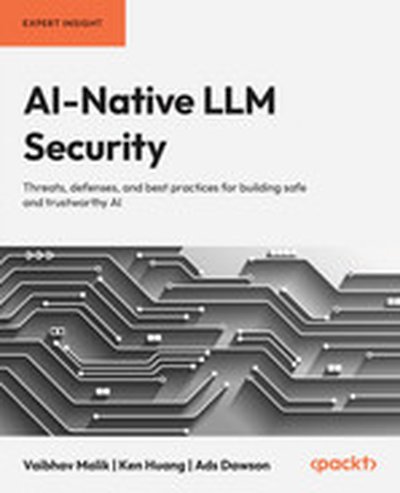
AI-Native LLM Security

"AI Native LLM Security" is your essential guide to understanding and securing large language models and AI systems. With a focus on implementing practical strategies and leveraging frameworks like OWASP Top 10, this book equips professionals to identify and mitigate risks effectively. By reading this, you'll gain the expertise to confidently manage LLM security challenges. What this Book will help me do Learn about adversarial AI attacks and methods to defend against them. Understand secure-by-design methodologies and their application to LLM systems. Gain insights on implementing MLSecOps practices for robust AI security. Navigate ethical considerations and legal aspects of AI security. Secure AI development life cycles with practical strategies and standards. Author(s) The authors, Vaibhav Malik, Ken Huang, and Adam Dawson, are experts in AI security with collective experience covering cybersecurity, AI development, and security frameworks. Their dedication to advancing trustworthy AI ensures that this book is both technically comprehensive and approachable. Who is it for? This book is perfect for cybersecurity experts, AI developers, and technology managers aiming to secure and manage AI systems. Readers should have a basic understanding of AI and security concepts. If you're a security architect, ML engineer, DevOps professional, or a leader overseeing AI initiatives, this book will help you address LLM security effectively for your field.

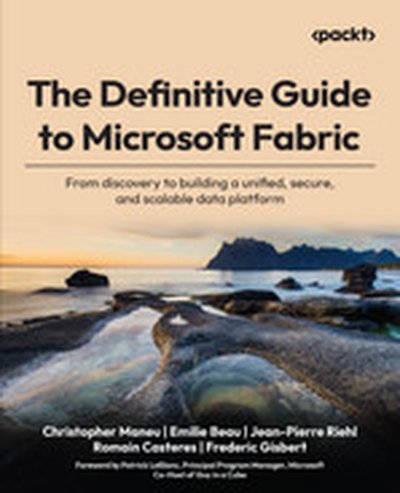
The Definitive Guide to Microsoft Fabric

Master Microsoft Fabric from basics to advanced architectures with expert guidance to unify, secure, and scale analytics on real-world data platforms Key Features Build a complete data analytics platform with Microsoft Fabric Apply proven architectures, governance, and security strategies Gain real-world insights from five seasoned data experts Purchase of the print or Kindle book includes a free PDF eBook Book Description Microsoft Fabric is reshaping how organizations manage, analyze, and act on data by unifying ingestion, storage, transformation, analytics, AI, and visualization in a single platform. The Definitive Guide to Microsoft Fabric takes you from your very first workspace to building a secure, scalable, and future-proof analytics environment. You’ll learn how to unify data in OneLake, design data meshes, transform and model data, implement real-time analytics, and integrate AI capabilities. The book also covers advanced topics, such as governance, security, cost optimization, and team collaboration using DevOps and DataOps principles. Drawing on the real-world expertise of five seasoned professionals who have built and advised on platforms for startups, SMEs, and Europe’s largest enterprises, this book blends strategic insight with practical guidance. By the end of this book, you’ll have gained the knowledge and skills to design, deploy, and operate a Microsoft Fabric platform that delivers sustainable business value. What you will learn Understand Microsoft Fabric architecture and concepts Unify data storage and data governance with OneLake Ingest and transform data using multiple Fabric tools Implement real-time analytics and event processing Design effective semantic models and reports Integrate AI and machine learning into data workflows Apply governance, security, and compliance controls Optimize performance and costs at scale Who this book is for This book is for data engineers, analytics engineers, architects, and data analysts moving into platform design roles. It’s also valuable for technical leaders seeking to unify analytics in their organizations. You’ll need only a basic grasp of databases, SQL, and Python.

Ship faster. Stress Less. Idea to ops with Azure and GitHub Copilot

Explore how GitHub Copilot and intelligent agents streamline Azure application development from design to operations. This session covers how the Coding Agent, App Modernization agent, and cloud architecture agent accelerate planning and coding, while GitHub Copilot for Azure and the Azure MCP Server simplify deployment and diagnostics. Learn how the SRE Agent and testing agent extend automation into production and quality assurance, enabling end-to-end DevOps with AI-powered workflows.

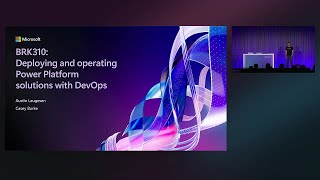
Deploying and operating Power Platform solutions with DevOps

There's so much more to software than creating it! Exercising DevOps principles in Power Platform has never been easier. Learn about the latest enhancements that scale development on complex solution, deploy production ready changes and monitor production workloads - all within Power Platform.

Delivered in a silent stage breakout.

This session will highlight the latest innovations in Agentic DevOps – from modernizing apps to building new apps and managing production environments. Use these innovations to accelerate time to market for the solutions and services you offer, and share them with your customers to drive success in their organizations.

Safe and scalable DevOps with AI agents on GitHub

AI agents like GitHub Copilot have transformed how developers build software. In this session, learn how to leverage GitHub’s governance and security capabilities to enable agents at scale. We’ll cover best practices for rolling out agents across your organization, aligning with developer workflows, and maintaining oversight while embracing this new era of software development.

As development velocity increases, testing and operations teams must innovate or fall behind. AI-powered agents are reshaping how software is designed, tested, and deployed. Discover how UiPath and Microsoft are enabling organizations to integrate autonomous AI agents into Azure DevOps and GitHub to deliver faster, smarter, and more resilient applications. This session explores how agentic automation drives adaptive SDLC, continuous delivery, and measurable efficiency in application testing.

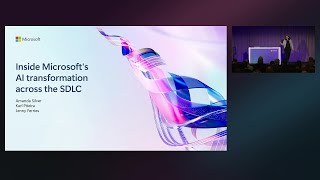
Inside Microsoft's AI transformation across the software lifecycle

Agentic DevOps is shaping the future of software engineering, driving productivity and innovation through automation and intelligent collaboration. Learn how AI-powered tools like GitHub Copilot, Microsoft Foundry, and Azure are empowering developers at Microsoft to innovate faster and more securely. Gain practical insights and strategies from Microsoft’s journey to empower your own DevOps transformation.

Send us a text Dive into the powerful world of mainframes! Chief Product Officer of IBM Z and LinuxONE, Tina Tarquinio, reveals the truth behind those eight nines of uptime and explores how mainframes are evolving with AI, hybrid cloud, and future-proofing strategies for mission-critical business decisions. 

Discover the cutting-edge innovations transforming enterprise computing—from on-chip AIU and Spyre AI accelerators enabling real-time inferencing at transaction speed, to how LinuxONE is redefining hybrid cloud architecture.  Tina discusses DevOps integration, AI-powered code assistants revolutionizing mainframe development, compelling AI use cases, and shares her bold predictions for the mainframe’s next 100 years.  Plus, career advice from a tech leader and what she does for fun! 00:46 Tina Tarquinio03:18 The Most Mainframe Surprise09:12 What IS the Mainframe Really?  8 Nines!14:40 On Chip AIU, Spyre Inferencing18:11 Mainframes with Hybrid Cloud19:11 The Linux One Pitch19:59 Exciting Mainframe Innovations22:09 DevOps23:36 Code Assistants26:03 AI Use Case27:49 Future Proofing Decisions37:17 Regulations38:45 Bold Prediction38:58 Mainframe 10040:48 Career Advice42:24 For FunLinkedIn: linkedin.com/in/tina-tarquinio Website: https://www.ibm.com/products/z

MakingDataSimple #IBMz #Mainframe #LinuxONE #AIInferencing #SpyreAccelerator #HybridCloud #EnterpriseAI #DevOps #AICodeAssistant #EightNines #TinaTarquinio #MainframeModernization #AIUChip #FutureProofing #TechLeadership #WatsonxCodeAssistant #CloudComputing #TelumII

Want to be featured as a guest on Making Data Simple? Reach out to us at [email protected] and tell us why you should be next. The Making Data Simple Podcast is hosted by Al Martin, WW VP Technical Sales, IBM, where we explore trending technologies, business innovation, and leadership ... while keeping it simple & fun.