talk-data.com talk-data.com

Topic

ADF

Azure Data Factory

cloud etl data_integration azure

26

tagged

Activity Trend

2 peak/qtr
2020-Q1 2026-Q1

Activities

26 activities · Newest first

Data Engineering with Azure Databricks

Master end-to-end data engineering on Azure Databricks. From data ingestion and Delta Lake to CI/CD and real-time streaming, build secure, scalable, and performant data solutions with Spark, Unity Catalog, and ML tools. Key Features Build scalable data pipelines using Apache Spark and Delta Lake Automate workflows and manage data governance with Unity Catalog Learn real-time processing and structured streaming with practical use cases Implement CI/CD, DevOps, and security for production-ready data solutions Explore Databricks-native ML, AutoML, and Generative AI integration Book Description "Data Engineering with Azure Databricks" is your essential guide to building scalable, secure, and high-performing data pipelines using the powerful Databricks platform on Azure. Designed for data engineers, architects, and developers, this book demystifies the complexities of Spark-based workloads, Delta Lake, Unity Catalog, and real-time data processing. Beginning with the foundational role of Azure Databricks in modern data engineering, you’ll explore how to set up robust environments, manage data ingestion with Auto Loader, optimize Spark performance, and orchestrate complex workflows using tools like Azure Data Factory and Airflow. The book offers deep dives into structured streaming, Delta Live Tables, and Delta Lake’s ACID features for data reliability and schema evolution. You’ll also learn how to manage security, compliance, and access controls using Unity Catalog, and gain insights into managing CI/CD pipelines with Azure DevOps and Terraform. With a special focus on machine learning and generative AI, the final chapters guide you in automating model workflows, leveraging MLflow, and fine-tuning large language models on Databricks. Whether you're building a modern data lakehouse or operationalizing analytics at scale, this book provides the tools and insights you need. What you will learn Set up a full-featured Azure Databricks environment Implement batch and streaming ingestion using Auto Loader Optimize Spark jobs with partitioning and caching Build real-time pipelines with structured streaming and DLT Manage data governance using Unity Catalog Orchestrate production workflows with jobs and ADF Apply CI/CD best practices with Azure DevOps and Git Secure data with RBAC, encryption, and compliance standards Use MLflow and Feature Store for ML pipelines Build generative AI applications in Databricks Who this book is for This book is for data engineers, solution architects, cloud professionals, and software engineers seeking to build robust and scalable data pipelines using Azure Databricks. Whether you're migrating legacy systems, implementing a modern lakehouse architecture, or optimizing data workflows for performance, this guide will help you leverage the full power of Databricks on Azure. A basic understanding of Python, Spark, and cloud infrastructure is recommended.
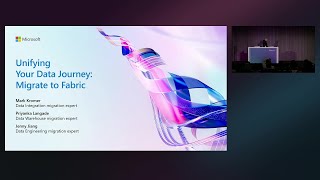
Unifying your data journey: Migrating to Microsoft Fabric

Modernizing and migrating from Azure Synapse Gen 2 and Azure Data Factory can be complex. Microsoft Fabric streamlines this journey with a seamless migration experience. In this session, discover key migration scenarios, best practices, and how Fabric serves as a single destination for data integration, transformation, and analytics - helping you modernize your data estate while reducing complexity and accelerating time to value.

Le groupe Egis conçoit et exploite des infrastructures complexes à l’échelle mondiale : autoroutes, aéroports, ferroviaire, bâtiments, services de mobilité, énergie, aménagement urbain et environnement. La diversité et le volume des données générées posent des défis majeurs en matière de gouvernance, d’industrialisation et de scalabilité.

Pour y répondre, Egis a déployé une infrastructure Data Mesh sur Azure, mise en place et opérée par une équipe dédiée. Cette équipe assure la conception, la gouvernance et la mise à disposition de l’architecture pour l’ensemble des Business Lines. L’infrastructure s’appuie sur :

• Stockage distribué avec ADLS Gen2,

• ETL et traitements big data avec Azure Data Factory et Databricks,

• Visualisation et partage sécurisé via Power BI Service et Delta Sharing,

• Des mécanismes de gouvernance avancés pour garantir interopérabilité et fiabilité.

Cette session présentera :

• Les choix d’architecture et patterns techniques pour mettre en place un Data Mesh distribué à l’échelle d’un grand groupe international

• Le rôle et l’organisation de l’équipe dédiée dans la mise à disposition et l’accompagnement des projets métiers

• Les enseignements pratiques tirés de cas d’usage concrets déjà en production


Une immersion au cœur de la mise en œuvre réelle du Data Mesh, pensée pour transformer la donnée en un actif accessible, fiable et exploitable à grande échelle par les équipes métiers et techniques.

In this episode, I sit down with Wendy Turner-Williams, a distinguished tech leader and executive with a deep history at companies like Microsoft and Salesforce. She's of the original minds behind what became Azure Data Factory, among other foundational tech. In this wide-ranging conversation, Wendy charts the trajectory from the early days of the Internet to the current AI-driven hype cycle and looming crisis. She explains how these tools of innovation are now being turned against the workforce and why this technological revolution is fundamentally more disruptive than anything that has come before. This episode is a candid, unfiltered discussion about the real-world impact of AI on jobs, the economy, and our collective future, and a call for leaders to act before it's too late. Timestamps: 00:22 - Catching up: The tough job market and writing new books. 05:49 - Wendy's impressive career history at Microsoft, Salesforce, and Tableau. 06:17 - The origin story of Azure Data Factory and other foundational projects at Microsoft. 09:18 - A personal story about the challenges of being a woman in Big Tech in the early days. 13:02 - A look back at a favorite early-career project: Digitizing physical maps with nascent GPS technology in 2001. 18:11 - The state of the tech industry: "Tech is cannibalizing itself because of AI." 20:31 - The massive, impending shock to the job market and why AI is different from previous industrial revolutions. 27:26 - Why the "human in the loop" is a temporary and misleading solution. 29:55 - Breaking down the numbers: The staggering quantity of white-collar jobs projected to be eliminated. 36:37 - Why leaders are failing to act and conversations are happening behind closed doors without solutions. 38:25 - Discussing potential solutions: Should companies have quotas for their human workforce? 45:21 - The need for "truth tellers" and leaders who are willing to question the current path and drive human-centric transformation. 53:15 - The grim reality for recent graduates with computer science degrees who can't find jobs. 56:22 - The risk of IP hoarding and engineers deliberately crippling systems to protect their jobs. 01:00:20 - Final thoughts: Are we waiting for a "let them eat cake" moment before we see real change?

How does a worm know what’s good for dinner? In this episode, we uncover how C. elegans can distinguish between helpful and harmful microbes — and it’s all down to polyamines. These microbe-produced metabolites act like scent beacons, guiding worms to nutritious bacteria like E. coli while steering them away from pathogens.

We explore:

How chemosensory neurons detect polyamines like cadaverine and putrescine Why ADF and AWC neurons are tuned to sniff out E. coli-enriched scents How the AIB interneuron acts as a decision hub for foraging Why worms lose interest in mutant E. coli strains lacking polyamines What this tells us about host-microbe interactions and innate sensory coding

📖 Based on the research article: “Chemosensory detection of polyamine metabolites guides C. elegans to nutritive microbes” Benjamin Brissette, Lia Ficaro, Chenguang Li, et al. Published in Science Advances (2024) 🔗 https://doi.org/10.1126/sciadv.adj4387

🎧 Subscribe to the WOrM Podcast for more full-organism discoveries in behaviour, sensory biology, and microbe-host interactions.

This podcast is generated with artificial intelligence and curated by Veeren. If you’d like your publication featured on the show, please get in touch.

📩 More info: 🔗 ⁠⁠www.veerenchauhan.com⁠⁠ 📧 [email protected]

How do you transform a data pipeline from sluggish 10-hour batch processing into a real-time powerhouse that delivers insights in just 10 minutes? This was the challenge we tackled at one of France's largest manufacturing companies, where data integration and analytics were mission-critical for supply chain optimization. Power BI dashboards needed to refresh every 15 minutes. Our team struggled with legacy Azure Data Factory batch pipelines. These outdated processes couldn’t keep up, delaying insights and generating up to three daily incident tickets. We identified Lakeflow Declarative Pipelines and Databricks SQL as the game-changing solution to modernize our workflow, implement quality checks, and reduce processing times.In this session, we’ll dive into the key factors behind our success: Pipeline modernization with Lakeflow Declarative Pipelines: improving scalability Data quality enforcement: clean, reliable datasets Seamless BI integration: Using Databricks SQL to power fast, efficient queries in Power BI

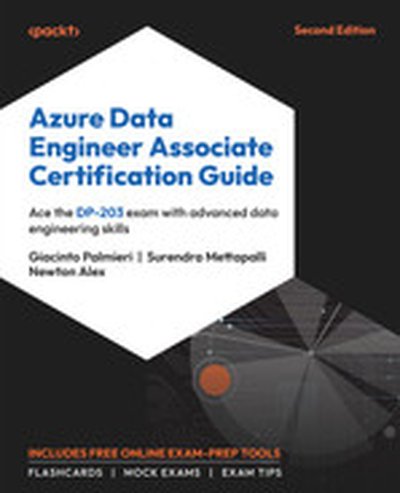
Azure Data Engineer Associate Certification Guide - Second Edition

This book is your gateway to mastering the skills required for achieving the Azure Data Engineer Associate certification (DP-203). Whether you're new to the field or a seasoned professional, it comprehensively prepares you for the challenges of the exam. Learn to design and implement advanced data solutions, secure sensitive information, and optimize data processes effectively. What this Book will help me do Understand and utilize Azure's data services such as Azure Synapse and Azure Databricks for data processing. Master advanced data storage and management solutions, including designing partitions and lake architectures. Learn to secure data with state-of-the-art tools like RBAC, encryption, and Azure Purview. Develop and manage data pipelines and workflows using tools like Azure Data Factory (ADF) and Spark. Prepare for and confidently pass the DP-203 certification exam with the included practical resources and guidance. Author(s) The authors, None Palmieri, Surendra Mettapalli, and None Alex, bring a wealth of expertise in cloud and data engineering. With extensive industry experience, they've designed this guide to be both educational and practical, enabling learners to not only understand but also apply concepts in real-world scenarios. Their goal is to make complex topics approachable, supporting your journey to certification success. Who is it for? This guide is perfect for aspiring and current data engineers aiming to achieve the Azure Data Engineer Associate certification (DP-203). It's particularly useful for professionals familiar with cloud services and basic data engineering concepts who want to delve deeper into Azure's offerings. Additionally, managers and learners preparing for roles involving Azure cloud data solutions will find the content invaluable for career advancement.

Azure Data Factory by Example: Practical Implementation for Data Engineers

Data engineers who need to hit the ground running will use this book to build skills in Azure Data Factory v2 (ADF). The tutorial-first approach to ADF taken in this book gets you working from the first chapter, explaining key ideas naturally as you encounter them. From creating your first data factory to building complex, metadata-driven nested pipelines, the book guides you through essential concepts in Microsoft’s cloud-based ETL/ELT platform. It introduces components indispensable for the movement and transformation of data in the cloud. Then it demonstrates the tools necessary to orchestrate, monitor, and manage those components. This edition, updated for 2024, includes the latest developments to the Azure Data Factory service: Enhancements to existing pipeline activities such as Execute Pipeline, along with the introduction of new activities such as Script, and activities designed specifically to interact with Azure Synapse Analytics. Improvements to flow control provided by activity deactivation and the Fail activity. The introduction of reusable data flow components such as user-defined functions and flowlets. Extensions to integration runtime capabilities including Managed VNet support. The ability to trigger pipelines in response to custom events. Tools for implementing boilerplate processes such as change data capture and metadata-driven data copying. What You Will Learn Create pipelines, activities, datasets, and linked services Build reusable components using variables, parameters, and expressions Move data into and around Azure services automatically Transform data natively using ADF data flows and Power Query data wrangling Master flow-of-control and triggers for tightly orchestrated pipeline execution Publish and monitor pipelines easily and with confidence Who This Book Is For Data engineers and ETL developers taking their first steps in Azure Data Factory, SQL Server Integration Services users making the transition toward doing ETL in Microsoft’s Azure cloud, and SQL Server database administrators involved in data warehousing and ETL operations

Azure Data Factory Cookbook - Second Edition

This comprehensive guide to Azure Data Factory shows you how to create robust data pipelines and workflows to handle both cloud and on-premises data solutions. Through practical recipes, you will learn to build, manage, and optimize ETL, hybrid ETL, and ELT processes. The book offers detailed explanations to help you integrate technologies like Azure Synapse, Data Lake, and Databricks into your projects. What this Book will help me do Master building and managing data pipelines using Azure Data Factory's latest versions and features. Leverage Azure Synapse and Azure Data Lake for streamlined data integration and analytics workflows. Enhance your ETL/ELT solutions with Microsoft Fabric, Databricks, and Delta tables. Employ debugging tools and workflows in Azure Data Factory to identify and solve data processing issues efficiently. Implement industry-grade best practices for reliable and efficient data orchestration and integration pipelines. Author(s) Dmitry Foshin, Tonya Chernyshova, Dmitry Anoshin, and Xenia Ireton collectively bring years of expertise in data engineering and cloud-based solutions. They are recognized professionals in the Azure ecosystem, dedicated to sharing their knowledge through detailed and actionable content. Their collaborative approach ensures that this book provides practical insights for technical audiences. Who is it for? This book is ideal for data engineers, ETL developers, and professional architects who work with cloud and hybrid environments. If you're looking to upskill in Azure Data Factory or expand your knowledge into related technologies like Synapse Analytics or Databricks, this is for you. Readers should have a foundational understanding of data warehousing concepts to fully benefit from the material.

Mastering Microsoft Fabric: SAASification of Analytics

Learn and explore the capabilities of Microsoft Fabric, the latest evolution in cloud analytics suites. This book will help you understand how users can leverage Microsoft Office equivalent experience for performing data management and advanced analytics activity. The book starts with an overview of the analytics evolution from on premises to cloud infrastructure as a service (IaaS), platform as a service (PaaS), and now software as a service (SaaS version) and provides an introduction to Microsoft Fabric. You will learn how to provision Microsoft Fabric in your tenant along with the key capabilities of SaaS analytics products and the advantage of using Fabric in the enterprise analytics platform. OneLake and Lakehouse for data engineering is discussed as well as OneLake for data science. Author Ghosh teaches you about data warehouse offerings inside Microsoft Fabric and the new data integration experience which brings Azure Data Factory and Power Query Editor of Power BI together in a single platform. Also demonstrated is Real-Time Analytics in Fabric, including capabilities such as Kusto query and database. You will understand how the new event stream feature integrates with OneLake and other computations. You also will know how to configure the real-time alert capability in a zero code manner and go through the Power BI experience in the Fabric workspace. Fabric pricing and its licensing is also covered. After reading this book, you will understand the capabilities of Microsoft Fabric and its Integration with current and upcoming Azure OpenAI capabilities. What You Will Learn Build OneLake for all data like OneDrive for Microsoft Office Leverage shortcuts for cross-cloud data virtualization in Azure and AWS Understand upcoming OpenAI integration Discover new event streaming and Kusto query inside Fabric real-time analytics Utilize seamless tooling for machine learning and data science Who This Book Is For Citizen users and experts in the data engineering and data science fields, along with chief AI officers

Azure Data Engineering Cookbook - Second Edition

Azure Data Engineering Cookbook is your ultimate guide to mastering data engineering on Microsoft's Azure platform. Through an engaging collection of recipes, this book breaks down procedures to build sophisticated data pipelines, leveraging tools like Azure Data Factory, Data Lake, Databricks, and Synapse Analytics. What this Book will help me do Efficiently process large datasets using Azure Synapse analytics and Azure Databricks pipelines. Transform and shape data within systems by leveraging Azure Synapse data flows. Implement and manage relational databases in Azure with performance tuning and administration. Configure data pipeline solutions integrated with Power BI for insightful reporting. Monitor, optimize, and ensure lineage tracking for your data systems efficiently with Purview and Log analytics. Author(s) Nagaraj Venkatesan is an experienced cloud architect specializing in Microsoft Azure, with years of hands-on data engineering expertise. Ahmad Osama is a seasoned data professional and author's shared emphasis is on practical learning and bridging this with actionable skills effectively. Who is it for? This book is essential for data engineers seeking expertise in Azure's rich engineering capabilities. It's tailored for professionals with a foundational knowledge of cloud services, looking to achieve advanced proficiency in Azure data engineering pipelines.

Come hang with Airflow practitioners from around the world using Airflow AND other data tools to power their data practice. From Databricks to Glue to Azure Data Factory, smart businesses make the right decision to standardize on Airflow for what it’s best at while using the other systems for what they are best at.

The Definitive Guide to Azure Data Engineering: Modern ELT, DevOps, and Analytics on the Azure Cloud Platform

Build efficient and scalable batch and real-time data ingestion pipelines, DevOps continuous integration and deployment pipelines, and advanced analytics solutions on the Azure Data Platform. This book teaches you to design and implement robust data engineering solutions using Data Factory, Databricks, Synapse Analytics, Snowflake, Azure SQL database, Stream Analytics, Cosmos database, and Data Lake Storage Gen2. You will learn how to engineer your use of these Azure Data Platform components for optimal performance and scalability. You will also learn to design self-service capabilities to maintain and drive the pipelines and your workloads. The approach in this book is to guide you through a hands-on, scenario-based learning process that will empower you to promote digital innovation best practices while you work through your organization’s projects, challenges, and needs. The clear examples enable you to use this book as a reference and guide for building data engineering solutions in Azure. After reading this book, you will have a far stronger skill set and confidence level in getting hands on with the Azure Data Platform. What You Will Learn Build dynamic, parameterized ELT data ingestion orchestration pipelines in Azure Data Factory Create data ingestion pipelines that integrate control tables for self-service ELT Implement a reusable logging framework that can be applied to multiple pipelines Integrate Azure Data Factory pipelines with a variety of Azure data sources and tools Transform data with Mapping Data Flows in Azure Data Factory Apply Azure DevOps continuous integration and deployment practices to your Azure Data Factory pipelines and development SQL databases Design and implement real-time streaming and advanced analytics solutions using Databricks, Stream Analytics, and Synapse Analytics Get started with a variety of Azure data services through hands-on examples Who This Book Is For Data engineers and data architects who are interested in learning architectural and engineering best practices around ELT and ETL on the Azure Data Platform, those who are creating complex Azure data engineering projects and are searching for patterns of success, and aspiring cloud and data professionals involved in data engineering, data governance, continuous integration and deployment of DevOps practices, and advanced analytics who want a full understanding of the many different tools and technologies that Azure Data Platform provides

Data Modeling for Azure Data Services

Data Modeling for Azure Data Services is an essential guide that delves into the intricacies of designing, provisioning, and implementing robust data solutions within the Azure ecosystem. Through practical examples and hands-on exercises, this book equips you with the knowledge to create scalable, performant, and adaptable database designs tailored to your business needs. What this Book will help me do Understand and apply normalization, dimensional modeling, and data vault modeling for relational databases. Learn to provision and implement scalable solutions like Azure SQL DB and Azure Synapse SQL Pool. Master how to design and model a Data Lake using Azure Storage efficiently. Gain expertise in NoSQL database modeling and implementing solutions using Azure Cosmos DB. Develop ETL/ELT processes effectively using Azure Data Factory to support data integration workflows. Author(s) None Braake brings a wealth of expertise as a data architect and cloud solutions builder specializing in Azure's data services. With hands-on experience in projects requiring sophisticated data modeling and optimization, None crafts detailed learning material to help professionals level up their database design and Azure deployment skills. Dedicated to explaining complex topics with clarity and approachable language, None ensures that the learners gain not just knowledge but applied competence. Who is it for? This book is a valuable resource for business intelligence developers, data architects, and consultants aiming to refine their skills in data modeling within modern cloud ecosystems, particularly Microsoft Azure. Whether you're a beginner with some foundational cloud data management knowledge or an experienced professional seeking to deepen your Azure data services proficiency, this book caters to your learning needs.

Azure Data Factory by Example: Practical Implementation for Data Engineers

Data engineers who need to hit the ground running will use this book to build skills in Azure Data Factory v2 (ADF). The tutorial-first approach to ADF taken in this book gets you working from the first chapter, explaining key ideas naturally as you encounter them. From creating your first data factory to building complex, metadata-driven nested pipelines, the book guides you through essential concepts in Microsoft’s cloud-based ETL/ELT platform. It introduces components indispensable for the movement and transformation of data in the cloud. Then it demonstrates the tools necessary to orchestrate, monitor, and manage those components. The hands-on introduction to ADF found in this book is equally well-suited to data engineers embracing their first ETL/ELT toolset as it is to seasoned veterans of Microsoft’s SQL Server Integration Services (SSIS). The example-driven approach leads you through ADF pipeline construction from the ground up, introducing important ideas and making learning natural and engaging. SSIS users will find concepts with familiar parallels, while ADF-first readers will quickly master those concepts through the book’s steady building up of knowledge in successive chapters. Summaries of key concepts at the end of each chapter provide a ready reference that you can return to again and again. What You Will Learn Create pipelines, activities, datasets, and linked services Build reusable components using variables, parameters, and expressions Move data into and around Azure services automatically Transform data natively using ADF data flows and Power Query data wrangling Master flow-of-control and triggers for tightly orchestrated pipeline execution Publish and monitor pipelines easily and with confidence Who This Book Is For Data engineers and ETL developers taking their first steps in Azure Data Factory, SQL Server Integration Services users making the transition toward doing ETL in Microsoft’s Azure cloud, and SQL Server database administrators involved in data warehousing and ETL operations

Distributed Data Systems with Azure Databricks

In 'Distributed Data Systems with Azure Databricks', you will explore the capabilities of Microsoft Azure Databricks as a platform for building and managing big data pipelines. Learn how to process, transform, and analyze data at scale while developing expertise in training distributed machine learning models and integrating them into enterprise workflows. What this Book will help me do Design and implement Extract, Transform, Load (ETL) pipelines using Azure Databricks. Conduct distributed training of machine learning models using TensorFlow and Horovod. Integrate Azure Databricks with Azure Data Factory for optimized data pipeline orchestration. Utilize Delta Engine for efficient querying and analysis of data within Delta Lake. Employ Databricks Structured Streaming to manage real-time production-grade data flows. Author(s) None Palacio is an experienced data engineer and cloud computing specialist, with extensive knowledge of the Microsoft Azure platform. With years of practical application of Databricks in enterprise settings, Palacio provides clear, actionable insights through relatable examples. They bring a passion for innovative solutions to the field of big data automation. Who is it for? This book is ideal for data engineers, machine learning engineers, and software developers looking to master Azure Databricks for large-scale data processing and analysis. Readers should have basic familiarity with cloud platforms, understanding of data pipelines, and a foundational grasp of Python and machine learning concepts. It is perfect for those wanting to create scalable and manageable data workflows.

Azure Data Engineering Cookbook

Dive into the world of data engineering with 'Azure Data Engineering Cookbook' to master building efficient ETL workflows using Microsoft Azure Data services. Whether you're working on batch processing solutions or real-time analytics, this book is your guide to implementing effective, scalable data operations. What this Book will help me do Design and implement efficient ETL pipelines for batch and real-time processing on MS Azure. Understand the use of Azure Blob storage for managing large data sets. Ingest, process, and analyze data using tools like Azure Synapse and Databricks. Develop and secure automation pipelines using Azure Data Factory. Leverage Azure Stream Analytics for real-time data processing workflows. Author(s) Ahmad Osama and Nagaraj Venkatesan bring years of expertise in cloud solutions and data engineering. Renowned for their practical teaching approach, they have helped countless professionals master the intricacies of Azure. Their focus is on equipping readers with actionable skills for real-world data challenges. Who is it for? This book is ideal for data engineers and database professionals aiming to hone their expertise in advanced Azure data engineering tasks. Readers should have a working knowledge of Azure fundamentals and basic data engineering concepts. If you're a technical architect or ETL developer seeking to transition or enhance your skills in Azure's ecosystem, you'll find immense value here.

Building Custom Tasks for SQL Server Integration Services: The Power of .NET for ETL for SQL Server 2019 and Beyond

Build custom SQL Server Integration Services (SSIS) tasks using Visual Studio Community Edition and C#. Bring all the power of Microsoft .NET to bear on your data integration and ETL processes, and for no added cost over what you’ve already spent on licensing SQL Server. New in this edition is a demonstration deploying a custom SSIS task to the Azure Data Factory (ADF) Azure-SSIS Integration Runtime (IR). All examples in this new edition are implemented in C#. Custom task developers are shown how to implement custom tasks using the widely accepted and default language for .NET development. Why are custom components necessary? Because even though the SSIS catalog of built-in tasks and components is a marvel of engineering, gaps remain in the available functionality. One such gap is a constraint of the built-in SSIS Execute Package Task, which does not allow SSIS developers to select SSIS packages from other projects in the SSIS Catalog. Examples in this bookshow how to create a custom Execute Catalog Package task that allows SSIS developers to execute tasks from other projects in the SSIS Catalog. Building on the examples and patterns in this book, SSIS developers may create any task to which they aspire, custom tailored to their specific data integration and ETL needs. What You Will Learn Configure and execute Visual Studio in the way that best supports SSIS task development Create a class library as the basis for an SSIS task, and reference the needed SSIS assemblies Properly sign assemblies that you create in order to invoke them from your task Implement source code control via Azure DevOps, or your own favorite tool set Troubleshoot and execute custom tasks as part of your own projects Create deployment projects (MSIs) for distributing code-complete tasks Deploy custom tasks to Azure Data Factory Azure-SSIS IRs in the cloud Create advanced editors for custom task parameters Who This Book Is For For database administrators and developers who are involved in ETL projects built around SQL Server Integration Services (SSIS). Readers do not need a background in software development with C#. Most important is a desire to optimize ETL efforts by creating custom-tailored tasks for execution in SSIS packages, on-premises or in ADF Azure-SSIS IRs.

SQL Server Data Automation Through Frameworks: Building Metadata-Driven Frameworks with T-SQL, SSIS, and Azure Data Factory

Learn to automate SQL Server operations using frameworks built from metadata-driven stored procedures and SQL Server Integration Services (SSIS). Bring all the power of Transact-SQL (T-SQL) and Microsoft .NET to bear on your repetitive data, data integration, and ETL processes. Do this for no added cost over what you’ve already spent on licensing SQL Server. The tools and methods from this book may be applied to on-premises and Azure SQL Server instances. The SSIS framework from this book works in Azure Data Factory (ADF) and provides DevOps personnel the ability to execute child packages outside a project—functionality not natively available in SSIS. Frameworks not only reduce the time required to deliver enterprise functionality, but can also accelerate troubleshooting and problem resolution. You'll learn in this book how frameworks also improve code quality by using metadata to drive processes. Much of the work performed by data professionals can be classified as “drudge work”—tasks that are repetitive and template-based. The frameworks-based approach shown in this book helps you to avoid that drudgery by turning repetitive tasks into "one and done" operations. Frameworks as described in this book also support enterprise DevOps with built-in logging functionality. What You Will Learn Create a stored procedure framework to automate SQL process execution Base your framework on a working system of stored procedures and execution logging Create an SSIS framework to reduce the complexity of executing multiple SSIS packages Deploy stored procedure and SSIS frameworks to Azure Data Factory environments in the cloud Who This Book Is For Database administrators and developers who are involved in enterprise data projects built around stored procedures and SQL Server Integration Services (SSIS). Readersshould have a background in programming along with a desire to optimize their data efforts by implementing repeatable processes that support enterprise DevOps.