talk-data.com talk-data.com

Topic

dimensional modeling

(Kimball) Dimensional Modeling

data_warehouse dimensional_modeling bi analytics_engineering

47

tagged

Activity Trend

3 peak/qtr
2020-Q1 2026-Q1

Activities

47 activities · Newest first

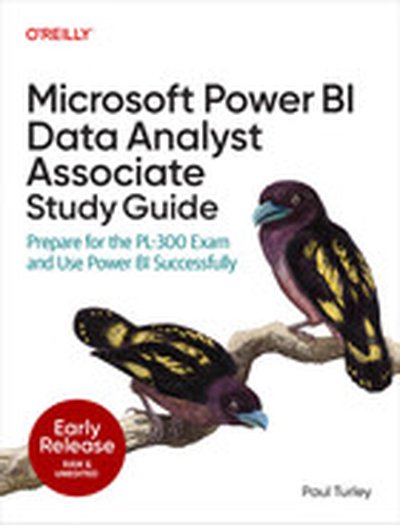
Microsoft Power BI Data Analyst Associate Study Guide

Passing the PL-300 exam with 2025 revisions isn't just about memorization—you need to thoroughly know the basic features of Power BI. However, data professionals must also apply best practices that make Power BI solutions scalable and future-proof. The first half of this go-to companion by Paul Turley provides complete coverage of the PL-300 exam objectives for desktop and self-service users, while the second half equips you with necessary best practices and practical skills for real-world success after the exam. Immerse yourself in exam prep, practice questions, and hands-on references for applying time-tested design patterns in Power BI. You'll learn how to transform raw data into actionable insights using Power Query, DAX, and dimensional modeling. Perfect for data analysts and business intelligence developers, this guide shows how Power BI fits into modern data platforms like Azure and Microsoft Fabric, preparing you for the exam and for the evolving world of data engineering. Understand PL-300 exam topics and key prep strategies Discover scalable, enterprise-grade Power BI solutions using best practices Learn how to correctly apply Power Query, DAX, and visualizations in real-world scenarios, with real business data Uncover how to build for scale See how Power BI fits into modern architectures like Azure and Microsoft Fabric

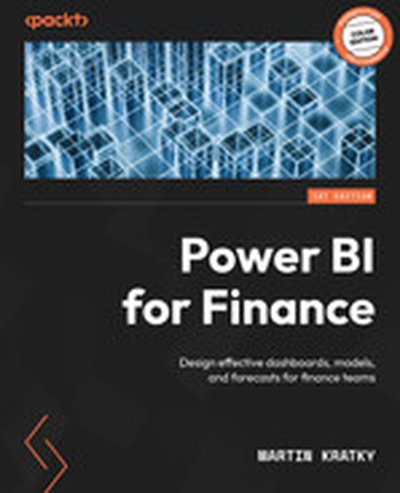
Power BI for Finance

Build effective data models and reports in Power BI for financial planning, budgeting, and valuations with practical templates, logic, and step-by-step guidance. Free with your book: DRM-free PDF version + access to Packt's next-gen Reader Key Features Engineer optimal star schema data models for financial planning and analysis Implement common financial logic, calendars, and variance calculations Create dynamic, formatted reports for income statements, balance sheets, and cash flow Purchase of the print or Kindle book includes a free PDF eBook Book Description Martin Kratky brings his global experience of over 20 years as co-founder of Managility and creator of Acterys to empower CFOs and accountants with Power BI for Finance through this hands-on guide to streamlining and enhancing financial processes. Starting with the foundation of every effective BI solution, a well-designed data model, the book shows you how to structure star schemas and integrate common financial data sources like ERP and accounting systems. You’ll then learn to implement key financial logic using DAX and M, covering calendars, KPIs, and variance calculations. The book offers practical advice on creating clear and compliant financial reports, such as income statements, balance sheets, and cash flows with visual design and formatting best practices. With dedicated chapters on advanced workflows, you’ll learn how to handle multi-currency setups, perform group consolidations, and implement planning models like rolling forecasts, annual budgets, and sales and operations planning (S&OP). As you advance, you’ll gain insights from real-world case studies covering company valuations, Excel integration, and the use of write-back methods with Dynamics Business Performance Planning and Acterys. The concluding chapters highlight how AI and Copilot enhance financial analytics. Email sign-up and proof of purchase required What you will learn Apply multi-currency handling and group consolidation techniques in Power BI Model discounted cash flow and company valuation scenarios Design and manage write-back workflows with Dynamics BPP and Acterys Integrate Excel and Power BI using live connections and cube formulas Utilize AI, Copilot, and LLMs to enhance automation and insight generation Create complete finance-focused dashboards for sales and operations planning Who this book is for This book is for finance professionals including CFOs, FP&A managers, controllers, and certified accountants who want to enhance reporting, planning, and forecasting using Power BI. Basic familiarity with Power BI and financial concepts is recommended to get the most out of this hands-on guide.

Summary In this episode of the Data Engineering Podcast Vijay Subramanian, founder and CEO of Trace, talks about metric trees - a new approach to data modeling that directly captures a company's business model. Vijay shares insights from his decade-long experience building data practices at Rent the Runway and explains how the modern data stack has led to a proliferation of dashboards without a coherent way for business consumers to reason about cause, effect, and action. He explores how metric trees differ from and interoperate with other data modeling approaches, serve as a backend for analytical workflows, and provide concrete examples like modeling Uber's revenue drivers and customer journeys. Vijay also discusses the potential of AI agents operating on metric trees to execute workflows, organizational patterns for defining inputs and outputs with business teams, and a vision for analytics that becomes invisible infrastructure embedded in everyday decisions.

Announcements Hello and welcome to the Data Engineering Podcast, the show about modern data managementData teams everywhere face the same problem: they're forcing ML models, streaming data, and real-time processing through orchestration tools built for simple ETL. The result? Inflexible infrastructure that can't adapt to different workloads. That's why Cash App and Cisco rely on Prefect. Cash App's fraud detection team got what they needed - flexible compute options, isolated environments for custom packages, and seamless data exchange between workflows. Each model runs on the right infrastructure, whether that's high-memory machines or distributed compute. Orchestration is the foundation that determines whether your data team ships or struggles. ETL, ML model training, AI Engineering, Streaming - Prefect runs it all from ingestion to activation in one platform. Whoop and 1Password also trust Prefect for their data operations. If these industry leaders use Prefect for critical workflows, see what it can do for you at dataengineeringpodcast.com/prefect.Data migrations are brutal. They drag on for months—sometimes years—burning through resources and crushing team morale. Datafold's AI-powered Migration Agent changes all that. Their unique combination of AI code translation and automated data validation has helped companies complete migrations up to 10 times faster than manual approaches. And they're so confident in their solution, they'll actually guarantee your timeline in writing. Ready to turn your year-long migration into weeks? Visit dataengineeringpodcast.com/datafold today for the details.Your host is Tobias Macey and today I'm interviewing Vijay Subramanian about metric trees and how they empower more effective and adaptive analyticsInterview IntroductionHow did you get involved in the area of data management?Can you describe what metric trees are and their purpose?How do metric trees relate to metric/semantic layers?What are the shortcomings of existing data modeling frameworks that prevent effective use of those assets?How do metric trees build on top of existing investments in dimensional data models?What are some strategies for engaging with the business to identify metrics and their relationships?What are your recommendations for storage, representation, and retrieval of metric trees?How do metric trees fit into the overall lifecycle of organizational data workflows?When creating any new data asset it introduces overhead of maintenance, monitoring, and evolution. How do metric trees fit into existing testing and validation frameworks that teams rely on for dimensional modeling?What are some of the key differences in useful evaluation/testing that teams need to develop for metric trees?How do metric trees assist in context engineering for AI-powered self-serve access to organizational data?What are the most interesting, innovative, or unexpected ways that you have seen metric trees used?What are the most interesting, unexpected, or challenging lessons that you have learned while working on metric trees and operationalizing them at Trace?When is a metric tree the wrong abstraction?What do you have planned for the future of Trace and applications of metric trees?Contact Info LinkedInParting Question From your perspective, what is the biggest gap in the tooling or technology for data management today?Closing Announcements Thank you for listening! Don't forget to check out our other shows. Podcast.init covers the Python language, its community, and the innovative ways it is being used. The AI Engineering Podcast is your guide to the fast-moving world of building AI systems.Visit the site to subscribe to the show, sign up for the mailing list, and read the show notes.If you've learned something or tried out a project from the show then tell us about it! Email [email protected] with your story.Links Metric TreeTraceModern Data StackHadoopVerticaLuigidbtRalph KimballBill InmonMetric LayerDimensional Data WarehouseMaster Data ManagementData GovernanceFinancial P&L (Profit and Loss)EBITDA ==Earnings before interest, taxes, depreciation and amortizationThe intro and outro music is from The Hug by The Freak Fandango Orchestra / CC BY-SA

This course offers a deep dive into designing data models within the Databricks Lakehouse environment, and understanding the data products lifecycle. Participants will learn to align business requirements with data organization and model design leveraging Delta Lake and Unity Catalog for defining data architectures, and techniques for data integration and sharing. Prerequisites: Foundational knowledge equivalent to Databricks Certified Data Engineer Associate and familiarity with many topics covered in Databricks Certified Data Engineer Professional. Experience with: Basic SQL queries and table creation on Databricks Lakehouse architecture fundamentals (medallion layers) Unity Catalog concepts (high-level) [Optional] Familiarity with data warehousing concepts (dimensional modeling, 3NF, etc.) is beneficial but not mandatory. Labs: Yes

Bill Inmon is considered the father of the data warehouse. I just got back from spending a couple of days with Bill, and we discussed the history of the data industry and the data warehouse. On my flight back, I realized people could benefit from a short version of our conversation.

In this short chat, we discuss what a data warehouse is (and is not), Kimball and Inmon, the origins of the data warehouse, and much more.

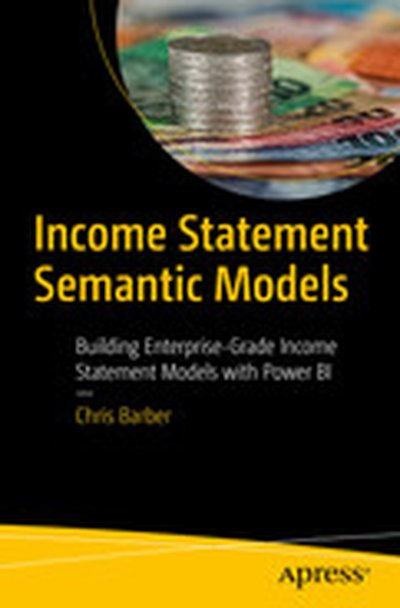
Income Statement Semantic Models: Building Enterprise-Grade Income Statement Models with Power BI

This comprehensive guide will teach you how to build an income statement semantic model, also known as the profit and loss (P&L) statement. Author Chris Barber— a business intelligence (BI) consultant, Microsoft MVP, and chartered accountant (ACMA, CGMA)—helps you master everything from designing conceptual models to building semantic models based on these designs. You will learn how to build a re-usable solution based on the trial balance and how to expand upon this to build enterprise-grade solutions. If you want to leverage the Microsoft BI platform to understand profit within your organization, this is the resource you need. What You Will Learn Modeling and the income statement: Learn what modelling the income statement entails, why it is important, and how income statements are constructed Calculating account balances: Learn how to optimally calculate account balances using a Star Schema Producing external income statement semantic models: Learn how to produce external income statement semantic models as they enable income statements to be analyzed from a range of perspectives and can be explored to reveal the underlying accounts and journal entries Producing internal income statement semantic models: Learn how to create multiple income statement layouts and further contextualize financial information by including percentages and non-financial information, and learn about the various security and self-service considerations Who This Book Is For Technical users (solution architects, Microsoft Fabric developers, Power BI developers) who require a comprehensive methodology for income statement semantic models because of the modeling complexities and knowledge needed of the accounting process; and finance (management accountants) who have hit the limits of Excel and have started using Power BI, but are unsure how income statement semantic models are built

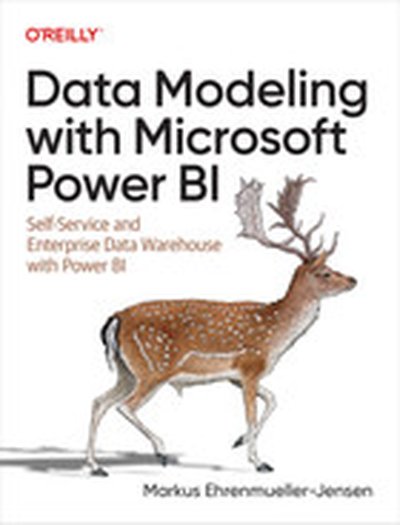
Data Modeling with Microsoft Power BI

Data modeling is the single most overlooked feature in Power BI Desktop, yet it's what sets Power BI apart from other tools on the market. This practical book serves as your fast-forward button for data modeling with Power BI, Analysis Services tabular, and SQL databases. It serves as a starting point for data modeling, as well as a handy refresher. Author Markus Ehrenmueller-Jensen, founder of Savory Data, shows you the basic concepts of Power BI's semantic model with hands-on examples in DAX, Power Query, and T-SQL. If you're looking to build a data warehouse layer, chapters with T-SQL examples will get you started. You'll begin with simple steps and gradually solve more complex problems. This book shows you how to: Normalize and denormalize with DAX, Power Query, and T-SQL Apply best practices for calculations, flags and indicators, time and date, role-playing dimensions and slowly changing dimensions Solve challenges such as binning, budget, localized models, composite models, and key value with DAX, Power Query, and T-SQL Discover and tackle performance issues by applying solutions in DAX, Power Query, and T-SQL Work with tables, relations, set operations, normal forms, dimensional modeling, and ETL

If Data Vault is a new term for you, it's a data modeling design pattern. We're joined by Brandon Taylor, a senior data architect at Guild, and Michael Olschimke, who is the CEO of Scalefree—the consulting firm whose co-founder Dan Lindstedt is credited as the designer of the data vault architecture.  In this conversation with Tristan and Julia, Michael and Brandon explore the Data Vault approach among data warehouse design methodologies. They discuss Data Vault's adoption in Europe, its alignment with data mesh architecture, and the ongoing debate over Data Vault vs. Kimball methods.  For full show notes and to read 6+ years of back issues of the podcast's companion newsletter, head to https://roundup.getdbt.com. The Analytics Engineering Podcast is sponsored by dbt Labs.

A Power BI Compendium: Answers to 65 Commonly Asked Questions on Power BI

Are you a reasonably competent Power BI user but still struggling to generate reports that truly tell the story of your data? Or do you simply want to extend your knowledge of Power BI by exploring more complex areas of visualizations, data modelling, DAX, and Power Query? If so, this book is for you. This book serves as a comprehensive resource for users to implement more challenging visuals, build better data models, use DAX with more confidence, and execute more complex queries so they can find and share important insights into their data. The contents of the chapters are in a question-and-answer format that explore everyday data analysis scenarios in Power BI. These questions have been generated from the author’s own client base and from commonly sought-for information from the Power BI community. They cover a wide and diverse range of topics that many Power BI users often struggle to get to grips with or don’t fully understand. Examples of suchquestions are: How can I generate dynamic titles for visuals? How can I control subtotals in a Matrix visual? Why do I need a date dimension? How can I show the previous N month’s sales in a column chart?Why do I need a Star Schema? Why aren't my totals correct? How can I bin measures into numeric ranges? Can I import a Word document? Can I dynamically append data from different source files? Solutions to these questions and many more are presented in non-technical and easy-to-follow explanations negating the requirement to perform tiresome and fruitless “google” searches. There are also companion Power BI Desktop files that set out the answers to each question so you can follow along with the examples given in the book.. After working through this book, you will have extended your knowledge of Power BI to an expert level, alleviating your existing frustrations and so enabling you to design Power BI reports where you are no longer limited by your lack of knowledge or experience. Who is This Book For: Power BI users who can build reports and now want to extend their knowledge of Power BI.

Is Kimball still relevant? Or should we just throw columnar storage and unlimited compute to solve our analytical needs?

Because I like to live on the edge, I respond to a comment online that I think highlights the rot in our industry as it relates to how we view data modeling today.

Data Modeling With Joe Reis - Understanding What Data Modeling Is And Where It's Going (Seattle Data Guy): https://www.youtube.com/watch?v=NKo02ThtAto


If you like this show, give it a 5-star rating on your favorite podcast platform.

Purchase Fundamentals of Data Engineering at your favorite bookseller.

Subscribe to my Substack: https://joereis.substack.com/

Summary

For business analytics the way that you model the data in your warehouse has a lasting impact on what types of questions can be answered quickly and easily. The major strategies in use today were created decades ago when the software and hardware for warehouse databases were far more constrained. In this episode Maxime Beauchemin of Airflow and Superset fame shares his vision for the entity-centric data model and how you can incorporate it into your own warehouse design.

Announcements

Hello and welcome to the Data Engineering Podcast, the show about modern data management Introducing RudderStack Profiles. RudderStack Profiles takes the SaaS guesswork and SQL grunt work out of building complete customer profiles so you can quickly ship actionable, enriched data to every downstream team. You specify the customer traits, then Profiles runs the joins and computations for you to create complete customer profiles. Get all of the details and try the new product today at dataengineeringpodcast.com/rudderstack Your host is Tobias Macey and today I'm interviewing Max Beauchemin about the concept of entity-centric data modeling for analytical use cases

Interview

Introduction How did you get involved in the area of data management? Can you describe what entity-centric modeling (ECM) is and the story behind it?

How does it compare to dimensional modeling strategies? What are some of the other competing methods Comparison to activity schema

What impact does this have on ML teams? (e.g. feature engineering)

What role does the tooling of a team have in the ways that they end up thinking about modeling? (e.g. dbt vs. informatica vs. ETL scripts, etc.)

What is the impact on the underlying compute engine on the modeling strategies used?

What are some examples of data sources or problem domains for which this approach is well suited?

What are some cases where entity centric modeling techniques might be counterproductive?

What are the ways that the benefits of ECM manifest in use cases that are down-stream from the warehouse?

What are some concrete tactical steps that teams should be thinking about to implement a workable domain model using entity-centric principles?

How does this work across business domains within a given organization (especially at "enterprise" scale)?

What are the most interesting, innovative, or unexpected ways that you have seen ECM used?

What are the most interesting, unexpected, or challenging lessons that you have learned while working on ECM?

When is ECM the wrong choice?

What are your predictions for the future direction/adoption of ECM or other modeling techniques?

Contact Info

mistercrunch on GitHub LinkedIn

Parting Question

From your perspective, what is the biggest gap in the tooling or technology for data management today?

Closing Announcements

Thank you for listening! Don't forget to check out our other shows. Podcast.init covers the Python language, its community, and the innovative ways it is being used. The Machine Learning Podcast helps you go from idea to production with machine learning. Visit the site to subscribe to the show, sign up for the mailing list, and read the show notes. If you've learned something or tried out a project from the show then tell us about it! Email [email protected]) with your story. To help other people find the show please leave a review on Apple Podcasts and tell your friends and co-workers

Links

Entity Centric Modeling Blog Post Max's Previous Apperances

Defining Data Engineering with Maxime Beauchemin Self Service Data Exploration And Dashboarding With Superset Exploring The Evolving Role Of Data Engineers Alumni Of AirBnB's Early Years Reflect On What They Learned About Building Data Driven Organizations

Apache Airflow Apache Superset Preset Ubisoft Ralph Kimball The Rise Of The Data Engineer The Downfall Of The Data Engineer The Rise Of The Data Scientist Dimensional Data Modeling Star Schema Databas

Summary

Architectural decisions are all based on certain constraints and a desire to optimize for different outcomes. In data systems one of the core architectural exercises is data modeling, which can have significant impacts on what is and is not possible for downstream use cases. By incorporating column-level lineage in the data modeling process it encourages a more robust and well-informed design. In this episode Satish Jayanthi explores the benefits of incorporating column-aware tooling in the data modeling process.

Announcements

Hello and welcome to the Data Engineering Podcast, the show about modern data management RudderStack helps you build a customer data platform on your warehouse or data lake. Instead of trapping data in a black box, they enable you to easily collect customer data from the entire stack and build an identity graph on your warehouse, giving you full visibility and control. Their SDKs make event streaming from any app or website easy, and their extensive library of integrations enable you to automatically send data to hundreds of downstream tools. Sign up free at dataengineeringpodcast.com/rudderstack- Your host is Tobias Macey and today I'm interviewing Satish Jayanthi about the practice and promise of building a column-aware data architecture through intentional modeling

Interview

Introduction How did you get involved in the area of data management? How has the move to the cloud for data warehousing/data platforms influenced the practice of data modeling?

There are ongoing conversations about the continued merits of dimensional modeling techniques in modern warehouses. What are the modeling practices that you have found to be most useful in large and complex data environments?

Can you describe what you mean by the term column-aware in the context of data modeling/data architecture?

What are the capabilities that need to be built into a tool for it to be effectively column-aware?

What are some of the ways that tools like dbt miss the mark in managing large/complex transformation workloads? Column-awareness is obviously critical in the context of the warehouse. What are some of the ways that that information can be fed into other contexts? (e.g. ML, reverse ETL, etc.) What is the importance of embedding column-level lineage awareness into transformation tool vs. layering on top w/ dedicated lineage/metadata tooling? What are the most interesting, innovative, or unexpected ways that you have seen column-aware data modeling used? What are the most interesting, unexpected, or challenging lessons that you have learned while working on building column-aware tooling? When is column-aware modeling the wrong choice? What are some additional resources that you recommend for individuals/teams who want to learn more about data modeling/column aware principles?

Contact Info

LinkedIn

Parting Question

From your perspective, what is the biggest gap in the tooling or technology for data management today?

Closing Announcements

Thank you for listening! Don't forget to check out our other shows. Podcast.init covers the Python language, its community, and the innovative ways it is being used. The Machine Learning Podcast helps you go from idea to production with machine learning. Visit the site to subscribe to the show, sign up for the mailing list, and read the show notes. If you've learned something or tried out a project from the show then tell us about it! Email [email protected]) with your story. To help other people find the show please leave a review on Apple Podcasts and tell your friends and co-workers

Links

Coalesce

Podcast Episode

Star Schema Conformed Dimensions Data Vault

The intro and outro music is from The Hug by The Freak Fandango Orchestra / CC BY-SA Sponsored By: Rudderstack: Rudderstack

RudderStack provides all your customer data pipeli

Summary

A significant portion of the time spent by data engineering teams is on managing the workflows and operations of their pipelines. DataOps has arisen as a parallel set of practices to that of DevOps teams as a means of reducing wasted effort. Agile Data Engine is a platform designed to handle the infrastructure side of the DataOps equation, as well as providing the insights that you need to manage the human side of the workflow. In this episode Tevje Olin explains how the platform is implemented, the features that it provides to reduce the amount of effort required to keep your pipelines running, and how you can start using it in your own team.

Announcements

Hello and welcome to the Data Engineering Podcast, the show about modern data management RudderStack helps you build a customer data platform on your warehouse or data lake. Instead of trapping data in a black box, they enable you to easily collect customer data from the entire stack and build an identity graph on your warehouse, giving you full visibility and control. Their SDKs make event streaming from any app or website easy, and their extensive library of integrations enable you to automatically send data to hundreds of downstream tools. Sign up free at dataengineeringpodcast.com/rudderstack Your host is Tobias Macey and today I'm interviewing Tevje Olin about Agile Data Engine, a platform that combines data modeling, transformations, continuous delivery and workload orchestration to help you manage your data products and the whole lifecycle of your warehouse

Interview

Introduction How did you get involved in the area of data management? Can you describe what Agile Data Engine is and the story behind it? What are some of the tools and architectures that an organization might be able to replace with Agile Data Engine?

How does the unified experience of Agile Data Engine change the way that teams think about the lifecycle of their data? What are some of the types of experiments that are enabled by reduced operational overhead?

What does CI/CD look like for a data warehouse?

How is it different from CI/CD for software applications?

Can you describe how Agile Data Engine is architected?

How have the design and goals of the system changed since you first started working on it? What are the components that you needed to develop in-house to enable your platform goals?

What are the changes in the broader data ecosystem that have had the most influence on your product goals and customer adoption? Can you describe the workflow for a team that is using Agile Data Engine to power their business analytics?

What are some of the insights that you generate to help your customers understand how to improve their processes or identify new opportunities?

In your "about" page it mentions the unique approaches that you take for warehouse automation. How do your practices differ from the rest of the industry? How have changes in the adoption/implementation of ML and AI impacted the ways that your customers exercise your platform? What are the most interesting, innovative, or unexpected ways that you have seen the Agile Data Engine platform used? What are the most interesting, unexpected, or challenging lessons that you have learned while working on Agile Data Engine? When is Agile Data Engine the wrong choice? What do you have planned for the future of Agile Data Engine?

Guest Contact Info

LinkedIn

Parting Question

From your perspective, what is the biggest gap in the tooling or technology for data management today?

About Agile Data Engine

Agile Data Engine unlocks the potential of your data to drive business value - in a rapidly changing world. Agile Data Engine is a DataOps Management platform for designing, deploying, operating and managing data products, and managing the whole lifecycle of a data warehouse. It combines data modeling, transformations, continuous delivery and workload orchestration into the same platform.

Links

Agile Data Engine Bill Inmon Ralph Kimball Snowflake Redshift BigQuery Azure Synapse Airflow

The intro and outro music is from The Hug by The Freak Fandango Orchestra / CC BY-SA Sponsored By: Rudderstack: Rudderstack

RudderStack provides all your customer data pipelines in one platform. You can collect, transform, and route data across your entire stack with its event streaming, ETL, and reverse ETL pipelines.

RudderStack’s warehouse-first approach means it does not store sensitive information, and it allows you to leverage your existing data warehouse/data lake infrastructure to build a single source of truth for every team.

RudderStack also supports real-time use cases. You can Implement RudderStack SDKs once, then automatically send events to your warehouse and 150+ business tools, and you’ll never have to worry about API changes again.

Visit dataengineeringpodcast.com/rudderstack to sign up for free today, and snag a free T-Shirt just for being a Data Engineering Podcast listener.Support Data Engineering Podcast

Data Modeling with Snowflake

This comprehensive guide, "Data Modeling with Snowflake", is your go-to resource for mastering the art of efficient data modeling tailored to the capabilities of the Snowflake Data Cloud. In this book, you will learn how to design agile and scalable data solutions by effectively leveraging Snowflake's unique architecture and advanced features. What this Book will help me do Understand the core principles of data modeling and how they apply to Snowflake's cloud-native environment. Learn to use Snowflake's features, such as time travel and zero-copy cloning, to create efficient data solutions. Gain hands-on experience with SQL recipes that outline practical approaches to transforming and managing Snowflake data. Discover techniques for modeling structured and semi-structured data for real-world business needs. Learn to integrate universal modeling frameworks like Star Schema and Data Vault into Snowflake implementations for scalability and maintainability. Author(s) The author, Serge Gershkovich, is a seasoned expert in database design and Snowflake architecture. With years of experience in the data management field, Serge has dedicated himself to making complex technical subjects approachable to professionals at all levels. His insights in this book are informed by practical applications and real-world experience. Who is it for? This book is targeted at data professionals, ranging from newcomers to database design to seasoned SQL developers seeking to specialize in Snowflake. If you are looking to understand and apply data modeling practices effectively within Snowflake's architecture, this book is for you. Whether you're refining your modeling skills or getting started with Snowflake, it provides the practical knowledge you need to succeed.

Summary

All of the advancements in our technology is based around the principles of abstraction. These are valuable until they break down, which is an inevitable occurrence. In this episode the host Tobias Macey shares his reflections on recent experiences where the abstractions leaked and some observances on how to deal with that situation in a data platform architecture.

Announcements

Hello and welcome to the Data Engineering Podcast, the show about modern data management RudderStack helps you build a customer data platform on your warehouse or data lake. Instead of trapping data in a black box, they enable you to easily collect customer data from the entire stack and build an identity graph on your warehouse, giving you full visibility and control. Their SDKs make event streaming from any app or website easy, and their extensive library of integrations enable you to automatically send data to hundreds of downstream tools. Sign up free at dataengineeringpodcast.com/rudderstack Your host is Tobias Macey and today I'm sharing some thoughts and observances about abstractions and impedance mismatches from my experience building a data lakehouse with an ELT workflow

Interview

Introduction impact of community tech debt

hive metastore new work being done but not widely adopted

tensions between automation and correctness data type mapping

integer types complex types naming things (keys/column names from APIs to databases)

disaggregated databases - pros and cons

flexibility and cost control not as much tooling invested vs. Snowflake/BigQuery/Redshift

data modeling

dimensional modeling vs. answering today's questions

What are the most interesting, unexpected, or challenging lessons that you have learned while working on your data platform? When is ELT the wrong choice? What do you have planned for the future of your data platform?

Contact Info

LinkedIn

Parting Question

From your perspective, what is the biggest gap in the tooling or technology for data management today?

Closing Announcements

Thank you for listening! Don't forget to check out our other shows. Podcast.init covers the Python language, its community, and the innovative ways it is being used. The Machine Learning Podcast helps you go from idea to production with machine learning. Visit the site to subscribe to the show, sign up for the mailing list, and read the show notes. If you've learned something or tried out a project from the show then tell us about it! Email [email protected]) with your story. To help other people find the show please leave a review on Apple Podcasts and tell your friends and co-workers

Links

dbt Airbyte

Podcast Episode

Dagster

Podcast Episode

Trino

Podcast Episode

ELT Data Lakehouse Snowflake BigQuery Redshift Technical Debt Hive Metastore AWS Glue

The intro and outro music is from The Hug by The Freak Fandango Orchestra / CC BY-SA Sponsored By: Rudderstack: Rudderstack

RudderStack provides all your customer data pipelines in one platform. You can collect, transform, and route data across your entire stack with its event streaming, ETL, and reverse ETL pipelines.

RudderStack’s warehouse-first approach means it does not store sensitive information, and it allows you to leverage your existing data warehouse/data lake infrastructure to build a single source of truth for every team.

RudderStack also supports real-time use cases. You can Implement RudderStack SDKs once, then automatically send events to your warehouse and 150+ business tools, and you’ll never have to worry about API changes again.

Visit dataengineeringpodcast.com/rudderstack to sign up for free today, and snag a free T-Shirt just for being a Data Engineering Podcast listener.Support Data Engineering Podcast

Expert Data Modeling with Power BI - Second Edition

Expert Data Modeling with Power BI, Second Edition, serves as your comprehensive guide to mastering data modeling using Power BI. With clear explanations, actionable examples, and a focus on hands-on learning, this book takes you through the concepts and advanced techniques that will enable you to build high-performing data models tailored to real-world requirements. What this Book will help me do Master time intelligence and virtual tables in DAX to enhance your data models. Understand best practices for creating efficient Star Schemas and preparing data in Power Query. Deploy advanced modeling techniques such as calculation groups, aggregations, and incremental refresh. Manage complex data models and streamline them to improve performance. Leverage data marts and data flows within Power BI for modularity and scalability. Author(s) Soheil Bakhshi is a seasoned expert in data visualization and analytics with extensive experience in leveraging Power BI for business intelligence solutions. Passionate about educating others, he combines practical insights and technical knowledge to make learning accessible and effective. His approachable writing style reflects his commitment to helping readers succeed. Who is it for? This book is ideal for business intelligence professionals, data analysts, or report developers with basic knowledge of Power BI and experience with Star Schema concepts. Whether you're looking to refine your data modeling skills or expand your expertise in advanced features, this guide aims to help you achieve your goals efficiently.

Microsoft Power BI Data Analyst Certification Companion: Preparation for Exam PL-300

Use this book to study for the PL-300 Microsoft Power BI Data Analyst exam. The book follows the “Skills Measured” outline provided by Microsoft to help focus your study. Each topic area from the outline corresponds to an area covered by the exam, and the book helps you build a good base of knowledge in each area. Each topic is presented with a blend of practical explanations, theory, and best practices. Power BI is more than just the Power BI Desktop or the Power BI Service. It is two distinct applications and an online service that, together, enable business users to gather, shape, and analyze data to generate and present insights. This book clearly delineates the purpose of each component and explains the key concepts necessary to use each component effectively. Each chapter provides best practices and tips to help an inexperienced Power BI practitioner develop good habits that will support larger or more complex analyses. Manybusiness analysts come to Power BI with a wealth of experience in Excel and particularly with pivot tables. Some of this experience translates readily into Power BI concepts. This book leverages that overlap in skill sets to help seasoned Excel users overcome the initial learning curve in Power BI, but no prior knowledge of any kind is assumed, terminology is defined in non-technical language, and key concepts are explained using analogies and ideas from experiences common to any reader. After reading this book, you will have the background and capability to learn the skills and concepts necessary both to pass the PL-300 exam and become a confident Power BI practitioner. What You Will Learn Create user-friendly, responsive reports with drill-throughs, bookmarks, and tool tips Construct a star schema with relationships, ensuring that your analysis will be both accurate and responsive Publish reports and datasets to the Power BI Service, enabling the report (and the dataset) to be viewed and used by your colleagues Extract data from a variety of sources, enabling you to leverage the data that your organization has collected and stored in a variety of sources Schedule data refreshes for published datasets so your reports and dashboards stay up to date Develop dashboards with visuals from different reports and streaming content Who This Book Is For Power BI users who are planning to take the PL-300 exam, Power BI users who want help studying the topic areas listed in Microsoft’s outline for the PL-300 exam, and those who are not planning to take the exam but want to close any knowledge gaps they might have

Babies and bathwater: Is Kimball still relevant?

In a popular Coalesce 2020 talk, Dave Fowler challenged the relevancy of dimensional modeling and the star schema popularized by Ralph Kimball over 25 years ago, arguing the dimensional modeling method now does “more harm than good,” in the context of the modern data stack. But should we throw the baby out with the bathwater? In this talk, Josh Devlin and Sydney Burns (Brooklyn Data Co) suggests a different approach to bringing Kimball’s system into the modern era.

Check the slides here:https://docs.google.com/presentation/d/1HLP1FfCNZJUIF7JgT1ote5LaG2tDvsNRfrA9vIkf2n4/edit?usp=sharing

Coalesce 2023 is coming! Register for free at https://coalesce.getdbt.com/.

Back to the Future: Where Dimensional Modeling Enters the Modern Data Stack

dbt’s powerful capabilities allow data teams to deliver data products and analytics solutions to solve business problems faster than ever. Yet still, even with the best modern technologies, challenges arise. How can you be certain what your building will stand up to changing requirements? How can you connect disparate parts of your business to derive new insights? The answer may be a blast from the past—but the fundamentals never change. Learn how to apply fundamental techniques—like dimensional modeling—to modern tools, helping you to build scalable and reusable solutions to solve data problems today, and in the future.

Coalesce 2023 is coming! Register for free at https://coalesce.getdbt.com/.

Summary Agile methodologies have been adopted by a majority of teams for building software applications. Applying those same practices to data can prove challenging due to the number of systems that need to be included to implement a complete feature. In this episode Shane Gibson shares practical advice and insights from his years of experience as a consultant and engineer working in data about how to adopt agile principles in your data work so that you can move faster and provide more value to the business, while building systems that are maintainable and adaptable.

Announcements

Hello and welcome to the Data Engineering Podcast, the show about modern data management When you’re ready to build your next pipeline, or want to test out the projects you hear about on the show, you’ll need somewhere to deploy it, so check out our friends at Linode. With their new managed database service you can launch a production ready MySQL, Postgres, or MongoDB cluster in minutes, with automated backups, 40 Gbps connections from your application hosts, and high throughput SSDs. Go to dataengineeringpodcast.com/linode today and get a $100 credit to launch a database, create a Kubernetes cluster, or take advantage of all of their other services. And don’t forget to thank them for their continued support of this show! Atlan is the metadata hub for your data ecosystem. Instead of locking your metadata into a new silo, unleash its transformative potential with Atlan’s active metadata capabilities. Push information about data freshness and quality to your business intelligence, automatically scale up and down your warehouse based on usage patterns, and let the bots answer those questions in Slack so that the humans can focus on delivering real value. Go to dataengineeringpodcast.com/atlan today to learn more about how Atlan’s active metadata platform is helping pioneering data teams like Postman, Plaid, WeWork & Unilever achieve extraordinary things with metadata and escape the chaos. Prefect is the modern Dataflow Automation platform for the modern data stack, empowering data practitioners to build, run and monitor robust pipelines at scale. Guided by the principle that the orchestrator shouldn’t get in your way, Prefect is the only tool of its kind to offer the flexibility to write code as workflows. Prefect specializes in glueing together the disparate pieces of a pipeline, and integrating with modern distributed compute libraries to bring power where you need it, when you need it. Trusted by thousands of organizations and supported by over 20,000 community members, Prefect powers over 100MM business critical tasks a month. For more information on Prefect, visit dataengineeringpodcast.com/prefect. Data engineers don’t enjoy writing, maintaining, and modifying ETL pipelines all day, every day. Especially once they realize 90% of all major data sources like Google Analytics, Salesforce, Adwords, Facebook, Spreadsheets, etc., are already available as plug-and-play connectors with reliable, intuitive SaaS solutions. Hevo Data is a highly reliable and intuitive data pipeline platform used by data engineers from 40+ countries to set up and run low-latency ELT pipelines with zero maintenance. Boasting more than 150 out-of-the-box connectors that can be set up in minutes, Hevo also allows you to monitor and control your pipelines. You get: real-time data flow visibility, fail-safe mechanisms, and alerts if anything breaks; preload transformations and auto-schema mapping precisely control how data lands in your destination; models and workflows to transform data for analytics; and reverse-ETL capability to move the transformed data back to your business software to inspire timely action. All of this, plus its transparent pricing and 24*7 live support, makes it consistently voted by users as the Leader in the Data Pipeline category on review platforms like G2. Go to dataengineeringpodcast.com/hevodata and sign up for a free 14-day trial that also comes with 24×7 support. Your host is Tobias Macey and today I’m interviewing Shane Gibson about how to bring Agile practices to your data management workflows

Interview

Introduction How did you get involved in the area of data management? Can you describe what AgileData is and the story behind it? What are the main industries and/or use cases that you are focused on supporting? The data ecosystem has been trying on different paradigms from software development for some time now (e.g. DataOps, version control, etc.). What are the aspects of Agile that do and don’t map well to data engineering/analysis? One of the perennial challenges of data analysis is how to approach data modeling. How do you balance the need to provide value with the long-term impacts of incomplete or underinformed modeling decisions made in haste at the beginning of a project?

How do you design in affordances for refactoring of the data models without breaking downstream assets?

Another aspect of implementing data products/platforms is how to manage permissions and governance. What are the incremental ways that those principles can be incorporated early and evolved along with the overall analytical products? What are some of the organizational design strategies that you find most helpful when establishing or training a team who is working on data products? In order to have a useful target to work toward it’s necessary to understand what the data consumers are hoping to achieve. What are some of the challenges of doing requirements gathering for data products? (e.g. not knowing what information is available, consumers not understanding what’s hard vs. easy, etc.)

How do you work with the "customers" to help them understand what a reasonable scope is and translate that to the actual project stages for the engineers?

What are some of the perennial questions or points of confusion that you have had to address with your clients on how to design and implement analytical assets? What are the most interesting, innovative, or unexpected ways that you have seen agile principles used for data? What are the most interesting, unexpected, or challenging lessons that you have learned while working on AgileData? When is agile the wrong choice for a data project? What do you have planned for the future of AgileData?

Contact Info

LinkedIn @shagility on Twitter

Parting Question

From your perspective, what is the biggest gap in the tooling or technology for data management today?

Closing Announcements

Thank you for listening! Don’t forget to check out our other shows. Podcast.init covers the Python language, its community, and the innovative ways it is being used. The Machine Learning Podcast helps you go from idea to production with machine learning. Visit the site to subscribe to the show, sign up for the mailing list, and read the show notes. If you’ve learned something or tried out a project from the show then tell us about it! Email [email protected]) with your story. To help other people find the show please leave a review on Apple Podcasts and tell your friends and co-workers

Links

AgileData OptimalBI How To Make Toast Data Mesh Information Product Canvas DataKitchen

Podcast Episode

Great Expectations

Podcast Episode

Soda Data

Podcast Episode

Google DataStore Unfix.work Activity Schema

Podcast Episode

Data Vault

Podcast Episode

Star Schema Lean Methodology Scrum Kanban

The intro and outro music is from The Hug by The Freak Fandango Orchestra / CC BY-SA

Sponsored By: Atlan: Atlan

Have you ever woken up to a crisis because a number on a dashboard is broken and no one knows why? Or sent out frustrating slack messages trying to find the right data set? Or tried to understand what a column name means?

Our friends at Atlan started out as a data team themselves and faced all this collaboration chaos themselves, and started building Atlan as an internal tool for themselves. Atlan is a collaborative workspace for data-driven teams, like Github for engineering or Figma for design teams. By acting as a virtual hub for data assets ranging from tables and dashboards to SQL snippets & code, Atlan enables teams to create a single source of truth for all their data assets, and collaborate across the modern data stack through deep integrations with tools like Snowflake, Slack, Looker and more.

Go to dataengineeringpodcast.com/atlan and sign up for a free trial. If you’re a data engineering podcast listener, you get credits worth $3000 on an annual subscription.Prefect: Prefect

Prefect is the modern Dataflow Automation platform for the modern data stack, empowering data practitioners to build, run and monitor robust pipelines at scale. Guided by the principle that the orchestrator shouldn’t get in your way, Prefect is the only tool of its kind to offer the flexibility to write code as workflows. Prefect specializes in glueing together the disparate pieces of a pipeline, and integrating with modern distributed compute libraries to bring power where you need it, when you need it. Trusted by thousands of organizations and supported by over 20,000 community members, Prefect powers over 100MM business critical tasks a month. For more information on Prefect, visit…