talk-data.com talk-data.com

Topic

dimensional modeling

(Kimball) Dimensional Modeling

data_warehouse dimensional_modeling bi analytics_engineering

27

tagged

Activity Trend

3 peak/qtr
2020-Q1 2026-Q1

Activities

27 activities · Newest first

Microsoft Power BI Data Analyst Associate Study Guide

Passing the PL-300 exam with 2025 revisions isn't just about memorization—you need to thoroughly know the basic features of Power BI. However, data professionals must also apply best practices that make Power BI solutions scalable and future-proof. The first half of this go-to companion by Paul Turley provides complete coverage of the PL-300 exam objectives for desktop and self-service users, while the second half equips you with necessary best practices and practical skills for real-world success after the exam. Immerse yourself in exam prep, practice questions, and hands-on references for applying time-tested design patterns in Power BI. You'll learn how to transform raw data into actionable insights using Power Query, DAX, and dimensional modeling. Perfect for data analysts and business intelligence developers, this guide shows how Power BI fits into modern data platforms like Azure and Microsoft Fabric, preparing you for the exam and for the evolving world of data engineering. Understand PL-300 exam topics and key prep strategies Discover scalable, enterprise-grade Power BI solutions using best practices Learn how to correctly apply Power Query, DAX, and visualizations in real-world scenarios, with real business data Uncover how to build for scale See how Power BI fits into modern architectures like Azure and Microsoft Fabric

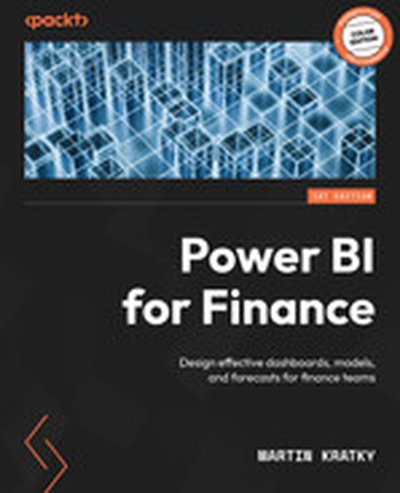
Power BI for Finance

Build effective data models and reports in Power BI for financial planning, budgeting, and valuations with practical templates, logic, and step-by-step guidance. Free with your book: DRM-free PDF version + access to Packt's next-gen Reader Key Features Engineer optimal star schema data models for financial planning and analysis Implement common financial logic, calendars, and variance calculations Create dynamic, formatted reports for income statements, balance sheets, and cash flow Purchase of the print or Kindle book includes a free PDF eBook Book Description Martin Kratky brings his global experience of over 20 years as co-founder of Managility and creator of Acterys to empower CFOs and accountants with Power BI for Finance through this hands-on guide to streamlining and enhancing financial processes. Starting with the foundation of every effective BI solution, a well-designed data model, the book shows you how to structure star schemas and integrate common financial data sources like ERP and accounting systems. You’ll then learn to implement key financial logic using DAX and M, covering calendars, KPIs, and variance calculations. The book offers practical advice on creating clear and compliant financial reports, such as income statements, balance sheets, and cash flows with visual design and formatting best practices. With dedicated chapters on advanced workflows, you’ll learn how to handle multi-currency setups, perform group consolidations, and implement planning models like rolling forecasts, annual budgets, and sales and operations planning (S&OP). As you advance, you’ll gain insights from real-world case studies covering company valuations, Excel integration, and the use of write-back methods with Dynamics Business Performance Planning and Acterys. The concluding chapters highlight how AI and Copilot enhance financial analytics. Email sign-up and proof of purchase required What you will learn Apply multi-currency handling and group consolidation techniques in Power BI Model discounted cash flow and company valuation scenarios Design and manage write-back workflows with Dynamics BPP and Acterys Integrate Excel and Power BI using live connections and cube formulas Utilize AI, Copilot, and LLMs to enhance automation and insight generation Create complete finance-focused dashboards for sales and operations planning Who this book is for This book is for finance professionals including CFOs, FP&A managers, controllers, and certified accountants who want to enhance reporting, planning, and forecasting using Power BI. Basic familiarity with Power BI and financial concepts is recommended to get the most out of this hands-on guide.

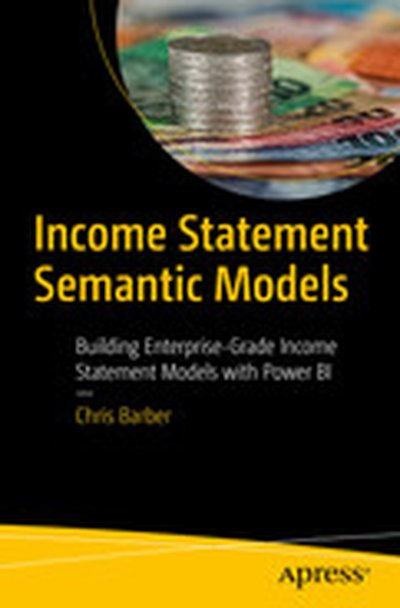
Income Statement Semantic Models: Building Enterprise-Grade Income Statement Models with Power BI

This comprehensive guide will teach you how to build an income statement semantic model, also known as the profit and loss (P&L) statement. Author Chris Barber— a business intelligence (BI) consultant, Microsoft MVP, and chartered accountant (ACMA, CGMA)—helps you master everything from designing conceptual models to building semantic models based on these designs. You will learn how to build a re-usable solution based on the trial balance and how to expand upon this to build enterprise-grade solutions. If you want to leverage the Microsoft BI platform to understand profit within your organization, this is the resource you need. What You Will Learn Modeling and the income statement: Learn what modelling the income statement entails, why it is important, and how income statements are constructed Calculating account balances: Learn how to optimally calculate account balances using a Star Schema Producing external income statement semantic models: Learn how to produce external income statement semantic models as they enable income statements to be analyzed from a range of perspectives and can be explored to reveal the underlying accounts and journal entries Producing internal income statement semantic models: Learn how to create multiple income statement layouts and further contextualize financial information by including percentages and non-financial information, and learn about the various security and self-service considerations Who This Book Is For Technical users (solution architects, Microsoft Fabric developers, Power BI developers) who require a comprehensive methodology for income statement semantic models because of the modeling complexities and knowledge needed of the accounting process; and finance (management accountants) who have hit the limits of Excel and have started using Power BI, but are unsure how income statement semantic models are built

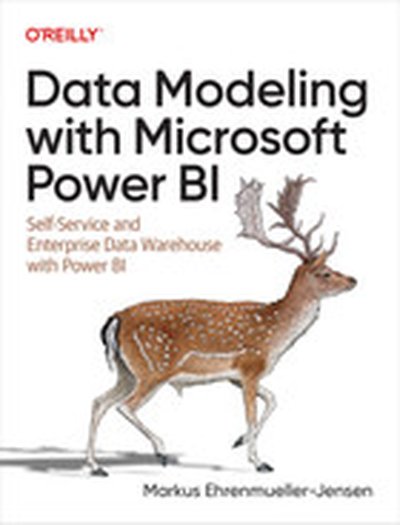
Data Modeling with Microsoft Power BI

Data modeling is the single most overlooked feature in Power BI Desktop, yet it's what sets Power BI apart from other tools on the market. This practical book serves as your fast-forward button for data modeling with Power BI, Analysis Services tabular, and SQL databases. It serves as a starting point for data modeling, as well as a handy refresher. Author Markus Ehrenmueller-Jensen, founder of Savory Data, shows you the basic concepts of Power BI's semantic model with hands-on examples in DAX, Power Query, and T-SQL. If you're looking to build a data warehouse layer, chapters with T-SQL examples will get you started. You'll begin with simple steps and gradually solve more complex problems. This book shows you how to: Normalize and denormalize with DAX, Power Query, and T-SQL Apply best practices for calculations, flags and indicators, time and date, role-playing dimensions and slowly changing dimensions Solve challenges such as binning, budget, localized models, composite models, and key value with DAX, Power Query, and T-SQL Discover and tackle performance issues by applying solutions in DAX, Power Query, and T-SQL Work with tables, relations, set operations, normal forms, dimensional modeling, and ETL

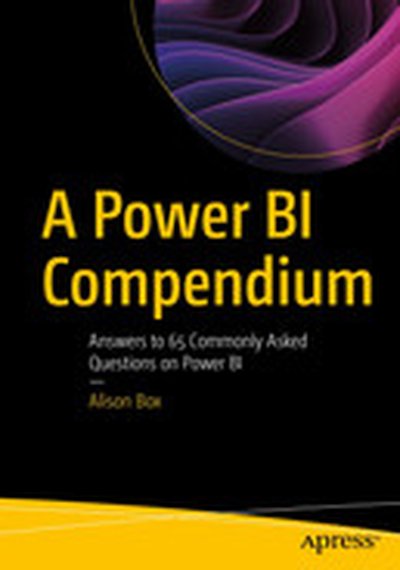
A Power BI Compendium: Answers to 65 Commonly Asked Questions on Power BI

Are you a reasonably competent Power BI user but still struggling to generate reports that truly tell the story of your data? Or do you simply want to extend your knowledge of Power BI by exploring more complex areas of visualizations, data modelling, DAX, and Power Query? If so, this book is for you. This book serves as a comprehensive resource for users to implement more challenging visuals, build better data models, use DAX with more confidence, and execute more complex queries so they can find and share important insights into their data. The contents of the chapters are in a question-and-answer format that explore everyday data analysis scenarios in Power BI. These questions have been generated from the author’s own client base and from commonly sought-for information from the Power BI community. They cover a wide and diverse range of topics that many Power BI users often struggle to get to grips with or don’t fully understand. Examples of suchquestions are: How can I generate dynamic titles for visuals? How can I control subtotals in a Matrix visual? Why do I need a date dimension? How can I show the previous N month’s sales in a column chart?Why do I need a Star Schema? Why aren't my totals correct? How can I bin measures into numeric ranges? Can I import a Word document? Can I dynamically append data from different source files? Solutions to these questions and many more are presented in non-technical and easy-to-follow explanations negating the requirement to perform tiresome and fruitless “google” searches. There are also companion Power BI Desktop files that set out the answers to each question so you can follow along with the examples given in the book.. After working through this book, you will have extended your knowledge of Power BI to an expert level, alleviating your existing frustrations and so enabling you to design Power BI reports where you are no longer limited by your lack of knowledge or experience. Who is This Book For: Power BI users who can build reports and now want to extend their knowledge of Power BI.

Data Modeling with Snowflake

This comprehensive guide, "Data Modeling with Snowflake", is your go-to resource for mastering the art of efficient data modeling tailored to the capabilities of the Snowflake Data Cloud. In this book, you will learn how to design agile and scalable data solutions by effectively leveraging Snowflake's unique architecture and advanced features. What this Book will help me do Understand the core principles of data modeling and how they apply to Snowflake's cloud-native environment. Learn to use Snowflake's features, such as time travel and zero-copy cloning, to create efficient data solutions. Gain hands-on experience with SQL recipes that outline practical approaches to transforming and managing Snowflake data. Discover techniques for modeling structured and semi-structured data for real-world business needs. Learn to integrate universal modeling frameworks like Star Schema and Data Vault into Snowflake implementations for scalability and maintainability. Author(s) The author, Serge Gershkovich, is a seasoned expert in database design and Snowflake architecture. With years of experience in the data management field, Serge has dedicated himself to making complex technical subjects approachable to professionals at all levels. His insights in this book are informed by practical applications and real-world experience. Who is it for? This book is targeted at data professionals, ranging from newcomers to database design to seasoned SQL developers seeking to specialize in Snowflake. If you are looking to understand and apply data modeling practices effectively within Snowflake's architecture, this book is for you. Whether you're refining your modeling skills or getting started with Snowflake, it provides the practical knowledge you need to succeed.

Expert Data Modeling with Power BI - Second Edition

Expert Data Modeling with Power BI, Second Edition, serves as your comprehensive guide to mastering data modeling using Power BI. With clear explanations, actionable examples, and a focus on hands-on learning, this book takes you through the concepts and advanced techniques that will enable you to build high-performing data models tailored to real-world requirements. What this Book will help me do Master time intelligence and virtual tables in DAX to enhance your data models. Understand best practices for creating efficient Star Schemas and preparing data in Power Query. Deploy advanced modeling techniques such as calculation groups, aggregations, and incremental refresh. Manage complex data models and streamline them to improve performance. Leverage data marts and data flows within Power BI for modularity and scalability. Author(s) Soheil Bakhshi is a seasoned expert in data visualization and analytics with extensive experience in leveraging Power BI for business intelligence solutions. Passionate about educating others, he combines practical insights and technical knowledge to make learning accessible and effective. His approachable writing style reflects his commitment to helping readers succeed. Who is it for? This book is ideal for business intelligence professionals, data analysts, or report developers with basic knowledge of Power BI and experience with Star Schema concepts. Whether you're looking to refine your data modeling skills or expand your expertise in advanced features, this guide aims to help you achieve your goals efficiently.

Microsoft Power BI Data Analyst Certification Companion: Preparation for Exam PL-300

Use this book to study for the PL-300 Microsoft Power BI Data Analyst exam. The book follows the “Skills Measured” outline provided by Microsoft to help focus your study. Each topic area from the outline corresponds to an area covered by the exam, and the book helps you build a good base of knowledge in each area. Each topic is presented with a blend of practical explanations, theory, and best practices. Power BI is more than just the Power BI Desktop or the Power BI Service. It is two distinct applications and an online service that, together, enable business users to gather, shape, and analyze data to generate and present insights. This book clearly delineates the purpose of each component and explains the key concepts necessary to use each component effectively. Each chapter provides best practices and tips to help an inexperienced Power BI practitioner develop good habits that will support larger or more complex analyses. Manybusiness analysts come to Power BI with a wealth of experience in Excel and particularly with pivot tables. Some of this experience translates readily into Power BI concepts. This book leverages that overlap in skill sets to help seasoned Excel users overcome the initial learning curve in Power BI, but no prior knowledge of any kind is assumed, terminology is defined in non-technical language, and key concepts are explained using analogies and ideas from experiences common to any reader. After reading this book, you will have the background and capability to learn the skills and concepts necessary both to pass the PL-300 exam and become a confident Power BI practitioner. What You Will Learn Create user-friendly, responsive reports with drill-throughs, bookmarks, and tool tips Construct a star schema with relationships, ensuring that your analysis will be both accurate and responsive Publish reports and datasets to the Power BI Service, enabling the report (and the dataset) to be viewed and used by your colleagues Extract data from a variety of sources, enabling you to leverage the data that your organization has collected and stored in a variety of sources Schedule data refreshes for published datasets so your reports and dashboards stay up to date Develop dashboards with visuals from different reports and streaming content Who This Book Is For Power BI users who are planning to take the PL-300 exam, Power BI users who want help studying the topic areas listed in Microsoft’s outline for the PL-300 exam, and those who are not planning to take the exam but want to close any knowledge gaps they might have

Data Modeling for Azure Data Services

Data Modeling for Azure Data Services is an essential guide that delves into the intricacies of designing, provisioning, and implementing robust data solutions within the Azure ecosystem. Through practical examples and hands-on exercises, this book equips you with the knowledge to create scalable, performant, and adaptable database designs tailored to your business needs. What this Book will help me do Understand and apply normalization, dimensional modeling, and data vault modeling for relational databases. Learn to provision and implement scalable solutions like Azure SQL DB and Azure Synapse SQL Pool. Master how to design and model a Data Lake using Azure Storage efficiently. Gain expertise in NoSQL database modeling and implementing solutions using Azure Cosmos DB. Develop ETL/ELT processes effectively using Azure Data Factory to support data integration workflows. Author(s) None Braake brings a wealth of expertise as a data architect and cloud solutions builder specializing in Azure's data services. With hands-on experience in projects requiring sophisticated data modeling and optimization, None crafts detailed learning material to help professionals level up their database design and Azure deployment skills. Dedicated to explaining complex topics with clarity and approachable language, None ensures that the learners gain not just knowledge but applied competence. Who is it for? This book is a valuable resource for business intelligence developers, data architects, and consultants aiming to refine their skills in data modeling within modern cloud ecosystems, particularly Microsoft Azure. Whether you're a beginner with some foundational cloud data management knowledge or an experienced professional seeking to deepen your Azure data services proficiency, this book caters to your learning needs.

Expert Data Modeling with Power BI

Expert Data Modeling with Power BI provides a comprehensive guide to creating effective and optimized data models using Microsoft Power BI. This book will teach you everything you need to know, from connecting to data sources to setting up complex models that enable insightful reporting and business analytics. What this Book will help me do Gain expertise in implementing virtual tables and time intelligence functionalities in Power BI's DAX language. Identify and correctly set up Dimension and Fact tables using the Power Query Editor interface. Master advanced data preparation techniques to build efficient Star Schemas for modeling. Apply best practices for preparing and modeling data for real-world business cases. Become proficient in advanced features like aggregations, incremental refresh, and row-level security. Author(s) Soheil Bakhshi is a seasoned Power BI expert and author with years of experience in business intelligence and analytics. His practical knowledge of data modeling and approachable writing style make complex concepts understandable. Soheil's passion for empowering users to harness the full potential of Power BI is evident through his clear guidance and real-world examples. Who is it for? This book is perfect for business intelligence developers, data analysts, and advanced users of Power BI who aim to deepen their understanding of data modeling. It assumes a familiarity with Power BI's basic functions and core concepts like Star Schema. If you're looking to refine your modeling practices and create versatile, dynamic solutions, this resource is for you.

QlikView Your Business

Unlock the meaning of your data with QlikView The Qlik platform was designed to provide a fast and easy data analytics tool, and QlikView Your Business is your detailed, full-color, step-by-step guide to understanding Qlikview's powerful features and techniques so you can quickly start unlocking your data’s potential. This expert author team brings real-world insight together with practical business analytics, so you can approach, explore, and solve business intelligence problems using the robust Qlik toolset and clearly communicate your results to stakeholders using powerful visualization features in QlikView and Qlik Sense. This book starts at the basic level and dives deep into the most advanced QlikView techniques, delivering tangible value and knowledge to new users and experienced developers alike. As an added benefit, every topic presented in the book is enhanced with tips, tricks, and insightful recommendations that the authors accumulated through years of developing QlikView analytics. This is the book for you: If you are a developer whose job is to load transactional data into Qlik BI environment, and who needs to understand both the basics and the most advanced techniques of Qlik data modelling and scripting If you are a data analyst whose job is to develop actionable and insightful QlikView visualizations to share within your organization If you are a project manager or business person, who wants to get a better understanding of the Qlik Business Intelligence platform and its capabilities What You Will Learn: The book covers three common business scenarios - Sales, Profitability, and Inventory Analysis. Each scenario contains four chapters, covering the four main disciplines of business analytics: Business Case, Data Modeling, Scripting, and Visualizations. The material is organized by increasing levels of complexity. Following our comprehensive tutorial, you will learn simple and advanced QlikView and Qlik Sense concepts, including the following: Data Modeling: Transforming Transactional data into Dimensional models Building a Star Schema Linking multiple fact tables using Link Tables Combing multiple tables into a single fact able using Concatenated Fact models Managing slowly changing dimensions Advanced date handling, using the As of Date table Calculating running balances Basic and Advanced Scripting: How to use the Data Load Script language for implementing data modeling techniques How to build and use the QVD data layer Building a multi-tier data architectures Using variables, loops, subroutines, and other script control statements Advanced scripting techniques for a variety of ETL solutions Building Insightful Visualizations in QlikView: Introduction into QlikView sheet objects — List Boxes, Text Objects, Charts, and more Designing insightful Dashboards in QlikView Using advanced calculation techniques, such as Set Analysis and Advanced Aggregation Using variables for What-If Analysis, as well as using variables for storing calculations, colors, and selection filters Advanced visualization techniques - normalized and non-normalized Mekko charts, Waterfall charts, Whale Tail charts, and more Building Insightful Visualizations in Qlik Sense: Introducing Qlik Sense - how it is different from QlikView and what is similar? Creating Sense sheet objects Building and using the Library of Master Items Exploring Qlik Sense unique features — Storytelling, Geo Mapping, and using Extensions Whether you are jus

Bitemporal Data

Bitemporal data has always been important. But it was not until 2011 that the ISO released a SQL standard that supported it. Currently, among major DBMS vendors, Oracle, IBM and Teradata now provide at least some bitemporal functionality in their flagship products. But to use these products effectively, someone in your IT organization needs to know more than how to code bitemporal SQL statements. Perhaps, in your organization, that person is you. To correctly interpret business requests for temporal data, to correctly specify requirements to your IT development staff, and to correctly design bitemporal databases and applications, someone in your enterprise needs a deep understanding of both the theory and the practice of managing bitemporal data. Someone also needs to understand what the future may bring in the way of additional temporal functionality, so their enterprise can plan for it. Perhaps, in your organization, that person is you. This is the book that will show the do-it-yourself IT professional how to design and build bitemporal databases and how to write bitemporal transactions and queries, and will show those who will direct the use of vendor-provided bitemporal DBMSs exactly what is going on "under the covers" of that software. Explains the business value of bitemporal data in terms of the information that can be provided by bitemporal tables and not by any other form of temporal data, including history tables, version tables, snapshot tables, or slowly-changing dimensions Provides an integrated account of the mathematics, logic, ontology and semantics of relational theory and relational databases, in terms of which current relational theory and practice can be seen as unnecessarily constrained to the management of nontemporal and incompletely temporal data Explains how bitemporal tables can provide the time-variance and nonvolatility hitherto lacking in Inmon historical data warehouses Explains how bitemporal dimensions can replace slowly-changing dimensions in Kimball star schemas, and why they should do so Describes several extensions to the current theory and practice of bitemporal data, including the use of episodes, "whenever" temporal transactions and queries, and future transaction time Points out a basic error in the ISO’s bitemporal SQL standard, and warns practitioners against the use of that faulty functionality. Recommends six extensions to the ISO standard which will increase the business value of bitemporal data Points towards a tritemporal future for bitemporal data, in which an Aristotelian ontology and a speech-act semantics support the direct management of the statements inscribed in the rows of relational tables, and add the ability to track the provenance of database content to existing bitemporal databases This book also provides the background needed to become a business ontologist, and explains why an IT data management person, deeply familiar with corporate databases, is best suited to play that role. Perhaps, in your organization, that person is you

Business Intelligence with MicroStrategy Cookbook

This comprehensive guide introduces you to the functionalities of MicroStrategy for business intelligence, empowering you to build dashboards, reports, and visualizations using hands-on, practical recipes with clear examples. You'll learn how to use MicroStrategy for the entire BI lifecycle, making data actionable and insights accessible. What this Book will help me do Install and configure the MicroStrategy platform, including setting up a fully operational BI environment. Create interactive dashboards and web reports to visualize and analyze data effectively. Learn to use MicroStrategy on mobile devices, enabling access to data-driven insights anywhere. Discover advanced analytics techniques using Visual Insight and MicroStrategy Cloud Express. Master practical skills with real-life examples to implement robust BI solutions. Author(s) Davide Moraschi, an experienced professional in business intelligence and data analytics, brings his expertise to guiding readers through the MicroStrategy platform. He has years of experience implementing and developing BI solutions in diverse industries, offering practical perspectives. Davide's approachable teaching style and clear examples make technical concepts accessible and engaging. Who is it for? This book is tailored for BI developers and data analysts who want to deepen their expertise in MicroStrategy. It's also suitable for IT professionals and business users aiming to leverage MicroStrategy for data insights. Some existing knowledge of BI concepts, such as dimensional modeling, will enrich your learning experience. You need no prior experience with MicroStrategy to benefit from this book.

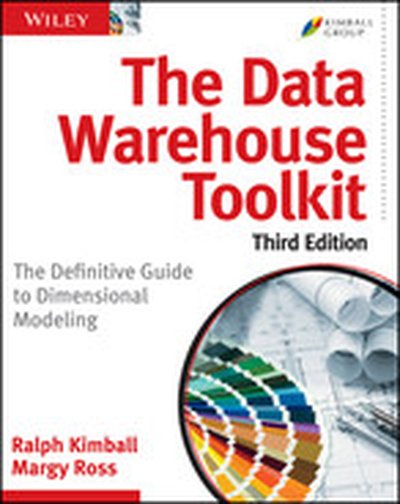
The Data Warehouse Toolkit: The Definitive Guide to Dimensional Modeling, 3rd Edition

Updated new edition of Ralph Kimball's groundbreaking book on dimensional modeling for data warehousing and business intelligence! The first edition of Ralph Kimball's The Data Warehouse Toolkit introduced the industry to dimensional modeling, and now his books are considered the most authoritative guides in this space. This new third edition is a complete library of updated dimensional modeling techniques, the most comprehensive collection ever. It covers new and enhanced star schema dimensional modeling patterns, adds two new chapters on ETL techniques, includes new and expanded business matrices for 12 case studies, and more. Authored by Ralph Kimball and Margy Ross, known worldwide as educators, consultants, and influential thought leaders in data warehousing and business intelligence Begins with fundamental design recommendations and progresses through increasingly complex scenarios Presents unique modeling techniques for business applications such as inventory management, procurement, invoicing, accounting, customer relationship management, big data analytics, and more Draws real-world case studies from a variety of industries, including retail sales, financial services, telecommunications, education, health care, insurance, e-commerce, and more Design dimensional databases that are easy to understand and provide fast query response with The Data Warehouse Toolkit: The Definitive Guide to Dimensional Modeling, 3rd Edition.

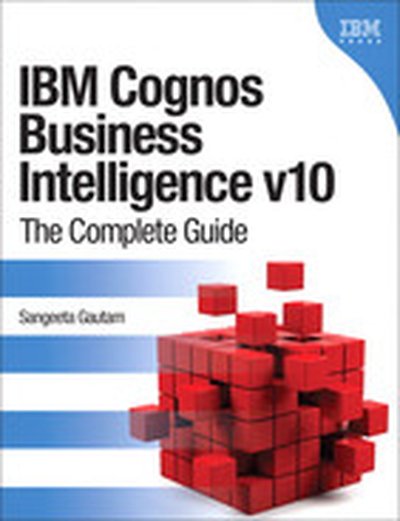
IBM Cognos Business Intelligence v10: The Complete Guide

Maximize the Value of Business Intelligence with IBM Cognos v10 -- Hands-on, from Start to Finish This easy-to-use, hands-on guide brings together all the information and insight you need to drive maximum business value from IBM Cognos v10. Long-time IBM Cognos expert and product designer Sangeeta Gautam thoroughly illuminates Cognos BI v10’s key capabilities: analysis, query, reporting, and dashboards. Gautam shows how to take full advantage of each key IBM Cognos feature, including brand-new innovations such as Active Reports and the new IBM Cognos Workspace report consumption environment. She concludes by walking you through successfully planning and implementing an integrated business intelligence solution using IBM’s best-practice methodologies. The first and only guide of its kind, offers expert insights for BI designers, architects, developers, administrators, project managers, nontechnical end-users, and partners throughout all areas of the business—from sales and marketing to operations and lines of business. If you’re pursuing official IBM Cognos certification, you’ll also find Cognos certification sample questions and information to help you with the certification process. IBM Cognos Business Intelligence v10 Coverage Includes • Understanding IBM Cognos BI’s components and open, extensible architecture • Working with IBM Cognos key “studio” tools: Analysis Studio, Query Studio, Report Studio, and Event Studio • Developing and managing powerful reports that draw on the rich capabilities of IBM Cognos Workspace and Workspace Advanced • Designing Star Schema databases and metadata models to answer the questions your organization cares about most • Efficiently maintaining and systematically securing IBM Cognos BI environments and their objects • Using IBM Cognos Connection as your single point of entry to all corporate data • Building interactive, easy-to-manage Active Reports for casual business users • Using new IBM Cognos BI v10.1 Dynamic Query Mode (DQM) to improve performance with complex heterogeneous data • Identifying, exploring, and exploiting hidden data relationships • Creating quick ad hoc queries that deliver fast answers • Establishing user and administrator roles

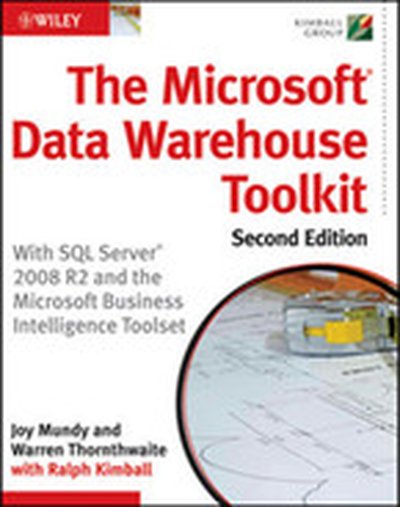
The Microsoft® Data Warehouse Toolkit: With SQL Server 2008 R2 and the Microsoft® Business Intelligence Toolset, Second Edition

Best practices and invaluable advice from world-renowned data warehouse experts In this book, leading data warehouse experts from the Kimball Group share best practices for using the upcoming "Business Intelligence release" of SQL Server, referred to as SQL Server 2008 R2. In this new edition, the authors explain how SQL Server 2008 R2 provides a collection of powerful new tools that extend the power of its BI toolset to Excel and SharePoint users and they show how to use SQL Server to build a successful data warehouse that supports the business intelligence requirements that are common to most organizations. Covering the complete suite of data warehousing and BI tools that are part of SQL Server 2008 R2, as well as Microsoft Office, the authors walk you through a full project lifecycle, including design, development, deployment and maintenance. Features more than 50 percent new and revised material that covers the rich new feature set of the SQL Server 2008 R2 release, as well as the Office 2010 release Includes brand new content that focuses on PowerPivot for Excel and SharePoint, Master Data Services, and discusses updated capabilities of SQL Server Analysis, Integration, and Reporting Services Shares detailed case examples that clearly illustrate how to best apply the techniques described in the book The accompanying Web site contains all code samples as well as the sample database used throughout the case studies The Microsoft Data Warehouse Toolkit, Second Edition provides you with the knowledge of how and when to use BI tools such as Analysis Services and Integration Services to accomplish your most essential data warehousing tasks.

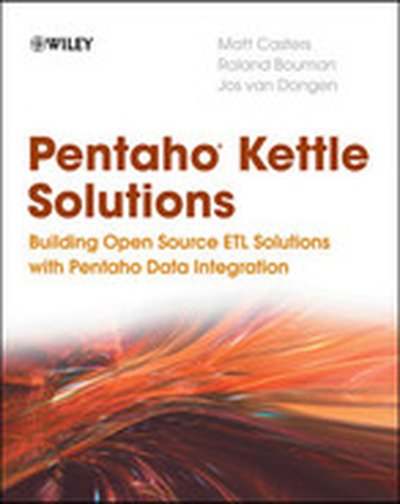
Pentaho® Kettle Solutions: Building Open Source ETL Solutions with Pentaho Data Integration

A complete guide to Pentaho Kettle, the Pentaho Data lntegration toolset for ETL This practical book is a complete guide to installing, configuring, and managing Pentaho Kettle. If you're a database administrator or developer, you'll first get up to speed on Kettle basics and how to apply Kettle to create ETL solutions—before progressing to specialized concepts such as clustering, extensibility, and data vault models. Learn how to design and build every phase of an ETL solution. Shows developers and database administrators how to use the open-source Pentaho Kettle for enterprise-level ETL processes (Extracting, Transforming, and Loading data) Assumes no prior knowledge of Kettle or ETL, and brings beginners thoroughly up to speed at their own pace Explains how to get Kettle solutions up and running, then follows the 34 ETL subsystems model, as created by the Kimball Group, to explore the entire ETL lifecycle, including all aspects of data warehousing with Kettle Goes beyond routine tasks to explore how to extend Kettle and scale Kettle solutions using a distributed "cloud" Get the most out of Pentaho Kettle and your data warehousing with this detailed guide—from simple single table data migration to complex multisystem clustered data integration tasks.

Star Schema The Complete Reference

The definitive guide to dimensional design for your data warehouse Learn the best practices of dimensional design. Star Schema: The Complete Reference offers in-depth coverage of design principles and their underlying rationales. Organized around design concepts and illustrated with detailed examples, this is a step-by-step guidebook for beginners and a comprehensive resource for experts. This all-inclusive volume begins with dimensional design fundamentals and shows how they fit into diverse data warehouse architectures, including those of W.H. Inmon and Ralph Kimball. The book progresses through a series of advanced techniques that help you address real-world complexity, maximize performance, and adapt to the requirements of BI and ETL software products. You are furnished with design tasks and deliverables that can be incorporated into any project, regardless of architecture or methodology. Master the fundamentals of star schema design and slow change processing Identify situations that call for multiple stars or cubes Ensure compatibility across subject areas as your data warehouse grows Accommodate repeating attributes, recursive hierarchies, and poor data quality Support conflicting requirements for historic data Handle variation within a business process and correlation of disparate activities Boost performance using derived schemas and aggregates Learn when it's appropriate to adjust designs for BI and ETL tools

The Kimball Group Reader: Relentlessly Practical Tools for Data Warehousing and Business Intelligence

An unparalleled collection of recommended guidelines for data warehousing and business intelligence pioneered by Ralph Kimball and his team of colleagues from the Kimball Group. Recognized and respected throughout the world as the most influential leaders in the data warehousing industry, Ralph Kimball and the Kimball Group have written articles covering more than 250 topics that define the field of data warehousing. For the first time, the Kimball Group's incomparable advice, design tips, and best practices have been gathered in this remarkable collection of articles, which spans a decade of data warehousing innovation. Each group of articles is introduced with original commentaries that explain their role in the overall lifecycle methodology developed by the Kimball Group. These practical, hands-on articles are fully updated to reflect current practices and terminology and cover the complete lifecycle—including project planning, requirements gathering, dimensional modeling, ETL, and business intelligence and analytics. This easily referenced collection is nothing less than vital if you are involved with data warehousing or business intelligence in any capacity.

The Data Warehouse Lifecycle Toolkit

The world of data warehousing has changed remarkably since the first edition of The Data Warehouse Lifecycle Toolkit was published in 1998. With this new edition, Ralph Kimball and his colleagues have refined the original set of Lifecycle methods and techniques based on their consulting and training experience. They walk you through the detailed steps of designing, developing, and deploying a data warehousing/business intelligence system. With substantial new and updated content, this second edition again sets the standard in data warehousing for the next decade.