talk-data.com talk-data.com

Topic

Data Vault

data_modeling data_warehouse analytics analytics_engineering

24

tagged

Activity Trend

4 peak/qtr
2020-Q1 2026-Q1

Activities

24 activities · Newest first

VodafoneZiggo, one of Europe’s leading telecommunications and entertainment providers, had accumulated years of data stored on multiple platforms, each shaped by different modeling approaches and design decisions, resulting in complexity and mounting technical debt. As the company moved to consolidate everything on Snowflake, the challenge was to unify these inconsistent systems into a single, efficient architecture. Rather than build custom tooling, VodafoneZiggo chose Coalesce to define its patterns once and automatically render them as code, ensuring governance, consistency, and cost efficiency across teams. This shift ensures consistent data vault modelling, enables faster time to market, and provides teams with the flexibility to innovate within well-governed standards—balancing predictability with adaptability at enterprise scale.

In this session, Stephen Martens, Data & AI Solution Architect & Vincent Eggenhuizen, Senior Data Engineer, will share how VodafoneZiggo approached consolidation, standardized its architecture, and empowered teams to build faster with confidence.

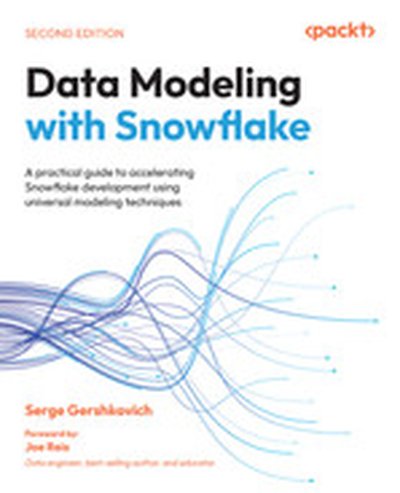
Data Modeling with Snowflake - Second Edition

Data Modeling with Snowflake provides a clear and practical guide to mastering data modeling tailored to the Snowflake Data Cloud. By integrating foundational principles of database modeling with Snowflake's unique features and functionality, this book empowers you to create scalable, cost-effective, and high-performing data solutions. What this Book will help me do Apply universal data modeling concepts within the Snowflake platform effectively. Leverage Snowflake's features such as Time Travel and Zero-Copy Cloning for optimized data solutions. Understand and utilize advanced techniques like Data Vault and Data Mesh for scalable data architecture. Master handling semi-structured data in Snowflake using practical recipes and examples. Achieve cost efficiency and resource optimization by aligning modeling principles with Snowflake's architecture. Author(s) Serge Gershkovich is an accomplished data engineer and seasoned professional in data architecture and modeling. With a passion for simplifying complex concepts, Serge's work leverages his years of hands-on experience to guide readers in mastering both foundational and advanced data management practices. His clear and practical approach ensures accessibility for all levels. Who is it for? This book is ideal for data developers and engineers seeking practical modeling guidance within Snowflake. It's suitable for data analysts looking to broaden their database design expertise, and for database beginners aiming to get a head start in structuring data. Professionals new to Snowflake will also find its clear explanations of key features aligned with modeling techniques invaluable.

Summary In this episode of the Data Engineering Podcast Serge Gershkovich, head of product at SQL DBM, talks about the socio-technical aspects of data modeling. Serge shares his background in data modeling and highlights its importance as a collaborative process between business stakeholders and data teams. He debunks common misconceptions that data modeling is optional or secondary, emphasizing its crucial role in ensuring alignment between business requirements and data structures. The conversation covers challenges in complex environments, the impact of technical decisions on data strategy, and the evolving role of AI in data management. Serge stresses the need for business stakeholders' involvement in data initiatives and a systematic approach to data modeling, warning against relying solely on technical expertise without considering business alignment.

Announcements Hello and welcome to the Data Engineering Podcast, the show about modern data managementData migrations are brutal. They drag on for months—sometimes years—burning through resources and crushing team morale. Datafold's AI-powered Migration Agent changes all that. Their unique combination of AI code translation and automated data validation has helped companies complete migrations up to 10 times faster than manual approaches. And they're so confident in their solution, they'll actually guarantee your timeline in writing. Ready to turn your year-long migration into weeks? Visit dataengineeringpodcast.com/datafold today for the details.Enterprises today face an enormous challenge: they’re investing billions into Snowflake and Databricks, but without strong foundations, those investments risk becoming fragmented, expensive, and hard to govern. And that’s especially evident in large, complex enterprise data environments. That’s why companies like DirecTV and Pfizer rely on SqlDBM. Data modeling may be one of the most traditional practices in IT, but it remains the backbone of enterprise data strategy. In today’s cloud era, that backbone needs a modern approach built natively for the cloud, with direct connections to the very platforms driving your business forward. Without strong modeling, data management becomes chaotic, analytics lose trust, and AI initiatives fail to scale. SqlDBM ensures enterprises don’t just move to the cloud—they maximize their ROI by creating governed, scalable, and business-aligned data environments. If global enterprises are using SqlDBM to tackle the biggest challenges in data management, analytics, and AI, isn’t it worth exploring what it can do for yours? Visit dataengineeringpodcast.com/sqldbm to learn more.Your host is Tobias Macey and today I'm interviewing Serge Gershkovich about how and why data modeling is a sociotechnical endeavorInterview IntroductionHow did you get involved in the area of data management?Can you start by describing the activities that you think of when someone says the term "data modeling"?What are the main groupings of incomplete or inaccurate definitions that you typically encounter in conversation on the topic?How do those conceptions of the problem lead to challenges and bottlenecks in execution?Data modeling is often associated with data warehouse design, but it also extends to source systems and unstructured/semi-structured assets. How does the inclusion of other data localities help in the overall success of a data/domain modeling effort?Another aspect of data modeling that often consumes a substantial amount of debate is which pattern to adhere to (star/snowflake, data vault, one big table, anchor modeling, etc.). What are some of the ways that you have found effective to remove that as a stumbling block when first developing an organizational domain representation?While the overall purpose of data modeling is to provide a digital representation of the business processes, there are inevitable technical decisions to be made. What are the most significant ways that the underlying technical systems can help or hinder the goals of building a digital twin of the business?What impact (positive and negative) are you seeing from the introduction of LLMs into the workflow of data modeling?How does tool use (e.g. MCP connection to warehouse/lakehouse) help when developing the transformation logic for achieving a given domain representation? What are the most interesting, innovative, or unexpected ways that you have seen organizations address the data modeling lifecycle?What are the most interesting, unexpected, or challenging lessons that you have learned while working with organizations implementing a data modeling effort?What are the overall trends in the ecosystem that you are monitoring related to data modeling practices?Contact Info LinkedInParting Question From your perspective, what is the biggest gap in the tooling or technology for data management today?Links sqlDBMSAPJoe ReisERD == Entity Relation DiagramMaster Data ManagementdbtData ContractsData Modeling With Snowflake book by Serge (affiliate link)Type 2 DimensionData VaultStar SchemaAnchor ModelingRalph KimballBill InmonSixth Normal FormMCP == Model Context ProtocolThe intro and outro music is from The Hug by The Freak Fandango Orchestra / CC BY-SA

Sponsored by: Skyflow | How to govern a billion sensitive records in your CDP

Customer Data Platforms (CDPs) promise better engagement, higher operational efficiency, and revenue growth by centralizing and streamlining access to customer data. However, consolidating sensitive information from a variety of sources creates complex challenges around data governance, security, and privacy. We’ve studied, built, and managed data protection strategies at some of the world’s biggest retailers. We’ll showcase business requirements, common architectural components, and best practices to deploy data protection solutions at scale, protecting billions of sensitive records across regions and countries. Learn how a data vault pattern with granular, policy-based access control and monitoring can improve organizational privacy posture and help meet regulatory requirements (e.g., GDPR, CCPA, e-Privacy). Walk away with a clear framework to deploy such architecture and knowledge of real-world issues, performance optimizations, and design trade-offs

From Datavault to Delta Lake: Streamlining Data Sync with Lakeflow Connect

In this session, we will explore the Australian Red Cross Lifeblood's approach to synchronizing an Azure SQL Datavault 2.0 (DV2.0) implementation with Unity Catalog (UC) using Lakeflow Connect. Lifeblood's DV2.0 data warehouse, which includes raw vault (RV) and business vault (BV) tables, as well as information marts defined as views, required a multi-step process to achieve data/business logic sync with UC. This involved using Lakeflow Connect to ingest RV and BV data, followed by a custom process utilizing JDBC to ingest view definitions, and the automated/manual conversion of T-SQL to Databricks SQL views, with Lakehouse Monitoring for validation. In this talk, we will share our journey, the design decisions we made, and how the resulting solution now supports analytics workloads, analysts, and data scientists at Lifeblood.

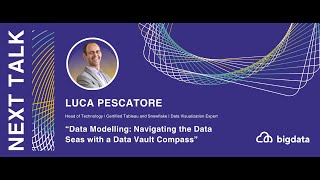
Luca Pescatore: Data Modelling: Navigating the Data Seas with a Data Vault Compass

🌟 Session Overview 🌟

Session Name: Data Modelling: Navigating the Data Seas with a Data Vault Compass Speaker: Luca Pescatore Session Description: Nowadays, data is everywhere. Companies are often drowning in a sea of data, and their data lakes turn into data swamps. Order is needed.

Dive into the evolution of data modeling and learn about use cases and advantages of different modeling structures. In particular, this talk will discuss how Data Vault modeling can be a navigational beacon in the data ocean.

🚀 About Big Data and RPA 2024 🚀

Unlock the future of innovation and automation at Big Data & RPA Conference Europe 2024! 🌟 This unique event brings together the brightest minds in big data, machine learning, AI, and robotic process automation to explore cutting-edge solutions and trends shaping the tech landscape. Perfect for data engineers, analysts, RPA developers, and business leaders, the conference offers dual insights into the power of data-driven strategies and intelligent automation. 🚀 Gain practical knowledge on topics like hyperautomation, AI integration, advanced analytics, and workflow optimization while networking with global experts. Don’t miss this exclusive opportunity to expand your expertise and revolutionize your processes—all from the comfort of your home! 📊🤖✨

📅 Yearly Conferences: Curious about the evolution of QA? Check out our archive of past Big Data & RPA sessions. Watch the strategies and technologies evolve in our videos! 🚀 🔗 Find Other Years' Videos: 2023 Big Data Conference Europe https://www.youtube.com/playlist?list=PLqYhGsQ9iSEpb_oyAsg67PhpbrkCC59_g 2022 Big Data Conference Europe Online https://www.youtube.com/playlist?list=PLqYhGsQ9iSEryAOjmvdiaXTfjCg5j3HhT 2021 Big Data Conference Europe Online https://www.youtube.com/playlist?list=PLqYhGsQ9iSEqHwbQoWEXEJALFLKVDRXiP

💡 Stay Connected & Updated 💡

Don’t miss out on any updates or upcoming event information from Big Data & RPA Conference Europe. Follow us on our social media channels and visit our website to stay in the loop!

🌐 Website: https://bigdataconference.eu/, https://rpaconference.eu/ 👤 Facebook: https://www.facebook.com/bigdataconf, https://www.facebook.com/rpaeurope/ 🐦 Twitter: @BigDataConfEU, @europe_rpa 🔗 LinkedIn: https://www.linkedin.com/company/73234449/admin/dashboard/, https://www.linkedin.com/company/75464753/admin/dashboard/ 🎥 YouTube: http://www.youtube.com/@DATAMINERLT

Totally Plc’s Data Vault implementation has provided a foundation for data driven decision making and improved engagement with the business’ data professionals. Learn how this initiative has helped build trust and transparency in the company’s data usage across business units and also how it has supported the efficient alignment, migration and integration of changing business systems.

If Data Vault is a new term for you, it's a data modeling design pattern. We're joined by Brandon Taylor, a senior data architect at Guild, and Michael Olschimke, who is the CEO of Scalefree—the consulting firm whose co-founder Dan Lindstedt is credited as the designer of the data vault architecture.  In this conversation with Tristan and Julia, Michael and Brandon explore the Data Vault approach among data warehouse design methodologies. They discuss Data Vault's adoption in Europe, its alignment with data mesh architecture, and the ongoing debate over Data Vault vs. Kimball methods.  For full show notes and to read 6+ years of back issues of the podcast's companion newsletter, head to https://roundup.getdbt.com. The Analytics Engineering Podcast is sponsored by dbt Labs.

Demystifying Data Vault with dbt - Coalesce 2023

In this session, Alex Higgs unveils the potential of Data Vault 2.0, an often overlooked but powerful data warehousing method. Discover how it offers scalability, agility, and flexibility to your data solutions.

Key Highlights: - Explore the origins and essence of Data Vault 2.0 - Learn how Data Vault 2.0 streamlines big data solutions for scalability. - See how it integrates with dbt via AutomateDV for faster time to value. - Understand how AutomateDV simplifies Data Vault 2.0 data warehouses, freeing data teams from intricate SQL.

Speaker: Alex Higgs, Senior Consultant Data Engineer, Datavault

Register for Coalesce at https://coalesce.getdbt.com

60 sources and counting: Unlocking microservice integration with dbt and Data Vault - Coalesce 2023

The Guild team migrated to Snowflake and dbt for their data warehousing needs and immediately saw the benefits of standardizing model structure, DRYer logic, data lineage ,and automated testing on Pull Requests.

But leveraging dbt didn’t solve everything. Pain points around maintaining model logic, handling historical data, and integrating data from over 60 source systems meant that analysts still struggled to provide a unified view of the business. The team knew that they needed to level up their processes and modeling again, and chose to adopt Data Vault (DV).

Brandon and Rebecca take you behind the scenes of this decision to explain the benefits of Data Vault. They highlight DV’s ability to handle complex data integration requirements while remaining agile and demonstrate that it complements other modern data concepts like domain-driven design and data mesh.

Attendees learn what Data Vault is, when it can be a key component of a successful data strategy, and instances where it’s not the right fit. Walk away with practical tips to successfully transition based on a real-world implementation.

Guild transformed their data warehouse; you can too!

Speakers: Brandon Taylor, Senior Data Architect, Guild; Rebecca Di Bari Staff Data Engineer , Guild

Register for Coalesce at https://coalesce.getdbt.com

Summary

Architectural decisions are all based on certain constraints and a desire to optimize for different outcomes. In data systems one of the core architectural exercises is data modeling, which can have significant impacts on what is and is not possible for downstream use cases. By incorporating column-level lineage in the data modeling process it encourages a more robust and well-informed design. In this episode Satish Jayanthi explores the benefits of incorporating column-aware tooling in the data modeling process.

Announcements

Hello and welcome to the Data Engineering Podcast, the show about modern data management RudderStack helps you build a customer data platform on your warehouse or data lake. Instead of trapping data in a black box, they enable you to easily collect customer data from the entire stack and build an identity graph on your warehouse, giving you full visibility and control. Their SDKs make event streaming from any app or website easy, and their extensive library of integrations enable you to automatically send data to hundreds of downstream tools. Sign up free at dataengineeringpodcast.com/rudderstack- Your host is Tobias Macey and today I'm interviewing Satish Jayanthi about the practice and promise of building a column-aware data architecture through intentional modeling

Interview

Introduction How did you get involved in the area of data management? How has the move to the cloud for data warehousing/data platforms influenced the practice of data modeling?

There are ongoing conversations about the continued merits of dimensional modeling techniques in modern warehouses. What are the modeling practices that you have found to be most useful in large and complex data environments?

Can you describe what you mean by the term column-aware in the context of data modeling/data architecture?

What are the capabilities that need to be built into a tool for it to be effectively column-aware?

What are some of the ways that tools like dbt miss the mark in managing large/complex transformation workloads? Column-awareness is obviously critical in the context of the warehouse. What are some of the ways that that information can be fed into other contexts? (e.g. ML, reverse ETL, etc.) What is the importance of embedding column-level lineage awareness into transformation tool vs. layering on top w/ dedicated lineage/metadata tooling? What are the most interesting, innovative, or unexpected ways that you have seen column-aware data modeling used? What are the most interesting, unexpected, or challenging lessons that you have learned while working on building column-aware tooling? When is column-aware modeling the wrong choice? What are some additional resources that you recommend for individuals/teams who want to learn more about data modeling/column aware principles?

Contact Info

LinkedIn

Parting Question

From your perspective, what is the biggest gap in the tooling or technology for data management today?

Closing Announcements

Thank you for listening! Don't forget to check out our other shows. Podcast.init covers the Python language, its community, and the innovative ways it is being used. The Machine Learning Podcast helps you go from idea to production with machine learning. Visit the site to subscribe to the show, sign up for the mailing list, and read the show notes. If you've learned something or tried out a project from the show then tell us about it! Email [email protected]) with your story. To help other people find the show please leave a review on Apple Podcasts and tell your friends and co-workers

Links

Coalesce

Podcast Episode

Star Schema Conformed Dimensions Data Vault

The intro and outro music is from The Hug by The Freak Fandango Orchestra / CC BY-SA Sponsored By: Rudderstack: Rudderstack

RudderStack provides all your customer data pipeli

George Park is a Czechia-based data engineer. We chat about automation, change management and culture, data modeling (Data Vault in particular), and much more. George lives on the front lines of helping customers, so this is a good discussion if you like to hear from a real practitioner.

George's LinkedIn: https://www.linkedin.com/in/george-park-599846136/


If you like this show, give it a 5-star rating on your favorite podcast platform.

Purchase Fundamentals of Data Engineering at your favorite bookseller.

Subscribe to my Substack: https://joereis.substack.com/

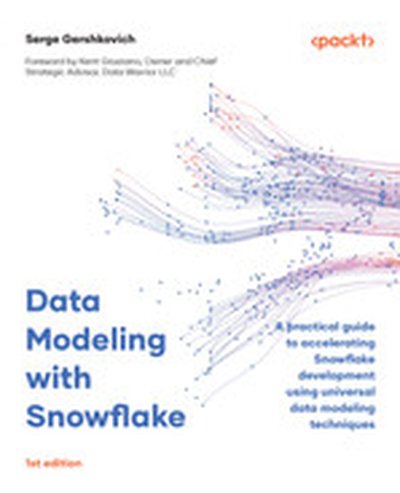
Data Modeling with Snowflake

This comprehensive guide, "Data Modeling with Snowflake", is your go-to resource for mastering the art of efficient data modeling tailored to the capabilities of the Snowflake Data Cloud. In this book, you will learn how to design agile and scalable data solutions by effectively leveraging Snowflake's unique architecture and advanced features. What this Book will help me do Understand the core principles of data modeling and how they apply to Snowflake's cloud-native environment. Learn to use Snowflake's features, such as time travel and zero-copy cloning, to create efficient data solutions. Gain hands-on experience with SQL recipes that outline practical approaches to transforming and managing Snowflake data. Discover techniques for modeling structured and semi-structured data for real-world business needs. Learn to integrate universal modeling frameworks like Star Schema and Data Vault into Snowflake implementations for scalability and maintainability. Author(s) The author, Serge Gershkovich, is a seasoned expert in database design and Snowflake architecture. With years of experience in the data management field, Serge has dedicated himself to making complex technical subjects approachable to professionals at all levels. His insights in this book are informed by practical applications and real-world experience. Who is it for? This book is targeted at data professionals, ranging from newcomers to database design to seasoned SQL developers seeking to specialize in Snowflake. If you are looking to understand and apply data modeling practices effectively within Snowflake's architecture, this book is for you. Whether you're refining your modeling skills or getting started with Snowflake, it provides the practical knowledge you need to succeed.

Many good project ideas fail before they even start due to the sensitive personal data required. The good news: a synthetic version of this data does not need protection. Synthetic data copies the actual data's structure and statistical properties without recreating personally identifiable information. The bad news: It is difficult to create synthetic data for open-access use, without recreating the exact copy of actual data. This talk will give hands-on insights into synthetic data creation and challenges along its lifecycle. We will learn how to create and evaluate synthetic data for any use case using the open-source package Synthetic Data Vault. We will find answers to why it takes so long to synthesize the huge amount of data dormant in public administration. The talk addresses owners who want to create access to their private data as well as analysts looking to use synthetic data. After this session, listeners will know which steps to take to generate synthetic data for multi-purpose use and its limitations for real-world analyses.

Summary Agile methodologies have been adopted by a majority of teams for building software applications. Applying those same practices to data can prove challenging due to the number of systems that need to be included to implement a complete feature. In this episode Shane Gibson shares practical advice and insights from his years of experience as a consultant and engineer working in data about how to adopt agile principles in your data work so that you can move faster and provide more value to the business, while building systems that are maintainable and adaptable.

Announcements

Hello and welcome to the Data Engineering Podcast, the show about modern data management When you’re ready to build your next pipeline, or want to test out the projects you hear about on the show, you’ll need somewhere to deploy it, so check out our friends at Linode. With their new managed database service you can launch a production ready MySQL, Postgres, or MongoDB cluster in minutes, with automated backups, 40 Gbps connections from your application hosts, and high throughput SSDs. Go to dataengineeringpodcast.com/linode today and get a $100 credit to launch a database, create a Kubernetes cluster, or take advantage of all of their other services. And don’t forget to thank them for their continued support of this show! Atlan is the metadata hub for your data ecosystem. Instead of locking your metadata into a new silo, unleash its transformative potential with Atlan’s active metadata capabilities. Push information about data freshness and quality to your business intelligence, automatically scale up and down your warehouse based on usage patterns, and let the bots answer those questions in Slack so that the humans can focus on delivering real value. Go to dataengineeringpodcast.com/atlan today to learn more about how Atlan’s active metadata platform is helping pioneering data teams like Postman, Plaid, WeWork & Unilever achieve extraordinary things with metadata and escape the chaos. Prefect is the modern Dataflow Automation platform for the modern data stack, empowering data practitioners to build, run and monitor robust pipelines at scale. Guided by the principle that the orchestrator shouldn’t get in your way, Prefect is the only tool of its kind to offer the flexibility to write code as workflows. Prefect specializes in glueing together the disparate pieces of a pipeline, and integrating with modern distributed compute libraries to bring power where you need it, when you need it. Trusted by thousands of organizations and supported by over 20,000 community members, Prefect powers over 100MM business critical tasks a month. For more information on Prefect, visit dataengineeringpodcast.com/prefect. Data engineers don’t enjoy writing, maintaining, and modifying ETL pipelines all day, every day. Especially once they realize 90% of all major data sources like Google Analytics, Salesforce, Adwords, Facebook, Spreadsheets, etc., are already available as plug-and-play connectors with reliable, intuitive SaaS solutions. Hevo Data is a highly reliable and intuitive data pipeline platform used by data engineers from 40+ countries to set up and run low-latency ELT pipelines with zero maintenance. Boasting more than 150 out-of-the-box connectors that can be set up in minutes, Hevo also allows you to monitor and control your pipelines. You get: real-time data flow visibility, fail-safe mechanisms, and alerts if anything breaks; preload transformations and auto-schema mapping precisely control how data lands in your destination; models and workflows to transform data for analytics; and reverse-ETL capability to move the transformed data back to your business software to inspire timely action. All of this, plus its transparent pricing and 24*7 live support, makes it consistently voted by users as the Leader in the Data Pipeline category on review platforms like G2. Go to dataengineeringpodcast.com/hevodata and sign up for a free 14-day trial that also comes with 24×7 support. Your host is Tobias Macey and today I’m interviewing Shane Gibson about how to bring Agile practices to your data management workflows

Interview

Introduction How did you get involved in the area of data management? Can you describe what AgileData is and the story behind it? What are the main industries and/or use cases that you are focused on supporting? The data ecosystem has been trying on different paradigms from software development for some time now (e.g. DataOps, version control, etc.). What are the aspects of Agile that do and don’t map well to data engineering/analysis? One of the perennial challenges of data analysis is how to approach data modeling. How do you balance the need to provide value with the long-term impacts of incomplete or underinformed modeling decisions made in haste at the beginning of a project?

How do you design in affordances for refactoring of the data models without breaking downstream assets?

Another aspect of implementing data products/platforms is how to manage permissions and governance. What are the incremental ways that those principles can be incorporated early and evolved along with the overall analytical products? What are some of the organizational design strategies that you find most helpful when establishing or training a team who is working on data products? In order to have a useful target to work toward it’s necessary to understand what the data consumers are hoping to achieve. What are some of the challenges of doing requirements gathering for data products? (e.g. not knowing what information is available, consumers not understanding what’s hard vs. easy, etc.)

How do you work with the "customers" to help them understand what a reasonable scope is and translate that to the actual project stages for the engineers?

What are some of the perennial questions or points of confusion that you have had to address with your clients on how to design and implement analytical assets? What are the most interesting, innovative, or unexpected ways that you have seen agile principles used for data? What are the most interesting, unexpected, or challenging lessons that you have learned while working on AgileData? When is agile the wrong choice for a data project? What do you have planned for the future of AgileData?

Contact Info

LinkedIn @shagility on Twitter

Parting Question

From your perspective, what is the biggest gap in the tooling or technology for data management today?

Closing Announcements

Thank you for listening! Don’t forget to check out our other shows. Podcast.init covers the Python language, its community, and the innovative ways it is being used. The Machine Learning Podcast helps you go from idea to production with machine learning. Visit the site to subscribe to the show, sign up for the mailing list, and read the show notes. If you’ve learned something or tried out a project from the show then tell us about it! Email [email protected]) with your story. To help other people find the show please leave a review on Apple Podcasts and tell your friends and co-workers

Links

AgileData OptimalBI How To Make Toast Data Mesh Information Product Canvas DataKitchen

Podcast Episode

Great Expectations

Podcast Episode

Soda Data

Podcast Episode

Google DataStore Unfix.work Activity Schema

Podcast Episode

Data Vault

Podcast Episode

Star Schema Lean Methodology Scrum Kanban

The intro and outro music is from The Hug by The Freak Fandango Orchestra / CC BY-SA

Sponsored By: Atlan: Atlan
Have you ever woken up to a crisis because a number on a dashboard is broken and no one knows why? Or sent out frustrating slack messages trying to find the right data set? Or tried to understand what a column name means?

Our friends at Atlan started out as a data team themselves and faced all this collaboration chaos themselves, and started building Atlan as an internal tool for themselves. Atlan is a collaborative workspace for data-driven teams, like Github for engineering or Figma for design teams. By acting as a virtual hub for data assets ranging from tables and dashboards to SQL snippets & code, Atlan enables teams to create a single source of truth for all their data assets, and collaborate across the modern data stack through deep integrations with tools like Snowflake, Slack, Looker and more.

Go to dataengineeringpodcast.com/atlan and sign up for a free trial. If you’re a data engineering podcast listener, you get credits worth $3000 on an annual subscription.Prefect: Prefect

Prefect is the modern Dataflow Automation platform for the modern data stack, empowering data practitioners to build, run and monitor robust pipelines at scale. Guided by the principle that the orchestrator shouldn’t get in your way, Prefect is the only tool of its kind to offer the flexibility to write code as workflows. Prefect specializes in glueing together the disparate pieces of a pipeline, and integrating with modern distributed compute libraries to bring power where you need it, when you need it. Trusted by thousands of organizations and supported by over 20,000 community members, Prefect powers over 100MM business critical tasks a month. For more information on Prefect, visit…

Summary Communication and shared context are the hardest part of any data system. In recent years the focus has been on data catalogs as the means for documenting data assets, but those introduce a secondary system of record in order to find the necessary information. In this episode Emily Riederer shares her work to create a controlled vocabulary for managing the semantic elements of the data managed by her team and encoding it in the schema definitions in her data warehouse. She also explains how she created the dbtplyr package to simplify the work of creating and enforcing your own controlled vocabularies.

Announcements

Hello and welcome to the Data Engineering Podcast, the show about modern data management When you’re ready to build your next pipeline, or want to test out the projects you hear about on the show, you’ll need somewhere to deploy it, so check out our friends at Linode. With their managed Kubernetes platform it’s now even easier to deploy and scale your workflows, or try out the latest Helm charts from tools like Pulsar and Pachyderm. With simple pricing, fast networking, object storage, and worldwide data centers, you’ve got everything you need to run a bulletproof data platform. Go to dataengineeringpodcast.com/linode today and get a $100 credit to try out a Kubernetes cluster of your own. And don’t forget to thank them for their continued support of this show! Modern Data teams are dealing with a lot of complexity in their data pipelines and analytical code. Monitoring data quality, tracing incidents, and testing changes can be daunting and often takes hours to days. Datafold helps Data teams gain visibility and confidence in the quality of their analytical data through data profiling, column-level lineage and intelligent anomaly detection. Datafold also helps automate regression testing of ETL code with its Data Diff feature that instantly shows how a change in ETL or BI code affects the produced data, both on a statistical level and down to individual rows and values. Datafold integrates with all major data warehouses as well as frameworks such as Airflow & dbt and seamlessly plugs into CI workflows. Go to dataengineeringpodcast.com/datafold today to start a 30-day trial of Datafold. Atlan is a collaborative workspace for data-driven teams, like Github for engineering or Figma for design teams. By acting as a virtual hub for data assets ranging from tables and dashboards to SQL snippets & code, Atlan enables teams to create a single source of truth for all their data assets, and collaborate across the modern data stack through deep integrations with tools like Snowflake, Slack, Looker and more. Go to dataengineeringpodcast.com/atlan today and sign up for a free trial. If you’re a data engineering podcast listener, you get credits worth $3000 on an annual subscription Your host is Tobias Macey and today I’m interviewing Emily Riederer about defining and enforcing column contracts and controlled vocabularies for your data warehouse

Interview

Introduction How did you get involved in the area of data management? Can you start by discussing some of the anti-patterns that you have encountered in data warehouse naming conventions and how it relates to the modeling approach? (e.g. star/snowflake schema, data vault, etc.) What are some of the types of contracts that can, and should, be defined and enforced in data workflows?

What are the boundaries where we should think about establishing those contracts?

What is the utility of column and table names for defining and enforcing contracts in analytical work? What is the process for establishing contractual elements in a naming schema?

Who should be involved in that design process? Who are the participants in the communication paths for column naming contracts?

What are some examples of context and details that can’t be captured in column names?

What are some options for managing that additional information and linking it to the naming cont

Summary The perennial question of data warehousing is how to model the information that you are storing. This has given rise to methods as varied as star and snowflake schemas, data vault modeling, and wide tables. The challenge with many of those approaches is that they are optimized for answering known questions but brittle and cumbersome when exploring unknowns. In this episode Ahmed Elsamadisi shares his journey to find a more flexible and universal data model in the form of the "activity schema" that is powering the Narrator platform, and how it has allowed his customers to perform self-service exploration of their business domains without being blocked by schema evolution in the data warehouse. This is a fascinating exploration of what can be done when you challenge your assumptions about what is possible.

Announcements

Hello and welcome to the Data Engineering Podcast, the show about modern data management When you’re ready to build your next pipeline, or want to test out the projects you hear about on the show, you’ll need somewhere to deploy it, so check out our friends at Linode. With their managed Kubernetes platform it’s now even easier to deploy and scale your workflows, or try out the latest Helm charts from tools like Pulsar and Pachyderm. With simple pricing, fast networking, object storage, and worldwide data centers, you’ve got everything you need to run a bulletproof data platform. Go to dataengineeringpodcast.com/linode today and get a $100 credit to try out a Kubernetes cluster of your own. And don’t forget to thank them for their continued support of this show! Atlan is a collaborative workspace for data-driven teams, like Github for engineering or Figma for design teams. By acting as a virtual hub for data assets ranging from tables and dashboards to SQL snippets & code, Atlan enables teams to create a single source of truth for all their data assets, and collaborate across the modern data stack through deep integrations with tools like Snowflake, Slack, Looker and more. Go to dataengineeringpodcast.com/atlan today and sign up for a free trial. If you’re a data engineering podcast listener, you get credits worth $3000 on an annual subscription Modern Data teams are dealing with a lot of complexity in their data pipelines and analytical code. Monitoring data quality, tracing incidents, and testing changes can be daunting and often takes hours to days. Datafold helps Data teams gain visibility and confidence in the quality of their analytical data through data profiling, column-level lineage and intelligent anomaly detection. Datafold also helps automate regression testing of ETL code with its Data Diff feature that instantly shows how a change in ETL or BI code affects the produced data, both on a statistical level and down to individual rows and values. Datafold integrates with all major data warehouses as well as frameworks such as Airflow & dbt and seamlessly plugs into CI workflows. Go to dataengineeringpodcast.com/datafold today to start a 30-day trial of Datafold. Your host is Tobias Macey and today I’m interviewing Ahmed Elsamadisi about Narrator, a platform to enable anyone to go from question to data-driven decision in minutes

Interview

Introduction How did you get involved in the area of data management? Can you describe what Narrator is and the story behind it? What are the challenges that you have seen organizations encounter when attempting to make analytics a self-serve capability? What are the use cases that you are focused on? How does Narrator fit within the data workflows of an organization? How is the Narrator platform implemented?

How has the design and focus of the technology evolved since you first started working on Narrator?

The core element of the analyses that you are building is the "activity schema". Can you describe the design process that led you to that format?

What are the challenges that are posed by more widely used modeling techniques such as star/s

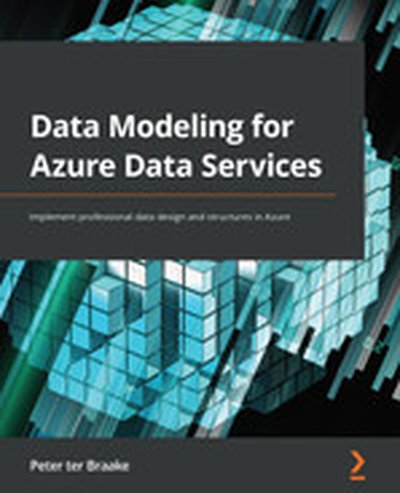
Data Modeling for Azure Data Services

Data Modeling for Azure Data Services is an essential guide that delves into the intricacies of designing, provisioning, and implementing robust data solutions within the Azure ecosystem. Through practical examples and hands-on exercises, this book equips you with the knowledge to create scalable, performant, and adaptable database designs tailored to your business needs. What this Book will help me do Understand and apply normalization, dimensional modeling, and data vault modeling for relational databases. Learn to provision and implement scalable solutions like Azure SQL DB and Azure Synapse SQL Pool. Master how to design and model a Data Lake using Azure Storage efficiently. Gain expertise in NoSQL database modeling and implementing solutions using Azure Cosmos DB. Develop ETL/ELT processes effectively using Azure Data Factory to support data integration workflows. Author(s) None Braake brings a wealth of expertise as a data architect and cloud solutions builder specializing in Azure's data services. With hands-on experience in projects requiring sophisticated data modeling and optimization, None crafts detailed learning material to help professionals level up their database design and Azure deployment skills. Dedicated to explaining complex topics with clarity and approachable language, None ensures that the learners gain not just knowledge but applied competence. Who is it for? This book is a valuable resource for business intelligence developers, data architects, and consultants aiming to refine their skills in data modeling within modern cloud ecosystems, particularly Microsoft Azure. Whether you're a beginner with some foundational cloud data management knowledge or an experienced professional seeking to deepen your Azure data services proficiency, this book caters to your learning needs.