talk-data.com talk-data.com

P

Speaker

Paul Turley

9

talks

author

Frequent Collaborators

Filter by Event / Source

Talks & appearances

9 activities · Newest first

Search activities →
Microsoft Power BI Data Analyst Associate Study Guide

Passing the PL-300 exam with 2025 revisions isn't just about memorization—you need to thoroughly know the basic features of Power BI. However, data professionals must also apply best practices that make Power BI solutions scalable and future-proof. The first half of this go-to companion by Paul Turley provides complete coverage of the PL-300 exam objectives for desktop and self-service users, while the second half equips you with necessary best practices and practical skills for real-world success after the exam. Immerse yourself in exam prep, practice questions, and hands-on references for applying time-tested design patterns in Power BI. You'll learn how to transform raw data into actionable insights using Power Query, DAX, and dimensional modeling. Perfect for data analysts and business intelligence developers, this guide shows how Power BI fits into modern data platforms like Azure and Microsoft Fabric, preparing you for the exam and for the evolving world of data engineering. Understand PL-300 exam topics and key prep strategies Discover scalable, enterprise-grade Power BI solutions using best practices Learn how to correctly apply Power Query, DAX, and visualizations in real-world scenarios, with real business data Uncover how to build for scale See how Power BI fits into modern architectures like Azure and Microsoft Fabric

Professional Microsoft SQL Server 2016 Reporting Services and Mobile Reports

Optimize reporting and BI with Microsoft SQL Server 2016 Professional Microsoft SQL Server 2016 Reporting Services and Mobile Reports provides a comprehensive lesson in business intelligence (BI), operational reporting and Reporting Services architecture using a clear, concise tutorial approach. You'll learn effective report solution design based upon many years of experience with successful report solutions. Improve your own reports with advanced, best-practice design, usability, query design, and filtering techniques. Expert guidance provides insight into common report types and explains where each could be made more efficient, while providing step-by step instruction on Microsoft SQL Server 2016. All changes to the 2016 release are covered in detail, including improvements to the Visual Studio Report Designer (SQL Server Data Tools) and Report Builder, Mobile Dashboard Designer, the new Report Portal Interface, HTML-5 Rendering, Power BI integration, Custom Parameters Pane, and more. The Microsoft SQL Server 2016 release will include significant changes. New functionality, new capabilities, re-tooled processes, and changing support require a considerable update to existing knowledge. Whether you're starting from scratch or simply upgrading, this book is an essential guide to report design and business intelligence solutions. Understand BI fundamentals and Reporting Services architecture Learn the ingredients to a successful report design Get up to speed on Microsoft SQL Server 2016 Grasp the purpose behind common designs to optimize your reporting Microsoft SQL Server Reporting Services makes reporting faster, easier, and more powerful than ever in web, desktop and portal solutions. Compatibility with an extensive variety of data sources makes it a go-to solution for organizations across the globe. The 2016 release brings some of the biggest changes in years, and the full depth and breadth of these changes can create a serious snag in your workflow. For a clear tutorial geared toward the working professional, Professional Microsoft SQL Server 2016 Reporting Services and Mobile Reports is the ideal guide for getting up to speed and producing successful reports.

Professional Microsoft SQL Server 2012 Reporting Services

A must-have guide for the latest updates to the new release of Reporting Services SQL Server Reporting Services allows you to create reports and business intelligence (BI) solutions. With this updated resource, a team of experts shows you how Reporting Services makes reporting faster, easier and more powerful than ever in web, desktop, and portal solutions. New coverage discusses the new reporting tool called Crescent, BI semantic model's impact on report design and creation, semantic model design, and more. You'll explore the major enhancements to Report Builder and benefit from best practices shared by the authors. Builds on the previous edition while also providing coverage of the new features introduced with SQL Server 2012 Explains Reporting Services architecture and BI fundamentals Covers advanced report design and filtering techniques, walking you through each design, discussing its purpose and the conditions where it could be more efficient Discusses semantic model design, Report Builder, Crescent, and more Targets business analysts and report designers as well as BI solution developers Professional Microsoft SQL Server 2012 Reporting Services is mandatory reading if you are eager to start using the newest version of SQL Server Reporting Services.

Microsoft® SQL Server® Reporting Services Recipes: for Designing Expert Reports

Learn to design more effective and sophisticated business reports While most users of SQL Server Reporting Services are now comfortable designing and building simple reports, business today demands increasingly complex reporting. In this book, top Reporting Services design experts have contributed step-by-step recipes for creating various types of reports. Written by well-known SQL Server Reporting Services experts, this book gives you the tools to meet your clients' needs Coverage includes: Business Reporting Paradigms Basic Report Design Concepts Using Report Builder. Report Design Essentials Tabular and Matrix Reports Expressions and Custom Code Formatting Report Data Columnar and Grouped Reports Bi Dashboards and Elements Synchronizing Groups, Charts, and Sparklines Chart and Gauge Reports Creating a Personal Report Card Creating a Multi-Series Multi-Y Axis Chart Interactive Reporting Integrated Reporting Applications Offline Reporting Using The Report Viewer Control Creating a Calendar Report Creating Mailing Labels Barcodes Excel Worksheet Naming and Page Naming External Image Sources Language Localization Creating a Checkbox List To Show Existing Records Using a Checkbox List To Select and Deselect Records Using The Map Wizard Filtering and Parameterization Multiple Criterion Report Filtering Using Multi-Value Parameters with a Stored Procedure Using Multi-Value Parameters with a Subscription Report Creating Custom Sorting Reports Filtering User-Specific Report Data Custom and Dynamic Data Sources Using a Web Service As a Data Source Reporting On Sharepoint List Data Dynamics Ax Report Wizard and More! Microsoft® SQL Server® Reporting Services Recipes brings together great report designs that have been field-tested by the experts Note: CD-ROM/DVD and other supplementary materials are not included as part of eBook file.

Beginning Oracle® Application Express

Oracle Application Express is an easy-to-use application development environment built on the Oracle technology stack. There are two aspects of that previous sentence that you may find jarring—that Oracle, a company widely known for its database technology, has an application development environment, and that Oracle, a company thought of as delivering high-end, enterprise-ready technology, has anything that is easy to use. But, as this book will show, the introductory statement is completely accurate. Oracle Application Express, commonly known as Oracle APEX or simply APEX, does benefit from the long-established enterprise-class robustness that is the hallmark of Oracle technology. The applications you build will be able to support hundreds of users and many terabytes of data, scalability far beyond even the imagination of most other development environments. And Oracle APEX, with its declarative, wizard-driven methodology, is truly easy to use. In the course of the few hundred pages of this book, you will not only learn about how to use APEX, you will create a usable order entry system. The fast learning curve presented in these pages is a consequence of many years of development and refinement of the APEX product, which began life almost a decade ago within Oracle. By the end of this volume, you will know enough to create your own applications, as well as having the knowledge and understanding of Oracle APEX and the world of Oracle technology to explore further refinements on your own. Best of all, you can use APEX with absolutely no cost—either in a hosted environment, as suggested in Chapter 1, or with a free version of the Oracle database. Welcome to the world of Oracle Application Express! This book is aimed at a particular group of users—those who are not familiar with Oracle Application Express. The book assumes that you have a basic knowledge of application development, the type you could get from playing around with a personal database such as Access. In fact, this book was written with an Access developer in mind—an Access developer looking to step up to a more scalable and reliable environment, with reduced maintenance overhead and greater integration between application systems. This book covers the use of Oracle Application Express. Although the book is based on the 3.5 version, you can use the book with older versions as well. However, since the book will use a hosted version of Oracle Application Express, and since both the Oracle database that support the product and the product itself are available as free downloads from http://otn.oracle.com, you should be able to use the latest version easily. This book is structured to give the reader a gradual introduction to the essentials of development with Oracle Application Express. The book contains the following: Welcome to Oracle!—This contains an overview of Oracle Application Express, as well as instructions on how to set up a hosted development environment for performing the exercises used in the book. Jumpstart Oracle Application Express—You will leap into creating applications with Oracle Application Express and finish a simple application by the end of this. Extending Your Oracle APEX Application—This will introduce you to the options in Oracle APEX that let you ensure that your users will enter correct data while using your application. Validation, Calculation, Navigation, and Lists—This continues the exploration of the aspects of APEX that help you to ensure that data used in your application is correct. Additionally, this covers basic navigation options for your application. Reporting and Charting—This covers the powerful and flexible reports you can create with Oracle APEX, and introduces you to the graphical capabilities of APEX reporting. Components Working Together—This extends your work with charts, showing how you can create charts that link to a more detailed view of the data they represent. You will also learn how to create a calendar page with links to the data shown as part of the calendar, and how to add images taken from the underlying database to an Oracle APEX report. Customizing User Interfaces—This explores advanced options for customizing user interfaces, on individual pages as well as across your entire APEX application. PL/SQL—This introduces you to PL/SQL, the underlying language used to implement your APEX application, and demonstrates how to use the power of PL/SQL to extend the logic in your application. Security—This covers how security is implemented for your APEX environment. Deployment and Administration—This covers the options you have for deploying an APEX application to another environment and walks you through one of those options. Additionally, this introduces you to the administrative functionality you can use to monitor and manage your APEX applications. Packaged Applications—This gives an overview of packaged applications available for Oracle Application Express, with a more detailed look at a select few. Migration—This describes how to migrate applications from Microsoft Access to Oracle Application Express.

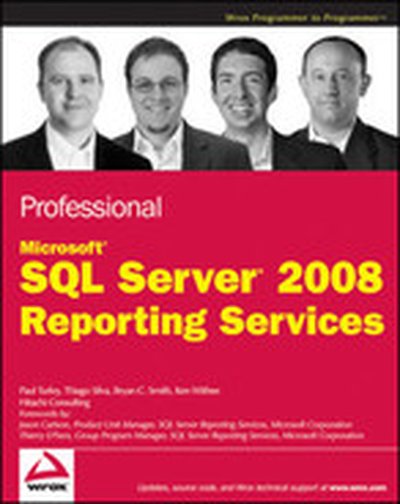
Professional Microsoft® SQL Server® 2008 Reporting Services

Teaches solution architects, designers, and developers how to use Microsoft's reporting platform to create reporting and business intelligence (BI) solutions Updated with new information about holistic BI solutions, comprehensive OLAP/Analysis Services reporting, and complete production deployment scenarios Includes programming examples focused on specific, scenario-based solutions Explains reporting services architecture and business intelligence, teaches the fundamentals of designing reports through the use of careful planning considerations, and covers advanced report design and filtering techniques

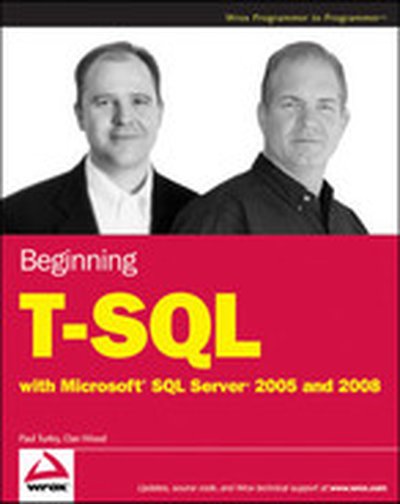
Beginning T-SQL with Microsoft® SQL Server® 2005 and 2008

If you have never programmed with T-SQL but have some background programming knowledge and experience, Beginning T-SQL with Microsoft SQL Server 2005 and 2006 will provide you with an overview of SQL Server query operations and tools used with T-SQL, Microsoft's implementation of the SQL database query language. Review basic query language commands and syntax, learn how to design and build applications, and understand how to optimize query performance. Improve your skills with the most up-to-date T-SQL guide, which provides hands-on examples and instructions to guide you through the process.

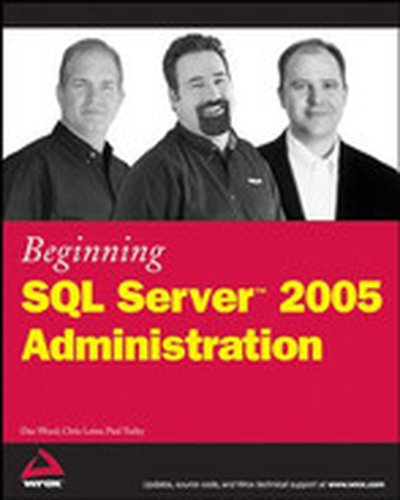
Beginning SQL Server™ 2005 Administration

For the first time, SQL Server 2005 provides features that can support large-scale enterprise databases. With this powerful new release, you may find yourself being called upon to perform duties that are no longer strictly "administrative," duties that have become much more complicated and difficult. With that in mind, a team of experienced Microsoft Certified Professionals provides you with the necessary information to be a more competent and successful database developer or administrator. Beginning with a foundation that features detailed coverage of typical administrative duties, the authors proceed to explain how to build complex data transformations for data import, build distributed data solutions, and maintain the security and integrity of the database. You will be able to apply what you learn to real-world scenarios, and smoothly navigate the vastly changed landscape of SQL Server 2005 administration. What you will learn from this book How to install, maintain, and manage an SQL Server 2005 installation, including high availability and security considerations Various features such as the Common Language Runtime, SQL Server Integration Services, Notification Service, and the Service Broker How to use the tools that are necessary to manage configuration, backups, restores, security, availability, performance, and monitoring A sampling of some of the more advanced areas and complex jobs of the broadening role of a database administrator in the enterprise Who this book is for This book is for both developers and administrators who are responsible for the management and maintenance of an SQL Server 2005 database. Familiarity with relational database concepts and SQL is assumed. Wrox Beginning guides are crafted to make learning programming languages and technologies easier than you think, providing a structured, tutorial format that will guide you through all the techniques involved. Enhance Your Knowledge Advance Your Career

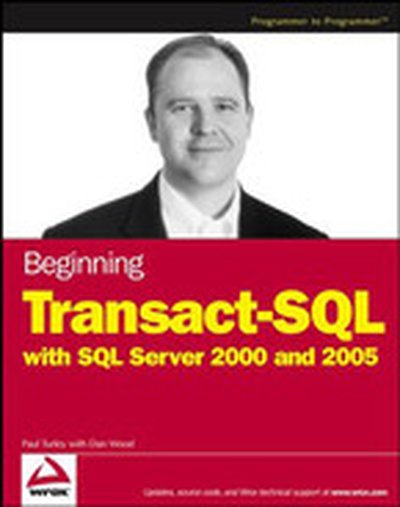
Beginning Transact-SQL with SQL Server 2000 and 2005

Beginning Transact-SQL with SQL Server 2000 and 2005 Transact-SQL is a powerful implementation of the ANSI standard SQL database query language. In order to build effective database applications, you must gain a thorough understanding of these features. This book provides you with a comprehensive introduction to the T-SQL language and shows you how it can be used to work with both the SQL Server 2000 and 2005 releases. Beginning with an overview of the SQL Server query operations and tools that are used with T-SQL, the author goes on to explain how to design and build applications of increasing complexity. By gaining an understanding of the power of the T-SQL language, you'll be prepared to meet the ever-increasing demands of programming. What you will learn from this book How T-SQL provides you with the means to create tools for managing hundreds of databases Various programming techniques that use views and stored procedures Ways to optimize query performance How to create databases that will be an essential foundation to applications you develop later Who this book is for This book is for database developers and administrators who have not yet programmed with Transact-SQL. Some familiarity with relational databases and basic SQL is helpful, and some programming experience is helpful. Wrox Beginning guides are crafted to make learning programming languages and technologies easier than you think, providing a structured, tutorial format that will guide you through all the techniques involved.