talk-data.com talk-data.com

Topic

pl/sql

40

tagged

Activity Trend

1 peak/qtr
2020-Q1 2026-Q1

Activities

40 activities · Newest first

Oracle PL/SQL by Example, 6th Edition

Using PL/SQL for Oracle Database 21c, you can build solutions that deliver unprecedented performance and efficiency in any environment, including the cloud. Oracle PL/SQL by Example, Sixth Edition, teaches all the PL/SQL skills you'll need, through real-world labs and extensive examples. Now fully updated for the newest version of PL/SQL 21c, it covers everything from basic syntax and program control through the latest optimization and tuning enhancements. Step by step, you'll walk through every key task, mastering today's most valuable Oracle 21c PL/SQL programming techniques on your own. Start by downloading the supporting schema and exercises from informit.com/title/9780138062835. Once you've done an exercise, the author doesn't just present the answer: She offers an in-depth discussion introducing deeper insights and modern best practices. This book's approach fully reflects the author's award-winning experience teaching PL/SQL to professionals at Columbia University in New York City. New database developers and DBAs can use it to get productive fast; experienced PL/SQL programmers will find it to be a superb Oracle Database 21c solutions reference. New in This Edition Updated code examples throughout New iteration controls for the FOR LOOP statement, such as stepped range, multiple iterations, collection, and cursor iterations Enhancements for PL/SQL qualified expressions Performance enhancements for PL/SQL functions, such as SQL macro, and better control of the result cache Other Topics Covered Mastering basic PL/SQL concepts and language fundamentals, and understanding SQL's role in PL/SQL Using conditional and iterative program controls Efficiently handling errors and exceptions Working with cursors and triggers, including compound triggers Using stored procedures, functions, and packages to write modular code that other programs can run Working with collections, object-relational features, native dynamic SQL, bulk SQL, and other advanced features ...

Resilient Oracle PL/SQL

As legacy and other critical systems continue to migrate online, the need for continuous operation is imperative. Code has to handle data issues as well as hard external problems today, including outages of networks, storage systems, power, and ancillary systems. This practical guide provides system administrators, DevSecOps engineers, and cloud architects with a concise yet comprehensive overview on how to use PL/SQL to develop resilient database solutions. Integration specialist Stephen B Morris helps you understand the language, build a PL/SQL toolkit, and collect a suite of reusable components and patterns. You'll dive into the benefits of synthesizing the toolkit with a requirements-driven, feature-oriented approach and learn how to produce resilient solutions by synthesizing the PL/SQL toolkit in conjunction with a scale of resilience. Build solid PL/SQL solutions while avoiding common PL/SQL antipatterns Learn why embedding complex business logic in SQL is often a brittle proposition Learn how to recognize and improve weak PL/SQL code Verify PL/SQL code by running data-driven, in-database tests Understand the safe operation, maintenance, and modification of complex PL/SQL systems Learn the benefits of thinking about features rather than just use cases Define good requirements for PL/SQL and hybrid solutions involving PL/SQL and high level languages

Modern Oracle Database Programming: Level Up Your Skill Set to Oracle's Latest and Most Powerful Features in SQL, PL/SQL, and JSON

Level up your skill set to the latest that Oracle Database can offer. This book introduces features that are not well known that can transform your development efforts. You’ll discover built-in functionality that can save you massive amounts of time that otherwise would be spent reinventing the wheel. You’ll find that what used to take a lot of programming some years ago can be done with less code in a more reliable way today. Anyone using Oracle Database without the knowledge in this book is leaving valuable functionality–that their company has paid for–on the table, and this book opens the door to that functionality so that you can deliver reliable and performant solutions faster and more easily than ever. Part I looks at features in SQL and PL/SQL that are underused and not well known. You’ll learn about new join types, pattern matching across rows, Top N pagination (useful in reporting!), qualified expressions, and enhancements to iterators that reduce code complexity and make your logic easier to understand. Part II covers how and when to invoke PL/SQL from SQL while maintaining performance. You'll learn about SQL macro functions for creating reusable SQL fragments, polymorphic table functions with return types determined by incoming argument types, and constructing and parsing JSON documents for data interchange with other systems. Part III introduces a vast array of built-in functionality that Oracle provides that is just waiting to be used. Edition-based redefinition enables zero-downtime application and schema upgrades. Data redaction enables easier compliance with privacy laws and similar regulations by protecting sensitive data from those who have no need to see it. Virtual private databases provide the appearance of giving each user their own database, again helping to secure sensitive data. These features are just a taste of what the book provides. Soon you’ll be improving your skillsand wondering why you ever worked so hard to solve problems that Oracle Database already solves for you. What You Will Learn Write more powerful code by incorporating underused features in SQL and PL/SQL Optimize your integration between SQL and PL/SQL for best performance Take advantage of enhanced set operators, lateral joins, row-based pattern matching, and other advanced features in SQL Make your code easier to understand through your use of newer PL/SQL features, such as qualified expressions and iterator enhancements Integrate with web services and external data sources directly from the database Create and parse JSON documents for easy data exchange and flexible schema design Who This Book Is For Any developer who is writing SQL or PL/SQL, PL/SQL experts who want to level up their knowledgeand skills to the latest features that Oracle Database provides, and developers who don’t want to write their own solutions only to find out later that they’ve wasted their time by building something that Oracle Database provides out of the box

Real World SQL and PL/SQL: Advice from the Experts

Master the Underutilized Advanced Features of SQL and PL/SQL This hands-on guide from Oracle Press shows how to fully exploit lesser known but extremely useful SQL and PL/SQL features―and how to effectively use both languages together. Written by a team of Oracle ACE Directors, Real-World SQL and PL/SQL: Advice from the Experts features best practices, detailed examples, and insider tips that clearly demonstrate how to write, troubleshoot, and implement code for a wide variety of practical applications. The book thoroughly explains underutilized SQL and PL/SQL functions and lays out essential development strategies. Data modeling, advanced analytics, database security, secure coding, and administration are covered in complete detail. Learn how to: • Apply advanced SQL and PL/SQL tools and techniques • Understand SQL and PL/SQL functionality and determine when to use which language • Develop accurate data models and implement business logic • Run PL/SQL in SQL and integrate complex datasets • Handle PL/SQL instrumenting and profiling • Use Oracle Advanced Analytics and Oracle R Enterprise • Build and execute predictive queries • Secure your data using encryption, hashing, redaction, and masking • Defend against SQL injection and other code-based attacks • Work with Oracle Virtual Private Database Code examples in the book are available for download at www.MHProfessional.com. TAG: For a complete list of Oracle Press titles, visit www.OraclePressBooks.com

Advanced Oracle PL/SQL Developer's Guide (Second Edition) - Second Edition

In "Advanced Oracle PL/SQL Developer's Guide (Second Edition)", you'll delve into the advanced capabilities of Oracle PL/SQL, honing skills needed for professional-level certification while mastering the innovations introduced in Oracle Database 12c. This book serves as a comprehensive resource for enhancing your database development expertise. What this Book will help me do Master advanced Oracle PL/SQL development skills aligned with Oracle Database 12c innovations. Understand and implement Virtual Private Database (VPD) for advanced database security. Gain expertise in tuning, profiling, and debugging PL/SQL code for robust application performance. Integrate and utilize Oracle Database 12c features such as Multitenant feature and Database In-Memory. Prepare for the 1Z0-146 Oracle certification to become recognized as an Advanced PL/SQL Developer. Author(s) Saurabh K. Gupta is an experienced Oracle developer and author known for his clarity and depth in explaining advanced technical concepts. With a strong background in Oracle Database and PL/SQL development, he imparts knowledge that bridges the gap between learning and practical application. Gupta's writing emphasizes clarity and hands-on understanding, making complex topics accessible to developers. Who is it for? This book is tailored for advanced Oracle developers looking to deepen their understanding of PL/SQL and integrate Oracle Database 12c's features into their workflow. It is particularly beneficial for professionals preparing for the 1Z0-146 Oracle exam. Readers should have foundational knowledge in PL/SQL and a determination to elevate their technical proficiency.

Oracle PL/SQL in 10 Minutes, Sams Teach Yourself

Covers Oracle DBMS versions 10, 11, 12, and XE Sams Teach Yourself Oracle PL/SQL in 10 Minutes offers straightforward, practical answers when you need fast results. By working through the book’s 26 lessons of 10 minutes or less, you’ll learn what you need to know to take advantage of Oracle’s PL/SQL language. This handy pocket guide starts with simple data retrieval and moves on to more complex topics, including the use of joins, subqueries, regular expression and full text-based searches, stored procedures, cursors, triggers, table constraints, and much more. 10 minutes is all you need to learn how to... Use PL/SQL in the Oracle environments and tools Construct complex PL/SQL statements using multiple clauses and operators Retrieve, sort, and format database contents Pinpoint the data you need using a variety of filtering techniques Use string, date-time, and math functions to manipulate your data Join two or more related tables Insert, update, and delete data Create and alter database tables Work with views, stored procedures, cursors, triggers, and more

Oracle PL/SQL Language Pocket Reference, 5th Edition

Be more productive with the Oracle PL/SQL language. The fifth edition of this popular pocket reference puts the syntax of specific PL/SQL language elements right at your fingertips, including features added in Oracle Database 12c. Whether you’re a developer or database administrator, when you need answers quickly, the Oracle PL/SQL Language Pocket Reference will save you hours of frustration with concise summaries of: Fundamental language elements, such as block structure, datatypes, and declarations Statements for program control, cursor management, and exception handling Records, procedures, functions, triggers, and packages Execution of PL/SQL functions in SQL Compilation options, object-oriented features, collections, and Java integration This handy pocket reference is a perfect companion to Steven Feuerstein and Bill Pribyl’s bestselling Oracle PL/SQL Programming.

Beginning Oracle PL/SQL, Second Edition

Beginning Oracle PL/SQL gets you started in using the built-in language that every Oracle developer and database administrator must know. Oracle Database is chock-full of built-in application features that are free for the using, and PL/SQL is your ticket to learning about and using those features from your own code. With it, you can centralize business logic in the database, you can offload application logic, and you can automate database- and application-administration tasks. Author Don Bales provides in Beginning Oracle PL/SQL a fast-paced and example-filled tutorial. Learn from Don’s extensive experience to discover the most commonly used aspects of PL/SQL, without wasting time on obscure and obsolete features. The author takes his 20+ years of experience and a wealth of statistics he's gathered on PL/SQL usage over those years and applies the 80/20 rule: cover what's most needed and used by PL/SQL professionals and avoid what's not necessary! The result is a book that covers all the key features of PL/SQL without wasting your time discussing esoteric and obsolete parts of the language. Learn what really matters, so that you can get to work feeling confident with what you know about PL/SQL. Covers the key topics that matter, including variables and datatypes, executing statements, working with cursors, bulk operations, real-world objects, debugging, testing, and more. Teaches you to write production-level, object-oriented PL/SQL. You'll explore relational PL/SQL, but unlike most other books on the subject, this one emphasizes the use of PL/SQLs object-oriented features as well. Guides you in working through real examples of using of PL/SQL. You'll learn PL/SQL by applying it to real-world business problems, not by heavy theory.

Oracle Database 12c PL/SQL Advanced Programming Techniques

Take Your PL/SQL Programming Skills to the Next Level Build robust database-centric PL/SQL applications quickly and effectively. Oracle Database 12c PL/SQL Advanced Programming Techniques shows you how to write and deploy Java libraries inside Oracle Database 12c, use the utl_file and DBMS_SCHEDULER packages, and create external tables and external procedures. Application security, performance tuning, and Oracle Database In-Memory are also covered in this Oracle Press guide. Configure, deploy, and troubleshoot Java libraries for Oracle object types Use the utl_file package to manage unstructured and structured data Develop and deploy Java I/O libraries and wrap them with PL/SQL Create and use external tables Implement high-speed data transfer Harden database systems and develop secure applications Manage complex schedules and jobs with the DBMS_SCHEDULER package Optimize PL/SQL for use in performance tuning Create and deploy external procedures Implement the Oracle Database In-Memory column store feature

Oracle PL/SQL Performance Tuning Tips & Techniques

Proven PL/SQL Optimization Solutions In Oracle PL/SQL Performance Tuning Tips & Techniques, Oracle ACE authors with decades of experience building complex production systems for government, industry, and educational organizations present a hands-on approach to enabling optimal results from PL/SQL. The book begins by describing the discovery process required to pinpoint performance problems and then provides measurable and repeatable test cases. In-depth coverage of linking SQL and PL/SQL is followed by deep dives into essential Oracle Database performance tuning tools. Real-world examples and best practices are included throughout this Oracle Press guide. Follow a request-driven nine-step process to identify and address performance problems in web applications Use performance-related database tools, including data dictionary views, logging, tracing, PL/SQL Hierarchical Profiler, PL/Scope, and RUNSTATS Instrument code to pinpoint performance issues using call stack APIs, error stack APIs, and timing markers Embed PL/SQL in SQL and manage user-defined functions Embed SQL in PL/SQL using a set-based approach to handle large volumes of data Properly write and deploy data manipulation language triggers to avoid performance problems Work with advanced datatypes, including LOBs and XML Use caching techniques to avoid redundant operations Effectively use dynamic SQL to reduce the amount of code needed and streamline system management Manage version control and ensure that performance fixes are successfully deployed Code examples in the book are available for download.

Oracle PL/SQL Programming, 6th Edition

Considered the best Oracle PL/SQL programming guide by the Oracle community, this definitive guide is precisely what you need to make the most of Oracle’s powerful procedural language. The sixth edition describes the features and capabilities of PL/SQL up through Oracle Database 12 c Release 1. Hundreds of thousands of PL/SQL developers have benefited from this book over the last twenty years; this edition continues that tradition. With extensive code examples and a lively sense of humor, this book explains language fundamentals, explores advanced coding techniques, and offers best practices to help you solve real-world problems. Get PL/SQL programs up and running quickly, with clear instructions for executing, tracing, testing, debugging, and managing code Understand new 12.1 features, including the ACCESSIBLE_BY clause, WITH FUNCTION and UDF pragma, BEQUEATH CURRENT_USER for views, and new conditional compilation directives Take advantage of extensive code samples, from easy-to-follow examples to reusable packaged utilities Optimize PL/SQL performance with features like the function result cache and Oracle utilities such as PL/Scope and the PL/SQL hierarchical profiler Build modular, easy-to-maintain PL/SQL applications using packages, procedures, functions, and triggers

Pro Oracle SQL, Second Edition

Pro Oracle SQL, Second Edition unlocks the power of SQL in the Oracle database—one of the most potent SQL implementations on the market today. To master it requires a multi-pronged approach: learn the language features, learn how and why the language features work, learn the supporting features that Oracle provides to help use the language effectively, and learn to think and work in sets. Karen Morton has updated the content for Oracle version 12c and helps you master powerful aspects of Oracle SQL from the inside-out. You'll learn analytic functions, the MODEL clause, and advanced grouping syntax—features that will help in creating good queries for reporting and business intelligence applications. Pro Oracle SQL, Second Edition also helps you minimize parsing overhead, read execution plans, test for correct results, understand performance management, and exert control over SQL execution in your database. You'll learn when to create indexes, how to verify that they make a difference, how to use SQL Baselines and Profiles to optimize and stabilize SQL execution plans, and much more. You'll also understand how SQL is optimized for working in sets, and that the key to getting accurate results lies in making sure that queries ask clear and precise questions. Pro Oracle SQL, Second Edition helps you work at a truly professional level in the Oracle dialect of SQL. You'll master the language, the tools to work effectively with the language, and the right way to think about a problem in SQL. Endorsed by the OakTable Network, a group of Oracle technologists well-known for their rigorous and scientific approach to Oracle Database performance Comprehensive—goes beyond the language with a focus on what you need to know to write successful queries and data manipulation statements. Performance focused—teaches you how to measure the performance of your SQL statements and not just the syntax. What you'll learn Master powerful SQL features implemented in the Oracle Database Understand how the Oracle Optimizer develops execution plans Read and interpret SQL execution plans Quickly diagnose and fix badly performing SQL Control execution plans through hints, profiles, and plan baselines Optimize queries within packaged applications without touching the code Recognize when not to waste time on SQL that is performing optimally Who this book is for Pro Oracle SQL, Second Edition is aimed at developers and database administrators who submit SQL for execution by an Oracle database. Readers should already know the basic four SQL statements, and be ready to learn deeply about Oracle's specific implementation of the language, including Oracle-specific features and syntax. Readers should also want to learn about Oracle Database features such as analytic queries, the MODEL clause, and the WITH clause (subquery factoring) that are designed to help developers and database administrators exert control over their SQL environment and its execution.

Oracle Advanced PL/SQL Developer Professional Guide

This book provides a comprehensive guide to the advanced features of PL/SQL, Oracle's procedural extension for SQL. It is especially designed for developers looking to master complex concepts, optimize code, and prepare for the Oracle 11g Advanced PL/SQL Professional certification (1Z0-146). Through clear explanations, practical examples, and exercises, you will advance your skills effectively. What this Book will help me do Master the use of advanced PL/SQL interface methods for robust database interactions. Implement Virtual Private Database settings with Fine Grained Access Control. Effectively use collections and data caching techniques to optimize your programs. Apply techniques to protect PL/SQL code from various security vulnerabilities, including injections. Implement result caching strategies and learn performance tuning methods to enhance application efficiency. Author(s) Saurabh K. Gupta is an experienced database professional specializing in Oracle technologies, with a focus on advanced PL/SQL development and optimization. He brings years of hands-on expertise to his writing, making complex subjects accessible for developers. In this book, he combines practical knowledge with certification-focused insights to guide readers towards programming excellence. Who is it for? This book is designed for PL/SQL programmers who have intermediate experience and are aiming to elevate their skills to a professional level. If you are preparing for the Oracle 1Z0-146 Professional certification or wish to deepen your understanding of advanced PL/SQL topics, this guide is ideal for you. A foundational knowledge of PL/SQL programming is assumed to fully benefit from the content.

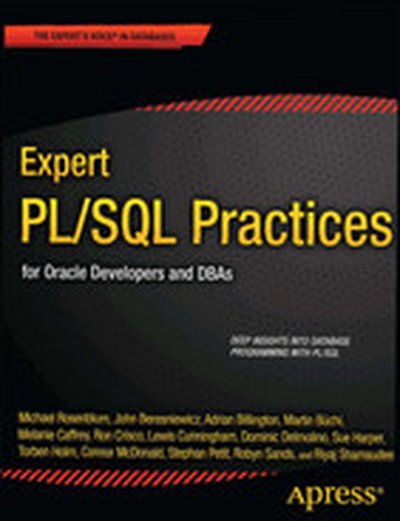
Expert PL/SQL Practices for Oracle Developers and DBAs

Expert PL/SQL Practices is a book of collected wisdom on PL/SQL programming from some of the best and the brightest in the field. Each chapter is a deep-dive into a specific problem, technology, or feature set that you'll face as a PL/SQL programmer. Each author has chosen their topic out of the strong belief that what they share can make a positive difference in the quality and scalability of code that you write. The path to mastery begins with syntax and the mechanics of writing statements to make things happen. If you've reached that point with PL/SQL, then let the authors of Expert PL/SQL Practices show you how to combine syntax and mechanics with features and techniques to really make the language sing. You'll learn to do more with less effort, to write code that scales and performs well, and to eliminate and avoid defects. These authors are passionate about PL/SQL and the power it places at your disposal. They want you to succeed, to know all that PL/SQL can offer. Let Expert PL/SQL Practices open your eyes to the full power of Oracle's world-class language for the database engine. Goes beyond the manual to cover good techniques and best practices Delivers knowledge usually gained only by hard experience Covers the functionality that distinguishes PL/SQL as a powerful and scalable programming language for deploying logic inside the database engine

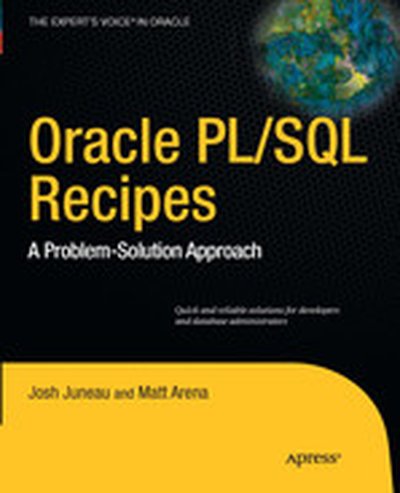
Oracle and PL/SQL Recipes: A Problem-Solution Approach

Oracle PL/SQL Recipes is your go to book for PL/SQL programming solutions. It takes a task-oriented approach to PL/SQL programming that lets you quickly look up a specific task and see the pattern for a solution. Then it's as simple as modifying the pattern for your specific application and implementing it. And you're done and home for dinner. Oracle PL/SQL Recipes is another in Apress' ongoing series of recipe books aimed at Oracle practitioners. The recipe format is ideal for the busy professional who just needs to get the job done. Covers the most common PL/SQL programming problems Presents solutions in ready-to-use format Stays short and to-the-point What you'll learn Move business logic into the database Implement robust exception-handling Optimize and debug, taking advantage of Oracle SQL Developer Integrate PL/SQL with web-based applications Interface with Java code and dynamic languages in the database, and running externally Run the UTPLSQL unit-testing framework Who this book is for Oracle PL/SQL Recipes is database administrators and developers wanting to take advantage of Oracle Database's built-in support for procedural logic. Database administrators can use PL/SQL to automate administrative tasks, audit access to sensitive data, and more. Developers will be able to optimize processing, push business logic into the database layer, and interface with Java and web applications.

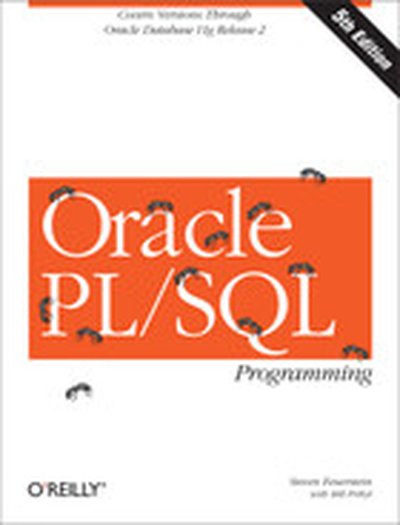
Oracle PL/SQL Programming, 5th Edition

This book is the definitive reference on PL/SQL, considered throughout the database community to be the best Oracle programming book available. Like its predecessors, this fifth edition of Oracle PL/SQL Programming covers language fundamentals, advanced coding techniques, and best practices for using Oracle's powerful procedural language. Thoroughly updated for Oracle Database 11g Release 2, this edition reveals new PL/SQL features and provides extensive code samples, ranging from simple examples to complex and complete applications, in the book and on the companion website. This indispensable reference for both novices and experienced Oracle programmers will help you: Get PL/SQL programs up and running quickly, with clear instructions for executing, tracing, testing, debugging, and managing PL/SQL code Optimize PL/SQL performance with the aid of a brand-new chapter in the fifth edition Explore datatypes, conditional and sequential control statements, loops, exception handling, security features, globalization and localization issues, and the PL/SQL architecture Understand and use new Oracle Database 11g features, including the edition-based redefinition capability, the function result cache, the new CONTINUE statement, fine-grained dependency tracking, sequences in PL/SQL expressions, supertype invocation from subtypes, and enhancements to native compilation, triggers, and dynamic SQL Use new Oracle Database 11g tools and techniques such as PL/Scope, the PL/SQL hierarchical profiler, and the SecureFiles technology for large objects Build modular PL/SQL applications using procedures, functions, triggers, and packages

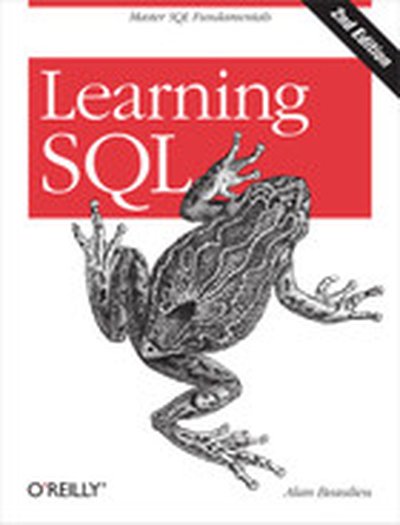
Learning SQL, 2nd Edition

Updated for the latest database management systems -- including MySQL 6.0, Oracle 11g, and Microsoft's SQL Server 2008 -- this introductory guide will get you up and running with SQL quickly. Whether you need to write database applications, perform administrative tasks, or generate reports, Learning SQL, Second Edition, will help you easily master all the SQL fundamentals. Each chapter presents a self-contained lesson on a key SQL concept or technique, with numerous illustrations and annotated examples. Exercises at the end of each chapter let you practice the skills you learn. With this book, you will: Move quickly through SQL basics and learn several advanced features Use SQL data statements to generate, manipulate, and retrieve data Create database objects, such as tables, indexes, and constraints, using SQL schema statements Learn how data sets interact with queries, and understand the importance of subqueries Convert and manipulate data with SQL's built-in functions, and use conditional logic in data statements Knowledge of SQL is a must for interacting with data. With Learning SQL, you'll quickly learn how to put the power and flexibility of this language to work.

Beginning Oracle® Application Express

Oracle Application Express is an easy-to-use application development environment built on the Oracle technology stack. There are two aspects of that previous sentence that you may find jarring—that Oracle, a company widely known for its database technology, has an application development environment, and that Oracle, a company thought of as delivering high-end, enterprise-ready technology, has anything that is easy to use. But, as this book will show, the introductory statement is completely accurate. Oracle Application Express, commonly known as Oracle APEX or simply APEX, does benefit from the long-established enterprise-class robustness that is the hallmark of Oracle technology. The applications you build will be able to support hundreds of users and many terabytes of data, scalability far beyond even the imagination of most other development environments. And Oracle APEX, with its declarative, wizard-driven methodology, is truly easy to use. In the course of the few hundred pages of this book, you will not only learn about how to use APEX, you will create a usable order entry system. The fast learning curve presented in these pages is a consequence of many years of development and refinement of the APEX product, which began life almost a decade ago within Oracle. By the end of this volume, you will know enough to create your own applications, as well as having the knowledge and understanding of Oracle APEX and the world of Oracle technology to explore further refinements on your own. Best of all, you can use APEX with absolutely no cost—either in a hosted environment, as suggested in Chapter 1, or with a free version of the Oracle database. Welcome to the world of Oracle Application Express! This book is aimed at a particular group of users—those who are not familiar with Oracle Application Express. The book assumes that you have a basic knowledge of application development, the type you could get from playing around with a personal database such as Access. In fact, this book was written with an Access developer in mind—an Access developer looking to step up to a more scalable and reliable environment, with reduced maintenance overhead and greater integration between application systems. This book covers the use of Oracle Application Express. Although the book is based on the 3.5 version, you can use the book with older versions as well. However, since the book will use a hosted version of Oracle Application Express, and since both the Oracle database that support the product and the product itself are available as free downloads from http://otn.oracle.com, you should be able to use the latest version easily. This book is structured to give the reader a gradual introduction to the essentials of development with Oracle Application Express. The book contains the following: Welcome to Oracle!—This contains an overview of Oracle Application Express, as well as instructions on how to set up a hosted development environment for performing the exercises used in the book. Jumpstart Oracle Application Express—You will leap into creating applications with Oracle Application Express and finish a simple application by the end of this. Extending Your Oracle APEX Application—This will introduce you to the options in Oracle APEX that let you ensure that your users will enter correct data while using your application. Validation, Calculation, Navigation, and Lists—This continues the exploration of the aspects of APEX that help you to ensure that data used in your application is correct. Additionally, this covers basic navigation options for your application. Reporting and Charting—This covers the powerful and flexible reports you can create with Oracle APEX, and introduces you to the graphical capabilities of APEX reporting. Components Working Together—This extends your work with charts, showing how you can create charts that link to a more detailed view of the data they represent. You will also learn how to create a calendar page with links to the data shown as part of the calendar, and how to add images taken from the underlying database to an Oracle APEX report. Customizing User Interfaces—This explores advanced options for customizing user interfaces, on individual pages as well as across your entire APEX application. PL/SQL—This introduces you to PL/SQL, the underlying language used to implement your APEX application, and demonstrates how to use the power of PL/SQL to extend the logic in your application. Security—This covers how security is implemented for your APEX environment. Deployment and Administration—This covers the options you have for deploying an APEX application to another environment and walks you through one of those options. Additionally, this introduces you to the administrative functionality you can use to monitor and manage your APEX applications. Packaged Applications—This gives an overview of packaged applications available for Oracle Application Express, with a more detailed look at a select few. Migration—This describes how to migrate applications from Microsoft Access to Oracle Application Express.

Oracle Database 11g PL/SQL Programming

Design Feature-Rich PL/SQL Applications Deliver dynamic, client/server PL/SQL applications with expert guidance from an Oracle programming professional. With full coverage of the latest features and tools, Oracle Database 11g PL/SQL Programming lays out each topic alongside detailed explanations, cut-and-paste syntax examples, and real-world case studies. Access and modify database information, construct powerful PL/SQL statements, execute effective queries, and deploy bulletproof security. You'll also learn how to implement C, C++, and Java procedures, Web-enable your database, cut development time, and optimize performance. Create, debug, and manage Oracle-driven PL/SQL programs Use PL/SQL structures, delimiters, operators, variables, and statements Identify and eliminate errors using PLSQL_WARNINGS and exception handlers Work with functions, procedures, packages, collections, and triggers Define and deploy varray, nested table, and associative array data types Handle external routines, object types, large objects, and secure files Communicate between parallel sessions using DBMS_ALERT and DBMS_PIPE Call external procedures through Oracle Net Services and PL/SQL wrappers Integrate internal and server-side Java class libraries using Oracle JVM Develop robust Web applications using PL/SQL Gateway and Web Toolkit

Oracle PL/SQL Language Pocket Reference, 4th Edition

The fourth edition of this popular pocket guide provides quick-reference information that will help you use Oracle's PL/SQL language, including the newest Oracle Database 11g features. It's a companion to Steven Feuerstein and Bill Pribyl's bestselling Oracle PL/SQL Programming. This concise guide boils down the most vital PL/SQL information into an accessible summary of: The new edition describes such Oracle Database 11g elements as PL/SQL's function result cache, compound triggers, the CONTINUE statement, the SIMPLE_INTEGER datatype, and improvements to native compilation, regular expressions, and compiler optimization (including intra-unit inlining). In addition, this book now includes substantial new sections on Oracle's built-in functions and packages. Fundamental language elements (e.g., block structure, datatypes, declarations) Statements for program control, cursor management, and exception handling Records, procedures, functions, triggers, and packages Calling PL/SQL functions in SQL Compilation options, object-oriented features, collections, and Java integration When you need answers quickly, the Oracle PL/SQL Language Pocket Reference will save you hours of frustration.