talk-data.com talk-data.com

Event

O'Reilly SQL Books

2002-09-10 – 2026-08-25 Oreilly Visit website ↗

Activities tracked

103

Collection of O'Reilly books on SQL.

Sessions & talks

Showing 1–25 of 103 · Newest first

Search within this event →
Advanced SQL

SQL is no longer just a querying language for relational databases—it's a foundational tool for building scalable, modern data solutions across real-time analytics, machine learning workflows, and even generative AI applications. Advanced SQL shows data professionals how to move beyond conventional SELECT statements and tap into the full power of SQL as a programming interface for today's most advanced data platforms. Written by seasoned data experts Rui Pedro Machado, Hélder Russa, and Pedro Esmeriz, this practical guide explores the role of SQL in streaming architectures (like Apache Kafka and Flink), data lake ecosystems, cloud data warehouses, and ML pipelines. Geared toward data engineers, analysts, scientists, and analytics engineers, the book combines hands-on guidance with architectural best practices to help you extend your SQL skills into emerging workloads and real-world production systems. Use SQL to design and deploy modern, end-to-end data architectures Integrate SQL with data lakes, stream processing, and cloud platforms Apply SQL in feature engineering and ML model deployment Master pipe syntax and other advanced features for scalable, efficient queries Leverage SQL to build GenAI-ready data applications and pipelines

Head First SQL, 2nd Edition

What will you learn from this book? Do you have an abundance of data but don't know how to make sense of it? Do you want to gain useful insights from your data, but you're not sure where to begin? Mining data is a vital, well-paying skill, and SQL provides the most fundamental way to query and manage data. But learning SQL can be intimidating. This thoroughly revised book teaches you SQL fundamentals in a painless and enjoyable manner. With the Head First series' hands-on, conversational style, you'll quickly grasp SQL concepts, then move to intermediate topics, including stored procedures and cloud databases. You'll gain the knowledge, skills, and confidence necessary to get the most out of your data with SQL. Why does this book look so different? If you've read a Head First book, you know what to expect: a visually rich format designed for the way your brain works. If you haven't, you're in for a treat. With this book, you'll learn about SQL through a multisensory experience that engages your mind—rather than a text-heavy approach that puts you to sleep.

SQL for Data Analytics - Fourth Edition

Dive into the world of data analytics with 'SQL for Data Analytics'. This book takes you beyond simple query writing to teach you how to use SQL to analyze, interpret, and derive actionable insights from real-world data. By the end, you'll build technical skills that allow you to solve complex problems and demonstrate results using data. What this Book will help me do Understand how to create, manage, and utilize structured databases for analytics. Use advanced SQL techniques such as window functions and subqueries effectively. Analyze various types of data like geospatial, JSON, and time-series data in SQL. Apply statistical principles within the context of SQL for enhanced insights. Automate data workflows and presentations using SQL and Python integration. Author(s) The authors Jun Shan, Haibin Li, Matt Goldwasser, Upom Malik, and Benjamin Johnston bring together a wealth of knowledge in data analytics, database management, and applied statistics. Together, they aim to empower readers through clear explanations, practical examples, and a focus on real-world applicability. Who is it for? This book is aimed at data professionals and learners such as aspiring data analysts, backend developers, and anyone involved in data-driven decision-making processes. The ideal reader has a basic understanding of SQL and mathematics and is eager to extend their skills to tackle real-world data challenges effectively.

SQL Server 2025 Unveiled: The AI-Ready Enterprise Database with Microsoft Fabric Integration

Unveil the data platform of the future with SQL Server 2025—guided by one of its key architects . With built-in AI for application development and advanced analytics powered by Microsoft Fabric, SQL Server 2025 empowers you to innovate—securely and confidently. This book shows you how. Author Bob Ward, Principal Architect for the Microsoft Azure Data team, shares exclusive insights drawn from over three decades at Microsoft. Having worked on every version of SQL Server since OS/2 1.1, Ward brings unmatched expertise and practical guidance to help you navigate this transformative release. Ward covers everything from setup and upgrades to advanced features in performance, high availability, and security. He also highlights what makes this the most developer-friendly release in a decade: support for JSON, RegEx, REST APIs, and event streaming. Most critically, Ward explores SQL Server 2025’s advanced, scalable AI integrations, showing you how to build AI-powered applications deeply integrated with the SQL engine—and elevate your analytics to the next level. But innovation doesn’t come at the cost of safety: this release is built on a foundation of enterprise-grade security, helping you adopt AI safely and responsibly. You control which models to use, how they interact with your data, and where they run—from ground to cloud, or integrated with Microsoft Fabric. With built-in features like Row-Level Security (RLS), Transparent Data Encryption (TDE), Dynamic Data Masking, and SQL Server Auditing, your data remains protected at every layer. The AI age is here. Make sure your SQL Server databases are ready—and built for secure, scalable innovation . What You Will Learn [if !supportLists] · [endif]Grasp the fundamentals of AI to leverage AI with your data, using the industry-proven security and scale of SQL Server [if !supportLists] · [endif]Utilize AI models of your choice, services, and frameworks to build new AI applications [if !supportLists] · [endif]Explore new developer features such as JSON, Regular Expressions, REST API, and Change Event Streaming [if !supportLists] · [endif]Discover SQL Server 2025's powerful new engine capabilities to increase application concurrency [if !supportLists] · [endif]Examine new high availability features to enhance uptime and diagnose complex HADR configurations [if !supportLists] · Use new query processing capabilities to extend the performance of your application [if !supportLists] · [endif]Connect SQL Server to Azure with Arc for advanced management and security capabilities [if !supportLists] · [endif]Secure and govern your data using Microsoft Entra [if !supportLists] · [endif]Achieve near-real-time analytics with the unified data platform Microsoft Fabric [if !supportLists] · [endif]Integrate AI capabilities with SQL Server for enterprise AI [if !supportLists] · [endif]Leverage new tools such as SQL Server Management Studio and Copilot experiences to assist your SQL Server journey Who This Book Is For The SQL Server community, including DBAs, architects, and developers eager to stay ahead with the latest advancements in SQL Server 2025, and those interested in the intersection of AI and data, particularly how artificial intelligence (AI) can be seamlessly integrated with SQL Server to unlock deeper insights and smarter solutions

Administering Microsoft Azure SQL Solutions: Hands-on Preparation and Practice for Exam DP-300

Ace the DP-300 Exam with this essential study companion, chock-full of insights and tips you cannot find online. This book will help you build a comprehensive understanding of Azure SQL systems and their role in supporting business solutions, and it will equip you with the mental models and technical knowledge needed to confidently answer exam questions. Structured to align with Microsoft’s published study guide, the book spans five major sections that correspond to the skills measured by the exam, covering topics vital to modern cloud operations and including HA/DR, security, compliance, performance, and scalability. [if !supportAnnotations]You’ll also learn about the ways cloud operations have changed the focus of operating database systems from task execution to platform configuration—and how to configure your data platforms to meet this new reality. [if !supportAnnotations] By the end of this book, you’ll be prepared to navigate exam scenarios with finesse, pass the exam with confidence, and advance in your career with a solid foundation of knowledge. What You Will Learn Maximize your ability to benefit from the online learning tools for Exam DP-300 Gain depth and context for Azure SQL technical solutions relevant to Exam DP-300 Boost your confidence in Azure SQL Database skills Extend your on-premises SQL Server skill set into the Azure SQL cloud Enhance your overall understanding of Azure SQL administration and operations Develop your Azure SQL skill set to increase your value as an employee or contractor Adopt a new mindset for cloud-based solutions versus on-premises solutions Who This Book Is For Anyone planning to take the DP-300: Administering Microsoft Azure SQL Solutions exam, and those who wish to understand Azure SQL and how to successfully migrate and manage SQL solutions using all Azure SQL Technologies

Exam Ref DP-300 Administering Microsoft Azure SQL Solutions

Prepare for Microsoft Exam DP-300 and demonstrate your real-world foundational knowledge of Azure database administration using a variety of methods and tools to perform and automate day-to-day operations, including use of Transact-SQL (T-SQL) and other tools for administrative management purposes. Designed for database administrators, solution architects, data scientists, and other data professionals, this Exam Ref focuses on the critical-thinking and decision-making acumen needed for success at the Microsoft Certified: Azure Database Administrator Associate level. Focus on the expertise measured by these objectives: Plan and implement data platform resources Implement a secure environment Monitor, configure, and optimize database resources Configure and manage automation of tasks Plan and configure a high availability and disaster recovery (HA/DR) environment This Microsoft Exam Ref: Organizes its coverage by the Skills Measured list published for the exam Features strategic, what-if scenarios to challenge you Assumes you have subject matter expertise in building database solutions that are designed to support multiple workloads built with SQL Server on-premises and Azure SQL About the Exam Exam PD-300 focuses on core knowledge for implementing and managing the operational aspects of cloud-native and hybrid data platform solutions built on SQL Server and Azure SQL services, using a variety of methods and tools to perform and automate day-to-day operations, including applying knowledge of using Transact-SQL (T-SQL) and other tools for administrative management purposes. About Microsoft Certification Passing this exam fulfills your requirements for the Microsoft Certified: Azure Database Administrator Associate certification, demonstrating your ability to administer a SQL Server database infrastructure for cloud, on-premises, and hybrid relational databases using the Microsoft PaaS relational database offerings. See full details at: microsoft.com/learn .

Learn SQL in a Month of Lunches

Use SQL to get the data you need in no time at all! Learn to read and write basic queries, troubleshoot common problems, and control your own business data in just 24 short lessons–no programming experience required! SQL has been designed to be as close to English as possible—anyone can learn it! Learn SQL in a Month of Lunches helps you add this lucrative and highly sought-after skill to your resume in just 24 fun and friendly lessons. The book emphasizes practical uses for the language in the real-world, so you’ll just learn the most useful skills for business data analysis. Inside Learn SQL in a Month of Lunches you’ll discover how to: Set up your first database with MySQL Write your own SQL queries See only the data you need from large datasets Connect different sets of data Analyze data with functions and aggregations Master basic data manipulation techniques Save queries in stored procedures and views Create tables to store data efficiently Read and improve SQL written by others If you use Excel, Tableau, or PowerBI to crunch business data, you’ve probably seen a lot of SQL already. And guess what? It’s easy to master the most useful parts of SQL! In just a few quick lessons, Learn SQL in a Month of Lunches will get you writing your own queries, modifying existing SQL statements, and working with data like a pro. 25-year SQL veteran Jeff Iannucci makes SQL a snap through hands-on lab exercises, relevant code examples, and easy-to-understand language. About the Technology SQL, Structured Query Language, is the standard way to query, create, and manage relational databases like SQL Server, PostgreSQL, and Oracle. It’s also a superpower for data analysts who need to go beyond spreadsheets and BI dashboarding tools. SQL is easy to read and understand, and with this book (and a little practice) you’ll be pulling data, tweaking tables, and cranking out amazing reports and presentations in no time at all! About the Book Learn SQL in a Month of Lunches introduces SQL to data analysts and other aspiring data pros with no prior experience using relational databases. In it, you’ll complete 24 short lessons, each of which teaches an essential SQL skill for retrieving, filtering, and analyzing data. You’ll practice each new technique with a friendly hands-on lab designed to take about 15 minutes, as you learn to write queries that deliver the exact data you need. Along the way, you’ll build a valuable intuition for how databases operate in real business scenarios. What's Inside Get the data you need from any relational database Filter, sort, and group data Combine data from multiple tables Create, update, and delete data About the Reader For students, aspiring data analysts, software developers, and anyone else who wants to work with relational databases. About the Author Jeff Iannucci is a Senior Consultant with Straight Path Solutions. For over 20 years, he has worked extensively with SQL in sectors such as healthcare, finance, retail sales, and government. Quotes An essential guide. Jeff has carefully developed each chapter to ensure clarity and comprehensiveness, making complex concepts accessible and practical. - Buck Woody, Microsoft The fastest and the most effective way to learn SQL, regardless of your background or technical knowledge level. - Kevin Kline, author of SQL in a Nutshell Explains concepts straightforwardly to help the reader grow their skills over a month of sessions. - Steve Jones, SQL Server Central Great selection of bite-sized, digestible courses to complement your lunch arrangement. It leaves you smarter every day. - Simon Tschöke, Databricks

SQL Essentials For Dummies

A right-to-the-point guide on all the key topics of SQL programming SQL Essentials For Dummies is your quick reference to all the core concepts of SQL—a valuable common standard language used in relational databases. This useful guide is straightforward—with no excess review, wordy explanations, or fluff—so you get what you need, fast. Great for a brush-up on the basics or as an everyday desk reference, this book is one you can rely on. Strengthen your understanding of the basics of SQL Review what you've already learned or pick up key skills Use SQL to create, manipulate, and control relational databases Jog your memory on the essentials as you work and get clear answers to your questions Perfect for supplementing classroom learning, reviewing for a certification, and staying knowledgeable on the job, SQL Essentials For Dummies is the convenient, direct, and digestible reference you've been looking for.

100 SQL Server Mistakes and How to Avoid Them

All the mistakes you might make with SQL Server—and how to avoid them! 100 SQL Server Mistakes and How to Avoid Them prepares you for the pitfalls database professionals often encounter—from administration to development, availability, and security. You'll learn to sidestep common errors that slow down your T-SQL code and ensure your SQL Server is installed and configured to handle anything your organization throws at it. Inside 100 SQL Server Mistakes and How to Avoid Them you'll learn to avoid: Development errors when writing T-SQL Installation and administration mistakes Optimization missteps Common pitfalls relating to high availability and disaster recovery (HA/DR) Security oversights that can endanger your data 100 SQL Server Mistakes and How to Avoid Them doesn't focus on the "happy path"—instead, it covers all the errors and problems you might face as a SQL Server developer or administrator. Each chapter is filled with real-world issues drawn from author Peter A. Carter’s two-decade-long career in SQL Server. Peter's seasoned advice helps dispel myths, debunk misconceptions, and set you on the right road. About the Technology Perfecting a SQL Server system can be a complex balancing act. Why is T-SQL running so slowly? Are the right data available? Are we protected against data theft? What about that new server instance I need to administer? Even the most skilled SQL Server experts make mistakes that cost time and performance. This book can help you get it right the first time. About the Book 100 SQL Server Mistakes and How to Avoid Them focuses exclusively on the errors that you might—and probably will—make as a SQL Server admin or developer. Real-world examples, code samples, and helpful diagrams make it easy to understand each issue and its solution. You’ll learn how to write performant code, design efficient database schemas, implement error handling, work with complex data types, and much more, all in a friendly, common-sense problem/solution format. What's Inside T-SQL development Installation, administration, and optimization High availability and security About the Reader Readers need to understand basic SQL Server concepts and SQL queries. Perfect for junior database admins, full-stack developers, and “accidental” DBAs. About the Author Peter A. Carter is a SQL Server expert with experience developing, administering, and architecting data-tier applications and SQL Server platforms. Quotes A masterful job! Covers the nuances of SQL Server that a new admin, or even an experienced one, needs to understand. - Allen White, SQL Server MVP 2007-2022 Quick, actionable advice that greatly improved my SQL Server skills. - Ruben Vandeginste, PeopleWare A practical path through pitfalls in administration and development with specific solutions, examples, and code snippets. - Josephine Bush, sqlkitty.com Worth reading for the testing and debugging section alone! - Mike McQuillan, McQTech Ltd.

Python and SQL Bible

The 'Python and SQL Bible' is a comprehensive guide to mastering both Python programming and SQL querying. Starting from the very basics, the book takes readers through advanced techniques, including data manipulation, database management, and integration of Python with SQL, all while offering hands-on examples and real-world exercises. What this Book will help me do Gain a strong foundation in Python programming, including control flow, functions, and object-oriented programming. Learn how to write advanced SQL queries for data extraction, manipulation, and reporting. Understand how to integrate Python with SQL to form a seamless data manipulation workflow. Develop data analysis skills using Python and tools such as SQLAlchemy for advanced insights. Master database administration techniques to efficiently manage and query datasets. Author(s) Cuantum Technologies LLC is a renowned tech education provider with a focus on equipping learners with in-demand programming and data management skills. Their training methods blend theory with practice, ensuring students gain hands-on experience applicable in professional environments. Their team of experts crafts content to cater to both beginners and professionals seeking to advance their skill set. Who is it for? This book is ideal for beginners who are new to programming and experienced professionals who wish to master Python and SQL for data manipulation and analysis. It is perfect for aspiring data scientists, software developers, and IT professionals looking to unlock new career opportunities. By detailing concepts and providing practical exercises, it accommodates various skill levels and prepares readers for industry demands.

SQL All-in-One For Dummies, 4th Edition

The most thorough SQL reference, now updated for SQL:2023 SQL All-in-One For Dummies has everything you need to get started with the SQL programming language, and then to level up your skill with advanced applications. This relational database coding language is one of the most used languages in professional software development. And, as it becomes ever more important to take control of data, there’s no end in sight to the need for SQL know-how. You can take your career to the next level with this guide to creating databases, accessing and editing data, protecting data from corruption, and integrating SQL with other languages in a programming environment. Become a SQL guru and turn the page on the next chapter of your coding career. Get 7 mini-books in one, covering basic SQL, database development, and advanced SQL concepts Read clear explanations of SQL code and learn to write complex queries Discover how to apply SQL in real-world situations to gain control over large datasets Enjoy a thorough reference to common tasks and issues in SQL development This Dummies All-in-One guide is for all SQL users—from beginners to more experienced programmers. Find the info and the examples you need to reach the next stage in your SQL journey.

Analytics Engineering with SQL and dbt

With the shift from data warehouses to data lakes, data now lands in repositories before it's been transformed, enabling engineers to model raw data into clean, well-defined datasets. dbt (data build tool) helps you take data further. This practical book shows data analysts, data engineers, BI developers, and data scientists how to create a true self-service transformation platform through the use of dynamic SQL. Authors Rui Machado from Monstarlab and Hélder Russa from Jumia show you how to quickly deliver new data products by focusing more on value delivery and less on architectural and engineering aspects. If you know your business well and have the technical skills to model raw data into clean, well-defined datasets, you'll learn how to design and deliver data models without any technical influence. With this book, you'll learn: What dbt is and how a dbt project is structured How dbt fits into the data engineering and analytics worlds How to collaborate on building data models The main tools and architectures for building useful, functional data models How to fit dbt into data warehousing and laking architecture How to build tests for data transformations

Learning Snowflake SQL and Scripting

To help you on the path to becoming a Snowflake pro, this concise yet comprehensive guide reviews fundamentals and best practices for Snowflake's SQL and Scripting languages. Developers and data professionals will learn how to generate, modify, and query data in the Snowflake relational database management system as well as how to apply analytic functions for reporting. Author Alan Beaulieu also shows you how to create scripts, stored functions, and stored procedures to return data sets using Snowflake Scripting. This book is ideal whether you're new to databases and need to run queries or reports against a Snowflake database, or transitioning from databases such as Oracle, SQL Server, or MySQL to cloud-based platforms. With this book, you will: Generate and modify Snowflake data using INSERT, UPDATE, DELETE Query data in Snowflake using SELECT, including joining multiple tables, using subqueries, and grouping Apply analytic functions for performing subtotals, grand totals, row comparisons, and other reporting functionality Build scripts combining SQL statements with looping, if-then-else, and exception handling Learn how to build stored procedures and functions Use stored procedures to return data sets

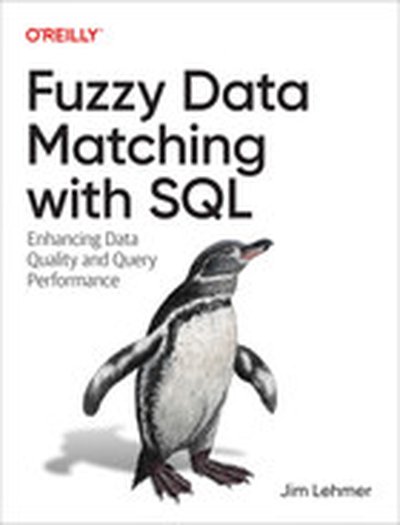
Fuzzy Data Matching with SQL

If you were handed two different but related sets of data, what tools would you use to find the matches? What if all you had was SQL SELECT access to a database? In this practical book, author Jim Lehmer provides best practices, techniques, and tricks to help you import, clean, match, score, and think about heterogeneous data using SQL. DBAs, programmers, business analysts, and data scientists will learn how to identify and remove duplicates, parse strings, extract data from XML and JSON, generate SQL using SQL, regularize data and prepare datasets, and apply data quality and ETL approaches for finding the similarities and differences between various expressions of the same data. Full of real-world techniques, the examples in the book contain working code. You'll learn how to: Identity and remove duplicates in two different datasets using SQL Regularize data and achieve data quality using SQL Extract data from XML and JSON Generate SQL using SQL to increase your productivity Prepare datasets for import, merging, and better analysis using SQL Report results using SQL Apply data quality and ETL approaches to finding similarities and differences between various expressions of the same data

Data Wrangling with SQL

Develop a comprehensive understanding of data wrangling with SQL to transform raw data into actionable insights. This hands-on guide, 'Data Wrangling with SQL,' leads you through fundamentals to advanced techniques for cleaning, analyzing, and engineering data. By mastering these techniques, you'll improve your data analysis capabilities and solve real-world data challenges efficiently. What this Book will help me do Understand and implement data wrangling steps using SQL, including handling missing data and optimizing queries. Master advanced SQL features like subqueries, aggregate functions, and common table expressions for effective data transformations. Apply data cleaning techniques to ensure data consistency and prepare it for deeper analysis and reporting. Optimize the structure and performance of SQL queries to work seamlessly with large datasets and improve decision-making processes. Gain practical skills with hands-on examples and exercises to consolidate your SQL abilities for real-world applications. Author(s) Raghav Kandarpa and Shivangi Saxena are experienced professionals in data analytics and database management. Their combined expertise in teaching SQL and working on real-world data analysis projects makes them ideal mentors for learning practical data wrangling concepts. They emphasize simplicity and clarity in their approach, offering a practical learning experience. Who is it for? This book is designed for data analysts, data scientists, and professionals dealing with business insights who aim to enhance their SQL skills for data wrangling and transformation. It suits those with basic SQL knowledge looking to refine their grasp of data manipulation techniques. Beginners to intermediate-level practitioners in data analysis will find practical guidance here for real-world data challenges. Readers aspiring to use SQL effectively for database analysis and decision-making will benefit greatly.

Oracle PL/SQL by Example, 6th Edition

Using PL/SQL for Oracle Database 21c, you can build solutions that deliver unprecedented performance and efficiency in any environment, including the cloud. Oracle PL/SQL by Example, Sixth Edition, teaches all the PL/SQL skills you'll need, through real-world labs and extensive examples. Now fully updated for the newest version of PL/SQL 21c, it covers everything from basic syntax and program control through the latest optimization and tuning enhancements. Step by step, you'll walk through every key task, mastering today's most valuable Oracle 21c PL/SQL programming techniques on your own. Start by downloading the supporting schema and exercises from informit.com/title/9780138062835. Once you've done an exercise, the author doesn't just present the answer: She offers an in-depth discussion introducing deeper insights and modern best practices. This book's approach fully reflects the author's award-winning experience teaching PL/SQL to professionals at Columbia University in New York City. New database developers and DBAs can use it to get productive fast; experienced PL/SQL programmers will find it to be a superb Oracle Database 21c solutions reference. New in This Edition Updated code examples throughout New iteration controls for the FOR LOOP statement, such as stepped range, multiple iterations, collection, and cursor iterations Enhancements for PL/SQL qualified expressions Performance enhancements for PL/SQL functions, such as SQL macro, and better control of the result cache Other Topics Covered Mastering basic PL/SQL concepts and language fundamentals, and understanding SQL's role in PL/SQL Using conditional and iterative program controls Efficiently handling errors and exceptions Working with cursors and triggers, including compound triggers Using stored procedures, functions, and packages to write modular code that other programs can run Working with collections, object-relational features, native dynamic SQL, bulk SQL, and other advanced features ...

Getting Started with SQL and Databases: Managing and Manipulating Data with SQL

Learn the basics of writing SQL scripts. Using Standard SQL as the starting point, this book teaches writing SQL in various popular dialects, including PostgreSQL, MySQL/MariaDB, Microsoft SQL Server, Oracle, and SQLite. The book starts with a general introduction to writing SQL and covers the basic concepts. Author Mark Simon then covers database principles, and how database tables are designed. He teaches you how to filter data using the WHERE clause, and you will work with NULL, numbers, dates, and strings. You will also understand sorting results using the ORDER BY clause, sorting by calculated columns, and limiting the number of results. By the end of the book, you will know how to insert and update data, and summarize data with aggregate functions and groups. Three appendices cover differences between SQL dialects, working with tables, and a crash course in PDO. What You Will Learn Filter, sort, andcalculate data Summarize data with aggregate functions Modify data with insert, update, and delete statements Study design principles in developing a database Who This Book Is For Developers and analysts working with SQL, as well as web developers who want a stronger understanding of working with databases

Job Ready SQL

Learn the most important SQL skills and apply them in your job—quickly and efficiently! SQL (Structured Query Language) is the modern language that almost every relational database system supports for adding data, retrieving data, and modifying data in a database. Although basic visual tools are available to help end-users input common commands, data scientists, business intelligence analysts, Cloud engineers, Machine Learning programmers, and other professionals routinely need to query a database using SQL. Job Ready SQL provides you with the foundational skills necessary to work with data of any kind. Offering a straightforward ‘learn-by-doing’ approach, this concise and highly practical guide teaches you all the basics of SQL so you can apply your knowledge in real-world environments immediately. Throughout the book, each lesson includes clear explanations of key concepts and hands-on exercises that mirror real-world SQL tasks. Teaches the basics of SQL database creation and management using easy-to-understand language Helps readers develop an understanding of fundamental concepts and more advanced applications such as data engineering and data science Discusses the key types of SQL commands, including Data Definition Language (DDL) commands and Data Manipulation Language (DML) commands Includes useful reference information on querying SQL-based databases Job Ready SQL is a must-have resource for students and working professionals looking to quickly get up to speed with SQL and take their relational database skills to the next level.

SQL Server 2022 Administration Inside Out

Conquer SQL Server 2022 and Azure SQL administration from the inside out! Dive into SQL Server 2022 administration and grow your Microsoft SQL Server data platform skillset. This well-organized reference packs in timesaving solutions, tips, and workarounds, all you need to plan, implement, deploy, provision, manage, and secure SQL Server 2022 in any environment: on-premises, cloud, or hybrid, including detailed, dedicated chapters on Azure SQL Database and Azure SQL Managed Instance. Nine experts thoroughly tour DBA capabilities available in the SQL Server 2022 Database Engine, SQL Server Data Tools, SQL Server Management Studio, PowerShell, and much more. Youll find extensive new coverage of Azure SQL Database and Azure SQL Managed Instance, both as a cloud platform of SQL Server and in their new integrations with SQL Server 2022, information available in no other book. Discover how experts tackle todays essential tasks and challenge yourself to new levels of mastery. Identify low-hanging fruit and practical, easy wins for improving SQL Server administration Get started with modern SQL Server tools, including SQL Server Management Studio, and Azure Data Studio Upgrade your SQL Server administration skillset to new features of SQL Server 2022, Azure SQL Database, Azure SQL Managed Instance, and SQL Server on Linux Design and implement modern on-premises database infrastructure, including Kubernetes Leverage data virtualization of third-party or non-relational data sources Monitor SQL instances for corruption, index activity, fragmentation, and extended events Automate maintenance plans, database mail, jobs, alerts, proxies, and event forwarding Protect data through encryption, privacy, and auditing Provision, manage, scale and secure, and bidirectionally synchronize Microsofts powerful Azure SQL Managed Instance Understand and enable new Intelligent Query Processing features to increase query concurrency Prepare a best-practice runbook for disaster recovery Use SQL Server 2022 features to span infrastructure across hybrid environments ...

T-SQL Fundamentals, 4th Edition

Starting with the background to T-SQL querying and programming, including: logical query processing, book-querying constructs (single table queries, joins, subqueries, table expressions, set operators, data analysis), data modifications, temporal tables, transactions and concurrency, SQL Graph (completely new to this edition), as well as programmatic T-SQL constructs. The book includes extensive exercises and solutions with explanations, allowing the reader to practice what they've learned. This book is widely considered as the authoritative guide on T-SQL fundamentals. It focuses on understanding why things work the way they do, and not just how to make them work. When people understand the "why" the code they write tends to be more correct and more meaningful. This edition of the book includes coverage of the newest T-SQL additions up to and including SQL Server 2022. ...

SQL Query Design Patterns and Best Practices

This book, "SQL Query Design Patterns and Best Practices," provides a thorough and practical exploration of SQL query techniques that focus on efficiency, clarity, and maintainability. By learning and applying the patterns and methodologies outlined in this guide, readers will enhance their ability to solve complex data problems, optimize query performance, and work effectively with modern data platforms. What this Book will help me do Learn how to write efficient SQL queries by optimizing result sets, enabling better handling of large datasets. Master advanced SQL techniques, including the use of common table expressions and window functions for solving real-world challenges. Gain insights into query optimization with tools like query execution plans and indexes to boost database performance. Understand the interaction of modern data types such as JSON and their integration in SQL workflows. Organize and document SQL queries effectively using tools such as Jupyter notebooks for collaborative and reproducible work. Author(s) The authors of this book are seasoned SQL professionals with rich experience in database management and optimization. Steven Hughes, Ram Babu Singh, Shabbir Mala, and others bring their deep knowledge in SQL query practices and real-world problem-solving to this guide. With a commitment to helping readers harness the power of SQL, the authors have crafted content that is both technically robust and approachable for learners. Who is it for? This book is designed for SQL practitioners ranging from beginners to intermediate levels, including SQL developers, data analysts, and database enthusiasts. If you aim to refine your SQL skills, optimize query designs, and tackle complex data challenges, this book will serve as your reliable companion. Novice readers will quickly build a strong foundation, while experienced professionals will find valuable techniques to enhance their workflow.

Pro SQL Server 2022 Wait Statistics: A Practical Guide to Analyzing Performance in SQL Server and Azure SQL Database

Use this practical guide to analyze and troubleshoot SQL Server performance using wait statistics. You'll learn to identify precisely why your queries are running slowly. And you'll know how to measure the amount of time consumed by each bottleneck so you can focus attention on making the largest improvements first. This edition is updated to cover analysis of wait statistics current with SQL Server 2022. Whether you are new to wait statistics, or already familiar with them, this book provides a deeper understanding on how wait statistics are generated and what they mean for your SQL Server instance’s performance. The book goes beyond the most common wait types into the more complex and performance-threatening wait types. You’ll learn about per-query wait statistics and session-based wait statistics, and the types of problems they can help you solve. The different wait types are categorized by their area of impact, including CPU, IO, Latching, Locking, and many more. Clear examples are included to help you gain practical knowledge of why and how specific wait times increase or decrease, how they impact your SQL Server’s performance, and what you can do to improve performance. After reading this book, you won’t want to be without the valuable information that wait statistics provide regarding where you should be spending your limited tuning time to maximize performance and value to your business. What You'll Learn Understand how the SQL Server engine processes requests Identify resource bottlenecks in a running SQL Server instance Locate wait statistics information inside DMVs and Query Store Analyze the root cause of sub-optimal performance Diagnose I/O contention and locking contention Benchmark SQL Server performance Improve database performance by lowering overall wait time Who This Book Is For Database administrators who want to identify and resolve performance bottlenecks, those who want to learn more about how the SQL Server engine accesses and uses resources inside SQL Server, and administrators concerned with achieving—and knowing they have achieved—optimal performance

SQL Server 2022 Query Performance Tuning: Troubleshoot and Optimize Query Performance

Troubleshoot slow-performing queries and make them run faster. Database administrators and SQL developers are constantly under pressure to provide more speed. This new edition has been redesigned and rewritten from scratch based on the last 15 years of learning, knowledge, and experience accumulated by the author. The book Includes expanded information on using extended events, automatic execution plan correction, and other advanced features now available in SQL Server. These modern features are covered while still providing the necessary fundamentals to better understand how statistics and indexes affect query performance. The book gives you knowledge and tools to help you identify poorly performing queries and understand the possible causes of that poor performance. The book also provides mechanisms for resolving the issues identified, whether on-premises, in containers, or on cloud platform providers. You’ll learn about key fundamentals, such as statistics, data distribution, cardinality, and parameter sniffing. You’ll learn to analyze and design your indexes and your queries using best practices that ward off performance problems before they occur. You’ll also learn to use important modern features, such as Query Store to manage and control execution plans, the automated performance tuning feature set, and memory-optimized OLTP tables and procedures. You will be able to troubleshoot in a systematic way. Query tuning doesn’t have to be difficult. This book helps you to make it much easier. What You Will Learn Use Query Store to understand and easily change query performance Recognize and eliminate bottlenecks leading to slow performance Tune queries whether on-premises, in containers, or on cloud platform providers Implement best practices in T-SQL to minimize performance risk Design in the performance that you need through careful query and index design Understand how built-in, automatic tuning can assist your performance enhancement efforts Protect query performance during upgrades to the newer versions of SQL Server Who This Book Is For Developers and database administrators with responsibility for query performance in SQL Server environments, and anyone responsible for writing or creating T-SQL queries and in need of insight into bottlenecks (including how to identify them, understand them, and eliminate them)

SQL Antipatterns, Volume 1

SQL is the ubiquitous language for software developers working with structured data. Most developers who rely on SQL are experts in their favorite language (such as Java, Python, or Go), but they're not experts in SQL. They often depend on antipatterns - solutions that look right but become increasingly painful to work with as you uncover their hidden costs. Learn to identify and avoid many of these common blunders. Refactor an inherited nightmare into a data model that really works. Updated for the current versions of MySQL and Python, this new edition adds a dozen brand new mini-antipatterns for quick wins. No matter which platform, framework, or language you use, the database is the foundation of your application, and the SQL database language is the standard for working with it. Antipatterns are solutions that look simple at the surface, but soon mire you down with needless work. Learn to identify these traps, and craft better solutions for the often-asked questions in this book. Avoid the mistakes that lead to poor performance and quality, and master the principles that make SQL a powerful and flexible tool for handling data and logic. Dive deep into SQL and database design, and learn to recognize the most common missteps made by software developers in database modeling, SQL query logic, and code design of data-driven applications. See practical examples of misconceptions about SQL that can lure software projects astray. Find the greatest value in each group of data. Understand why an intersection table may be your new best friend. Store passwords securely and don't reinvent the wheel. Handle NULL values like a pro. Defend your web applications against the security weakness of SQL injection. Use SQL the right way - it can save you from headaches and needless work, and let your application really shine! What You Need: The SQL examples use the MySQL 8.0 flavor, but other popular brands of RDBMS are mentioned. Other code examples use Python 3.9+ or Ruby 2.7+.

Business Intelligence with Databricks SQL

Discover the power of business intelligence through Databricks SQL. This comprehensive guide explores the features and tools of the Databricks Lakehouse Platform, emphasizing how it leverages data lakes and warehouses for scalable analytics. You'll gain hands-on experience with Databricks SQL, enabling you to manage data efficiently and implement cutting-edge analytical solutions. What this Book will help me do Comprehend the core features of Databricks SQL and its role in the Lakehouse architecture. Master the use of Databricks SQL for conducting scalable and efficient data queries. Implement data management techniques, including security and cataloging, with Databricks. Optimize data performance using Delta Lake and Photon technologies with Databricks SQL. Compose advanced SQL scripts for robust data ingestion and analytics workflows. Author(s) Vihag Gupta, acclaimed data engineer and BI expert, brings a wealth of experience in large-scale data analytics to this work. With a career deeply rooted in cutting-edge data warehousing technologies, Vihag combines expertise with an approachable teaching style. This book reflects his commitment to empowering data professionals with tools for next-gen analytics. Who is it for? Ideal for data engineers, business intelligence analysts, and warehouse administrators aiming to enhance their practice with Databricks SQL. This book suits those with fundamental knowledge of SQL and data platforms seeking to adopt Lakehouse methodologies. Whether a novice to Databricks or looking to master advanced features, this guide will support professional growth.