talk-data.com talk-data.com

Event

O'Reilly SQL Books

2002-09-10 – 2026-08-25 Oreilly Visit website ↗

Activities tracked

32

Collection of O'Reilly books on SQL.

Filtering by: Oracle ×

Sessions & talks

Showing 1–25 of 32 · Newest first

Search within this event →
Learn SQL in a Month of Lunches

Use SQL to get the data you need in no time at all! Learn to read and write basic queries, troubleshoot common problems, and control your own business data in just 24 short lessons–no programming experience required! SQL has been designed to be as close to English as possible—anyone can learn it! Learn SQL in a Month of Lunches helps you add this lucrative and highly sought-after skill to your resume in just 24 fun and friendly lessons. The book emphasizes practical uses for the language in the real-world, so you’ll just learn the most useful skills for business data analysis. Inside Learn SQL in a Month of Lunches you’ll discover how to: Set up your first database with MySQL Write your own SQL queries See only the data you need from large datasets Connect different sets of data Analyze data with functions and aggregations Master basic data manipulation techniques Save queries in stored procedures and views Create tables to store data efficiently Read and improve SQL written by others If you use Excel, Tableau, or PowerBI to crunch business data, you’ve probably seen a lot of SQL already. And guess what? It’s easy to master the most useful parts of SQL! In just a few quick lessons, Learn SQL in a Month of Lunches will get you writing your own queries, modifying existing SQL statements, and working with data like a pro. 25-year SQL veteran Jeff Iannucci makes SQL a snap through hands-on lab exercises, relevant code examples, and easy-to-understand language. About the Technology SQL, Structured Query Language, is the standard way to query, create, and manage relational databases like SQL Server, PostgreSQL, and Oracle. It’s also a superpower for data analysts who need to go beyond spreadsheets and BI dashboarding tools. SQL is easy to read and understand, and with this book (and a little practice) you’ll be pulling data, tweaking tables, and cranking out amazing reports and presentations in no time at all! About the Book Learn SQL in a Month of Lunches introduces SQL to data analysts and other aspiring data pros with no prior experience using relational databases. In it, you’ll complete 24 short lessons, each of which teaches an essential SQL skill for retrieving, filtering, and analyzing data. You’ll practice each new technique with a friendly hands-on lab designed to take about 15 minutes, as you learn to write queries that deliver the exact data you need. Along the way, you’ll build a valuable intuition for how databases operate in real business scenarios. What's Inside Get the data you need from any relational database Filter, sort, and group data Combine data from multiple tables Create, update, and delete data About the Reader For students, aspiring data analysts, software developers, and anyone else who wants to work with relational databases. About the Author Jeff Iannucci is a Senior Consultant with Straight Path Solutions. For over 20 years, he has worked extensively with SQL in sectors such as healthcare, finance, retail sales, and government. Quotes An essential guide. Jeff has carefully developed each chapter to ensure clarity and comprehensiveness, making complex concepts accessible and practical. - Buck Woody, Microsoft The fastest and the most effective way to learn SQL, regardless of your background or technical knowledge level. - Kevin Kline, author of SQL in a Nutshell Explains concepts straightforwardly to help the reader grow their skills over a month of sessions. - Steve Jones, SQL Server Central Great selection of bite-sized, digestible courses to complement your lunch arrangement. It leaves you smarter every day. - Simon Tschöke, Databricks
Learning Snowflake SQL and Scripting

To help you on the path to becoming a Snowflake pro, this concise yet comprehensive guide reviews fundamentals and best practices for Snowflake's SQL and Scripting languages. Developers and data professionals will learn how to generate, modify, and query data in the Snowflake relational database management system as well as how to apply analytic functions for reporting. Author Alan Beaulieu also shows you how to create scripts, stored functions, and stored procedures to return data sets using Snowflake Scripting. This book is ideal whether you're new to databases and need to run queries or reports against a Snowflake database, or transitioning from databases such as Oracle, SQL Server, or MySQL to cloud-based platforms. With this book, you will: Generate and modify Snowflake data using INSERT, UPDATE, DELETE Query data in Snowflake using SELECT, including joining multiple tables, using subqueries, and grouping Apply analytic functions for performing subtotals, grand totals, row comparisons, and other reporting functionality Build scripts combining SQL statements with looping, if-then-else, and exception handling Learn how to build stored procedures and functions Use stored procedures to return data sets

Oracle PL/SQL by Example, 6th Edition

Using PL/SQL for Oracle Database 21c, you can build solutions that deliver unprecedented performance and efficiency in any environment, including the cloud. Oracle PL/SQL by Example, Sixth Edition, teaches all the PL/SQL skills you'll need, through real-world labs and extensive examples. Now fully updated for the newest version of PL/SQL 21c, it covers everything from basic syntax and program control through the latest optimization and tuning enhancements. Step by step, you'll walk through every key task, mastering today's most valuable Oracle 21c PL/SQL programming techniques on your own. Start by downloading the supporting schema and exercises from informit.com/title/9780138062835. Once you've done an exercise, the author doesn't just present the answer: She offers an in-depth discussion introducing deeper insights and modern best practices. This book's approach fully reflects the author's award-winning experience teaching PL/SQL to professionals at Columbia University in New York City. New database developers and DBAs can use it to get productive fast; experienced PL/SQL programmers will find it to be a superb Oracle Database 21c solutions reference. New in This Edition Updated code examples throughout New iteration controls for the FOR LOOP statement, such as stepped range, multiple iterations, collection, and cursor iterations Enhancements for PL/SQL qualified expressions Performance enhancements for PL/SQL functions, such as SQL macro, and better control of the result cache Other Topics Covered Mastering basic PL/SQL concepts and language fundamentals, and understanding SQL's role in PL/SQL Using conditional and iterative program controls Efficiently handling errors and exceptions Working with cursors and triggers, including compound triggers Using stored procedures, functions, and packages to write modular code that other programs can run Working with collections, object-relational features, native dynamic SQL, bulk SQL, and other advanced features ...

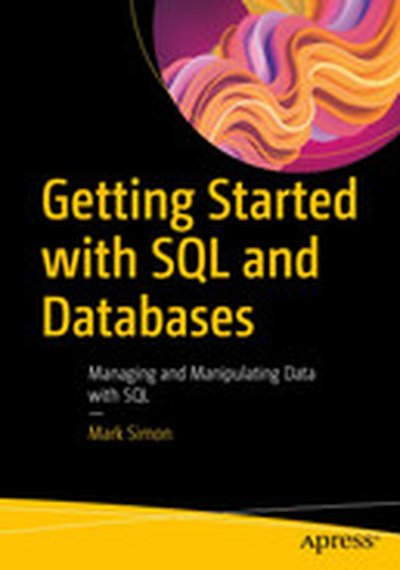
Getting Started with SQL and Databases: Managing and Manipulating Data with SQL

Learn the basics of writing SQL scripts. Using Standard SQL as the starting point, this book teaches writing SQL in various popular dialects, including PostgreSQL, MySQL/MariaDB, Microsoft SQL Server, Oracle, and SQLite. The book starts with a general introduction to writing SQL and covers the basic concepts. Author Mark Simon then covers database principles, and how database tables are designed. He teaches you how to filter data using the WHERE clause, and you will work with NULL, numbers, dates, and strings. You will also understand sorting results using the ORDER BY clause, sorting by calculated columns, and limiting the number of results. By the end of the book, you will know how to insert and update data, and summarize data with aggregate functions and groups. Three appendices cover differences between SQL dialects, working with tables, and a crash course in PDO. What You Will Learn Filter, sort, andcalculate data Summarize data with aggregate functions Modify data with insert, update, and delete statements Study design principles in developing a database Who This Book Is For Developers and analysts working with SQL, as well as web developers who want a stronger understanding of working with databases

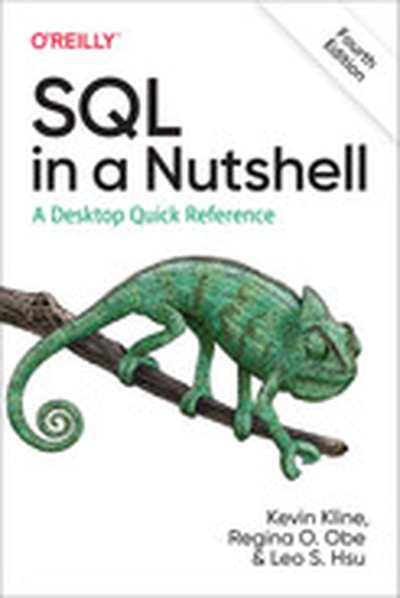
SQL in a Nutshell, 4th Edition

For programmers, analysts, and database administrators, this Nutshell guide is the essential reference for the SQL language used in today's most popular database products. This new fourth edition clearly documents SQL commands according to the latest ANSI/ISO standard and details how those commands are implemented in Microsoft SQL Server 2019 and Oracle 19c, as well as in the MySQL 8, MariaDB 10.5, and PostgreSQL 14 open source database products. You'll also get a concise overview of the relational database management system (RDBMS) model and a clear-cut explanation of foundational RDBMS concepts--all packed into a succinct, comprehensive, and easy-to-use format. Sections include: Background on the relational database model, including current and previous SQL standards Fundamental concepts necessary for understanding relational databases and SQL commands An alphabetical command reference to SQL statements, according to the SQL:2016 ANSI standard The implementation of each command by MySQL, Oracle, PostgreSQL, and SQL Server An alphabetical reference of the ANSI SQL:2016 functions and constructs as well as the vendor implementations Platform-specific functions unique to each implementation

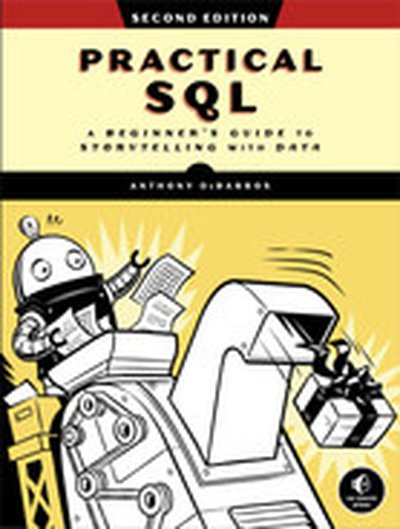
Practical SQL, 2nd Edition

Practical SQL is an approachable and fast-paced guide to SQL (Structured Query Language), the standard programming language for defining, organizing, and exploring data in relational databases. Anthony DeBarros, a journalist and data analyst, focuses on using SQL to find the story within your data. The examples and code use the open-source database PostgreSQL and its companion pgAdmin interface, and the concepts you learn will apply to most database management systems, including MySQL, Oracle, SQLite, and others.* You’ll first cover the fundamentals of databases and the SQL language, then build skills by analyzing data from real-world datasets such as US Census demographics, New York City taxi rides, and earthquakes from US Geological Survey. Each chapter includes exercises and examples that teach even those who have never programmed before all the tools necessary to build powerful databases and access information quickly and efficiently. You’ll learn how to: •Create databases and related tables using your own data •Aggregate, sort, and filter data to find patterns •Use functions for basic math and advanced statistical operations •Identify errors in data and clean them up •Analyze spatial data with a geographic information system (PostGIS) •Create advanced queries and automate tasks This updated second edition has been thoroughly revised to reflect the latest in SQL features, including additional advanced query techniques for wrangling data. This edition also has two new chapters: an expanded set of instructions on for setting up your system plus a chapter on using PostgreSQL with the popular JSON data interchange format. Learning SQL doesn’t have to be dry and complicated. Practical SQL delivers clear examples with an easy-to-follow approach to teach you the tools you need to build and manage your own databases. * Microsoft SQL Server employs a variant of the language called T-SQL, which is not covered by Practical SQL.

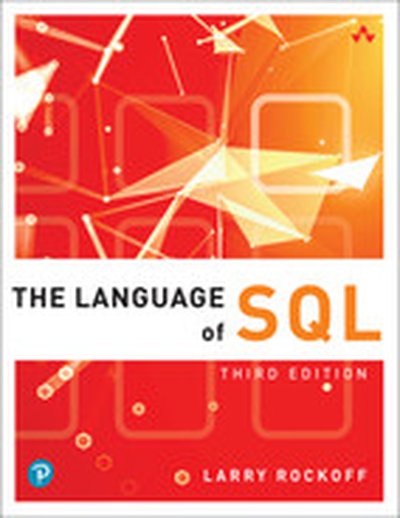
The Language of SQL, 3rd Edition

Get Started Fast with SQL! The only book you need to gain a quick working knowledge of SQL and relational databases. Many SQL texts attempt to serve as an encyclopedic reference on SQL syntaxan approach that is often counterproductive because that information is readily available in online references published by the major database vendors. For SQL beginners, its more important for a book to focus on general concepts and to offer clear explanations and examples of what various SQL statements can accomplish. This is that book. Several features make The Language of SQL unique among introductory SQL books. First, you will not be required to download software or sit with a computer as you read the text. The intent of this book is to provide examples of SQL usage that can be understood simply by reading. Second, topics are organized in an intuitive and logical sequence. SQL keywords are introduced one at a time, allowing you to grow your understanding as you encounter new terms and concepts. Finally, this book covers the syntax of the latest releases of three widely used databases: Microsoft SQL Server 2019, MySQL 8.0, and Oracle 18c. Special Database Differences sidebars clearly show you any differences in syntax among these three databases, and instructions are included on how to obtain and install free versions of the databases. Use SQL to retrieve data from relational databases Apply functions and calculations to data Group and summarize data in a variety of useful ways Use complex logic to retrieve only the data you need Design relational databases so that data retrieval is easy and intuitive Update data and create new tables Use spreadsheets to transform your data into meaningful displays Retrieve data from multiple tables via joins, subqueries, views, and set logic Create, modify, and execute stored procedures Install Microsoft SQL Server, MySQL, or Oracle

SQL in 24 Hours, Sams Teach Yourself, 7th Edition

In just 24 lessons of one hour or less, Sams Teach Yourself SQL in 24 Hours helps you use SQL to build effective databases, efficiently retrieve data, and manage everything from performance to security. This Seventh Edition is thoroughly revised and reorganized for faster learning and a deeper understanding of modern SQL development. Based on standardized SQL throughout, it teaches using new sample code based on the free, easy-to-use Oracle Database Express (XE). You’ll find more hands-on examples than ever, culminating in an all-new Bonus Exercises Workshop with even more real-world practice. This guide’s straightforward, step-by-step approach shows you how to work with database structures, objects, queries, tables, and more. In just hours, you will be applying advanced techniques, from transactions and joins to complex data retrieval using views and subqueries. Step-by-step instructions carefully walk you through the most common SQL tasks. Practical, hands-on examples show you how to apply what you learn. Quizzes and exercises help you test your knowledge and stretch your skills. Notes and tips point out shortcuts and solutions. Learn how to... * Master core relational database concepts, SQL concepts, and language components * Clearly understand your data * Set up databases and plan efficient database designs * Define entities and relationships, establish data structures, and create database objects * “Normalize” raw databases into logically organized tables * Edit relational data and tables and manage transactions * Write effective, well-performing queries * Categorize, summarize, sort, group, and restructure data * Work with dates and times * Join tables in queries, use subqueries, and combine multiple queries * Optimize performance with indexes and other techniques * Administer databases and manage users * Secure databases and data

SQL Pocket Guide, 4th Edition

If you use SQL in your day-to-day work as a data analyst, data scientist, or data engineer, this popular pocket guide is your ideal on-the-job reference. You'll find many examples that address the language's complexities, along with key aspects of SQL used in Microsoft SQL Server, MySQL, Oracle Database, PostgreSQL, and SQLite. In this updated edition, author Alice Zhao describes how these database management systems implement SQL syntax for both querying and making changes to a database. You'll find details on data types and conversions, regular expression syntax, window functions, pivoting and unpivoting, and more. Quickly look up how to perform specific tasks using SQL Apply the book's syntax examples to your own queries Update SQL queries to work in five different database management systems NEW: Connect Python and R to a relational database NEW: Look up frequently asked SQL questions in the "How Do I?" chapter

SQL Cookbook, 2nd Edition

You may know SQL basics, but are you taking advantage of its expressive power? This second edition applies a highly practical approach to Structured Query Language (SQL) so you can create and manipulate large stores of data. Based on real-world examples, this updated cookbook provides a framework to help you construct solutions and executable examples in several flavors of SQL, including Oracle, DB2, SQL Server, MySQL, and PostgreSQL. SQL programmers, analysts, data scientists, database administrators, and even relatively casual SQL users will find SQL Cookbook to be a valuable problem-solving guide for everyday issues. No other resource offers recipes in this unique format to help you tackle nagging day-to-day conundrums with SQL. The second edition includes: Fully revised recipes that recognize the greater adoption of window functions in SQL implementations Additional recipes that reflect the widespread adoption of common table expressions (CTEs) for more readable, easier-to-implement solutions New recipes to make SQL more useful for people who aren't database experts, including data scientists Expanded solutions for working with numbers and strings Up-to-date SQL recipes throughout the book to guide you through the basics

Sams Teach Yourself SQL in 10 Minutes a Day, 5th Edition

Sams Teach Yourself SQL in 10 Minutes offers straightforward, practical answers when you need fast results. By working through the book’s 22 lessons of 10 minutes or less, you’ll learn what you need to know to take advantage of the SQL language. Lessons cover IBM DB2, Microsoft SQL Server and SQL Server Express, MariaDB, MySQL, Oracle and Oracle express, PostgreSQL, and SQLite. Full-color code examples help you understand how SQL statements are structured Tips point out shortcuts and solutions Cautions help you avoid common pitfalls Notes explain additional concepts, and provide additional information 10 minutes is all you need to learn how to… Use the major SQL statements Construct complex SQL statements using multiple clauses and operators Retrieve, sort, and format database contents Pinpoint the data you need using a variety of filtering techniques Use aggregate functions to summarize data Join two or more related tables Insert, update, and delete data Create and alter database tables Work with views, stored procedures, and more

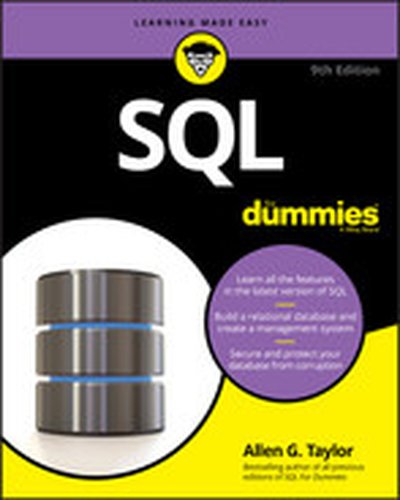
SQL For Dummies, 9th Edition

Get ready to make SQL easy! Updated for the latest version of SQL, the new edition of this perennial bestseller shows programmers and web developers how to use SQL to build relational databases and get valuable information from them. Covering everything you need to know to make working with SQL easier than ever, topics include how to use SQL to structure a DBMS and implement a database design; secure a database; and retrieve information from a database; and much more. SQL is the international standard database language used to create, access, manipulate, maintain, and store information in relational database management systems (DBMS) such as Access, Oracle, SQL Server, and MySQL. SQL adds powerful data manipulation and retrieval capabilities to conventional languages—and this book shows you how to harness the core element of relational databases with ease. Server platform that gives you choices of development languages, data types, on-premises or cloud, and operating systems Find great examples on the use of temporal data Jump right in—without previous knowledge of database programming or SQL As database-driven websites continue to grow in popularity—and complexity— SQL For Dummies is the easy-to-understand, go-to resource you need to use it seamlessly.

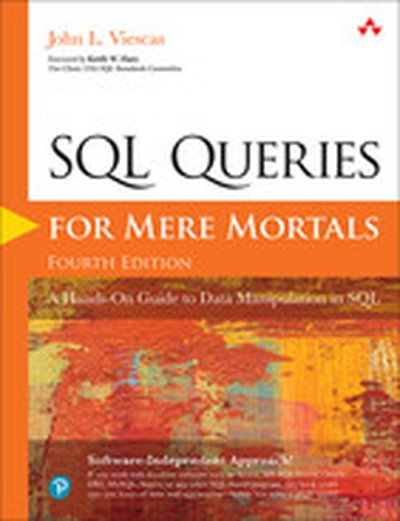
SQL Queries for Mere Mortals: A Hands-On Guide to Data Manipulation in SQL, 4th Edition

The #1 Easy, Common-Sense Guide to SQL Queries—Updated with More Advanced Techniques and Solutions Foreword by Keith W. Hare, Vice Chair, USA SQL Standards Committee SQL Queries for Mere Mortals has earned worldwide praise as the clearest, simplest tutorial on writing effective queries with the latest SQL standards and database applications. Now, author John L. Viescas has updated this hands-on classic with even more advanced and valuable techniques. Step by step, Viescas guides you through creating reliable queries for virtually any current SQL-based database. He demystifies all aspects of SQL query writing, from simple data selection and filtering to joining multiple tables and modifying sets of data. Building on the basics, Viescas shows how to solve challenging real-world problems, including applying multiple complex conditions on one table, performing sophisticated logical evaluations, and using unlinked tables to think “outside the box.” In two brand-new chapters, you learn how to perform complex calculations on groups for sophisticated reporting, and how to partition data into windows for more flexible aggregation. Practice all you want with downloadable sample databases for today’s versions of Microsoft Office Access, Microsoft SQL Server, and the open source MySQL and PostgreSQL databases. Whether you’re a DBA, developer, user, or student, there’s no better way to master SQL. Coverage includes: Getting started: understanding what relational databases are, and ensuring that your database structures are sound SQL basics: using SELECT statements, creating expressions, sorting information with ORDER BY, and filtering data using WHERE Summarizing and grouping data with GROUP BY and HAVING clauses Drawing data from multiple tables: using INNER JOIN, OUTER JOIN, and UNION operators, and working with subqueries Modifying data sets with UPDATE, INSERT, and DELETE statements Advanced queries: complex NOT and AND, conditions, if-then-else using CASE, unlinked tables, driver tables, and more NEW! Using advanced GROUP BY keywords to create subtotals, roll-ups, and more NEW! Applying window functions to answer more sophisticated questions, and gain deeper insight into your data Software-Independent Approach! If you work with database software such as Access, MS SQL Server, Oracle, DB2, MySQL, Ingres, or any other SQL-based program, this book could save you hours of time and aggravation—before you write a single query! .

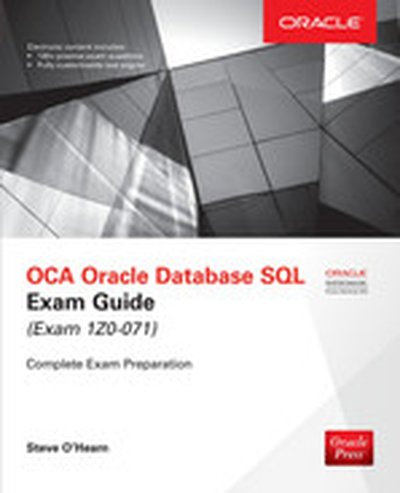
OCA Oracle Database SQL Exam Guide (Exam 1Z0-071)

A fully updated, integrated self-study system for the Oracle Database SQL Exam This thoroughly revised Oracle Press guide offers 100% coverage of all objectives on the latest version of the Oracle Database SQL Exam. Ideal both as a study guide and on-the-job reference, OCA Oracle Database SQL Exam Guide (Exam 1Z0-071) features detailed explanations, examples, practice questions, and chapter summaries. “Certification Objectives,” “Exam Watch,” and “On the Job” sections reinforce salient points throughout. You will gain access to two complete practice exams that match the tone, tenor, and format of the live test. Get complete coverage every topic on Exam 1Z0-071, including: • DDL and SQL SELECT statements • Manipulating, restricting, and sorting data • Single-row and group functions • Displaying data from multiple tables • Subqueries • Schema objects • Set operators • Grouping related data • Report creation • Data dictionary views • Large data sets • Hierarchical retrieval • Regular expression support • User access control The electronic includes: • Two full practice exams • Detailed answers and explanations

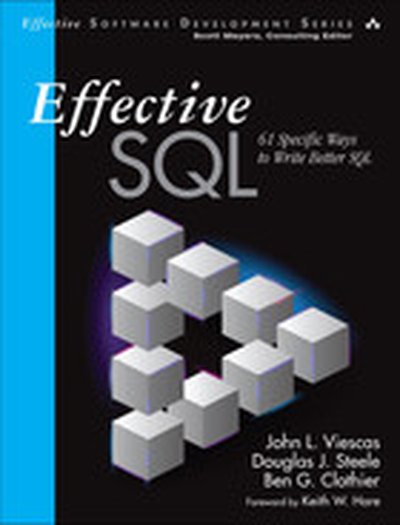
Effective SQL: 61 Specific Ways to Write Better SQL, First Edition

“Given the authors’ reputations, I expected to be impressed. I was blown away! . . . Most SQL books sit on my shelf. This one will live on my desk.” –Roger Carlson, Microsoft Access MVP (2006-2015) “Rather than stumble around reinventing wheels or catching glimpses of the proper approaches, do yourself a favor: Buy this book.” —Dave Stokes, MySQL Community Manager, Oracle Corporation brings together practical solutions and insights so you can solve complex problems with SQL and design databases that simplify data management in the future. It’s the only modern book that brings together advanced best practices and realistic example code for all of these versions of SQL: IBM DB2, Microsoft Access, Microsoft SQL Server, MySQL, Oracle Database, and PostgreSQL. Effective SQL Drawing on their immense experience as world-class database consultants and instructors, the authors identify 61 proven approaches to writing better SQL. Wherever SQL versions vary, the authors illuminate the key nuances, so you can get the most out of whatever version you prefer. This full-color guide provides clear, practical explanations; expert tips; and plenty of usable code. Going far beyond mere syntax, it addresses issues ranging from optimizing database designs to managing hierarchies and metadata. If you already know SQL’s basics, this guide will help you become a world-class SQL problem-solver. Craft better logical data models, and fix flawed models Implement indexes that improve query performance Handle external data from sources you don’t control Extract and aggregate the information you need, as efficiently as possible Write more flexible subqueries Analyze and retrieve metadata using your database platform of choice Use Cartesian Products and Tally Tables to solve problems you can’t address with conventional JOINs Model hierarchical data: managing SQL’s tradeoffs and shortcomings

Data Analysis Using SQL and Excel, 2nd Edition

A practical guide to data mining using SQL and Excel Data Analysis Using SQL and Excel, 2nd Edition shows you how to leverage the two most popular tools for data query and analysis—SQL and Excel—to perform sophisticated data analysis without the need for complex and expensive data mining tools. Written by a leading expert on business data mining, this book shows you how to extract useful business information from relational databases. You'll learn the fundamental techniques before moving into the "where" and "why" of each analysis, and then learn how to design and perform these analyses using SQL and Excel. Examples include SQL and Excel code, and the appendix shows how non-standard constructs are implemented in other major databases, including Oracle and IBM DB2/UDB. The companion website includes datasets and Excel spreadsheets, and the book provides hints, warnings, and technical asides to help you every step of the way. Data Analysis Using SQL and Excel, 2nd Edition shows you how to perform a wide range of sophisticated analyses using these simple tools, sparing you the significant expense of proprietary data mining tools like SAS. Understand core analytic techniques that work with SQL and Excel Ensure your analytic approach gets you the results you need Design and perform your analysis using SQL and Excel Data Analysis Using SQL and Excel, 2nd Edition shows you how to best use the tools you already know to achieve expert results.

SQL in 24 Hours, Sams Teach Yourself, Sixth Edition

Includes Coverage of Oracle and Microsoft SQL Implementations In just 24 lessons of one hour or less, Sams Teach Yourself SQL in 24 Hours, Sixth Edition, helps you use SQL to build effective databases, efficiently retrieve data, and manage everything from performance to security. This book’s straightforward, step-by-step approach shows you how to work with database structures, objects, queries, tables, and more. In just hours, you will be applying advanced techniques, including views, transactions, web connections, and powerful Oracle and SQL Server extensions. Every lesson builds on what you’ve already learned, giving you a rock-solid foundation for real-world success. Step-by-step instructions carefully walk you through the most common SQL tasks. Practical, hands-on examples show you how to apply what you learn. Quizzes and exercises help you test your knowledge and stretch your skills. Notes and tips point out shortcuts and solutions. Learn how to… • Define efficient database structures and objects • “Normalize” raw databases into logically organized tables • Edit relational data and tables with DML • Manage transactions • Write effective, well-performing queries • Categorize, summarize, sort, group, and restructure data • Work with dates and times • Join tables in queries, use subqueries, and combine multiple queries • Master powerful query optimization techniques • Administer databases and manage users • Secure databases and protect data • Use views, synonyms, and the system catalog • Extend SQL to the enterprise and Internet • Master important Oracle and Microsoft extensions to ANSI SQL Register your product at informit.com/register for convenient access to downloads, updates, and corrections as they become available.

SQL: A Beginner's Guide, Fourth Edition, 4th Edition

This fully revised, self-paced learning tool lays out all the necessary steps to quickly and easily start writing SQL programs Thoroughly updated to reflect the most recent ANSI/ISO standard, SQL: A Beginner's Guide, Fourth Edition will get you up-and-running with SQL programming right away. Clear tutorials, annotated code, and proven instructional tools guide you to easily performing queries and modifications, building databases, creating and reviewing embedded statements, troubleshooting system- and data-related problems, and much more. You will learn how to retrieve, insert, update, and delete database data, and perform management and administrative functions. The book also covers new features, including SQL/XML and the long-awaited temporal support. Code examples are provided throughout along with notes on using them with the latest RDBMS software versions such as MySQL 5.7, SQL Server 2014, and Oracle Database 12 c. Platform-neutral coverage; all skills can be applied to any database product, and any SQL version Features hands-on exercises and self-tests that reinforce basic knowledge ”Ask the Expert” sections throughout are filled with bonus information and useful tips

Expert Oracle SQL

Expert Oracle SQL: Optimization, Deployment, and Statistics is about optimizing individual SQL statements, especially on production database systems. This Oracle-specific book begins by assuming you have already identified a particular SQL statement and are considering taking steps to improve its performance. The book describes a systematic process by which to diagnose a problem statement, identify a fix, and to implement that fix safely in a production system. You'll learn not only to improve performance when it is too slow, but also to stabilize performance when it is too variable. You'll learn about system statistics and how the Cost-Based Optimizer uses them to determine a suitable execution plan for a given statement. That knowledge provides the foundation from which to identify the root cause, and to stabilize and improve performance. Next after identifying a problem and the underlying root cause is to put in place a solution. Expert Oracle SQL: Optimization, Deployment, and Statistics explains how to apply various remedies such as changing the SQL statement, adding hints, changing the physical design, and more, and how they can be brought to bear on fixing a problem once and for all. Rolling a change out smoothly is an important topic when dealing with tuning and optimization. Expert Oracle SQL: Optimization, Deployment, and Statistics does not let you down in this critical area. The book contains two chapters of good information from an experienced professional on how to safely deploy changes into production so that your systems remaining running and available throughout the deployment process. Describes a systematic approach to tuning Oracle SQL Explains how things are supposed to work, what can go wrong, and how to fix it Takes you through the steps needed to stabilize performance in your production systems What you'll learn Determine the root cause of poor performance in a SQL statement Decipher each line of an execution plan and how it relates to its source SQL statement Know the various options and transformations available for the Cost-Based Optimizer Interpret the diagnostic data from Active Session History, SQL Performance Monitor, and from other sources Apply optimizer hints, SQL profiles, and SQL baselines when they are best used, and avoid them otherwise Manage object statistics used by the optimizer to ensure efficient execution plans

Oracle PL/SQL Programming, 6th Edition

Considered the best Oracle PL/SQL programming guide by the Oracle community, this definitive guide is precisely what you need to make the most of Oracle’s powerful procedural language. The sixth edition describes the features and capabilities of PL/SQL up through Oracle Database 12 c Release 1. Hundreds of thousands of PL/SQL developers have benefited from this book over the last twenty years; this edition continues that tradition. With extensive code examples and a lively sense of humor, this book explains language fundamentals, explores advanced coding techniques, and offers best practices to help you solve real-world problems. Get PL/SQL programs up and running quickly, with clear instructions for executing, tracing, testing, debugging, and managing code Understand new 12.1 features, including the ACCESSIBLE_BY clause, WITH FUNCTION and UDF pragma, BEQUEATH CURRENT_USER for views, and new conditional compilation directives Take advantage of extensive code samples, from easy-to-follow examples to reusable packaged utilities Optimize PL/SQL performance with features like the function result cache and Oracle utilities such as PL/Scope and the PL/SQL hierarchical profiler Build modular, easy-to-maintain PL/SQL applications using packages, procedures, functions, and triggers

Oracle Database 12c SQL

Write Powerful SQL Statements and PL/SQL Programs Learn how to access Oracle databases through SQL statements and construct PL/SQL programs. Oracle Database 12c SQL offers complete coverage of the latest database features and techniques. Find out how to write SQL statements to retrieve and modify database information, use SQLPlus and SQL Developer, work with database objects, write PL/SQL programs, use performance optimization techniques, incorporate XML, and more. This Oracle Press guide contains everything you need to know to master SQL. Use SQL statements to access an Oracle database Work with SQLPlus and SQL Developer Write PL/SQL programs Create tables, sequences, indexes, views, and triggers Design advanced queries containing complex calculations Create database objects to handle abstract data Use date, time stamp, and time interval data types Establish user roles and privileges Handle multimedia files using large objects Tune SQL statements to make them execute faster Generate, process, and store XML data Master the very latest Oracle Database 12 c features Code examples in the book are available for download.

Discovering SQL: A Hands-On Guide for Beginners

Teaching the SQL skills that businesses demand when hiring programmers If you're a SQL beginner, you don't just want to learn SQL basics, you also want to get some practical SQL skills you can use in the job market. This book gives you both. Covering the basics through intermediate topics with clear explanations, hands-on exercises, and helpful solutions, this book is the perfect introduction to SQL. Topics include both the current SQL:2008 standards, the upcoming SQL:2011 standards, and also how to use SQL against current releases of the most popular commercial SQL databases, such as Oracle, SQL Server, and MySQL. Introduces SQL concepts, explains SQL statements, and clearly shows how to write efficient and effective SQL code Uses a hands-on style and a sample database that incorporates all SQL concepts taught in the book; this database will be enhanced through the book as key points and lessons are covered Covers topics such as how SQL interacts with the sample database via various interfaces, including vendor-provided utilities, programming languages, SQL clients, and productivity software Includes appendices with primers on database normalization, set theory and bollean algebra, RDBMS software step-by-step setup guides, and database connectivity Learn how to write effective, efficient SQL code with Discovering SQL: A Hands-On Guide for Beginners.

SQL Pocket Guide, 3rd Edition

If you're a programmer or database administrator who uses SQL in your day-to-day work, this popular pocket guide is the ideal on-the-job reference. You'll find many examples that address the language's complexity, along with key aspects of SQL used in IBM DB2 Release 9.7, MySQL 5.1, Oracle Database 11g Release 2, PostgreSQL 9.0, and Microsoft SQL Server 2008 Release 2. SQL Pocket Guide describes how these database systems implement SQL syntax for querying, managing transactions, and making changes to data. It also shows how the systems use SQL functions, regular expression syntax, and type conversion functions and formats. All example SQL statements in this book execute against a set of tables, with data that you can quickly download. The third edition covers important database changes, including: Oracle's support of the recursive WITH syntax, and addition of PIVOT and UNPIVOT operators Functions new to Oracle, such as LISTAGG, NTH_VALUE, and more PostgreSQL’s support of recursive WITH and some window functions DB2 syntax and datatypes, some compatible with Oracle MySQL features such as the TIMESTAMP type and the TO_SECONDS function

Oracle PL/SQL Programming, 5th Edition

This book is the definitive reference on PL/SQL, considered throughout the database community to be the best Oracle programming book available. Like its predecessors, this fifth edition of Oracle PL/SQL Programming covers language fundamentals, advanced coding techniques, and best practices for using Oracle's powerful procedural language. Thoroughly updated for Oracle Database 11g Release 2, this edition reveals new PL/SQL features and provides extensive code samples, ranging from simple examples to complex and complete applications, in the book and on the companion website. This indispensable reference for both novices and experienced Oracle programmers will help you: Get PL/SQL programs up and running quickly, with clear instructions for executing, tracing, testing, debugging, and managing PL/SQL code Optimize PL/SQL performance with the aid of a brand-new chapter in the fifth edition Explore datatypes, conditional and sequential control statements, loops, exception handling, security features, globalization and localization issues, and the PL/SQL architecture Understand and use new Oracle Database 11g features, including the edition-based redefinition capability, the function result cache, the new CONTINUE statement, fine-grained dependency tracking, sequences in PL/SQL expressions, supertype invocation from subtypes, and enhancements to native compilation, triggers, and dynamic SQL Use new Oracle Database 11g tools and techniques such as PL/Scope, the PL/SQL hierarchical profiler, and the SecureFiles technology for large objects Build modular PL/SQL applications using procedures, functions, triggers, and packages

Oracle SQL By Example

“The book...has enough depth for even a seasoned professional to pick up enough tips to pay back the price of the book many times over.” –Dr. Paul Dorsey, President, Dulcian, Inc., Oracle Magazine PL/SQL Developer of the Year 2007, and President Emeritus, New York Oracle Users Group “This is a fascinating guide into the world of Oracle SQL with an abundance of well-collected examples. Without a doubt, this book is helpful to beginners and experts alike who seek alternative ways to resolve advanced scenarios.”–Oleg Voskoboynikov, Ph.D., Database Architect The World’s #1 Hands-On Oracle SQL Workbook–Fully Updated for Oracle 11 g Crafted for hands-on learning and tested in classrooms worldwide, this book illuminates in-depth every Oracle SQL technique you’ll need. From the simplest query fundamentals to regular expressions and with newly added coverage of Oracle’s powerful new SQL Developer tool, you will focus on the tasks that matter most. Hundreds of step-by-step, guided lab exercises will systematically strengthen your expertise in writing effective, high-performance SQL. Along the way, you’ll acquire a powerful arsenal of useful skills–and an extraordinary library of solutions for your real-world challenges with Oracle SQL. Coverage includes 100% focused on Oracle SQL for Oracle 11 g, today’s #1 database platform–not “generic” SQL! Master all core SQL techniques including every type of join such as equijoins, self joins, and outer joins Understand Oracle functions in depth, especially character, number, date, timestamp, interval, conversion, aggregate, regular expressions, analytical, and more Practice all types of subqueries, such as correlated and scalar subqueries, and learn about set operators and hierarchical queries Build effective queries and learn fundamental Oracle SQL Developer and SQL*Plus skills Make the most of the Data Dictionary and create tables, views, indexes, and sequences Secure databases using Oracle privileges, roles, and synonyms Explore Oracle 11 g’s advanced data warehousing features Learn many practical tips about performance optimization, security, and architectural solutions Avoid common pitfalls and understand and solve common mistakes For every database developer, administrator, designer, or architect, regardless of experience!