talk-data.com talk-data.com

Event

O'Reilly SQL Books

2002-09-10 – 2026-08-25 Oreilly Visit website ↗

Activities tracked

24

Collection of O'Reilly books on SQL.

Filtering by: RDBMS ×

Sessions & talks

Showing 1–24 of 24 · Newest first

Search within this event →
Advanced SQL

SQL is no longer just a querying language for relational databases—it's a foundational tool for building scalable, modern data solutions across real-time analytics, machine learning workflows, and even generative AI applications. Advanced SQL shows data professionals how to move beyond conventional SELECT statements and tap into the full power of SQL as a programming interface for today's most advanced data platforms. Written by seasoned data experts Rui Pedro Machado, Hélder Russa, and Pedro Esmeriz, this practical guide explores the role of SQL in streaming architectures (like Apache Kafka and Flink), data lake ecosystems, cloud data warehouses, and ML pipelines. Geared toward data engineers, analysts, scientists, and analytics engineers, the book combines hands-on guidance with architectural best practices to help you extend your SQL skills into emerging workloads and real-world production systems. Use SQL to design and deploy modern, end-to-end data architectures Integrate SQL with data lakes, stream processing, and cloud platforms Apply SQL in feature engineering and ML model deployment Master pipe syntax and other advanced features for scalable, efficient queries Leverage SQL to build GenAI-ready data applications and pipelines

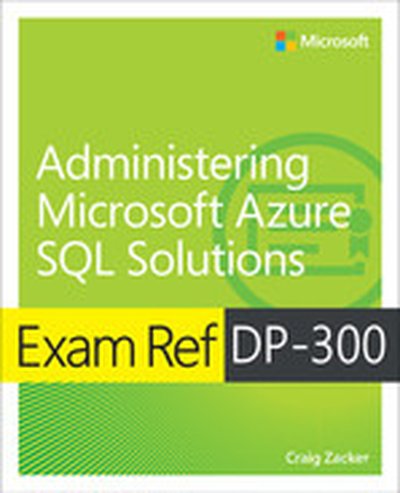
Exam Ref DP-300 Administering Microsoft Azure SQL Solutions

Prepare for Microsoft Exam DP-300 and demonstrate your real-world foundational knowledge of Azure database administration using a variety of methods and tools to perform and automate day-to-day operations, including use of Transact-SQL (T-SQL) and other tools for administrative management purposes. Designed for database administrators, solution architects, data scientists, and other data professionals, this Exam Ref focuses on the critical-thinking and decision-making acumen needed for success at the Microsoft Certified: Azure Database Administrator Associate level. Focus on the expertise measured by these objectives: Plan and implement data platform resources Implement a secure environment Monitor, configure, and optimize database resources Configure and manage automation of tasks Plan and configure a high availability and disaster recovery (HA/DR) environment This Microsoft Exam Ref: Organizes its coverage by the Skills Measured list published for the exam Features strategic, what-if scenarios to challenge you Assumes you have subject matter expertise in building database solutions that are designed to support multiple workloads built with SQL Server on-premises and Azure SQL About the Exam Exam PD-300 focuses on core knowledge for implementing and managing the operational aspects of cloud-native and hybrid data platform solutions built on SQL Server and Azure SQL services, using a variety of methods and tools to perform and automate day-to-day operations, including applying knowledge of using Transact-SQL (T-SQL) and other tools for administrative management purposes. About Microsoft Certification Passing this exam fulfills your requirements for the Microsoft Certified: Azure Database Administrator Associate certification, demonstrating your ability to administer a SQL Server database infrastructure for cloud, on-premises, and hybrid relational databases using the Microsoft PaaS relational database offerings. See full details at: microsoft.com/learn .

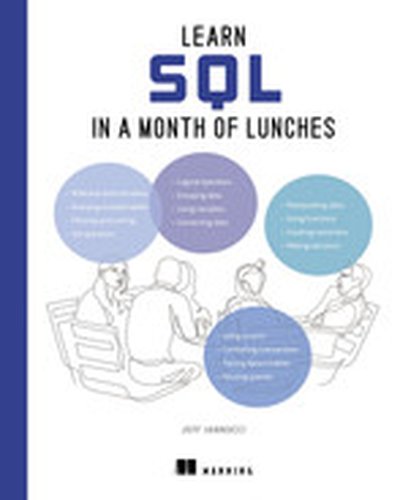
Learn SQL in a Month of Lunches

Use SQL to get the data you need in no time at all! Learn to read and write basic queries, troubleshoot common problems, and control your own business data in just 24 short lessons–no programming experience required! SQL has been designed to be as close to English as possible—anyone can learn it! Learn SQL in a Month of Lunches helps you add this lucrative and highly sought-after skill to your resume in just 24 fun and friendly lessons. The book emphasizes practical uses for the language in the real-world, so you’ll just learn the most useful skills for business data analysis. Inside Learn SQL in a Month of Lunches you’ll discover how to: Set up your first database with MySQL Write your own SQL queries See only the data you need from large datasets Connect different sets of data Analyze data with functions and aggregations Master basic data manipulation techniques Save queries in stored procedures and views Create tables to store data efficiently Read and improve SQL written by others If you use Excel, Tableau, or PowerBI to crunch business data, you’ve probably seen a lot of SQL already. And guess what? It’s easy to master the most useful parts of SQL! In just a few quick lessons, Learn SQL in a Month of Lunches will get you writing your own queries, modifying existing SQL statements, and working with data like a pro. 25-year SQL veteran Jeff Iannucci makes SQL a snap through hands-on lab exercises, relevant code examples, and easy-to-understand language. About the Technology SQL, Structured Query Language, is the standard way to query, create, and manage relational databases like SQL Server, PostgreSQL, and Oracle. It’s also a superpower for data analysts who need to go beyond spreadsheets and BI dashboarding tools. SQL is easy to read and understand, and with this book (and a little practice) you’ll be pulling data, tweaking tables, and cranking out amazing reports and presentations in no time at all! About the Book Learn SQL in a Month of Lunches introduces SQL to data analysts and other aspiring data pros with no prior experience using relational databases. In it, you’ll complete 24 short lessons, each of which teaches an essential SQL skill for retrieving, filtering, and analyzing data. You’ll practice each new technique with a friendly hands-on lab designed to take about 15 minutes, as you learn to write queries that deliver the exact data you need. Along the way, you’ll build a valuable intuition for how databases operate in real business scenarios. What's Inside Get the data you need from any relational database Filter, sort, and group data Combine data from multiple tables Create, update, and delete data About the Reader For students, aspiring data analysts, software developers, and anyone else who wants to work with relational databases. About the Author Jeff Iannucci is a Senior Consultant with Straight Path Solutions. For over 20 years, he has worked extensively with SQL in sectors such as healthcare, finance, retail sales, and government. Quotes An essential guide. Jeff has carefully developed each chapter to ensure clarity and comprehensiveness, making complex concepts accessible and practical. - Buck Woody, Microsoft The fastest and the most effective way to learn SQL, regardless of your background or technical knowledge level. - Kevin Kline, author of SQL in a Nutshell Explains concepts straightforwardly to help the reader grow their skills over a month of sessions. - Steve Jones, SQL Server Central Great selection of bite-sized, digestible courses to complement your lunch arrangement. It leaves you smarter every day. - Simon Tschöke, Databricks

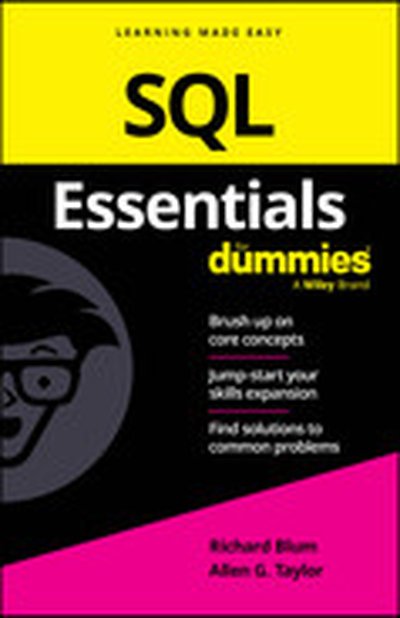
SQL Essentials For Dummies

A right-to-the-point guide on all the key topics of SQL programming SQL Essentials For Dummies is your quick reference to all the core concepts of SQL—a valuable common standard language used in relational databases. This useful guide is straightforward—with no excess review, wordy explanations, or fluff—so you get what you need, fast. Great for a brush-up on the basics or as an everyday desk reference, this book is one you can rely on. Strengthen your understanding of the basics of SQL Review what you've already learned or pick up key skills Use SQL to create, manipulate, and control relational databases Jog your memory on the essentials as you work and get clear answers to your questions Perfect for supplementing classroom learning, reviewing for a certification, and staying knowledgeable on the job, SQL Essentials For Dummies is the convenient, direct, and digestible reference you've been looking for.

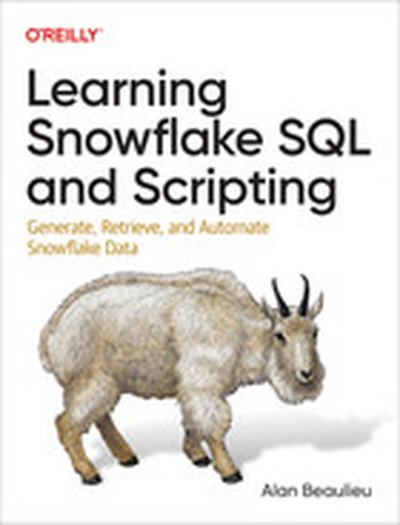
Learning Snowflake SQL and Scripting

To help you on the path to becoming a Snowflake pro, this concise yet comprehensive guide reviews fundamentals and best practices for Snowflake's SQL and Scripting languages. Developers and data professionals will learn how to generate, modify, and query data in the Snowflake relational database management system as well as how to apply analytic functions for reporting. Author Alan Beaulieu also shows you how to create scripts, stored functions, and stored procedures to return data sets using Snowflake Scripting. This book is ideal whether you're new to databases and need to run queries or reports against a Snowflake database, or transitioning from databases such as Oracle, SQL Server, or MySQL to cloud-based platforms. With this book, you will: Generate and modify Snowflake data using INSERT, UPDATE, DELETE Query data in Snowflake using SELECT, including joining multiple tables, using subqueries, and grouping Apply analytic functions for performing subtotals, grand totals, row comparisons, and other reporting functionality Build scripts combining SQL statements with looping, if-then-else, and exception handling Learn how to build stored procedures and functions Use stored procedures to return data sets

SQL Antipatterns, Volume 1

SQL is the ubiquitous language for software developers working with structured data. Most developers who rely on SQL are experts in their favorite language (such as Java, Python, or Go), but they're not experts in SQL. They often depend on antipatterns - solutions that look right but become increasingly painful to work with as you uncover their hidden costs. Learn to identify and avoid many of these common blunders. Refactor an inherited nightmare into a data model that really works. Updated for the current versions of MySQL and Python, this new edition adds a dozen brand new mini-antipatterns for quick wins. No matter which platform, framework, or language you use, the database is the foundation of your application, and the SQL database language is the standard for working with it. Antipatterns are solutions that look simple at the surface, but soon mire you down with needless work. Learn to identify these traps, and craft better solutions for the often-asked questions in this book. Avoid the mistakes that lead to poor performance and quality, and master the principles that make SQL a powerful and flexible tool for handling data and logic. Dive deep into SQL and database design, and learn to recognize the most common missteps made by software developers in database modeling, SQL query logic, and code design of data-driven applications. See practical examples of misconceptions about SQL that can lure software projects astray. Find the greatest value in each group of data. Understand why an intersection table may be your new best friend. Store passwords securely and don't reinvent the wheel. Handle NULL values like a pro. Defend your web applications against the security weakness of SQL injection. Use SQL the right way - it can save you from headaches and needless work, and let your application really shine! What You Need: The SQL examples use the MySQL 8.0 flavor, but other popular brands of RDBMS are mentioned. Other code examples use Python 3.9+ or Ruby 2.7+.

SQL in a Nutshell, 4th Edition

For programmers, analysts, and database administrators, this Nutshell guide is the essential reference for the SQL language used in today's most popular database products. This new fourth edition clearly documents SQL commands according to the latest ANSI/ISO standard and details how those commands are implemented in Microsoft SQL Server 2019 and Oracle 19c, as well as in the MySQL 8, MariaDB 10.5, and PostgreSQL 14 open source database products. You'll also get a concise overview of the relational database management system (RDBMS) model and a clear-cut explanation of foundational RDBMS concepts--all packed into a succinct, comprehensive, and easy-to-use format. Sections include: Background on the relational database model, including current and previous SQL standards Fundamental concepts necessary for understanding relational databases and SQL commands An alphabetical command reference to SQL statements, according to the SQL:2016 ANSI standard The implementation of each command by MySQL, Oracle, PostgreSQL, and SQL Server An alphabetical reference of the ANSI SQL:2016 functions and constructs as well as the vendor implementations Platform-specific functions unique to each implementation

Practical SQL, 2nd Edition

Practical SQL is an approachable and fast-paced guide to SQL (Structured Query Language), the standard programming language for defining, organizing, and exploring data in relational databases. Anthony DeBarros, a journalist and data analyst, focuses on using SQL to find the story within your data. The examples and code use the open-source database PostgreSQL and its companion pgAdmin interface, and the concepts you learn will apply to most database management systems, including MySQL, Oracle, SQLite, and others.* You’ll first cover the fundamentals of databases and the SQL language, then build skills by analyzing data from real-world datasets such as US Census demographics, New York City taxi rides, and earthquakes from US Geological Survey. Each chapter includes exercises and examples that teach even those who have never programmed before all the tools necessary to build powerful databases and access information quickly and efficiently. You’ll learn how to: •Create databases and related tables using your own data •Aggregate, sort, and filter data to find patterns •Use functions for basic math and advanced statistical operations •Identify errors in data and clean them up •Analyze spatial data with a geographic information system (PostGIS) •Create advanced queries and automate tasks This updated second edition has been thoroughly revised to reflect the latest in SQL features, including additional advanced query techniques for wrangling data. This edition also has two new chapters: an expanded set of instructions on for setting up your system plus a chapter on using PostgreSQL with the popular JSON data interchange format. Learning SQL doesn’t have to be dry and complicated. Practical SQL delivers clear examples with an easy-to-follow approach to teach you the tools you need to build and manage your own databases. * Microsoft SQL Server employs a variant of the language called T-SQL, which is not covered by Practical SQL.

The Language of SQL, 3rd Edition

Get Started Fast with SQL! The only book you need to gain a quick working knowledge of SQL and relational databases. Many SQL texts attempt to serve as an encyclopedic reference on SQL syntaxan approach that is often counterproductive because that information is readily available in online references published by the major database vendors. For SQL beginners, its more important for a book to focus on general concepts and to offer clear explanations and examples of what various SQL statements can accomplish. This is that book. Several features make The Language of SQL unique among introductory SQL books. First, you will not be required to download software or sit with a computer as you read the text. The intent of this book is to provide examples of SQL usage that can be understood simply by reading. Second, topics are organized in an intuitive and logical sequence. SQL keywords are introduced one at a time, allowing you to grow your understanding as you encounter new terms and concepts. Finally, this book covers the syntax of the latest releases of three widely used databases: Microsoft SQL Server 2019, MySQL 8.0, and Oracle 18c. Special Database Differences sidebars clearly show you any differences in syntax among these three databases, and instructions are included on how to obtain and install free versions of the databases. Use SQL to retrieve data from relational databases Apply functions and calculations to data Group and summarize data in a variety of useful ways Use complex logic to retrieve only the data you need Design relational databases so that data retrieval is easy and intuitive Update data and create new tables Use spreadsheets to transform your data into meaningful displays Retrieve data from multiple tables via joins, subqueries, views, and set logic Create, modify, and execute stored procedures Install Microsoft SQL Server, MySQL, or Oracle

Beginning T-SQL: A Step-by-Step Approach

Get a performance-oriented introduction to the T-SQL language underlying the Microsoft SQL Server and Azure SQL database engines. This fourth edition is updated to include SQL Notebooks as well as up-to-date syntax and features for T-SQL on-premises and in the Azure cloud. Exercises and examples now include the WideWorldImporters database, the newest sample database from Microsoft for SQL Server. Also new in this edition is coverage of JSON from T-SQL, news about performance enhancements called Intelligent Query Processing, and an appendix on running SQL Server in a container on macOS or Linux. Beginning T-SQL starts you on the path to mastering T-SQL with an emphasis on best practices. Using the sound coding techniques taught in this book will lead to excellent performance in the queries that you write in your daily work. Important techniques such as windowing functions are covered to help you write fast-executing queries that solve real business problems.The book begins with an introduction to databases, normalization, and to setting up your learning environment. You will learn about the tools you need to use such as SQL Server Management Studio, Azure Data Studio, and SQL Notebooks. Each subsequent chapter teaches an aspect of T-SQL, building on the skills learned in previous chapters. Exercises in most chapters provide an opportunity for the hands-on practice that leads to true learning and distinguishes the competent professional. A stand-out feature in this book is that most chapters end with a Thinking About Performance section. These sections cover aspects of query performance relative to the content just presented, including the new Intelligent Query Processing features that make queries faster without changing code. They will help you avoid beginner mistakes by knowing about and thinking about performance from day 1. What You Will Learn Install a sandboxed SQL Server instance for learning Understand how relational databases are designed Create objects such as tables and stored procedures Query a SQL Server table Filter and order the results of a query Query and work with specialized data types such as XML and JSON Apply modern features such as window functions Choose correct techniques so that your queries perform well Who This Book Is For Anyone who wants to learn T-SQL from the beginning or improve their T-SQL skills; those who need T-SQL as an additional skill; and those who write queries such as application developers, database administrators, business intelligence developers, and data scientists. The book is also helpful for anyone who must retrieve data from a SQL Server database.

Learn SQL Database Programming

Learn SQL Database Programming is your comprehensive guide to mastering SQL and its applications in database management. With step-by-step instructions, you'll gain confidence in querying and manipulating data, covering both fundamental and advanced SQL techniques. By working through this book, you'll acquire in-demand skills for organizing, analyzing, and presenting data effectively. What this Book will help me do Install and configure MySQL tools to create and manage databases efficiently. Utilize SQL commands to query and retrieve data from simple or complex datasets. Manipulate data securely using commands like INSERT, UPDATE, and DELETE. Master advanced SQL techniques including joins, subqueries, and flow controls. Apply best practices in SQL queries to design databases with optimal performance. Author(s) Josephine Bush is an experienced database developer and technical educator with a strong background in SQL programming. She has years of practical experience working with relational databases, and her teaching is grounded in real-world applications. She excels at explaining complex concepts clearly and emphasizing hands-on learning. Who is it for? This book is ideal for business analysts, aspiring SQL developers, database administrators, and students entering the field of SQL programming. It caters to beginners with no prior SQL experience, providing a structured and practical approach to learning. If you're eager to organize data or administer databases effectively, this book is for you.

Introducing Microsoft SQL Server 2019

Introducing Microsoft SQL Server 2019 is the must-have guide for database professionals eager to leverage the latest advancements in SQL Server 2019. This book covers the features and capabilities that make SQL Server 2019 a powerful tool for managing and analyzing data both on-premises and in the cloud. What this Book will help me do Understand the new features introduced in SQL Server 2019 and their practical applications. Confidently manage and analyze relational, NoSQL, and big data within SQL Server 2019. Implement containerization for SQL Server using Docker and Kubernetes. Migrate and integrate your databases effectively to use Power BI Report Server. Query data from Hadoop Distributed File System with Azure Data Studio. Author(s) The authors of 'Introducing Microsoft SQL Server 2019' are subject matter experts including Kellyn Gorman, Allan Hirt, and others. With years of professional experience in database management and SQL Server, they bring a wealth of practical insight and knowledge to the book. Their experience spans roles as administrators, architects, and educators in the field. Who is it for? This book is aimed at database professionals such as DBAs, architects, and big data engineers who are currently using earlier versions of SQL Server or other database platforms. It is particularly well-suited for professionals aiming to understand and implement SQL Server 2019's new features. Readers should have basic familiarity with SQL Server and RDBMS concepts. If you're looking to explore SQL Server 2019 to improve data management and analytics in your organization, this book is for you.

SQL For Dummies, 9th Edition

Get ready to make SQL easy! Updated for the latest version of SQL, the new edition of this perennial bestseller shows programmers and web developers how to use SQL to build relational databases and get valuable information from them. Covering everything you need to know to make working with SQL easier than ever, topics include how to use SQL to structure a DBMS and implement a database design; secure a database; and retrieve information from a database; and much more. SQL is the international standard database language used to create, access, manipulate, maintain, and store information in relational database management systems (DBMS) such as Access, Oracle, SQL Server, and MySQL. SQL adds powerful data manipulation and retrieval capabilities to conventional languages—and this book shows you how to harness the core element of relational databases with ease. Server platform that gives you choices of development languages, data types, on-premises or cloud, and operating systems Find great examples on the use of temporal data Jump right in—without previous knowledge of database programming or SQL As database-driven websites continue to grow in popularity—and complexity— SQL For Dummies is the easy-to-understand, go-to resource you need to use it seamlessly.

Practical SQL

"Practical SQL is an approachable and fast-paced guide to SQL (Structured Query Language), the standard programming language for defining, organizing, and exploring data in relational databases. The book focuses on using SQL to find the story your data tells, with the popular open-source database PostgreSQL and the pgAdmin interface as its primary tools. You’ll first cover the fundamentals of databases and the SQL language, then build skills by analyzing data from the U.S. Census and other federal and state government agencies. With exercises and real-world examples in each chapter, this book will teach even those who have never programmed before all the tools necessary to build powerful databases and access information quickly and efficiently. You’ll learn how to: • Create databases and related tables using your own data• Define the right data types for your information• Aggregate, sort, and filter data to find patterns• Use basic math and advanced statistical functions• Identify errors in data and clean them up• Import and export data using delimited text files• Write queries for geographic information systems (GIS)• Create advanced queries and automate tasks Learning SQL doesn’t have to be dry and complicated. Practical SQL delivers clear examples with an easy-to-follow approach to teach you the tools you need to build and manage your own databases. This book uses PostgreSQL, but the SQL syntax is applicable to many database applications, including Microsoft SQL Server and MySQL."

SQL Queries for Mere Mortals: A Hands-On Guide to Data Manipulation in SQL, 4th Edition

The #1 Easy, Common-Sense Guide to SQL Queries—Updated with More Advanced Techniques and Solutions Foreword by Keith W. Hare, Vice Chair, USA SQL Standards Committee SQL Queries for Mere Mortals has earned worldwide praise as the clearest, simplest tutorial on writing effective queries with the latest SQL standards and database applications. Now, author John L. Viescas has updated this hands-on classic with even more advanced and valuable techniques. Step by step, Viescas guides you through creating reliable queries for virtually any current SQL-based database. He demystifies all aspects of SQL query writing, from simple data selection and filtering to joining multiple tables and modifying sets of data. Building on the basics, Viescas shows how to solve challenging real-world problems, including applying multiple complex conditions on one table, performing sophisticated logical evaluations, and using unlinked tables to think “outside the box.” In two brand-new chapters, you learn how to perform complex calculations on groups for sophisticated reporting, and how to partition data into windows for more flexible aggregation. Practice all you want with downloadable sample databases for today’s versions of Microsoft Office Access, Microsoft SQL Server, and the open source MySQL and PostgreSQL databases. Whether you’re a DBA, developer, user, or student, there’s no better way to master SQL. Coverage includes: Getting started: understanding what relational databases are, and ensuring that your database structures are sound SQL basics: using SELECT statements, creating expressions, sorting information with ORDER BY, and filtering data using WHERE Summarizing and grouping data with GROUP BY and HAVING clauses Drawing data from multiple tables: using INNER JOIN, OUTER JOIN, and UNION operators, and working with subqueries Modifying data sets with UPDATE, INSERT, and DELETE statements Advanced queries: complex NOT and AND, conditions, if-then-else using CASE, unlinked tables, driver tables, and more NEW! Using advanced GROUP BY keywords to create subtotals, roll-ups, and more NEW! Applying window functions to answer more sophisticated questions, and gain deeper insight into your data Software-Independent Approach! If you work with database software such as Access, MS SQL Server, Oracle, DB2, MySQL, Ingres, or any other SQL-based program, this book could save you hours of time and aggravation—before you write a single query! .

Pro SQL Server Relational Database Design and Implementation, Fifth Edition

Learn effective and scalable database design techniques in a SQL Server 2016 and higher environment. This book is revised to cover in-memory online transaction processing, temporal data storage, row-level security, durability enhancements, and other design-related features that are new or changed in SQL Server 2016. Designing an effective and scalable database using SQL Server is a task requiring skills that have been around for forty years coupled with technology that is constantly changing. and Implementation covers everything from design logic that business users will understand, all the way to the physical implementation of design in a SQL Server database. Grounded in best practices and a solid understanding of the underlying theory, Louis Davidson shows how to "get it right" in SQL Server database design and lay a solid groundwork for the future use of valuable business data. Pro SQL Server Relational Database Design The pace of change in relational database management systems has been tremendous these past few years. Whereas in the past it was enough to think about optimizing data residing on spinning hard drives, today one also must consider solid-state storage as well as data that are constantly held in memory and never written to disk at all except as a backup. Furthermore, there is a trend toward hybrid cloud and on-premise database configurations as well a move toward preconfigured appliances. guides in the understanding of these massive changes and in their application toward sound database design. Pro SQL Server Relational Database Design and Implementation Gives a solid foundation in best practices and relational theory Covers the latest implementation features in SQL Server 2016 Helps you master in-memory OLTP and use it effectively Takes you from conceptual design to an effective, physical implementation What You Will Learn Develop conceptual models of client data using interviews and client documentation Recognize and apply common database design patterns Normalize data models to enhance scalability and the long term use of valuable data Translate conceptual models into high–performing SQL Server databases Secure and protect data integrity as part of meeting regulatory requirements Create effective indexing to speed query performance Who This Book Is For Programmers and database administrators of all types who want to use SQL Server to store data. The book is especially useful to those wanting to learn the very latest design features in SQL Server 2016, features that include an improved approach to in-memory OLTP, durability enhancements, temporal data support, and more. Chapters on fundamental concepts, the language of database modeling, SQL implementation, and of course, the normalization process, lay a solid groundwork for readers who are just entering the field of database design. More advanced chapters serve the seasoned veteran by tackling the very latest in physical implementation features that SQL Server has to offer. The book has been carefully revised to cover all the design-related features that are new in SQL Server 2016.

Getting Started with SQL

Businesses are gathering data today at exponential rates and yet few people know how to access it meaningfully. If you’re a business or IT professional, this short hands-on guide teaches you how to pull and transform data with SQL in significant ways. You will quickly master the fundamentals of SQL and learn how to create your own databases. Author Thomas Nield provides exercises throughout the book to help you practice your newfound SQL skills at home, without having to use a database server environment. Not only will you learn how to use key SQL statements to find and manipulate your data, but you’ll also discover how to efficiently design and manage databases to meet your needs. You’ll also learn how to: Explore relational databases, including lightweight and centralized models Use SQLite and SQLiteStudio to create lightweight databases in minutes Query and transform data in meaningful ways by using SELECT, WHERE, GROUP BY, and ORDER BY Join tables to get a more complete view of your business data Build your own tables and centralized databases by using normalized design principles Manage data by learning how to INSERT, DELETE, and UPDATE records

Data Analysis Using SQL and Excel, 2nd Edition

A practical guide to data mining using SQL and Excel Data Analysis Using SQL and Excel, 2nd Edition shows you how to leverage the two most popular tools for data query and analysis—SQL and Excel—to perform sophisticated data analysis without the need for complex and expensive data mining tools. Written by a leading expert on business data mining, this book shows you how to extract useful business information from relational databases. You'll learn the fundamental techniques before moving into the "where" and "why" of each analysis, and then learn how to design and perform these analyses using SQL and Excel. Examples include SQL and Excel code, and the appendix shows how non-standard constructs are implemented in other major databases, including Oracle and IBM DB2/UDB. The companion website includes datasets and Excel spreadsheets, and the book provides hints, warnings, and technical asides to help you every step of the way. Data Analysis Using SQL and Excel, 2nd Edition shows you how to perform a wide range of sophisticated analyses using these simple tools, sparing you the significant expense of proprietary data mining tools like SAS. Understand core analytic techniques that work with SQL and Excel Ensure your analytic approach gets you the results you need Design and perform your analysis using SQL and Excel Data Analysis Using SQL and Excel, 2nd Edition shows you how to best use the tools you already know to achieve expert results.

SQL: A Beginner's Guide, Fourth Edition, 4th Edition

This fully revised, self-paced learning tool lays out all the necessary steps to quickly and easily start writing SQL programs Thoroughly updated to reflect the most recent ANSI/ISO standard, SQL: A Beginner's Guide, Fourth Edition will get you up-and-running with SQL programming right away. Clear tutorials, annotated code, and proven instructional tools guide you to easily performing queries and modifications, building databases, creating and reviewing embedded statements, troubleshooting system- and data-related problems, and much more. You will learn how to retrieve, insert, update, and delete database data, and perform management and administrative functions. The book also covers new features, including SQL/XML and the long-awaited temporal support. Code examples are provided throughout along with notes on using them with the latest RDBMS software versions such as MySQL 5.7, SQL Server 2014, and Oracle Database 12 c. Platform-neutral coverage; all skills can be applied to any database product, and any SQL version Features hands-on exercises and self-tests that reinforce basic knowledge ”Ask the Expert” sections throughout are filled with bonus information and useful tips

SQL Queries for Mere Mortals®: A Hands-On Guide to Data Manipulation in SQL, Third Edition

The #1 Easy, Common-Sense Guide to SQL Queries—Updated for Today’s Databases, Standards, and Challenges SQL Queries for Mere Mortals ® has earned worldwide praise as the clearest, simplest tutorial on writing effective SQL queries. The authors have updated this hands-on classic to reflect new SQL standards and database applications and teach valuable new techniques. Step by step, John L. Viescas and Michael J. Hernandez guide you through creating reliable queries for virtually any modern SQL-based database. They demystify all aspects of SQL query writing, from simple data selection and filtering to joining multiple tables and modifying sets of data. Three brand-new chapters teach you how to solve a wide range of challenging SQL problems. You’ll learn how to write queries that apply multiple complex conditions on one table, perform sophisticated logical evaluations, and think “outside the box” using unlinked tables. Coverage includes -- Getting started: understanding what relational databases are, and ensuring that your database structures are sound -- SQL basics: using SELECT statements, creating expressions, sorting information with ORDER BY, and filtering data using WHERE -- Summarizing and grouping data with GROUP BY and HAVING clauses -- Drawing data from multiple tables: using INNER JOIN, OUTER JOIN, and UNION operators, and working with subqueries -- Modifying data sets with UPDATE, INSERT, and DELETE statements Advanced queries: complex NOT and AND, conditions, if-then-else using CASE, unlinked tables, driver tables, and more Practice all you want with downloadable sample databases for today’s versions of Microsoft Office Access, Microsoft SQL Server, and the open source MySQL database. Whether you’re a DBA, developer, user, or student, there’s no better way to master SQL. informit.com/aw forMereMortals.com

Discovering SQL: A Hands-On Guide for Beginners

Teaching the SQL skills that businesses demand when hiring programmers If you're a SQL beginner, you don't just want to learn SQL basics, you also want to get some practical SQL skills you can use in the job market. This book gives you both. Covering the basics through intermediate topics with clear explanations, hands-on exercises, and helpful solutions, this book is the perfect introduction to SQL. Topics include both the current SQL:2008 standards, the upcoming SQL:2011 standards, and also how to use SQL against current releases of the most popular commercial SQL databases, such as Oracle, SQL Server, and MySQL. Introduces SQL concepts, explains SQL statements, and clearly shows how to write efficient and effective SQL code Uses a hands-on style and a sample database that incorporates all SQL concepts taught in the book; this database will be enhanced through the book as key points and lessons are covered Covers topics such as how SQL interacts with the sample database via various interfaces, including vendor-provided utilities, programming languages, SQL clients, and productivity software Includes appendices with primers on database normalization, set theory and bollean algebra, RDBMS software step-by-step setup guides, and database connectivity Learn how to write effective, efficient SQL code with Discovering SQL: A Hands-On Guide for Beginners.

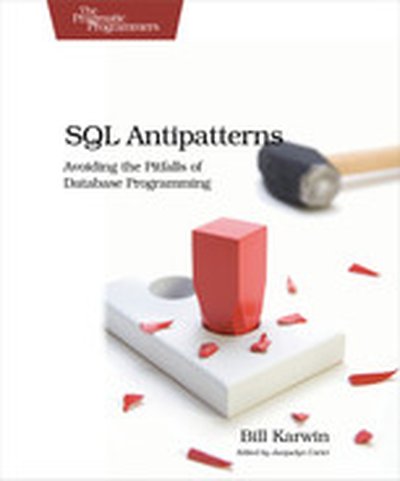
SQL Antipatterns

Bill Karwin has helped thousands of people write better SQL and build stronger relational databases. Now he's sharing his collection of antipatterns--the most common errors he's identified in those thousands of requests for help. Most developers aren't SQL experts, and most of the SQL that gets used is inefficient, hard to maintain, and sometimes just plain wrong. This book shows you all the common mistakes, and then leads you through the best fixes. What's more, it shows you what's behind these fixes, so you'll learn a lot about relational databases along the way. Each chapter in this book helps you identify, explain, and correct a unique and dangerous antipattern. The four parts of the book group the anti​patterns in terms of logical database design, physical database design, queries, and application development. The chances are good that your application's database layer already contains problems such as Index Shotgun, Keyless Entry, Fear of the Unknown, and Spaghetti Query. This book will help you and your team find them. Even better, it will also show you how to fix them, and how to avoid these and other problems in the future. SQL Antipatterns gives you a rare glimpse into an SQL expert's playbook. Now you can stamp out these common database errors once and for all. Whatever platform or programming language you use, whether you're a junior programmer or a Ph.D., SQL Antipatterns will show you how to design and build databases, how to write better database queries, and how to integrate SQL programming with your application like an expert. You'll also learn the best and most current technology for full-text search, how to design code that is resistant to SQL injection attacks, and other techniques for success.

SQL in a Nutshell, 3rd Edition

For programmers, analysts, and database administrators, SQL in a Nutshell is the essential reference for the SQL language used in today's most popular database products. This new edition clearly documents every SQL command according to the latest ANSI standard, and details how those commands are implemented in Microsoft SQL Server 2008, Oracle 11g, and the MySQL 5.1 and PostgreSQL 8.3 open source database products. You'll also get a concise overview of the Relational Database Management System (RDBMS) model, and a clear-cut explanation of foundational RDBMS concepts -- all packed into a succinct, comprehensive, and easy-to-use format. This book provides: Background on the Relational Database Model, including current and previous SQL standards Fundamental concepts necessary for understanding relational databases and SQL commands An alphabetical command reference to SQL statements, according to the SQL2003 ANSI standard The implementation of each command by MySQL, Oracle, PostgreSQL, and SQL Server An alphabetical reference of the ANSI SQL2003 functions, as well as the vendor implementations Platform-specific functions unique to each implementation Beginning where vendor documentation ends, SQL in a Nutshell distills the experiences of professional database administrators and developers who have used SQL variants to support complex enterprise applications. Whether SQL is new to you, or you've been using SQL since its earliest days, you'll get lots of new tips and techniques in this book.

Learning SQL on SQL Server 2005

Anyone who interacts with today's modern databases needs to know SQL (Structured Query Language), the standard language for generating, manipulating, and retrieving database information. In recent years, the dramatic rise in the popularity of relational databases and multi-user databases has fueled a healthy demand for application developers and others who can write SQL code efficiently and correctly. If you're new to databases, or need a SQL refresher, Learning SQL on SQL Server 2005 is an ideal step-by-step introduction to this database query tool, with everything you need for programming SQL using Microsoft's SQL Server 2005-one of the most powerful and popular database engines used today. Plenty of books explain database theory. This guide lets you apply the theory as you learn SQL. You don't need prior database knowledge, or even prior computer knowledge. Based on a popular university-level course designed by authors Sikha Saha Bagui and Richard Walsh Earp, Learning SQL on SQL Server 2005 starts with very simple SQL concepts, and slowly builds into more complex query development. Every topic, concept, and idea comes with examples of code and output, along with exercises to help you gain proficiency in SQL and SQL Server 2005. With this book, you'll learn: Beginning SQL commands, such as how and where to type an SQL query, and how to create, populate, alter and delete tables How to customize SQL Server 2005's settings and about SQL Server 2005's functions About joins, a common database mechanism for combining tables Query development, the use of views and other derived structures, and simple set operations Subqueries, aggregate functions and correlated subqueries, as well as indexes and constraints that can be added to tables in SQL Server 2005 Whether you're an undergraduate computer science or MIS student, a self-learner who has access to the new Microsoft database, or work for your company's IT department, Learning SQL on SQL Server 2005 will get you up to speed on SQL in no time.