talk-data.com talk-data.com

Topic

MySQL

relational_database open_source sql

268

tagged

Activity Trend

27 peak/qtr
2020-Q1 2026-Q1

Activities

268 activities · Newest first

AWS re:Invent 2025 - Amazon Aurora HA and DR design patterns for global resilience (DAT442)

Amazon Aurora is a serverless relational database with unparalleled high performance and availability at global scale for PostgreSQL, MySQL, and DSQL. Aurora provides managed high availability (HA) and disaster recovery (DR) capabilities in and across AWS Regions. In this session, explore the Aurora HA and DR capabilities and discover design patterns that enable the development of resilient applications. Learn how to establish in-Region and cross-Region HA and DR using Aurora features including Multi-AZ deployments and Aurora Global Database, and how Aurora DSQL multi-Region clusters provides the highest level of availability and application resilience.

Learn more: More AWS events: https://go.aws/3kss9CP

Subscribe: More AWS videos: http://bit.ly/2O3zS75 More AWS events videos: http://bit.ly/316g9t4

ABOUT AWS: Amazon Web Services (AWS) hosts events, both online and in-person, bringing the cloud computing community together to connect, collaborate, and learn from AWS experts. AWS is the world's most comprehensive and broadly adopted cloud platform, offering over 200 fully featured services from data centers globally. Millions of customers—including the fastest-growing startups, largest enterprises, and leading government agencies—are using AWS to lower costs, become more agile, and innovate faster.

AWSreInvent #AWSreInvent2025 #AWS

AWS re:Invent 2025 - Deep dive into Amazon Aurora and its innovations (DAT441)

With an innovative architecture that decouples compute from storage and advanced features like Amazon Aurora Global Database and low-latency read replicas, Aurora reimagines what it means to be a relational database. Aurora is a built-for-the-cloud, serverless relational database service that delivers unparalleled performance and availability at global scale for MySQL, PostgreSQL, and DSQL. In this session, dive deep into new features – and Aurora’s most popular offerings including serverless, I/O-Optimized, zero-ETL integrations, MCP integration, and generative AI support for vector search and storage. Also learn about the groundbreaking Aurora DSQL engine.

Learn more: More AWS events: https://go.aws/3kss9CP

Subscribe: More AWS videos: http://bit.ly/2O3zS75 More AWS events videos: http://bit.ly/316g9t4

ABOUT AWS: Amazon Web Services (AWS) hosts events, both online and in-person, bringing the cloud computing community together to connect, collaborate, and learn from AWS experts. AWS is the world's most comprehensive and broadly adopted cloud platform, offering over 200 fully featured services from data centers globally. Millions of customers—including the fastest-growing startups, largest enterprises, and leading government agencies—are using AWS to lower costs, become more agile, and innovate faster.

AWSreInvent #AWSreInvent2025 #AWS

Nasdaq Boardvantage: AI-driven governance on PostgreSQL and Microsoft Foundry

Trusted by nearly half of Fortune 100 companies, Nasdaq Boardvantage powers secure, intelligent board operations. In this deep dive session, explore how Azure Database for PostgreSQL and MySQL, Microsoft Foundry, Azure Kubernetes Service (AKS), and API Management create a resilient architecture that safeguards confidential data while unlocking new agentic AI capabilities.

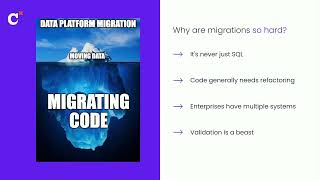
How CHG Healthcare saved 15 months on their migration to Snowflake + dbt Cloud

CHG Healthcare migrated 2000+ legacy MySQL jobs to dbt Cloud and Snowflake in record time. We'll share how Datafold used their AI-powered Migration Agent to migrate and refactor convoluted legacy code into dbt Cloud and Snowflake with full automatic validation, dramatically accelerating our modernization.

Software Architects choose tools and patterns with an eye toward cost, time, shelf-life, and standard features. Data API builder is not source generation — it's Microsoft's free Data API engine that exposes secure REST & GraphQL endpoints over SQL Server, Postgres, MySQL, and Azure Cosmos DB, whether in Azure, on-premises, or even in AWS or GCP. In this session, we'll discuss security & architecture options, and when to use GraphQL versus REST endpoints.

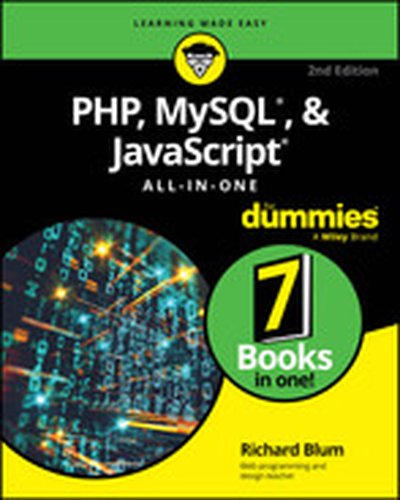
PHP, MySQL, & JavaScript All-In-One For Dummies, 2nd Edition

Learn the essentials of creating web apps with some of the most popular programming languages PHP, MySQL, & JavaScript All-in-One For Dummies bundles the essentials of coding in some of the most in-demand web development languages. You'll learn to create your own data-driven web applications and interactive web content. The three powerful languages covered in this book form the backbone of top online apps like Wikipedia and Etsy. Paired with the basics of HTML and CSS—also covered in this All-in-One Dummies guide—you can make dynamic websites with a variety of elements. This book makes it easy to get started. You'll also find coverage of advanced skills, as well as resources you'll appreciate when you're ready to level up. Get beginner-friendly instructions and clear explanations of how to program websites in common languages Understand the basics of object-oriented programming, interacting with databases, and connecting front- and back-end code Learn how to work according to popular DevOps principles, including containers and microservices Troubleshoot problems in your code and avoid common web development mistakes This All-in-One is a great value for new programmers looking to pick up web development skills, as well as those with more experience who want to expand to building web apps.

Creating a Custom PySpark Stream Reader with PySpark 4.0

PySpark supports many data sources out of the box, such as Apache Kafka, JDBC, ODBC, Delta Lake, etc. However, some older systems, such as systems that use JMS protocol, are not supported by default and require considerable extra work for developers to read from them. One such example is ActiveMQ for streaming. Traditionally, users of ActiveMQ have to use a middle-man in order to read the stream with Spark (such as writing to a MySQL DB using Java code and reading that table with Spark JDBC). With PySpark 4.0’s custom data sources (supported in DBR 15.3+) we are able to cut out the middle-man processing using batch or Spark Streaming and consume the queues directly from PySpark, saving developers considerable time and complexity in getting source data into your Delta Lake and governed by Unity Catalog and orchestrated with Databricks Workflows.

Sponsored by: Fivetran | Raw Data to Real-Time Insights: How Dropbox Revolutionized Data Ingestion

Dropbox, a leading cloud storage platform, is on a mission to accelerate data insights to better understand customers’ needs and elevate the overall customer experience. By leveraging Fivetran’s data movement platform, Dropbox gained real-time visibility into customer sentiment, marketing ROI, and ad performance-empowering teams to optimize spend, improve operational efficiency, and deliver greater business outcomes.Join this session to learn how Dropbox:- Cut data pipeline time from 8 weeks to 30 minutes by automating ingestion and streamlining reporting workflows.- Enable real-time, reliable data movement across tools like Zendesk Chat, Google Ads, MySQL, and more — at global operations scale.- Unify fragmented data sources into the Databricks Data Intelligence Platform to reduce redundancy, improve accessibility, and support scalable analytics.

Time to make generative AI a reality for your application. This session is all about how to build high-performance gen AI applications fast with Cloud SQL for MySQL and PostgreSQL. Learn about Google Cloud’s innovative full-stack solutions that make gen AI app development, deployment, and operations simple and easy – even when deploying high-performance, production-grade applications. We’ll highlight best practices for getting started with Vertex AI, Cloud Run, Google Kubernetes Engine, and Cloud SQL, so that you can focus on gen AI application development from the get-go.

Build resilient, scalable applications that thrive in the face of increasing demands. Cloud SQL offers new features designed to optimize performance, availability, and cost efficiency for MySQL and PostgreSQL databases, managed replica pools, and connection pooling. Learn how to make downtime a thing of the past, implement advanced disaster recovery strategies, and maximize your application’s performance. Join our demo-packed session for a deep dive into these new Cloud SQL capabilities and best practices.

AI is revolutionizing observability. Learn about Cloud SQL AI-powered Database Insights and how it can help you optimize your queries and boost database performance. We’ll dive deep into the new Insights capabilities for MySQL, PostgreSQL, and SQL Server, including the Gemini-powered chat agent. Learn how to troubleshoot those tricky database performance issues and get practical tips to improve the performance of your applications.

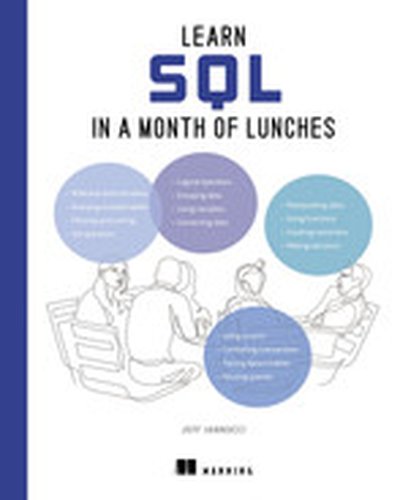
Learn SQL in a Month of Lunches

Use SQL to get the data you need in no time at all! Learn to read and write basic queries, troubleshoot common problems, and control your own business data in just 24 short lessons–no programming experience required! SQL has been designed to be as close to English as possible—anyone can learn it! Learn SQL in a Month of Lunches helps you add this lucrative and highly sought-after skill to your resume in just 24 fun and friendly lessons. The book emphasizes practical uses for the language in the real-world, so you’ll just learn the most useful skills for business data analysis. Inside Learn SQL in a Month of Lunches you’ll discover how to: Set up your first database with MySQL Write your own SQL queries See only the data you need from large datasets Connect different sets of data Analyze data with functions and aggregations Master basic data manipulation techniques Save queries in stored procedures and views Create tables to store data efficiently Read and improve SQL written by others If you use Excel, Tableau, or PowerBI to crunch business data, you’ve probably seen a lot of SQL already. And guess what? It’s easy to master the most useful parts of SQL! In just a few quick lessons, Learn SQL in a Month of Lunches will get you writing your own queries, modifying existing SQL statements, and working with data like a pro. 25-year SQL veteran Jeff Iannucci makes SQL a snap through hands-on lab exercises, relevant code examples, and easy-to-understand language. About the Technology SQL, Structured Query Language, is the standard way to query, create, and manage relational databases like SQL Server, PostgreSQL, and Oracle. It’s also a superpower for data analysts who need to go beyond spreadsheets and BI dashboarding tools. SQL is easy to read and understand, and with this book (and a little practice) you’ll be pulling data, tweaking tables, and cranking out amazing reports and presentations in no time at all! About the Book Learn SQL in a Month of Lunches introduces SQL to data analysts and other aspiring data pros with no prior experience using relational databases. In it, you’ll complete 24 short lessons, each of which teaches an essential SQL skill for retrieving, filtering, and analyzing data. You’ll practice each new technique with a friendly hands-on lab designed to take about 15 minutes, as you learn to write queries that deliver the exact data you need. Along the way, you’ll build a valuable intuition for how databases operate in real business scenarios. What's Inside Get the data you need from any relational database Filter, sort, and group data Combine data from multiple tables Create, update, and delete data About the Reader For students, aspiring data analysts, software developers, and anyone else who wants to work with relational databases. About the Author Jeff Iannucci is a Senior Consultant with Straight Path Solutions. For over 20 years, he has worked extensively with SQL in sectors such as healthcare, finance, retail sales, and government. Quotes An essential guide. Jeff has carefully developed each chapter to ensure clarity and comprehensiveness, making complex concepts accessible and practical. - Buck Woody, Microsoft The fastest and the most effective way to learn SQL, regardless of your background or technical knowledge level. - Kevin Kline, author of SQL in a Nutshell Explains concepts straightforwardly to help the reader grow their skills over a month of sessions. - Steve Jones, SQL Server Central Great selection of bite-sized, digestible courses to complement your lunch arrangement. It leaves you smarter every day. - Simon Tschöke, Databricks

AWS re:Invent 2024 - Customer Keynote Too Good to Go

Too Good To Go, a Danish start-up focused on fighting food waste, discusses how it managed complexity as it faced challenges of rapid growth and global expansion, while helping save over 400 million meals from going to waste. This includes rapidly scaling its initial PHP application with a single MySQL database to serve its growing user base, and implementing solutions like Amazon Aurora.

Learn more about AWS events: https://go.aws/events

Subscribe: More AWS videos: http://bit.ly/2O3zS75 More AWS events videos: http://bit.ly/316g9t4

ABOUT AWS Amazon Web Services (AWS) hosts events, both online and in-person, bringing the cloud computing community together to connect, collaborate, and learn from AWS experts. AWS is the world’s most comprehensive and broadly adopted cloud platform, offering over 200 fully featured services from data centers globally. Millions of customers—including the fastest-growing startups, largest enterprises, and leading government agencies—are using AWS to lower costs, become more agile, and innovate faster.

AWSreInvent #AWSreInvent2024 #AWS

AWS re:Invent 2024 - Achieving scale with Amazon Aurora PostgreSQL Limitless Database (DAT420)

Amazon Aurora is a relational database service built for the cloud that is designed for unparalleled high performance and availability at global scale, with full MySQL and PostgreSQL compatibility. In this session, learn how Amazon Aurora PostgreSQL Limitless Database enables applications to scale to millions of transactions per second across petabytes of data. Explore the architecture, distributed transaction management, and serverless scaling capabilities of Aurora PostgreSQL Limitless Database. Also, discover application patterns that are a good fit for Aurora PostgreSQL Limitless Database and which patterns to avoid. Learn how Aurora PostgreSQL Limitless Database makes it easier than ever to scale Aurora.

Learn more: AWS re:Invent: https://go.aws/reinvent. More AWS events: https://go.aws/3kss9CP

Subscribe: More AWS videos: http://bit.ly/2O3zS75 More AWS events videos: http://bit.ly/316g9t4

About AWS: Amazon Web Services (AWS) hosts events, both online and in-person, bringing the cloud computing community together to connect, collaborate, and learn from AWS experts. AWS is the world's most comprehensive and broadly adopted cloud platform, offering over 200 fully featured services from data centers globally. Millions of customers—including the fastest-growing startups, largest enterprises, and leading government agencies—are using AWS to lower costs, become more agile, and innovate faster.

AWSreInvent #AWSreInvent2024

AWS re:Invent 2024 - Deep dive into Amazon Aurora and its innovations (DAT405)

With an innovative architecture that decouples compute from storage and advanced features like Global Database and low-latency read replicas, Amazon Aurora reimagines what it means to be a relational database. Aurora is a modern database service offering unparalleled performance and high availability at scale with full open source MySQL and PostgreSQL compatibility. In this session, dive deep into the most exciting new features that Aurora offers, including Aurora Limitless Database, Aurora I/O-Optimized, Aurora zero-ETL integration with Amazon Redshift, and Aurora Serverless v2. Additionally, learn how the addition of the pgvector extension allows for the storage of vector embeddings and support of vector similarity searches for generative AI.

Learn more: AWS re:Invent: https://go.aws/reinvent. More AWS events: https://go.aws/3kss9CP

Subscribe: More AWS videos: http://bit.ly/2O3zS75 More AWS events videos: http://bit.ly/316g9t4

About AWS: Amazon Web Services (AWS) hosts events, both online and in-person, bringing the cloud computing community together to connect, collaborate, and learn from AWS experts. AWS is the world's most comprehensive and broadly adopted cloud platform, offering over 200 fully featured services from data centers globally. Millions of customers—including the fastest-growing startups, largest enterprises, and leading government agencies—are using AWS to lower costs, become more agile, and innovate faster.

AWSreInvent #AWSreInvent2024

AWS re:Invent 2024 - Amazon Aurora HA and DR design patterns for global resilience (DAT304)

Amazon Aurora is a fully managed relational database designed for unparalleled high performance and availability at global scale with full MySQL and PostgreSQL compatibility. Aurora provides managed high availability (HA) and disaster recovery (DR) capabilities in and across AWS Regions. In this session, explore the Aurora HA and DR capabilities and discover design patterns that enable the development of resilient applications. Learn how to establish in-Region and cross-Region HA and DR using Aurora features, including Multi-AZ deployments, Aurora Global Database, and Amazon RDS Proxy, and discover how to reduce failover times with a JDBC driver.

Learn more: AWS re:Invent: https://go.aws/reinvent. More AWS events: https://go.aws/3kss9CP

Subscribe: More AWS videos: http://bit.ly/2O3zS75 More AWS events videos: http://bit.ly/316g9t4

About AWS: Amazon Web Services (AWS) hosts events, both online and in-person, bringing the cloud computing community together to connect, collaborate, and learn from AWS experts. AWS is the world's most comprehensive and broadly adopted cloud platform, offering over 200 fully featured services from data centers globally. Millions of customers—including the fastest-growing startups, largest enterprises, and leading government agencies—are using AWS to lower costs, become more agile, and innovate faster.

AWSreInvent #AWSreInvent2024

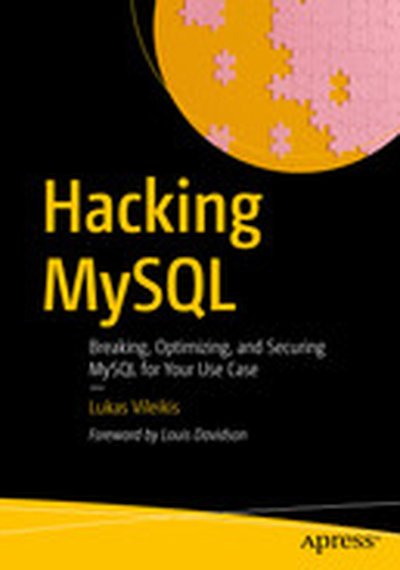
Hacking MySQL: Breaking, Optimizing, and Securing MySQL for Your Use Case

Your MySQL instances are probably broken. Many developers face slow-running queries, issues related to database architecture, replication, or database security—and that’s only the beginning. This book will deliver answers to your most pressing MySQL database questions related to performance, availability, or security by uncovering what causes databases to break in the first place. At its core, this book provides you with the knowledge necessary for you to break your database instances so you can better optimize it for performance and secure it from data breaches. In other words, you’ll discover the sorts of actions, minor and major, that degrade databases so you can fix and ultimately preempt them. MySQL sometimes acts according to its own rules, and this book will help you keep it working on your terms. At the same time, you will learn to optimize your backup and recovery procedures, determine when and which data to index to achieve maximum performance, and choose the best MySQL configurations, among other essential skills. Most MySQL books focus exclusively on optimization, but this book argues that it’s just as important to pay attention to the ways databases break. Indeed, after reading this book, you will be able to safely break your database instances to expose and overcome the nuanced issues that affect performance, availability, and security. What You Will Learn Know the basics of MySQL and the storage engines innoDB and MyISAM Spot the ways you are harming your database’s performance, availability and security without even realizing it Fix minor bugs and issues that have surprisingly serious impact Optimize schema, data types, queries, indexes, and partitions to head off issues Understand key MySQL security strategies Who This Book Is For Database administrators, web developers, systems administrators, and security professionals with an intermediary knowledge of database management systems and building applications in MySQL

Summary In this episode of the Data Engineering Podcast Sam Kleinman talks about the pivotal role of databases in software engineering. Sam shares his journey into the world of data and discusses the complexities of database selection, highlighting the trade-offs between different database architectures and how these choices affect system design, query performance, and the need for ETL processes. He emphasizes the importance of understanding specific requirements to choose the right database engine and warns against over-engineering solutions that can lead to increased complexity. Sam also touches on the tendency of engineers to move logic to the application layer due to skepticism about database longevity and advises teams to leverage database capabilities instead. Finally, he identifies a significant gap in data management tooling: the lack of easy-to-use testing tools for database interactions, highlighting the need for better testing paradigms to ensure reliability and reduce bugs in data-driven applications.

Announcements Hello and welcome to the Data Engineering Podcast, the show about modern data managementIt’s 2024, why are we still doing data migrations by hand? Teams spend months—sometimes years—manually converting queries and validating data, burning resources and crushing morale. Datafold's AI-powered Migration Agent brings migrations into the modern era. Their unique combination of AI code translation and automated data validation has helped companies complete migrations up to 10 times faster than manual approaches. And they're so confident in their solution, they'll actually guarantee your timeline in writing. Ready to turn your year-long migration into weeks? Visit dataengineeringpodcast.com/datafold today to learn how Datafold can automate your migration and ensure source to target parity. Your host is Tobias Macey and today I'm interviewing Sam Kleinman about database tradeoffs across operating environments and axes of scaleInterview IntroductionHow did you get involved in the area of data management?The database engine you use has a substantial impact on how you architect your overall system. When starting a greenfield project, what do you see as the most important factor to consider when selecting a database?points of friction introduced by database capabilitiesembedded databases (e.g. SQLite, DuckDB, LanceDB), when to use and when do they become a bottlenecksingle-node database engines (e.g. Postgres, MySQL), when are they legitimately a problemdistributed databases (e.g. CockroachDB, PlanetScale, MongoDB)polyglot storage vs. general-purpose/multimodal databasesfederated queries, benefits and limitations ease of integration vs. variability of performance and access control Contact Info LinkedInGitHubParting Question From your perspective, what is the biggest gap in the tooling or technology for data management today?Closing Announcements Thank you for listening! Don't forget to check out our other shows. Podcast.init covers the Python language, its community, and the innovative ways it is being used. The AI Engineering Podcast is your guide to the fast-moving world of building AI systems.Visit the site to subscribe to the show, sign up for the mailing list, and read the show notes.If you've learned something or tried out a project from the show then tell us about it! Email [email protected] with your story.Links MongoDBNeonPodcast EpisodeGlareDBNoSQLS3 Conditional WriteEvent driven architectureCockroachDBCouchbaseCassandraThe intro and outro music is from The Hug by The Freak Fandango Orchestra / CC BY-SA

Unlock the power of open-source databases in Azure | BRK207

Microsoft is making significant investments in relational and NoSQL open-source databases. Learn about Azure Database for PostgreSQL, Azure Database for MySQL, Azure Cosmos DB for MongoDB, with new enterprise-ready features to support daily business operations. See new migration capabilities as well as Microsoft's new contributions to the open-source community, including DiskANN, a PostgreSQL extension for Azure OpenAI Service, and much more.

𝗦𝗽𝗲𝗮𝗸𝗲𝗿𝘀: * Aditi Gupta * AVIJIT GUPTA * Dingding Lu * Prasanth Tammiraju

𝗦𝗲𝘀𝘀𝗶𝗼𝗻 𝗜𝗻𝗳𝗼𝗿𝗺𝗮𝘁𝗶𝗼𝗻: This is one of many sessions from the Microsoft Ignite 2024 event. View even more sessions on-demand and learn about Microsoft Ignite at https://ignite.microsoft.com

BRK207 | English (US) | Data

MSIgnite