The core of enterprise’s agentic transformation involves autonomous AI agents to handle complex tasks and a workflow logic that is dynamic/decision driven. The success of agentic transformation hinges on access to high-quality, trusted and well-governed data. Explore how Informatica, Microsoft Foundry and Microsoft Fabric power agentic workflows through MCP and dive into an architectural blueprint/demo of metadata driven data discovery, automated data quality and enriched master data.
 talk-data.com
Topic
Informatica
data_integration
etl
data_management
45
tagged
Activity Trend
10
peak/qtr
2020-Q1
2026-Q2
Top Events
Data Engineering Podcast
20
O'Reilly Data Science Books
9
Data + AI Summit 2025
3
Secrets of Data Analytics Leaders
3
DataFramed
2
Microsoft Ignite 2025
1
gartner-data-analytics-apac-2025
1
Databricks DATA + AI Summit 2023
1
Google Cloud Next '25
1
Airflow Summit 2021
1
O'Reilly Data Engineering Books
1
gartner-data-analytics-uk-2025
1
The journey from startup to billion-dollar enterprise requires more than just a great product—it demands strategic alignment between sales and marketing. How do you identify your ideal customer profile when you're just starting out? What data signals help you find the twins of your successful early adopters? With AI now automating everything from competitive analysis to content creation, the traditional boundaries between departments are blurring. But what personality traits should you look for when building teams that can scale with your growth? And how do you ensure your data strategy supports rather than hinders your AI ambitions in this rapidly evolving landscape? Denise Persson is CMO at Snowflake and has 20 years of technology marketing experience at high-growth companies. Prior to joining Snowflake, she served as CMO for Apigee, an API platform company that went public in 2015 and Google acquired in 2016. She began her career at collaboration software company Genesys, where she built and led a global marketing organization. Denise also helped lead Genesys through its expansion to become a successful IPO and acquired company. Denise holds a BA in Business Administration and Economics from Stockholm University, and holds an MBA from Georgetown University. Chris Degnan is the former CRO at Snowflake and has over 15 years of enterprise technology sales experience. Before working at Snowflake, Chris served as the AVP of the West at EMC, and prior to that as VP Western Region at Aveksa, where he helped grow the business 250% year-over-year. Before Aveksa, Chris spent eight years at EMC and managed a team responsible for 175 select accounts. Prior to EMC, Chris worked in enterprise sales at Informatica and Covalent Technologies (acquired by VMware). He holds a BA from the University of Delaware. In the episode, Richie, Denise, and Chris explore the journey to a billion-dollar ARR, the importance of customer obsession, aligning sales and marketing, leveraging data for decision-making, and the role of AI in scaling operations, and much more. Links Mentioned in the Show: SnowflakeSnowflake BUILDConnect with Denise and ChrisSnowflake is FREE on DataCamp this weekRelated Episode: Adding AI to the Data Warehouse with Sridhar Ramaswamy, CEO at SnowflakeRewatch RADAR AI New to DataCamp? Learn on the go using the DataCamp mobile appEmpower your business with world-class data and AI skills with DataCamp for business
Un témoignage inspirant pour les entreprises souhaitant moderniser leur stack ETL et exploiter pleinement les avantages du cloud.
MACIF partage son retour d'expérience sur la migration de plus de 400 workflows Informatica vers BigQuery et la plateforme dbt, en utilisant les accélérateurs développés par Infinite Lambda, dans le cadre de son projet de modernisation data "Move to Cloud".
Aux côtés de Laurent, découvrez comment la MACIF a tiré parti du cloud pour accélérer la livraison de ses data products, réduire les risques techniques et améliorer la gouvernance des données.
Join Transurban as they share their journey, highlighting how enhanced data visibility and effective remediation have transformed their data culture and driven improved business value in infrastructure and road operations. Gain insights into Transurban’s plans for leveraging AI governance in the future to unlock further benefits and optimize industry practices.
As enterprises continue their journey to the cloud, data warehouse and data management modernization is essential to optimize analytics and drive business outcomes. Minimizing modernization timelines is important for reducing risk and shortening time to value – and ensuring enterprise data is clean, curated and governed is imperative to enable analytics and AI initiatives. In this session, learn how Informatica's Intelligent Data Management Cloud (IDMC) empowers analytics and AI on Databricks by helping data teams: · Develop no-code/low-code data pipelines that ingest, transform and clean data at enterprise scale · Improve data quality and extend enterprise governance with Informatica Cloud Data Governance and Catalog (CDGC) and Unity Catalog · Accelerate pilot-to-production with Mosaic AI
Supercharge advanced analytics and AI insights on Databricks with accurate and consistent master data. This session explores how Informatica’s Master Data Management (MDM) integrates with Databricks to provide high-quality, integrated golden record data like customer, supplier, product 360 or reference data to support downstream analytics, Generative AI and Agentic AI. Enterprises can accelerate and de-risk the process of creating a golden record via a no-code/low-code interface, allowing data teams to quickly integrate siloed data and create a complete and consistent record that improves decision-making speed and accuracy.
Join this 20-minute session to learn how Informatica CDGC integrates with and leverages Unity Catalog metadata to provide end-to-end governance and security across an enterprise data landscape. Topics covered will include: Comprehensive data lineage that provides complete data transformation visibility across multicloud and hybrid environments -Broad data source support to facilitate holistic cataloging and a centralized governance framework Centralized access policy management and data stewardship to enable compliance with regulatory standards Rich data quality to ensure data is cleansed, validated and trusted for analytics and AI
Learn how one of Europe's leading insurers is leveraging AI in it's Next Generation Data Governance strategy. This presentation reveals the essence of AI ready data, comprehensive metadata frameworks, product thinking and data excellence to power data governance and AI adoption at scale.
Essential insights for data leaders seeking to combine transformative AI capabilities with enterprise-grade data management.
It’s Happy Hour time! Join us today from 4:30 PM to 6 PM in the Expo for drinks and networking. Don’t forget to stop by our sponsor “hot spots” for tasty treats: AMD, Ab Initio, Cribl, Incorta, Informatica, Rubrik, SADA, an Insight Company, SAP and Tenable.
Building a robust data infrastructure is crucial for any organization looking to leverage AI and data-driven insights. But as your data ecosystem grows, so do the challenges of managing, securing, and scaling it. How do you ensure that your data infrastructure not only meets today’s needs but is also prepared for the rapid changes in technology tomorrow? What strategies can you adopt to keep your organization agile, while ensuring that your data investments continue to deliver value and support business goals? Saad Siddiqui is a venture capitalist for Titanium Ventures. Titanium focus on enterprise technology investments, particularly focusing on next generation enterprise infrastructure and applications. In his career, Saad has deployed over $100M in venture capital in over a dozen companies. In previous roles as a corporate development executive, he has executed M&A transactions valued at over $7 billion in aggregate. Prior to Titanium Ventures he was in corporate development at Informatica and was a member of Cisco's venture investing and acquisitions team covering cloud, big data and virtualization. In the episode, Richie and Saad explore the business impacts of data infrastructure, getting started with data infrastructure, the roles and teams you need to get started, scalability and future-proofing, implementation challenges, continuous education and flexibility, automation and modernization, trends in data infrastructure, and much more. Links Mentioned in the Show: Titanium VenturesConnect with SaadCourse - Artificial Intelligence (AI) StrategyRelated Episode: How are Businesses Really Using AI? With Tathagat Varma, Global TechOps Leader at Walmart Global TechRewatch sessions from RADAR: AI Edition New to DataCamp? Learn on the go using the DataCamp mobile appEmpower your business with world-class data and AI skills with DataCamp for business

Computational Intelligence in Sustainable Computing and Optimization: Trends and Applications focuses on developing and evolving advanced computational intelligence algorithms for the analysis of data involved in applications, such as agriculture, biomedical systems, bioinformatics, business intelligence, economics, disaster management, e-learning, education management, financial management, and environmental policies. The book presents research in sustainable computing and optimization, combining methods from engineering, mathematics, artificial intelligence, and computer science to optimize environmental resources Computational intelligence in the field of sustainable computing combines computer science and engineering in applications ranging from Internet of Things (IoT), information security systems, smart storage, cloud computing, intelligent transport management, cognitive and bio-inspired computing, and management science. In addition, data intelligence techniques play a critical role in sustainable computing. Recent advances in data management, data modeling, data analysis, and artificial intelligence are finding applications in energy networks and thus making our environment more sustainable. Presents computational, intelligence–based data analysis for sustainable computing applications such as pattern recognition, biomedical imaging, sustainable cities, sustainable transport, sustainable agriculture, and sustainable financial management Develops research in sustainable computing and optimization, combining methods from engineering, mathematics, and computer science to optimize environmental resources Includes three foundational chapters dedicated to providing an overview of computational intelligence and optimization techniques and their applications for sustainable computing
Summary
All software systems are in a constant state of evolution. This makes it impossible to select a truly future-proof technology stack for your data platform, making an eventual migration inevitable. In this episode Gleb Mezhanskiy and Rob Goretsky share their experiences leading various data platform migrations, and the hard-won lessons that they learned so that you don't have to.
Announcements
Hello and welcome to the Data Engineering Podcast, the show about modern data management Introducing RudderStack Profiles. RudderStack Profiles takes the SaaS guesswork and SQL grunt work out of building complete customer profiles so you can quickly ship actionable, enriched data to every downstream team. You specify the customer traits, then Profiles runs the joins and computations for you to create complete customer profiles. Get all of the details and try the new product today at dataengineeringpodcast.com/rudderstack Modern data teams are using Hex to 10x their data impact. Hex combines a notebook style UI with an interactive report builder. This allows data teams to both dive deep to find insights and then share their work in an easy-to-read format to the whole org. In Hex you can use SQL, Python, R, and no-code visualization together to explore, transform, and model data. Hex also has AI built directly into the workflow to help you generate, edit, explain and document your code. The best data teams in the world such as the ones at Notion, AngelList, and Anthropic use Hex for ad hoc investigations, creating machine learning models, and building operational dashboards for the rest of their company. Hex makes it easy for data analysts and data scientists to collaborate together and produce work that has an impact. Make your data team unstoppable with Hex. Sign up today at dataengineeringpodcast.com/hex to get a 30-day free trial for your team! Your host is Tobias Macey and today I'm interviewing Gleb Mezhanskiy and Rob Goretsky about when and how to think about migrating your data stack
Interview
Introduction How did you get involved in the area of data management? A migration can be anything from a minor task to a major undertaking. Can you start by describing what constitutes a migration for the purposes of this conversation? Is it possible to completely avoid having to invest in a migration? What are the signals that point to the need for a migration?
What are some of the sources of cost that need to be accounted for when considering a migration? (both in terms of doing one, and the costs of not doing one) What are some signals that a migration is not the right solution for a perceived problem?
Once the decision has been made that a migration is necessary, what are the questions that the team should be asking to determine the technologies to move to and the sequencing of execution? What are the preceding tasks that should be completed before starting the migration to ensure there is no breakage downstream of the changing component(s)? What are some of the ways that a migration effort might fail? What are the major pitfalls that teams need to be aware of as they work through a data platform migration? What are the opportunities for automation during the migration process? What are the most interesting, innovative, or unexpected ways that you have seen teams approach a platform migration? What are the most interesting, unexpected, or challenging lessons that you have learned while working on data platform migrations? What are some ways that the technologies and patterns that we use can be evolved to reduce the cost/impact/need for migraitons?
Contact Info
Gleb
LinkedIn @glebmm on Twitter
Rob
LinkedIn RobGoretsky on GitHub
Parting Question
From your perspective, what is the biggest gap in the tooling or technology for data management today?
Closing Announcements
Thank you for listening! Don't forget to check out our other shows. Podcast.init covers the Python language, its community, and the innovative ways it is being used. The Machine Learning Podcast helps you go from idea to production with machine learning. Visit the site to subscribe to the show, sign up for the mailing list, and read the show notes. If you've learned something or tried out a project from the show then tell us about it! Email [email protected]) with your story. To help other people find the show please leave a review on Apple Podcasts and tell your friends and co-workers
Links
Datafold
Podcast Episode
Informatica Airflow Snowflake
Podcast Episode
Redshift Eventbrite Teradata BigQuery Trino EMR == Elastic Map-Reduce Shadow IT
Podcast Episode
Mode Analytics Looker Sunk Cost Fallacy data-diff
Podcast Episode
SQLGlot Dagster dbt
The intro and outro music is from The Hug by The Freak Fandango Orchestra / CC BY-SA
Sponsored By:
Hex: 
Hex is a collaborative workspace for data science and analytics. A single place for teams to explore, transform, and visualize data into beautiful interactive reports. Use SQL, Python, R, no-code and AI to find and share insights across your organization. Empower everyone in an organization to make an impact with data. Sign up today at [dataengineeringpodcast.com/hex](https://www.dataengineeringpodcast.com/hex} and get 30 days free!Rudderstack: 
Introducing RudderStack Profiles. RudderStack Profiles takes the SaaS guesswork and SQL grunt work out of building complete customer profiles so you can quickly ship actionable, enriched data to every downstream team. You specify the customer traits, then Profiles runs the joins and computations for you to create complete customer profiles. Get all of the details and try the new product today at dataengineeringpodcast.com/rudderstackSupport Data Engineering Podcast
Summary
For business analytics the way that you model the data in your warehouse has a lasting impact on what types of questions can be answered quickly and easily. The major strategies in use today were created decades ago when the software and hardware for warehouse databases were far more constrained. In this episode Maxime Beauchemin of Airflow and Superset fame shares his vision for the entity-centric data model and how you can incorporate it into your own warehouse design.
Announcements
Hello and welcome to the Data Engineering Podcast, the show about modern data management Introducing RudderStack Profiles. RudderStack Profiles takes the SaaS guesswork and SQL grunt work out of building complete customer profiles so you can quickly ship actionable, enriched data to every downstream team. You specify the customer traits, then Profiles runs the joins and computations for you to create complete customer profiles. Get all of the details and try the new product today at dataengineeringpodcast.com/rudderstack Your host is Tobias Macey and today I'm interviewing Max Beauchemin about the concept of entity-centric data modeling for analytical use cases
Interview
Introduction How did you get involved in the area of data management? Can you describe what entity-centric modeling (ECM) is and the story behind it?
How does it compare to dimensional modeling strategies? What are some of the other competing methods Comparison to activity schema
What impact does this have on ML teams? (e.g. feature engineering)
What role does the tooling of a team have in the ways that they end up thinking about modeling? (e.g. dbt vs. informatica vs. ETL scripts, etc.)
What is the impact on the underlying compute engine on the modeling strategies used?
What are some examples of data sources or problem domains for which this approach is well suited?
What are some cases where entity centric modeling techniques might be counterproductive?
What are the ways that the benefits of ECM manifest in use cases that are down-stream from the warehouse?
What are some concrete tactical steps that teams should be thinking about to implement a workable domain model using entity-centric principles?
How does this work across business domains within a given organization (especially at "enterprise" scale)?
What are the most interesting, innovative, or unexpected ways that you have seen ECM used?
What are the most interesting, unexpected, or challenging lessons that you have learned while working on ECM?
When is ECM the wrong choice?
What are your predictions for the future direction/adoption of ECM or other modeling techniques?
Contact Info
mistercrunch on GitHub LinkedIn
Parting Question
From your perspective, what is the biggest gap in the tooling or technology for data management today?
Closing Announcements
Thank you for listening! Don't forget to check out our other shows. Podcast.init covers the Python language, its community, and the innovative ways it is being used. The Machine Learning Podcast helps you go from idea to production with machine learning. Visit the site to subscribe to the show, sign up for the mailing list, and read the show notes. If you've learned something or tried out a project from the show then tell us about it! Email [email protected]) with your story. To help other people find the show please leave a review on Apple Podcasts and tell your friends and co-workers
Links
Entity Centric Modeling Blog Post Max's Previous Apperances
Defining Data Engineering with Maxime Beauchemin Self Service Data Exploration And Dashboarding With Superset Exploring The Evolving Role Of Data Engineers Alumni Of AirBnB's Early Years Reflect On What They Learned About Building Data Driven Organizations
Apache Airflow Apache Superset Preset Ubisoft Ralph Kimball The Rise Of The Data Engineer The Downfall Of The Data Engineer The Rise Of The Data Scientist Dimensional Data Modeling Star Schema Databas
Data observability provides intelligence about data quality and data pipeline performance, contributing to the disciplines of DataOps and FinOps. Vendors such as DataKitchen, DataOps.live, Informatica, and Unravel offer solutions to help enterprises address these overlapping disciplines. Published at: https://www.eckerson.com/articles/the-blending-disciplines-of-data-observability-dataops-and-finops
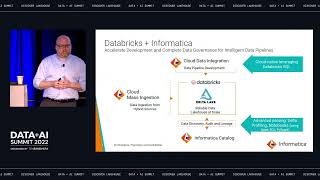
The hard part of ML and analytics is not building data models. It’s getting the data right and into production. Join us to learn how Informatica’s Intelligent Data Management Cloud (IDMC) helps you maximize the benefits of the Databricks’ Unified Analytics platform. Learn how our cloud-native capabilities can shorten your time to results. See how to enable more data users to easily load data and develop data engineering workflows on Databricks in ELT mode at scale. Find out how Informatica delivers all the necessary governance and compliance guardrails you need to operate analytics, AI and ML. Accelerate adoption and maximize agility while maintaining control of your data and lowering risk.
Connect with us: Website: https://databricks.com Facebook: https://www.facebook.com/databricksinc Twitter: https://twitter.com/databricks LinkedIn: https://www.linkedin.com/company/data... Instagram: https://www.instagram.com/databricksinc/
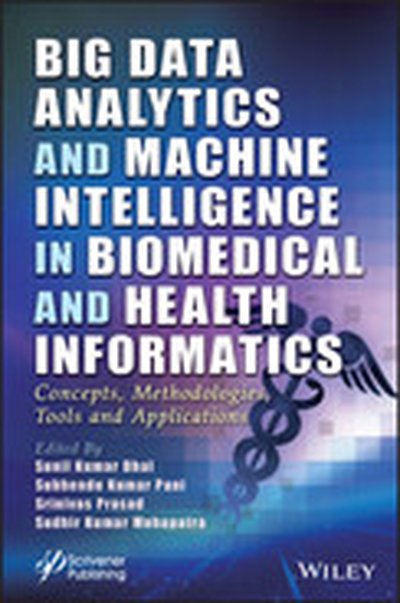
BIG DATA ANALYTICS AND MACHINE INTELLIGENCE IN BIOMEDICAL AND HEALTH INFORMATICS Provides coverage of developments and state-of-the-art methods in the broad and diversified data analytics field and applicable areas such as big data analytics, data mining, and machine intelligence in biomedical and health informatics. The novel applications of Big Data Analytics and machine intelligence in the biomedical and healthcare sector is an emerging field comprising computer science, medicine, biology, natural environmental engineering, and pattern recognition. Biomedical and health informatics is a new era that brings tremendous opportunities and challenges due to the plentifully available biomedical data and the aim is to ensure high-quality and efficient healthcare by analyzing the data. The 12 chapters in??Big Data Analytics and Machine Intelligence in Biomedical and Health Informatics??cover the latest advances and developments in health informatics, data mining, machine learning, and artificial intelligence. They have been organized with respect to the similarity of topics addressed, ranging from issues pertaining to the Internet of Things (IoT) for biomedical engineering and health informatics, computational intelligence for medical data processing, and Internet of Medical Things??(IoMT). New researchers and practitioners working in the field will benefit from reading the book as they can quickly ascertain the best performing methods and compare the different approaches. Audience Researchers and practitioners working in the fields of biomedicine, health informatics, big data analytics, Internet of Things, and machine learning.
Summary Metadata is the lifeblood of your data platform, providing information about what is happening in your systems. A variety of platforms have been developed to capture and analyze that information to great effect, but they are inherently limited in their utility due to their nature as storage systems. In order to level up their value a new trend of active metadata is being implemented, allowing use cases like keeping BI reports up to date, auto-scaling your warehouses, and automated data governance. In this episode Prukalpa Sankar joins the show to talk about the work she and her team at Atlan are doing to push this capability into the mainstream.
Announcements
Hello and welcome to the Data Engineering Podcast, the show about modern data management When you’re ready to build your next pipeline, or want to test out the projects you hear about on the show, you’ll need somewhere to deploy it, so check out our friends at Linode. With their new managed database service you can launch a production ready MySQL, Postgres, or MongoDB cluster in minutes, with automated backups, 40 Gbps connections from your application hosts, and high throughput SSDs. Go to dataengineeringpodcast.com/linode today and get a $100 credit to launch a database, create a Kubernetes cluster, or take advantage of all of their other services. And don’t forget to thank them for their continued support of this show! RudderStack helps you build a customer data platform on your warehouse or data lake. Instead of trapping data in a black box, they enable you to easily collect customer data from the entire stack and build an identity graph on your warehouse, giving you full visibility and control. Their SDKs make event streaming from any app or website easy, and their state-of-the-art reverse ETL pipelines enable you to send enriched data to any cloud tool. Sign up free… or just get the free t-shirt for being a listener of the Data Engineering Podcast at dataengineeringpodcast.com/rudder. Data teams are increasingly under pressure to deliver. According to a recent survey by Ascend.io, 95% in fact reported being at or over capacity. With 72% of data experts reporting demands on their team going up faster than they can hire, it’s no surprise they are increasingly turning to automation. In fact, while only 3.5% report having current investments in automation, 85% of data teams plan on investing in automation in the next 12 months. 85%!!! That’s where our friends at Ascend.io come in. The Ascend Data Automation Cloud provides a unified platform for data ingestion, transformation, orchestration, and observability. Ascend users love its declarative pipelines, powerful SDK, elegant UI, and extensible plug-in architecture, as well as its support for Python, SQL, Scala, and Java. Ascend automates workloads on Snowflake, Databricks, BigQuery, and open source Spark, and can be deployed in AWS, Azure, or GCP. Go to dataengineeringpodcast.com/ascend and sign up for a free trial. If you’re a data engineering podcast listener, you get credits worth $5,000 when you become a customer. Today’s episode is Sponsored by Prophecy.io – the low-code data engineering platform for the cloud. Prophecy provides an easy-to-use visual interface to design & deploy data pipelines on Apache Spark & Apache Airflow. Now all the data users can use software engineering best practices – git, tests and continuous deployment with a simple to use visual designer. How does it work? – You visually design the pipelines, and Prophecy generates clean Spark code with tests on git; then you visually schedule these pipelines on Airflow. You can observe your pipelines with built in metadata search and column level lineage. Finally, if you have existing workflows in AbInitio, Informatica or other ETL formats that you want to move to the cloud, you can import them automatically into Prophecy making them run productively on Spark. Create your free account today at dataengineeringpodcast.com/prophecy. Your host is Tobias Macey and today I’m interviewing Prukalpa Sankar about how data platforms can benefit from the idea of "active metadata" and the work that she and her team at Atlan are doing to make it a reality
Interview
Introduction How did you get involved in the area of data management? Can you describe what "active metadata" is and how it differs from the current approaches to metadata systems? What are some of the use cases that "active metadata" can enable for data producers and consumers?
What are the points of friction that those users encounter in the current formulation of metadata systems?
Central metadata systems/data catalogs came about as a solution to the challenge of integrating every data tool with every other data tool, giving a single place to integrate. What are the lessons that are being learned from the "modern data stack" that can be applied to centralized metadata? Can you describe the approach that you are taking at Atlan to enable the adoption of "active metadata"?
What are the architectural capabilities that you had to build to power the outbound traffic flows?
How are you addressing the N x M integration problem for pushing metadata into the necessary contexts at Atlan?
What are the interfaces that are necessary for receiving systems to be able to make use of the metadata that is being delivered? How does the type/category of metadata impact the type of integration that is necessary?
What are some of the automation possibilities that metadata activation offers for data teams?
What are the cases where you still need a human in the loop?
What are the most interesting, innovative, or unexpected ways that you have seen active metadata capabilities used? What are the most interesting, unexpected, or challenging lessons that you have learned while working on activating metadata for your users? When is an active approach to metadata the wrong choice? What do you have planned for the future of Atlan and active metadata?
Contact Info
LinkedIn @prukalpa on Twitter
Parting Question
From your perspective, what is the biggest gap in the tooling or technology for data management today?
Closing Announcements
Thank you for listening! Don’t forget to check out our other shows. Podcast.init covers the Python language, its community, and the innovative ways it is being used. The Machine Learning Podcast helps you go from idea to production with machine learning. Visit the site to subscribe to the show, sign up for the mailing list, and read the show notes. If you’ve learned something or tried out a project from the show then tell us about it! Email [email protected]) with your story. To help other people find the show please leave a review on Apple Podcasts and tell your friends and co-workers
Links
Atlan What is Active Metadata? Segment
Podcast Episode
Zapier ArgoCD Kubernetes Wix AWS Lambda Modern Data Culture Blog Post
The intro and outro music is from The Hug by The Freak Fandango Orchestra / CC BY-SA
Support Data Engineering Podcast
Data integration, governance, and consumption play a pivotal role in the machine learning lifecycle. New offerings from Informatica illustrate the types of tools data science teams need to handle data integration, governance, and consumption. Published at: https://www.eckerson.com/articles/integrating-governing-and-consuming-data-for-the-machine-learning-lifecycle
Summary The modern data stack is a constantly moving target which makes it difficult to adopt without prior experience. In order to accelerate the time to deliver useful insights at organizations of all sizes that are looking to take advantage of these new and evolving architectures Tarush Aggarwal founded 5X Data. In this episode he explains how he works with these companies to deploy the technology stack and pairs them with an experienced engineer who assists with the implementation and training to let them realize the benefits of this architecture. He also shares his thoughts on the current state of the ecosystem for modern data vendors and trends to watch as we move into the future.
Announcements
Hello and welcome to the Data Engineering Podcast, the show about modern data management When you’re ready to build your next pipeline, or want to test out the projects you hear about on the show, you’ll need somewhere to deploy it, so check out our friends at Linode. With their managed Kubernetes platform it’s now even easier to deploy and scale your workflows, or try out the latest Helm charts from tools like Pulsar and Pachyderm. With simple pricing, fast networking, object storage, and worldwide data centers, you’ve got everything you need to run a bulletproof data platform. Go to dataengineeringpodcast.com/linode today and get a $100 credit to try out a Kubernetes cluster of your own. And don’t forget to thank them for their continued support of this show! Today’s episode is Sponsored by Prophecy.io – the low-code data engineering platform for the cloud. Prophecy provides an easy-to-use visual interface to design & deploy data pipelines on Apache Spark & Apache Airflow. Now all the data users can use software engineering best practices – git, tests and continuous deployment with a simple to use visual designer. How does it work? – You visually design the pipelines, and Prophecy generates clean Spark code with tests on git; then you visually schedule these pipelines on Airflow. You can observe your pipelines with built in metadata search and column level lineage. Finally, if you have existing workflows in AbInitio, Informatica or other ETL formats that you want to move to the cloud, you can import them automatically into Prophecy making them run productively on Spark. Create your free account today at dataengineeringpodcast.com/prophecy. So now your modern data stack is set up. How is everyone going to find the data they need, and understand it? Select Star is a data discovery platform that automatically analyzes & documents your data. For every table in Select Star, you can find out where the data originated, which dashboards are built on top of it, who’s using it in the company, and how they’re using it, all the way down to the SQL queries. Best of all, it’s simple to set up, and easy for both engineering and operations teams to use. With Select Star’s data catalog, a single source of truth for your data is built in minutes, even across thousands of datasets. Try it out for free and double the length of your free trial today at dataengineeringpodcast.com/selectstar. You’ll also get a swag package when you continue on a paid plan. Your host is Tobias Macey and today I’m interviewing Tarush Agarwal about how he and his team are helping organizations streamline adoption of the modern data stack
Interview
Introduction How did you get involved in the area of data management? Can you describe what you are doing at 5x and the story behind it? How has your focus and operating model shifted since we spoke a year ago?
What are the biggest shifts in the market for data management that you have seen in that time?
What are the main challenges that your customers are facing when they start working with you? What are the components that you are relying on to build repeatable data platforms for your customers?
What are the sharp edges that you have had to smooth out to scale your implementation of those
Summary Databases are an important component of application architectures, but they are often difficult to work with. HarperDB was created with the core goal of being a developer friendly database engine. In the process they ended up creating a scalable distributed engine that works across edge and datacenter environments to support a variety of novel use cases. In this episode co-founder and CEO Stephen Goldberg shares the history of the project, how it is architected to achieve their goals, and how you can start using it today.
Announcements
Hello and welcome to the Data Engineering Podcast, the show about modern data management When you’re ready to build your next pipeline, or want to test out the projects you hear about on the show, you’ll need somewhere to deploy it, so check out our friends at Linode. With their managed Kubernetes platform it’s now even easier to deploy and scale your workflows, or try out the latest Helm charts from tools like Pulsar and Pachyderm. With simple pricing, fast networking, object storage, and worldwide data centers, you’ve got everything you need to run a bulletproof data platform. Go to dataengineeringpodcast.com/linode today and get a $100 credit to try out a Kubernetes cluster of your own. And don’t forget to thank them for their continued support of this show! Today’s episode is Sponsored by Prophecy.io – the low-code data engineering platform for the cloud. Prophecy provides an easy-to-use visual interface to design & deploy data pipelines on Apache Spark & Apache Airflow. Now all the data users can use software engineering best practices – git, tests and continuous deployment with a simple to use visual designer. How does it work? – You visually design the pipelines, and Prophecy generates clean Spark code with tests on git; then you visually schedule these pipelines on Airflow. You can observe your pipelines with built in metadata search and column level lineage. Finally, if you have existing workflows in AbInitio, Informatica or other ETL formats that you want to move to the cloud, you can import them automatically into Prophecy making them run productively on Spark. Create your free account today at dataengineeringpodcast.com/prophecy. So now your modern data stack is set up. How is everyone going to find the data they need, and understand it? Select Star is a data discovery platform that automatically analyzes & documents your data. For every table in Select Star, you can find out where the data originated, which dashboards are built on top of it, who’s using it in the company, and how they’re using it, all the way down to the SQL queries. Best of all, it’s simple to set up, and easy for both engineering and operations teams to use. With Select Star’s data catalog, a single source of truth for your data is built in minutes, even across thousands of datasets. Try it out for free and double the length of your free trial today at dataengineeringpodcast.com/selectstar. You’ll also get a swag package when you continue on a paid plan. Are you looking for a structured and battle-tested approach for learning data engineering? Would you like to know how you can build proper data infrastructures that are built to last? Would you like to have a seasoned industry expert guide you and answer all your questions? Join Pipeline Academy, the worlds first data engineering bootcamp. Learn in small groups with likeminded professionals for 9 weeks part-time to level up in your career. The course covers the most relevant and essential data and software engineering topics that enable you to start your journey as a professional data engineer or analytics engineer. Plus we have AMAs with world-class guest speakers every week! The next cohort starts in April 2022. Visit dataengineeringpodcast.com/academy and apply now! Your host is Tobias Macey and today I’m interviewing Stephen Goldberg about HarperDB, a developer-friendly distributed database engine designed to scale acros