talk-data.com talk-data.com

Topic

Informatica

data_integration etl data_management

10

tagged

Activity Trend

10 peak/qtr
2020-Q1 2026-Q1

Activities

10 activities · Newest first

Computational Intelligence in Sustainable Computing and Optimization

Computational Intelligence in Sustainable Computing and Optimization: Trends and Applications focuses on developing and evolving advanced computational intelligence algorithms for the analysis of data involved in applications, such as agriculture, biomedical systems, bioinformatics, business intelligence, economics, disaster management, e-learning, education management, financial management, and environmental policies. The book presents research in sustainable computing and optimization, combining methods from engineering, mathematics, artificial intelligence, and computer science to optimize environmental resources Computational intelligence in the field of sustainable computing combines computer science and engineering in applications ranging from Internet of Things (IoT), information security systems, smart storage, cloud computing, intelligent transport management, cognitive and bio-inspired computing, and management science. In addition, data intelligence techniques play a critical role in sustainable computing. Recent advances in data management, data modeling, data analysis, and artificial intelligence are finding applications in energy networks and thus making our environment more sustainable. Presents computational, intelligence–based data analysis for sustainable computing applications such as pattern recognition, biomedical imaging, sustainable cities, sustainable transport, sustainable agriculture, and sustainable financial management Develops research in sustainable computing and optimization, combining methods from engineering, mathematics, and computer science to optimize environmental resources Includes three foundational chapters dedicated to providing an overview of computational intelligence and optimization techniques and their applications for sustainable computing
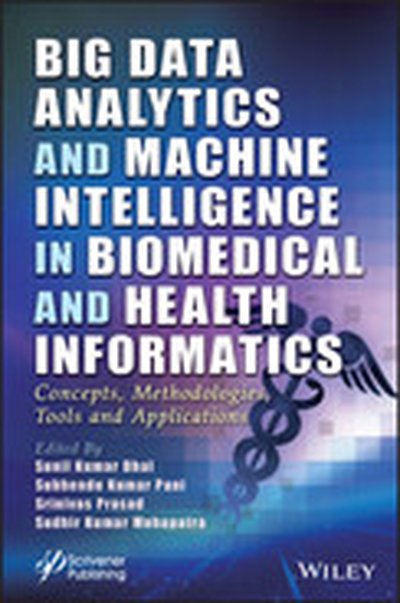
Big Data Analytics and Machine Intelligence in Biomedical and Health Informatics

BIG DATA ANALYTICS AND MACHINE INTELLIGENCE IN BIOMEDICAL AND HEALTH INFORMATICS Provides coverage of developments and state-of-the-art methods in the broad and diversified data analytics field and applicable areas such as big data analytics, data mining, and machine intelligence in biomedical and health informatics. The novel applications of Big Data Analytics and machine intelligence in the biomedical and healthcare sector is an emerging field comprising computer science, medicine, biology, natural environmental engineering, and pattern recognition. Biomedical and health informatics is a new era that brings tremendous opportunities and challenges due to the plentifully available biomedical data and the aim is to ensure high-quality and efficient healthcare by analyzing the data. The 12 chapters in??Big Data Analytics and Machine Intelligence in Biomedical and Health Informatics??cover the latest advances and developments in health informatics, data mining, machine learning, and artificial intelligence. They have been organized with respect to the similarity of topics addressed, ranging from issues pertaining to the Internet of Things (IoT) for biomedical engineering and health informatics, computational intelligence for medical data processing, and Internet of Medical Things??(IoMT). New researchers and practitioners working in the field will benefit from reading the book as they can quickly ascertain the best performing methods and compare the different approaches. Audience Researchers and practitioners working in the fields of biomedicine, health informatics, big data analytics, Internet of Things, and machine learning.

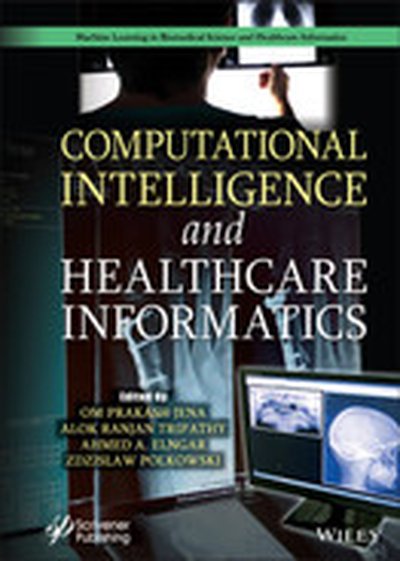
Computational Intelligence and Healthcare Informatics

COMPUTATIONAL INTELLIGENCE and HEALTHCARE INFORMATICS The book provides the state-of-the-art innovation, research, design, and implements methodological and algorithmic solutions to data processing problems, designing and analysing evolving trends in health informatics, intelligent disease prediction, and computer-aided diagnosis. Computational intelligence (CI) refers to the ability of computers to accomplish tasks that are normally completed by intelligent beings such as humans and animals. With the rapid advance of technology, artificial intelligence (AI) techniques are being effectively used in the fields of health to improve the efficiency of treatments, avoid the risk of false diagnoses, make therapeutic decisions, and predict the outcome in many clinical scenarios. Modern health treatments are faced with the challenge of acquiring, analyzing and applying the large amount of knowledge necessary to solve complex problems. Computational intelligence in healthcare mainly uses computer techniques to perform clinical diagnoses and suggest treatments. In the present scenario of computing, CI tools present adaptive mechanisms that permit the understanding of data in difficult and changing environments. The desired results of CI technologies profit medical fields by assembling patients with the same types of diseases or fitness problems so that healthcare facilities can provide effectual treatments. This book starts with the fundamentals of computer intelligence and the techniques and procedures associated with it. Contained in this book are state-of-the-art methods of computational intelligence and other allied techniques used in the healthcare system, as well as advances in different CI methods that will confront the problem of effective data analysis and storage faced by healthcare institutions. The objective of this book is to provide researchers with a platform encompassing state-of-the-art innovations; research and design; implementation of methodological and algorithmic solutions to data processing problems; and the design and analysis of evolving trends in health informatics, intelligent disease prediction and computer-aided diagnosis. Audience The book is of interest to artificial intelligence and biomedical scientists, researchers, engineers and students in various settings such as pharmaceutical & biotechnology companies, virtual assistants developing companies, medical imaging & diagnostics centers, wearable device designers, healthcare assistance robot manufacturers, precision medicine testers, hospital management, and researchers working in healthcare system.

Learning Informatica PowerCenter 10.x - Second Edition

Dive into the world of Informatica PowerCenter 10.x, where enterprise data warehousing meets cutting-edge data management solutions. This comprehensive guide walks you through mastering ETL processes and optimizing performance, helping you become proficient in this powerful data integration tool. With step-by-step instructions, you'll build your knowledge from installation to advanced techniques. What this Book will help me do Understand how to install and configure Informatica PowerCenter 10.x for enterprise-level data integration projects, ensuring readiness to start transforming data effectively. Gain hands-on experience with PowerCenter's various developer tools, including Workflow Manager, Workflow Monitor, Designer, and Repository Manager, mastering their practical utilities. Learn and apply essential data warehousing concepts, such as Slowly Changing Dimensions (SCDs) and Incremental Aggregations, to create robust data-handling workflows. Leverage advanced PowerCenter features like pushdown optimization and partitioning to optimize performance for large-scale data processing jobs. Become proficient in migrating sources, targets, and workflows between environments, enabling seamless integration of data management solutions across enterprise systems. Author(s) Rahul Malewar, a seasoned expert in ETL and data integration, brings his extensive experience with Informatica PowerCenter to the table. With years spent working alongside global enterprises to streamline their data operations, Rahul's insights transfer into a hands-on teaching style that simplifies even the most advanced concepts. Apt at bridging technical depth with accessible explanations, he has dedicated his career to empowering learners to unlock the full potential of their data warehousing tools. Who is it for? Perfect for developers and data professionals aiming to elevate their enterprise data management skills, this book is ideally suited for those new to or experienced with Informatica. Whether you're striving to become proficient in PowerCenter or seeking to implement advanced ETL concepts in your projects, this guide will equip you with the expertise to succeed. A foundational understanding of programming and data warehousing concepts is recommended for best results.

Understanding Metadata

One viable option for organizations looking to harness massive amounts of data is the data lake, a single repository for storing all the raw data, both structured and unstructured, that floods into the company. But that isn’t the end of the story. The key to making a data lake work is data governance, using metadata to provide valuable context through tagging and cataloging. This practical report examines why metadata is essential for managing, migrating, accessing, and deploying any big data solution. Authors Federico Castanedo and Scott Gidley dive into the specifics of analyzing metadata for keeping track of your data—where it comes from, where it’s located, and how it’s being used—so you can provide safeguards and reduce risk. In the process, you’ll learn about methods for automating metadata capture. This report also explains the main features of a data lake architecture, and discusses the pros and cons of several data lake management solutions that support metadata. These solutions include: Traditional data integration/management vendors such as the IBM Research Accelerated Discovery Lab Tooling from open source projects, including Teradata Kylo and Informatica Startups such as Trifacta and Zaloni that provide best of breed technology

Cyber-Risk Informatics

This book provides a scientific modeling approach for conducting metrics-based quantitative risk assessments of cybersecurity vulnerabilities and threats. This book provides a scientific modeling approach for conducting metrics-based quantitative risk assessments of cybersecurity threats. The author builds from a common understanding based on previous class-tested works to introduce the reader to the current and newly innovative approaches to address the maliciously-by-human-created (rather than by-chance-occurring) vulnerability and threat, and related cost-effective management to mitigate such risk. This book is purely statistical data-oriented (not deterministic) and employs computationally intensive techniques, such as Monte Carlo and Discrete Event Simulation. The enriched JAVA ready-to-go applications and solutions to exercises provided by the author at the book’s specifically preserved website will enable readers to utilize the course related problems. • Enables the reader to use the book's website's applications to implement and see results, and use them making ‘budgetary’ sense • Utilizes a data analytical approach and provides clear entry points for readers of varying skill sets and backgrounds • Developed out of necessity from real in-class experience while teaching advanced undergraduate and graduate courses by the author Cyber-Risk Informatics is a resource for undergraduate students, graduate students, and practitioners in the field of Risk Assessment and Management regarding Security and Reliability Modeling. Mehmet Sahinoglu, a Professor (1990) Emeritus (2000), is the founder of the Informatics Institute (2009) and its SACS-accredited (2010) and NSA-certified (2013) flagship Cybersystems and Information Security (CSIS) graduate program (the first such full degree in-class program in Southeastern USA) at AUM, Auburn University’s metropolitan campus in Montgomery, Alabama. He is a fellow member of the SDPS Society, a senior member of the IEEE, and an elected member of ISI. Sahinoglu is the recipient of Microsoft's Trustworthy Computing Curriculum (TCC) award and the author of Trustworthy Computing (Wiley, 2007).

Computer Science Illuminated, 6th Edition

Each new print copy includes Navigate 2 Advantage Access that unlocks a comprehensive and interactive eBook, student practice activities and assessments, a full suite of instructor resources, and learning analytics reporting tools.

Fully revised and updated, the Sixth Edition of the best-selling text Computer Science Illuminated retains the accessibility and in-depth coverage of previous editions, while incorporating all-new material on cutting-edge issues in computer science. Authored by the award-winning Nell Dale and John Lewis, Computer Science Illuminated’s unique and innovative layered approach moves through the levels of computing from an organized, language-neutral perspective.

Designed for the introductory computing and computer science course, this student-friendly Sixth Edition provides students with a solid foundation for further study, and offers non-majors a complete introduction to computing.

Key Features of the Sixth Edition include:

Access to Navigate 2 online learning materials including a comprehensive and interactive eBook, student practice activities and assessments, learning analytics reporting tools, and more
Completely revised sections on HTML and CSS
Updates regarding Top Level Domains, Social Networks, and Google Analytics
All-new section on Internet management, including ICANN control and net neutrality 
New design, including fully revised figures and tables
New and updated Did You Know callouts are included in the chapter margins
New and revised Ethical Issues and Biographies throughout emphasize the history and breadth of computing
Available in our customizable PUBLISH platform

A collection of programming language chapters are available as low-cost bundling options. Available chapters include: Java, C++, Python, Alice, SQL, VB.NET, RUBY, Perl, Pascal, and JavaScript.

With Navigate 2, technology and content combine to expand the reach of your classroom. Whether you teach an online, hybrid, or traditional classroom-based course, Navigate 2 delivers unbeatable value. Experience Navigate 2 today at www.jblnavigate.com/2

Learning Informatica PowerCenter 9.x

Master the essentials of Informatica PowerCenter 9.x with this comprehensive guide. Whether you are new to the platform or an experienced user, this book provides the knowledge and techniques needed to extract, integrate, and manage data effectively across diverse systems. By learning key functionalities and advanced techniques, you'll become proficient in creating and optimizing data integration workflows. What this Book will help me do Install, configure, and customize Informatica PowerCenter to suit your project requirements. Understand graphical interfaces such as the Designer and Workflow Manager for effective development. Implement data warehousing concepts like Slowly Changing Dimensions (SCDs) using Informatica tools. Optimize data integration workflows through performance tuning and advanced debugging techniques. Execute seamless migrations of components across environments using repository management features. Author(s) Rahul Malewar is an experienced data integration specialist with a strong background in Informatica and data warehousing. With years of practical experience in implementing and deploying complex Informatica solutions, Rahul brings technical expertise combined with a clear and accessible teaching style. His books and courses are widely recognized for helping readers efficiently tackle real-world data challenges. Who is it for? This book is best suited for IT professionals, data analysts, and developers interested in mastering data integration concepts and tools through Informatica PowerCenter. If you work in data warehousing or are stepping into the field, this book provides essential knowledge. Beginner users will find step-by-step guidance, while experienced professionals will deepen their expertise. Prior knowledge in programming and data warehousing is beneficial.

Service- and Component-based Development: Using Select Perspective™ and UML

This book presents the approaches and practices for the construction of software systems using Select Perspective. It details the key workflows for a contemporary approach to supplying, managing, and consuming software assets to deliver business IT systems. This book provides a comprehensive development lifecycle (Select Perspective) for component and web service based IT solutions, that supports parallel development activities, to reduce time-to-market. It introduces the Select Perspective as a Supply, Manage, Consume software development process. It provides a real world project experience and examples. Technology: Unlike other development processes, Select Perspective is focused on a small number of key deliverables within an organizational framework of suppliers and consumers, of solution driven components. Audience: For CIOs, IT Directors, Project Managers, and solution developers. Level Intermediate. Hedley Apperly is Vice President, Product Marketing and Development with Aonix Hedley has graduate and post-graduate qualifications in production engineering, business computing and strategic marketing. His 19 years experience in IT, have focused on the design and development of relational, object-oriented and component-bases systems. He is also a committee member of the British Computer Societies (BCS), Object-Oriented Programming and Systems (OOPS) specialist group. As well as his involvement Component Based Development for Enterprise Systems, published by Cambridge University Press, Hedley co-authored Component Based Software Engineering; Putting the Pieces Together, published by Addison Wesley. Ralph Hofman works in Manager Services (Benelux) at Aonix. Ralph studied computer science at the University of Twente in the Netherlands. He started as a freelance consultant for different companies and specialized in methods and tools for system development. Ralph initiated component-based development as a way of working within a major international Bank. He joined Aonix in 2000, where he is responsible for the consultancy and services in the Benelux. Steve Latchem is Director of International Services with Aonix. Steve has been within the IT industry for over 18 years, holding positions in large consultancy groups and IT Departments ranging from business analyst to object oriented consultant, architect and project manager. Steve now directs the global professional services group at Aonix. Steve collaborated on AntiPatterns: Refactoring Software & Projects in Crisis and co-authored Component Based Software Engineering; Putting the Pieces Together, published by Addison Wesley. Barry Maybank is Principal Consultant with Aonix . Barry has been within the IT industry for over 17 years, holding positions in consultancy groups, IT Product Companies and Engineering companies with roles ranging from software engineer to architect. Barry McGibbon is Associate Consultant with Aonix. Barry has worked in the IT industry for over 35 years, holding very senior management positions with leading computing services providers. He has been involved in component-based development initiatives for significant enterprises in the UK and Europe. As well as a frequent contributor to major journals, he is author of Managing Your Move To Object Technology: Guidelines & Strategies for a Smooth Transition published by SIGS Books Inc. He is also Technical Chair for Europe's largest CBD/OO conference and a series editor for Cambridge University Press. David Piper is a Principal Consultant with Aonix. David has been working in the IT industry for over 20 years holding positions in manufacturing, financial services and IT consultancy with roles ranging from analyst to quality assurance manager and project manager. Chris Simons is a Senior Consultant with Aonix. Christopher has been within the IT industry for over 12 years, holding positions in real-time, defense, retail, public sector and finance domains, with roles ranging from software engineer, lead analyst to technical architect. He has also taught object-orientation and development process at various universities as a visiting lecturer.

Essential Guide to Computing: The Story of Information Technology, The

The complete, easy-to-understand guide to IT—now and in the future! Computers, networks, and pervasive computing Hardware, operating systems, and software How networks work: LANs, WANs, and the Internet E-business, the Web, and security The guide for ANYONE who needs to understand the key technologies driving today's economy and high tech industries! You can't afford not to understand the information revolution that's sweeping the world-but who's got time for all the acronyms and hype most technology books give you? The Essential Guide to Computing demystifies the digital society we live in with an intelligent, thorough, and up-to-date explanation of computer, networking, and Internet technologies. It's perfect for smart professionals who want to get up to speed, but don't have computer science or engineering degrees! You'll find up-to-the-minute coverage on all of today's hottest technologies including: The evolution of computing: from the room-sized "monoliths" of the 1950s to today's global Internet Preview of the next revolution: "pervasive computing" Computer hardware: microprocessors, memory, storage, I/O, displays, and architecture Windows, Macintosh, UNIX/Linux, DOS, NetWare, Palm: what operating systems do, and how they compare Programming languages: from machine language to advanced object-oriented technologies Key software applications: databases, spreadsheets, word processing, voice recognition, and beyond Microsoft and the software industry: where they stand, where they're headed How networks work: LANs, WANs, packet switching, hardware, media, and more The Internet, e-commerce, and security Enterprise applications: data warehousing, Web-centered development, and groupware Whether you're a consumer, investor, marketer, or executive, this is your start-to-finish briefing on the information technologies that have changed the world-and the coming technologies that will transform it yet again!