talk-data.com talk-data.com

Topic

TensorFlow

machine_learning deep_learning neural_networks

73

tagged

Activity Trend

10 peak/qtr
2020-Q1 2026-Q1

Activities

73 activities · Newest first

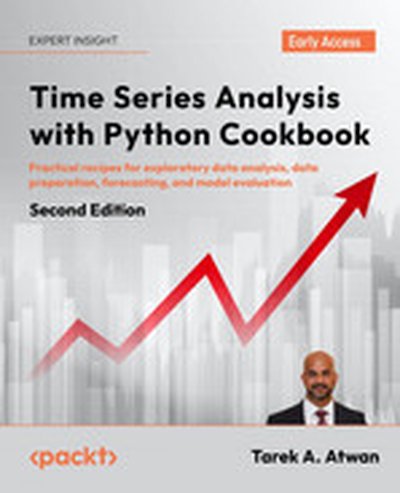
Time Series Analysis with Python Cookbook - Second Edition

Perform time series analysis and forecasting confidently with this Python code bank and reference manual Purchase of the print or Kindle book includes a free PDF eBook Key Features Explore up-to-date forecasting and anomaly detection techniques using statistical, machine learning, and deep learning algorithms Learn different techniques for evaluating, diagnosing, and optimizing your models Work with a variety of complex data with trends, multiple seasonal patterns, and irregularities Book Description To use time series data to your advantage, you need to be well-versed in data preparation, analysis, and forecasting. This fully updated second edition includes chapters on probabilistic models and signal processing techniques, as well as new content on transformers. Additionally, you will leverage popular libraries and their latest releases covering Pandas, Polars, Sktime, stats models, stats forecast, Darts, and Prophet for time series with new and relevant examples. You'll start by ingesting time series data from various sources and formats, and learn strategies for handling missing data, dealing with time zones and custom business days, and detecting anomalies using intuitive statistical methods. Further, you'll explore forecasting using classical statistical models (Holt-Winters, SARIMA, and VAR). Learn practical techniques for handling non-stationary data, using power transforms, ACF and PACF plots, and decomposing time series data with multiple seasonal patterns. Then we will move into more advanced topics such as building ML and DL models using TensorFlow and PyTorch, and explore probabilistic modeling techniques. In this part, you’ll also learn how to evaluate, compare, and optimize models, making sure that you finish this book well-versed in wrangling data with Python. What you will learn Understand what makes time series data different from other data Apply imputation and interpolation strategies to handle missing data Implement an array of models for univariate and multivariate time series Plot interactive time series visualizations using hvPlot Explore state-space models and the unobserved components model (UCM) Detect anomalies using statistical and machine learning methods Forecast complex time series with multiple seasonal patterns Use conformal prediction for constructing prediction intervals for time series Who this book is for This book is for data analysts, business analysts, data scientists, data engineers, and Python developers who want practical Python recipes for time series analysis and forecasting techniques. Fundamental knowledge of Python programming is a prerequisite. Prior experience working with time series data to solve business problems will also help you to better utilize and apply the different recipes in this book.

LLMOps in Practice: Building Secure, Governed Pipelines for Large Language Models

As organizations move from prototyping LLMs to deploying them in production, the biggest challenges are no longer about model accuracy - they’re about trust, security, and control. How do we monitor model behavior, prevent prompt injection, track drift, and enforce governance across environments?

This talk presents a real-world view of how to design secure and governed LLM pipelines, grounded in open-source tooling and reproducible architectures. We’ll discuss how multi-environment setups (sandbox, runner, production) can isolate experimentation from deployment, how to detect drift and hallucination using observability metrics, and how to safeguard against prompt injection, data leakage, and bias propagation.

Attendees will gain insight into how tools like MLflow, Ray, and TensorFlow Data Validation can be combined for ** version tracking, monitoring, and auditability**, without turning your workflow into a black box. By the end of the session, you’ll walk away with a practical roadmap on what makes an LLMOps stack resilient: reproducibility by design, continuous evaluation, and responsible governance across the LLM lifecycle.

Bridging Accessibility and AI: Sign Language Recognition & Inclusive Design with Sheida Rashidi

As AI continues to shape human-computer interaction, there’s a growing opportunity and responsibility to ensure these technologies serve everyone, including people with communication disabilities. In this talk, I will present my ongoing work in developing a real-time American Sign Language (ASL) recognition system, and explore how integrating accessible design principles into AI research can expand both usability and impact.

The core of the talk will cover the Sign Language Recogniser project (available on GitHub), in which I used MediaPipe Studio together with TensorFlow, Keras, and OpenCV to train a model that classifies ASL letters from hand-tracking features.

I’ll share the methodology: data collection, feature extraction via MediaPipe, model training, and demo/testing results. I’ll also discuss challenges encountered, such as dealing with gesture variability, lighting and camera differences, latency constraints, and model generalization.

Beyond the technical implementation, I’ll reflect on the broader implications: how accessibility-focused AI projects can promote inclusion, how design decisions affect trust and usability, and how women in AI & data science can lead innovation that is both rigorous and socially meaningful. Attendees will leave with actionable insights for building inclusive AI systems, especially in domains involving rich human modalities such as gesture or sign.

AI/ML workloads depend heavily on complex software stacks, including numerical computing libraries (SciPy, NumPy), deep learning frameworks (PyTorch, TensorFlow), and specialized toolchains (CUDA, cuDNN). However, integrating these dependencies into Bazel-based workflows remains challenging due to compatibility issues, dependency resolution, and performance optimization. This session explores the process of creating and maintaining Bazel packages for key AI/ML libraries, ensuring reproducibility, performance, and ease of use for researchers and engineers.

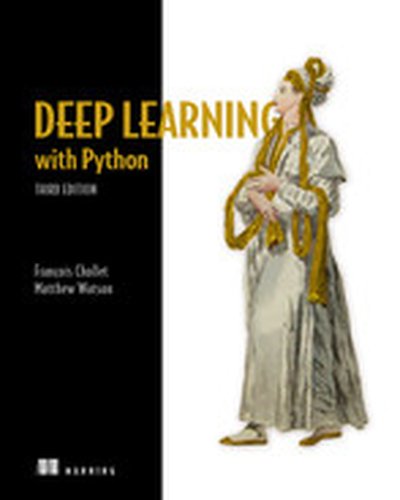
Deep Learning with Python, Third Edition

The bestselling book on Python deep learning, now covering generative AI, Keras 3, PyTorch, and JAX! Deep Learning with Python, Third Edition puts the power of deep learning in your hands. This new edition includes the latest Keras and TensorFlow features, generative AI models, and added coverage of PyTorch and JAX. Learn directly from the creator of Keras and step confidently into the world of deep learning with Python. In Deep Learning with Python, Third Edition you’ll discover: Deep learning from first principles The latest features of Keras 3 A primer on JAX, PyTorch, and TensorFlow Image classification and image segmentation Time series forecasting Large Language models Text classification and machine translation Text and image generation—build your own GPT and diffusion models! Scaling and tuning models With over 100,000 copies sold, Deep Learning with Python makes it possible for developers, data scientists, and machine learning enthusiasts to put deep learning into action. In this expanded and updated third edition, Keras creator François Chollet offers insights for both novice and experienced machine learning practitioners. You'll master state-of-the-art deep learning tools and techniques, from the latest features of Keras 3 to building AI models that can generate text and images. About the Technology In less than a decade, deep learning has changed the world—twice. First, Python-based libraries like Keras, TensorFlow, and PyTorch elevated neural networks from lab experiments to high-performance production systems deployed at scale. And now, through Large Language Models and other generative AI tools, deep learning is again transforming business and society. In this new edition, Keras creator François Chollet invites you into this amazing subject in the fluid, mentoring style of a true insider. About the Book Deep Learning with Python, Third Edition makes the concepts behind deep learning and generative AI understandable and approachable. This complete rewrite of the bestselling original includes fresh chapters on transformers, building your own GPT-like LLM, and generating images with diffusion models. Each chapter introduces practical projects and code examples that build your understanding of deep learning, layer by layer. What's Inside Hands-on, code-first learning Comprehensive, from basics to generative AI Intuitive and easy math explanations Examples in Keras, PyTorch, JAX, and TensorFlow About the Reader For readers with intermediate Python skills. No previous experience with machine learning or linear algebra required. About the Authors François Chollet is the co-founder of Ndea and the creator of Keras. Matthew Watson is a software engineer at Google working on Gemini and a core maintainer of Keras. Quotes Perfect for anyone interested in learning by doing from one of the industry greats. - Anthony Goldbloom, Founder of Kaggle A sharp, deeply practical guide that teaches you how to think from first principles to build models that actually work. - Santiago Valdarrama, Founder of ml.school The most up-to-date and complete guide to deep learning you’ll find today! - Aran Komatsuzaki, EleutherAI Masterfully conveys the true essence of neural networks. A rare case in recent years of outstanding technical writing. - Salvatore Sanfilippo, Creator of Redis

Data science in containers: the good, the bad, and the ugly

If we want to run data science workloads (e.g. using Tensorflow, PyTorch, and others) in containers (for local development or production on Kubernetes), we need to build container images. Doing that with a Dockerfile is fairly straightforward, but is it the best method? In this talk, we'll take a well-known speech-to-text model (Whisper) and show various ways to run it in containers, comparing the outcomes in terms of image size and build time.

Formation immersive et orientée pratique sur la création et le déploiement d'une IA capable de prédire le prix d'une voiture. Manipulation de données, création d'un modèle de régression, et mise en production avec Python, TensorFlow, PyTorch, Flask et Ngrok. Animation en direct par un formateur expert, approche interactive et pratique.

Formation pratique guidée par un formateur expert. Manipuler des données, créer un modèle de régression et le mettre en production avec Python, TensorFlow, PyTorch, Flask et Ngrok. Approche progressive et interactive pour transformer vos compétences en programmation en solutions d’IA.

Formation pratique de deep learning offrant une introduction claire à l’entraînement et à l’expérimentation avec des modèles de réseaux neuronaux. Combinaison de théorie essentielle et de mises en pratique interactives pour explorer les concepts fondamentaux, tester différentes architectures et ajuster les hyperparamètres afin de comprendre leur impact sur les performances.

Formation pratique sur le deep learning couvrant l’entraînement et l’expérimentation avec des modèles de réseaux neuronaux, exploration des concepts fondamentaux, test d’architectures et ajustement d’hyperparamètres, avec TensorFlow et PyTorch. Durée 6 heures; session animée en direct par un formateur expert.

This talk presents zfit with the newest improvements, a general purpose distribution fitting library for complicated model building beyond fitting a normal distribution. The talk will cover all aspects of fitting with a focus on the strong model building part in zfit; composable distributions with sums, products and more, build and mix binned and unbinned, analytic and templated functions in multiple dimensions. This includes the creation of arbitrary, custom distributions with minimal effort that fulfils everyones need. Thanks to the numpy-like backend used by TensorFlow, zfit is highly performant by using JIT compiled code on CPUs and even GPUs, a showcase for scientific computing faster than numpy.

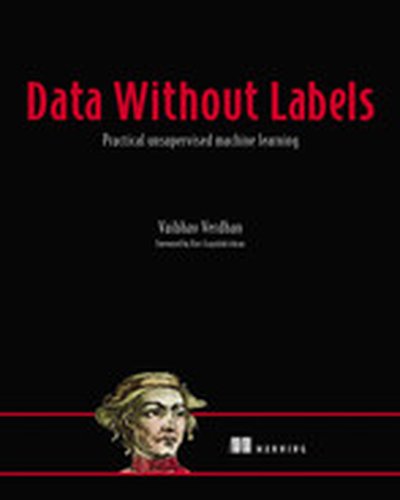
Data Without Labels

Discover all-practical implementations of the key algorithms and models for handling unlabeled data. Full of case studies demonstrating how to apply each technique to real-world problems. In Data Without Labels you’ll learn: Fundamental building blocks and concepts of machine learning and unsupervised learning Data cleaning for structured and unstructured data like text and images Clustering algorithms like K-means, hierarchical clustering, DBSCAN, Gaussian Mixture Models, and Spectral clustering Dimensionality reduction methods like Principal Component Analysis (PCA), SVD, Multidimensional scaling, and t-SNE Association rule algorithms like aPriori, ECLAT, SPADE Unsupervised time series clustering, Gaussian Mixture models, and statistical methods Building neural networks such as GANs and autoencoders Dimensionality reduction methods like Principal Component Analysis and multidimensional scaling Association rule algorithms like aPriori, ECLAT, and SPADE Working with Python tools and libraries like sci-kit learn, numpy, Pandas, matplotlib, Seaborn, Keras, TensorFlow, and Flask How to interpret the results of unsupervised learning Choosing the right algorithm for your problem Deploying unsupervised learning to production Maintenance and refresh of an ML solution Data Without Labels introduces mathematical techniques, key algorithms, and Python implementations that will help you build machine learning models for unannotated data. You’ll discover hands-off and unsupervised machine learning approaches that can still untangle raw, real-world datasets and support sound strategic decisions for your business. Don’t get bogged down in theory—the book bridges the gap between complex math and practical Python implementations, covering end-to-end model development all the way through to production deployment. You’ll discover the business use cases for machine learning and unsupervised learning, and access insightful research papers to complete your knowledge. About the Technology Generative AI, predictive algorithms, fraud detection, and many other analysis tasks rely on cheap and plentiful unlabeled data. Machine learning on data without labels—or unsupervised learning—turns raw text, images, and numbers into insights about your customers, accurate computer vision, and high-quality datasets for training AI models. This book will show you how. About the Book Data Without Labels is a comprehensive guide to unsupervised learning, offering a deep dive into its mathematical foundations, algorithms, and practical applications. It presents practical examples from retail, aviation, and banking using fully annotated Python code. You’ll explore core techniques like clustering and dimensionality reduction along with advanced topics like autoencoders and GANs. As you go, you’ll learn where to apply unsupervised learning in business applications and discover how to develop your own machine learning models end-to-end. What's Inside Master unsupervised learning algorithms Real-world business applications Curate AI training datasets Explore autoencoders and GANs applications About the Reader Intended for data science professionals. Assumes knowledge of Python and basic machine learning. About the Author Vaibhav Verdhan is a seasoned data science professional with extensive experience working on data science projects in a large pharmaceutical company. Quotes An invaluable resource for anyone navigating the complexities of unsupervised learning. A must-have. - Ganna Pogrebna, The Alan Turing Institute Empowers the reader to unlock the hidden potential within their data. - Sonny Shergill, Astra Zeneca A must-have for teams working with unstructured data. Cuts through the fog of theory ili Explains the theory and delivers practical solutions. - Leonardo Gomes da Silva, onGRID Sports Technology The Bible for unsupervised learning! Full of real-world applications, clear explanations, and excellent Python implementations. - Gary Bake, Falconhurst Technologies

In this podcast episode, we talked with Lavanya Gupta about Building a Strong Career in Data. About the Speaker: Lavanya is a Carnegie Mellon University (CMU) alumni of the Language Technologies Institute (LTI). She works as a Sr. AI/ML Applied Associate at JPMorgan Chase in their specialized Machine Learning Center of Excellence (MLCOE) vertical. Her latest research on long-context evaluation of LLMs was published in EMNLP 2024.

In addition to having a strong industrial research background of 5+ years, she is also an enthusiastic technical speaker. She has delivered talks at events such as Women in Data Science (WiDS) 2021, PyData, Illuminate AI 2021, TensorFlow User Group (TFUG), and MindHack! Summit. She also serves as a reviewer at top-tier NLP conferences (NeurIPS 2024, ICLR 2025, NAACL 2025). Additionally, through her collaborations with various prestigious organizations, like Anita BOrg and Women in Coding and Data Science (WiCDS), she is committed to mentoring aspiring machine learning enthusiasts.

In this episode, we talk about Lavanya Gupta’s journey from software engineer to AI researcher. She shares how hackathons sparked her passion for machine learning, her transition into NLP, and her current work benchmarking large language models in finance. Tune in for practical insights on building a strong data career and navigating the evolving AI landscape.

🕒 TIMECODES 00:00 Lavanya’s journey from software engineer to AI researcher 10:15 Benchmarking long context language models 12:36 Limitations of large context models in real domains 14:54 Handling large documents and publishing research in industry 19:45 Building a data science career: publications, motivation, and mentorship 25:01 Self-learning, hackathons, and networking 33:24 Community work and Kaggle projects 37:32 Mentorship and open-ended guidance 51:28 Building a strong data science portfolio 🔗 CONNECT WITH LAVANYALinkedIn -   / lgupta18  🔗 CONNECT WITH DataTalksClub Join the community - https://datatalks.club/slack.html Subscribe to our Google calendar to have all our events in your calendar - https://calendar.google.com/calendar/... Check other upcoming events - https://lu.ma/dtc-events LinkedIn -   / datatalks-club   Twitter -   / datatalksclub   Website - https://datatalks.club/

This meetup is a space for developers actively working with any open-source AI libraries, frameworks, or tools, to share their projects, challenges, and solutions. Whether you're building with LangChain, Haystack, Transformers, TensorFlow, PyTorch, or any other open-source AI tool, we want to hear from you. This meetup will provide an opportunity to connect with other developers, share practical tips, and get inspired to build even more with open-source AI on Google Cloud. Come ready to contribute, and let's learn from each other!