talk-data.com talk-data.com

Topic

TensorFlow

machine_learning deep_learning neural_networks

73

tagged

Activity Trend

10 peak/qtr
2020-Q1 2026-Q1

Activities

73 activities · Newest first

Machine Learning for Tabular Data

Business runs on tabular data in databases, spreadsheets, and logs. Crunch that data using deep learning, gradient boosting, and other machine learning techniques. Machine Learning for Tabular Data teaches you to train insightful machine learning models on common tabular business data sources such as spreadsheets, databases, and logs. You’ll discover how to use XGBoost and LightGBM on tabular data, optimize deep learning libraries like TensorFlow and PyTorch for tabular data, and use cloud tools like Vertex AI to create an automated MLOps pipeline. Machine Learning for Tabular Data will teach you how to: Pick the right machine learning approach for your data Apply deep learning to tabular data Deploy tabular machine learning locally and in the cloud Pipelines to automatically train and maintain a model Machine Learning for Tabular Data covers classic machine learning techniques like gradient boosting, and more contemporary deep learning approaches. By the time you’re finished, you’ll be equipped with the skills to apply machine learning to the kinds of data you work with every day. About the Technology Machine learning can accelerate everyday business chores like account reconciliation, demand forecasting, and customer service automation—not to mention more exotic challenges like fraud detection, predictive maintenance, and personalized marketing. This book shows you how to unlock the vital information stored in spreadsheets, ledgers, databases and other tabular data sources using gradient boosting, deep learning, and generative AI. About the Book Machine Learning for Tabular Data delivers practical ML techniques to upgrade every stage of the business data analysis pipeline. In it, you’ll explore examples like using XGBoost and Keras to predict short-term rental prices, deploying a local ML model with Python and Flask, and streamlining workflows using large language models (LLMs). Along the way, you’ll learn to make your models both more powerful and more explainable. What's Inside Master XGBoost Apply deep learning to tabular data Deploy models locally and in the cloud Build pipelines to train and maintain models About the Reader For readers experienced with Python and the basics of machine learning. About the Authors Mark Ryan is the AI Lead of the Developer Knowledge Platform at Google. A three-time Kaggle Grandmaster, Luca Massaron is a Google Developer Expert (GDE) in machine learning and AI. He has published 17 other books. Quotes
Deep Learning and AI Superhero

"Deep Learning and AI Superhero" is an extensive resource for mastering the core concepts and advanced techniques in AI and deep learning using TensorFlow, Keras, and PyTorch. This comprehensive guide walks you through topics from foundational neural network concepts to implementing real-world machine learning solutions. You will gain hands-on experience and theoretical knowledge to elevate your AI development skills. What this Book will help me do Develop a solid foundation in neural networks, their structure, and their training methodologies. Understand and implement deep learning models using TensorFlow and Keras effectively. Gain experience using PyTorch for creating, training, and optimizing advanced machine learning models. Learn advanced applications such as CNNs for computer vision, RNNs for sequential data, and Transformers for natural language processing. Deploy AI models on cloud and edge platforms through practical examples and optimized workflows. Author(s) Cuantum Technologies LLC has established itself as a pioneer in creating educational resources for advanced AI technologies. Their team consists of experts and practitioners in the field, combining years of industry and academic experience. Their books are crafted to ensure readers can practically apply cutting-edge AI techniques with clarity and confidence. Who is it for? This book is ideally suited for software developers, AI enthusiasts, and data scientists who have a basic understanding of programming and machine learning concepts. It's perfect for those seeking to enhance their skills and tackle real-world AI challenges. Whether your goals are professional development, research, or personal learning, you'll find practical and detailed guidance throughout this book.

Episode Summary In this episode, we dive into the transformative power of synthetic data and its ability to bypass privacy barriers while accelerating AI innovation. Learn how industries like healthcare, finance, and retail leverage synthetic data to fuel progress and discover actionable steps to implement this game-changing technology. Key Topics Covered What Is Synthetic Data?Definition and importance.How it solves privacy and data scarcity challenges.Top 5 Breakthroughs in Synthetic Data:SafeSynthDP: Differential privacy for secure synthetic data generation.GANs for Healthcare: Generating synthetic patient records.CaPS: Collaborative synthetic data sharing across organizations.Private Text Data: Privacy-safe NLP dataset generation.Vertical Federated Learning: Secure synthetic data creation for tabular datasets.Applications Across Industries:Healthcare: HIPAA-compliant AI for diagnostics.Finance: Risk modeling with synthetic transaction data.Retail: Personalization using synthetic customer profiles.Action Plan:Learn and apply differential privacy techniques.Experiment with large language models for synthetic data.Use federated learning for collaborative data sharing.Build synthetic datasets for complex, messy data.Market privacy-first solutions to build customer trust.Resources Mentioned Research Papers:SafeSynthDP: Privacy-Preserving Data GenerationGANs for Healthcare DataCaPS: Collaborative Synthetic Data PlatformPrivate Predictions for NLPVertical Federated Learning for Tabular DataTools and Frameworks:TensorFlow Privacy LibraryPyTorch GAN ZooFlower Framework for Federated LearningTakeaways Synthetic data is not just a workaround—it’s a key enabler of privacy-compliant AI innovation.Industries across the board are adopting synthetic data to overcome regulatory and privacy challenges.You can start leveraging synthetic data today with available tools and frameworks.Ready to explore the power of synthetic data? Dive into the resources mentioned and start experimenting with synthetic data generation to give your AI strategy a competitive edge. Subscribe to our podcast for more cutting-edge insights into the world of AI and data innovation.

Website: https://mukundansankar.substack.com/

MAPIE (Model Agnostic Prediction Interval Estimator) is your go-to solution for managing uncertainties and risks in machine learning models. This Python library, nestled within scikit-learn-contrib, offers a way to calculate prediction intervals with controlled coverage rates for regression, classification, and even time series analysis. But it doesn't stop there - MAPIE can also be used to handle more complex tasks like multi-label classification and semantic segmentation in computer vision, ensuring probabilistic guarantees on crucial metrics like recall and precision. MAPIE can be integrated with any model - whether it's scikit-learn, TensorFlow, or PyTorch. Join us as we delve into the world of conformal predictions and how to quickly manage your uncertainties using MAPIE.

Link to Github: https://github.com/scikit-learn-contrib/MAPIE

Google Machine Learning and Generative AI for Solutions Architects

This book teaches solutions architects how to effectively design and implement AI/ML solutions utilizing Google Cloud services. Through detailed explanations, examples, and hands-on exercises, you will understand essential AI/ML concepts, tools, and best practices while building advanced applications. What this Book will help me do Build robust AI/ML solutions using Google Cloud tools such as TensorFlow, BigQuery, and Vertex AI. Prepare and process data efficiently for machine learning workloads. Establish and apply an MLOps framework for automating ML model lifecycle management. Implement cutting-edge generative AI solutions using best practices. Address common challenges in AI/ML projects with insights from expert solutions. Author(s) Kieran Kavanagh is a seasoned principal architect with nearly twenty years of experience in the tech industry. He has successfully led teams in designing, planning, and governing enterprise cloud strategies, and his wealth of experience is distilled into the practical approaches and insights in this book. Who is it for? This book is ideal for IT professionals aspiring to design AI/ML solutions, particularly in the role of solutions architects. It assumes a basic knowledge of Python and foundational AI/ML concepts but is suitable for both beginners and seasoned practitioners. If you're looking to deepen your understanding of state-of-the-art AI/ML applications on Google Cloud, this resource will guide you.

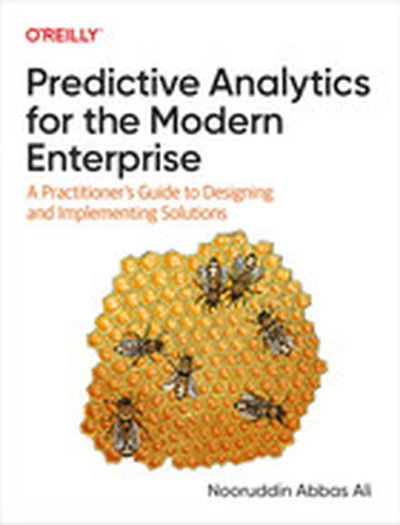
Predictive Analytics for the Modern Enterprise

The surging predictive analytics market is expected to grow from $10.5 billion today to $28 billion by 2026. With the rise in automation across industries, the increase in data-driven decision-making, and the proliferation of IoT devices, predictive analytics has become an operational necessity in today's forward-thinking companies. If you're a data professional, you need to be aligned with your company's business activities more than ever before. This practical book provides the background, tools, and best practices necessary to help you design, implement, and operationalize predictive analytics on-premises or in the cloud. Explore ways that predictive analytics can provide direct input back to your business Understand mathematical tools commonly used in predictive analytics Learn the development frameworks used in predictive analytics applications Appreciate the role of predictive analytics in the machine learning process Examine industry implementations of predictive analytics Build, train, and retrain predictive models using Python and TensorFlow

We are embarking on the creation of a specialized programming assistant, meticulously fine-tuned for libraries such as PyTorch, TensorFlow, or Dart, FastAIs. This intelligent assistant, accessible through a chat-like interface, is designed to offer tailored guidance, provide access to the latest documentation, and suggest learning resources to users. It will comprehend contextual queries, ensuring deep library expertise, and offer direct links to official documentation, facilitating efficient problem-solving and learning. With continuous updates, personalization options, and a commitment to privacy, this coding assistant aims to significantly enhance the development experience for programmers and serve as an invaluable resource in the ever-evolving landscape of software development.

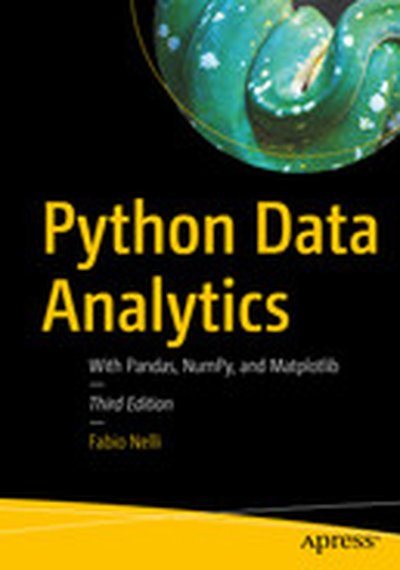
Python Data Analytics: With Pandas, NumPy, and Matplotlib

Explore the latest Python tools and techniques to help you tackle the world of data acquisition and analysis. You'll review scientific computing with NumPy, visualization with matplotlib, and machine learning with scikit-learn. This third edition is fully updated for the latest version of Python and its related libraries, and includes coverage of social media data analysis, image analysis with OpenCV, and deep learning libraries. Each chapter includes multiple examples demonstrating how to work with each library. At its heart lies the coverage of pandas, for high-performance, easy-to-use data structures and tools for data manipulation Author Fabio Nelli expertly demonstrates using Python for data processing, management, and information retrieval. Later chapters apply what you've learned to handwriting recognition and extending graphical capabilities with the JavaScript D3 library. Whether you are dealing with sales data, investment data, medical data, web page usage, or other data sets, Python Data Analytics, Third Edition is an invaluable reference with its examples of storing, accessing, and analyzing data. What You'll Learn Understand the core concepts of data analysis and the Python ecosystem Go in depth with pandas for reading, writing, and processing data Use tools and techniques for data visualization and image analysis Examine popular deep learning libraries Keras, Theano,TensorFlow, and PyTorch Who This Book Is For Experienced Python developers who need to learn about Pythonic tools for data analysis

David is a Machine Learning Engineer and technologist focused on building embedded systems to use novel techniques, and state of the art technologies (Podman, Balena, TensorFlow, Flutter) in machine learning. Software developer with experience in software exploitation, information security, open-source development and DevOps practices. Community leader for the data science community in Colo…

David is a Machine Learning Engineer and technologist focused on building embedded systems to use novel techniques, and state of the art technologies (Podman, Balena, TensorFlow, Flutter) in machine learning. Software developer with experience in software exploitation, information security, open-source development and DevOps practices. Community leader for the data science community in Colo…

US Army Corp of Engineers Enhanced Commerce & National Sec Through Data-Driven Geospatial Insight

The US Army Corps of Engineers (USACE) is responsible for maintaining and improving nearly 12,000 miles of shallow-draft (9'-14') inland and intracoastal waterways, 13,000 miles of deep-draft (14' and greater) coastal channels, and 400 ports, harbors, and turning basins throughout the United States. Because these components of the national waterway network are considered assets to both US commerce and national security, they must be carefully managed to keep marine traffic operating safely and efficiently.

The National DQM Program is tasked with providing USACE a nationally standardized remote monitoring and documentation system across multiple vessel types with timely data access, reporting, dredge certifications, data quality control, and data management. Government systems have often lagged commercial systems in modernization efforts, and the emergence of the cloud and Data Lakehouse Architectures have empowered USACE to successfully move into the modern data era.

This session incorporates aspects of these topics: Data Lakehouse Architecture: Delta Lake, platform security and privacy, serverless, administration, data warehouse, Data Lake, Apache Iceberg, Data Mesh GIS: H3, MOSAIC, spatial analysis data engineering: data pipelines, orchestration, CDC, medallion architecture, Databricks Workflows, data munging, ETL/ELT, lakehouses, data lakes, Parquet, Data Mesh, Apache Spark™ internals. Data Streaming: Apache Spark Structured Streaming, real-time ingestion, real-time ETL, real-time ML, real-time analytics, and real-time applications, Delta Live Tables. ML: PyTorch, TensorFlow, Keras, scikit-learn, Python and R ecosystems data governance: security, compliance, RMF, NIST data sharing: sharing and collaboration, delta sharing, data cleanliness, APIs.

Talk by: Jeff Mroz

Connect with us: Website: https://databricks.com Twitter: https://twitter.com/databricks LinkedIn: https://www.linkedin.com/company/databricks Instagram: https://www.instagram.com/databricksinc Facebook: https://www.facebook.com/databricksinc

Writing Data-Sharing Apps Using Node.js and Delta Sharing

JavaScript remains the top programming language today with most code repositories written using JavaScript on GitHub. However, JavaScript is evolving beyond just a language for web application development into a language built for tomorrow. Everyday tasks like data wrangling, data analysis, and predictive analytics are possible today directly from a web browser. For example, many popular data analytics libraries, like Tensorflow.js, now support JavaScript SDKs.

Another popular library, Danfo.js, makes it possible to wrangle data using familiar pandas-like operations, shortening the learning curve and arming the typical data engineer or data scientist with another data tool in their toolbox. In this presentation, we’ll explore using the Node.js connector for Delta Sharing to build a data analytics app that summarizes a Twitter dataset.

Talk by: Will Girten

Connect with us: Website: https://databricks.com Twitter: https://twitter.com/databricks LinkedIn: https://www.linkedin.com/company/databricks Instagram: https://www.instagram.com/databricksinc Facebook: https://www.facebook.com/databricksinc

Margaret is an ML GDE (Google Developers Expert) and ML engineer working on applying AI/ML to real-world applications from art and design, climate change to society safety. She is also an avid artist who creates traditional, digital, and AI art. She writes and speaks at conferences about deep learning, computer vision, TensorFlow and on-device ML. She leads GDG Seattle and Seattle Data/Analyti…

Publishing Jupyter Notebooks with Quarto | RStudio

ABOUT THE TALK: Quarto is a multi-language, open-source toolkit for creating data-driven websites, reports, presentations, and scientific articles, built on Jupyter.

This talk teaches you how to use Quarto to publish Jupyter notebooks as production quality websites, books, blogs, presentations, PDFs, Office documents, and more. It covers how to publish notebooks within existing content management systems like Hugo, Docusaurus, and Confluence and also explore how Quarto works under the hood along with how the system can be extended to accommodate unique requirements and workflows.

ABOUT THE SPEAKER: J.J. Allaire is the founder of RStudio and the creator of the RStudio IDE. He is an author of several packages in the R Markdown publishing ecosystem and has also worked extensively on the R interfaces to Python and TensorFlow. J.J. is now leading the Quarto project, which is a new Jupyter-based scientific and technical publishing system.

ABOUT DATA COUNCIL: Data Council (https://www.datacouncil.ai/) is a community and conference series that provides data professionals with the learning and networking opportunities they need to grow their careers.

Make sure to subscribe to our channel for the most up-to-date talks from technical professionals on data related topics including data infrastructure, data engineering, ML systems, analytics and AI from top startups and tech companies.

FOLLOW DATA COUNCIL: Twitter: https://twitter.com/DataCouncilAI LinkedIn: https://www.linkedin.com/company/datacouncil-ai

Deepminds JAX ecosystem provides deep learning practitioners with an appealing alternative to TensorFlow and PyTorch. Among its strengths are great functionalities such as native TPU support, as well as easy vectorization and parallelization. Nevertheless, making your first steps in JAX can feel complicated given some of its idiosyncrasies. This talk helps new users getting started in this promising ecosystem by sharing practical tips and best practises.

Scaling Machine Learning with Spark

Learn how to build end-to-end scalable machine learning solutions with Apache Spark. With this practical guide, author Adi Polak introduces data and ML practitioners to creative solutions that supersede today's traditional methods. You'll learn a more holistic approach that takes you beyond specific requirements and organizational goals--allowing data and ML practitioners to collaborate and understand each other better. Scaling Machine Learning with Spark examines several technologies for building end-to-end distributed ML workflows based on the Apache Spark ecosystem with Spark MLlib, MLflow, TensorFlow, and PyTorch. If you're a data scientist who works with machine learning, this book shows you when and why to use each technology. You will: Explore machine learning, including distributed computing concepts and terminology Manage the ML lifecycle with MLflow Ingest data and perform basic preprocessing with Spark Explore feature engineering, and use Spark to extract features Train a model with MLlib and build a pipeline to reproduce it Build a data system to combine the power of Spark with deep learning Get a step-by-step example of working with distributed TensorFlow Use PyTorch to scale machine learning and its internal architecture

Optimized Inferencing and Integration with AI on IBM zSystems: Introduction, Methodology, and Use Cases

In today's fast-paced, ever-growing digital world, you face various new and complex business problems. To help resolve these problems, enterprises are embedding artificial intelligence (AI) into their mission-critical business processes and applications to help improve operations, optimize performance, personalize the user experience, and differentiate themselves from the competition. Furthermore, the use of AI on the IBM® zSystems platform, where your mission-critical transactions, data, and applications are installed, is a key aspect of modernizing business-critical applications while maintaining strict service-level agreements (SLAs) and security requirements. This colocation of data and AI empowers your enterprise to optimally and easily deploy and infuse AI capabilities into your enterprise workloads with the most recent and relevant data available in real time, which enables a more transparent, accurate, and dependable AI experience. This IBM Redpaper publication introduces and explains AI technologies and hardware optimizations, such as IBM zSystems Integrated Accelerator for AI, and demonstrates how to leverage certain capabilities and components to enable solutions in business-critical use cases, such as fraud detection and credit risk scoring on the platform. Real-time inferencing with AI models, a capability that is critical to certain industries and use cases such as fraud detection, now can be implemented with optimized performance thanks to innovations like IBM zSystems Integrated Accelerator for AI embedded in the Telum chip within IBM z16™. This publication also describes and demonstrates the implementation and integration of the two end-to-end solutions (fraud detection and credit risk), from developing and training the AI models to deploying the models in an IBM z/OS® V2R5 environment on IBM z16 hardware, and to integrating AI functions into an application, for example an IBM z/OS Customer Information Control System (IBM CICS®) application. We describe performance optimization recommendations and considerations when leveraging AI technology on the IBM zSystems platform, including optimizations for micro-batching in IBM Watson® Machine Learning for z/OS (WMLz). The benefits that are derived from the solutions also are described in detail, which includes how the open-source AI framework portability of the IBM zSystems platform enables model development and training to be done anywhere, including on IBM zSystems, and the ability to easily integrate to deploy on IBM zSystems for optimal inferencing. You can uncover insights at the transaction level while taking advantage of the speed, depth, and securability of the platform. This publication is intended for technical specialists, site reliability engineers, architects, system programmers, and systems engineers. Technologies that are covered include TensorFlow Serving, WMLz, IBM Cloud Pak® for Data (CP4D), IBM z/OS Container Extensions (zCX), IBM Customer Information Control System (IBM CICS), Open Neural Network Exchange (ONNX), and IBM Deep Learning Compiler (zDLC).

Applied Machine Learning and AI for Engineers

While many introductory guides to AI are calculus books in disguise, this one mostly eschews the math. Instead, author Jeff Prosise helps engineers and software developers build an intuitive understanding of AI to solve business problems. Need to create a system to detect the sounds of illegal logging in the rainforest, analyze text for sentiment, or predict early failures in rotating machinery? This practical book teaches you the skills necessary to put AI and machine learning to work at your company. Applied Machine Learning and AI for Engineers provides examples and illustrations from the AI and ML course Prosise teaches at companies and research institutions worldwide. There's no fluff and no scary equations—just a fast start for engineers and software developers, complete with hands-on examples. This book helps you: Learn what machine learning and deep learning are and what they can accomplish Understand how popular learning algorithms work and when to apply them Build machine learning models in Python with Scikit-Learn, and neural networks with Keras and TensorFlow Train and score regression models and binary and multiclass classification models Build facial recognition models and object detection models Build language models that respond to natural-language queries and translate text to other languages Use Cognitive Services to infuse AI into the apps that you write