talk-data.com talk-data.com

L

Speaker

Luca Massaron

11

talks

author

Frequent Collaborators

Filter by Event / Source

Talks & appearances

11 activities · Newest first

Search activities →
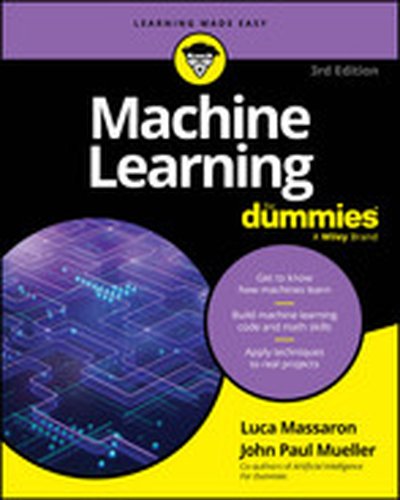
Machine Learning For Dummies, 3rd Edition

The most human-friendly book on machine learning Somewhere buried in all the systems that drive artificial intelligence, you'll find machine learning—the process that allows technology to build knowledge based on data and patterns. Machine Learning For Dummies is an excellent starting point for anyone who wants deeper insight into how all this learning actually happens. This book offers an overview of machine learning and its most important practical applications. Then, you'll dive into the tools, code, and math that make machine learning go—and you'll even get step-by-step instructions for testing it out on your own. For an easy-to-follow introduction to building smart algorithms, this Dummies guide is your go-to. Piece together what machine learning is, what it can do, and what it can't do Learn the basics of machine learning code and how it integrates with large datasets Understand the mathematical principles that AI uses to make itself smarter Consider real-world applications of machine learning and write your own algorithms With clear explanations and hands-on instruction, Machine Learning For Dummies is a great entry-level resource for developers looking to get started with AI and machine learning.

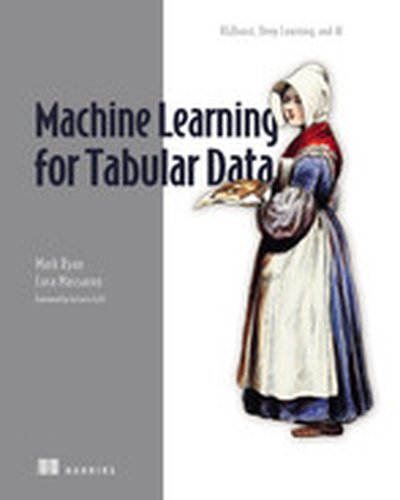
Machine Learning for Tabular Data

Business runs on tabular data in databases, spreadsheets, and logs. Crunch that data using deep learning, gradient boosting, and other machine learning techniques. Machine Learning for Tabular Data teaches you to train insightful machine learning models on common tabular business data sources such as spreadsheets, databases, and logs. You’ll discover how to use XGBoost and LightGBM on tabular data, optimize deep learning libraries like TensorFlow and PyTorch for tabular data, and use cloud tools like Vertex AI to create an automated MLOps pipeline. Machine Learning for Tabular Data will teach you how to: Pick the right machine learning approach for your data Apply deep learning to tabular data Deploy tabular machine learning locally and in the cloud Pipelines to automatically train and maintain a model Machine Learning for Tabular Data covers classic machine learning techniques like gradient boosting, and more contemporary deep learning approaches. By the time you’re finished, you’ll be equipped with the skills to apply machine learning to the kinds of data you work with every day. About the Technology Machine learning can accelerate everyday business chores like account reconciliation, demand forecasting, and customer service automation—not to mention more exotic challenges like fraud detection, predictive maintenance, and personalized marketing. This book shows you how to unlock the vital information stored in spreadsheets, ledgers, databases and other tabular data sources using gradient boosting, deep learning, and generative AI. About the Book Machine Learning for Tabular Data delivers practical ML techniques to upgrade every stage of the business data analysis pipeline. In it, you’ll explore examples like using XGBoost and Keras to predict short-term rental prices, deploying a local ML model with Python and Flask, and streamlining workflows using large language models (LLMs). Along the way, you’ll learn to make your models both more powerful and more explainable. What's Inside Master XGBoost Apply deep learning to tabular data Deploy models locally and in the cloud Build pipelines to train and maintain models About the Reader For readers experienced with Python and the basics of machine learning. About the Authors Mark Ryan is the AI Lead of the Developer Knowledge Platform at Google. A three-time Kaggle Grandmaster, Luca Massaron is a Google Developer Expert (GDE) in machine learning and AI. He has published 17 other books. Quotes

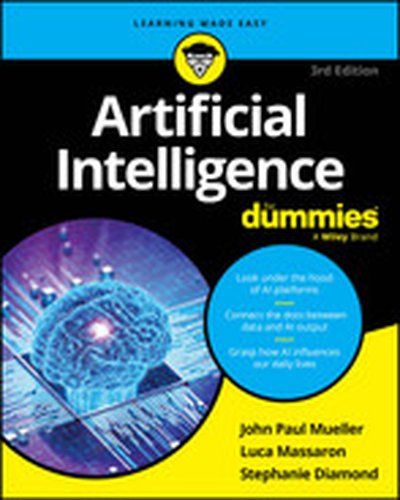
Artificial Intelligence For Dummies, 3rd Edition

Dive into the intelligence that powers artificial intelligence Artificial intelligence is swiftly moving from a sci-fi future to a modern reality. This edition of Artificial Intelligence For Dummies keeps pace with the lighting-fast expansion of AI tools that are overhauling every corner of reality. This book demystifies how artificial intelligence systems operate, giving you a look at the inner workings of AI and explaining the important role of data in creating intelligence. You'll get a primer on using AI in everyday life, and you'll also get a glimpse into possible AI-driven futures. What's next for humanity in the age of AI? How will your job and your life change as AI continue to evolve? How can you take advantage of AI today to make your live easier? This jargon-free Dummies guide answers all your most pressing questions about the world of artificial intelligence. Learn the basics of AI hardware and software, and how intelligence is created from code Get up to date with the latest AI trends and disruptions across industries Wrap your mind around what the AI revolution means for humanity, and for you Discover tips on using generative AI ethically and effectively Artificial Intelligence For Dummies is the ideal starting point for anyone seeking a deeper technological understanding of how artificial intelligence works and what promise it holds for the future.

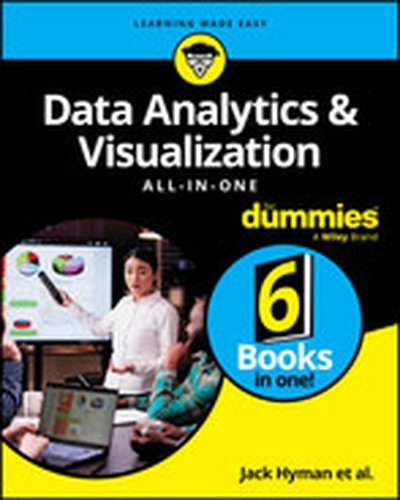
Data Analytics & Visualization All-in-One For Dummies

Install data analytics into your brain with this comprehensive introduction Data Analytics & Visualization All-in-One For Dummies collects the essential information on mining, organizing, and communicating data, all in one place. Clocking in at around 850 pages, this tome of a reference delivers eight books in one, so you can build a solid foundation of knowledge in data wrangling. Data analytics professionals are highly sought after these days, and this book will put you on the path to becoming one. You’ll learn all about sources of data like data lakes, and you’ll discover how to extract data using tools like Microsoft Power BI, organize the data in Microsoft Excel, and visually present the data in a way that makes sense using a Tableau. You’ll even get an intro to the Python, R, and SQL coding needed to take your data skills to a new level. With this Dummies guide, you’ll be well on your way to becoming a priceless data jockey. Mine data from data sources Organize and analyze data Use data to tell a story with Tableau Expand your know-how with Python and R New and novice data analysts will love this All-in-One reference on how to make sense of data. Get ready to watch as your career in data takes off.

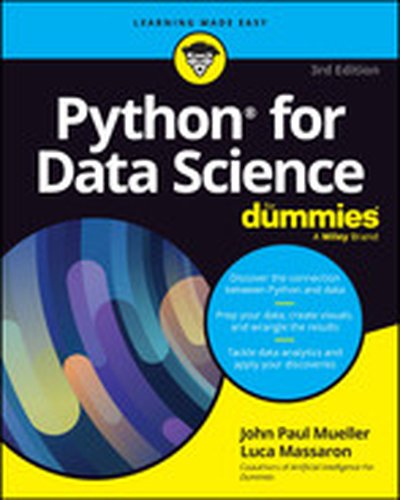
Python for Data Science For Dummies, 3rd Edition

Let Python do the heavy lifting for you as you analyze large datasets Python for Data Science For Dummies lets you get your hands dirty with data using one of the top programming languages. This beginner’s guide takes you step by step through getting started, performing data analysis, understanding datasets and example code, working with Google Colab, sampling data, and beyond. Coding your data analysis tasks will make your life easier, make you more in-demand as an employee, and open the door to valuable knowledge and insights. This new edition is updated for the latest version of Python and includes current, relevant data examples. Get a firm background in the basics of Python coding for data analysis Learn about data science careers you can pursue with Python coding skills Integrate data analysis with multimedia and graphics Manage and organize data with cloud-based relational databases Python careers are on the rise. Grab this user-friendly Dummies guide and gain the programming skills you need to become a data pro.

The Kaggle Workbook

"The Kaggle Workbook" is an engaging and practical guide for anyone looking to excel in Kaggle competitions by learning from real past case studies and hands-on exercises. Inside, you'll dive deep into key data science concepts, explore how Kaggle Grandmasters tackle challenges, and apply new skills to your own projects. What this Book will help me do Master the methodology used in past Kaggle competitions for real-world applications. Discover and implement advanced data science techniques such as gradient boosting and NLP. Build a portfolio that demonstrates hands-on experience solving complex data problems. Learn time-series forecasting and computer vision by exploring detailed case studies. Develop a practical mindset for competitive data science problem solving. Author(s) Konrad Banachewicz and Luca Massaron bring their expertise as Kaggle Grandmasters to the pages of this book. With extensive experience in data science and collaborative problem-solving, they guide readers through practical exercises with a clear, approachable style. Their passion for sharing knowledge shines through in every chapter. Who is it for? "The Kaggle Workbook" is ideal for aspiring and experienced data scientists who want to sharpen their competitive data science skills. It caters to those with a foundational knowledge of data science and an interest in enhancing it through practical exercises. The book is a perfect fit for anyone aiming to succeed in Kaggle competitions, whether starting out or advancing further.

The Kaggle Book

The Kaggle Book is an essential guide for anyone aiming to excel in data science through Kaggle competitions. With expert advice from Kaggle Grandmasters, you'll learn practical techniques for handling data, creating robust models, and improving your ranking in competitions. This book is packed with insights on advanced topics like ensembling, validation, and evaluation metrics. What this Book will help me do Master the Kaggle platform, including its Notebooks, Datasets, and Discussion capabilities. Enhance model performance using techniques like feature engineering, AutoML, and ensembling strategies. Apply advanced validation schemes to improve the reliability of your predictions. Tackle diverse competition types, including NLP, computer vision, and optimization challenges. Build a professional portfolio to showcase your data science expertise and attract career opportunities. Author(s) Konrad Banachewicz and Luca Massaron, authoritative Kaggle Grandmasters, bring their wealth of experience in competitive data science to this book. They have collectively competed in numerous Kaggle challenges and possess deep insights into what differentiates successful Kagglers. Their guidance combines practicality with expertise, making this book a must-have for aspiring data scientists looking to make an impact. Who is it for? This book is tailored for data analysts and scientists interested in enhancing their Kaggle performance, as well as those new to Kaggle who wish to explore competitive data science. It suits individuals with basic knowledge of machine learning, aiming to develop and demonstrate their skills further. The content is valuable for practitioners aiming to build a professional profile or secure roles in the tech industry.

Data Science Programming All-in-One For Dummies

Your logical, linear guide to the fundamentals of data science programming Data science is exploding—in a good way—with a forecast of 1.7 megabytes of new information created every second for each human being on the planet by 2020 and 11.5 million job openings by 2026. It clearly pays dividends to be in the know. This friendly guide charts a path through the fundamentals of data science and then delves into the actual work: linear regression, logical regression, machine learning, neural networks, recommender engines, and cross-validation of models. Data Science Programming All-In-One For Dummies is a compilation of the key data science, machine learning, and deep learning programming languages: Python and R. It helps you decide which programming languages are best for specific data science needs. It also gives you the guidelines to build your own projects to solve problems in real time. Get grounded: the ideal start for new data professionals What lies ahead: learn about specific areas that data is transforming Be meaningful: find out how to tell your data story See clearly: pick up the art of visualization Whether you’re a beginning student or already mid-career, get your copy now and add even more meaning to your life—and everyone else’s!

Python for Data Science For Dummies, 2nd Edition

The fast and easy way to learn Python programming and statistics Python is a general-purpose programming language created in the late 1980s—and named after Monty Python—that's used by thousands of people to do things from testing microchips at Intel, to powering Instagram, to building video games with the PyGame library. Python For Data Science For Dummies is written for people who are new to data analysis, and discusses the basics of Python data analysis programming and statistics. The book also discusses Google Colab, which makes it possible to write Python code in the cloud. Get started with data science and Python Visualize information Wrangle data Learn from data The book provides the statistical background needed to get started in data science programming, including probability, random distributions, hypothesis testing, confidence intervals, and building regression models for prediction.

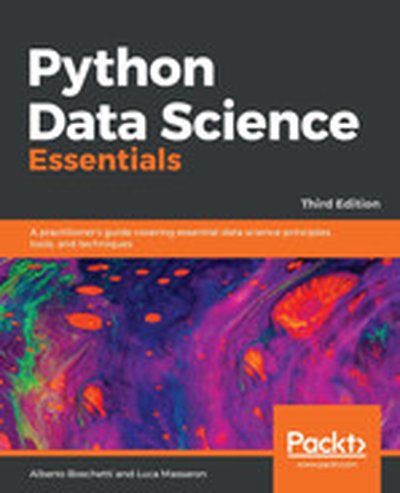
Python Data Science Essentials - Third Edition

Learn the essentials of data science with Python through this comprehensive guide. By the end of this book, you'll have an in-depth understanding of core data science workflows, tools, and techniques. What this Book will help me do Understand and apply data manipulation techniques with pandas and NumPy. Build and optimize machine learning models with scikit-learn. Analyze and visualize complex datasets for derived insights. Implement exploratory data analysis to uncover trends in data. Leverage advanced techniques like graph analysis and deep learning for sophisticated projects. Author(s) Alberto Boschetti and Luca Massaron combine their extensive expertise in data science and Python programming to guide readers effectively. With hands-on knowledge and a passion for teaching, they provide practical insights across the data science lifecycle. Who is it for? This book is ideal for aspiring data scientists, data analysts, and software developers aiming to enhance their data analysis skills. Suited for beginners familiar with Python and basic statistics, this guide bridges the gap to real-world applications. Advance your career by unlocking crucial data science expertise.

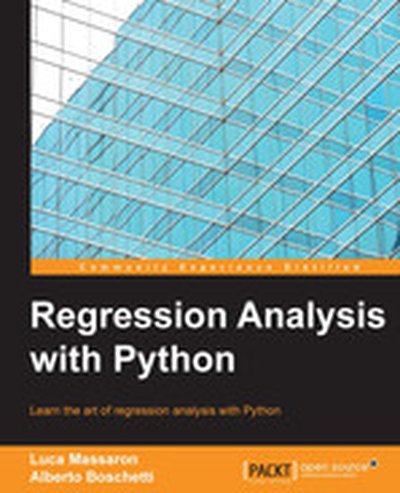
Regression Analysis with Python

Dive into the world of regression analysis guided by Python in this comprehensive book. From simple linear regression to complex models, you'll gain a deep understanding of how to analyze data and predict outcomes. By the end of this book, you will be equipped with the skills to tidy data, build models, and apply regression techniques to real-world problems. What this Book will help me do Understand and format datasets to prepare them for regression analysis efficiently. Build and implement various regression models, such as linear and logistic regression, to solve data science problems. Develop techniques to combat overfitting and ensure predictive accuracy. Learn to scale and adapt regression models to large datasets and apply incremental learning. Apply the skills gained to make informed business decisions using predictive insights from regression models. Author(s) Luca Massaron and Alberto Boschetti are seasoned data professionals with years of expertise in data science, regression analysis, and Python programming. They are passionate about teaching and have crafted this book to demystify regression for learners interested in predictive analytics. Their approachable style ensures concepts are accessible yet comprehensive. Who is it for? This book is ideal for Python developers and data scientists who have a foundational knowledge of math and statistics. Whether you're looking to delve deeper into predictive modeling or efficiently analyze datasets, this book provides step-by-step guidance. If you've dabbled in data science and wish to expand your skillset to include regression analysis, this book is for you!