The presentation introduces Smart Alerting, a system that uses machine learning and statistics to automatically detect anomalies in sales and performance data during platform rollouts. It helps identify incidents faster, reduce manual monitoring, and support data-driven decision-making.
 talk-data.com
Topic
forecasting
58
tagged
Activity Trend
2
peak/qtr
2020-Q1
2026-Q2
Top Events
Claudio Giancaterino will discuss the integration of advanced AI agents and conformal prediction techniques to transform financial analysis and forecasting.
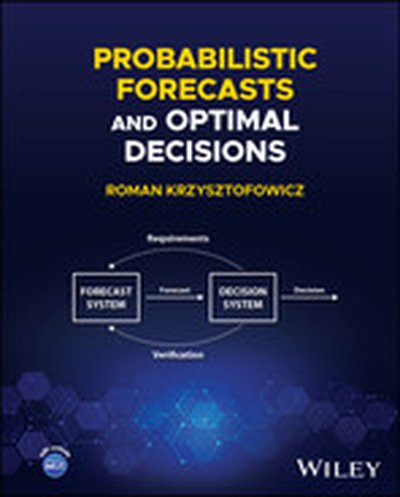
Account for uncertainties and optimize decision-making with this thorough exposition Decision theory is a body of thought and research seeking to apply a mathematical-logical framework to assessing probability and optimizing decision-making. It has developed robust tools for addressing all major challenges to decision making. Yet the number of variables and uncertainties affecting each decision outcome, many of them beyond the decider’s control, mean that decision-making is far from a ‘solved problem’. The tools created by decision theory remain to be refined and applied to decisions in which uncertainties are prominent. Probabilistic Forecasts and Optimal Decisions introduces a theoretically-grounded methodology for optimizing decision-making under conditions of uncertainty. Beginning with an overview of the basic elements of probability theory and methods for modeling continuous variates, it proceeds to survey the mathematics of both continuous and discrete models, supporting each with key examples. The result is a crucial window into the complex but enormously rewarding world of decision theory. Readers of Probablistic Forecasts and Optimal Decisions will also find: Extended case studies supported with real-world data Mini-projects running through multiple chapters to illustrate different stages of the decision-making process End of chapter exercises designed to facilitate student learning Probabilistic Forecasts and Optimal Decisions is ideal for advanced undergraduate and graduate students in the sciences and engineering, as well as predictive analytics and decision analytics professionals.
Can you forecast the future value by considering historical data? Accurate forecasting requires more than just plugging in historical data into models. Readers will find the latest techniques used by managers in business today, discover the importance of forecasting and learn how it is accomplished.
The problem of forecasting future values of economic and physical processes, the problem of restoring lost information, cleaning signals or other data observations from noise, is magnified in an information-laden word. Methods of stochastic processes estimation depend on two main factors. The first factor is construction of a model of the process being investigated. The second factor is the available information about the structure of the process under consideration. In this book, we propose results of the investigation of the problem of mean square optimal estimation (extrapolation, interpolation, and filtering) of linear functionals depending on unobserved values of stochastic sequences and processes with periodically stationary and long memory multiplicative seasonal increments. Formulas for calculating the mean square errors and the spectral characteristics of the optimal estimates of the functionals are derived in the case of spectral certainty, where spectral structure of the considered sequences and processes are exactly known. In the case where spectral densities of the sequences and processes are not known exactly while some sets of admissible spectral densities are given, we apply the minimax-robust method of estimation.
The surging predictive analytics market is expected to grow from $10.5 billion today to $28 billion by 2026. With the rise in automation across industries, the increase in data-driven decision-making, and the proliferation of IoT devices, predictive analytics has become an operational necessity in today's forward-thinking companies. If you're a data professional, you need to be aligned with your company's business activities more than ever before. This practical book provides the background, tools, and best practices necessary to help you design, implement, and operationalize predictive analytics on-premises or in the cloud. Explore ways that predictive analytics can provide direct input back to your business Understand mathematical tools commonly used in predictive analytics Learn the development frameworks used in predictive analytics applications Appreciate the role of predictive analytics in the machine learning process Examine industry implementations of predictive analytics Build, train, and retrain predictive models using Python and TensorFlow
In recent years, and with increasing installation of renewable energy, the demand for accurate wind power prediction is growing, in order to keep grid stability at a high level, This project aims to use rather large scale numerical weather predictions and map it to local measurements. In a next step local weather predictions are combined with historical operational data of a large wind farm and the production in the next 48h is forecasted.
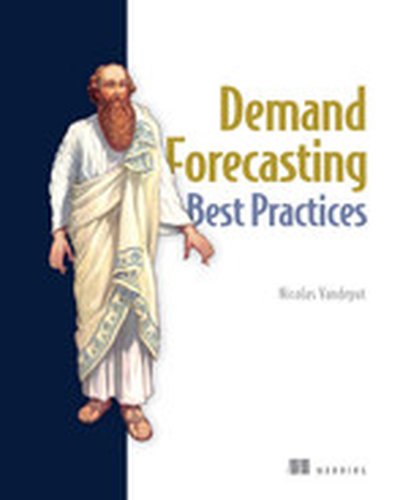
Lead your demand planning process to excellence and deliver real value to your supply chain. In Demand Forecasting Best Practices you’ll learn how to: Lead your team to improve quality while reducing workload Properly define the objectives and granularity of your demand planning Use intelligent KPIs to track accuracy and bias Identify areas for process improvement Help planners and stakeholders add value Determine relevant data to collect and how best to collect it Utilize different statistical and machine learning models An expert demand forecaster can help an organization avoid overproduction, reduce waste, and optimize inventory levels for a real competitive advantage. Demand Forecasting Best Practices teaches you how to become that virtuoso demand forecaster. This one-of-a-kind guide reveals forecasting tools, metrics, models, and stakeholder management techniques for delivering more effective supply chains. Everything you learn has been proven and tested in a live business environment. Discover author Nicolas Vandeput’s original five step framework for demand planning excellence and learn how to tailor it to your own company’s needs. Illustrations and real-world examples make each concept easy to understand and easy to follow. You’ll soon be delivering accurate predictions that are driving major business value. About the Technology An expert demand forecaster can help an organization avoid overproduction, reduce waste, and optimize inventory levels for a real competitive advantage. This book teaches you how to become that virtuoso demand forecaster. About the Book Demand Forecasting Best Practices reveals forecasting tools, metrics, models, and stakeholder management techniques for managing your demand planning process efficiently and effectively. Everything you learn has been proven and tested in a live business environment. Discover author Nicolas Vandeput’s original five step framework for demand planning excellence and learn how to tailor it to your own company’s needs. Illustrations and real-world examples make each concept easy to understand and easy to follow. You’ll soon be delivering accurate predictions that are driving major business value. What's Inside Enhance forecasting quality while reducing team workload Utilize intelligent KPIs to track accuracy and bias Identify process areas for improvement Assist stakeholders in sales, marketing, and finance Optimize statistical and machine learning models About the Reader For demand planners, sales and operations managers, supply chain leaders, and data scientists. About the Author Nicolas Vandeput is a supply chain data scientist, the founder of consultancy company SupChains in 2016, and a teacher at CentraleSupélec, France. Quotes This new book continues to push the FVA mindset, illustrating practices that drive the efficiency and effectiveness of the business forecasting process. - Michael Gilliland, Editor-in-Chief, Foresight: Journal of Applied Forecasting A must-read for any SCM professional, data scientist, or business owner. It's practical, accessible, and packed with valuable insights. - Edouard Thieuleux, Founder of AbcSupplyChain An exceptional resource that covers everything from basic forecasting principles to advanced forecasting techniques using artificial intelligence and machine learning. The writing style is engaging, making complex concepts accessible to both beginners and experts. - Daniel Stanton, Mr. Supply Chain® Nicolas did it again! Demand Forecasting Best Practices provides practical and actionable advice for improving the demand planning process. - Professor Spyros Makridakis, The Makridakis Open Forecasting Center, Institute For the Future (IFF), University of Nicosia This book is now my companion on all of our planning and forecasting projects. A perfect foundation for implementation and also to recommend process improvements. - Werner Nindl, Chief Architect – CPM Practice Director, Pivotal Drive This author understands the nuances of forecasting, and is able to explain them well. - Burhan Ul Haq, Director of Products, Enablers Both broader and deeper than I expected. - Maxim Volgin, Quantitative Marketing Manager, KLM Great book with actionable insights. - Simon Tschöke, Head of Research, German Edge Cloud
A thought-provoking and startlingly insightful reworking of the science of prediction In Prediction Revisited: The Importance of Observation, a team of renowned experts in the field of data-driven investing delivers a ground-breaking reassessment of the delicate science of prediction for anyone who relies on data to contemplate the future. The book reveals why standard approaches to prediction based on classical statistics fail to address the complexities of social dynamics, and it provides an alternative method based on the intuitive notion of relevance. The authors describe, both conceptually and with mathematical precision, how relevance plays a central role in forming predictions from observed experience. Moreover, they propose a new and more nuanced measure of a prediction’s reliability. Prediction Revisited also offers: Clarifications of commonly accepted but less commonly understood notions of statistics Insight into the efficacy of traditional prediction models in a variety of fields Colorful biographical sketches of some of the key prediction scientists throughout history Mutually supporting conceptual and mathematical descriptions of the key insights and methods discussed within With its strikingly fresh perspective grounded in scientific rigor, Prediction Revisited is sure to earn its place as an indispensable resource for data scientists, researchers, investors, and anyone else who aspires to predict the future from the data-driven lessons of the past.
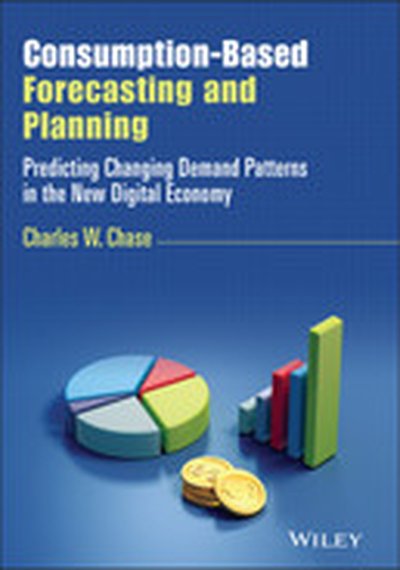
Discover a new, demand-centric framework for forecasting and demand planning In Consumption-Based Forecasting and Planning, thought leader and forecasting expert Charles W. Chase delivers a practical and novel approach to retail and consumer goods companies demand planning process. The author demonstrates why a demand-centric approach relying on point-of-sale and syndicated scanner data is necessary for success in the new digital economy. The book showcases short- and mid-term demand sensing and focuses on disruptions to the marketplace caused by the digital economy and COVID-19. You’ll also learn: How to improve demand forecasting and planning accuracy, reduce inventory costs, and minimize waste and stock-outs What is driving shifting consumer demand patterns, including factors like price, promotions, in-store merchandising, and unplanned and unexpected events How to apply analytics and machine learning to your forecasting challenges using proven approaches and tactics described throughout the book via several case studies. Perfect for executives, directors, and managers at retailers, consumer products companies, and other manufacturers, Consumption-Based Forecasting and Planning will also earn a place in the libraries of sales, marketing, supply chain, and finance professionals seeking to sharpen their understanding of how to predict future consumer demand.
Cover all the machine learning techniques relevant for forecasting problems, ranging from univariate and multivariate time series to supervised learning, to state-of-the-art deep forecasting models such as LSTMs, recurrent neural networks, Facebook’s open-source Prophet model, and Amazon’s DeepAR model. Rather than focus on a specific set of models, this book presents an exhaustive overview of all the techniques relevant to practitioners of forecasting. It begins by explaining the different categories of models that are relevant for forecasting in a high-level language. Next, it covers univariate and multivariate time series models followed by advanced machine learning and deep learning models. It concludes with reflections on model selection such as benchmark scores vs. understandability of models vs. compute time, and automated retraining and updating of models. Each of the models presented in this book is covered in depth, with an intuitive simple explanation ofthe model, a mathematical transcription of the idea, and Python code that applies the model to an example data set. Reading this book will add a competitive edge to your current forecasting skillset. The book is also adapted to those who have recently started working on forecasting tasks and are looking for an exhaustive book that allows them to start with traditional models and gradually move into more and more advanced models. What You Will Learn Carry out forecasting with Python Mathematically and intuitively understand traditional forecasting models and state-of-the-art machine learning techniques Gain the basics of forecasting and machine learning, including evaluation of models, cross-validation, and back testing Select the right model for the right use case Who This Book Is For The advanced nature of the later chapters makes the book relevant for appliedexperts working in the domain of forecasting, as the models covered have been published only recently. Experts working in the domain will want to update their skills as traditional models are regularly being outperformed by newer models.
INTERMITTENT DEMAND FORECASTING The first text to focus on the methods and approaches of intermittent, rather than fast, demand forecasting Intermittent Demand Forecasting is for anyone who is interested in improving forecasts of intermittent demand products, and enhancing the management of inventories. Whether you are a practitioner, at the sharp end of demand planning, a software designer, a student, an academic teaching operational research or operations management courses, or a researcher in this field, we hope that the book will inspire you to rethink demand forecasting. If you do so, then you can contribute towards significant economic and environmental benefits. No prior knowledge of intermittent demand forecasting or inventory management is assumed in this book. The key formulae are accompanied by worked examples to show how they can be implemented in practice. For those wishing to understand the theory in more depth, technical notes are provided at the end of each chapter, as well as an extensive and up-to-date collection of references for further study. Software developments are reviewed, to give an appreciation of the current state of the art in commercial and open source software. “Intermittent demand forecasting may seem like a specialized area but actually is at the center of sustainability efforts to consume less and to waste less. Boylan and Syntetos have done a superb job in showing how improvements in inventory management are pivotal in achieving this. Their book covers both the theory and practice of intermittent demand forecasting and my prediction is that it will fast become the bible of the field.” — Spyros Makridakis, Professor, University of Nicosia, and Director, Institute for the Future and the Makridakis Open Forecasting Center (MOFC). “We have been able to support our clients by adopting many of the ideas discussed in this excellent book, and implementing them in our software. I am sure that these ideas will be equally helpful for other supply chain software vendors and for companies wanting to update and upgrade their capabilities in forecasting and inventory management.” — Suresh Acharya, VP, Research and Development, Blue Yonder. “As product variants proliferate and the pace of business quickens, more and more items have intermittent demand. Boylan and Syntetos have long been leaders in extending forecasting and inventory methods to accommodate this new reality. Their book gathers and clarifies decades of research in this area, and explains how practitioners can exploit this knowledge to make their operations more efficient and effective.” — Thomas R. Willemain, Professor Emeritus, Rensselaer Polytechnic Institute.
by
Udo Sglavo
,
Spyros G. Makridakis
,
Len Tashman
,
Michael Gilliland
,
Fotios Petropoulos
(University of Bath)
Discover the role of machine learning and artificial intelligence in business forecasting from some of the brightest minds in the field In Business Forecasting: The Emerging Role of Artificial Intelligence and Machine Learning accomplished authors Michael Gilliland, Len Tashman, and Udo Sglavo deliver relevant and timely insights from some of the most important and influential authors in the field of forecasting. You'll learn about the role played by machine learning and AI in the forecasting process and discover brand-new research, case studies, and thoughtful discussions covering an array of practical topics. The book offers multiple perspectives on issues like monitoring forecast performance, forecasting process, communication and accountability for forecasts, and the use of big data in forecasting. You will find: Discussions on deep learning in forecasting, including current trends and challenges Explorations of neural network-based forecasting strategies A treatment of the future of artificial intelligence in business forecasting Analyses of forecasting methods, including modeling, selection, and monitoring In addition to the Foreword by renowned researchers Spyros Makridakis and Fotios Petropoulos, the book also includes 16 "opinion/editorial" Afterwords by a diverse range of top academics, consultants, vendors, and industry practitioners, each providing their own unique vision of the issues, current state, and future direction of business forecasting. Perfect for financial controllers, chief financial officers, business analysts, forecast analysts, and demand planners, Business Forecasting will also earn a place in the libraries of other executives and managers who seek a one-stop resource to help them critically assess and improve their own organization's forecasting efforts.
Using data science in order to solve a problem requires a scientific mindset more than coding skills. Data Science for Supply Chain Forecasting, Second Edition contends that a true scientific method which includes experimentation, observation, and constant questioning must be applied to supply chains to achieve excellence in demand forecasting. This second edition adds more than 45 percent extra content with four new chapters including an introduction to neural networks and the forecast value added framework. Part I focuses on statistical "traditional" models, Part II, on machine learning, and the all-new Part III discusses demand forecasting process management. The various chapters focus on both forecast models and new concepts such as metrics, underfitting, overfitting, outliers, feature optimization, and external demand drivers. The book is replete with do-it-yourself sections with implementations provided in Python (and Excel for the statistical models) to show the readers how to apply these models themselves. This hands-on book, covering the entire range of forecasting—from the basics all the way to leading-edge models—will benefit supply chain practitioners, forecasters, and analysts looking to go the extra mile with demand forecasting. Events around the book Link to a De Gruyter Online Event in which the author Nicolas Vandeput together with Stefan de Kok, supply chain innovator and CEO of Wahupa; Spyros Makridakis, professor at the University of Nicosia and director of the Institute For the Future (IFF); and Edouard Thieuleux, founder of AbcSupplyChain, discuss the general issues and challenges of demand forecasting and provide insights into best practices (process, models) and discussing how data science and machine learning impact those forecasts. The event will be moderated by Michael Gilliland, marketing manager for SAS forecasting software: https://youtu.be/1rXjXcabW2s
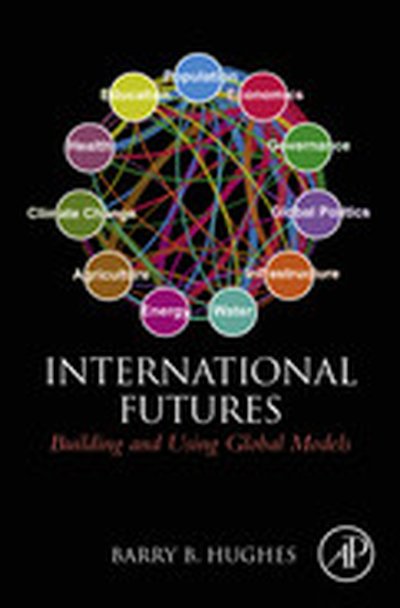
International Futures: Building and Using Global Models extensively covers one of the most advanced systems for integrated, long-term, global and large-scale forecasting analysis available today, the International Futures (IFs) system. Key elements of a strong, long-term global forecasting system are described, i.e. the formulations for the driving variables in separate major models and the manner in which these separate models are integrated. The heavy use of algorithmic and rule-based elements and the use of elements of control theory is also explained. Furthermore, the IFs system is compared and contrasted with all other major modeling efforts, also outlining the major benefits of the IFs system. Finally, the book provides suggestions on how the development of forecasting systems might most productively proceed in the coming years. Helps readers understand the IFs system, not at a detailed equation and technical level, but in terms of the important decisions made that dominate the structure and long-term behavior Presents information on the universe of long-term global forecasting systems, key decisions made, and the range of similarities and differences in the systems Covers the relationship between long-term forecasts in a variety of global issues and the forecasting systems and assumptions that underly them (essential information for forecast consumers)
The first book to be published on the Theta method, outlining under what conditions the method outperforms other forecasting methods This book is the first to detail the Theta method of forecasting – one of the most difficult-to-beat forecasting benchmarks, which topped the biggest forecasting competition in the world in 2000: the M3 competition. Written by two of the leading experts in the forecasting field, it illuminates the exact replication of the method and under what conditions the method outperforms other forecasting methods. Recent developments such as multivariate models are also included, as are a series of practical applications in finance, economics, and healthcare. The book also offers practical tools in MS Excel and guidance, as well as provisional access, for the use of R source code and respective packages. Forecasting with the Theta Method: Theory and Applications includes three main parts. The first part, titled Theory, Methods, Models & Applications details the new theory about the method. The second part, Applications & Performance in Forecasting Competitions, describes empirical results and simulations on the method. The last part roadmaps future research and also include contributions from another leading scholar of the method – Dr. Fotios Petropoulos. First ever book to be published on the Theta Method Explores new theory and exact conditions under which methods would outperform most forecasting benchmarks Clearly written with practical applications Employs R – open source code with all included implementations Forecasting with the Theta Method: Theory and Applications is a valuable tool for both academics and practitioners involved in forecasting and respective software development.
This textbook reviews the methodologies of reliability prediction as currently used in industries such as electronics, automotive, aircraft, aerospace, off-highway, farm machinery, and others. It then discusses why these are not successful; and, presents methods developed by the authors for obtaining accurate information for successful prediction. The approach is founded on approaches that accurately duplicate the real world use of the product. Their approach is based on two fundamental components needed for successful reliability prediction; first, the methodology necessary; and, second, use of accelerated reliability and durability testing as a source of the necessary data. Applicable to all areas of engineering, this textbook details the newest techniques and tools to achieve successful reliabilityprediction and testing. It demonstrates practical examples of the implementation of the approaches described. This book is a tool for engineers, managers, researchers, in industry, teachers, and students. The reader will learn the importance of the interactions of the influencing factors and the interconnections of safety and human factors in product prediction and testing.
Learning is an empirical phenomenon whereby people or organisations undergo a level of efficiency improvement with recurring tasks. Alan Jones pragmatic guide to this important element within estimating introduces two key learning curve models: Wright and Crawford and explains where, how and when to apply them.
Many companies fail to succeed due to poor planning, which is one reason why accountants are in big demand. Skilled at forecasting, accountants can plan a company's future by determining the maximum sustainable growth and predict its external fund requirements. This book provides you with the basic tools necessary to project the balance sheet and statements of income and cash flow, enabling you to add a unique value to your client(s) work. This book will prepare you to do the following: Recall the basics of planning and forecasting financial statements Recall considerations related to a basic forecasting model Identify the evidence of growth mismanagement and develop the skills to determine maximum sustainable growth Apply statistical procedures to forecasting Analyze projected or forecasted financial statements
Go beyond technique to master the difficult judgement calls of forecasting A variety of software can be used effectively to achieve accurate forecasting, but no software can replace the essential human component. You may be new to forecasting, or you may have mastered the statistical theory behind the software’s predictions, and even more advanced “power user” techniques for the software itself—but your forecasts will never reach peak accuracy unless you master the complex judgement calls that the software cannot make. Profit From Your Forecasting Software addresses the issues that arise regularly, and shows you how to make the correct decisions to get the most out of your software. Taking a non-mathematical approach to the various forecasting models, the discussion covers common everyday decisions such as model choice, forecast adjustment, product hierarchies, safety stock levels, model fit, testing, and much more. Clear explanations help you better understand seasonal indices, smoothing coefficients, mean absolute percentage error, and r-squared, and an exploration of psychological biases provides insight into the decision to override the software’s forecast. With a focus on choice, interpretation, and judgement, this book goes beyond the technical manuals to help you truly grasp the more intangible skills that lead to better accuracy. Explore the advantages and disadvantages of alternative forecasting methods in different situations Master the interpretation and evaluation of your software’s output Learn the subconscious biases that could affect your judgement toward intervention Find expert guidance on testing, planning, and configuration to help you get the most out of your software Relevant to sales forecasters, demand planners, and analysts across industries, Profit From Your Forecasting Software is the much sought-after “missing piece” in forecasting reference.