talk-data.com talk-data.com

Topic

etl

6

tagged

Activity Trend

1 peak/qtr
2020-Q1 2026-Q1

Activities

6 activities · Newest first

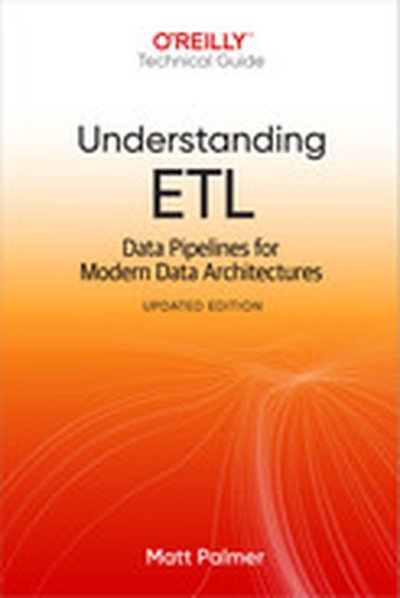
Understanding ETL (Updated Edition)

"Extract, transform, load" (ETL) is at the center of every application of data, from business intelligence to AI. Constant shifts in the data landscape—including the implementations of lakehouse architectures and the importance of high-scale real-time data—mean that today's data practitioners must approach ETL a bit differently. This updated technical guide offers data engineers, engineering managers, and architects an overview of the modern ETL process, along with the challenges you're likely to face and the strategic patterns that will help you overcome them. You'll come away equipped to make informed decisions when implementing ETL and confident about choosing the technology stack that will help you succeed. Discover what ETL looks like in the new world of data lakehouses Learn how to deal with real-time data Explore low-code ETL tools Understand how to best achieve scale, performance, and observability
In a world where data teams need agility, flexibility, and control over their pipelines, dlt (data load tool) steps in to simplify and empower the data engineering process. We’ll discuss how dlt integrates with other tools, to create seamless, end-to-end pipelines that are easy to configure and maintain. Perfect for data engineers, analysts, and anyone eager to embrace a future of composable, future-proof data workflows.

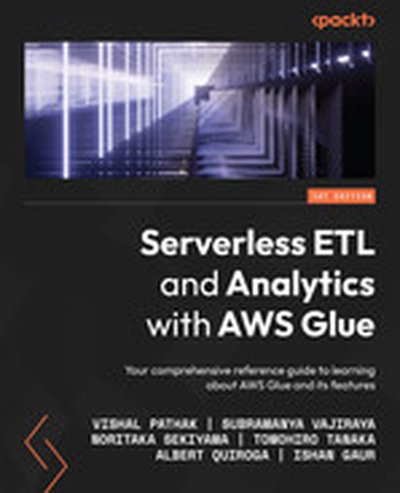
Serverless ETL and Analytics with AWS Glue

Discover how to harness AWS Glue for your ETL and data analysis workflows with "Serverless ETL and Analytics with AWS Glue." This comprehensive guide introduces readers to the capabilities of AWS Glue, from building data lakes to performing advanced ETL tasks, allowing you to create efficient, secure, and scalable data pipelines with serverless technology. What this Book will help me do Understand and utilize various AWS Glue features for data lake and ETL pipeline creation. Leverage AWS Glue Studio and DataBrew for intuitive data preparation workflows. Implement effective storage optimization techniques for enhanced data analytics. Apply robust data security measures, including encryption and access control, to protect data. Integrate AWS Glue with machine learning tools like SageMaker to build intelligent models. Author(s) The authors of this book include experts across the fields of data engineering and AWS technologies. With backgrounds in data analytics, software development, and cloud architecture, they bring a depth of practical experience. Their approach combines hands-on tutorials with conceptual clarity, ensuring a blend of foundational knowledge and actionable insights. Who is it for? This book is designed for ETL developers, data engineers, and data analysts who are familiar with data management concepts and want to extend their skills into serverless cloud solutions. If you're looking to master AWS Glue for building scalable and efficient ETL pipelines or are transitioning existing systems to the cloud, this book is ideal for you.

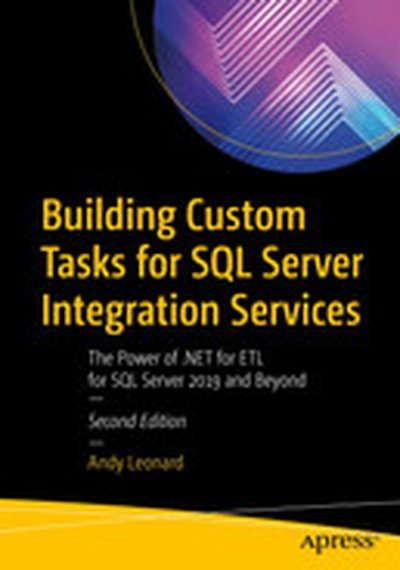
Building Custom Tasks for SQL Server Integration Services: The Power of .NET for ETL for SQL Server 2019 and Beyond

Build custom SQL Server Integration Services (SSIS) tasks using Visual Studio Community Edition and C#. Bring all the power of Microsoft .NET to bear on your data integration and ETL processes, and for no added cost over what you’ve already spent on licensing SQL Server. New in this edition is a demonstration deploying a custom SSIS task to the Azure Data Factory (ADF) Azure-SSIS Integration Runtime (IR). All examples in this new edition are implemented in C#. Custom task developers are shown how to implement custom tasks using the widely accepted and default language for .NET development. Why are custom components necessary? Because even though the SSIS catalog of built-in tasks and components is a marvel of engineering, gaps remain in the available functionality. One such gap is a constraint of the built-in SSIS Execute Package Task, which does not allow SSIS developers to select SSIS packages from other projects in the SSIS Catalog. Examples in this bookshow how to create a custom Execute Catalog Package task that allows SSIS developers to execute tasks from other projects in the SSIS Catalog. Building on the examples and patterns in this book, SSIS developers may create any task to which they aspire, custom tailored to their specific data integration and ETL needs. What You Will Learn Configure and execute Visual Studio in the way that best supports SSIS task development Create a class library as the basis for an SSIS task, and reference the needed SSIS assemblies Properly sign assemblies that you create in order to invoke them from your task Implement source code control via Azure DevOps, or your own favorite tool set Troubleshoot and execute custom tasks as part of your own projects Create deployment projects (MSIs) for distributing code-complete tasks Deploy custom tasks to Azure Data Factory Azure-SSIS IRs in the cloud Create advanced editors for custom task parameters Who This Book Is For For database administrators and developers who are involved in ETL projects built around SQL Server Integration Services (SSIS). Readers do not need a background in software development with C#. Most important is a desire to optimize ETL efforts by creating custom-tailored tasks for execution in SSIS packages, on-premises or in ADF Azure-SSIS IRs.

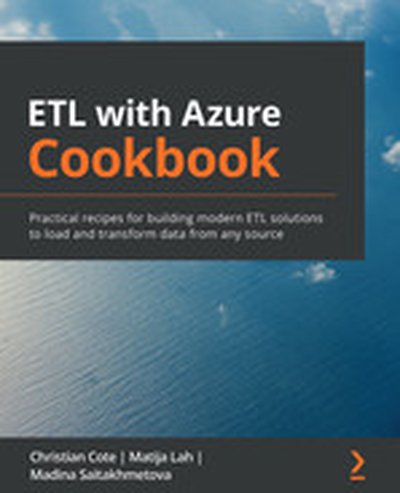
ETL with Azure Cookbook

ETL with Azure Cookbook is a comprehensive guide to building effective and scalable ETL solutions using the Azure cloud platform. Through hands-on recipes, this book explores the features and capabilities of Azure services for data integration and transformation, guiding you in creating efficient processes for moving and handling data. What this Book will help me do Master the basics and advanced techniques for building ETL processes on Azure. Learn practical skills in designing solutions that integrate multiple Azure services. Understand how to migrate existing on-premises ETL solutions to Azure successfully. Acquire knowledge of SQL Server and Azure Big Data Clusters for data integration. Gain experience in automating and optimizing data processes with BIML and Azure Databricks. Author(s) The authors of ETL with Azure Cookbook are experienced data engineers and Azure specialists with years of expertise in designing and implementing robust data solutions. Their professional journey includes hands-on work with SQL Server, Azure services, and scalable ETL frameworks. They aim to provide practical insights and actionable guidance to help readers achieve success in data engineering projects. Who is it for? This book is ideal for data architects, ETL developers, and IT professionals seeking to enhance their skills in data integration and transformation, particularly within the Azure ecosystem. It's suitable for individuals with some knowledge of data engineering principles, SQL, and familiarity with ETL processes who aim to adopt modern cloud-based approaches.