Explore how open standards and design patterns enable scalable, repeatable digital twins that aggregate heterogeneous operational data onto physically accurate 3D objects. Experience how Microsoft and NVIDIA apply OpenUSD, CloudEvents, OpenTelemetry, and other open standards to bridge data engineering and data science. Learn how these patterns unify real-world data into actionable digital twins—extensible across domains, systems, and protocols.
 talk-data.com
Topic
Data Engineering
etl
data_pipelines
big_data
1127
tagged
Activity Trend
127
peak/qtr
2020-Q1
2026-Q2
Top Events
Data engineering is undergoing a fundamental shift. In this episode, I sit down with Nick Schrock, founder and CTO of Dagster, to discuss why he went from being an "AI moderate" to believing 90% of code will be written by AI. Being hands on also led to a massive pivot in Dagster’s roadmap and a new focus on managing and engineering context. We dive deep into why simply feeding data to LLMs isn't enough. Nick explains why real-time context tools (like MCPs) can become "token hogs" that lack precision and why the future belongs to "context pipelines": offline, batch-computed context that is governed, versioned, and treated like code. We also explore Compass, Dagster’s new collaborative agent that lives in Slack, bridging the gap between business stakeholders and data teams. If you’re wondering how your role as a data engineer will evolve in an agentic world, this conversation maps out the territory Dagster: dagster.io Nick Schrock on X: @schrockn
Summary In this episode Preeti Somal, EVP of Engineering at Temporal, talks about the durable execution model and how it reshapes the way teams build reliable, stateful systems for data and AI. She explores Temporal’s code‑first programming model—workflows, activities, task queues, and replay—and how it eliminates hand‑rolled retry, checkpoint, and error‑handling scaffolding while letting data remain where it lives. Preeti shares real-world patterns for replacing DAG-first orchestration, integrating application and data teams through signals and Nexus for cross-boundary calls, and using Temporal to coordinate long-running, human-in-the-loop, and agentic AI workflows with full observability and auditability. Shee also discusses heuristics for choosing Temporal alongside (or instead of) traditional orchestrators, managing scale without moving large datasets, and lessons from running durable execution as a cloud service.
Announcements Hello and welcome to the Data Engineering Podcast, the show about modern data managementData teams everywhere face the same problem: they're forcing ML models, streaming data, and real-time processing through orchestration tools built for simple ETL. The result? Inflexible infrastructure that can't adapt to different workloads. That's why Cash App and Cisco rely on Prefect. Cash App's fraud detection team got what they needed - flexible compute options, isolated environments for custom packages, and seamless data exchange between workflows. Each model runs on the right infrastructure, whether that's high-memory machines or distributed compute. Orchestration is the foundation that determines whether your data team ships or struggles. ETL, ML model training, AI Engineering, Streaming - Prefect runs it all from ingestion to activation in one platform. Whoop and 1Password also trust Prefect for their data operations. If these industry leaders use Prefect for critical workflows, see what it can do for you at dataengineeringpodcast.com/prefect.Data migrations are brutal. They drag on for months—sometimes years—burning through resources and crushing team morale. Datafold's AI-powered Migration Agent changes all that. Their unique combination of AI code translation and automated data validation has helped companies complete migrations up to 10 times faster than manual approaches. And they're so confident in their solution, they'll actually guarantee your timeline in writing. Ready to turn your year-long migration into weeks? Visit dataengineeringpodcast.com/datafold today for the details. Composable data infrastructure is great, until you spend all of your time gluing it together. Bruin is an open source framework, driven from the command line, that makes integration a breeze. Write Python and SQL to handle the business logic, and let Bruin handle the heavy lifting of data movement, lineage tracking, data quality monitoring, and governance enforcement. Bruin allows you to build end-to-end data workflows using AI, has connectors for hundreds of platforms, and helps data teams deliver faster. Teams that use Bruin need less engineering effort to process data and benefit from a fully integrated data platform. Go to dataengineeringpodcast.com/bruin today to get started. And for dbt Cloud customers, they'll give you $1,000 credit to migrate to Bruin Cloud.Your host is Tobias Macey and today I'm interviewing Preeti Somal about how to incorporate durable execution and state management into AI application architectures Interview IntroductionHow did you get involved in the area of data management?Can you describe what durable execution is and how it impacts system architecture?With the strong focus on state maintenance and high reliability, what are some of the most impactful ways that data teams are incorporating tools like Temporal into their work?One of the core primitives in Temporal is a "workflow". How does that compare to similar primitives in common data orchestration systems such as Airflow, Dagster, Prefect, etc.? What are the heuristics that you recommend when deciding which tool to use for a given task, particularly in data/pipeline oriented projects? Even if a team is using a more data-focused orchestration engine, what are some of the ways that Temporal can be applied to handle the processing logic of the actual data?AI applications are also very dependent on reliable data to be effective in production contexts. What are some of the design patterns where durable execution can be integrated into RAG/agent applications?What are some of the conceptual hurdles that teams experience when they are starting to adopt Temporal or other durable execution frameworks?What are the most interesting, innovative, or unexpected ways that you have seen Temporal/durable execution used for data/AI services?What are the most interesting, unexpected, or challenging lessons that you have learned while working on Temporal?When is Temporal/durable execution the wrong choice?What do you have planned for the future of Temporal for data and AI systems? Contact Info LinkedIn Parting Question From your perspective, what is the biggest gap in the tooling or technology for data management today? Closing Announcements Thank you for listening! Don't forget to check out our other shows. Podcast.init covers the Python language, its community, and the innovative ways it is being used. The AI Engineering Podcast is your guide to the fast-moving world of building AI systems.Visit the site to subscribe to the show, sign up for the mailing list, and read the show notes.If you've learned something or tried out a project from the show then tell us about it! Email [email protected] with your story. Links TemporalDurable ExecutionFlinkMachine Learning EpochSpark StreamingAirflowDirected Acyclic Graph (DAG)Temporal NexusTensorZeroAI Engineering Podcast Episode The intro and outro music is from The Hug by The Freak Fandango Orchestra / CC BY-SA
Hello! A new episode of the Data Engineering Central Podcast is dropping today. We will be covering a few hot topics! * Cluster Fatigue * The Death of Open Source Going to be a great show, come along for the ride! Thanks for reading Data Engineering Central! This post is public so feel free to share it.
This is a public episode. If you'd like to discuss this with other subscribers or get access to bonus episodes, visit dataengineeringcentral.substack.com/subscribe
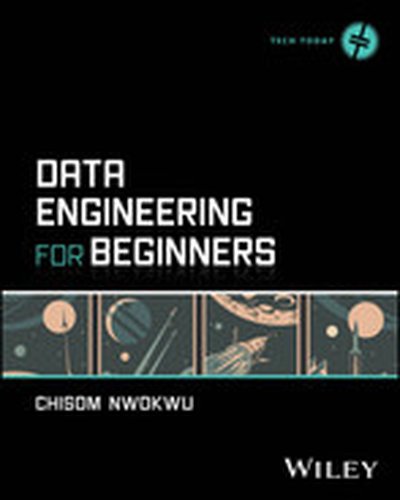
A hands-on technical and industry roadmap for aspiring data engineers In Data Engineering for Beginners, big data expert Chisom Nwokwu delivers a beginner-friendly handbook for everyone interested in the fundamentals of data engineering. Whether you're interested in starting a rewarding, new career as a data analyst, data engineer, or data scientist, or seeking to expand your skillset in an existing engineering role, Nwokwu offers the technical and industry knowledge you need to succeed. The book explains: Database fundamentals, including relational and noSQL databases Data warehouses and data lakes Data pipelines, including info about batch and stream processing Data quality dimensions Data security principles, including data encryption Data governance principles and data framework Big data and distributed systems concepts Data engineering on the cloud Essential skills and tools for data engineering interviews and jobs Data Engineering for Beginners offers an easy-to-read roadmap on a seemingly complicated and intimidating subject. It addresses the topics most likely to cause a beginning data engineer to stumble, clearly explaining key concepts in an accessible way. You'll also find: A comprehensive glossary of data engineering terms Common and practical career paths in the data engineering industry An introduction to key cloud technologies and services you may encounter early in your data engineering career Perfect for practicing and aspiring data analysts, data scientists, and data engineers, Data Engineering for Beginners is an effective and reliable starting point for learning an in-demand skill. It's a powerful resource for everyone hoping to expand their data engineering Skillset and upskill in the big data era.
Summary In this episode of the Data Engineering Podcast Ariel Pohoryles, head of product marketing for Boomi's data management offerings, talks about a recent survey of 300 data leaders on how organizations are investing in data to scale AI. He shares a paradox uncovered in the research: while 77% of leaders trust the data feeding their AI systems, only 50% trust their organization's data overall. Ariel explains why truly productionizing AI demands broader, continuously refreshed data with stronger automation and governance, and highlights the challenges posed by unstructured data and vector stores. The conversation covers the need to shift from manual reviews to automated pipelines, the resurgence of metadata and master data management, and the importance of guardrails, traceability, and agent governance. Ariel also predicts a growing convergence between data teams and application integration teams and advises leaders to focus on high-value use cases, aggressive pipeline automation, and cataloging and governing the coming sprawl of AI agents, all while using AI to accelerate data engineering itself.
Announcements Hello and welcome to the Data Engineering Podcast, the show about modern data managementData teams everywhere face the same problem: they're forcing ML models, streaming data, and real-time processing through orchestration tools built for simple ETL. The result? Inflexible infrastructure that can't adapt to different workloads. That's why Cash App and Cisco rely on Prefect. Cash App's fraud detection team got what they needed - flexible compute options, isolated environments for custom packages, and seamless data exchange between workflows. Each model runs on the right infrastructure, whether that's high-memory machines or distributed compute. Orchestration is the foundation that determines whether your data team ships or struggles. ETL, ML model training, AI Engineering, Streaming - Prefect runs it all from ingestion to activation in one platform. Whoop and 1Password also trust Prefect for their data operations. If these industry leaders use Prefect for critical workflows, see what it can do for you at dataengineeringpodcast.com/prefect.Data migrations are brutal. They drag on for months—sometimes years—burning through resources and crushing team morale. Datafold's AI-powered Migration Agent changes all that. Their unique combination of AI code translation and automated data validation has helped companies complete migrations up to 10 times faster than manual approaches. And they're so confident in their solution, they'll actually guarantee your timeline in writing. Ready to turn your year-long migration into weeks? Visit dataengineeringpodcast.com/datafold today for the details.Composable data infrastructure is great, until you spend all of your time gluing it together. Bruin is an open source framework, driven from the command line, that makes integration a breeze. Write Python and SQL to handle the business logic, and let Bruin handle the heavy lifting of data movement, lineage tracking, data quality monitoring, and governance enforcement. Bruin allows you to build end-to-end data workflows using AI, has connectors for hundreds of platforms, and helps data teams deliver faster. Teams that use Bruin need less engineering effort to process data and benefit from a fully integrated data platform. Go to dataengineeringpodcast.com/bruin today to get started. And for dbt Cloud customers, they'll give you $1,000 credit to migrate to Bruin Cloud.Your host is Tobias Macey and today I'm interviewing Ariel Pohoryles about data management investments that organizations are making to enable them to scale AI implementationsInterview IntroductionHow did you get involved in the area of data management?Can you start by describing the motivation and scope of your recent survey on data management investments for AI across your respondents?What are the key takeaways that were most significant to you?The survey reveals a fascinating paradox: 77% of leaders trust the data used by their AI systems, yet only half trust their organization's overall data quality. For our data engineering audience, what does this suggest about how companies are currently sourcing data for AI? Does it imply they are using narrow, manually-curated "golden datasets," and what are the technical challenges and risks of that approach as they try to scale?The report highlights a heavy reliance on manual data quality processes, with one expert noting companies feel it's "not reliable to fully automate validation" for external or customer data. At the same time, maturity in "Automated tools for data integration and cleansing" is low, at only 42%. What specific technical hurdles or organizational inertia are preventing teams from adopting more automation in their data quality and integration pipelines?There was a significant point made that with generative AI, "biases can scale much faster," making automated governance essential. From a data engineering perspective, how does the data management strategy need to evolve to support generative AI versus traditional ML models? What new types of data quality checks, lineage tracking, or monitoring for feedback loops are required when the model itself is generating new content based on its own outputs?The report champions a "centralized data management platform" as the "connective tissue" for reliable AI. How do you see the scale and data maturity impacting the realities of that effort?How do architectural patterns in the shape of cloud warehouses, lakehouses, data mesh, data products, etc. factor into that need for centralized/unified platforms?A surprising finding was that a third of respondents have not fully grasped the risk of significant inaccuracies in their AI models if they fail to prioritize data management. In your experience, what are the biggest blind spots for data and analytics leaders?Looking at the maturity charts, companies rate themselves highly on "Developing a data management strategy" (65%) but lag significantly in areas like "Automated tools for data integration and cleansing" (42%) and "Conducting bias-detection audits" (24%). If you were advising a data engineering team lead based on these findings, what would you tell them to prioritize in the next 6-12 months to bridge the gap between strategy and a truly scalable, trustworthy data foundation for AI?The report states that 83% of companies expect to integrate more data sources for their AI in the next year. For a data engineer on the ground, what is the most important capability they need to build into their platform to handle this influx?What are the most interesting, innovative, or unexpected ways that you have seen teams addressing the new and accelerated data needs for AI applications?What are some of the noteworthy trends or predictions that you have for the near-term future of the impact that AI is having or will have on data teams and systems?Contact Info LinkedInParting Question From your perspective, what is the biggest gap in the tooling or technology for data management today?Closing Announcements Thank you for listening! Don't forget to check out our other shows. Podcast.init covers the Python language, its community, and the innovative ways it is being used. The AI Engineering Podcast is your guide to the fast-moving world of building AI systems.Visit the site to subscribe to the show, sign up for the mailing list, and read the show notes.If you've learned something or tried out a project from the show then tell us about it! Email [email protected] with your story.Links BoomiData ManagementIntegration & Automation DemoAgentstudioData Connector Agent WebinarSurvey ResultsData GovernanceShadow ITPodcast EpisodeThe intro and outro music is from The Hug by The Freak Fandango Orchestra / CC BY-SA
This session will go over 4 common data engineering problems, myth busting the "ask" vs "reality" with real-life examples. Part data engineering therapy, part solving problems that "really" matter, part how to think small and deliver big.
To be clear - I'm not saying that analytics and data engineering are a fad. I'm not saying the data teams are doomed to fade away, or that the old fundamentals of data modeling are wrong, or that the urge to quantify everything is a mistake. I'm saying that things seem pretty good, right now. But, you know. Like Charles Schwab constantly says, past performance is no guarantee of future results. So someone else might say all of that in the future - because, as John Maynard Keynes said, in the long run, we are all dead.
For years, data engineering was a story of predictable "pipelines": move data from point A to point B. But AI just hit the reset button on our entire field. Now, we're all staring into the void, wondering what's next. While the fundamentals haven't changed, data remains challenging in the traditional areas of data governance, data management, and data modeling, which still present challenges. Everything else is up for grabs. This talk will cut through the noise and explore the future of data engineering in an AI-driven world. We'll examine how team structures will evolve, why agentic workflows and real-time systems are becoming non-negotiable, and how our focus must shift from building dashboards and analytics to architecting for automated action. The reset button has been pushed. It's time for us to invent the future of our industry.
Summary In this episode of the Data Engineering Podcast Omri Lifshitz (CTO) and Ido Bronstein (CEO) of Upriver talk about the growing gap between AI's demand for high-quality data and organizations' current data practices. They discuss why AI accelerates both the supply and demand sides of data, highlighting that the bottleneck lies in the "middle layer" of curation, semantics, and serving. Omri and Ido outline a three-part framework for making data usable by LLMs and agents: collect, curate, serve, and share challenges of scaling from POCs to production, including compounding error rates and reliability concerns. They also explore organizational shifts, patterns for managing context windows, pragmatic views on schema choices, and Upriver's approach to building autonomous data workflows using determinism and LLMs at the right boundaries. The conversation concludes with a look ahead to AI-first data platforms where engineers supervise business semantics while automation stitches technical details end-to-end.
Announcements Hello and welcome to the Data Engineering Podcast, the show about modern data managementData teams everywhere face the same problem: they're forcing ML models, streaming data, and real-time processing through orchestration tools built for simple ETL. The result? Inflexible infrastructure that can't adapt to different workloads. That's why Cash App and Cisco rely on Prefect. Cash App's fraud detection team got what they needed - flexible compute options, isolated environments for custom packages, and seamless data exchange between workflows. Each model runs on the right infrastructure, whether that's high-memory machines or distributed compute. Orchestration is the foundation that determines whether your data team ships or struggles. ETL, ML model training, AI Engineering, Streaming - Prefect runs it all from ingestion to activation in one platform. Whoop and 1Password also trust Prefect for their data operations. If these industry leaders use Prefect for critical workflows, see what it can do for you at dataengineeringpodcast.com/prefect.Data migrations are brutal. They drag on for months—sometimes years—burning through resources and crushing team morale. Datafold's AI-powered Migration Agent changes all that. Their unique combination of AI code translation and automated data validation has helped companies complete migrations up to 10 times faster than manual approaches. And they're so confident in their solution, they'll actually guarantee your timeline in writing. Ready to turn your year-long migration into weeks? Visit dataengineeringpodcast.com/datafold today for the details.Composable data infrastructure is great, until you spend all of your time gluing it together. Bruin is an open source framework, driven from the command line, that makes integration a breeze. Write Python and SQL to handle the business logic, and let Bruin handle the heavy lifting of data movement, lineage tracking, data quality monitoring, and governance enforcement. Bruin allows you to build end-to-end data workflows using AI, has connectors for hundreds of platforms, and helps data teams deliver faster. Teams that use Bruin need less engineering effort to process data and benefit from a fully integrated data platform. Go to dataengineeringpodcast.com/bruin today to get started. And for dbt Cloud customers, they'll give you $1,000 credit to migrate to Bruin Cloud.Your host is Tobias Macey and today I'm interviewing Omri Lifshitz and Ido Bronstein about the challenges of keeping up with the demand for data when supporting AI systemsInterview IntroductionHow did you get involved in the area of data management?We're here to talk about "The Growing Gap Between Data & AI". From your perspective, what is this gap, and why do you think it's widening so rapidly right now?How does this gap relate to the founding story of Upriver? What problems were you and your co-founders experiencing that led you to build this?The core premise of new AI tools, from RAG pipelines to LLM agents, is that they are only as good as the data they're given. How does this "garbage in, garbage out" problem change when the "in" is not a static file but a complex, high-velocity, and constantly changing data pipeline?Upriver is described as an "intelligent agent system" and an "autonomous data engineer." This is a fascinating "AI to solve for AI" approach. Can you describe this agent-based architecture and how it specifically works to bridge that data-AI gap?Your website mentions a "Data Context Layer" that turns "tribal knowledge" into a "machine-usable mode." This sounds critical for AI. How do you capture that context, and how does it make data "AI-ready" in a way that a traditional data catalog or quality tool doesn't?What are the most innovative or unexpected ways you've seen companies trying to make their data "AI-ready"? And where are the biggest points of failure you observe?What has been the most challenging or unexpected lesson you've learned while building an AI system (Upriver) that is designed to fix the data foundation for other AI systems?When is an autonomous, agent-based approach not the right solution for a team's data quality problems? What organizational or technical maturity is required to even start closing this data-AI gap?What do you have planned for the future of Upriver? And looking more broadly, how do you see this gap between data and AI evolving over the next few years?Contact Info Ido - LinkedInOmri - LinkedInParting Question From your perspective, what is the biggest gap in the tooling or technology for data management today?Closing Announcements Thank you for listening! Don't forget to check out our other shows. Podcast.init covers the Python language, its community, and the innovative ways it is being used. The AI Engineering Podcast is your guide to the fast-moving world of building AI systems.Visit the site to subscribe to the show, sign up for the mailing list, and read the show notes.If you've learned something or tried out a project from the show then tell us about it! Email [email protected] with your story.Links UpriverRAG == Retrieval Augmented GenerationAI Engineering Podcast EpisodeAI AgentContext WindowModel Finetuning)The intro and outro music is from The Hug by The Freak Fandango Orchestra / CC BY-SA
Snowflake's latest features, like Cortex, are revolutionizing how we approach AI and data innovation. But how do you build the robust, AI-ready data pipelines needed to power them without getting bogged down in complex coding and lengthy development cycles?
This hands-on lab reveals how to bridge that gap. Discover how Coalesce’s data transformation platform lets you harness Snowflake’s most powerful capabilities. We’ll show you how to automate the complex groundwork, freeing you to focus on delivering high-impact data and AI projects faster than ever. You’ll learn how to:
•Automate and accelerate pipeline development by 10x using ready-made templates to handle common data transformations •Seamlessly operationalize Snowflake Cortex, bringing powerful AI and ML functions directly into your data workflows in minutes •Master modern data engineering on Snowflake by simplifying the use of advanced features like Dynamic Tables, Iceberg Tables, and Snowpark automation. Get Ready for the Lab:
For the best hands-on experience, please sign up for a Snowflake trial account before the event. Once activated, create your Coalesce trial account via Snowflake’s Partner Connect portal.
This is a Hands-On workshop, all attendees must bring their own laptop to participate.
Seats are limited to 16 participants to ensure a focused, interactive discussion. Registration on request.
This roundtable will explore how top financial institutions are leveraging Snowflake for data engineering, analytics, and the next wave of AI workloads, the latest Snowflake innovations in AI, and best practices to accelerate regulatory reporting (DORA, ESG, BCBS) and harnessing Snowflake’s marketplace of 800+ FSI data providers.
Summary In this episode of the Data Engineering Podcast Matt Topper, president of UberEther, talks about the complex challenge of identity, credentials, and access control in modern data platforms. With the shift to composable ecosystems, integration burdens have exploded, fracturing governance and auditability across warehouses, lakes, files, vector stores, and streaming systems. Matt shares practical solutions, including propagating user identity via JWTs, externalizing policy with engines like OPA/Rego and Cedar, and using database proxies for native row/column security. He also explores catalog-driven governance, lineage-based label propagation, and OpenTDF for binding policies to data objects. The conversation covers machine-to-machine access, short-lived credentials, workload identity, and constraining access by interface choke points, as well as lessons from Zanzibar-style policy models and the human side of enforcement. Matt emphasizes the need for trust composition - unifying provenance, policy, and identity context - to answer questions about data access, usage, and intent across the entire data path.
Announcements Hello and welcome to the Data Engineering Podcast, the show about modern data managementData teams everywhere face the same problem: they're forcing ML models, streaming data, and real-time processing through orchestration tools built for simple ETL. The result? Inflexible infrastructure that can't adapt to different workloads. That's why Cash App and Cisco rely on Prefect. Cash App's fraud detection team got what they needed - flexible compute options, isolated environments for custom packages, and seamless data exchange between workflows. Each model runs on the right infrastructure, whether that's high-memory machines or distributed compute. Orchestration is the foundation that determines whether your data team ships or struggles. ETL, ML model training, AI Engineering, Streaming - Prefect runs it all from ingestion to activation in one platform. Whoop and 1Password also trust Prefect for their data operations. If these industry leaders use Prefect for critical workflows, see what it can do for you at dataengineeringpodcast.com/prefect.Data migrations are brutal. They drag on for months—sometimes years—burning through resources and crushing team morale. Datafold's AI-powered Migration Agent changes all that. Their unique combination of AI code translation and automated data validation has helped companies complete migrations up to 10 times faster than manual approaches. And they're so confident in their solution, they'll actually guarantee your timeline in writing. Ready to turn your year-long migration into weeks? Visit dataengineeringpodcast.com/datafold today for the details.Composable data infrastructure is great, until you spend all of your time gluing it together. Bruin is an open source framework, driven from the command line, that makes integration a breeze. Write Python and SQL to handle the business logic, and let Bruin handle the heavy lifting of data movement, lineage tracking, data quality monitoring, and governance enforcement. Bruin allows you to build end-to-end data workflows using AI, has connectors for hundreds of platforms, and helps data teams deliver faster. Teams that use Bruin need less engineering effort to process data and benefit from a fully integrated data platform. Go to dataengineeringpodcast.com/bruin today to get started. And for dbt Cloud customers, they'll give you $1,000 credit to migrate to Bruin Cloud.Your host is Tobias Macey and today I'm interviewing Matt Topper about the challenges of managing identity and access controls in the context of data systemsInterview IntroductionHow did you get involved in the area of data management?The data ecosystem is a uniquely challenging space for creating and enforcing technical controls for identity and access control. What are the key considerations for designing a strategy for addressing those challenges?For data acess the off-the-shelf options are typically on either extreme of too coarse or too granular in their capabilities. What do you see as the major factors that contribute to that situation?Data governance policies are often used as the primary means of identifying what data can be accesssed by whom, but translating that into enforceable constraints is often left as a secondary exercise. How can we as an industry make that a more manageable and sustainable practice?How can the audit trails that are generated by data systems be used to inform the technical controls for identity and access?How can the foundational technologies of our data platforms be improved to make identity and authz a more composable primitive?How does the introduction of streaming/real-time data ingest and delivery complicate the challenges of security controls?What are the most interesting, innovative, or unexpected ways that you have seen data teams address ICAM?What are the most interesting, unexpected, or challenging lessons that you have learned while working on ICAM?What are the aspects of ICAM in data systems that you are paying close attention to?What are your predictions for the industry adoption or enforcement of those controls?Contact Info LinkedInParting Question From your perspective, what is the biggest gap in the tooling or technology for data management today?Closing Announcements Thank you for listening! Don't forget to check out our other shows. Podcast.init covers the Python language, its community, and the innovative ways it is being used. The AI Engineering Podcast is your guide to the fast-moving world of building AI systems.Visit the site to subscribe to the show, sign up for the mailing list, and read the show notes.If you've learned something or tried out a project from the show then tell us about it! Email [email protected] with your story.Links UberEtherJWT == JSON Web TokenOPA == Open Policy AgentRegoPingIdentityOktaMicrosoft EntraSAML == Security Assertion Markup LanguageOAuthOIDC == OpenID ConnectIDP == Identity ProviderKubernetesIstioAmazon CEDAR policy languageAWS IAMPII == Personally Identifiable InformationCISO == Chief Information Security OfficerOpenTDFOpenFGAGoogle ZanzibarRisk Management FrameworkModel Context ProtocolGoogle Data ProjectTPM == Trusted Platform ModulePKI == Public Key InfrastructurePassskeysDuckLakePodcast EpisodeAccumuloJDBCOpenBaoHashicorp VaultLDAPThe intro and outro music is from The Hug by The Freak Fandango Orchestra / CC BY-SA
There's no shortage of technical content for data engineers, but a massive gap exists when it comes to the non-technical skills required to advance beyond a senior role. I sit down with Yordan Ivanov, Head of Data Engineering and writer of "Data Gibberish," to talk about this disconnect. We dive into his personal journey of failing as a manager the first time, learning the crucial "people" skills, and his current mission to help data engineers learn how to speak the language of business. Key areas we explore: The Senior-Level Content Gap: Yordan explains why his non-technical content on career strategy and stakeholder communication gets "terrible" engagement compared to technical posts, even though it's what's needed to advance.The Managerial Trap: Yordan's candid story about his first attempt at management, where he failed because he cared only about code and wasn't equipped for the people-centric aspects and politics of the role.The Danger of AI Over-reliance: A deep discussion on how leaning too heavily on AI can prevent the development of fundamental thinking and problem-solving skills, both in coding and in life.The Maturing Data Landscape: We reflect on the end of the "modern data stack euphoria" and what the wave of acquisitions means for innovation and the future of data tooling.AI Adoption in Europe vs. the US: A look at how AI adoption is perceived as massive and mandatory in Europe, while US census data shows surprisingly low enterprise adoption rates
Summary In this episode Kate Shaw, Senior Product Manager for Data and SLIM at SnapLogic, talks about the hidden and compounding costs of maintaining legacy systems—and practical strategies for modernization. She unpacks how “legacy” is less about age and more about when a system becomes a risk: blocking innovation, consuming excess IT time, and creating opportunity costs. Kate explores technical debt, vendor lock-in, lost context from employee turnover, and the slippery notion of “if it ain’t broke,” especially when data correctness and lineage are unclear. Shee digs into governance, observability, and data quality as foundations for trustworthy analytics and AI, and why exit strategies for system retirement should be planned from day one. The discussion covers composable architectures to avoid monoliths and big-bang migrations, how to bridge valuable systems into AI initiatives without lock-in, and why clear success criteria matter for AI projects. Kate shares lessons from the field on discovery, documentation gaps, parallel run strategies, and using integration as the connective tissue to unlock data for modern, cloud-native and AI-enabled use cases. She closes with guidance on planning migrations, defining measurable outcomes, ensuring lineage and compliance, and building for swap-ability so teams can evolve systems incrementally instead of living with a “bowl of spaghetti.”
Announcements Hello and welcome to the Data Engineering Podcast, the show about modern data managementData teams everywhere face the same problem: they're forcing ML models, streaming data, and real-time processing through orchestration tools built for simple ETL. The result? Inflexible infrastructure that can't adapt to different workloads. That's why Cash App and Cisco rely on Prefect. Cash App's fraud detection team got what they needed - flexible compute options, isolated environments for custom packages, and seamless data exchange between workflows. Each model runs on the right infrastructure, whether that's high-memory machines or distributed compute. Orchestration is the foundation that determines whether your data team ships or struggles. ETL, ML model training, AI Engineering, Streaming - Prefect runs it all from ingestion to activation in one platform. Whoop and 1Password also trust Prefect for their data operations. If these industry leaders use Prefect for critical workflows, see what it can do for you at dataengineeringpodcast.com/prefect.Data migrations are brutal. They drag on for months—sometimes years—burning through resources and crushing team morale. Datafold's AI-powered Migration Agent changes all that. Their unique combination of AI code translation and automated data validation has helped companies complete migrations up to 10 times faster than manual approaches. And they're so confident in their solution, they'll actually guarantee your timeline in writing. Ready to turn your year-long migration into weeks? Visit dataengineeringpodcast.com/datafold today for the details.Your host is Tobias Macey and today I'm interviewing Kate Shaw about the true costs of maintaining legacy systemsInterview IntroductionHow did you get involved in the area of data management?What are your crtieria for when a given system or service transitions to being "legacy"?In order for any service to survive long enough to become "legacy" it must be serving its purpose and providing value. What are the common factors that prompt teams to deprecate or migrate systems?What are the sources of monetary cost related to maintaining legacy systems while they remain operational?Beyond monetary cost, economics also have a concept of "opportunity cost". What are some of the ways that manifests in data teams who are maintaining or migrating from legacy systems?How does that loss of productivity impact the broader organization?How does the process of migration contribute to issues around data accuracy, reliability, etc. as well as contributing to potential compromises of security and compliance?Once a system has been replaced, it needs to be retired. What are some of the costs associated with removing a system from service?What are the most interesting, innovative, or unexpected ways that you have seen teams address the costs of legacy systems and their retirement?What are the most interesting, unexpected, or challenging lessons that you have learned while working on legacy systems migration?When is deprecation/migration the wrong choice?How have evolutionary architecture patterns helped to mitigate the costs of system retirement?Contact Info LinkedInParting Question From your perspective, what is the biggest gap in the tooling or technology for data management today?Closing Announcements Thank you for listening! Don't forget to check out our other shows. Podcast.init covers the Python language, its community, and the innovative ways it is being used. The AI Engineering Podcast is your guide to the fast-moving world of building AI systems.Visit the site to subscribe to the show, sign up for the mailing list, and read the show notes.If you've learned something or tried out a project from the show then tell us about it! Email [email protected] with your story.Links SnapLogicSLIM == SnapLogic Intelligent ModernizerOpportunity CostSunk Cost FallacyData GovernanceEvolutionary ArchitectureThe intro and outro music is from The Hug by The Freak Fandango Orchestra / CC BY-SA
In this session we will introduce Snowflake’s latest developer tools for secure authentication, Git integration, collaborative notebooks, code workspaces, unified data engineering, and workflow automation - all aimed at streamlining product development and deployment.
We will also demonstrate how Snowflake enables engineers to query, aggregate, and extract insights from structured and unstructured data—including sales, support transcripts, and images—using AISQL functions and Cortex AI models. The demo highlights Snowflake Intelligence’s Data Agents, which let you interact with multimodal data sources and external apps, generate visualizations, and produce direct answers via natural language.
The role of data analysts is evolving, not disappearing. With generative AI transforming the industry, many wonder if their analytical skills will soon become obsolete. But how is the relationship between human expertise and AI tools really changing? While AI excels at coding, debugging, and automating repetitive tasks, it struggles with understanding complex business problems and domain-specific challenges. What skills should today's data professionals focus on to remain relevant? How can you leverage AI as a partner rather than viewing it as a replacement? The balance between technical expertise and business acumen has never been more critical in navigating this changing landscape. Mo Chen is a Data & Analytics Manager with over seven years of experience in financial and banking data. Currently at NatWest Group, Mo leads initiatives that enhance data management, automate reporting, and improve decision-making across the organization. After earning an MSc in Finance & Economics from the University of St Andrews, Mo launched a career in risk and credit portfolio management before transitioning into analytics. Blending economics, finance, and data engineering, Mo is skilled at turning large-scale financial data into actionable insight that supports efficiency and strategic planning. Beyond corporate life, Mo has become a passionate educator and community-builder. On YouTube, Mo hosts a fast-growing channel (185K+ subscribers, with millions of views) where he breaks down complex analytics concepts into bite-sized, actionable lessons. In the episode, Richie and Mo explore the evolving role of data analysts, the impact of AI on coding and debugging, the importance of domain knowledge for career switchers, effective communication strategies in data analysis, and much more. Links Mentioned in the Show: Mo’s Website - Build a Data Portfolio WebsiteMo’s YouTube ChannelConnect with MoGet Certified as a Data AnalystRelated Episode: Career Skills for Data Professionals with Wes Kao, Co-Founder of MavenRewatch RADAR AI New to DataCamp? Learn on the go using the DataCamp mobile appEmpower your business with world-class data and AI skills with DataCamp for business
Summary In this episode of the Data Engineering Podcast, host Tobias Macey welcomes back Nick Schrock, CTO and founder of Dagster Labs, to discuss Compass - a Slack-native, agentic analytics system designed to keep data teams connected with business stakeholders. Nick shares his journey from initial skepticism to embracing agentic AI as model and application advancements made it practical for governed workflows, and explores how Compass redefines the relationship between data teams and stakeholders by shifting analysts into steward roles, capturing and governing context, and integrating with Slack where collaboration already happens. The conversation covers organizational observability through Compass's conversational system of record, cost control strategies, and the implications of agentic collaboration on Conway's Law, as well as what's next for Compass and Nick's optimistic views on AI-accelerated software engineering.
Announcements Hello and welcome to the Data Engineering Podcast, the show about modern data managementData teams everywhere face the same problem: they're forcing ML models, streaming data, and real-time processing through orchestration tools built for simple ETL. The result? Inflexible infrastructure that can't adapt to different workloads. That's why Cash App and Cisco rely on Prefect. Cash App's fraud detection team got what they needed - flexible compute options, isolated environments for custom packages, and seamless data exchange between workflows. Each model runs on the right infrastructure, whether that's high-memory machines or distributed compute. Orchestration is the foundation that determines whether your data team ships or struggles. ETL, ML model training, AI Engineering, Streaming - Prefect runs it all from ingestion to activation in one platform. Whoop and 1Password also trust Prefect for their data operations. If these industry leaders use Prefect for critical workflows, see what it can do for you at dataengineeringpodcast.com/prefect.Data migrations are brutal. They drag on for months—sometimes years—burning through resources and crushing team morale. Datafold's AI-powered Migration Agent changes all that. Their unique combination of AI code translation and automated data validation has helped companies complete migrations up to 10 times faster than manual approaches. And they're so confident in their solution, they'll actually guarantee your timeline in writing. Ready to turn your year-long migration into weeks? Visit dataengineeringpodcast.com/datafold today for the details. Your host is Tobias Macey and today I'm interviewing Nick Schrock about building an AI analyst that keeps data teams in the loopInterview IntroductionHow did you get involved in the area of data management?Can you describe what Compass is and the story behind it?context repository structurehow to keep it relevant/avoid sprawl/duplicationproviding guardrailshow does a tool like Compass help provide feedback/insights back to the data teams?preparing the data warehouse for effective introspection by the AILLM selectioncost managementcaching/materializing ad-hoc queriesWhy Slack and enterprise chat are important to b2b softwareHow AI is changing stakeholder relationshipsHow not to overpromise AI capabilities How does Compass relate to BI?How does Compass relate to Dagster and Data Infrastructure?What are the most interesting, innovative, or unexpected ways that you have seen Compass used?What are the most interesting, unexpected, or challenging lessons that you have learned while working on Compass?When is Compass the wrong choice?What do you have planned for the future of Compass?Contact Info LinkedInParting Question From your perspective, what is the biggest gap in the tooling or technology for data management today?Closing Announcements Thank you for listening! Don't forget to check out our other shows. Podcast.init covers the Python language, its community, and the innovative ways it is being used. The AI Engineering Podcast is your guide to the fast-moving world of building AI systems.Visit the site to subscribe to the show, sign up for the mailing list, and read the show notes.If you've learned something or tried out a project from the show then tell us about it! Email [email protected] with your story.Links DagsterDagster LabsDagster PlusDagster CompassChris Bergh DataOps EpisodeRise of Medium Code blog postContext EngineeringData StewardInformation ArchitectureConway's LawTemporal durable execution frameworkThe intro and outro music is from The Hug by The Freak Fandango Orchestra / CC BY-SA
In this episode, we talked with Abouzar Abbaspour, a data engineer whose career spans software engineering in Iran, building crowd and recommendation systems at a Dutch theme park, deploying large-scale ML models at Bol.com, and now working at Tesla. Abouzar shares how he bridged diverse industries, tackled real-world data challenges, and adapted to new roles while keeping a hands-on approach to machine learning and engineering.TIMECODES00:00 Career journey and early motivations06:17 Moving to Europe for data science12:18 Working with theme parks and crowd modeling18:29 Lessons from ride and visitor data23:06 Building recommendation systems at Efteling27:26 Joining Bol.com and the Dutch e-commerce industry32:49 Product and brand recommendation logic36:09 Experimenting with "Tinder for brands"40:26 Engagement metrics and product validation43:02 From ML engineering to data engineering roles52:04 Hands-on skills at Tesla and industry expectations57:43 Career growth, learning, and adviceConnect with AbouzarLinkedin - / abouzar-abbaspour Website - https://www.abouzar-abbaspour.com/ Connect with DataTalks.Club: Join the community - https://datatalks.club/slack.htmlSubscribe to our Google calendar to have all our events in your calendar - https://calendar.google.com/calendar/...Check other upcoming events - https://lu.ma/dtc-eventsGitHub: https://github.com/DataTalksClubLinkedIn - / datatalks-club Twitter - / datatalksclub Website - https://datatalks.club/
Modern data engineering leverages Python to build robust, scalable, end-to-end workflows. In this talk, we will cover how Snowflake offers you a flexible development environment for developing Python data pipelines, performing transformation at scale, orchestrating and deploying your pipelines at scale. Topics we’ll cover include:
•Ingest: Data source APIs, Snowflake file-to-read and ingest data of any format when files arrive, with sources outside Snowflake •Develop: Packaging (artifact repo), Python runtimes, IDE (Notebook, vscode) •Transform: Snowpark pandas, UDFs, UDAFs •Deploy: Tasks, Notebook scheduling