talk-data.com talk-data.com

Topic

Computer Science

programming algorithms data_structures

42

tagged

Activity Trend

9 peak/qtr
2020-Q1 2026-Q1

Activities

Showing filtered results

Filtering by: O'Reilly Data Science Books ×
Graph Theory for Computer Science

This book is a vital resource for anyone looking to understand the essential role of graph theory as the unifying thread that connects and provides innovative solutions across a wide spectrum of modern computer science disciplines. Graph theory is a traditional mathematical discipline that has evolved as a basic tool for modeling and analyzing the complex relationships between different technological landscapes. Graph theory helps explain the semantic and syntactic relationships in natural language processing, a technology behind many businesses. Disciplinary and industry developments are seeing a major transition towards more interconnected and data-driven decision-making, and the application of graph theory will facilitate this transition. Disciplines such as parallel and distributive computing will gain insights into how graph theory can help with resource optimization and job scheduling, creating considerable change in the design and development of scalable systems. This book provides comprehensive coverage of how graph theory acts as the thread that connects different areas of computer science to create innovative solutions to modern technological problems. Using a multi-faceted approach, the book explores the fundamentals and role of graph theory in molding complex computational processes across a wide spectrum of computer science.

Analytics the Right Way

CLEAR AND CONCISE TECHNIQUES FOR USING ANALYTICS TO DELIVER BUSINESS IMPACT AT ANY ORGANIZATION Organizations have more data at their fingertips than ever, and their ability to put that data to productive use should be a key source of sustainable competitive advantage. Yet, business leaders looking to tap into a steady and manageable stream of “actionable insights” often, instead, get blasted with a deluge of dashboards, chart-filled slide decks, and opaque machine learning jargon that leaves them asking, “So what?” Analytics the Right Way is a guide for these leaders. It provides a clear and practical approach to putting analytics to productive use with a three-part framework that brings together the realities of the modern business environment with the deep truths underpinning statistics, computer science, machine learning, and artificial intelligence. The result: a pragmatic and actionable guide for delivering clarity, order, and business impact to an organization’s use of data and analytics. The book uses a combination of real-world examples from the authors’ direct experiences—working inside organizations, as external consultants, and as educators—mixed with vivid hypotheticals and illustrations—little green aliens, petty criminals with an affinity for ice cream, skydiving without parachutes, and more—to empower the reader to put foundational analytical and statistical concepts to effective use in a business context.

The Data Science Handbook, 2nd Edition

Practical, accessible guide to becoming a data scientist, updated to include the latest advances in data science and related fields. Becoming a data scientist is hard. The job focuses on mathematical tools, but also demands fluency with software engineering, understanding of a business situation, and deep understanding of the data itself. This book provides a crash course in data science, combining all the necessary skills into a unified discipline. The focus of The Data Science Handbook is on practical applications and the ability to solve real problems, rather than theoretical formalisms that are rarely needed in practice. Among its key points are: An emphasis on software engineering and coding skills, which play a significant role in most real data science problems. Extensive sample code, detailed discussions of important libraries, and a solid grounding in core concepts from computer science (computer architecture, runtime complexity, and programming paradigms). A broad overview of important mathematical tools, including classical techniques in statistics, stochastic modeling, regression, numerical optimization, and more. Extensive tips about the practical realities of working as a data scientist, including understanding related jobs functions, project life cycles, and the varying roles of data science in an organization. Exactly the right amount of theory. A solid conceptual foundation is required for fitting the right model to a business problem, understanding a tool’s limitations, and reasoning about discoveries. Data science is a quickly evolving field, and this 2nd edition has been updated to reflect the latest developments, including the revolution in AI that has come from Large Language Models and the growth of ML Engineering as its own discipline. Much of data science has become a skillset that anybody can have, making this book not only for aspiring data scientists, but also for professionals in other fields who want to use analytics as a force multiplier in their organization.

Computational Intelligence in Sustainable Computing and Optimization

Computational Intelligence in Sustainable Computing and Optimization: Trends and Applications focuses on developing and evolving advanced computational intelligence algorithms for the analysis of data involved in applications, such as agriculture, biomedical systems, bioinformatics, business intelligence, economics, disaster management, e-learning, education management, financial management, and environmental policies. The book presents research in sustainable computing and optimization, combining methods from engineering, mathematics, artificial intelligence, and computer science to optimize environmental resources Computational intelligence in the field of sustainable computing combines computer science and engineering in applications ranging from Internet of Things (IoT), information security systems, smart storage, cloud computing, intelligent transport management, cognitive and bio-inspired computing, and management science. In addition, data intelligence techniques play a critical role in sustainable computing. Recent advances in data management, data modeling, data analysis, and artificial intelligence are finding applications in energy networks and thus making our environment more sustainable. Presents computational, intelligence–based data analysis for sustainable computing applications such as pattern recognition, biomedical imaging, sustainable cities, sustainable transport, sustainable agriculture, and sustainable financial management Develops research in sustainable computing and optimization, combining methods from engineering, mathematics, and computer science to optimize environmental resources Includes three foundational chapters dedicated to providing an overview of computational intelligence and optimization techniques and their applications for sustainable computing

Programming in MATLAB ®: A Problem-Solving Approach by Pearson

MATLAB provides an interactive programming interface for numerical computation and data visualization making it the default framework used for analysis, design and research in many domains of science and industry. Programming in MATLAB is intended as an aid to engineers and scientists with no prior programming expertise. The book focuses on the systematic development of practical programming skills through MATLAB language constructs, backed by several well-designed examples and exercises. Designed to be as much a MATLAB reference tool for researchers in varied fields as it is a guide for undergraduate readers, the book builds on the concepts sequentially as it progresses through the chapters. Each chapter is complete, independent of the book's remaining contents. Thus, for teaching purposes, one can suitably the relevant portions.

About The Authors –

Ramnarayan Patel did his Ph.D. in the area of power systems from Indian Institute of Technology Delhi, in 2003. He received his M.Tech. from IIT Delhi and a graduate degree in electrical engineering from SGSITS, Indore. His manifold fields of interest include power system stability, optimization in electric power systems, application of artificial intelligence techniques, design of intelligent controllers and renewable energy systems. He has over 14 years of hands-on experience working with MATLAB and Simulink, as an instructor, researcher and trainer.

Dr Patel has served as faculty in the electrical engineering department at IIT Roorkee and at the Birla Institute of Technology and Science, Pilani. Currently, he is Professorin the Department of Electrical and Electronics Engineering, Shri Shankaracharya Technical Campus (SSGI), Bhilai, and has many publications to his credit in various international journals of repute. He has presented his research at various international conferences and organized many workshops and conferences within the country. He is a recipient of the prestigious ‘Career Award for Young Teachers’ from All India Council for Technical Education (AICTE), New Delhi. Dr Patel has successfully handled many research projects funded by AICTE, New Delhi, and Department of Science and Technology, Government of India, New Delhi.

Ankush Mittal received his B.Tech. in computer science and engineering from Indian Institute of Technology Delhi in 1996, and later, his Master’s degree in 1998 from the same institute. He received his Ph.D. degree in electrical and computer engineering from the National University of Singapore in 2001 and was a faculty member in the Department of Computer Science, National University of Singapore, for two years. He has also served as Associate Professor at IIT Roorkee. Currently, he is Director (Research) at Graphic Era University, Dehradun.

Dr Mittal has contributed more than 250 research papers in journals and conferences of high repute with significant impact in academic circles. A dedicated teacher and active researcher, he is a recipient of the IIT Roorkee Outstanding Teacher Award and the IBM Faculty Award. He has taught more than 20 courses and worked on MATLAB extensively since his Ph.D.

Book Contents –

  1. Introduction to MATLAB® Desktop
  2. Matrix Operations and Applications
  3. MATLAB® Graphics and Plotting
  4. Control Structures, Loops, and File Handling
  5. Scripts and Functions
  6. Numerical Methods, Calculus, and Statistics
  7. Using Memory Efficiently
  8. Using the MATLAB® Debugger and Profiler
  9. Efficient Coding Using Vectorization Technique
  10. Precision and Errors
  11. Advanced Concepts in MATLAB®
  12. Modeling with Simulink®
  13. Digital Image Processing Index
Data Science Fundamentals with R, Python, and Open Data

Data Science Fundamentals with R, Python, and Open Data Introduction to essential concepts and techniques of the fundamentals of R and Python needed to start data science projects Organized with a strong focus on open data, Data Science Fundamentals with R, Python, and Open Data discusses concepts, techniques, tools, and first steps to carry out data science projects, with a focus on Python and RStudio, reflecting a clear industry trend emerging towards the integration of the two. The text examines intricacies and inconsistencies often found in real data, explaining how to recognize them and guiding readers through possible solutions, and enables readers to handle real data confidently and apply transformations to reorganize, indexing, aggregate, and elaborate. This book is full of reader interactivity, with a companion website hosting supplementary material including datasets used in the examples and complete running code (R scripts and Jupyter notebooks) of all examples. Exam-style questions are implemented and multiple choice questions to support the readers’ active learning. Each chapter presents one or more case studies. Written by a highly qualified academic, Data Science Fundamentals with R, Python, and Open Data discuss sample topics such as: Data organization and operations on data frames, covering reading CSV dataset and common errors, and slicing, creating, and deleting columns in R Logical conditions and row selection, covering selection of rows with logical condition and operations on dates, strings, and missing values Pivoting operations and wide form-long form transformations, indexing by groups with multiple variables, and indexing by group and aggregations Conditional statements and iterations, multicolumn functions and operations, data frame joins, and handling data in list/dictionary format Data Science Fundamentals with R, Python, and Open Data is a highly accessible learning resource for students from heterogeneous disciplines where Data Science and quantitative, computational methods are gaining popularity, along with hard sciences not closely related to computer science, and medical fields using stochastic and quantitative models.

Principles of Data Science - Third Edition

Principles of Data Science offers an end-to-end introduction to data science fundamentals, blending key mathematical concepts with practical programming. You'll learn how to clean and prepare data, construct predictive models, and leverage modern tools like pre-trained models for NLP and computer vision. By integrating theory and practice, this book sets the foundation for impactful data-driven decision-making. What this Book will help me do Develop a solid understanding of foundational statistics and machine learning. Learn how to clean, transform, and visualize data for impactful analysis. Explore transfer learning and pre-trained models for advanced AI tasks. Understand ethical implications, biases, and governance in AI and ML. Gain the knowledge to implement complete data pipelines effectively. Author(s) Sinan Ozdemir is an experienced data scientist, educator, and author with a deep passion for making complex topics accessible. With a background in computer science and applied statistics, Sinan has taught data science at leading institutions and authored multiple books on the topic. His practical approach to teaching combines real-world examples with insightful explanations, ensuring learners gain both competence and confidence. Who is it for? This book is ideal for beginners in data science who want to gain a comprehensive understanding of the field. If you have a background in programming or mathematics and are eager to combine these skills to analyze and extract insights from data, this book will guide you. Individuals working with machine learning or AI who need to solidify their foundational knowledge will find it invaluable. Some familiarity with Python is recommended to follow along seamlessly.

Fuzzy Computing in Data Science

FUZZY COMPUTING IN DATA SCIENCE This book comprehensively explains how to use various fuzzy-based models to solve real-time industrial challenges. The book provides information about fundamental aspects of the field and explores the myriad applications of fuzzy logic techniques and methods. It presents basic conceptual considerations and case studies of applications of fuzzy computation. It covers the fundamental concepts and techniques for system modeling, information processing, intelligent system design, decision analysis, statistical analysis, pattern recognition, automated learning, system control, and identification. The book also discusses the combination of fuzzy computation techniques with other computational intelligence approaches such as neural and evolutionary computation. Audience Researchers and students in computer science, artificial intelligence, machine learning, big data analytics, and information and communication technology.

Big Data Analytics and Machine Intelligence in Biomedical and Health Informatics

BIG DATA ANALYTICS AND MACHINE INTELLIGENCE IN BIOMEDICAL AND HEALTH INFORMATICS Provides coverage of developments and state-of-the-art methods in the broad and diversified data analytics field and applicable areas such as big data analytics, data mining, and machine intelligence in biomedical and health informatics. The novel applications of Big Data Analytics and machine intelligence in the biomedical and healthcare sector is an emerging field comprising computer science, medicine, biology, natural environmental engineering, and pattern recognition. Biomedical and health informatics is a new era that brings tremendous opportunities and challenges due to the plentifully available biomedical data and the aim is to ensure high-quality and efficient healthcare by analyzing the data. The 12 chapters in??Big Data Analytics and Machine Intelligence in Biomedical and Health Informatics??cover the latest advances and developments in health informatics, data mining, machine learning, and artificial intelligence. They have been organized with respect to the similarity of topics addressed, ranging from issues pertaining to the Internet of Things (IoT) for biomedical engineering and health informatics, computational intelligence for medical data processing, and Internet of Medical Things??(IoMT). New researchers and practitioners working in the field will benefit from reading the book as they can quickly ascertain the best performing methods and compare the different approaches. Audience Researchers and practitioners working in the fields of biomedicine, health informatics, big data analytics, Internet of Things, and machine learning.

Bioinformatics and Medical Applications

BIOINFORMATICS AND MEDICAL APPLICATIONS The main topics addressed in this book are big data analytics problems in bioinformatics research such as microarray data analysis, sequence analysis, genomics-based analytics, disease network analysis, techniques for big data analytics, and health information technology. Bioinformatics and Medical Applications: Big Data Using Deep Learning Algorithms analyses massive biological datasets using computational approaches and the latest cutting-edge technologies to capture and interpret biological data. The book delivers various bioinformatics computational methods used to identify diseases at an early stage by assembling cutting-edge resources into a single collection designed to enlighten the reader on topics focusing on computer science, mathematics, and biology. In modern biology and medicine, bioinformatics is critical for data management. This book explains the bioinformatician’s important tools and examines how they are used to evaluate biological data and advance disease knowledge. The editors have curated a distinguished group of perceptive and concise chapters that presents the current state of medical treatments and systems and offers emerging solutions for a more personalized approach to healthcare. Applying deep learning techniques for data-driven solutions in health information allows automated analysis whose method can be more advantageous in supporting the problems arising from medical and health-related information. Audience The primary audience for the book includes specialists, researchers, postgraduates, designers, experts, and engineers, who are occupied with biometric research and security-related issues.

Intelligent Data Analytics for Terror Threat Prediction

Intelligent data analytics for terror threat prediction is an emerging field of research at the intersection of information science and computer science, bringing with it a new era of tremendous opportunities and challenges due to plenty of easily available criminal data for further analysis. This book provides innovative insights that will help obtain interventions to undertake emerging dynamic scenarios of criminal activities. Furthermore, it presents emerging issues, challenges and management strategies in public safety and crime control development across various domains. The book will play a vital role in improvising human life to a great extent. Researchers and practitioners working in the fields of data mining, machine learning and artificial intelligence will greatly benefit from this book, which will be a good addition to the state-of-the-art approaches collected for intelligent data analytics. It will also be very beneficial for those who are new to the field and need to quickly become acquainted with the best performing methods. With this book they will be able to compare different approaches and carry forward their research in the most important areas of this field, which has a direct impact on the betterment of human life by maintaining the security of our society. No other book is currently on the market which provides such a good collection of state-of-the-art methods for intelligent data analytics-based models for terror threat prediction, as intelligent data analytics is a newly emerging field and research in data mining and machine learning is still in the early stage of development.

Big Data Meets Survey Science

O ffers a clear view of the utility and place for survey data within the broader Big Data ecosystem This book presents a collection of snapshots from two sides of the Big Data perspective. It assembles an array of tangible tools, methods, and approaches that illustrate how Big Data sources and methods are being used in the survey and social sciences to improve official statistics and estimates for human populations. It also provides examples of how survey data are being used to evaluate and improve the quality of insights derived from Big Data. Big Data Meets Survey Science: A Collection of Innovative Methods shows how survey data and Big Data are used together for the benefit of one or more sources of data, with numerous chapters providing consistent illustrations and examples of survey data enriching the evaluation of Big Data sources. Examples of how machine learning, data mining, and other data science techniques are inserted into virtually every stage of the survey lifecycle are presented. Topics covered include: Total Error Frameworks for Found Data; Performance and Sensitivities of Home Detection on Mobile Phone Data; Assessing Community Wellbeing Using Google Street View and Satellite Imagery; Using Surveys to Build and Assess RBS Religious Flag; and more. Presents groundbreaking survey methods being utilized today in the field of Big Data Explores how machine learning methods can be applied to the design, collection, and analysis of social science data Filled with examples and illustrations that show how survey data benefits Big Data evaluation Covers methods and applications used in combining Big Data with survey statistics Examines regulations as well as ethical and privacy issues Big Data Meets Survey Science: A Collection of Innovative Methods is an excellent book for both the survey and social science communities as they learn to capitalize on this new revolution. It will also appeal to the broader data and computer science communities looking for new areas of application for emerging methods and data sources.

Probability with R, 2nd Edition

Provides a comprehensive introduction to probability with an emphasis on computing-related applications This self-contained new and extended edition outlines a first course in probability applied to computer-related disciplines. As in the first edition, experimentation and simulation are favoured over mathematical proofs. The freely down-loadable statistical programming language R is used throughout the text, not only as a tool for calculation and data analysis, but also to illustrate concepts of probability and to simulate distributions. The examples in Probability with R: An Introduction with Computer Science Applications, Second Edition cover a wide range of computer science applications, including: testing program performance; measuring response time and CPU time; estimating the reliability of components and systems; evaluating algorithms and queuing systems. Chapters cover: The R language; summarizing statistical data; graphical displays; the fundamentals of probability; reliability; discrete and continuous distributions; and more. This second edition includes: improved R code throughout the text, as well as new procedures, packages and interfaces; updated and additional examples, exercises and projects covering recent developments of computing; an introduction to bivariate discrete distributions together with the R functions used to handle large matrices of conditional probabilities, which are often needed in machine translation; an introduction to linear regression with particular emphasis on its application to machine learning using testing and training data; a new section on spam filtering using Bayes theorem to develop the filters; an extended range of Poisson applications such as network failures, website hits, virus attacks and accessing the cloud; use of new allocation functions in R to deal with hash table collision, server overload and the general allocation problem. The book is supplemented with a Wiley Book Companion Site featuring data and solutions to exercises within the book. Primarily addressed to students of computer science and related areas, Probability with R: An Introduction with Computer Science Applications, Second Edition is also an excellent text for students of engineering and the general sciences. Computing professionals who need to understand the relevance of probability in their areas of practice will find it useful.

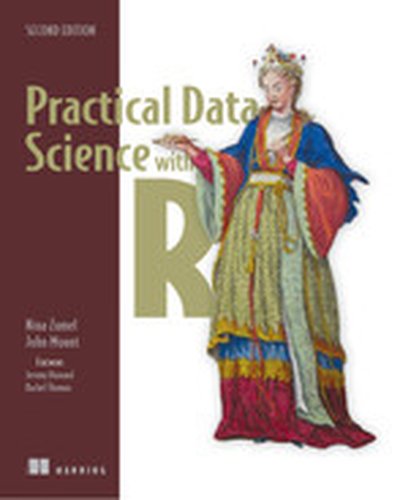
Practical Data Science with R, Second Edition

Practical Data Science with R, Second Edition takes a practice-oriented approach to explaining basic principles in the ever expanding field of data science. You’ll jump right to real-world use cases as you apply the R programming language and statistical analysis techniques to carefully explained examples based in marketing, business intelligence, and decision support. About the Technology Evidence-based decisions are crucial to success. Applying the right data analysis techniques to your carefully curated business data helps you make accurate predictions, identify trends, and spot trouble in advance. The R data analysis platform provides the tools you need to tackle day-to-day data analysis and machine learning tasks efficiently and effectively. About the Book Practical Data Science with R, Second Edition is a task-based tutorial that leads readers through dozens of useful, data analysis practices using the R language. By concentrating on the most important tasks you’ll face on the job, this friendly guide is comfortable both for business analysts and data scientists. Because data is only useful if it can be understood, you’ll also find fantastic tips for organizing and presenting data in tables, as well as snappy visualizations. What's Inside Statistical analysis for business pros Effective data presentation The most useful R tools Interpreting complicated predictive models About the Reader You’ll need to be comfortable with basic statistics and have an introductory knowledge of R or another high-level programming language. About the Authors Nina Zumel and John Mount founded a San Francisco–based data science consulting firm. Both hold PhDs from Carnegie Mellon University and blog on statistics, probability, and computer science. Quotes Full of useful shared experience and practical advice. Highly recommended. - From the Foreword by Jeremy Howard and Rachel Thomas Great examples and an informative walk-through of the data science process. - David Meza, NASA Offers interesting perspectives that cover many aspects of practical data science; a good reference. - Pascal Barbedor, BL SET R you ready to get data science done the right way? - Taylor Dolezal, Disney Studios

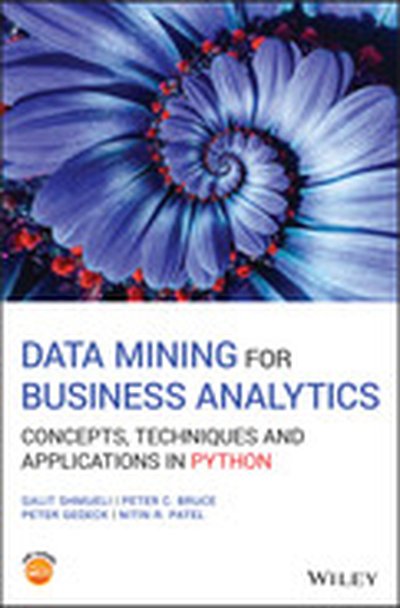
Data Mining for Business Analytics

Data Mining for Business Analytics: Concepts, Techniques, and Applications in Python presents an applied approach to data mining concepts and methods, using Python software for illustration Readers will learn how to implement a variety of popular data mining algorithms in Python (a free and open-source software) to tackle business problems and opportunities. This is the sixth version of this successful text, and the first using Python. It covers both statistical and machine learning algorithms for prediction, classification, visualization, dimension reduction, recommender systems, clustering, text mining and network analysis. It also includes: A new co-author, Peter Gedeck, who brings both experience teaching business analytics courses using Python, and expertise in the application of machine learning methods to the drug-discovery process A new section on ethical issues in data mining Updates and new material based on feedback from instructors teaching MBA, undergraduate, diploma and executive courses, and from their students More than a dozen case studies demonstrating applications for the data mining techniques described End-of-chapter exercises that help readers gauge and expand their comprehension and competency of the material presented A companion website with more than two dozen data sets, and instructor materials including exercise solutions, PowerPoint slides, and case solutions Data Mining for Business Analytics: Concepts, Techniques, and Applications in Python is an ideal textbook for graduate and upper-undergraduate level courses in data mining, predictive analytics, and business analytics. This new edition is also an excellent reference for analysts, researchers, and practitioners working with quantitative methods in the fields of business, finance, marketing, computer science, and information technology. “This book has by far the most comprehensive review of business analytics methods that I have ever seen, covering everything from classical approaches such as linear and logistic regression, through to modern methods like neural networks, bagging and boosting, and even much more business specific procedures such as social network analysis and text mining. If not the bible, it is at the least a definitive manual on the subject.” —Gareth M. James, University of Southern California and co-author (with Witten, Hastie and Tibshirani) of the best-selling book An Introduction to Statistical Learning, with Applications in R

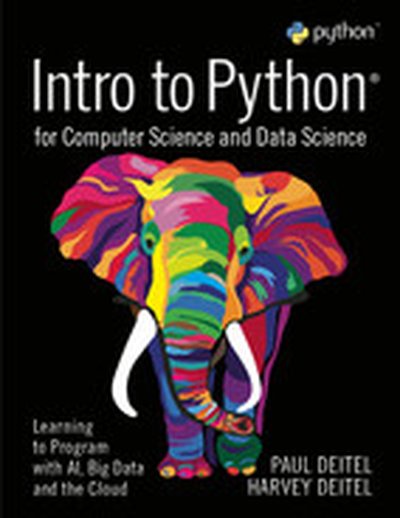
Intro to Python for Computer Science and Data Science: Learning to Program with AI, Big Data and The Cloud

This is the eBook of the printed book and may not include any media, website access codes, or print supplements that may come packaged with the bound book. For introductory-level Python programming and/or data-science courses. A groundbreaking, flexible approach to computer science and data science The Deitels’ Introduction to Python for Computer Science and Data Science: Learning to Program with AI, Big Data and the Cloud offers a unique approach to teaching introductory Python programming, appropriate for both computer-science and data-science audiences. Providing the most current coverage of topics and applications, the book is paired with extensive traditional supplements as well as Jupyter Notebooks supplements. Real-world datasets and artificial-intelligence technologies allow students to work on projects making a difference in business, industry, government and academia. Hundreds of examples, exercises, projects (EEPs), and implementation case studies give students an engaging, challenging and entertaining introduction to Python programming and hands-on data science. Related Content Video: Python Fundamentals Live courses: Python Full Throttle with Paul Deitel: A One-Day, Fast-Paced, Code-Intensive Python Presentation Python® Data Science Full Throttle with Paul Deitel: Introductory Artificial Intelligence (AI), Big Data and Cloud Case Studies The book’s modular architecture enables instructors to conveniently adapt the text to a wide range of computer-science and data-science courses offered to audiences drawn from many majors. Computer-science instructors can integrate as much or as little data-science and artificial-intelligence topics as they’d like, and data-science instructors can integrate as much or as little Python as they’d like. The book aligns with the latest ACM/IEEE CS-and-related computing curriculum initiatives and with the Data Science Undergraduate Curriculum Proposal sponsored by the National Science Foundation.

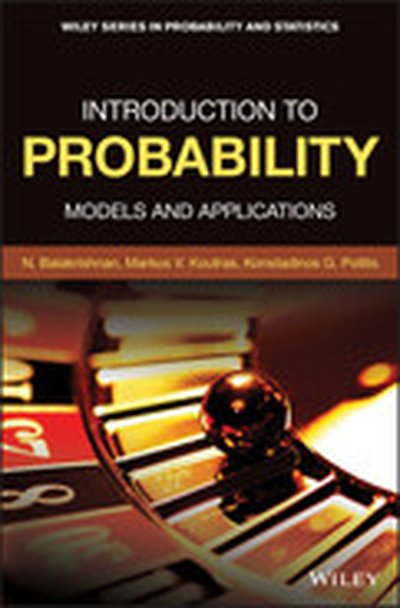
Introduction to Probability.

An essential guide to the concepts of probability theory that puts the focus on models and applications Introduction to Probability offers an authoritative text that presents the main ideas and concepts, as well as the theoretical background, models, and applications of probability. The authors—noted experts in the field—include a review of problems where probabilistic models naturally arise, and discuss the methodology to tackle these problems. A wide-range of topics are covered that include the concepts of probability and conditional probability, univariate discrete distributions, univariate continuous distributions, along with a detailed presentation of the most important probability distributions used in practice, with their main properties and applications. Designed as a useful guide, the text contains theory of probability, de finitions, charts, examples with solutions, illustrations, self-assessment exercises, computational exercises, problems and a glossary. This important text: • Includes classroom-tested problems and solutions to probability exercises • Highlights real-world exercises designed to make clear the concepts presented • Uses Mathematica software to illustrate the text’s computer exercises • Features applications representing worldwide situations and processes • Offers two types of self-assessment exercises at the end of each chapter, so that students may review the material in that chapter and monitor their progress. Written for students majoring in statistics, engineering, operations research, computer science, physics, and mathematics, Introduction to Probability: Models and Applications is an accessible text that explores the basic concepts of probability and includes detailed information on models and applications.

Probability, Random Variables, Statistics, and Random Processes

Probability, Random Variables, Statistics, and Random Processes: Fundamentals & Applications is a comprehensive undergraduate-level textbook. With its excellent topical coverage, the focus of this book is on the basic principles and practical applications of the fundamental concepts that are extensively used in various Engineering disciplines as well as in a variety of programs in Life and Social Sciences. The text provides students with the requisite building blocks of knowledge they require to understand and progress in their areas of interest. With a simple, clear-cut style of writing, the intuitive explanations, insightful examples, and practical applications are the hallmarks of this book. The text consists of twelve chapters divided into four parts. Part-I, Probability (Chapters 1 – 3), lays a solid groundwork for probability theory, and introduces applications in counting, gambling, reliability, and security. Part-II, Random Variables (Chapters 4 – 7), discusses in detail multiple random variables, along with a multitude of frequently-encountered probability distributions. Part-III, Statistics (Chapters 8 – 10), highlights estimation and hypothesis testing. Part-IV, Random Processes (Chapters 11 – 12), delves into the characterization and processing of random processes. Other notable features include: Most of the text assumes no knowledge of subject matter past first year calculus and linear algebra With its independent chapter structure and rich choice of topics, a variety of syllabi for different courses at the junior, senior, and graduate levels can be supported A supplemental website includes solutions to about 250 practice problems, lecture slides, and figures and tables from the text Given its engaging tone, grounded approach, methodically-paced flow, thorough coverage, and flexible structure, Probability, Random Variables, Statistics, and Random Processes: Fundamentals & Applications clearly serves as a must textbook for courses not only in Electrical Engineering, but also in Computer Engineering, Software Engineering, and Computer Science.

Robust Statistics, 2nd Edition

A new edition of this popular text on robust statistics, thoroughly updated to include new and improved methods and focus on implementation of methodology using the increasingly popular open-source software R. Classical statistics fail to cope well with outliers associated with deviations from standard distributions. Robust statistical methods take into account these deviations when estimating the parameters of parametric models, thus increasing the reliability of fitted models and associated inference. This new, second edition of Robust Statistics: Theory and Methods (with R) presents a broad coverage of the theory of robust statistics that is integrated with computing methods and applications. Updated to include important new research results of the last decade and focus on the use of the popular software package R, it features in-depth coverage of the key methodology, including regression, multivariate analysis, and time series modeling. The book is illustrated throughout by a range of examples and applications that are supported by a companion website featuring data sets and R code that allow the reader to reproduce the examples given in the book. Unlike other books on the market, Robust Statistics: Theory and Methods (with R) offers the most comprehensive, definitive, and up-to-date treatment of the subject. It features chapters on estimating location and scale; measuring robustness; linear regression with fixed and with random predictors; multivariate analysis; generalized linear models; time series; numerical algorithms; and asymptotic theory of M-estimates. Explains both the use and theoretical justification of robust methods Guides readers in selecting and using the most appropriate robust methods for their problems Features computational algorithms for the core methods Robust statistics research results of the last decade included in this 2nd edition include: fast deterministic robust regression, finite-sample robustness, robust regularized regression, robust location and scatter estimation with missing data, robust estimation with independent outliers in variables, and robust mixed linear models. Robust Statistics aims to stimulate the use of robust methods as a powerful tool to increase the reliability and accuracy of statistical modelling and data analysis. It is an ideal resource for researchers, practitioners, and graduate students in statistics, engineering, computer science, and physical and social sciences.

An Introduction to Discrete-Valued Time Series

A much-needed introduction to the field of discrete-valued time series, with a focus on count-data time series Time series analysis is an essential tool in a wide array of fields, including business, economics, computer science, epidemiology, finance, manufacturing and meteorology, to name just a few. Despite growing interest in discrete-valued time series—especially those arising from counting specific objects or events at specified times—most books on time series give short shrift to that increasingly important subject area. This book seeks to rectify that state of affairs by providing a much needed introduction to discrete-valued time series, with particular focus on count-data time series. The main focus of this book is on modeling. Throughout numerous examples are provided illustrating models currently used in discrete-valued time series applications. Statistical process control, including various control charts (such as cumulative sum control charts), and performance evaluation are treated at length. Classic approaches like ARMA models and the Box-Jenkins program are also featured with the basics of these approaches summarized in an Appendix. In addition, data examples, with all relevant R code, are available on a companion website. Provides a balanced presentation of theory and practice, exploring both categorical and integer-valued series Covers common models for time series of counts as well as for categorical time series, and works out their most important stochastic properties Addresses statistical approaches for analyzing discrete-valued time series and illustrates their implementation with numerous data examples Covers classical approaches such as ARMA models, Box-Jenkins program and how to generate functions Includes dataset examples with all necessary R code provided on a companion website An Introduction to Discrete-Valued Time Series is a valuable working resource for researchers and practitioners in a broad range of fields, including statistics, data science, machine learning, and engineering. It will also be of interest to postgraduate students in statistics, mathematics and economics.