talk-data.com talk-data.com

S

Speaker

Sinan Ozdemir

10

talks

AI & LLM Expert; Author; Founder & CTO LoopGenius

AI & LLM Expert | Author | Founder + CTO at LoopGenius

Bio from: ODSC AI West Expo 2025

Filter by Event / Source

Talks & appearances

10 activities · Newest first

Search activities →
workshop
with Michael Albada (Microsoft) , Ali Arsanjani (Google Cloud) , Manoj Saxena (Trustwise) , Holt Skinner (Google Cloud AI) , Andrea Kropp (LandingAI) , Kyle Stratis (Stratis Data Labs) , Harpreet Sahota (Voxel51) , Sanyam Bhutani (Meta) , Ivan Lee (Datasaur) , Claire Longo (Comet) , Cameron Royce Turner (TRUIFY.AI) , Sara Zanzottera (BNP Paribas) , Sinan Ozdemir (LoopGenius) , Zain Hasan, PhD (Together AI)

Live, expert-led sessions where you’ll build real agentic systems step-by-step.
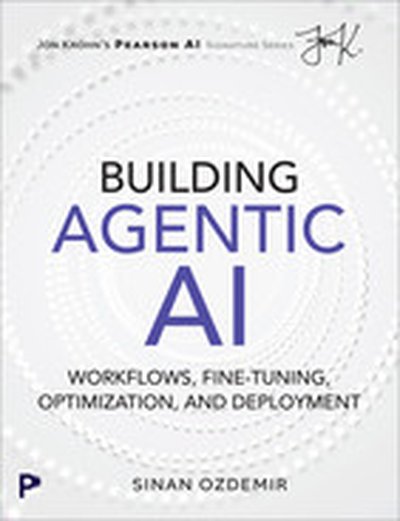
Building Agentic AI: Workflows, Fine-Tuning, Optimization, and Deployment

Transform Your Business with Intelligent AI to Drive Outcomes Building reactive AI applications and chatbots is no longer enough. The competitive advantage belongs to those who can build AI that can respond, reason, plan, and execute. Building Agentic AI: Workflows, Fine-Tuning, Optimization, and Deployment takes you beyond basic chatbots to create fully functional, autonomous agents that automate real workflows, enhance human decision-making, and drive measurable business outcomes across high-impact domains like customer support, finance, and research. Whether you're a developer deploying your first model, a data scientist exploring multi-agent systems and distilled LLMs, or a product manager integrating AI workflows and embedding models, this practical handbook provides tried and tested blueprints for building production-ready systems. Harness the power of reasoning models for applications like computer use, multimodal systems to work with all kinds of data, and fine-tuning techniques to get the most out of AI. Learn to test, monitor, and optimize agentic systems to keep them reliable and cost-effective at enterprise scale. Master the complete agentic AI pipeline Design adaptive AI agents with memory, tool use, and collaborative reasoning capabilities Build robust RAG workflows using embeddings, vector databases, and LangGraph state management Implement comprehensive evaluation frameworks beyond accuracy, including precision, recall, and latency metrics Deploy multimodal AI systems that seamlessly integrate text, vision, audio, and code generation Optimize models for production through fine-tuning, quantization, and speculative decoding techniques Navigate the bleeding edge of reasoning LLMs and computer-use capabilities Balance cost, speed, accuracy, and privacy in real-world deployment scenarios Create hybrid architectures that combine multiple agents for complex enterprise applications Register your book for convenient access to downloads, updates, and/or corrections as they become available. See inside book for details.

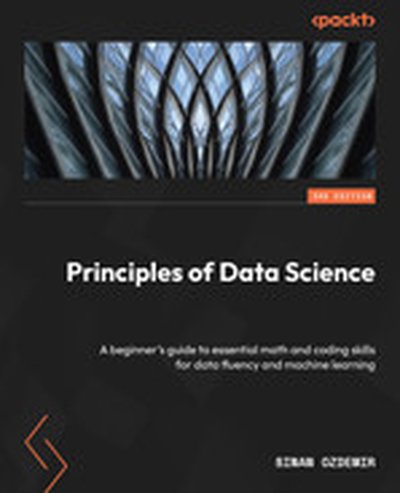
Principles of Data Science - Third Edition

Principles of Data Science offers an end-to-end introduction to data science fundamentals, blending key mathematical concepts with practical programming. You'll learn how to clean and prepare data, construct predictive models, and leverage modern tools like pre-trained models for NLP and computer vision. By integrating theory and practice, this book sets the foundation for impactful data-driven decision-making. What this Book will help me do Develop a solid understanding of foundational statistics and machine learning. Learn how to clean, transform, and visualize data for impactful analysis. Explore transfer learning and pre-trained models for advanced AI tasks. Understand ethical implications, biases, and governance in AI and ML. Gain the knowledge to implement complete data pipelines effectively. Author(s) Sinan Ozdemir is an experienced data scientist, educator, and author with a deep passion for making complex topics accessible. With a background in computer science and applied statistics, Sinan has taught data science at leading institutions and authored multiple books on the topic. His practical approach to teaching combines real-world examples with insightful explanations, ensuring learners gain both competence and confidence. Who is it for? This book is ideal for beginners in data science who want to gain a comprehensive understanding of the field. If you have a background in programming or mathematics and are eager to combine these skills to analyze and extract insights from data, this book will guide you. Individuals working with machine learning or AI who need to solidify their foundational knowledge will find it invaluable. Some familiarity with Python is recommended to follow along seamlessly.

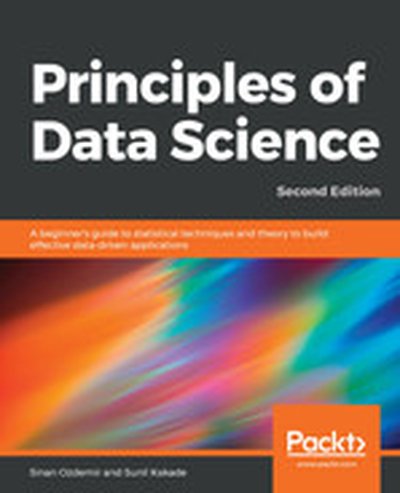
Principles of Data Science - Second Edition

Dive into the intricacies of data science with 'Principles of Data Science'. This book takes you on a journey to explore, analyze, and transform data into actionable insights using mathematical models, Python programming, and machine learning concepts. With a clear and engaging style, you will progress from understanding theoretical foundations to implementing advanced techniques in real-world scenarios. What this Book will help me do Master the five critical steps in a practical data science workflow. Clean and prepare raw datasets for accurate machine learning models. Understand and apply statistical models and mathematical principles for data analysis. Build and evaluate predictive models using Python and effective metrics. Create impactful visualizations that clearly convey data insights. Author(s) Sinan Ozdemir is an expert in data science, with a background in developing and teaching advanced courses in machine learning and predictive analytics. With co-authors None Kakade and None Tibaldeschi, they bring years of hands-on experience in data science to this comprehensive guide. Their approach simplifies complex concepts, making them accessible without sacrificing depth, to empower readers to make data-driven decisions confidently. Who is it for? This book is ideal for aspiring data scientists seeking a practical introduction to the field. It's perfect for those with basic math skills looking to apply them to data science or experienced programmers who want to explore the mathematical foundation of data science. A basic understanding of Python programming will be invaluable, but the book builds up core concepts step-by-step, making it accessible to both beginners and experienced professionals.

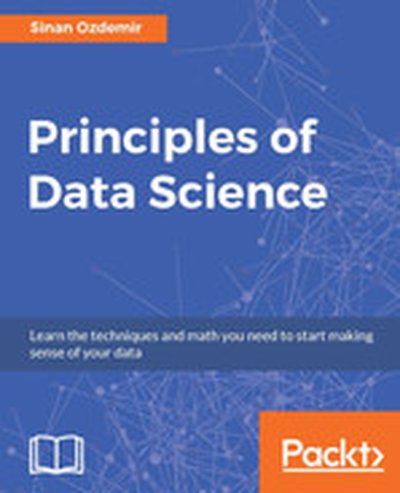
Principles of Data Science

If you've ever wondered how to bridge the gap between mathematics, programming, and actionable data insights, 'Principles of Data Science' is the guide for you. This book explores the full data science pipeline, providing you with tools and knowledge to transform raw data into impactful decisions. With practical lessons and hands-on tutorials, you'll master the essential skills of a data scientist. What this Book will help me do Understand and apply the five core steps of the data science process. Gain insight into data cleaning, visualization, and effective communication of results. Learn and implement foundational machine learning models using Python or R. Bridge gaps between mathematics, statistics, and programming to solve data-driven problems. Evaluate machine learning models using key metrics for better predictive capabilities. Author(s) The author, a seasoned data scientist with years of professional experience in analytics and software development, brings a rich perspective to the topic. Combining a strong foundation in mathematics with expertise in Python and R, they have worked on diverse real-world data projects. Their teaching philosophy emphasizes clarity and practical application, ensuring you not only gain knowledge but also know how to apply it effectively. Who is it for? This book is intended for individuals with a basic understanding of algebra and some programming experience in Python or R. It is perfect for programmers who wish to dive into the world of data science or for those with math skills looking to apply them practically. If you seek to turn raw data into valuable insights and predictions, this book is tailored for you.