talk-data.com talk-data.com

Topic

graph-analytics

22

tagged

Activity Trend

1 peak/qtr
2020-Q1 2026-Q1

Activities

22 activities · Newest first

Graph Theory for Computer Science

This book is a vital resource for anyone looking to understand the essential role of graph theory as the unifying thread that connects and provides innovative solutions across a wide spectrum of modern computer science disciplines. Graph theory is a traditional mathematical discipline that has evolved as a basic tool for modeling and analyzing the complex relationships between different technological landscapes. Graph theory helps explain the semantic and syntactic relationships in natural language processing, a technology behind many businesses. Disciplinary and industry developments are seeing a major transition towards more interconnected and data-driven decision-making, and the application of graph theory will facilitate this transition. Disciplines such as parallel and distributive computing will gain insights into how graph theory can help with resource optimization and job scheduling, creating considerable change in the design and development of scalable systems. This book provides comprehensive coverage of how graph theory acts as the thread that connects different areas of computer science to create innovative solutions to modern technological problems. Using a multi-faceted approach, the book explores the fundamentals and role of graph theory in molding complex computational processes across a wide spectrum of computer science.
Scaling Graph Learning for the Enterprise

Tackle the core challenges related to enterprise-ready graph representation and learning. With this hands-on guide, applied data scientists, machine learning engineers, and practitioners will learn how to build an E2E graph learning pipeline. You'll explore core challenges at each pipeline stage, from data acquisition and representation to real-time inference and feedback loop retraining. Drawing on their experience building scalable and production-ready graph learning pipelines, the authors take you through the process of building robust graph learning systems in a world of dynamic and evolving graphs. Understand the importance of graph learning for boosting enterprise-grade applications Navigate the challenges surrounding the development and deployment of enterprise-ready graph learning and inference pipelines Use traditional and advanced graph learning techniques to tackle graph use cases Use and contribute to PyGraf, an open source graph learning library, to help embed best practices while building graph applications Design and implement a graph learning algorithm using publicly available and syntactic data Apply privacy-preserving techniques to the graph learning process

Graph Based Multimedia Analysis

Graph Based Multimedia Analysis applies concepts from graph theory to the problems of analyzing overabundant video data. Video data can be quite diverse: exocentric (captured by a standard camera) or egocentric (captured by a wearable device like Google Glass); of various durations (ranging from a few seconds to several hours); and could be from a single source or multiple sources. Efficient extraction of important information from such a large class of diverse video data can be overwhelming. The book, with its rich repertoire of theoretically elegant solutions, from graph theory in conjunction with deep learning, constrained optimization, and game theory, empowers the audience to achieve tasks like obtaining concise yet useful summaries and precisely recognizing single as well as multiple actions in a computationally efficient manner. The book provides a unique treatise on topics like egocentric video analysis and scalable video processing. Addresses a number of challenging state-of-the-art problems in multimedia analysis like summarization, co-summarization, and action recognition Handles a wide class of video with different genres, durations, and numbers Applies a class of theoretically rich algorithms from the discipline of graph theory, in conjunction with deep learning, constrained optimization and game theory Includes thorough complexity analyses of the proposed solutions, and an appendix containing implementable source codes

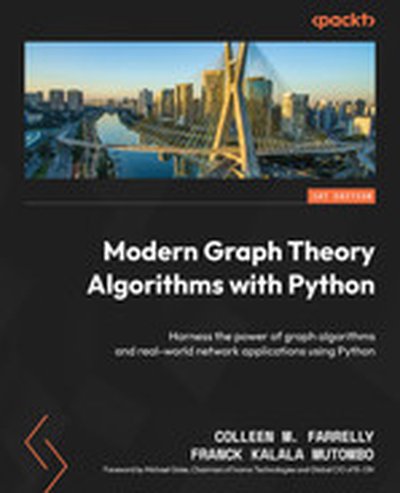
Modern Graph Theory Algorithms with Python

Dive into the fascinating world of graph theory and its applications with 'Modern Graph Theory Algorithms with Python.' Through Python programming and real-world case studies, this book equips you with the tools to transform data into graph structures, apply algorithms, and uncover insights, enabling effective solutions in diverse domains such as finance, epidemiology, and social networks. What this Book will help me do Understand how to wrangle a variety of data types into network formats suitable for analysis. Learn to use graph theory algorithms and toolkits such as NetworkX and igraph in Python. Apply network theory to predict and analyze trends, from epidemics to stock market dynamics. Explore the intersection of machine learning and graph theory through advanced neural network techniques. Gain expertise in database solutions with graph database querying and applications. Author(s) Colleen M. Farrelly, an experienced data scientist, and Franck Kalala Mutombo, a seasoned software engineer, bring years of expertise in network science and Python programming to every page of this book. Their professional experience includes working on cutting-edge problems in data analytics, graph theory, and scalable solutions for real-world issues. Combining their practical know-how, they deliver a resource aimed at both learning and applying techniques effectively. Who is it for? This book is tailored for data scientists, researchers, and analysts with an interest in using graph-based approaches for solving complex data problems. Ideal for those with a basic Python knowledge and familiarity with libraries like pandas and NumPy, the content bridges the gap between theory and application. It also provides insights into broad fields where network science can be impactful, contributing value to both students and professionals.

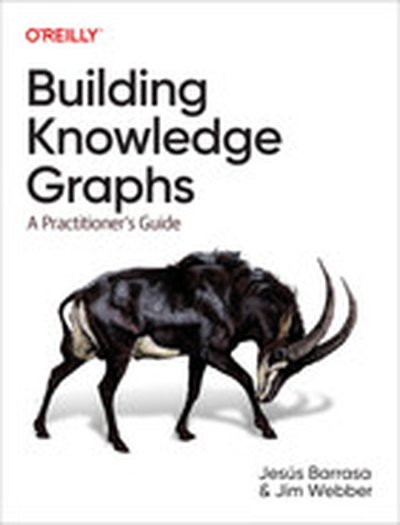
Building Knowledge Graphs

Incredibly useful, knowledge graphs help organizations keep track of medical research, cybersecurity threat intelligence, GDPR compliance, web user engagement, and much more. They do so by storing interlinked descriptions of entities—objects, events, situations, or abstract concepts—and encoding the underlying information. How do you create a knowledge graph? And how do you move it from theory into production? Using hands-on examples, this practical book shows data scientists and data engineers how to build their own knowledge graphs. Authors Jesús Barrasa and Jim Webber from Neo4j illustrate common patterns for building knowledge graphs that solve many of today's pressing knowledge management problems. You'll quickly discover how these graphs become increasingly useful as you add data and augment them with algorithms and machine learning. Learn the organizing principles necessary to build a knowledge graph Explore how graph databases serve as a foundation for knowledge graphs Understand how to import structured and unstructured data into your graph Follow examples to build integration-and-search knowledge graphs Learn what pattern detection knowledge graphs help you accomplish Explore dependency knowledge graphs through examples Use examples of natural language knowledge graphs and chatbots Use graph algorithms and ML to gain insight into connected data

Discrete Networked Dynamic Systems

Discrete Networked Dynamic Systems: Analysis and Performance provides a high-level treatment of a general class of linear discrete-time dynamic systems interconnected over an information network, exchanging relative state measurements or output measurements. It presents a systematic analysis of the material and provides an account to the math development in a unified way. The topics in this book are structured along four dimensions: Agent, Environment, Interaction, and Organization, while keeping global (system-centered) and local (agent-centered) viewpoints. The focus is on the wide-sense consensus problem in discrete networked dynamic systems. The authors rely heavily on algebraic graph theory and topology to derive their results. It is known that graphs play an important role in the analysis of interactions between multiagent/distributed systems. Graph-theoretic analysis provides insight into how topological interactions play a role in achieving coordination among agents. Numerous types of graphs exist in the literature, depending on the edge set of G. A simple graph has no self-loop or edges. Complete graphs are simple graphs with an edge connecting any pair of vertices. The vertex set in a bipartite graph can be partitioned into disjoint non-empty vertex sets, whereby there is an edge connecting every vertex in one set to every vertex in the other set. Random graphs have fixed vertex sets, but the edge set exhibits stochastic behavior modeled by probability functions. Much of the studies in coordination control are based on deterministic/fixed graphs, switching graphs, and random graphs. This book addresses advanced analytical tools for characterization control, estimation and design of networked dynamic systems over fixed, probabilistic and time-varying graphs Provides coherent results on adopting a set-theoretic framework for critically examining problems of the analysis, performance and design of discrete distributed systems over graphs Deals with both homogeneous and heterogeneous systems to guarantee the generality of design results

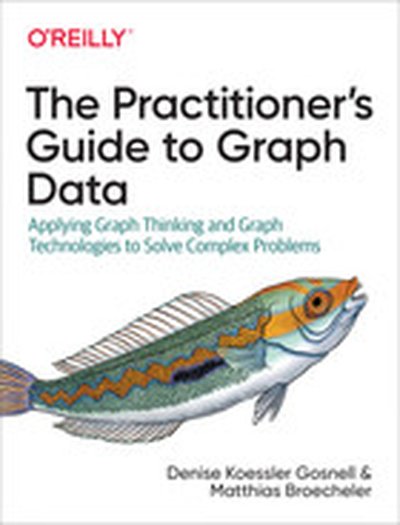
The Practitioner's Guide to Graph Data

Graph data closes the gap between the way humans and computers view the world. While computers rely on static rows and columns of data, people navigate and reason about life through relationships. This practical guide demonstrates how graph data brings these two approaches together. By working with concepts from graph theory, database schema, distributed systems, and data analysis, you’ll arrive at a unique intersection known as graph thinking. Authors Denise Koessler Gosnell and Matthias Broecheler show data engineers, data scientists, and data analysts how to solve complex problems with graph databases. You’ll explore templates for building with graph technology, along with examples that demonstrate how teams think about graph data within an application. Build an example application architecture with relational and graph technologies Use graph technology to build a Customer 360 application, the most popular graph data pattern today Dive into hierarchical data and troubleshoot a new paradigm that comes from working with graph data Find paths in graph data and learn why your trust in different paths motivates and informs your preferences Use collaborative filtering to design a Netflix-inspired recommendation system

Analyzing Social Media Networks with NodeXL, 2nd Edition

Analyzing Social Media Networks with NodeXL: Insights from a Connected World, Second Edition, provides readers with a thorough, practical and updated guide to NodeXL, the open-source social network analysis (SNA) plug-in for use with Excel. The book analyzes social media, provides a NodeXL tutorial, and presents network analysis case studies, all of which are revised to reflect the latest developments. Sections cover history and concepts, mapping and modeling, the detailed operation of NodeXL, and case studies, including e-mail, Twitter, Facebook, Flickr and YouTube. In addition, there are descriptions of each system and types of analysis for identifying people, documents, groups and events. This book is perfect for use as a course text in social network analysis or as a guide for practicing NodeXL users. Walks users through NodeXL while also explaining the theory and development behind each step Demonstrates how visual analytics research can be applied to SNA tools for the mass market Includes updated case studies from researchers who use NodeXL on popular networks like email, Facebook, Twitter, and Instagram Includes downloadable companion materials and online resources at https://www.smrfoundation.org/nodexl/teaching-with-nodexl/teaching-resources/

Power System Analysis

Power System Analysis: A Dynamic Perspective a text designed to serve as a bridge between the undergraduate course on power systems and the complex modelling and computational tools used in the dynamic analysis of practical power systems. With extensive teaching and research experience in the field, the author presents fundamental and advanced concepts using rigorous mathematical analysis and extensive time-domain simulation results. The text also includes numerous plots with clear explanation for easy understanding.

Advanced Graph Theory and Combinatorics

Advanced Graph Theory focuses on some of the main notions arising in graph theory with an emphasis from the very start of the book on the possible applications of the theory and the fruitful links existing with linear algebra. The second part of the book covers basic material related to linear recurrence relations with application to counting and the asymptotic estimate of the rate of growth of a sequence satisfying a recurrence relation.

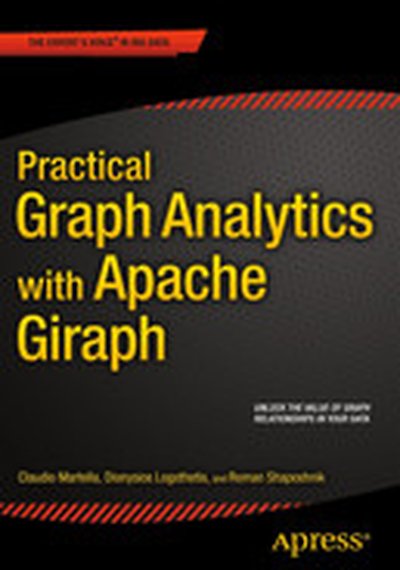
Practical Graph Analytics with Apache Giraph

Practical Graph Analytics with Apache Giraph helps you build data mining and machine learning applications using the Apache Foundation’s Giraph framework for graph processing. This is the same framework as used by Facebook, Google, and other social media analytics operations to derive business value from vast amounts of interconnected data points. Graphs arise in a wealth of data scenarios and describe the connections that are naturally formed in both digital and real worlds. Examples of such connections abound in online social networks such as Facebook and Twitter, among users who rate movies from services like Netflix and Amazon Prime, and are useful even in the context of biological networks for scientific research. Whether in the context of business or science, viewing data as connected adds value by increasing the amount of information available to be drawn from that data and put to use in generating new revenue or scientific opportunities. Apache Giraph offers a simple yet flexible programming model targeted to graph algorithms and designed to scale easily to accommodate massive amounts of data. Originally developed at Yahoo!, Giraph is now a top top-level project at the Apache Foundation, and it enlists contributors from companies such as Facebook, LinkedIn, and Twitter. Practical Graph Analytics with Apache Giraph brings the power of Apache Giraph to you, showing how to harness the power of graph processing for your own data by building sophisticated graph analytics applications using the very same framework that is relied upon by some of the largest players in the industry today.

Recursion Theory

This monograph presents recursion theory from a generalized point of view centered on the computational aspects of definability. A major theme is the study of the structures of degrees arising from two key notions of reducibility, the Turing degrees and the hyperdegrees, using techniques and ideas from recursion theory, hyperarithmetic theory, and descriptive set theory. The emphasis is on the interplay between recursion theory and set theory, anchored on the notion of definability. The monograph covers a number of fundamental results in hyperarithmetic theory as well as some recent results on the structure theory of Turing and hyperdegrees. It also features a chapter on the applications of these investigations to higher randomness.

Graph Analysis and Visualization: Discovering Business Opportunity in Linked Data

Wring more out of the data with a scientific approach to analysis Graph Analysis and Visualization brings graph theory out of the lab and into the real world. Using sophisticated methods and tools that span analysis functions, this guide shows you how to exploit graph and network analytic techniques to enable the discovery of new business insights and opportunities. Published in full color, the book describes the process of creating powerful visualizations using a rich and engaging set of examples from sports, finance, marketing, security, social media, and more. You will find practical guidance toward pattern identification and using various data sources, including Big Data, plus clear instruction on the use of software and programming. The companion website offers data sets, full code examples in Python, and links to all the tools covered in the book. Science has already reaped the benefit of network and graph theory, which has powered breakthroughs in physics, economics, genetics, and more. This book brings those proven techniques into the world of business, finance, strategy, and design, helping extract more information from data and better communicate the results to decision-makers. Study graphical examples of networks using clear and insightful visualizations Analyze specifically-curated, easy-to-use data sets from various industries Learn the software tools and programming languages that extract insights from data Code examples using the popular Python programming language There is a tremendous body of scientific work on network and graph theory, but very little of it directly applies to analyst functions outside of the core sciences - until now. Written for those seeking empirically based, systematic analysis methods and powerful tools that apply outside the lab, Graph Analysis and Visualization is a thorough, authoritative resource.

Handbook of Graph Theory, 2nd Edition

With 34 new contributors, this best-selling handbook provides comprehensive coverage of the main topics in pure and applied graph theory. This second edition incorporates 14 new sections. Each chapter includes lists of essential definitions and facts, accompanied by examples, tables, remarks, and, in some cases, conjectures and open problems.

Combined Analysis

This book introduces and details the key facets of Combined Analysis - an x-ray and/or neutron scattering methodology which combines structural, textural, stress, microstructural, phase, layer, or other relevant variable or property analyses in a single approach. The text starts with basic theories related to diffraction by polycrystals and some of the most common combined analysis instrumental set-ups are detailed. Also discussed are microstructures of powder diffraction profiles; quantitative phase analysis from the Rietveld analysis; residual stress analysis for isotropic and anisotropic materials; specular x-ray reflectivity, and the various associated models.

Analysis of Complex Networks

Mathematical problems such as graph theory problems are of increasing importance for the analysis of modelling data in biomedical research such as in systems biology, neuronal network modelling etc. This book follows a new approach of including graph theory from a mathematical perspective with specific applications of graph theory in biomedical and computational sciences. The book is written by renowned experts in the field and offers valuable background information for a wide audience.

Fundamentals of Structural Stability

The ability of a structural assembly to carry loads and forces determines how stable it will be over time. Viewing structural assemblages as comprising columns, beams, arches, rings, and plates, this book will introduce the student to both a classical and advanced understanding of the mechanical behavior of such structural systems under load and how modeling the resulting strains can predict the overall future performance—the stability—of that structure. While covering traditional beam theory, the book is more focused on elastica theory in keeping with modern approaches. This text will be an expanded and updated version a similar, previously published book, but with pedagogical improvements and updated analytical methods. This engineering textbook will provide a focused treatment on the study of how structures behave and perform when under stress loading, including plastic deformation and buckling. All advanced engineering students studying engineering mechanics, structural analysis and design, fatigue and failure, and other related subjects need to have this knowledge, and this book will provide it in a thorough and coherent fashion. Written by two of the world’s leading engineering professors in this subject area, the pedagogy has been classroom-tested over many years and should find a receptive readership among both students and instructors. * An understandable introduction to the theory of structural stability, useful for a wide variety of engineering disciplines, including mechanical, civil and aerospace engineering * Covers both static and dynamic loads, for both conservative and nonconservative systems * Emphasizes elastic behavior under loads, including vertical buckling, torsional buckling and nonlinear affects of structural system buckling and stability * Case examples to illustrate real-world applications of Stability Theory