As organizations scale GenAI from concept to production, they face challenges like ensuring accuracy, explaining responses, and connecting GenAI to unique knowledge. This session shows how GraphRAG combines knowledge graphs with retrieval-augmented generation to build GenAI apps grounded in enterprise data. Learn how companies like Klarna have deployed GenAI to build chatbots grounded in knowledge graphs, improving productivity and trust, while a major gaming company achieved 10x faster insights. We'll share real examples and practical steps for successful GenAI deployment.
 talk-data.com
J
Speaker
Jim Webber
5
talks
author
Neo4j
As Neo4j's Chief Scientist, Jim spearheads the Systems Research Group, shaping the
future of graph technology. His depth of expertise in large-scale distributed systems is
invaluable to Neo4j. An accomplished author, including the O'Reilly book 'Building
Knowledge Graphs', Jim has played a pivotal role in developing the Cypher query
language, democratizing graph theory for developers and analysts alike.
Bio from: gartner-data-analytics-india-2025
Frequent Collaborators
Filter by Event / Source
Talks & appearances
5 activities · Newest first
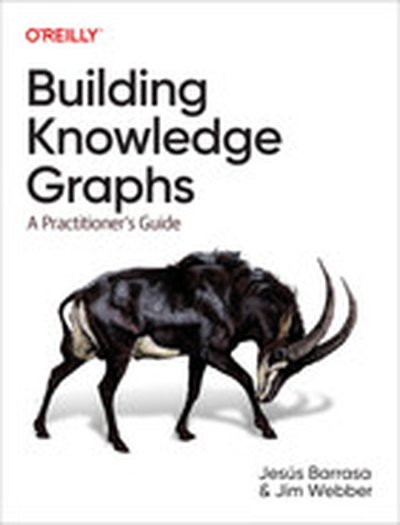
Incredibly useful, knowledge graphs help organizations keep track of medical research, cybersecurity threat intelligence, GDPR compliance, web user engagement, and much more. They do so by storing interlinked descriptions of entities—objects, events, situations, or abstract concepts—and encoding the underlying information. How do you create a knowledge graph? And how do you move it from theory into production? Using hands-on examples, this practical book shows data scientists and data engineers how to build their own knowledge graphs. Authors Jesús Barrasa and Jim Webber from Neo4j illustrate common patterns for building knowledge graphs that solve many of today's pressing knowledge management problems. You'll quickly discover how these graphs become increasingly useful as you add data and augment them with algorithms and machine learning. Learn the organizing principles necessary to build a knowledge graph Explore how graph databases serve as a foundation for knowledge graphs Understand how to import structured and unstructured data into your graph Follow examples to build integration-and-search knowledge graphs Learn what pattern detection knowledge graphs help you accomplish Explore dependency knowledge graphs through examples Use examples of natural language knowledge graphs and chatbots Use graph algorithms and ML to gain insight into connected data
Applying knowledge in the right context is the most powerful lever businesses can use to become agile, creative, and resilient. Knowledge graphs add context, meaning, and utility to business data. They drive intelligence into data for unparalleled automation and visibility into processes, products, and customers. Businesses use knowledge graphs to anticipate downstream effects, make decisions based on all relevant information, and quickly respond to dynamic markets. In this report for chief information and data officers, Jesus Barassa, Amy E. Hodler, and Jim Webber from Neo4j show how to use knowledge graphs to gain insights, reveal a flexible and intuitive representation of complex data relationships, and make better predictions based on holistic information. Explore knowledge graph mechanics and common organizing principles Build and exploit a connected representation of your enterprise data environment Use decisioning knowledge graphs to explore the advantages of adding relationships to data analytics and data science Conduct virtual testing using software versions of real-world processes Deploy knowledge graphs for more trusted data, higher accuracies, and better reasoning for contextual AI
Discover how graph databases can help you manage and query highly connected data. With this practical book, you’ll learn how to design and implement a graph database that brings the power of graphs to bear on a broad range of problem domains. Whether you want to speed up your response to user queries or build a database that can adapt as your business evolves, this book shows you how to apply the schema-free graph model to real-world problems. This second edition includes new code samples and diagrams, using the latest Neo4j syntax, as well as information on new functionality. Learn how different organizations are using graph databases to outperform their competitors. With this book’s data modeling, query, and code examples, you’ll quickly be able to implement your own solution. Model data with the Cypher query language and property graph model Learn best practices and common pitfalls when modeling with graphs Plan and implement a graph database solution in test-driven fashion Explore real-world examples to learn how and why organizations use a graph database Understand common patterns and components of graph database architecture Use analytical techniques and algorithms to mine graph database information
Discover how graph databases can help you manage and query highly connected data. With this practical book, you’ll learn how to design and implement a graph database that brings the power of graphs to bear on a broad range of problem domains. Whether you want to speed up your response to user queries or build a database that can adapt as your business evolves, this book shows you how to apply the schema-free graph model to real-world problems. Learn how different organizations are using graph databases to outperform their competitors. With this book’s data modeling, query, and code examples, you’ll quickly be able to implement your own solution. Model data with the Cypher query language and property graph model Learn best practices and common pitfalls when modeling with graphs Plan and implement a graph database solution in test-driven fashion Explore real-world examples to learn how and why organizations use a graph database Understand common patterns and components of graph database architecture Use analytical techniques and algorithms to mine graph database information