talk-data.com talk-data.com

Topic

artificial intelligence (ai)

31

tagged

Activity Trend

1 peak/qtr
2020-Q1 2026-Q1

Activities

31 activities · Newest first

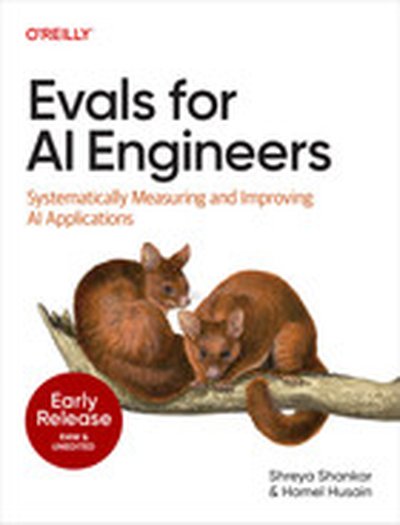
Evals for AI Engineers

Stop using guesswork to find out how your AI applications are performing. Evals for AI Engineers equips you with the proven tools and processes required to systematically test, measure, and enhance the reliability of AI applications, especially those using LLMs. Written by AI engineers with extensive experience in real-world consulting (across 35+ AI products) and cutting-edge research, this practical resource will help you move from assumptions to robust, data-driven evaluation. Ideal for software engineers, technical product managers, and technical leads, this hands-on guide dives into techniques like error analysis, synthetic data generation, automated LLM-as-a-judge systems, production monitoring, and cost optimization. You'll learn how to debug LLM behavior, design test suites based on synthetic and real data, and build data flywheels that improve over time. Whether you're starting without user data or scaling a production system, you'll gain the skills to build AI you can trust—with processes that are repeatable, measurable, and aligned with real-world outcomes. Run systematic error analyses to uncover, categorize, and prioritize failure modes Build, implement, and automate evaluation pipelines using code-based and LLM-based metrics Optimize AI performance and costs through smart evaluation and feedback loops Apply key principles and techniques for monitoring AI applications in production
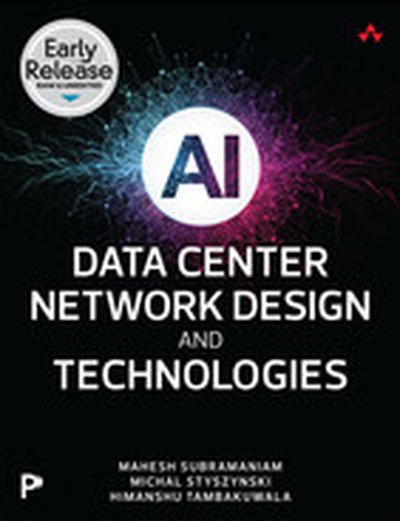
AI Data Center Network Design and Technologies

AI Data Center Network Design and Technologies Designing the Networks that Power the AI Revolution Artificial intelligence is transforming the modern data center. Training large-scale machine learning models requires infrastructure that can move massive datasets at lightning speed-far beyond the capabilities of traditional architectures. AI Data Center Network Design and Technologies is the first comprehensive, vendor-neutral guide to building and optimizing networks purpose-built for AI workloads. Written by leading experts in AI data center design, this book bridges the gap between network engineering and AI infrastructure-helping you understand how to design, scale, and future-proof high-performance environments for training and inference. What You'll Learn Architect for scale: Build high-radix network fabrics to support GPU, TPU, and xPU-based AI clusters Optimize data movement: Integrate lossless Ethernet/IP fabrics for high-throughput, low-latency communication Design with purpose: Align network design to AI/ML workload patterns and server architectures Plan for the physical layer: Address cooling, power, and interconnect challenges at AI scale Stay ahead of innovation: Explore emerging standards from the Ultra Ethernet Consortium (UEC) Validate performance: Apply proven deployment, testing, and measurement best practices Why Read This Book AI is redefining what data centers can-and must-do. Whether you're a network engineer, architect, or technology leader, this book provides the technical foundation and forward-looking insights you need to design next-generation networks optimized for AI-scale computing. .

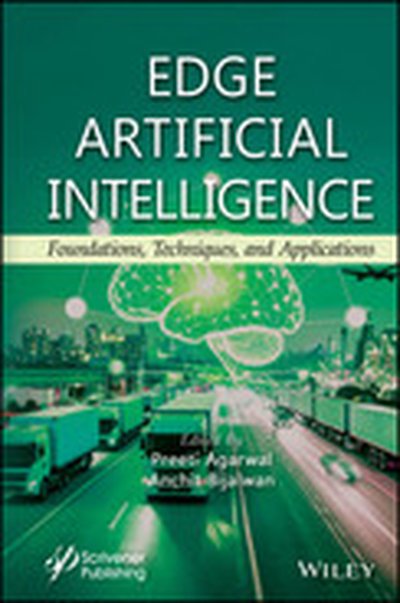
Edge Artificial Intelligence

Secure your expertise in the next wave of computing with this essential book, which provides a comprehensive guide to Edge AI, detailing its foundational concepts, deployment strategies, and real-world applications for revolutionizing performance and privacy across various industries. Edge AI has the potential to bring the computational power of AI algorithms closer to where data is generated, processed, and utilized. Traditionally, AI models are deployed in centralized cloud environments, leading to latency issues, bandwidth constraints, and privacy concerns. Edge AI addresses these limitations by enabling AI inference and decision-making directly on edge devices, such as smartphones, IoT sensors, and edge servers. Despite its challenges, edge AI presents numerous opportunities across various domains. From real-time health monitoring and predictive maintenance in industrial IoT to personalized recommendations in retail and immersive experiences in augmented reality, edge AI has the potential to revolutionize how we interact with technology. This book aims to provide a comprehensive exploration of edge AI, covering its foundational concepts, development frameworks, deployment strategies, security considerations, ethical implications, emerging trends, and real-world applications. This guide is essential for anyone pushing the boundaries to leverage edge computing for enhanced performance and efficiency. Readers will find this volume: Dives deep into the world of edge AI with a comprehensive exploration covering foundational concepts, development frameworks, deployment strategies, security considerations, ethical implications, governance frameworks, optimization techniques, and real-world applications; Offers practical guidance on implementing edge AI solutions effectively in various domains, including architecture design, development frameworks, deployment strategies, and optimization techniques; Explores concrete examples of edge AI applications across diverse domains such as healthcare, industrial IoT, smart cities, and autonomous systems, providing insights into how edge AI is revolutionizing industries and everyday life; Provides insights into emerging trends and technologies in the field of edge AI, including convergence with blockchain, augmented reality, virtual reality, autonomous systems, personalized experiences, and cybersecurity. Audience Researchers, AI experts, and industry professionals in the field of computer science, IT, and business management.

AI Systems Performance Engineering

Elevate your AI system performance capabilities with this definitive guide to maximizing efficiency across every layer of your AI infrastructure. In today's era of ever-growing generative models, AI Systems Performance Engineering provides engineers, researchers, and developers with a hands-on set of actionable optimization strategies. Learn to co-optimize hardware, software, and algorithms to build resilient, scalable, and cost-effective AI systems that excel in both training and inference. Authored by Chris Fregly, a performance-focused engineering and product leader, this resource transforms complex AI systems into streamlined, high-impact AI solutions. Inside, you'll discover step-by-step methodologies for fine-tuning GPU CUDA kernels, PyTorch-based algorithms, and multinode training and inference systems. You'll also master the art of scaling GPU clusters for high performance, distributed model training jobs, and inference servers. The book ends with a 175+-item checklist of proven, ready-to-use optimizations. Codesign and optimize hardware, software, and algorithms to achieve maximum throughput and cost savings Implement cutting-edge inference strategies that reduce latency and boost throughput in real-world settings Utilize industry-leading scalability tools and frameworks Profile, diagnose, and eliminate performance bottlenecks across complex AI pipelines Integrate full stack optimization techniques for robust, reliable AI system performance

Adaptive Artificial Intelligence

Master the next frontier of technology with this book, which provides an in-depth guide to adaptive artificial intelligence and its ability to create flexible, self-governed systems in dynamic industries. Adaptive artificial intelligence represents a significant advancement in the development of AI systems, particularly within various industries that require robust, flexible, and responsive technologies. Unlike traditional AI, which operates based on pre-defined models and static data, adaptive AI is designed to learn and evolve in real time, making it particularly valuable in dynamic and unpredictable environments. This capability is increasingly important in disciplines such as autonomous systems, healthcare, finance, and industrial automation, where the ability to adapt to new information and changing conditions is crucial. In industry development, adaptive AI drives innovation by enabling systems that can continuously improve their performance and decision-making processes without the need for constant human intervention. This leads to more efficient operations, reduced downtime, and enhanced outcomes across sectors. As industries increasingly rely on AI for critical functions, the adaptive capability of these systems becomes a cornerstone for achieving higher levels of automation, reliability, and intelligence in technological solutions. Readers will find the book: Introduces the emerging concept of adaptive artificial intelligence; Explores the many applications of adaptive artificial intelligence across various industries; Provides comprehensive coverage of reinforcement learning for different domains. Audience Research scholars, IT professionals, engineering students, network administrators, artificial intelligence and deep learning experts, and government research agencies looking to innovate with the power of artificial intelligence.

Artificial Intelligence Applications in Aeronautical and Aerospace Engineering

This book is a comprehensive guide for anyone in the aeronautical and aerospace fields who wants to understand and leverage the transformative power of artificial intelligence to enhance safety, optimize performance, and drive innovation. The field of aeronautical and aerospace engineering is on the brink of a transformative revolution driven by rapid advancements in artificial intelligence (AI). This book analyzes AI’s multifaceted impact on the industry, exploring AI’s potential to address complex challenges, optimize processes, and push technological boundaries with a focus on enhancing safety, security, innovation, and performance. By blending technical insights with practical applications, it provides readers with a roadmap for harnessing AI to solve complex challenges and improve efficiency in aeronautics. Ideal for those seeking a deeper understanding of AI’s role in aeronautical and aerospace engineering, this book offers real-world applications, case studies, and expert insights, making it a valuable resource for anyone aiming to stay at the forefront of this rapidly evolving field. Readers will find this book: Examines AI’s transformative role in aerospace and aeronautics, from enhancing safety to driving innovation and optimizing performance; Highlights real-time applications, addressing AI’s role in boosting operational efficiency and safety in the aerospace and aeronautical industries; Offers insights into emerging AI technologies shaping the future of aerospace and aeronautical systems; Features real-world case studies on AI applications in autonomous navigation, predictive maintenance of aircraft, and air traffic management. Audience Aeronautical and aerospace engineers, AI researchers, students, and industry professionals seeking to understand and apply AI solutions in areas like safety, security, and performance optimization.

AI-Driven Software Testing : Transforming Software Testing with Artificial Intelligence and Machine Learning

AI-Driven Software Testing explores how Artificial Intelligence (AI) and Machine Learning (ML) are revolutionizing quality engineering (QE), making testing more intelligent, efficient, and adaptive. The book begins by examining the critical role of QE in modern software development and the paradigm shift introduced by AI/ML. It traces the evolution of software testing, from manual approaches to AI-powered automation, highlighting key innovations that enhance accuracy, speed, and scalability. Readers will gain a deep understanding of quality engineering in the age of AI, comparing traditional and AI-driven testing methodologies to uncover their advantages and challenges. Moving into practical applications, the book delves into AI-enhanced test planning, execution, and defect management. It explores AI-driven test case development, intelligent test environments, and real-time monitoring techniques that streamline the testing lifecycle. Additionally, it covers AI’s impact on continuous integration and delivery (CI/CD), predictive analytics for failure prevention, and strategies for scaling AI-driven testing across cloud platforms. Finally, it looks ahead to the future of AI in software testing, discussing emerging trends, ethical considerations, and the evolving role of QE professionals in an AI-first world. With real-world case studies and actionable insights, AI-Driven Software Testing is an essential guide for QE engineers, developers, and tech leaders looking to harness AI for smarter, faster, and more reliable software testing. What you will learn: • What are the key principles of AI/ML-driven quality engineering • What is intelligent test case generation and adaptive test automation • Explore predictive analytics for defect prevention and risk assessment • Understand integration of AI/ML tools in CI/CD pipelines Who this book is for: Quality Engineers looking to enhance software testing with AI-driven techniques. Data Scientists exploring AI applications in software quality assurance and engineering. Software Developers – Engineers seeking to integrate AI/ML into testing and automation workflows.

Architecting AI Software Systems

Dive into the world of architecting intelligent software with this comprehensive guide. This book explores the principles and practices required to integrate artificial intelligence into existing architectures to deliver scalable and robust AI-driven systems. By the end of this journey, you will be equipped with the knowledge and skills to design and optimize next-generation AI applications. What this Book will help me do Effectively integrate AI-driven components within traditional software systems while maintaining scalability and performance. Understand key architectural risks and how to address them, ensuring resilience and cost-efficiency. Apply architectural principles through hands-on exercises and real-world case studies to solidify your learning. Master AI and ML concepts crucial to modern architectures, such as inference and decision-making mechanisms. Develop actionable architectural strategies for implementing user-centric, high-performance AI systems. Author(s) Richard D Avila and Imran Ahmad bring decades of experience in software architecture and AI technologies. Richard has worked extensively in crafting AI-integrated solutions for enterprise-grade systems, while Imran specializes in making complex AI accessible and manageable for developers. Their combined expertise provides an authoritative and approachable guide to AI systems architecture. Who is it for? This book is ideal for software architects and system designers looking to understand and implement AI within their architectures. It is also a valuable resource for CTOs, VPs of Engineering, and professionals spinning on the edge of technical leadership to keep their systems competitive. Intermediate-level developers aspiring to grow into architectural roles will gain actionable insights into the principles of AI-driven systems design. Beginner architects with a passion for AI technologies will find this book to be a robust starting point.

Advances in Artificial Intelligence Applications in Industrial and Systems Engineering

Comprehensive guide offering actionable strategies for enhancing human-centered AI, efficiency, and productivity in industrial and systems engineering through the power of AI. Advances in Artificial Intelligence Applications in Industrial and Systems Engineering is the first book in the Advances in Industrial and Systems Engineering series, offering insights into AI techniques, challenges, and applications across various industrial and systems engineering (ISE) domains. Not only does the book chart current AI trends and tools for effective integration, but it also raises pivotal ethical concerns and explores the latest methodologies, tools, and real-world examples relevant to today’s dynamic ISE landscape. Readers will gain a practical toolkit for effective integration and utilization of AI in system design and operation. The book also presents the current state of AI across big data analytics, machine learning, artificial intelligence tools, cloud-based AI applications, neural-based technologies, modeling and simulation in the metaverse, intelligent systems engineering, and more, and discusses future trends. Written by renowned international contributors for an international audience, Advances in Artificial Intelligence Applications in Industrial and Systems Engineering includes information on: Reinforcement learning, computer vision and perception, and safety considerations for autonomous systems (AS) (NLP) topics including language understanding and generation, sentiment analysis and text classification, and machine translation AI in healthcare, covering medical imaging and diagnostics, drug discovery and personalized medicine, and patient monitoring and predictive analysis Cybersecurity, covering threat detection and intrusion prevention, fraud detection and risk management, and network security Social good applications including poverty alleviation and education, environmental sustainability, and disaster response and humanitarian aid. Advances in Artificial Intelligence Applications in Industrial and Systems Engineering is a timely, essential reference for engineering, computer science, and business professionals worldwide.

Handbook of Intelligent Automation Systems Using Computer Vision and Artificial Intelligence

The book is essential for anyone seeking to understand and leverage the transformative power of intelligent automation technologies, providing crucial insights into current trends, challenges, and effective solutions that can significantly enhance operational efficiency and decision-making within organizations. Intelligent automation systems, also called cognitive automation, use automation technologies such as artificial intelligence, business process management, and robotic process automation, to streamline and scale decision-making across organizations. Intelligent automation simplifies processes, frees up resources, improves operational efficiencies, and has a variety of applications. Intelligent automation systems aim to reduce costs by augmenting the workforce and improving productivity and accuracy through consistent processes and approaches, which enhance quality, improve customer experience, and address compliance and regulations with confidence. Handbook of Intelligent Automation Systems Using Computer Vision and Artificial Intelligence explores the significant role, current trends, challenges, and potential solutions to existing challenges in the field of intelligent automation systems, making it an invaluable guide for researchers, industry professionals, and students looking to apply these innovative technologies. Readers will find the volume: Offers comprehensive coverage on intelligent automation systems using computer vision and AI, covering everything from foundational concepts to real-world applications and ethical considerations; Provides actionable knowledge with case studies and best practices for intelligent automation systems, computer vision, and AI; Explores the integration of various techniques, including facial recognition, natural language processing, neuroscience and neuromarketing. Audience The book is designed for AI and data scientists, software developers and engineers in industry and academia, as well as business leaders and entrepreneurs who are interested in the applications of intelligent automation systems.

AI Agents in Action

Create LLM-powered autonomous agents and intelligent assistants tailored to your business and personal needs. From script-free customer service chatbots to fully independent agents operating seamlessly in the background, AI-powered assistants represent a breakthrough in machine intelligence. In AI Agents in Action, you'll master a proven framework for developing practical agents that handle real-world business and personal tasks. Author Micheal Lanham combines cutting-edge academic research with hands-on experience to help you: Understand and implement AI agent behavior patterns Design and deploy production-ready intelligent agents Leverage the OpenAI Assistants API and complementary tools Implement robust knowledge management and memory systems Create self-improving agents with feedback loops Orchestrate collaborative multi-agent systems Enhance agents with speech and vision capabilities You won't find toy examples or fragile assistants that require constant supervision. AI Agents in Action teaches you to build trustworthy AI capable of handling high-stakes negotiations. You'll master prompt engineering to create agents with distinct personas and profiles, and develop multi-agent collaborations that thrive in unpredictable environments. Beyond just learning a new technology, you'll discover a transformative approach to problem-solving. About the Technology Most production AI systems require many orchestrated interactions between the user, AI models, and a wide variety of data sources. AI agents capture and organize these interactions into autonomous components that can process information, make decisions, and learn from interactions behind the scenes. This book will show you how to create AI agents and connect them together into powerful multi-agent systems. About the Book In AI Agents in Action, you’ll learn how to build production-ready assistants, multi-agent systems, and behavioral agents. You’ll master the essential parts of an agent, including retrieval-augmented knowledge and memory, while you create multi-agent applications that can use software tools, plan tasks autonomously, and learn from experience. As you explore the many interesting examples, you’ll work with state-of-the-art tools like OpenAI Assistants API, GPT Nexus, LangChain, Prompt Flow, AutoGen, and CrewAI. What's Inside Knowledge management and memory systems Feedback loops for continuous agent learning Collaborative multi-agent systems Speech and computer vision About the Reader For intermediate Python programmers. About the Author Micheal Lanham is a software and technology innovator with over 20 years of industry experience. He has authored books on deep learning, including Manning’s Evolutionary Deep Learning. Quotes This is about to become the hottest area of applied AI. Get a head start with this book! - Richard Davies, author of Prompt Engineering in Practice Couldn’t put this book down! It’s so comprehensive and clear that I felt like I was learning from a master teacher. - Radhika Kanubaddhi, Amazon An enlightening journey! This book transformed my questions into answers. - Jose San Leandro, ACM-SL Expertly guides through creating agent profiles, using tools, memory, planning, and multi-agent systems. Couldn’t be more timely! - Grigory Sapunov author of JAX in Action

Artificial Intelligence-Enabled Businesses

This book has a multidimensional perspective on AI solutions for business innovation and real-life case studies to achieve competitive advantage and drive growth in the evolving digital landscape. Artificial Intelligence-Enabled Businesses demonstrates how AI is a catalyst for change in business functional areas. Though still in the experimental phase, AI is instrumental in redefining the workforce, predicting consumer behavior, solving real-life marketing dynamics and modifications, recommending products and content, foreseeing demand, analyzing costs, strategizing, managing big data, enabling collaboration of cross-entities, and sparking new ethical, social and regulatory implications for business. Thus, AI can effectively guide the future of financial services, trading, mobile banking, last-mile delivery, logistics, and supply chain with a solution-oriented focus on discrete business problems. Furthermore, it is expected to educate leaders to act in an ever more accurate, complex, and sophisticated business environment with the combination of human and machine intelligence. The book offers effective, efficient, and strategically competent suggestions for handling new challenges and responsibilities and is aimed at leaders who wish to be more innovative. It covers the early stages of AI adoption by organizations across their functional areas and provides insightful guidance for practitioners in the suitable and timely adoption of AI. This book will greatly help to scale up AI by leveraging interdisciplinary collaboration with cross-functional, skill-diverse teams and result in a competitive advantage. Audience This book is for marketing professionals, organizational leaders, and researchers to leverage AI and new technologies across various business functions. It also fits the needs of academics, students, and trainers, providing insights, case studies, and practical strategies for driving growth in the rapidly evolving digital landscape.

AI Engineering

Recent breakthroughs in AI have not only increased demand for AI products, they've also lowered the barriers to entry for those who want to build AI products. The model-as-a-service approach has transformed AI from an esoteric discipline into a powerful development tool that anyone can use. Everyone, including those with minimal or no prior AI experience, can now leverage AI models to build applications. In this book, author Chip Huyen discusses AI engineering: the process of building applications with readily available foundation models. The book starts with an overview of AI engineering, explaining how it differs from traditional ML engineering and discussing the new AI stack. The more AI is used, the more opportunities there are for catastrophic failures, and therefore, the more important evaluation becomes. This book discusses different approaches to evaluating open-ended models, including the rapidly growing AI-as-a-judge approach. AI application developers will discover how to navigate the AI landscape, including models, datasets, evaluation benchmarks, and the seemingly infinite number of use cases and application patterns. You'll learn a framework for developing an AI application, starting with simple techniques and progressing toward more sophisticated methods, and discover how to efficiently deploy these applications. Understand what AI engineering is and how it differs from traditional machine learning engineering Learn the process for developing an AI application, the challenges at each step, and approaches to address them Explore various model adaptation techniques, including prompt engineering, RAG, fine-tuning, agents, and dataset engineering, and understand how and why they work Examine the bottlenecks for latency and cost when serving foundation models and learn how to overcome them Choose the right model, dataset, evaluation benchmarks, and metrics for your needs Chip Huyen works to accelerate data analytics on GPUs at Voltron Data. Previously, she was with Snorkel AI and NVIDIA, founded an AI infrastructure startup, and taught Machine Learning Systems Design at Stanford. She's the author of the book Designing Machine Learning Systems, an Amazon bestseller in AI. AI Engineering builds upon and is complementary to Designing Machine Learning Systems (O'Reilly).

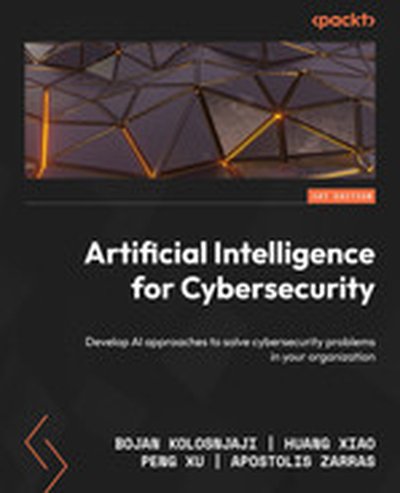
Artificial Intelligence for Cybersecurity

Explore how artificial intelligence can transform your cybersecurity strategies with "Artificial Intelligence for Cybersecurity". This book provides practical insights into applying AI methods to a variety of cybersecurity problems, from malware analysis to threat detection. By understanding these concepts, you'll gain the knowledge needed to protect your organization's data and networks effectively. What this Book will help me do Understand how AI methods can address cybersecurity concerns effectively. Develop practical skills using AI tools to combat cyber threats. Design AI-powered solutions for malware identification and anomaly detection. Navigate real-world applications of AI in cybersecurity scenarios. Recognize and mitigate common pitfalls while implementing AI methods in cybersecurity. Author(s) The authors, Bojan Kolosnjaji, Huang Xiao, Peng Xu, and Apostolis Zarras, are experts in machine learning and cybersecurity. With extensive backgrounds in both academia and industry, they bring a wealth of knowledge to the book. Their practical and educational approach makes complex AI and cybersecurity concepts accessible, empowering readers to apply these methods to real-world problems. Who is it for? This book is ideal for professionals in cybersecurity who are keen to integrate AI techniques into their frameworks and workflows. It's also suitable for machine learning enthusiasts who want to delve into the realm of cybersecurity. If you possess a basic understanding of Python programming and machine learning fundamentals, this book will guide you through to advanced concepts. Whether you are a student or an industry veteran, this book offers valuable insights for enhancing your cybersecurity strategies with AI.

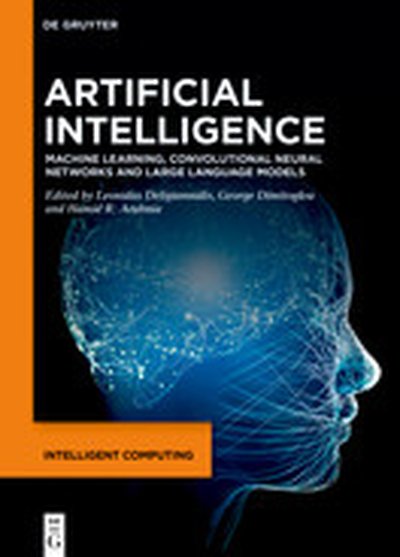
Artificial Intelligence

Artificial Intelligence (AI) revolves around creating and utilizing intelligent machines through science and engineering. This book delves into the theory and practical applications of computer science methods that incorporate AI across many domains. It covers techniques such as Machine Learning (ML), Convolutional Neural Networks (CNN), Deep Learning (DL), and Large Language Models (LLM) to tackle complex issues and overcome various challenges.

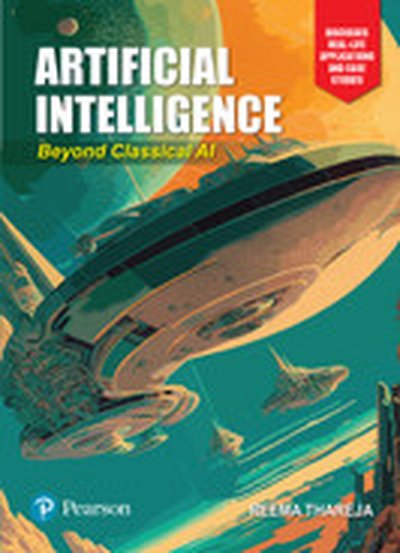
Artificial Intelligence: Beyond Classical AI

Pearson’s Artificial Intelligence encompasses a comprehensive text on the fundamental principles and concepts of Artificial Intelligence—a new-age technology that fuels the much-coveted ‘Industry 4.0’. Presented in lucid English, this book covers all the basic concepts, enriched with latest examples. It also discusses all the major components of AI, such as Neural Networks, Natural Language Processing, Reinforcement Learning, Machine Learning, Deep Learning and Computer Vision. The book is a deliberation of classical as well modern AI techniques and related technologies that provides readers with an overall knowledge and understanding of AI in present-day context.

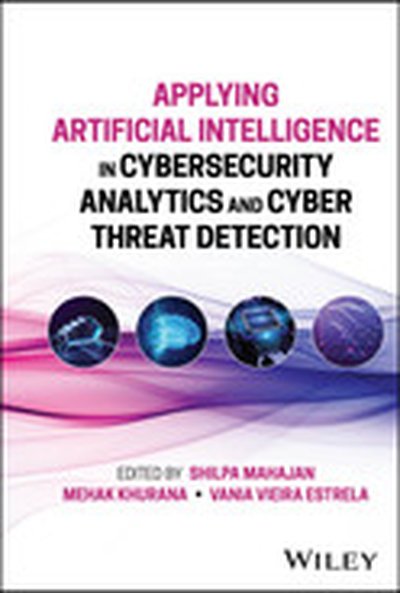
Applying Artificial Intelligence in Cybersecurity Analytics and Cyber Threat Detection

APPLYING ARTIFICIAL INTELLIGENCE IN CYBERSECURITY ANALYTICS AND CYBER THREAT DETECTION Comprehensive resource providing strategic defense mechanisms for malware, handling cybercrime, and identifying loopholes using artificial intelligence (AI) and machine learning (ML) Applying Artificial Intelligence in Cybersecurity Analytics and Cyber Threat Detection is a comprehensive look at state-of-the-art theory and practical guidelines pertaining to the subject, showcasing recent innovations, emerging trends, and concerns as well as applied challenges encountered, and solutions adopted in the fields of cybersecurity using analytics and machine learning. The text clearly explains theoretical aspects, framework, system architecture, analysis and design, implementation, validation, and tools and techniques of data science and machine learning to detect and prevent cyber threats. Using AI and ML approaches, the book offers strategic defense mechanisms for addressing malware, cybercrime, and system vulnerabilities. It also provides tools and techniques that can be applied by professional analysts to safely analyze, debug, and disassemble any malicious software they encounter. With contributions from qualified authors with significant experience in the field, Applying Artificial Intelligence in Cybersecurity Analytics and Cyber Threat Detection explores topics such as: Cybersecurity tools originating from computational statistics literature and pure mathematics, such as nonparametric probability density estimation, graph-based manifold learning, and topological data analysis Applications of AI to penetration testing, malware, data privacy, intrusion detection system (IDS), and social engineering How AI automation addresses various security challenges in daily workflows and how to perform automated analyses to proactively mitigate threats Offensive technologies grouped together and analyzed at a higher level from both an offensive and defensive standpoint Providing detailed coverage of a rapidly expanding field, Applying Artificial Intelligence in Cybersecurity Analytics and Cyber Threat Detection is an essential resource for a wide variety of researchers, scientists, and professionals involved in fields that intersect with cybersecurity, artificial intelligence, and machine learning.