 talk-data.com
C
Speaker
Chip Huyen
5
talks
computer scientist
Independent
Author | AI Engineering
Bio from: ODSC West 2025 | The Leading AI Training Conference
Filter by Event / Source
Talks & appearances
5 activities · Newest first
Supported by Our Partners • Swarmia — The engineering intelligence platform for modern software organizations. • Graphite — The AI developer productivity platform. • Vanta — Automate compliance and simplify security with Vanta. — On today’s episode of The Pragmatic Engineer, I’m joined by Chip Huyen, a computer scientist, author of the freshly published O’Reilly book AI Engineering, and an expert in applied machine learning. Chip has worked as a researcher at Netflix, was a core developer at NVIDIA (building NeMo, NVIDIA’s GenAI framework), and co-founded Claypot AI. She also taught Machine Learning at Stanford University. In this conversation, we dive into the evolving field of AI Engineering and explore key insights from Chip’s book, including: • How AI Engineering differs from Machine Learning Engineering • Why fine-tuning is usually not a tactic you’ll want (or need) to use • The spectrum of solutions to customer support problems – some not even involving AI! • The challenges of LLM evals (evaluations) • Why project-based learning is valuable—but even better when paired with structured learning • Exciting potential use cases for AI in education and entertainment • And more! — Timestamps (00:00) Intro (01:31) A quick overview of AI Engineering (05:00) How Chip ensured her book stays current amidst the rapid advancements in AI (09:50) A definition of AI Engineering and how it differs from Machine Learning Engineering (16:30) Simple first steps in building AI applications (22:53) An explanation of BM25 (retrieval system) (23:43) The problems associated with fine-tuning (27:55) Simple customer support solutions for rolling out AI thoughtfully (33:44) Chip’s thoughts on staying focused on the problem (35:19) The challenge in evaluating AI systems (38:18) Use cases in evaluating AI (41:24) The importance of prioritizing users’ needs and experience (46:24) Common mistakes made with Gen AI (52:12) A case for systematic problem solving (53:13) Project-based learning vs. structured learning (58:32) Why AI is not the end of engineering (1:03:11) How AI is helping education and the future use cases we might see (1:07:13) Rapid fire round — The Pragmatic Engineer deepdives relevant for this episode: • Applied AI Software Engineering: RAG https://newsletter.pragmaticengineer.com/p/rag • How do AI software engineering agents work? https://newsletter.pragmaticengineer.com/p/ai-coding-agents • AI Tooling for Software Engineers in 2024: Reality Check https://newsletter.pragmaticengineer.com/p/ai-tooling-2024 • IDEs with GenAI features that Software Engineers love https://newsletter.pragmaticengineer.com/p/ide-that-software-engineers-love — See the transcript and other references from the episode at https://newsletter.pragmaticengineer.com/podcast — Production and marketing by https://penname.co/. For inquiries about sponsoring the podcast, email [email protected].
Get full access to The Pragmatic Engineer at newsletter.pragmaticengineer.com/subscribe
Chip Huyen joins me to chat about AI Engineering, AI Agents, and much more.
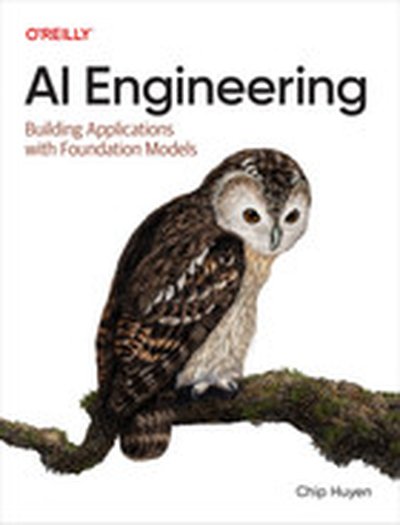
Recent breakthroughs in AI have not only increased demand for AI products, they've also lowered the barriers to entry for those who want to build AI products. The model-as-a-service approach has transformed AI from an esoteric discipline into a powerful development tool that anyone can use. Everyone, including those with minimal or no prior AI experience, can now leverage AI models to build applications. In this book, author Chip Huyen discusses AI engineering: the process of building applications with readily available foundation models. The book starts with an overview of AI engineering, explaining how it differs from traditional ML engineering and discussing the new AI stack. The more AI is used, the more opportunities there are for catastrophic failures, and therefore, the more important evaluation becomes. This book discusses different approaches to evaluating open-ended models, including the rapidly growing AI-as-a-judge approach. AI application developers will discover how to navigate the AI landscape, including models, datasets, evaluation benchmarks, and the seemingly infinite number of use cases and application patterns. You'll learn a framework for developing an AI application, starting with simple techniques and progressing toward more sophisticated methods, and discover how to efficiently deploy these applications. Understand what AI engineering is and how it differs from traditional machine learning engineering Learn the process for developing an AI application, the challenges at each step, and approaches to address them Explore various model adaptation techniques, including prompt engineering, RAG, fine-tuning, agents, and dataset engineering, and understand how and why they work Examine the bottlenecks for latency and cost when serving foundation models and learn how to overcome them Choose the right model, dataset, evaluation benchmarks, and metrics for your needs Chip Huyen works to accelerate data analytics on GPUs at Voltron Data. Previously, she was with Snorkel AI and NVIDIA, founded an AI infrastructure startup, and taught Machine Learning Systems Design at Stanford. She's the author of the book Designing Machine Learning Systems, an Amazon bestseller in AI. AI Engineering builds upon and is complementary to Designing Machine Learning Systems (O'Reilly).
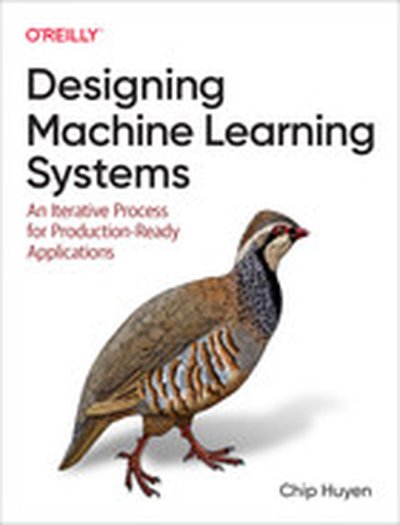
Machine learning systems are both complex and unique. Complex because they consist of many different components and involve many different stakeholders. Unique because they're data dependent, with data varying wildly from one use case to the next. In this book, you'll learn a holistic approach to designing ML systems that are reliable, scalable, maintainable, and adaptive to changing environments and business requirements. Author Chip Huyen, co-founder of Claypot AI, considers each design decision--such as how to process and create training data, which features to use, how often to retrain models, and what to monitor--in the context of how it can help your system as a whole achieve its objectives. The iterative framework in this book uses actual case studies backed by ample references. This book will help you tackle scenarios such as: Engineering data and choosing the right metrics to solve a business problem Automating the process for continually developing, evaluating, deploying, and updating models Developing a monitoring system to quickly detect and address issues your models might encounter in production Architecting an ML platform that serves across use cases Developing responsible ML systems