
talk-data.com talk-data.com

Topic

artificial intelligence (ai)

3

tagged

Activity Trend

1 peak/qtr
2020-Q1 2026-Q1

Activities

Showing filtered results

Filtering by: O'Reilly Data Engineering Books ×
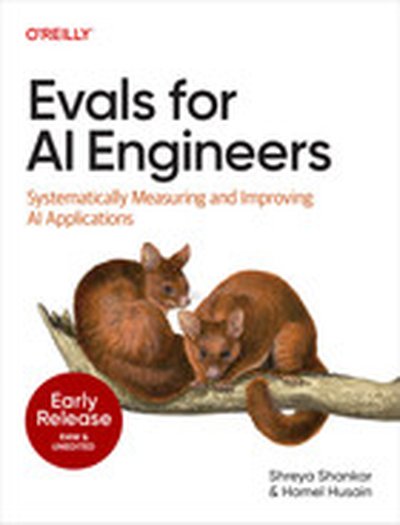
Evals for AI Engineers

Stop using guesswork to find out how your AI applications are performing. Evals for AI Engineers equips you with the proven tools and processes required to systematically test, measure, and enhance the reliability of AI applications, especially those using LLMs. Written by AI engineers with extensive experience in real-world consulting (across 35+ AI products) and cutting-edge research, this practical resource will help you move from assumptions to robust, data-driven evaluation. Ideal for software engineers, technical product managers, and technical leads, this hands-on guide dives into techniques like error analysis, synthetic data generation, automated LLM-as-a-judge systems, production monitoring, and cost optimization. You'll learn how to debug LLM behavior, design test suites based on synthetic and real data, and build data flywheels that improve over time. Whether you're starting without user data or scaling a production system, you'll gain the skills to build AI you can trust—with processes that are repeatable, measurable, and aligned with real-world outcomes. Run systematic error analyses to uncover, categorize, and prioritize failure modes Build, implement, and automate evaluation pipelines using code-based and LLM-based metrics Optimize AI performance and costs through smart evaluation and feedback loops Apply key principles and techniques for monitoring AI applications in production
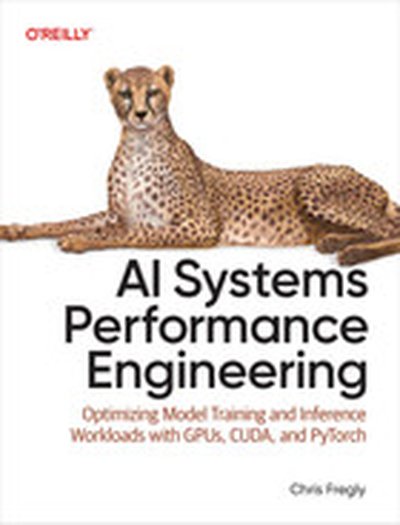
AI Systems Performance Engineering

Elevate your AI system performance capabilities with this definitive guide to maximizing efficiency across every layer of your AI infrastructure. In today's era of ever-growing generative models, AI Systems Performance Engineering provides engineers, researchers, and developers with a hands-on set of actionable optimization strategies. Learn to co-optimize hardware, software, and algorithms to build resilient, scalable, and cost-effective AI systems that excel in both training and inference. Authored by Chris Fregly, a performance-focused engineering and product leader, this resource transforms complex AI systems into streamlined, high-impact AI solutions. Inside, you'll discover step-by-step methodologies for fine-tuning GPU CUDA kernels, PyTorch-based algorithms, and multinode training and inference systems. You'll also master the art of scaling GPU clusters for high performance, distributed model training jobs, and inference servers. The book ends with a 175+-item checklist of proven, ready-to-use optimizations. Codesign and optimize hardware, software, and algorithms to achieve maximum throughput and cost savings Implement cutting-edge inference strategies that reduce latency and boost throughput in real-world settings Utilize industry-leading scalability tools and frameworks Profile, diagnose, and eliminate performance bottlenecks across complex AI pipelines Integrate full stack optimization techniques for robust, reliable AI system performance

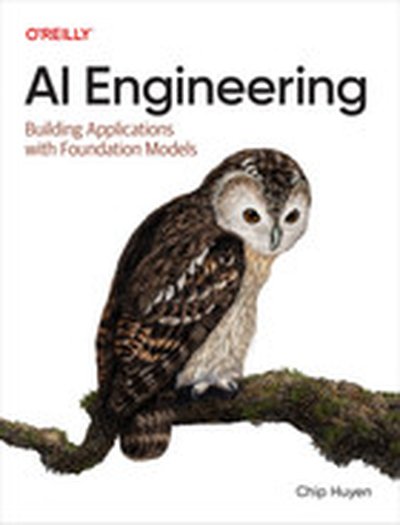
AI Engineering

Recent breakthroughs in AI have not only increased demand for AI products, they've also lowered the barriers to entry for those who want to build AI products. The model-as-a-service approach has transformed AI from an esoteric discipline into a powerful development tool that anyone can use. Everyone, including those with minimal or no prior AI experience, can now leverage AI models to build applications. In this book, author Chip Huyen discusses AI engineering: the process of building applications with readily available foundation models. The book starts with an overview of AI engineering, explaining how it differs from traditional ML engineering and discussing the new AI stack. The more AI is used, the more opportunities there are for catastrophic failures, and therefore, the more important evaluation becomes. This book discusses different approaches to evaluating open-ended models, including the rapidly growing AI-as-a-judge approach. AI application developers will discover how to navigate the AI landscape, including models, datasets, evaluation benchmarks, and the seemingly infinite number of use cases and application patterns. You'll learn a framework for developing an AI application, starting with simple techniques and progressing toward more sophisticated methods, and discover how to efficiently deploy these applications. Understand what AI engineering is and how it differs from traditional machine learning engineering Learn the process for developing an AI application, the challenges at each step, and approaches to address them Explore various model adaptation techniques, including prompt engineering, RAG, fine-tuning, agents, and dataset engineering, and understand how and why they work Examine the bottlenecks for latency and cost when serving foundation models and learn how to overcome them Choose the right model, dataset, evaluation benchmarks, and metrics for your needs Chip Huyen works to accelerate data analytics on GPUs at Voltron Data. Previously, she was with Snorkel AI and NVIDIA, founded an AI infrastructure startup, and taught Machine Learning Systems Design at Stanford. She's the author of the book Designing Machine Learning Systems, an Amazon bestseller in AI. AI Engineering builds upon and is complementary to Designing Machine Learning Systems (O'Reilly).