talk-data.com talk-data.com

Topic

artificial intelligence (ai)

31

tagged

Activity Trend

1 peak/qtr
2020-Q1 2026-Q1

Activities

31 activities · Newest first

Grow Your Business with AI: A First Principles Approach for Scaling Artificial Intelligence in the Enterprise

Leverage the power of Artificial Intelligence (AI) to drive the growth and success of your organization. This book thoroughly explores the reasons why it is so hard to implement AI, and highlights the need to reconcile the motivations and goals of two very different groups of people, business-minded and technical-minded. Divided into four main parts (First Principles, The Why, The What, The How), you'll review case studies and examples from companies that have successfully implemented AI. Part 1 provides a comprehensive overview of the First Principles approach and its basic conventions. Part 2 provides an in-depth look at the current state of AI and why it is increasingly important to businesses of all sizes. Part 3 delves into the key concepts and technologies of AI. Part 4 shares practical guidance and actionable steps for businesses looking to implement AI. Grow Your Business with AI is a must-read for anyone looking to understand and harness the power of AI for business growth and to stay ahead of the curve. What You'll Learn Review the key concepts and technologies of AI, including machine learning, natural language processing, and computer vision Apply the benefits of AI, including increased efficiency, improved decision-making, and new revenue streams in different industries Integrate AI into existing systems and processes. Who This Book Is For Entrepreneurs, business leaders, and professionals looking to leverage the power of AI to drive growth and success for their organizations.
The past decade has seen rapid development of Artificial Intelligence (AI) and Machine Learning (ML) across different industries and for a multitude of successful use cases. However, one key challenge many businesses face for larger-scale adoption of AI and ML is that their data is often not ready for AI/ML. Automated feature engineering is a technology that aims to address the fundamental challenges of data readiness for AI.

In this talk, we will review automated feature engineering technology and discuss how data scientists can benefit from this technology to transform your data and enable AI applications.

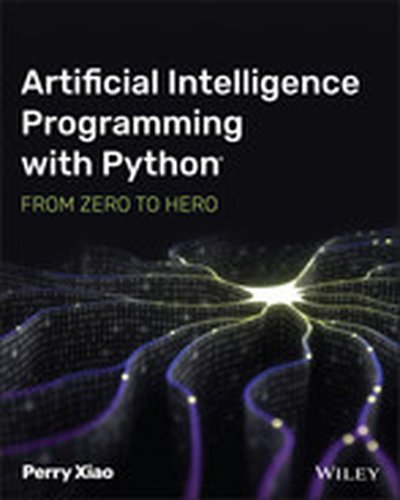
Artificial Intelligence Programming with Python

A hands-on roadmap to using Python for artificial intelligence programming In Practical Artificial Intelligence Programming with Python: From Zero to Hero, veteran educator and photophysicist Dr. Perry Xiao delivers a thorough introduction to one of the most exciting areas of computer science in modern history. The book demystifies artificial intelligence and teaches readers its fundamentals from scratch in simple and plain language and with illustrative code examples. Divided into three parts, the author explains artificial intelligence generally, machine learning, and deep learning. It tackles a wide variety of useful topics, from classification and regression in machine learning to generative adversarial networks. He also includes: Fulsome introductions to MATLAB, Python, AI, machine learning, and deep learning Expansive discussions on supervised and unsupervised machine learning, as well as semi-supervised learning Practical AI and Python “cheat sheet” quick references This hands-on AI programming guide is perfect for anyone with a basic knowledge of programming—including familiarity with variables, arrays, loops, if-else statements, and file input and output—who seeks to understand foundational concepts in AI and AI development.

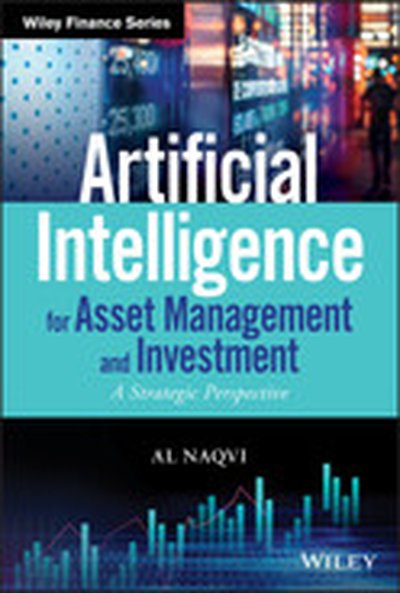
Artificial Intelligence for Asset Management and Investment

Make AI technology the backbone of your organization to compete in the Fintech era The rise of artificial intelligence is nothing short of a technological revolution. AI is poised to completely transform asset management and investment banking, yet its current application within the financial sector is limited and fragmented. Existing AI implementations tend to solve very narrow business issues, rather than serving as a powerful tech framework for next-generation finance. Artificial Intelligence for Asset Management and Investment provides a strategic viewpoint on how AI can be comprehensively integrated within investment finance, leading to evolved performance in compliance, management, customer service, and beyond. No other book on the market takes such a wide-ranging approach to using AI in asset management. With this guide, you’ll be able to build an asset management firm from the ground up—or revolutionize your existing firm—using artificial intelligence as the cornerstone and foundation. This is a must, because AI is quickly growing to be the single competitive factor for financial firms. With better AI comes better results. If you aren’t integrating AI in the strategic DNA of your firm, you’re at risk of being left behind. See how artificial intelligence can form the cornerstone of an integrated, strategic asset management framework Learn how to build AI into your organization to remain competitive in the world of Fintech Go beyond siloed AI implementations to reap even greater benefits Understand and overcome the governance and leadership challenges inherent in AI strategy Until now, it has been prohibitively difficult to map the high-tech world of AI onto complex and ever-changing financial markets. Artificial Intelligence for Asset Management and Investment makes this difficulty a thing of the past, providing you with a professional and accessible framework for setting up and running artificial intelligence in your financial operations.

Artificial Intelligence for Business, 2nd Edition

Millions of non-technical professionals and leaders want to understand Artificial Intelligence (AI) and Machine Learning (ML) — whether to improve their businesses, be more effective citizens, consumers or policymakers, or just out of sheer curiosity. Until now, most books on the subject have either been too complicated and mathematical, or have simply avoided the big picture by focusing on the use of specific software libraries. In , Doug Rose bridges the gap, offering today’s most accessible and useful introduction to AI and ML technologies — and what they can and can’t do. Artificial Intelligence for Business Rose begins by tracing AI’s evolution from the early 1950s to the present, illuminating core ideas that still drive its development. Next, he explores recent innovations that have reinvigorated the field by providing the “big data” that makes machine learning so powerful – innovations such as GPS, social media and electronic transactions. Finally, he explains how today’s machines learn by combining powerful processing, advanced algorithms, and artificial neural networks that mimic the human brain. Throughout, he illustrates key concepts with practical examples that help you connect AI, ML, and neural networks to specific problems and solutions. Step by step, he systematically demystifies these powerful technologies, removing the fear, bewilderment, and advanced math — so you can understand the new possibilities they create, and start using them.

Artificial Intelligence in Finance

The widespread adoption of AI and machine learning is revolutionizing many industries today. Once these technologies are combined with the programmatic availability of historical and real-time financial data, the financial industry will also change fundamentally. With this practical book, you'll learn how to use AI and machine learning to discover statistical inefficiencies in financial markets and exploit them through algorithmic trading. Author Yves Hilpisch shows practitioners, students, and academics in both finance and data science practical ways to apply machine learning and deep learning algorithms to finance. Thanks to lots of self-contained Python examples, you'll be able to replicate all results and figures presented in the book. In five parts, this guide helps you: Learn central notions and algorithms from AI, including recent breakthroughs on the way to artificial general intelligence (AGI) and superintelligence (SI) Understand why data-driven finance, AI, and machine learning will have a lasting impact on financial theory and practice Apply neural networks and reinforcement learning to discover statistical inefficiencies in financial markets Identify and exploit economic inefficiencies through backtesting and algorithmic trading--the automated execution of trading strategies Understand how AI will influence the competitive dynamics in the financial industry and what the potential emergence of a financial singularity might bring about

Artificial Intelligence Business: How you can profit from AI

Artificial Intelligence Business: How you can profit from AI is your essential guide to understanding how AI shapes the modern business landscape. This book guides you through the power of machine learning and artificial intelligence, revealing how these technologies can elevate businesses and impact society. What this Book will help me do Gain insight into how artificial intelligence can foster innovative cultures in enterprises. Learn key strategies for utilizing AI to accelerate start-up success. Understand the application of AI in fields such as manufacturing, logistics, and content generation. Discover how text and image generation technologies are transforming modern industries. Explore the societal and political implications of artificial intelligence. Author(s) Noelle Silver Russel and Przemek Chojecki bring extensive expertise in artificial intelligence and business strategy. Noelle is a renowned AI thought leader, with substantial experience in applying machine learning in corporate settings. Przemek is a successful entrepreneur and technologist passionate about innovation in AI. Together, they provide approachable yet informed insights tailored for practical learning. Who is it for? This book is perfect for professionals or enthusiasts with an interest in artificial intelligence and its applications in business. It's suitable for individuals in business roles seeking to enhance their understanding of AI's potential to transform enterprises. The content is designed for learners ranging from AI beginners to those with moderate knowledge looking to explore AI's practical uses. If you're keen on leveraging AI for strategic advantage, this book is for you.

Artificial Intelligence for Business

Artificial Intelligence for Business: A Roadmap for Getting Started with AI will provide the reader with an easy to understand roadmap for how to take an organization through the adoption of AI technology. It will first help with the identification of which business problems and opportunities are right for AI and how to prioritize them to maximize the likelihood of success. Specific methodologies are introduced to help with finding critical training data within an organization and how to fill data gaps if they exist. With data in hand, a scoped prototype can be built to limit risk and provide tangible value to the organization as a whole to justify further investment. Finally, a production level AI system can be developed with best practices to ensure quality with not only the application code, but also the AI models. Finally, with this particular AI adoption journey at an end, the authors will show that there is additional value to be gained by iterating on this AI adoption lifecycle and improving other parts of the organization.

Hands-On Artificial Intelligence for Beginners

"Hands-On Artificial Intelligence for Beginners" is your gateway to understanding and implementing modern AI technologies. This book introduces foundational AI concepts, delves into machine learning, deep learning, and neural networks, and guides you through practical applications in real-world scenarios. What this Book will help me do Understand and apply core AI and machine learning principles using tools like TensorFlow. Develop and train artificial neural networks for various applications. Implement advanced models like CNNs, RNNs, and generative models to solve real-world tasks. Explore reinforcement learning techniques and their game-playing strategies. Design, deploy, and optimize scalable AI systems for long-term use. Author(s) None Dindi and Patrick D. Smith are experts in Artificial Intelligence with extensive teaching and development experience. They dedicate their writing to demystifying complex ideas and making them accessible to learners. Their commitment to hands-on practice ensures that readers build concrete skills while grasping theoretical concepts. Who is it for? If you're an aspiring data scientist or developer keen to break into Artificial Intelligence, this book is perfect for you. Beginners with basic programming knowledge will feel comfortable progressing through the material. Readers looking for practical illustrations of AI concepts will benefit greatly from the hands-on approach. This book is tailored for learners aiming to build and deploy real-world AI systems efficiently.

Business Strategy in the Artificial Intelligence Economy

Technological breakthroughs relating to artificial intelligence has redefined business operations worldwide. For example, the ways in which data is captured, processed, and utilized to optimize customer interactions has grown by leaps and bounds. The change is redefining the structural dynamics of business strategy, economic theory, and management concepts. Leading technology companies around the world have expanded their research in artificial intelligence. With IBM’s launch of Watson, a new cognitive era has started. Investment firms have backed numerous emerging artificial intelligence companies. Meanwhile, there is paucity of academic and business research on the subject. This book project is a pioneering examination of how artificial intelligence is transforming the contemporary business strategy.

Artificial Intelligence for Marketing

A straightforward, non-technical guide to the next major marketing tool Artificial Intelligence for Marketing presents a tightly-focused introduction to machine learning, written specifically for marketing professionals. This book will not teach you to be a data scientist—but it does explain how Artificial Intelligence and Machine Learning will revolutionize your company's marketing strategy, and teach you how to use it most effectively. Data and analytics have become table stakes in modern marketing, but the field is ever-evolving with data scientists continually developing new algorithms—where does that leave you? How can marketers use the latest data science developments to their advantage? This book walks you through the "need-to-know" aspects of Artificial Intelligence, including natural language processing, speech recognition, and the power of Machine Learning to show you how to make the most of this technology in a practical, tactical way. Simple illustrations clarify complex concepts, and case studies show how real-world companies are taking the next leap forward. Straightforward, pragmatic, and with no math required, this book will help you: Speak intelligently about Artificial Intelligence and its advantages in marketing Understand how marketers without a Data Science degree can make use of machine learning technology Collaborate with data scientists as a subject matter expert to help develop focused-use applications Help your company gain a competitive advantage by leveraging leading-edge technology in marketing Marketing and data science are two fast-moving, turbulent spheres that often intersect; that intersection is where marketing professionals pick up the tools and methods to move their company forward. Artificial Intelligence and Machine Learning provide a data-driven basis for more robust and intensely-targeted marketing strategies—and companies that effectively utilize these latest tools will reap the benefit in the marketplace. Artificial Intelligence for Marketing provides a nontechnical crash course to help you stay ahead of the curve.