talk-data.com talk-data.com

Topic

Data Collection

44

tagged

Activity Trend

17 peak/qtr
2020-Q1 2026-Q1

Activities

Showing filtered results

Filtering by: O'Reilly Data Science Books ×
The Data Flow Map: A Practical Guide to Clear and Creative Analytics in Any Data Environment

Unlock the secrets of practical data analysis with the Data Flow Map framework—a game-changing approach that transcends tools and platforms. This book isn’t just another programming manual; it’s a guide to thinking and communicating about data at a higher level. Whether you're working with spreadsheets, databases, or AI-driven models, you'll learn how to express your analytics in clear, common language that anyone can understand. In today’s data-rich world, clarity is the real challenge. Technical details often obscure insights that could drive real impact. The Data Flow Map framework simplifies complexity into three core motions: source, focus, and build. The first half of the book explores these concepts through illustrations and stories. The second half applies them to real-world datasets using tools like Excel, SQL, and Python, showing how the framework works across platforms and use cases. A vital resource for analysts at any level, this book offers a practical, tool-agnostic approach to data analysis. With hands-on examples and a universal mental model, you’ll gain the confidence to tackle any dataset, align your team, and deliver insights that matter. Whether you're a beginner or a seasoned pro, the Data Flow Map framework will transform how you approach data analytics. What You Will Learn Grasp essential elements applicable to every data analysis workflow Adapt quickly to any dataset, tool, or platform Master analytic thinking at a higher level Use analytics patterns to better understand the world Break complex analysis into manageable, repeatable steps Iterate faster to uncover deeper insights and better solutions Communicate findings clearly for better decision-making Who This Book Is For Aspiring data professionals and experienced analysts, from beginners to seasoned data engineers, focused on data collection, analysis, and decision making
Data Insight Foundations: Step-by-Step Data Analysis with R

This book is an essential guide designed to equip you with the vital tools and knowledge needed to excel in data science. Master the end-to-end process of data collection, processing, validation, and imputation using R, and understand fundamental theories to achieve transparency with literate programming, renv, and Git--and much more. Each chapter is concise and focused, rendering complex topics accessible and easy to understand. Data Insight Foundations caters to a diverse audience, including web developers, mathematicians, data analysts, and economists, and its flexible structure allows enables you to explore chapters in sequence or navigate directly to the topics most relevant to you. While examples are primarily in R, a basic understanding of the language is advantageous but not essential. Many chapters, especially those focusing on theory, require no programming knowledge at all. Dive in and discover how to manipulate data, ensure reproducibility, conduct thorough literature reviews, collect data effectively, and present your findings with clarity. What You Will Learn Data Management: Master the end-to-end process of data collection, processing, validation, and imputation using R. Reproducible Research: Understand fundamental theories and achieve transparency with literate programming, renv, and Git. Academic Writing: Conduct scientific literature reviews and write structured papers and reports with Quarto. Survey Design: Design well-structured surveys and manage data collection effectively. Data Visualization: Understand data visualization theory and create well-designed and captivating graphics using ggplot2. Who this Book is For Career professionals such as research and data analysts transitioning from academia to a professional setting where production quality significantly impacts career progression. Some familiarity with data analytics processes and an interest in learning R or Python are ideal.

Data Science for Decision Makers

Data Science for Decision Makers is an essential guide for executives, managers, entrepreneurs, and anyone seeking to harness the power of data to drive business success. In today's fast-paced and increasingly digital world, the ability to make informed decisions based on data-driven insights is vital. This book serves as a bridge between the complex world of data science and the strategic decision-making process, providing readers with the knowledge and tools they need to leverage data effectively. With a clear focus on practical application, this book demystifies key concepts in data science, from data collection and analysis to predictive modeling and visualization. Via real-world examples, case studies, and actionable insights, readers will learn how to extract insights from data and translate them into actionable strategies that drive organizational growth. Written in a reader-friendly manner, this book caters to both novice and experienced professionals alike. Whether you're a seasoned executive looking to sharpen your strategic acumen or a manager seeking to enhance your team's data literacy, this essential reference provides the necessary foundation to navigate the complex landscape of data science with confidence.

Data Science Essentials For Dummies

Feel confident navigating the fundamentals of data science Data Science Essentials For Dummies is a quick reference on the core concepts of the exploding and in-demand data science field, which involves data collection and working on dataset cleaning, processing, and visualization. This direct and accessible resource helps you brush up on key topics and is right to the point—eliminating review material, wordy explanations, and fluff—so you get what you need, fast. Strengthen your understanding of data science basics Review what you've already learned or pick up key skills Effectively work with data and provide accessible materials to others Jog your memory on the essentials as you work and get clear answers to your questions Perfect for supplementing classroom learning, reviewing for a certification, or staying knowledgeable on the job, Data Science Essentials For Dummies is a reliable reference that's great to keep on hand as an everyday desk reference.

The Decision Maker's Handbook to Data Science: AI and Data Science for Non-Technical Executives, Managers, and Founders

Data science is expanding across industries at a rapid pace, and the companies first to adopt best practices will gain a significant advantage. To reap the benefits, decision makers need to have a confident understanding of data science and its application in their organization. This third edition delves into the latest advancements in AI, particularly focusing on large language models (LLMs), with clear distinctions made between AI and traditional data science, including AI's ability to emulate human decision-making. Author Stylianos Kampakis introduces you to the critical aspect of ethics in AI, an area of growing importance and scrutiny. The narrative examines the ethical considerations intrinsic to the development and deployment of AI technologies, including bias, fairness, transparency, and accountability. You’ll be provided with the expertise and tools required to develop a solid data strategy that is continuously effective. Ethics and legal issues surrounding data collection and algorithmic bias are some common pitfalls that Kampakis helps you avoid, while guiding you on the path to build a thriving data science culture at your organization. This updated edition also includes plenty of case studies, tools for project assessment, and expanded content for hiring and managing data scientists. Data science is a language that everyone at a modern company should understand across departments. Friction in communication arises most often when management does not connect with what a data scientist is doing or how impactful data collection and storage can be for their organization. The Decision Maker’s Handbook to Data Science bridges this gap and readies you for both the present and future of your workplace in this engaging, comprehensive guide. What You Will Learn Integrate AI with other innovative technologies Explore anticipated ethical, regulatory, and technical landscapes that will shape the future of AI and data science Discover how to hire and manage data scientists Build the right environment in order to make your organization data-driven Who This Book Is For Startup founders, product managers, higher level managers, and any other non-technical decision makers who are thinking to implement data science in their organization and hire data scientists. A secondary audience includes people looking for a soft introduction into the subject of data science.

Mastering Marketing Data Science

Unlock the Power of Data: Transform Your Marketing Strategies with Data Science In the digital age, understanding the symbiosis between marketing and data science is not just an advantage; it's a necessity. In Mastering Marketing Data Science: A Comprehensive Guide for Today's Marketers, Dr. Iain Brown, a leading expert in data science and marketing analytics, offers a comprehensive journey through the cutting-edge methodologies and applications that are defining the future of marketing. This book bridges the gap between theoretical data science concepts and their practical applications in marketing, providing readers with the tools and insights needed to elevate their strategies in a data-driven world. Whether you're a master's student, a marketing professional, or a data scientist keen on applying your skills in a marketing context, this guide will empower you with a deep understanding of marketing data science principles and the competence to apply these principles effectively. Comprehensive Coverage: From data collection to predictive analytics, NLP, and beyond, explore every facet of marketing data science. Practical Applications: Engage with real-world examples, hands-on exercises in both Python & SAS, and actionable insights to apply in your marketing campaigns. Expert Guidance: Benefit from Dr. Iain Brown's decade of experience as he shares cutting-edge techniques and ethical considerations in marketing data science. Future-Ready Skills: Learn about the latest advancements, including generative AI, to stay ahead in the rapidly evolving marketing landscape. Accessible Learning: Tailored for both beginners and seasoned professionals, this book ensures a smooth learning curve with a clear, engaging narrative. Mastering Marketing Data Science is designed as a comprehensive how-to guide, weaving together theory and practice to offer a dynamic, workbook-style learning experience. Dr. Brown's voice and expertise guide you through the complexities of marketing data science, making sophisticated concepts accessible and actionable.

Healthcare Big Data Analytics

This book highlights how optimized big data applications can be used for patient monitoring and clinical diagnosis. In fact, IoT-based applications are data-driven and mostly employ modern optimization techniques. The book also explores challenges, opportunities, and future research directions, discussing the stages of data collection and pre-processing, as well as the associated challenges and issues in data handling and setup.

Learning Data Science

As an aspiring data scientist, you appreciate why organizations rely on data for important decisions—whether it's for companies designing websites, cities deciding how to improve services, or scientists discovering how to stop the spread of disease. And you want the skills required to distill a messy pile of data into actionable insights. We call this the data science lifecycle: the process of collecting, wrangling, analyzing, and drawing conclusions from data. Learning Data Science is the first book to cover foundational skills in both programming and statistics that encompass this entire lifecycle. It's aimed at those who wish to become data scientists or who already work with data scientists, and at data analysts who wish to cross the "technical/nontechnical" divide. If you have a basic knowledge of Python programming, you'll learn how to work with data using industry-standard tools like pandas. Refine a question of interest to one that can be studied with data Pursue data collection that may involve text processing, web scraping, etc. Glean valuable insights about data through data cleaning, exploration, and visualization Learn how to use modeling to describe the data Generalize findings beyond the data

Advances in Business Statistics, Methods and Data Collection

ADVANCES IN BUSINESS STATISTICS, METHODS AND DATA COLLECTION Advances in Business Statistics, Methods and Data Collection delivers insights into the latest state of play in producing establishment statistics, obtained from businesses, farms and institutions. Presenting materials and reflecting discussions from the 6 th International Conference on Establishment Statistics (ICES-VI), this edited volume provides a broad overview of methodology underlying current establishment statistics from every aspect of the production life cycle while spotlighting innovative and impactful advancements in the development, conduct, and evaluation of modern establishment statistics programs. Highlights include: Practical discussions on agile, timely, and accurate measurement of rapidly evolving economic phenomena such as globalization, new computer technologies, and the informal sector. Comprehensive explorations of administrative and new data sources and technologies, covering big (organic) data sources and methods for data integration, linking, machine learning and visualization. Detailed compilations of statistical programs’ responses to wide-ranging data collection and production challenges, among others caused by the Covid-19 pandemic. In-depth examinations of business survey questionnaire design, computerization, pretesting methods, experimentation, and paradata. Methodical presentations of conventional and emerging procedures in survey statistics techniques for establishment statistics, encompassing probability sampling designs and sample coordination, non-probability sampling, missing data treatments, small area estimation and Bayesian methods. Providing a broad overview of most up-to-date science, this book challenges the status quo and prepares researchers for current and future challenges in establishment statistics and methods. Perfect for survey researchers, government statisticians, National Bank employees, economists, and undergraduate and graduate students in survey research and economics, Advances in Business Statistics, Methods and Data Collection will also earn a place in the toolkit of researchers working –with data– in industries across a variety of fields.

Building Solutions with the Microsoft Power Platform

With the accelerating speed of business and the increasing dependence on technology, companies today are significantly changing the way they build in-house business solutions. Many now use low-code and no code technologies to help them deal with specific issues, but that's just the beginning. With this practical guide, power users and developers will discover ways to resolve everyday challenges by building end-to-end solutions with the Microsoft Power Platform. Author Jason Rivera, who specializes in SharePoint and the Microsoft 365 solution architecture, provides a comprehensive overview of how to use the Power Platform to build end-to-end solutions that address tactical business needs. By learning key components of the platform, including Power Apps, Power Automate, and Power BI, you'll be able to build low-code and no code applications, automate repeatable business processes, and create interactive reports from available data. Learn how the Power Platform apps work together Incorporate AI into the Power Platform without extensive ML or AI knowledge Create end-to-end solutions to solve tactical business needs, including data collection, process automation, and reporting Build AI-based solutions using Power Virtual Agents and AI Builder

Mastering Microsoft Power BI - Second Edition

Dive deep into Microsoft Power BI with the second edition of 'Mastering Microsoft Power BI'. This comprehensive book equips you with the skills to transform business data into actionable insights using Power BI's latest features and techniques. From efficient data retrieval and transformation processes to creating interactive dashboards that tell impactful data stories, you will learn actionable knowledge every step of the way. What this Book will help me do Learn to master data collection and modeling using the Power Query M language Gain expertise in designing DirectQuery, import, and composite data models Understand how to create advanced analytics reports using DAX and Power BI visuals Learn to manage the Power BI environment as an administrator with Premium capacity Develop insightful, scalable, and visually impactful dashboards and reports Author(s) Greg Deckler, a seasoned Power BI expert and solution architect, and None Powell, an experienced BI consultant and data visualization specialist, bring their extensive practical knowledge to this book. Together, they share their real-world expertise and proven techniques applying Power BI's diverse capabilities. Who is it for? This book is ideal for business intelligence professionals and intermediate Power BI users. If you're looking to master data visualization, prepare insightful dashboards, and explore Power BI's full potential, this is for you. Basic understanding of BI concepts and familiarity with Power BI will ensure you get the most value.

Advances in Longitudinal Survey Methodology

Advances in Longitudinal Survey Methodology Explore an up-to-date overview of best practices in the implementation of longitudinal surveys from leading experts in the field of survey methodology Advances in Longitudinal Survey Methodology delivers a thorough review of the most current knowledge in the implementation of longitudinal surveys. The book provides a comprehensive overview of the many advances that have been made in the field of longitudinal survey methodology over the past fifteen years, as well as extending the topic coverage of the earlier volume, “Methodology of Longitudinal Surveys”, published in 2009. This new edited volume covers subjects like dependent interviewing, interviewer effects, panel conditioning, rotation group bias, measurement of cognition, and weighting. New chapters discussing the recent shift to mixed-mode data collection and obtaining respondents’ consent to data linkage add to the book’s relevance to students and social scientists seeking to understand modern challenges facing data collectors today. Readers will also benefit from the inclusion of: A thorough introduction to refreshment sampling for longitudinal surveys, including consideration of principles, sampling frame, sample design, questionnaire design, and frequency An exploration of the collection of biomarker data in longitudinal surveys, including detailed measurements of ill health, biological pathways, and genetics in longitudinal studies An examination of innovations in participant engagement and tracking in longitudinal surveys, including current practices and new evidence on internet and social media for participant engagement. An invaluable source for post-graduate students, professors, and researchers in the field of survey methodology, Advances in Longitudinal Survey Methodology will also earn a place in the libraries of anyone who regularly works with or conducts longitudinal surveys and requires a one-stop reference for the latest developments and findings in the field.

IoT-Based Data Analytics for the Healthcare Industry

IoT Based Data Analytics for the Healthcare Industry: Techniques and Applications explores recent advances in the analysis of healthcare industry data through IoT data analytics. The book covers the analysis of ubiquitous data generated by the healthcare industry, from a wide range of sources, including patients, doctors, hospitals, and health insurance companies. The book provides AI solutions and support for healthcare industry end-users who need to analyze and manipulate this vast amount of data. These solutions feature deep learning and a wide range of intelligent methods, including simulated annealing, tabu search, genetic algorithm, ant colony optimization, and particle swarm optimization. The book also explores challenges, opportunities, and future research directions, and discusses the data collection and pre-processing stages, challenges and issues in data collection, data handling, and data collection set-up. Healthcare industry data or streaming data generated by ubiquitous sensors cocooned into the IoT requires advanced analytics to transform data into information. With advances in computing power, communications, and techniques for data acquisition, the need for advanced data analytics is in high demand. Provides state-of-art methods and current trends in data analytics for the healthcare industry Addresses the top concerns in the healthcare industry using IoT and data analytics, and machine learning and deep learning techniques Discusses several potential AI techniques developed using IoT for the healthcare industry Explores challenges, opportunities, and future research directions, and discusses the data collection and pre-processing stages

Intelligent Data Analysis
  This book focuses on methods and tools for intelligent data analysis, aimed at narrowing the increasing gap between data gathering and data comprehension, and emphasis will also be given to solving of problems which result from automated data collection, such as analysis of computer-based patient records, data warehousing tools, intelligent alarming, effective and efficient monitoring, and so on. This book aims to describe the different approaches of Intelligent Data Analysis from a practical point of view: solving common life problems with data analysis tools.
The Decision Maker's Handbook to Data Science: A Guide for Non-Technical Executives, Managers, and Founders

Data science is expanding across industries at a rapid pace, and the companies first to adopt best practices will gain a significant advantage. To reap the benefits, decision makers need to have a confident understanding of data science and its application in their organization. It is easy for novices to the subject to feel paralyzed by intimidating buzzwords, but what many don’t realize is that data science is in fact quite multidisciplinary—useful in the hands of business analysts, communications strategists, designers, and more. With the second edition of The Decision Maker’s Handbook to Data Science, you will learn how to think like a veteran data scientist and approach solutions to business problems in an entirely new way. Author Stylianos Kampakis provides you with the expertise and tools required to develop a solid data strategy that is continuously effective. Ethics and legal issues surrounding data collection and algorithmic bias are some common pitfalls that Kampakis helps you avoid, while guiding you on the path to build a thriving data science culture at your organization. This updated and revised second edition, includes plenty of case studies, tools for project assessment, and expanded content for hiring and managing data scientists Data science is a language that everyone at a modern company should understand across departments. Friction in communication arises most often when management does not connect with what a data scientist is doing or how impactful data collection and storage can be for their organization. The Decision Maker’s Handbook to Data Science bridges this gap and readies you for both the present and future of your workplace in this engaging, comprehensive guide. What You Will Learn Understand how data science can be used within your business. Recognize the differences between AI, machine learning, and statistics. Become skilled at thinking like a data scientist, without being one. Discover how to hire and manage data scientists. Comprehend how to build the right environment in order to make your organization data-driven. Who This Book Is For Startup founders, product managers, higher level managers, and any other non-technical decision makers who are thinking to implement data science in their organization and hire data scientists. A secondary audience includes people looking for a soft introduction into the subject of data science.

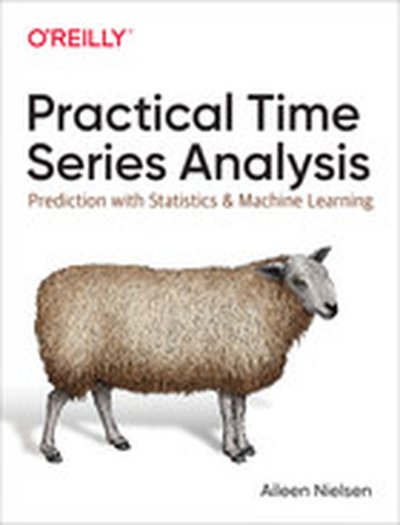
Practical Time Series Analysis

Time series data analysis is increasingly important due to the massive production of such data through the internet of things, the digitalization of healthcare, and the rise of smart cities. As continuous monitoring and data collection become more common, the need for competent time series analysis with both statistical and machine learning techniques will increase. Covering innovations in time series data analysis and use cases from the real world, this practical guide will help you solve the most common data engineering and analysis challengesin time series, using both traditional statistical and modern machine learning techniques. Author Aileen Nielsen offers an accessible, well-rounded introduction to time series in both R and Python that will have data scientists, software engineers, and researchers up and running quickly. You’ll get the guidance you need to confidently: Find and wrangle time series data Undertake exploratory time series data analysis Store temporal data Simulate time series data Generate and select features for a time series Measure error Forecast and classify time series with machine or deep learning Evaluate accuracy and performance

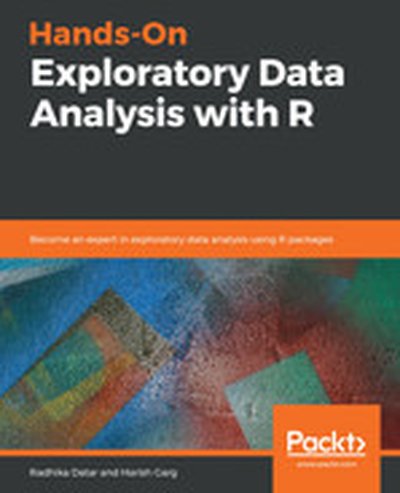
Hands-On Exploratory Data Analysis with R

Immerse yourself in 'Hands-On Exploratory Data Analysis with R,' a comprehensive guide designed to hone your skills in data analysis using the powerful R programming language. This book walks you through all essential aspects of exploratory data analysis, from data collection and cleaning to generating insights with statistical and graphical methods, setting you up for success with any dataset. What this Book will help me do Utilize powerful R packages to accelerate your data analysis workflow. Effectively import, clean, and prepare diverse datasets for analysis. Create informative and visually appealing data visualizations using ggplot2. Generate comprehensive and sharable reports with R Markdown and knitr. Handle multi-factor, optimization, and regression data challenges. Author(s) Radhika Datar and Harish Garg are experienced data analysts and educators specializing in using R for practical data analysis. They have developed this book to share their depth of expertise, offering a detailed yet approachable learning experience. Their combined experience in teaching and applying data analysis in real-world scenarios makes this book an invaluable resource for practitioners. Who is it for? This book is perfect for data enthusiasts looking to strengthen their foundational knowledge in exploratory data analysis. Data analysts, engineers, software developers, and product managers seeking to broaden their skillset in data interpretation and visualization will find this guide extremely beneficial. Whether you're a beginner or already possess basic understanding of data analysis, this book will provide actionable insights to improve your workflow.

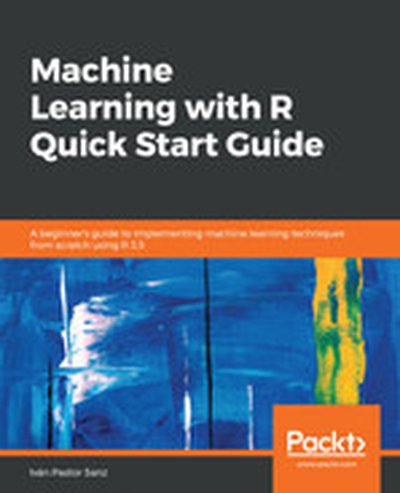
Machine Learning with R Quick Start Guide

Machine Learning with R Quick Start Guide takes you through the foundations of machine learning using the R programming language. Starting with the basics, this book introduces key algorithms and methodologies, offering hands-on examples and applicable machine learning solutions that allow you to extract insights and create predictive models. What this Book will help me do Understand the basics of machine learning and apply them using R 3.5. Learn to clean, prepare, and visualize data with R to ensure robust data analysis. Develop and work with predictive models using various machine learning techniques. Discover advanced topics like Natural Language Processing and neural network training. Implement end-to-end pipeline solutions, from data collection to predictive analytics, in R. Author(s) None Sanz, the author of Machine Learning with R Quick Start Guide, is an expert in data science with years of experience in the field of machine learning and R programming. Known for their accessible and detailed teaching style, the author focuses on providing practical knowledge to empower readers in the real world. Who is it for? This book is ideal for graduate students and professionals, including aspiring data scientists and data analysts, looking to start their journey in machine learning. Readers are expected to have some familiarity with the R programming language but no prior machine learning experience is necessary. With this book, the audience will gain the ability to confidently navigate machine learning concepts and practices.

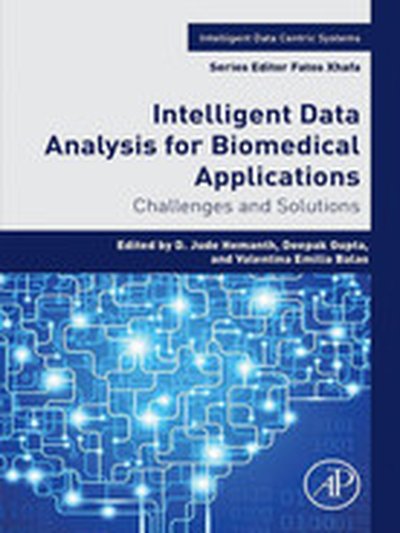
Intelligent Data Analysis for Biomedical Applications

Intelligent Data Analysis for Biomedical Applications: Challenges and Solutions presents specialized statistical, pattern recognition, machine learning, data abstraction and visualization tools for the analysis of data and discovery of mechanisms that create data. It provides computational methods and tools for intelligent data analysis, with an emphasis on problem-solving relating to automated data collection, such as computer-based patient records, data warehousing tools, intelligent alarming, effective and efficient monitoring, and more. This book provides useful references for educational institutions, industry professionals, researchers, scientists, engineers and practitioners interested in intelligent data analysis, knowledge discovery, and decision support in databases. Provides the methods and tools necessary for intelligent data analysis and gives solutions to problems resulting from automated data collection Contains an analysis of medical databases to provide diagnostic expert systems Addresses the integration of intelligent data analysis techniques within biomedical information systems

R Web Scraping Quick Start Guide

Discover the essentials of web scraping with R through this comprehensive guide. In this book, you will learn powerful techniques to extract valuable data from websites using the R programming language and tools like rvest and RSelenium. By understanding how to write efficient scripts, you will gain the ability to automate data collection and analysis for your projects. What this Book will help me do Understand the fundamentals of web scraping and its applications. Master the use of rvest for extracting data from static websites. Learn advanced techniques for dynamic websites using RSelenium. Write effective RegEx and XPath rules to enhance data extraction. Store, manage, and visualize the scraped data efficiently. Author(s) None Aydin is an experienced data analyst and R programmer with a deep passion for data manipulation and analysis. With years of firsthand expertise in utilizing R for various data-related tasks, Aydin brings a practical and methodological approach to teaching complex concepts. His clear instruction style ensures that readers quickly grasp and apply the techniques taught in this book. Who is it for? This book is ideal for R programmers seeking to expand their skills by delving into web scraping techniques. Whether you are a beginner with a basic knowledge of R or a data analyst exploring new ways to extract and utilize data, this guide is tailored for you. It suits readers who aspire to automate data collection and expand their analytical capabilities.