talk-data.com talk-data.com

Topic

web-scraping

24

tagged

Activity Trend

1 peak/qtr
2020-Q1 2026-Q1

Activities

24 activities · Newest first

Web Scraping with Python, 3rd Edition

If programming is magic, then web scraping is surely a form of wizardry. By writing a simple automated program, you can query web servers, request data, and parse it to extract the information you need. This thoroughly updated third edition not only introduces you to web scraping but also serves as a comprehensive guide to scraping almost every type of data from the modern web. Part I focuses on web scraping mechanics: using Python to request information from a web server, performing basic handling of the server's response, and interacting with sites in an automated fashion. Part II explores a variety of more specific tools and applications to fit any web scraping scenario you're likely to encounter. Parse complicated HTML pages Develop crawlers with the Scrapy framework Learn methods to store the data you scrape Read and extract data from documents Clean and normalize badly formatted data Read and write natural languages Crawl through forms and logins Scrape JavaScript and crawl through APIs Use and write image-to-text software Avoid scraping traps and bot blockers Use scrapers to test your website
Hands-On Web Scraping with Python - Second Edition

In "Hands-On Web Scraping with Python," you'll learn how to harness the power of Python libraries to extract, process, and analyze data from the web. This book provides a practical, step-by-step guide for beginners and data enthusiasts alike. What this Book will help me do Master the use of Python libraries like requests, lxml, Scrapy, and Beautiful Soup for web scraping. Develop advanced techniques for secure browsing and data extraction using APIs and Selenium. Understand the principles behind regex and PDF data parsing for comprehensive scraping. Analyze and visualize data using data science tools such as Pandas and Plotly. Build a portfolio of real-world scraping projects to demonstrate your capabilities. Author(s) Anish Chapagain, the author of "Hands-On Web Scraping with Python," is an experienced programmer and instructor who specializes in Python and data-related technologies. With his vast experience in teaching individuals from diverse backgrounds, Anish approaches complex concepts with clarity and a hands-on methodology. Who is it for? This book is perfect for aspiring data scientists, Python beginners, and anyone who wants to delve into web scraping. Readers should have a basic understanding of how websites work but no prior coding experience is required. If you aim to develop scraping skills and understand data analysis, this book is the ideal starting point.

Modern Data Mining Algorithms in C++ and CUDA C: Recent Developments in Feature Extraction and Selection Algorithms for Data Science

Discover a variety of data-mining algorithms that are useful for selecting small sets of important features from among unwieldy masses of candidates, or extracting useful features from measured variables. As a serious data miner you will often be faced with thousands of candidate features for your prediction or classification application, with most of the features being of little or no value. You’ll know that many of these features may be useful only in combination with certain other features while being practically worthless alone or in combination with most others. Some features may have enormous predictive power, but only within a small, specialized area of the feature space. The problems that plague modern data miners are endless. This book helps you solve this problem by presenting modern feature selection techniques and the code to implement them. Some of these techniques are: Forward selection component analysis Local feature selection Linking features and a target with a hidden Markov model Improvements on traditional stepwise selection Nominal-to-ordinal conversion All algorithms are intuitively justified and supported by the relevant equations and explanatory material. The author also presents and explains complete, highly commented source code. The example code is in C++ and CUDA C but Python or other code can be substituted; the algorithm is important, not the code that's used to write it. What You Will Learn Combine principal component analysis with forward and backward stepwise selection to identify a compact subset of a large collection of variables that captures the maximum possible variation within the entire set. Identify features that may have predictive power over only a small subset of the feature domain. Such features can be profitably used by modern predictive models but may be missed by other feature selection methods. Find an underlying hidden Markov model that controls the distributions of feature variables and the target simultaneously. The memory inherent in this method is especially valuable in high-noise applications such as prediction of financial markets. Improve traditional stepwise selection in three ways: examine a collection of 'best-so-far' feature sets; test candidate features for inclusion with cross validation to automatically and effectively limit model complexity; and at each step estimate the probability that our results so far could be just the product of random good luck. We also estimate the probability that the improvement obtained by adding a new variable could have been just good luck. Take a potentially valuable nominal variable (a category or class membership) that is unsuitable for input to a prediction model, and assign to each category a sensible numeric value that can be used as a model input. Who This Book Is For Intermediate to advanced data science programmers and analysts.

Mining Social Media

Did fake Twitter accounts help sway a presidential election? What can Facebook and Reddit archives tell us about human behavior? In Mining Social Media, senior BuzzFeed reporter Lam Thuy Vo shows you how to use Python and key data analysis tools to find the stories buried in social media. Whether you’re a professional journalist, an academic researcher, or a citizen investigator, you’ll learn how to use technical tools to collect and analyze data from social media sources to build compelling, data-driven stories. Learn how to: •Write Python scripts and use APIs to gather data from the social web •Download data archives and dig through them for insights •Inspect HTML downloaded from websites for useful content •Format, aggregate, sort, and filter your collected data using Google Sheets •Create data visualizations to illustrate your discoveries •Perform advanced data analysis using Python, Jupyter Notebooks, and the pandas library •Apply what you’ve learned to research topics on your own Social media is filled with thousands of hidden stories just waiting to be told. Learn to use the data-sleuthing tools that professionals use to write your own data-driven stories.

Hands-On Web Scraping with Python

This book, "Hands-On Web Scraping with Python", is your comprehensive guide to mastering web scraping techniques and tools. Harnessing the power of Python libraries like Scrapy, Beautiful Soup, and Selenium, you'll learn how to extract and analyze data from websites effectively and efficiently. What this Book will help me do Master the foundational concepts of web scraping using Python. Efficiently use libraries such as Scrapy, Beautiful Soup, and Selenium for data extraction. Handle advanced scenarios such as forms, logins, and dynamic content in scraping. Leverage XPath, CSS selectors, and Regex for precise data targeting and processing. Improve scraping reliability and manage challenges like cookies, API use, and web security. Author(s) None Chapagain is an accomplished Python programmer and an expert in web scraping methodologies. With years of experience in applying Python to solve practical data challenges, they bring a clear and insightful approach to teaching these skills. Readers appreciate their practical examples and ready-to-use guidance for real-world applications. Who is it for? This book is designed for Python developers and data enthusiasts eager to master web scraping. Whether you're a beginner looking to dep dive into new techniques or an analyst needing reliable data extraction methods, this book offers clear guidance. A basic understanding of Python is recommended to fully benefit from this text.

Go Web Scraping Quick Start Guide

In "Go Web Scraping Quick Start Guide", you'll learn how to harness the power of the Go programming language to scrape and crawl data from websites effectively. This book covers fundamental techniques and essential libraries such as Colly and Goquery, helping you efficiently extract useful data while understanding best practices and avoiding common pitfalls. What this Book will help me do Master web scraping techniques using Go and libraries like Colly and Goquery. Understand HTTP request and response handling in the context of web scraping. Explore web scraping navigation strategies to retrieve the data you need efficiently and effectively. Learn to use Go's concurrency model for parallelized and scalable web scraping. Protect your scrapers from being blocked by implementing proxies and best practices. Author(s) None Smith is an experienced Go developer with a passion for teaching and simplifying technical concepts. With a strong background in software development and web technologies, they bring a practical approach to mastering Go and web scraping. Their clear writing style helps readers gain hands-on knowledge in applying technology effectively. Who is it for? This book is perfect for data scientists and web developers who have some prior knowledge of Go and want to extend their skills to include effective web scraping. Whether you're looking to extract data for analysis or develop solutions for web crawling tasks, this book provides a step-by-step approach tailored to practical applications. It's especially suited for professionals aiming to expand their technical toolkit for data and web projects.

R Web Scraping Quick Start Guide

Discover the essentials of web scraping with R through this comprehensive guide. In this book, you will learn powerful techniques to extract valuable data from websites using the R programming language and tools like rvest and RSelenium. By understanding how to write efficient scripts, you will gain the ability to automate data collection and analysis for your projects. What this Book will help me do Understand the fundamentals of web scraping and its applications. Master the use of rvest for extracting data from static websites. Learn advanced techniques for dynamic websites using RSelenium. Write effective RegEx and XPath rules to enhance data extraction. Store, manage, and visualize the scraped data efficiently. Author(s) None Aydin is an experienced data analyst and R programmer with a deep passion for data manipulation and analysis. With years of firsthand expertise in utilizing R for various data-related tasks, Aydin brings a practical and methodological approach to teaching complex concepts. His clear instruction style ensures that readers quickly grasp and apply the techniques taught in this book. Who is it for? This book is ideal for R programmers seeking to expand their skills by delving into web scraping techniques. Whether you are a beginner with a basic knowledge of R or a data analyst exploring new ways to extract and utilize data, this guide is tailored for you. It suits readers who aspire to automate data collection and expand their analytical capabilities.

Practical Web Scraping for Data Science: Best Practices and Examples with Python

This book provides a complete and modern guide to web scraping, using Python as the programming language, without glossing over important details or best practices. Written with a data science audience in mind, the book explores both scraping and the larger context of web technologies in which it operates, to ensure full understanding. The authors recommend web scraping as a powerful tool for any data scientist’s arsenal, as many data science projects start by obtaining an appropriate data set. Starting with a brief overview on scraping and real-life use cases, the authors explore the core concepts of HTTP, HTML, and CSS to provide a solid foundation. Along with a quick Python primer, they cover Selenium for JavaScript-heavy sites, and web crawling in detail. The book finishes with a recap of best practices and a collection of examples that bring together everything you've learned and illustrate various data science use cases. What You'll Learn Leverage well-established best practices and commonly-used Python packages Handle today's web, including JavaScript, cookies, and common web scraping mitigation techniques Understand the managerial and legal concerns regarding web scraping Who This Book is For A data science oriented audience that is probably already familiar with Python or another programming language or analytical toolkit (R, SAS, SPSS, etc). Students or instructors in university courses may also benefit. Readers unfamiliar with Python will appreciate a quick Python primer in chapter 1 to catch up with the basics and provide pointers to other guides as well.

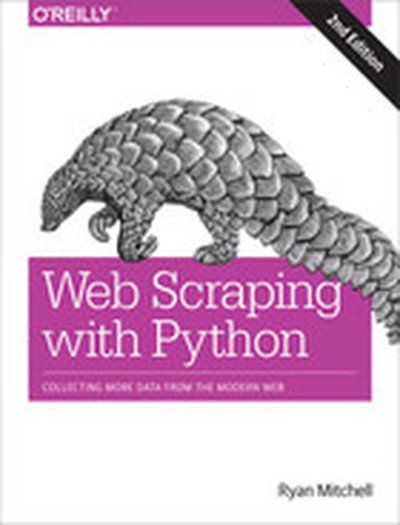
Web Scraping with Python, 2nd Edition

If programming is magic then web scraping is surely a form of wizardry. By writing a simple automated program, you can query web servers, request data, and parse it to extract the information you need. The expanded edition of this practical book not only introduces you web scraping, but also serves as a comprehensive guide to scraping almost every type of data from the modern web. Part I focuses on web scraping mechanics: using Python to request information from a web server, performing basic handling of the server's response, and interacting with sites in an automated fashion. Part II explores a variety of more specific tools and applications to fit any web scraping scenario you're likely to encounter. Parse complicated HTML pages Develop crawlers with the Scrapy framework Learn methods to store data you scrape Read and extract data from documents Clean and normalize badly formatted data Read and write natural languages Crawl through forms and logins Scrape JavaScript and crawl through APIs Use and write image-to-text software Avoid scraping traps and bot blockers Use scrapers to test your website
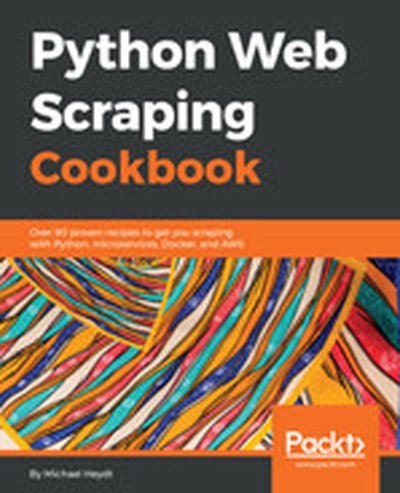
Python Web Scraping Cookbook

Python Web Scraping Cookbook is your comprehensive guide to building efficient and functional web scraping tools using Python. With practical recipes, you'll learn to overcome the challenges of dynamic content, captcha, and irregular web structures while deploying scalable solutions. What this Book will help me do Master the use of Python libraries like BeautifulSoup and Scrapy for scraping data. Perfect techniques for handling JavaScript-heavy sites using Selenium. Learn to overcome web scraping challenges, such as captchas and rate-limiting. Design scalable scraping pipelines with cloud deployment in AWS. Understand web data extraction techniques with XPath, CSS selectors, and more. Author(s) Michael Heydt is a seasoned software engineer and technical author with a focus on data engineering and cloud solutions. Having worked with Python extensively, he brings real-world insights into web scraping. His practical approach simplifies complex concepts. Who is it for? This book is perfect for Python developers and data enthusiasts keen to master web scraping techniques. If you're a programmer with insights into Python scripting and wish to scrape, analyze, and utilize web data efficiently, this book is for you.

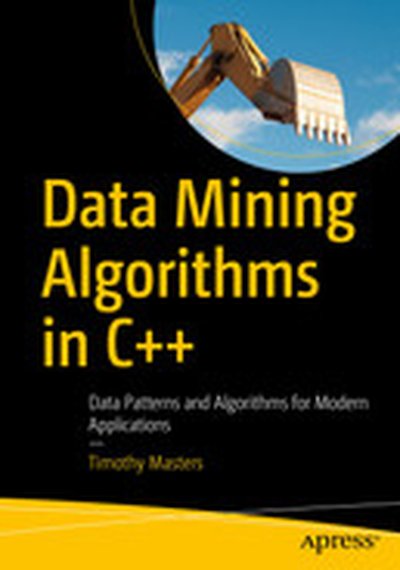
Data Mining Algorithms in C++: Data Patterns and Algorithms for Modern Applications

Discover hidden relationships among the variables in your data, and learn how to exploit these relationships. This book presents a collection of data-mining algorithms that are effective in a wide variety of prediction and classification applications. All algorithms include an intuitive explanation of operation, essential equations, references to more rigorous theory, and commented C++ source code. Many of these techniques are recent developments, still not in widespread use. Others are standard algorithms given a fresh look. In every case, the focus is on practical applicability, with all code written in such a way that it can easily be included into any program. The Windows-based DATAMINE program lets you experiment with the techniques before incorporating them into your own work. What You'll Learn Use Monte-Carlo permutation tests to provide statistically sound assessments of relationships present in your data Discover how combinatorially symmetric cross validation reveals whether your model has true power or has just learned noise by overfitting the data Work with feature weighting as regularized energy-based learning to rank variables according to their predictive power when there is too little data for traditional methods See how the eigenstructure of a dataset enables clustering of variables into groups that exist only within meaningful subspaces of the data Plot regions of the variable space where there is disagreement between marginal and actual densities, or where contribution to mutual information is high Who This Book Is For Anyone interested in discovering and exploiting relationships among variables. Although all code examples are written in C++, the algorithms are described in sufficient detail that they can easily be programmed in any language.

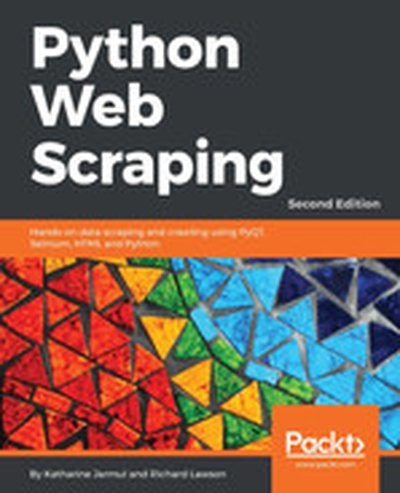
Python Web Scraping - Second Edition

"Python Web Scraping" is a practical guide to extracting and processing online data using the Python programming language. With this book, you'll learn step-by-step how to build web scrapers and crawlers that can handle a range of data sources and structures. After reading this, you will be equipped to tackle real-world web scraping challenges effectively. What this Book will help me do Learn how to extract structured data from standard webpages using Python. Gain proficiency with libraries such as Selenium and PyQt for handling dynamic and JavaScript-dependent content. Build concurrent scrapers to efficiently process large volumes of web pages in parallel. Understand and implement form interaction automation for data extraction from complex websites. Develop advanced scrapers using Scrapy to handle sophisticated web crawling tasks. Author(s) None Jarmul is an experienced data scientist and programmer with extensive knowledge in Python. They bring practical expertise from working on real-world web scraping projects. In their work, they focus on creating content that empowers readers by demystifying complex technical topics. Who is it for? This book is perfect for software developers eager to dive into web scraping using Python, even if they're new to the subject. If you have basic to intermediate Python skills and want to automate data collection and processing, this is the book for you. The techniques here are valuable for tackling diverse data extraction scenarios.

Python Web Scraping

Explore the possibilities of web scraping using Python with this practical guide. The book provides a comprehensive introduction to extracting information from web pages, managing complex scraping scenarios, and utilizing specialized tools such as Scrapy. Whether you're dealing with static pages or interactive web content, this book equips you with the skills to gather and process web data efficiently. What this Book will help me do Gain proficiency in writing Python scripts to extract data from web pages. Learn to build and manage multithreaded crawlers to handle large-scale scraping tasks. Master techniques for interacting with dynamic web content and JavaScript-rendered pages. Understand how to work with web forms, sessions, and tackle challenges like CAPTCHA. Implement practical examples of web scraping using Scrapy for real-world data projects. Author(s) Richard Penman is an experienced software engineer and an expert in Python programming and web development. With years of practical expertise in web crawling and data extraction, Richard shares his extensive knowledge in this field to make complex tasks accessible to developers of all levels. His thoughtful approach aims to empower readers to confidently tackle data challenges on the web. Who is it for? This book is ideal for developers and technical professionals who want to learn effective techniques for web scraping with Python. A basic understanding of programming concepts and experience with Python will help readers get the most out of the practical examples. It's also suitable for advanced learners looking to apply Python skills for automating web data extraction tasks. If you're enthusiastic about turning web data into actionable insights, this guide is for you.

Web Scraping with Python

Learn web scraping and crawling techniques to access unlimited data from any web source in any format. With this practical guide, you’ll learn how to use Python scripts and web APIs to gather and process data from thousands—or even millions—of web pages at once. Ideal for programmers, security professionals, and web administrators familiar with Python, this book not only teaches basic web scraping mechanics, but also delves into more advanced topics, such as analyzing raw data or using scrapers for frontend website testing. Code samples are available to help you understand the concepts in practice.

Automated Data Collection with R: A Practical Guide to Web Scraping and Text Mining

A hands on guide to web scraping and text mining for both beginners and experienced users of R Introduces fundamental concepts of the main architecture of the web and databases and covers HTTP, HTML, XML, JSON, SQL. Provides basic techniques to query web documents and data sets (XPath and regular expressions). An extensive set of exercises are presented to guide the reader through each technique. Explores both supervised and unsupervised techniques as well as advanced techniques such as data scraping and text management. Case studies are featured throughout along with examples for each technique presented. R code and solutions to exercises featured in the book are provided on a supporting website.

Getting Started with Beautiful Soup

"Getting Started with Beautiful Soup" is your practical guide to website scraping using Python. It teaches you how to use Beautiful Soup and the urllib2 module to extract data from websites efficiently and effectively. Through hands-on examples and clear explanations, you'll gain the skills to navigate, search, and modify HTML content. What this Book will help me do Navigate and scrape web pages using the Beautiful Soup Python library. Understand and implement the urllib2 module to access web content programmatically. Search and analyze HTML structures efficiently to extract the needed data. Modify and format extracted HTML and XML content effectively. Handle encoding and manage output formats for diverse scraping requirements. Author(s) Vineeth G. Nair is an experienced Python developer with a strong focus on web technologies, data extraction, and automation. His expertise in Python's Beautiful Soup library has helped countless learners and professionals tackle the challenges of web scraping. Vineeth combines a methodical approach to teaching with practical examples, making complex concepts accessible and actionable. Who is it for? This book is ideal for Python enthusiasts, data analysts, and budding developers looking to explore web scraping. Whether you're a beginner or have some programming experience, this book will guide you through the fundamental concepts of extracting web data. If you're aiming to delve into practical, real-world implementations of web scraping, this is the book for you.

Webbots, Spiders, and Screen Scrapers, 2nd Edition

There's a wealth of data online, but sorting and gathering it by hand can be tedious and time consuming. Rather than click through page after endless page, why not let bots do the work for you? Webbots, Spiders, and Screen Scrapers will show you how to create simple programs with PHP/CURL to mine, parse, and archive online data to help you make informed decisions.

Mining the Social Web

Popular social networks such as Facebook and Twitter generate a tremendous amount of valuable data on topics and use patterns. Who's talking to whom? What are they talking about? How often are they talking? This concise and practical book shows you how to answer these questions and more by harvesting and analyzing data using social web APIs, Python, and pragmatic storage technologies such as Redis, CouchDB, and NetworkX. With Mining the Social Web, intermediate to advanced programmers will learn how to harvest and analyze social data in way that lends itself to hacking as well as more industrial-strength analysis. Algorithms are designed with robustness and efficiency in mind so that the approaches scale well on an ordinary piece of commodity hardware. The book is highly readable from cover to cover as content progressively grows in complexity, but also lends itself to being read in an ad-hoc fashion. Use easily adaptable scripts to access popular social network APIs including Twitter, OpenSocial, and Facebook Learn approaches for slicing and dicing social data that's been harvested from social web APIs as well as other common formats such as email and markup formats Harvest data from other sources such as Freebase and other sites to enrich your analytic capabilities with additional context Visualize and analyze data in interactive ways with tools built upon rich UI JavaScript toolkits Get a concise and straightforward synopsis of some practical technologies from the semantic web landscape that you can incorporate into your analysis This book is still in progress, but you can get going on this technology through our Rough Cuts edition, which lets you read the manuscript as it's being written, either online or via PDF.

21 Recipes for Mining Twitter

Millions of public Twitter streams harbor a wealth of data, and once you mine them, you can gain some valuable insights. This short and concise book offers a collection of recipes to help you extract nuggets of Twitter information using easy-to-learn Python tools. Each recipe offers a discussion of how and why the solution works, so you can quickly adapt it to fit your particular needs. The recipes include techniques to: Use OAuth to access Twitter data Create and analyze graphs of retweet relationships Use the streaming API to harvest tweets in realtime Harvest and analyze friends and followers Discover friendship cliques Summarize webpages from short URLs This book is a perfect companion to O’Reilly's Mining the Social Web.

Webbots, Spiders, and Screen Scrapers

The Internet is bigger and better than what a mere browser allows. Webbots, Spiders, and Screen Scrapers is for programmers and businesspeople who want to take full advantage of the vast resources available on the Web. There's no reason to let browsers limit your online experience-especially when you can easily automate online tasks to suit your individual needs. Learn how to write webbots and spiders that do all this and more: Programmatically download entire websites Effectively parse data from web pages Manage cookies Decode encrypted files Automate form submissions Send and receive email Send SMS alerts to your cell phone Unlock password-protected websites Automatically bid in online auctions Exchange data with FTP and NNTP servers Sample projects using standard code libraries reinforce these new skills. You'll learn how to create your own webbots and spiders that track online prices, aggregate different data sources into a single web page, and archive the online data you just can't live without. You'll learn inside information from an experienced webbot developer on how and when to write stealthy webbots that mimic human behavior, tips for developing fault-tolerant designs, and various methods for launching and scheduling webbots. You'll also get advice on how to write webbots and spiders that respect website owner property rights, plus techniques for shielding websites from unwanted robots. As a bonus, visit the author's website to test your webbots on sample target pages, and to download the scripts and code libraries used in the book. Some tasks are just too tedious-or too important!- to leave to humans. Once you've automated your online life, you'll never let a browser limit the way you use the Internet again.